
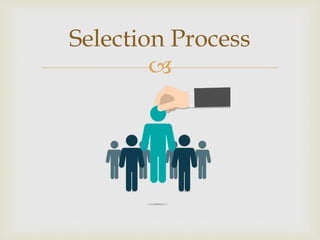
Selection Process

Introduction
 What is selection process?
 Why is it important to get right?

 The process of assessing candidates
and appointing a post holder.
 Applicants short listed, most suitable
candidates selected.
 Selection process varies according to
organisation.
Selection

 Making a bad selection decision is costly
in terms of the cost of the recruitment and
selection process itself, salary,
management time and resources.
 If you select someone unsuitable you
might need to spend time, managing their
performance and it might affect other
employees.
Importance of Selection to be
right

 Preliminary Interview
 Selection Tests
 Employment Interview
 Reference and Background Analysis
 Physical Examination
 Job Offer
 Employment Contact
Selection process

Preliminary Interview

 In preliminary interview the applicant
is given the job details enabling him to
decide whether the job will suit him or
not.
 In preliminary interview, interviewer
ask general question.
Preliminary Interview

Selection Tests

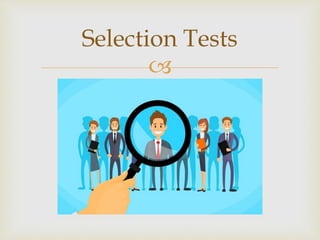
 Aptitude Test
 Mental Ability Test
 Mechanical Aptitude Test
 Psycho Motor Test
 Performance test
Selection Tests

 Factual information about Candidate.
 Encourages applicants to be honest.
 Discourages applicants who hide
something.
Reference & Background
Analysis

 It includes medical examination ,or
clinical examination ( more popularly
as a check-up or medical ) is the process
by which a medical professional
investigates the body of a patient for a
signs of diseases . It generally follows
the taking of the medical history.
Physical Examination

 A job offer is an invitation for a
potential employee, whether he or she
has applied for a job, or not, to become
an employee in your organization. The
job offer contains the details of your
employment offer.
Job Offer

 An employment contract is a written
legal document that lays out binding
terms and condition of employment
between an employee and an employer.
Employment Contract

RECRUITMENT

 Meaning of recruitment .
 Recruitment organization .
 Methods of recruitment.
 Steps in recruitment process.
TABLE OF CONTENTS

“Recruitment is the process of
searching for prospective employees
and stimulating and encouraging the to
apply for the job.” – (Flippo EB, 1980)
DEFINITION

RECRUITMENT NEEDS

 Recruitment needs are of three types:
 Planned: Arises from changes in organization and
retirement policy.
 Unexpected: Arises during resignations, deaths,
accidents and illness.
 Anticipated: Refers to those movements in personnel
which an organization can predict by studying trends
in the internal and external environments.
RECRUITMENT NEEDS

 Requisitions contains the details about
the positions to be filled, no. of persons
to be recruited, etc.
 Developing and location of sources, i.e
both internal and external.
Communicating the information of the
organization to acquire prospective
employees.
Steps in Recruitment
Process:
 Encouraging the identified candidates to
apply for the job.
 Analyzing and evaluating the
effectiveness of recruitment process by
candidate progression.

Recruitment Policy

 It specifies the objectives of
recruitment and provides a framework
for the implementation of the
recruitment programe.
Recruitment Policy

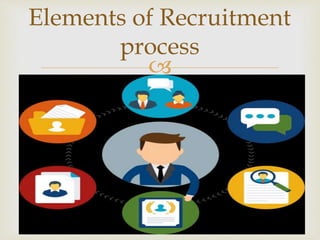
Elements of Recruitment
process

Elements of Recruitment
process
 Recruitment Policy
 Recruitment organization
 Developing sources of recruitment
 Methods of recruiting

General principal

General principles a recruitment policy
involves which reflect the employer’s
commitment are :
 To find and employ the best qualified
persons for each job .
 To retain the most promising of those
hired .
General Principles
 To offer promising opportunities for
the life time working careers .
 To provide facilities and opportunities
for personal growth on the job.

Factors affecting recruitment
policy

 Organizational objectives
 Personnel policies of the Organization and
its competitors.
 Government policies on reservations .
 Preferred sources of recruitment .
 Organization’s recruitment needs .
 Recruitment costs .
 Financial implications.
 Selection criteria and preferences etc.
Factors affecting recruitment
policy

Recruitment Organization
 Centralized recruitment
 Decentralized recruitment

 Recruitment methods are the means by
which and organization attempts to
establishes contact with potential
candidates, provides them necessary
information and encourages them to
apply for jobs.
METHODS OF
RECRUITMENT

 Meaning of recruitment
 Steps in recruitment process
 Recruitment policy
 Recruitment organization
 Sources of recruitment
 Methods of recruitment
SUMMARY

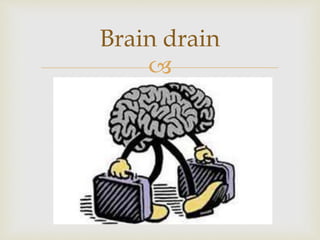
Brain drain

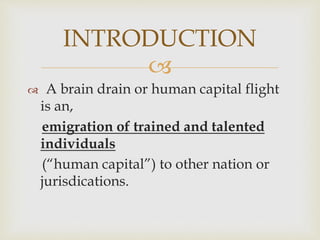
 A brain drain or human capital flight
is an,
emigration of trained and talented
individuals
(“human capital”) to other nation or
jurisdications.
INTRODUCTION

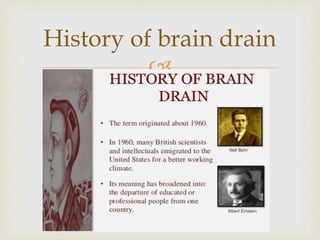
History of brain drain

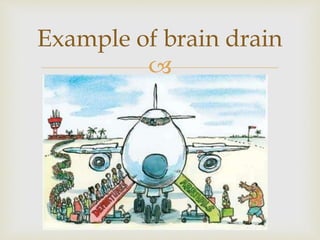
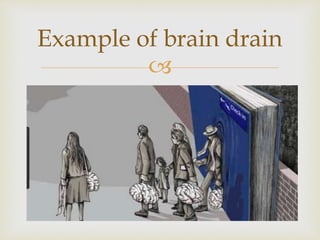
Example of brain drain

Example of brain drain

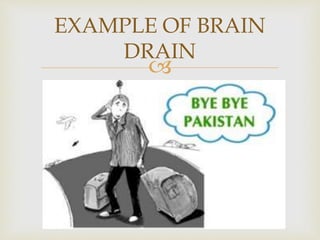
EXAMPLE OF BRAIN
DRAIN

SO THANK YOU

Presentation1.1

  • 2.
  • 3.
     Introduction  What isselection process?  Why is it important to get right?
  • 4.
      The processof assessing candidates and appointing a post holder.  Applicants short listed, most suitable candidates selected.  Selection process varies according to organisation. Selection
  • 5.
      Making abad selection decision is costly in terms of the cost of the recruitment and selection process itself, salary, management time and resources.  If you select someone unsuitable you might need to spend time, managing their performance and it might affect other employees. Importance of Selection to be right
  • 6.
      Preliminary Interview Selection Tests  Employment Interview  Reference and Background Analysis  Physical Examination  Job Offer  Employment Contact Selection process
  • 7.
  • 8.
      In preliminaryinterview the applicant is given the job details enabling him to decide whether the job will suit him or not.  In preliminary interview, interviewer ask general question. Preliminary Interview
  • 9.
  • 10.
      Aptitude Test Mental Ability Test  Mechanical Aptitude Test  Psycho Motor Test  Performance test Selection Tests
  • 11.
      Factual informationabout Candidate.  Encourages applicants to be honest.  Discourages applicants who hide something. Reference & Background Analysis
  • 12.
      It includesmedical examination ,or clinical examination ( more popularly as a check-up or medical ) is the process by which a medical professional investigates the body of a patient for a signs of diseases . It generally follows the taking of the medical history. Physical Examination
  • 13.
      A joboffer is an invitation for a potential employee, whether he or she has applied for a job, or not, to become an employee in your organization. The job offer contains the details of your employment offer. Job Offer
  • 14.
      An employmentcontract is a written legal document that lays out binding terms and condition of employment between an employee and an employer. Employment Contract
  • 15.
  • 16.
      Meaning ofrecruitment .  Recruitment organization .  Methods of recruitment.  Steps in recruitment process. TABLE OF CONTENTS
  • 17.
     “Recruitment is theprocess of searching for prospective employees and stimulating and encouraging the to apply for the job.” – (Flippo EB, 1980) DEFINITION
  • 18.
  • 19.
      Recruitment needsare of three types:  Planned: Arises from changes in organization and retirement policy.  Unexpected: Arises during resignations, deaths, accidents and illness.  Anticipated: Refers to those movements in personnel which an organization can predict by studying trends in the internal and external environments. RECRUITMENT NEEDS
  • 20.
      Requisitions containsthe details about the positions to be filled, no. of persons to be recruited, etc.  Developing and location of sources, i.e both internal and external. Communicating the information of the organization to acquire prospective employees. Steps in Recruitment Process:
  • 21.
     Encouraging theidentified candidates to apply for the job.  Analyzing and evaluating the effectiveness of recruitment process by candidate progression.
  • 22.
  • 23.
      It specifiesthe objectives of recruitment and provides a framework for the implementation of the recruitment programe. Recruitment Policy
  • 24.
  • 25.
     Elements of Recruitment process Recruitment Policy  Recruitment organization  Developing sources of recruitment  Methods of recruiting
  • 26.
  • 27.
     General principles arecruitment policy involves which reflect the employer’s commitment are :  To find and employ the best qualified persons for each job .  To retain the most promising of those hired . General Principles
  • 28.
     To offerpromising opportunities for the life time working careers .  To provide facilities and opportunities for personal growth on the job.
  • 29.
  • 30.
      Organizational objectives Personnel policies of the Organization and its competitors.  Government policies on reservations .  Preferred sources of recruitment .  Organization’s recruitment needs .  Recruitment costs .  Financial implications.  Selection criteria and preferences etc. Factors affecting recruitment policy
  • 31.
     Recruitment Organization  Centralizedrecruitment  Decentralized recruitment
  • 32.
      Recruitment methodsare the means by which and organization attempts to establishes contact with potential candidates, provides them necessary information and encourages them to apply for jobs. METHODS OF RECRUITMENT
  • 33.
      Meaning ofrecruitment  Steps in recruitment process  Recruitment policy  Recruitment organization  Sources of recruitment  Methods of recruitment SUMMARY
  • 34.
  • 35.
      A braindrain or human capital flight is an, emigration of trained and talented individuals (“human capital”) to other nation or jurisdications. INTRODUCTION
  • 36.
  • 37.
  • 38.
  • 39.
  • 40.