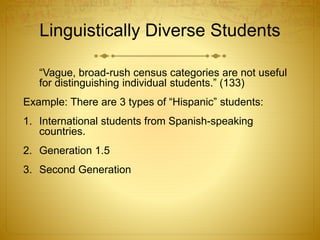
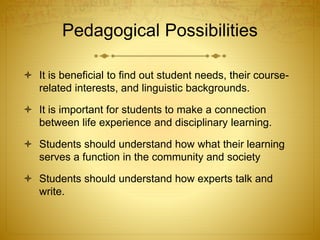
This document summarizes key points from several sources about teaching linguistically diverse students. It discusses the importance of not making assumptions about students based on broad census categories, and finding out about their individual backgrounds and needs. It also emphasizes making course content relevant to students' lives, understanding academic language from an expert perspective, and allowing multiple ways for students to demonstrate knowledge. The document cautions against biases and expectations that don't align with students' own perspectives. It provides suggestions for inclusive classroom practices like clear expectations, encouraging participation, and assessing teaching approaches.