THE MAGIC OF KINECT
CAPSTONE PROJECT
BENJOE VIDAL
WHAT THE KINECT DOES ?
• GET THE DEPTH IMAGE
• ESTIMATE THE BODY POSE
• OUTPUT ( APPLICATION)
HOW KINECT WORKS
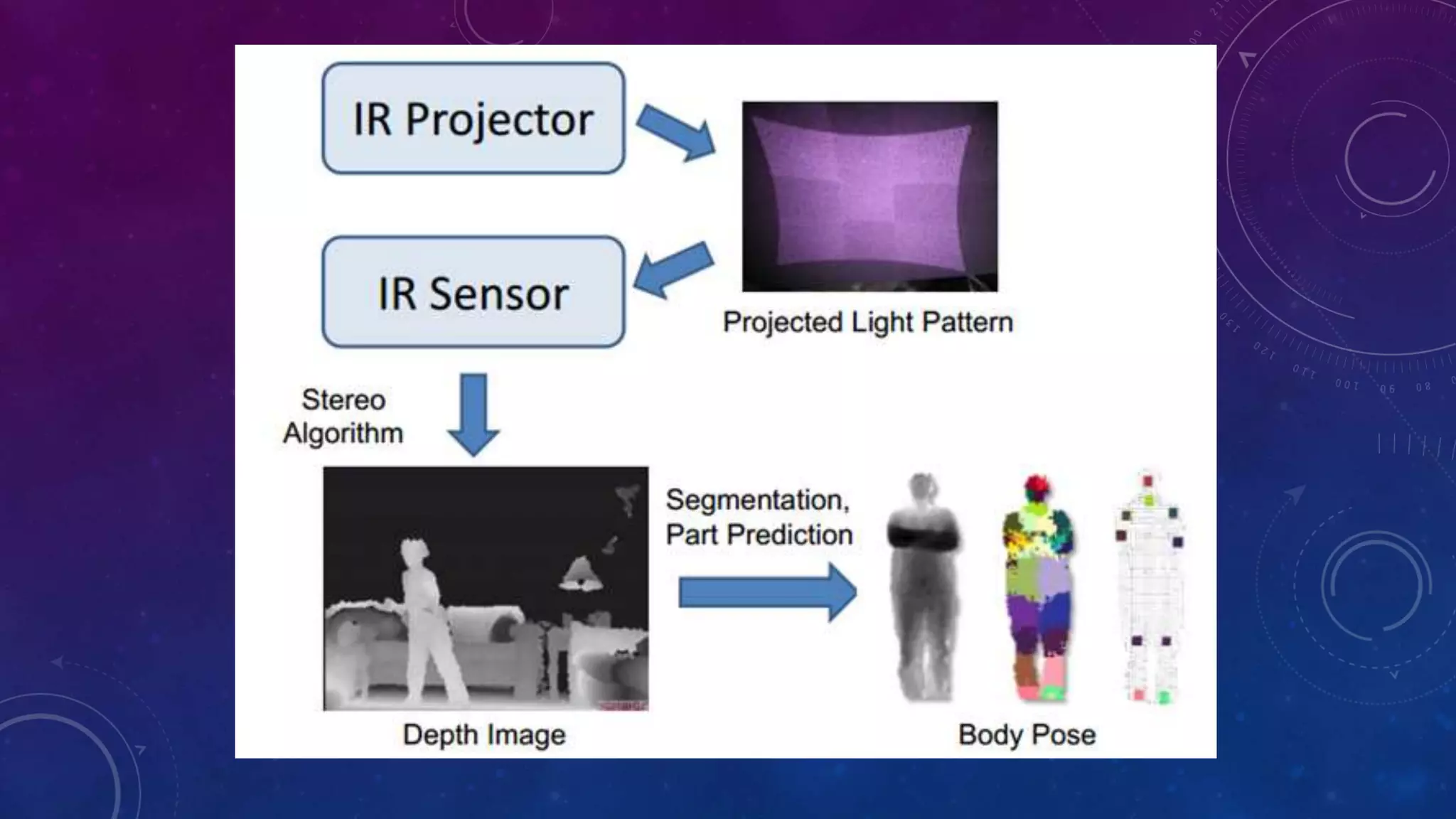
• IR PROJECTOR
• PROJECTED LIGHT PATTER (SPECLE PATTERN - TIME OF
FLIGHT)
• IR SENSOR
• STEREO ALGORITHM - CONVERT TO DEPTH IMAGE
• SEGMENTATION
• DEPTH IMAGE
STEREO ALGORITHM
•used by Primesense and kinect
•image based rendering to get
depth image
DEPTH IMAGE
• is constructed by analyzing a specle pattern of
infrared laser light.
• inferring body position is a two - stage process.
- First compute a depth map( using structured
light)
STRUCTURED LIGHT
•The kinect used structured light
and machine learning algorithm to
estimate the body pose..
HOW KINECT GET THE IMAGE DATA
• A time-of-flight camera emits light signals and then measures how
long it takes them to return. That needs to be accurate to
1/10,000,000,000 of a second, the camera is able to differentiate
light reflecting from objects in a room and the surrounding
environment. That provides an accurate depth estimation that
enables the shape of those objects to be computed.
HOW WE INTEGRATE THE GESTURE RECOGNITION.
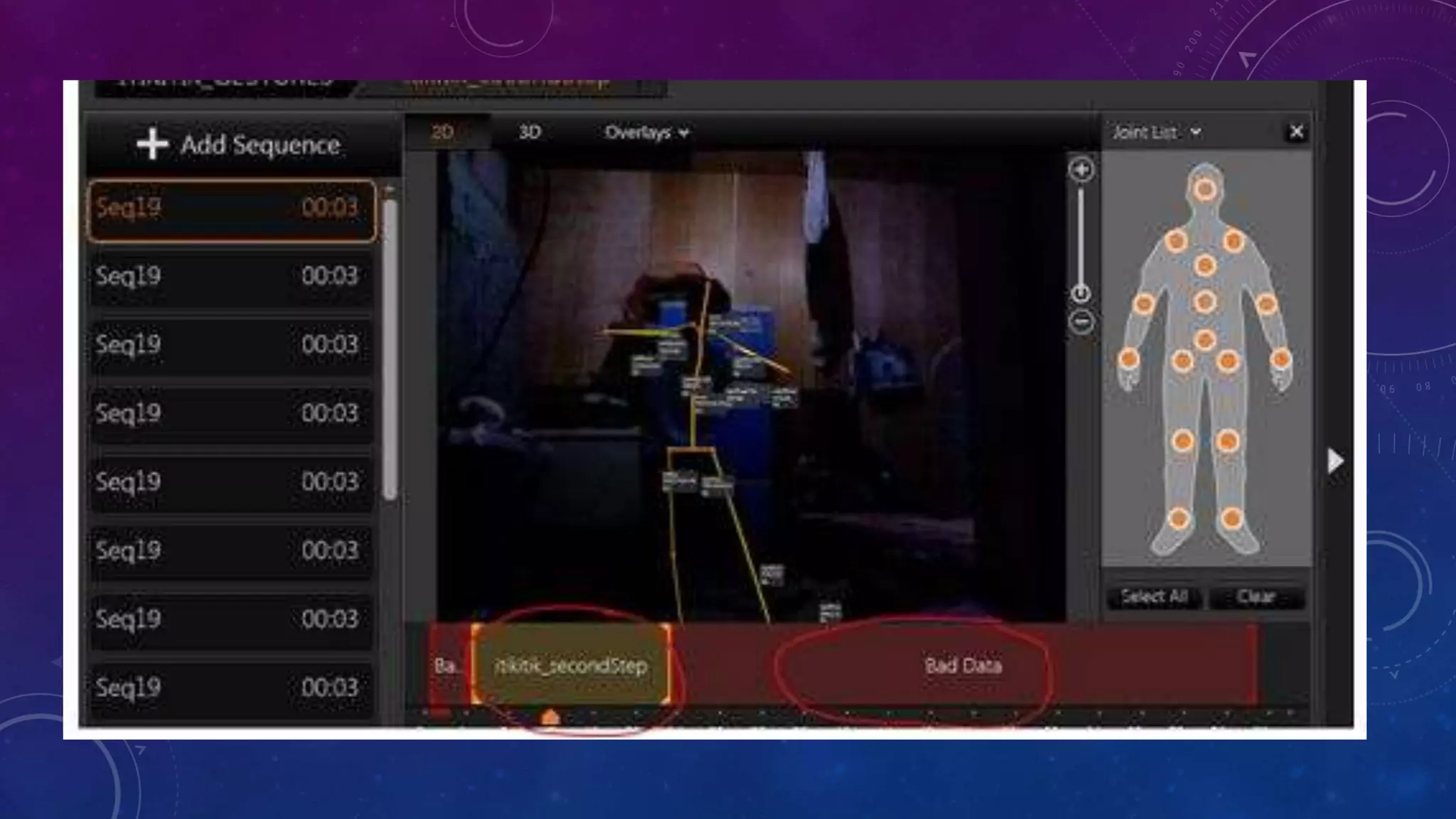
• We used OMEK - GAT to record gesture.
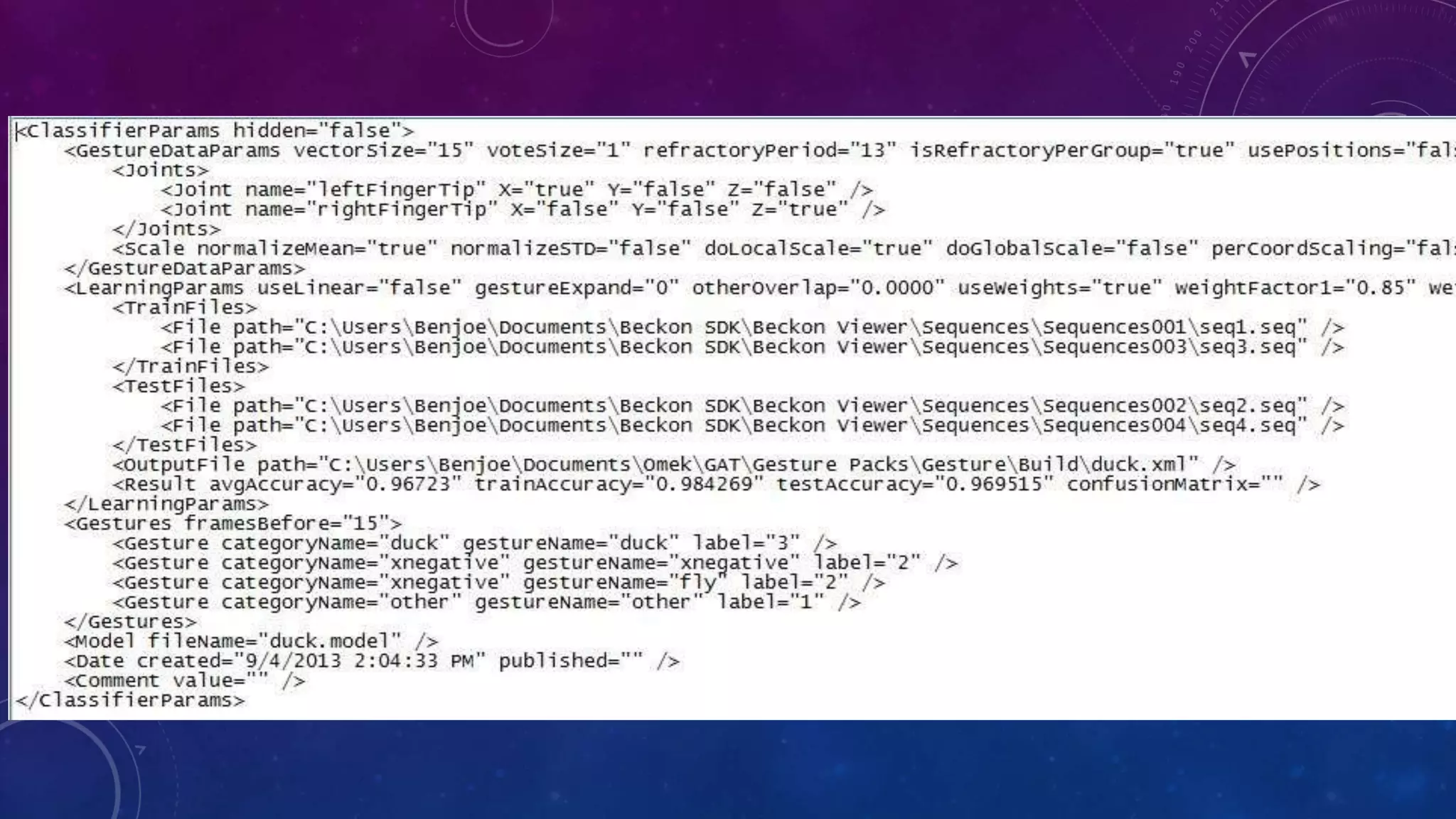
• Convert to XML data
• Pattern maching algorithm
• ICP - Iterative Closest Point
PATTERN MATCHING
• pattern maching involves having a database of recorded images
produced by gestures.
• Using this database you can compare the current drawing(made with
the positions of the tracked joint) with all the recorded drawings in
the database.
• Pattern matching algorithm, determines if one of the templates
matches the current drawing, and if so, then the gesture is detected.
ITERATIVE CLOSEST POINT
• The ICP (Iterative Closest Point) algorithm is widely used for
geometric alignment of three-dimensional models when an initial
estimate of the relative pose is known. This capability has potential
application to real-time 3D model acquisition and model-based
tracking.
• Iterative closest point algorithm to solve the
simultaneous assignment of silhouette points to a
body part and alignment of the body part.
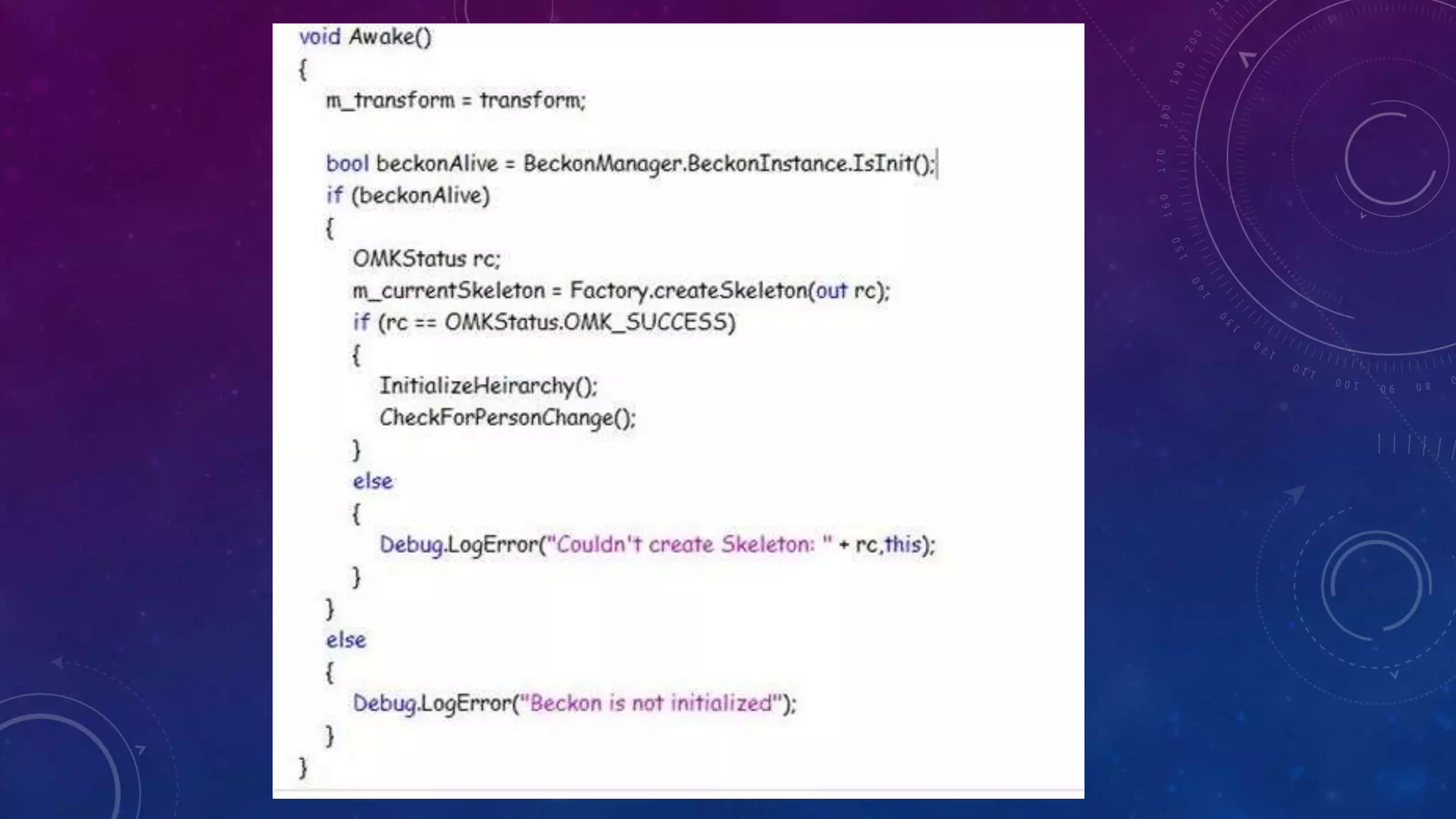
• Awake is used to initialize any variables or game state before the
game starts.
• Bool beckonAlive = BeckonManager.beckonInstance.IsInit(); // this
line initialize the beckon SDK
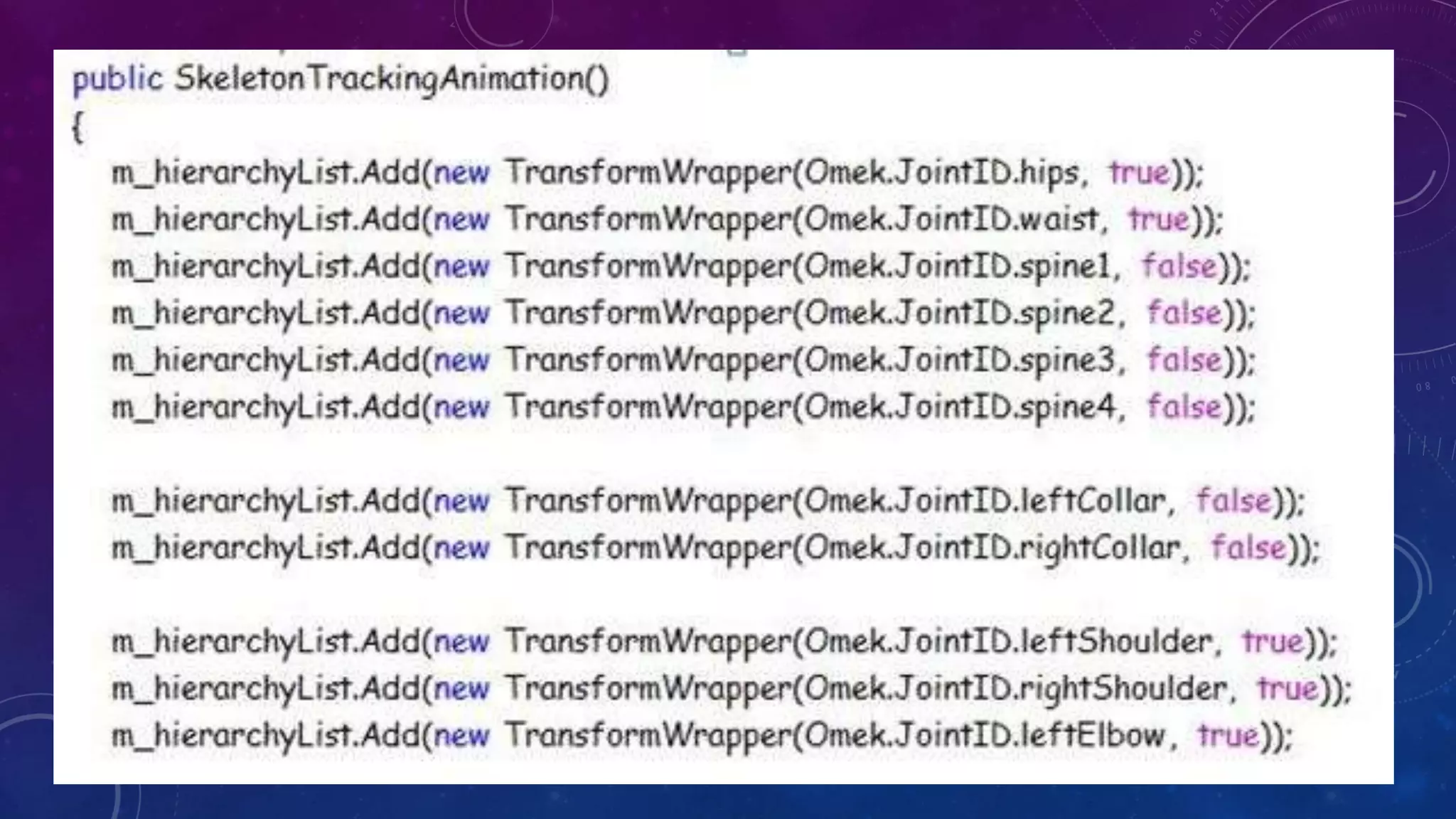
• OMKStatus rc; M_currentSkeleton = Factory.createSkeleton(out rc);
this line will create skeleton every point of joint of avatar. If the
OMKStatus is successfully initialized InitializeHeirarchy(); function
will call to create skeleton
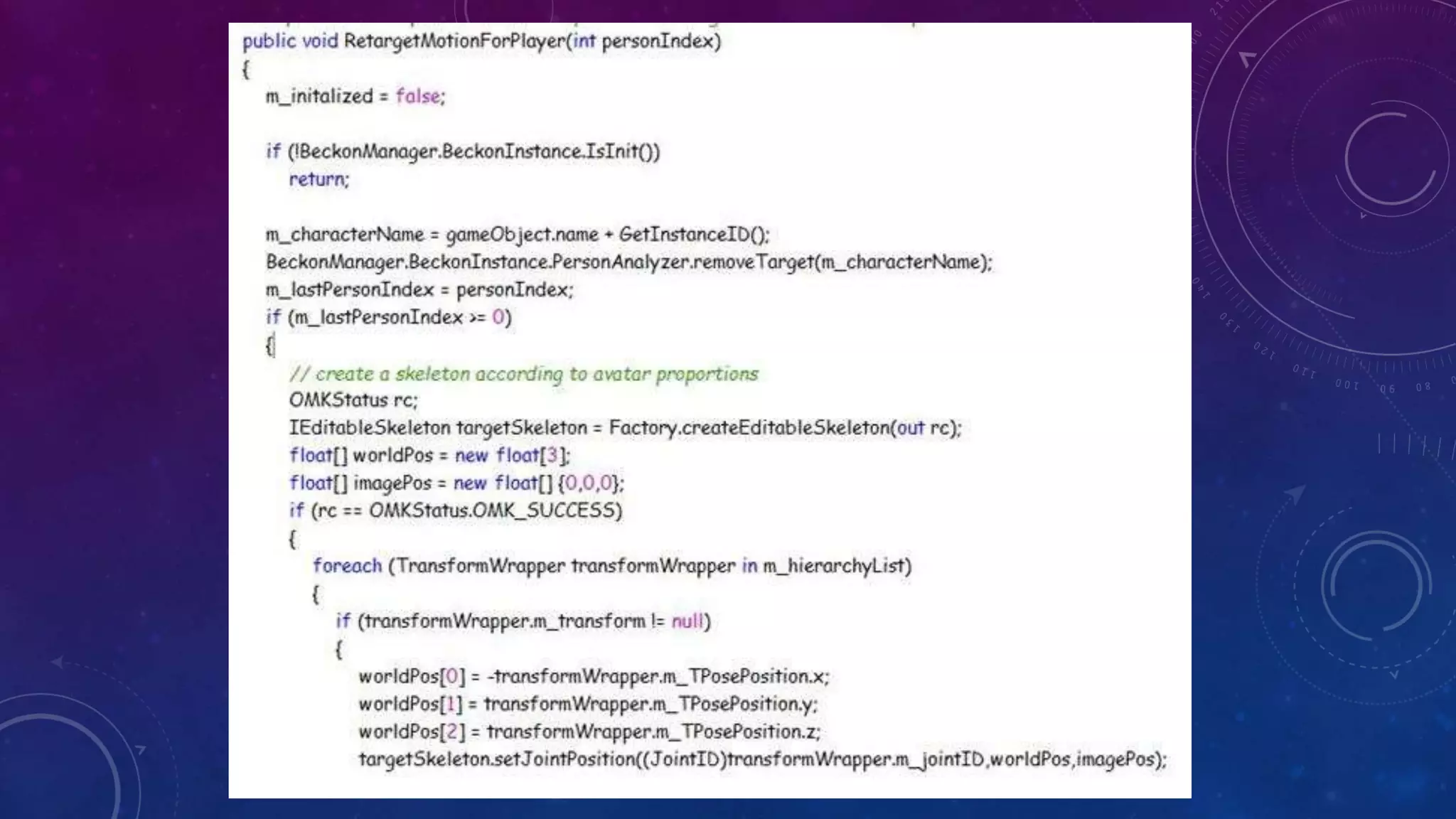
• after the skeleton successfully attached to the
avatar it will animate the movement of the avatar
same as the movement of the player in the game
Virtual Dance Game Using Kinect and ICP Algorithm

Virtual Dance Game Using Kinect and ICP Algorithm

  • 1.
    THE MAGIC OFKINECT CAPSTONE PROJECT BENJOE VIDAL
  • 2.
    WHAT THE KINECTDOES ? • GET THE DEPTH IMAGE • ESTIMATE THE BODY POSE • OUTPUT ( APPLICATION)
  • 3.
    HOW KINECT WORKS •IR PROJECTOR • PROJECTED LIGHT PATTER (SPECLE PATTERN - TIME OF FLIGHT) • IR SENSOR • STEREO ALGORITHM - CONVERT TO DEPTH IMAGE • SEGMENTATION • DEPTH IMAGE
  • 5.
    STEREO ALGORITHM •used byPrimesense and kinect •image based rendering to get depth image
  • 6.
    DEPTH IMAGE • isconstructed by analyzing a specle pattern of infrared laser light. • inferring body position is a two - stage process. - First compute a depth map( using structured light)
  • 7.
    STRUCTURED LIGHT •The kinectused structured light and machine learning algorithm to estimate the body pose..
  • 8.
    HOW KINECT GETTHE IMAGE DATA • A time-of-flight camera emits light signals and then measures how long it takes them to return. That needs to be accurate to 1/10,000,000,000 of a second, the camera is able to differentiate light reflecting from objects in a room and the surrounding environment. That provides an accurate depth estimation that enables the shape of those objects to be computed.
  • 9.
    HOW WE INTEGRATETHE GESTURE RECOGNITION. • We used OMEK - GAT to record gesture. • Convert to XML data • Pattern maching algorithm • ICP - Iterative Closest Point
  • 12.
    PATTERN MATCHING • patternmaching involves having a database of recorded images produced by gestures. • Using this database you can compare the current drawing(made with the positions of the tracked joint) with all the recorded drawings in the database. • Pattern matching algorithm, determines if one of the templates matches the current drawing, and if so, then the gesture is detected.
  • 13.
    ITERATIVE CLOSEST POINT •The ICP (Iterative Closest Point) algorithm is widely used for geometric alignment of three-dimensional models when an initial estimate of the relative pose is known. This capability has potential application to real-time 3D model acquisition and model-based tracking.
  • 14.
    • Iterative closestpoint algorithm to solve the simultaneous assignment of silhouette points to a body part and alignment of the body part.
  • 16.
    • Awake isused to initialize any variables or game state before the game starts. • Bool beckonAlive = BeckonManager.beckonInstance.IsInit(); // this line initialize the beckon SDK • OMKStatus rc; M_currentSkeleton = Factory.createSkeleton(out rc); this line will create skeleton every point of joint of avatar. If the OMKStatus is successfully initialized InitializeHeirarchy(); function will call to create skeleton
  • 18.
    • after theskeleton successfully attached to the avatar it will animate the movement of the avatar same as the movement of the player in the game