Nano Biotechnology in Disease
   Detection and Therapy
            Shruthi Raghuraman
         Authentic Science Research
                Senior – DHS

 Note: Sharing my work here in a RESTRICTED
  way as I am presenting my ASR work to a
  nationally renowned Science competition.
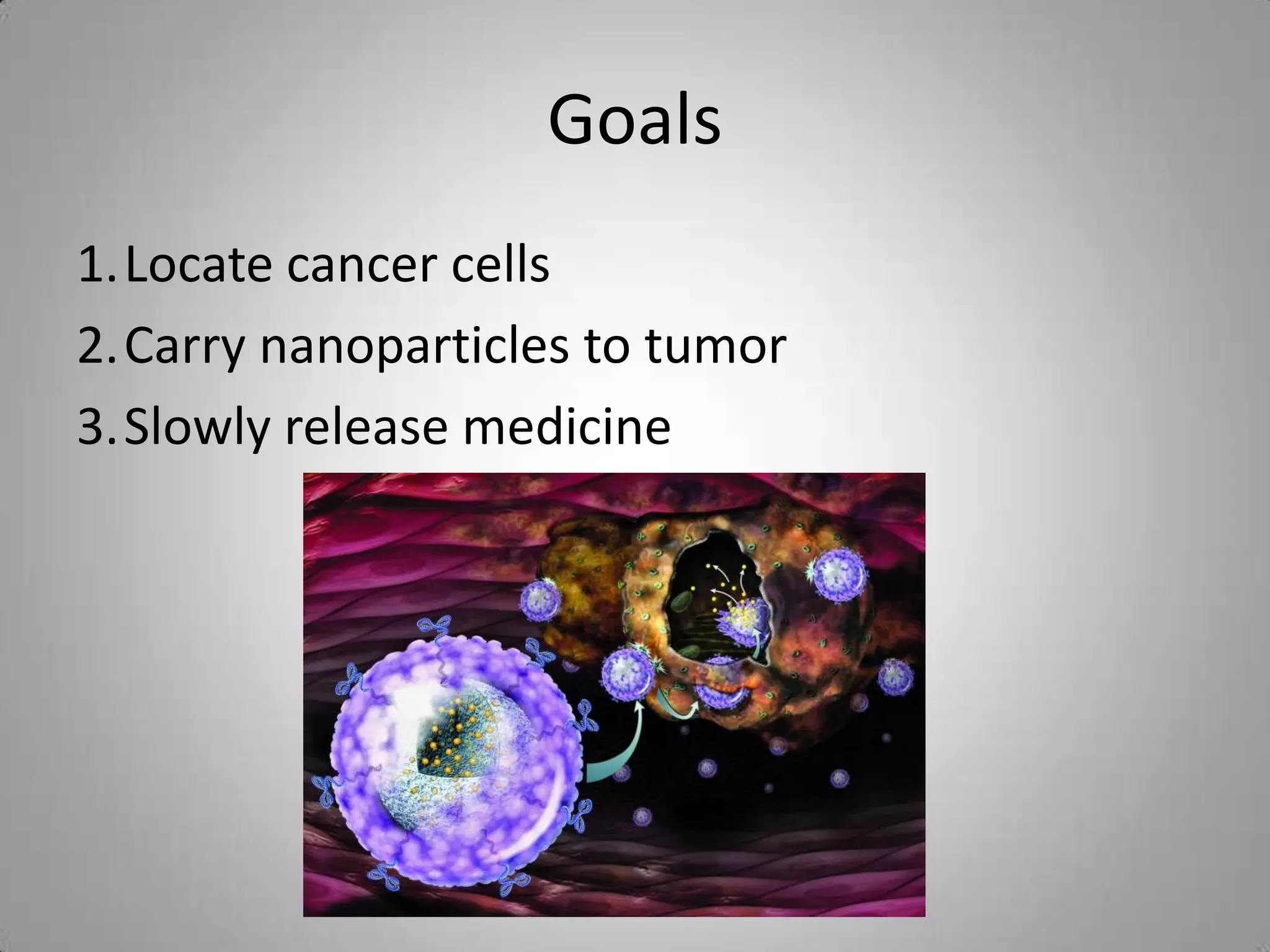
Goals
1.Locate cancer cells
2.Carry nanoparticles to tumor
3.Slowly release medicine
Parameters
•   Alginate Concentration
•   Calcium Chloride Concentration
•   Flow Rate
•   Agitation
•   Voltage
Procedure

• Target Size:           • Target Size:
  – 150 µL (diameter)        – 100 µL (diameter)
  – 450 µL (diameter)        – 500 µL (diameter)
• Stable Shape           • Stable shape
• Visibility             • Visibility
• Uniformity             • Uniformity
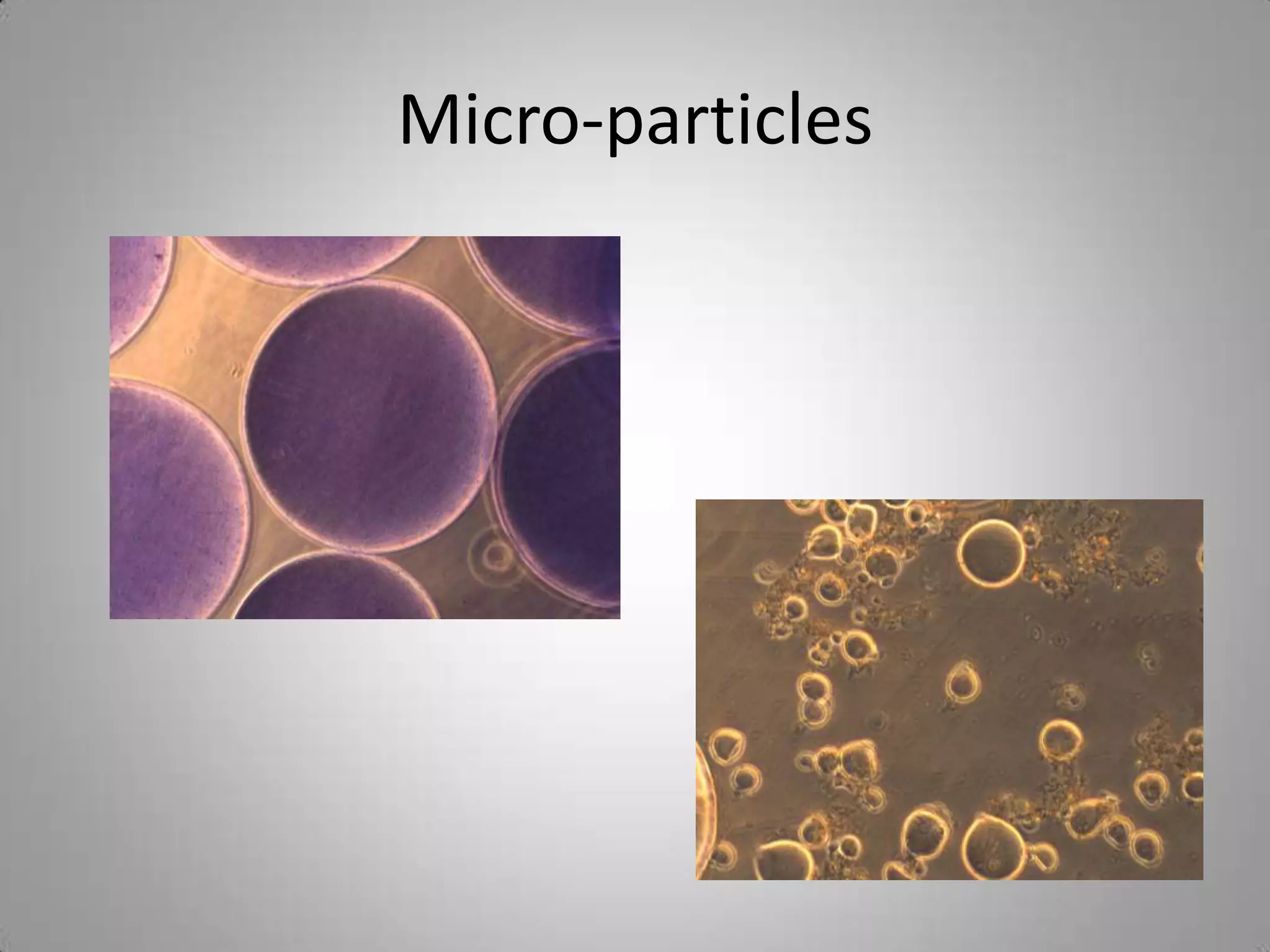
Micro-particles
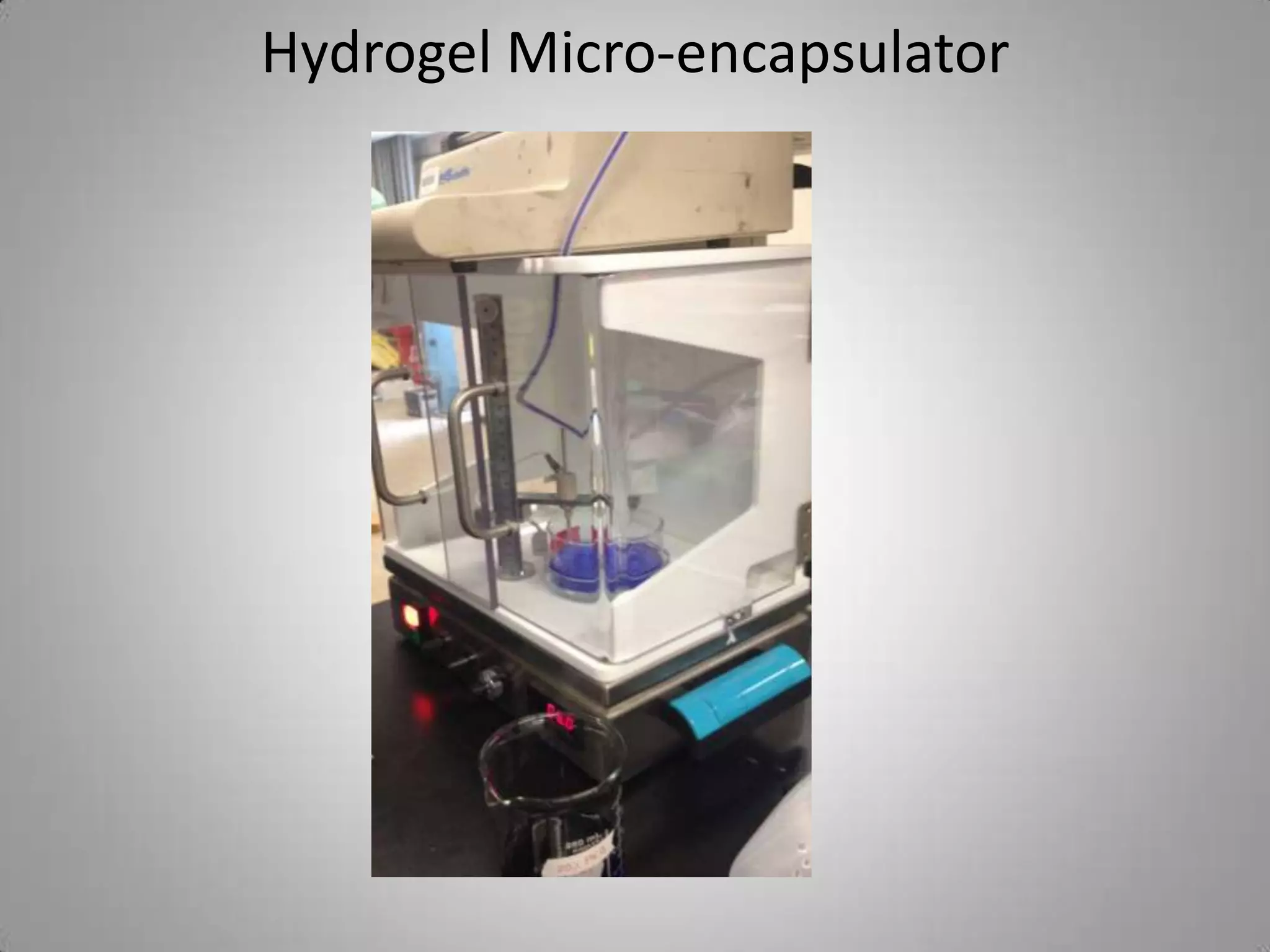
Hydrogel Micro-encapsulator
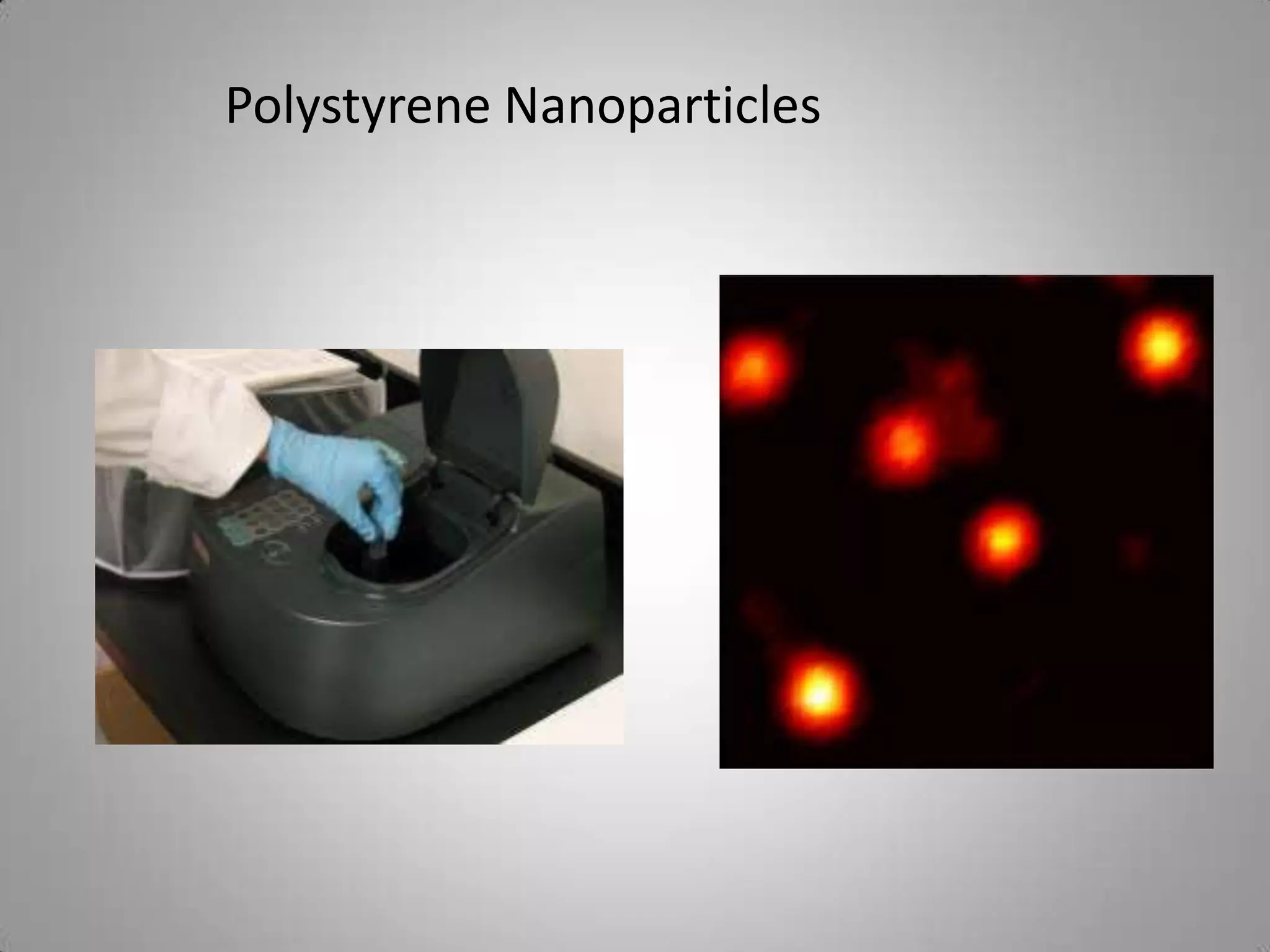
Polystyrene Nanoparticles
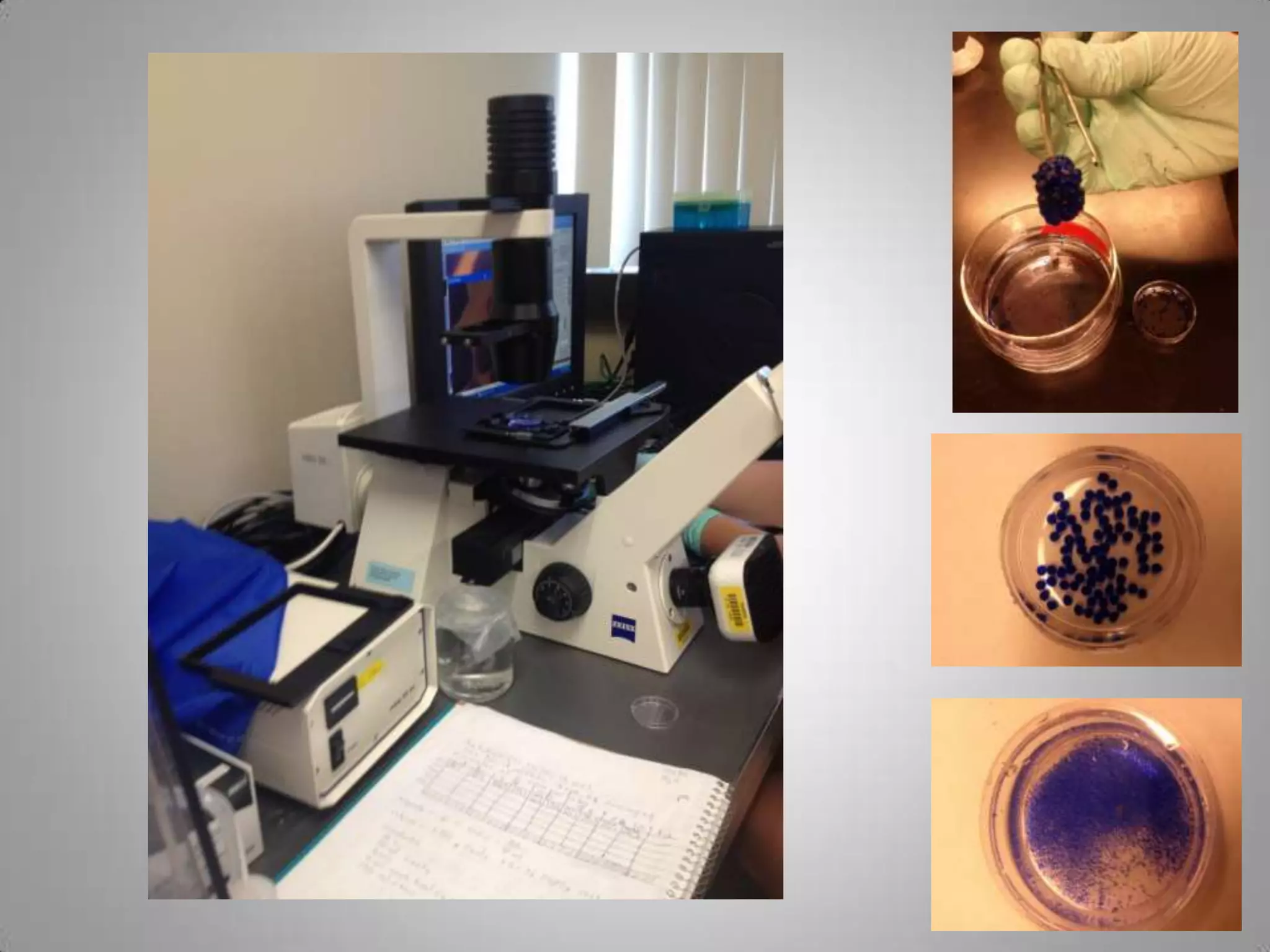
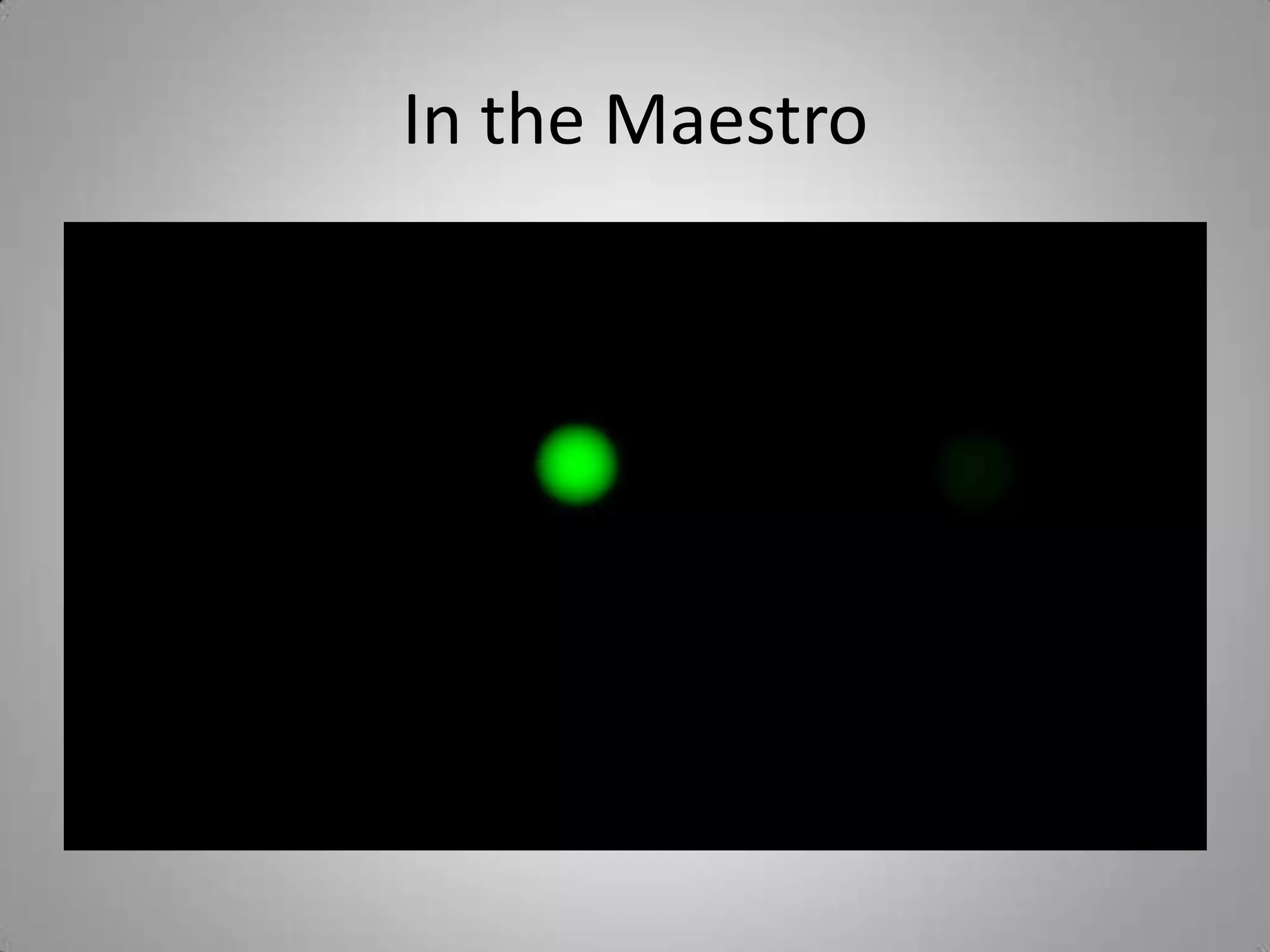
In the Maestro
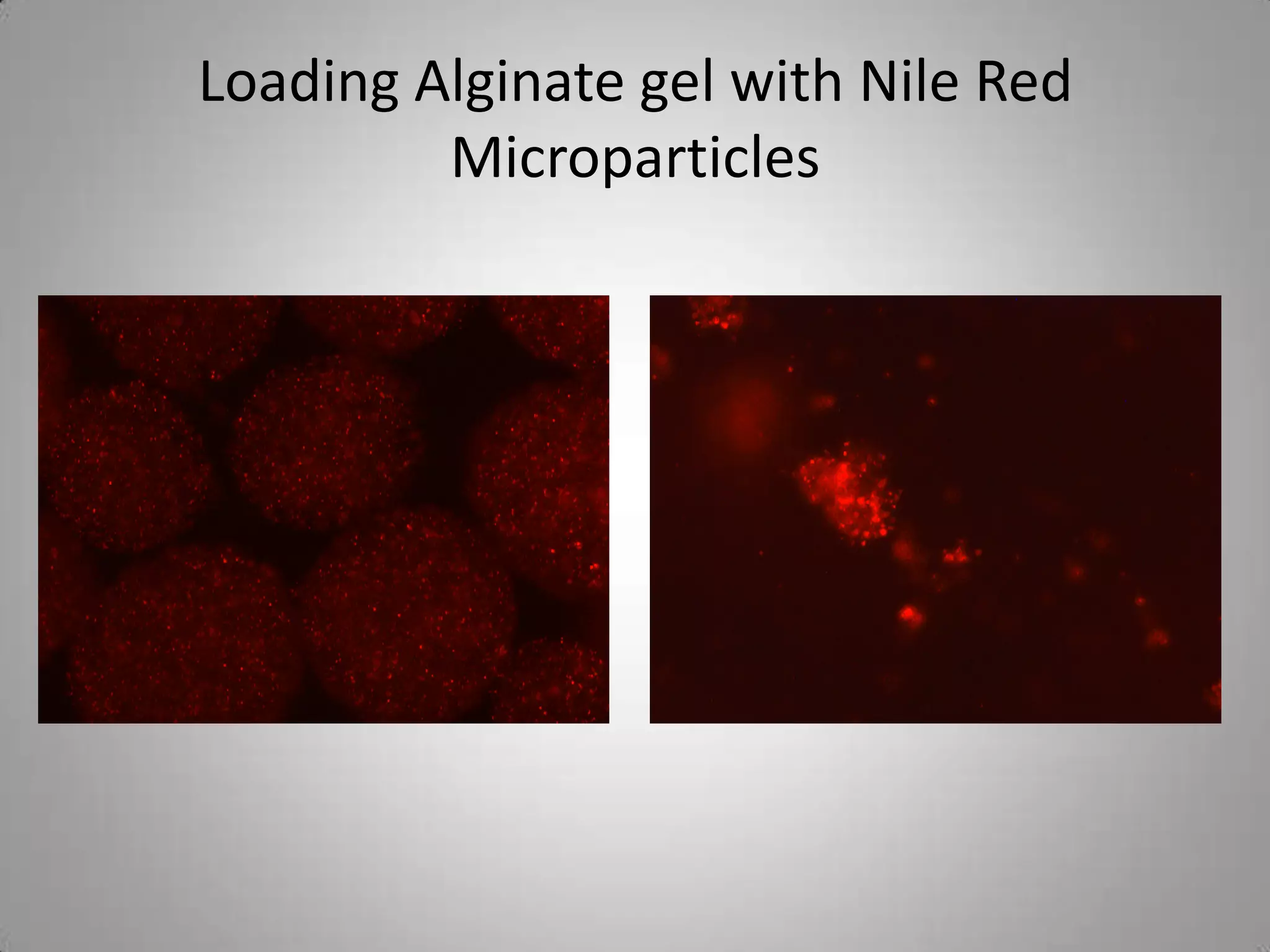
Loading Alginate gel with Nile Red
         Microparticles
Things I Learned:
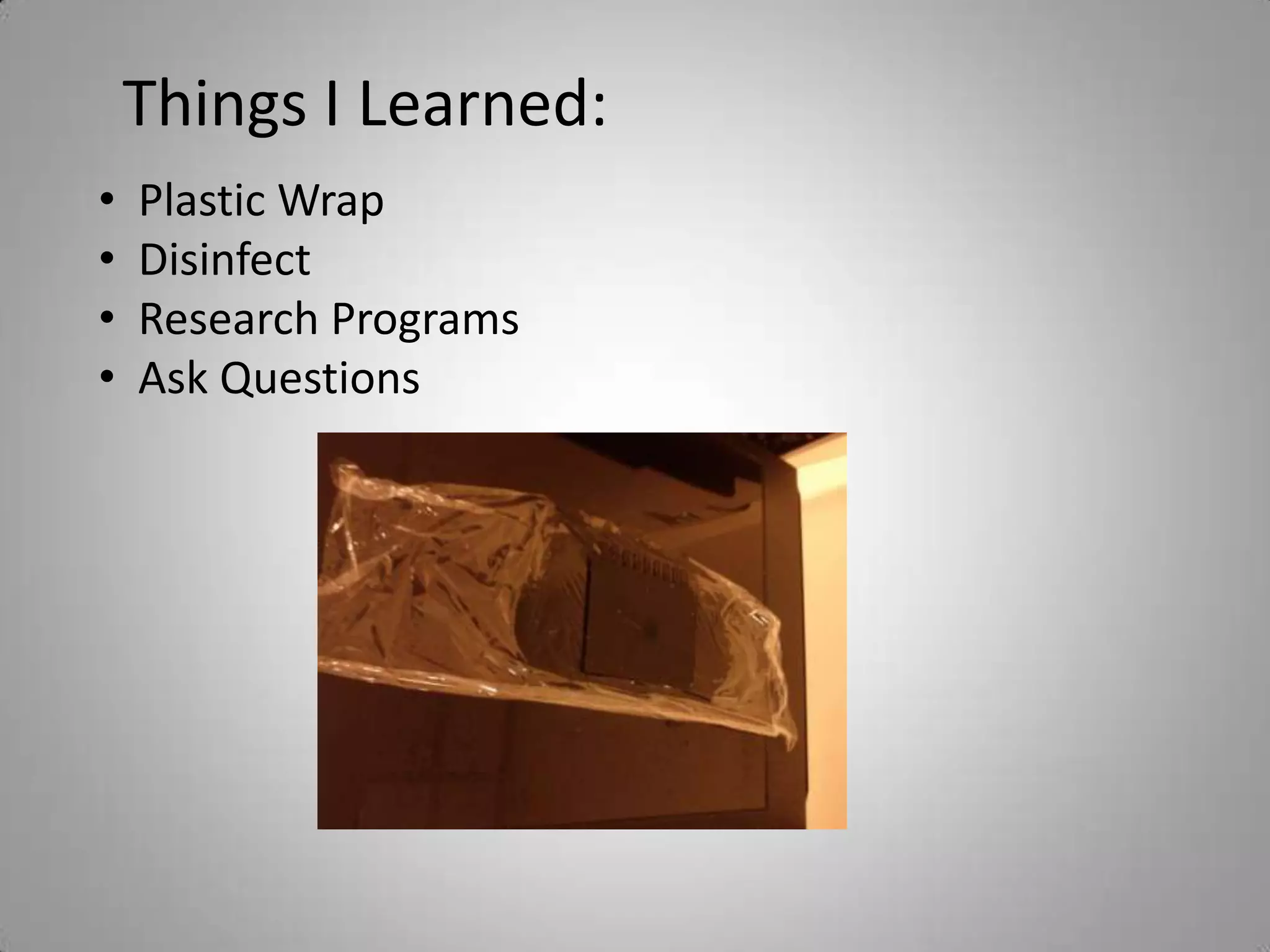
•   Plastic Wrap
•   Disinfect
•   Research Programs
•   Ask Questions
Acknowledgements

•   Dr. Yong Wang - Dept of Chemical, Materials & Biomolecular Engineering
•   Mark Battig - Research Graduate
•   Shihui Li - Research Graduate
•   Kelsey Boch - Undergraduate Student
•   Xhaolong Zhang
•   Niancao Chen
•   Mr. Lewis - ASR - DHS
•   Mrs. Leventhal - ASR - DHS
Presentation1
Presentation1

Presentation1

Editor's Notes

  • #10 Polystyrene nanoparticle labeled with fluorescent DNA -> maestro imaging machineGreen fluorescenceDNA attached to the nanoparticles (biotin/streptavidin conjugate) can recognize specific cell receptor on cancer cells This allows the nanoparticles to attach to the cellImaging a samples of the cells can allow one to look at the fluorescent label on the cells