SWOT Analysis: An
Introduction
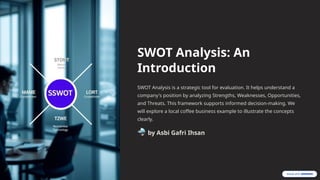
SWOT Analysis is a strategic tool for evaluation. It helps understand a
company's position by analyzing Strengths, Weaknesses, Opportunities,
and Threats. This framework supports informed decision-making. We
will explore a local coffee business example to illustrate the concepts
clearly.
by Asbi Gafri Ihsan
Strengths: Internal
Advantages
Definition
Internal advantages that set a
company apart.
Examples
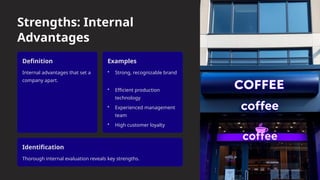
• Strong, recognizable brand
• Efficient production
technology
• Experienced management
team
• High customer loyalty
Identification
Thorough internal evaluation reveals key strengths.
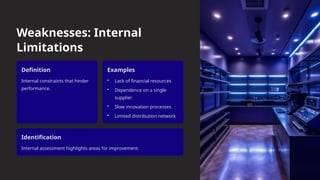
Weaknesses: Internal
Limitations
Definition
Internal constraints that hinder
performance.
Examples
• Lack of financial resources
• Dependence on a single
supplier
• Slow innovation processes
• Limited distribution network
Identification
Internal assessment highlights areas for improvement.
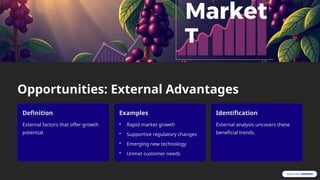
Opportunities: External Advantages
Definition
External factors that offer growth
potential.
Examples
• Rapid market growth
• Supportive regulatory changes
• Emerging new technology
• Unmet customer needs
Identification
External analysis uncovers these
beneficial trends.
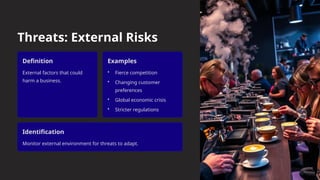
Threats: External Risks
Definition
External factors that could
harm a business.
Examples
• Fierce competition
• Changing customer
preferences
• Global economic crisis
• Stricter regulations
Identification
Monitor external environment for threats to adapt.
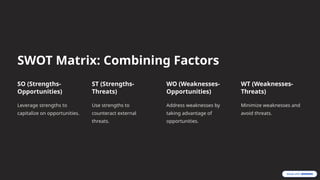
SWOT Matrix: Combining Factors
SO (Strengths-
Opportunities)
Leverage strengths to
capitalize on opportunities.
ST (Strengths-
Threats)
Use strengths to
counteract external
threats.
WO (Weaknesses-
Opportunities)
Address weaknesses by
taking advantage of
opportunities.
WT (Weaknesses-
Threats)
Minimize weaknesses and
avoid threats.
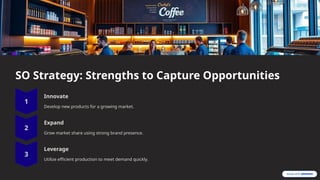
SO Strategy: Strengths to Capture Opportunities
Innovate
Develop new products for a growing market.
Expand
Grow market share using strong brand presence.
Leverage
Utilize efficient production to meet demand quickly.
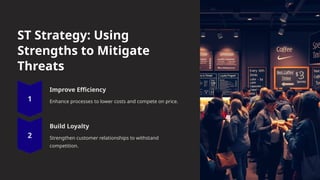
ST Strategy: Using
Strengths to Mitigate
Threats
Improve Efficiency
Enhance processes to lower costs and compete on price.
Build Loyalty
Strengthen customer relationships to withstand
competition.
WO & WT Strategies: Addressing Weaknesses
and Risks
WO
Seek funding to boost innovation and capitalize on
opportunities.
WT
Diversify products to reduce risk and avoid threats.
Conclusion: The Power of
SWOT
Importance
SWOT is key for effective strategic planning.
Implementation
Develop strategies based on SWOT insights.
Adaptation
Regularly revise SWOT to stay aligned with changes.
Final Thought
Use SWOT to drive business success sustainably.
presentation SWOT-Analysis-An-Introduction.pptx

  • 1.
    SWOT Analysis: An Introduction SWOTAnalysis is a strategic tool for evaluation. It helps understand a company's position by analyzing Strengths, Weaknesses, Opportunities, and Threats. This framework supports informed decision-making. We will explore a local coffee business example to illustrate the concepts clearly. by Asbi Gafri Ihsan
  • 2.
    Strengths: Internal Advantages Definition Internal advantagesthat set a company apart. Examples • Strong, recognizable brand • Efficient production technology • Experienced management team • High customer loyalty Identification Thorough internal evaluation reveals key strengths.
  • 3.
    Weaknesses: Internal Limitations Definition Internal constraintsthat hinder performance. Examples • Lack of financial resources • Dependence on a single supplier • Slow innovation processes • Limited distribution network Identification Internal assessment highlights areas for improvement.
  • 4.
    Opportunities: External Advantages Definition Externalfactors that offer growth potential. Examples • Rapid market growth • Supportive regulatory changes • Emerging new technology • Unmet customer needs Identification External analysis uncovers these beneficial trends.
  • 5.
    Threats: External Risks Definition Externalfactors that could harm a business. Examples • Fierce competition • Changing customer preferences • Global economic crisis • Stricter regulations Identification Monitor external environment for threats to adapt.
  • 6.
    SWOT Matrix: CombiningFactors SO (Strengths- Opportunities) Leverage strengths to capitalize on opportunities. ST (Strengths- Threats) Use strengths to counteract external threats. WO (Weaknesses- Opportunities) Address weaknesses by taking advantage of opportunities. WT (Weaknesses- Threats) Minimize weaknesses and avoid threats.
  • 7.
    SO Strategy: Strengthsto Capture Opportunities Innovate Develop new products for a growing market. Expand Grow market share using strong brand presence. Leverage Utilize efficient production to meet demand quickly.
  • 8.
    ST Strategy: Using Strengthsto Mitigate Threats Improve Efficiency Enhance processes to lower costs and compete on price. Build Loyalty Strengthen customer relationships to withstand competition.
  • 9.
    WO & WTStrategies: Addressing Weaknesses and Risks WO Seek funding to boost innovation and capitalize on opportunities. WT Diversify products to reduce risk and avoid threats.
  • 10.
    Conclusion: The Powerof SWOT Importance SWOT is key for effective strategic planning. Implementation Develop strategies based on SWOT insights. Adaptation Regularly revise SWOT to stay aligned with changes. Final Thought Use SWOT to drive business success sustainably.