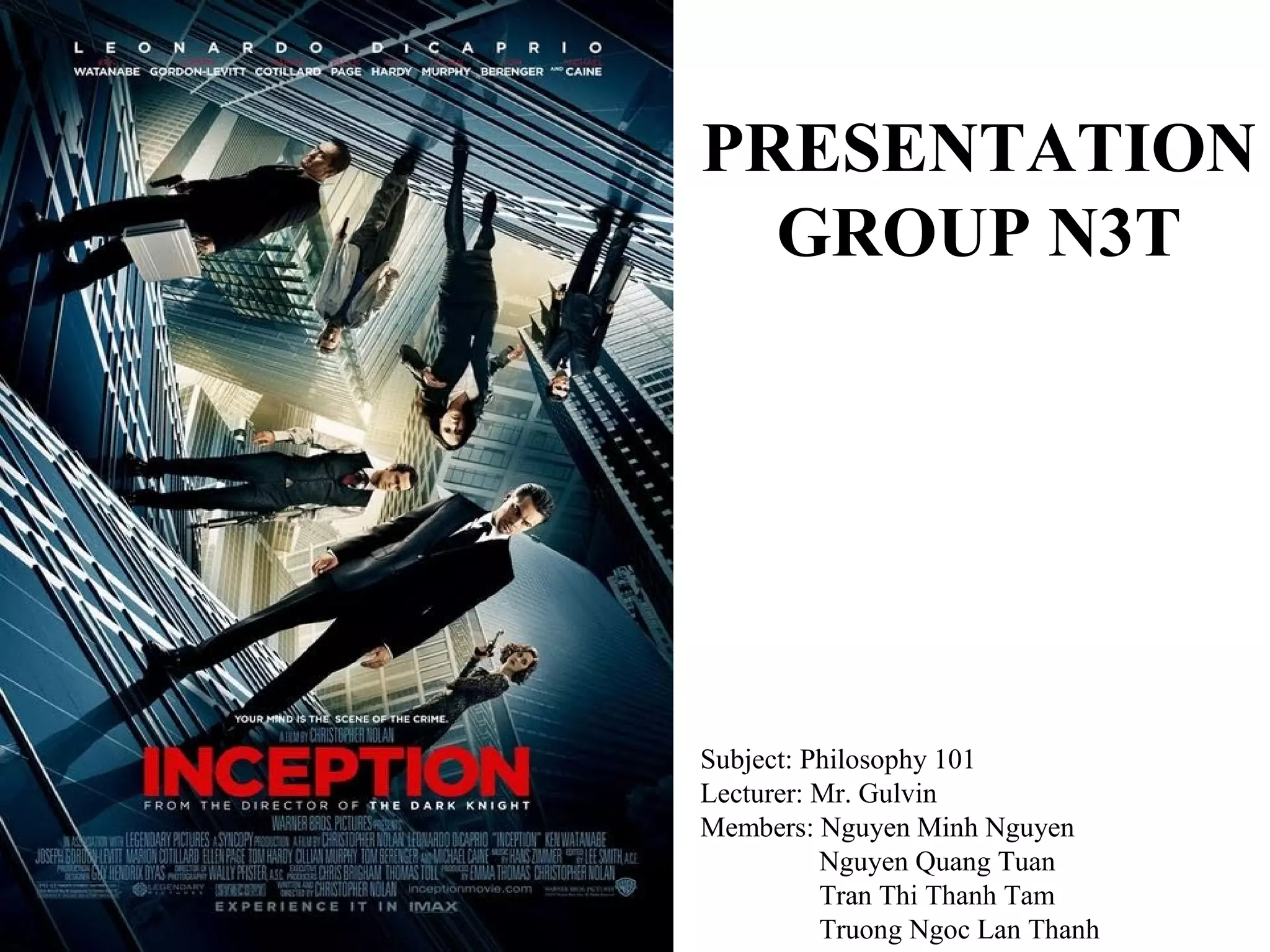
PRESENTATION 
GROUP N3T 
Subject: Philosophy 101 
Lecturer: Mr. Gulvin 
Members: Nguyen Minh Nguyen 
Nguyen Quang Tuan 
Tran Thi Thanh Tam 
Truong Ngoc Lan Thanh
INTRODUCTION 
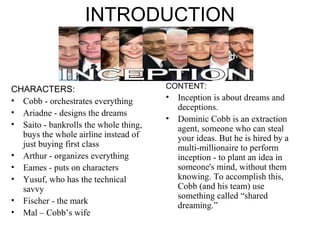
CHARACTERS: 
• Cobb - orchestrates everything 
• Ariadne - designs the dreams 
• Saito - bankrolls the whole thing, 
buys the whole airline instead of 
just buying first class 
• Arthur - organizes everything 
• Eames - puts on characters 
• Yusuf, who has the technical 
savvy 
• Fischer - the mark 
• Mal – Cobb’s wife 
CONTENT: 
• Inception is about dreams and 
deceptions. 
• Dominic Cobb is an extraction 
agent, someone who can steal 
your ideas. But he is hired by a 
multi-millionaire to perform 
inception - to plant an idea in 
someone's mind, without them 
knowing. To accomplish this, 
Cobb (and his team) use 
something called “shared 
dreaming.”
INTRODUCTION
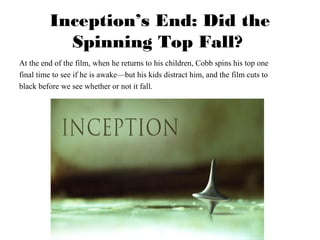
Inception’s End: Did the 
Spinning Top Fall? 
At the end of the film, when he returns to his children, Cobb spins his top one 
final time to see if he is awake—but his kids distract him, and the film cuts to 
black before we see whether or not it fall.
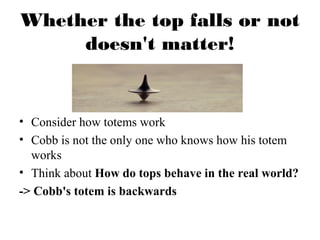
Whether the top falls or not 
doesn't matter! 
• Consider how totems work 
• Cobb is not the only one who knows how his totem 
works 
• Think about How do tops behave in the real world? 
-> Cobb's totem is backwards
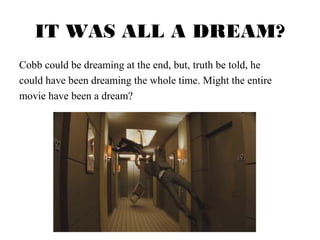
IT WAS ALL A DREAM? 
Cobb could be dreaming at the end, but, truth be told, he 
could have been dreaming the whole time. Might the entire 
movie have been a dream?
IT WAS ALL A DREAM? 
• The chase scene in Mombasa, has many dream-like 
qualities. 
• Consider where Mal sits as she threatens suicide. 
• The song the dreamers use to herald the end of a 
dream is 2 minutes and 28 seconds. Inception is, 
exactly, 2 hours and 28 minutes. 
=> Christopher Nolan seems to have left multiple 
clues that suggest Cobb is dreaming the entire 
movie, even when he is supposed to be in the real 
world.
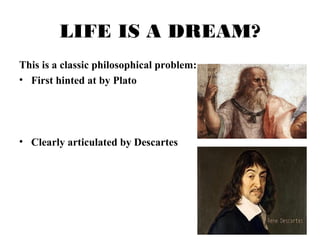
LIFE IS A DREAM? 
This is a classic philosophical problem: 
• First hinted at by Plato 
• Clearly articulated by Descartes
PLATO’S CAVE AND INCEPTION 
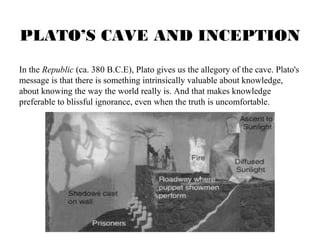
In the Republic (ca. 380 B.C.E), Plato gives us the allegory of the cave. Plato's 
message is that there is something intrinsically valuable about knowledge, 
about knowing the way the world really is. And that makes knowledge 
preferable to blissful ignorance, even when the truth is uncomfortable.
PLATO’S CAVE AND INCEPTION 
• A group of prisoners, forced to watch 
shadows on the wall of a cave since 
birth. The shadows are all they have 
ever known; they think the shadows 
are the highest reality and are 
perfectly happy living a life of 
"shadow games.“ 
• But when one of the prisoners breaks 
loose and learns about the real world 
outside the cave he looks back at his 
former life and pities those still stuck 
in it. 
• There is something intrinsically 
valuable about knowledge – about 
knowing the way the world really is. 
And that makes knowledge preferable 
to blissful ignorance, even when the 
truth is uncomfortable. 
• Projection of the shadows on the cave 
wall 
• The shadows were projected onto the 
walls 
• As the people in the cave believe they 
are in the real world, and will fight to 
stay there, the main characters of 
Inception has the world that they 
believe to be real. 
• “You are just a shade of my real life.” 
Cobb admits while talking to Mal of 
the dream world that she is only a 
shadow of reality. 
• Mal is uncomfortable living in the 
world which is believed is the real 
world by Cobb. Over time, she 
doesn't know which world is reality 
anymore. She becomes trapped within 
the dream world completely, and kills 
herself to stay in that world – the 
world she’s comfortable living with. 
• Creating dreamscapes 
• They presented specific skewed ideas 
to dreamers
DESCARTES’ PIT OF SKEPTICISM 
AND INCEPTION 
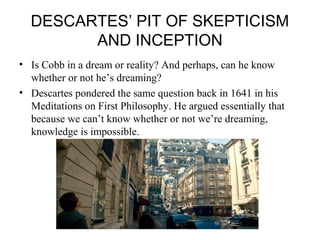
• Is Cobb in a dream or reality? And perhaps, can he know 
whether or not he’s dreaming? 
• Descartes pondered the same question back in 1641 in his 
Meditations on First Philosophy. He argued essentially that 
because we can’t know whether or not we’re dreaming, 
knowledge is impossible.
DESCARTES’ PIT OF SKEPTICISM 
AND INCEPTION 
• René Descartes, in 1639, worried 
that all of reality might be a 
dream. What distinguishes dream 
from reality? 
• Descartes tell us that we cannot 
dream what we have not 
experienced 
• It is impossible to consider within 
a dream that you might be 
dreaming is what proves for 
Descartes that you’re awake, then 
in the movie it’s impossible to tell 
whether you’re dreaming or not. 
• Whenever Cobb is unsure about 
whether he’s dreaming or not, he 
spins his totems. In fact, he’s been 
wondering all the time. 
• Dreamers who create the worlds 
or ‘levels’ of the dreams always 
use pieces of places that are 
familiar to them 
• Even when Cobb’s dreaming in 
the movie, he’s aware of the 
possibility that he might be 
dreaming. Inception ends in doubt 
over whether Cobb is still 
dreaming or awake
GROUP N3T 
THANK YOU 
FOR LISTENING AND CONSIDERATION!

Philosophy_Inception

  • 1.
    PRESENTATION GROUP N3T Subject: Philosophy 101 Lecturer: Mr. Gulvin Members: Nguyen Minh Nguyen Nguyen Quang Tuan Tran Thi Thanh Tam Truong Ngoc Lan Thanh
  • 2.
    INTRODUCTION CHARACTERS: •Cobb - orchestrates everything • Ariadne - designs the dreams • Saito - bankrolls the whole thing, buys the whole airline instead of just buying first class • Arthur - organizes everything • Eames - puts on characters • Yusuf, who has the technical savvy • Fischer - the mark • Mal – Cobb’s wife CONTENT: • Inception is about dreams and deceptions. • Dominic Cobb is an extraction agent, someone who can steal your ideas. But he is hired by a multi-millionaire to perform inception - to plant an idea in someone's mind, without them knowing. To accomplish this, Cobb (and his team) use something called “shared dreaming.”
  • 3.
  • 4.
    Inception’s End: Didthe Spinning Top Fall? At the end of the film, when he returns to his children, Cobb spins his top one final time to see if he is awake—but his kids distract him, and the film cuts to black before we see whether or not it fall.
  • 5.
    Whether the topfalls or not doesn't matter! • Consider how totems work • Cobb is not the only one who knows how his totem works • Think about How do tops behave in the real world? -> Cobb's totem is backwards
  • 6.
    IT WAS ALLA DREAM? Cobb could be dreaming at the end, but, truth be told, he could have been dreaming the whole time. Might the entire movie have been a dream?
  • 7.
    IT WAS ALLA DREAM? • The chase scene in Mombasa, has many dream-like qualities. • Consider where Mal sits as she threatens suicide. • The song the dreamers use to herald the end of a dream is 2 minutes and 28 seconds. Inception is, exactly, 2 hours and 28 minutes. => Christopher Nolan seems to have left multiple clues that suggest Cobb is dreaming the entire movie, even when he is supposed to be in the real world.
  • 8.
    LIFE IS ADREAM? This is a classic philosophical problem: • First hinted at by Plato • Clearly articulated by Descartes
  • 9.
    PLATO’S CAVE ANDINCEPTION In the Republic (ca. 380 B.C.E), Plato gives us the allegory of the cave. Plato's message is that there is something intrinsically valuable about knowledge, about knowing the way the world really is. And that makes knowledge preferable to blissful ignorance, even when the truth is uncomfortable.
  • 10.
    PLATO’S CAVE ANDINCEPTION • A group of prisoners, forced to watch shadows on the wall of a cave since birth. The shadows are all they have ever known; they think the shadows are the highest reality and are perfectly happy living a life of "shadow games.“ • But when one of the prisoners breaks loose and learns about the real world outside the cave he looks back at his former life and pities those still stuck in it. • There is something intrinsically valuable about knowledge – about knowing the way the world really is. And that makes knowledge preferable to blissful ignorance, even when the truth is uncomfortable. • Projection of the shadows on the cave wall • The shadows were projected onto the walls • As the people in the cave believe they are in the real world, and will fight to stay there, the main characters of Inception has the world that they believe to be real. • “You are just a shade of my real life.” Cobb admits while talking to Mal of the dream world that she is only a shadow of reality. • Mal is uncomfortable living in the world which is believed is the real world by Cobb. Over time, she doesn't know which world is reality anymore. She becomes trapped within the dream world completely, and kills herself to stay in that world – the world she’s comfortable living with. • Creating dreamscapes • They presented specific skewed ideas to dreamers
  • 11.
    DESCARTES’ PIT OFSKEPTICISM AND INCEPTION • Is Cobb in a dream or reality? And perhaps, can he know whether or not he’s dreaming? • Descartes pondered the same question back in 1641 in his Meditations on First Philosophy. He argued essentially that because we can’t know whether or not we’re dreaming, knowledge is impossible.
  • 12.
    DESCARTES’ PIT OFSKEPTICISM AND INCEPTION • René Descartes, in 1639, worried that all of reality might be a dream. What distinguishes dream from reality? • Descartes tell us that we cannot dream what we have not experienced • It is impossible to consider within a dream that you might be dreaming is what proves for Descartes that you’re awake, then in the movie it’s impossible to tell whether you’re dreaming or not. • Whenever Cobb is unsure about whether he’s dreaming or not, he spins his totems. In fact, he’s been wondering all the time. • Dreamers who create the worlds or ‘levels’ of the dreams always use pieces of places that are familiar to them • Even when Cobb’s dreaming in the movie, he’s aware of the possibility that he might be dreaming. Inception ends in doubt over whether Cobb is still dreaming or awake
  • 13.
    GROUP N3T THANKYOU FOR LISTENING AND CONSIDERATION!