A
POWERPOINT PRESENTATION
ON
“AUTOMATIC TOLL GATE SYSTEM”
SUBMITTED BY :
• SITA VERMA (LATERAL ENTRY)
• HIMANSHU DIXIT (2204850210015)
• SHIPANSHI GUPTA (LATERAL ENTRY)
• MAHAK YADAV (2204850210016)
UNDER GUIDANCE OF
“Er. BEER SINGH”
(HOD, EN DEPARTMENT)
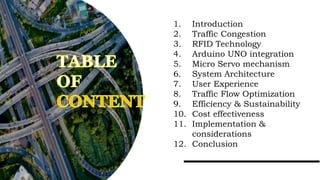
1. Introduction
2. Traffic Congestion
3. RFID Technology
4. Arduino UNO integration
5. Micro Servo mechanism
6. System Architecture
7. User Experience
8. Traffic Flow Optimization
9. Efficiency & Sustainability
10. Cost effectiveness
11. Implementation &
considerations
12. Conclusion
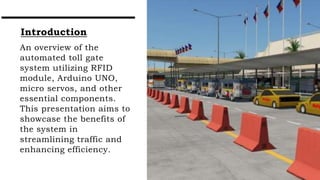
Introduction
An overview of the
automated toll gate
system utilizing RFID
module, Arduino UNO,
micro servos, and other
essential components.
This presentation aims to
showcase the benefits of
the system in
streamlining traffic and
enhancing efficiency.
Traffic Congestion Traffic congestion is a pressing issue in
urban areas, leading to delays, pollution,
and frustration among commuters.
Traditional toll gate systems contribute to
this problem by causing bottlenecks and
long queues.
RFID technology enables
contactless communication
between the vehicle and the toll
gate system. This allows for
seamless passage without the
need for physical tokens or
manual transactions, reducing
waiting times and enhancing
user experience.
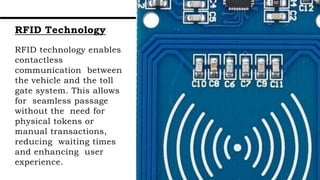
RFID Technology
RFID technology enables
contactless
communication between
the vehicle and the toll
gate system. This allows
for seamless passage
without the need for
physical tokens or
manual transactions,
reducing waiting times
and enhancing user
experience.
RFID Technology
The Arduino Uno serves as the
central control unit,managing
the communication between the
RFID module, micro servos, and
other components.Its versatility
and ease of programming make
it an ideal choice for this
application.
Arduino Uno Integration
The Arduino Uno serves
as the central control
unit, managing the
communication between
the RFID module, micro
servos, and other
components. Its
versatility and ease of
programming make it an
ideal choice for this
application.
Arduino Uno Integration
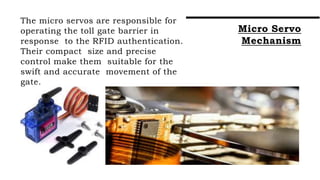
The micro servos are responsible for
operating the toll gate barrier in
response to the RFID authentication.
Their compact size and precise
control make them suitable for the
swift and accurate movement of the
gate.
Micro Servo
Mechanism
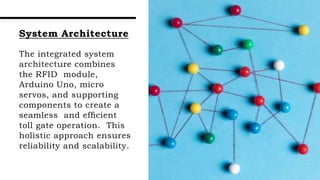
The integrated system
architecture combines the RFID
module, Arduino Uno,micro
servos, and supporting
components to create a seamless
and efficient toll gate operation.
This holistic approach ensures
reliability and scalability.
System Architecture
The integrated system
architecture combines
the RFID module,
Arduino Uno, micro
servos, and supporting
components to create a
seamless and efficient
toll gate operation. This
holistic approach ensures
reliability and scalability.
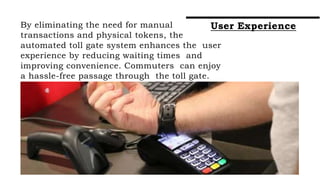
By eliminating the need for manual
transactions and physical tokens, the
automated toll gate system enhances the user
experience by reducing waiting times and
improving convenience. Commuters can enjoy
a hassle-free passage through the toll gate.
User Experience
The implementation of the automated
toll gate system contributes to the
optimization of traffic flow by minimizing
congestion and streamlining the passage
of vehicles. This leads to improved
overall traffic management and reduced
environmental impact.
Traffic Flow
Optimization
The utilization of an
automated toll gate system
not only enhances operational
efficiency but also promotes
sustainability by reducing
fuel consumption and
emissions associated with
idling in traffic queues.
Efficiency and
Sustainability
In addition to its operational benefits,
the automated toll gate system offers
cost- effectiveness through reduced
maintenance and operational
expenses, making it a viable long-
term solution for toll management.
Cost-Effectiveness
Successful implementation of an
automated toll gate system requires
careful planning, stakeholder
collaboration, and consideration of
regulatory standards to ensure
seamless adoption and compliance.
Implementation
Considerations
The adoption of an
automated toll gate system
utilizing RFID technology,
Arduino Uno, micro servos,
and other essential
components presents a
transformative solution for
streamlining traffic,
enhancing user experience,
and promoting sustainable
urban mobility.
Conclusion
Presentation on Automatic Toll collection system using RFID

Presentation on Automatic Toll collection system using RFID

  • 1.
    A POWERPOINT PRESENTATION ON “AUTOMATIC TOLLGATE SYSTEM” SUBMITTED BY : • SITA VERMA (LATERAL ENTRY) • HIMANSHU DIXIT (2204850210015) • SHIPANSHI GUPTA (LATERAL ENTRY) • MAHAK YADAV (2204850210016) UNDER GUIDANCE OF “Er. BEER SINGH” (HOD, EN DEPARTMENT)
  • 2.
    1. Introduction 2. TrafficCongestion 3. RFID Technology 4. Arduino UNO integration 5. Micro Servo mechanism 6. System Architecture 7. User Experience 8. Traffic Flow Optimization 9. Efficiency & Sustainability 10. Cost effectiveness 11. Implementation & considerations 12. Conclusion
  • 3.
    Introduction An overview ofthe automated toll gate system utilizing RFID module, Arduino UNO, micro servos, and other essential components. This presentation aims to showcase the benefits of the system in streamlining traffic and enhancing efficiency.
  • 4.
    Traffic Congestion Trafficcongestion is a pressing issue in urban areas, leading to delays, pollution, and frustration among commuters. Traditional toll gate systems contribute to this problem by causing bottlenecks and long queues.
  • 5.
    RFID technology enables contactlesscommunication between the vehicle and the toll gate system. This allows for seamless passage without the need for physical tokens or manual transactions, reducing waiting times and enhancing user experience. RFID Technology RFID technology enables contactless communication between the vehicle and the toll gate system. This allows for seamless passage without the need for physical tokens or manual transactions, reducing waiting times and enhancing user experience. RFID Technology
  • 6.
    The Arduino Unoserves as the central control unit,managing the communication between the RFID module, micro servos, and other components.Its versatility and ease of programming make it an ideal choice for this application. Arduino Uno Integration The Arduino Uno serves as the central control unit, managing the communication between the RFID module, micro servos, and other components. Its versatility and ease of programming make it an ideal choice for this application. Arduino Uno Integration
  • 7.
    The micro servosare responsible for operating the toll gate barrier in response to the RFID authentication. Their compact size and precise control make them suitable for the swift and accurate movement of the gate. Micro Servo Mechanism
  • 8.
    The integrated system architecturecombines the RFID module, Arduino Uno,micro servos, and supporting components to create a seamless and efficient toll gate operation. This holistic approach ensures reliability and scalability. System Architecture The integrated system architecture combines the RFID module, Arduino Uno, micro servos, and supporting components to create a seamless and efficient toll gate operation. This holistic approach ensures reliability and scalability.
  • 9.
    By eliminating theneed for manual transactions and physical tokens, the automated toll gate system enhances the user experience by reducing waiting times and improving convenience. Commuters can enjoy a hassle-free passage through the toll gate. User Experience
  • 10.
    The implementation ofthe automated toll gate system contributes to the optimization of traffic flow by minimizing congestion and streamlining the passage of vehicles. This leads to improved overall traffic management and reduced environmental impact. Traffic Flow Optimization
  • 11.
    The utilization ofan automated toll gate system not only enhances operational efficiency but also promotes sustainability by reducing fuel consumption and emissions associated with idling in traffic queues. Efficiency and Sustainability
  • 12.
    In addition toits operational benefits, the automated toll gate system offers cost- effectiveness through reduced maintenance and operational expenses, making it a viable long- term solution for toll management. Cost-Effectiveness
  • 13.
    Successful implementation ofan automated toll gate system requires careful planning, stakeholder collaboration, and consideration of regulatory standards to ensure seamless adoption and compliance. Implementation Considerations
  • 14.
    The adoption ofan automated toll gate system utilizing RFID technology, Arduino Uno, micro servos, and other essential components presents a transformative solution for streamlining traffic, enhancing user experience, and promoting sustainable urban mobility. Conclusion