PREPARATION FOR
IELTS WAY
BY JOHNNY
LEARN VOCABULARY
BANK FOR EXAM
FILE FIVE FROM FLORIDA
WHAT IS THE IELTS
SECTION OF ACADEMIC AND GENERAL IELTS EXAM
LISTENING
LISTENING QUESTIONS DISINTEGRATION
• By order in answer sheet
• Questions 1-6
• Questions 7-10
• Questions 11-14
• Questions 15-20
• Questions 21-26
• Questions 27-30
• Questions 31-40
• By number of writings
• Write ONE WORD ONLY for each
answer
• Write NO MORE THAN TWO WORDS
for each answer.
• Write NO MORE THAN TWO WORDS
AND/OR A NUMBER for each answer.
• Write NO MORE THAN THREE
WORDS AND/OR A NUMBER for each
answer.
TO IDENTIFY TYPE OF QUESTION
• Complete the notes below=NOTE COMPLETION
• Complete the table below=TABLE COMPLETION
• Complete the sentences below.=SENTENCE COMPLETION
• Choose the correct letter. A. В or C.=MULTIPLE CHOICE
• Complete the flow-chart below=FLOW-CHART COMPLETION
• Choose FOUR answers from the box=MULTIPLE CHOICE IN BOX
HOW TO DEAL WITH NOTE COMPLETION
BEFORE LISTENING
• (!)Look at heading/what does it mean
• FOR EX:PRESTON PARK RUN
• (!)Look at the body/guess type of
word
• FOR EX:in front of the
……………………..(where)
DURING LISTENING
• (!) Usually notes will be in dialogue
• (!)Find the Answerist
• (!)Pay attention to Parasites
• (!)Pay attention to change in idea
• (!)write grmmatical correct answer
HOW DEAL WITH TABLE COMPLETION
BEFORE LISTENING
• (!)Look at the main heading/what does it mean
• PACTON-ON-SEA BUS TOUR
• (!)look at subheadings/what are they about
• Bus stops Location. Things to see
• (!)understand line of answers/is it rain or snake
• (!)pay attention to first sentence
• take key words fully
• (!)guess coming word by grammar
DURING LISTENING
• (!)Match your keywords/be ready for
extended answer
• (!)Match needed grammar word
• (!)check your answer by subheading
• (!)If you can’t locate well keep going
• (!)There can be extra info listen up
HOW TO DEAL WITH SENTENCE COMPLETION
BEFORE LISTENING
• (!)Read the sentence fully
• (!)Understand what kind of/type of
word is missing
• Take main words/details
• Give question to the sentence
DURING LISTENING
• Keep listening until you match your
main words
• Be carefully for
paraphrase/synonym/negative
• Each answer can be summary
• If you can’t find one skip and keep
going
HOW TO DEAL WITH MULTIPLE CHOICE
BEFORE LISTENING
• (!)Read questions/what are they saying
• (!)Take main words from question
• (!) find diferences between
answers/highlight them
• (!)Try to understand speakers’ ideas by
paraphrasing
• Pay Attention to sentence tense
DURING LISTENING
• (!)Listen and delete Ng from variants
• Guess the false
• (!)Don’t spend a lot of time for one question
• (!)Try to remember speakers names and
voices
• (!)if it discussion pay attention to last
aggrement
• (!)if speaker speaks general things it can be
connected to one variant
HOW TO DEAL WITH FLOW-CHART COMPLETION
BEFORE LISTENING
• (!)Pay attention to headings/what
does it mean
• (!)read the questions and take
meaning
• (!)pay attention to their order
• Guess the answer by grammar
DURING LISTENING
• (!)try to listen fully
• (!)Write needed count of words
WRITING
TYPES OF LINE GRAPH TRENDS
IMPORTANT INFORMATIONS IN LINE GRAPH
• Graph information: Graph quantity:
• Graph heading: Graph period:
OVER ALL ANALYSIS OF THE LINE GRAPH GRAPH
• To do it we need to find
• How many trends(upwarding/downwarding/flactuate/no change)
• Where is rapid changes(boom/fall-down)
TYPES OF PLANING FOR BODY PARAGRAPHS IN
LINE GRAPHG
COMMON WAY
• All common things in all trends
• Rises
• Falies
COMPARISON WAY
• All differences in all trends
• One rise other fail
• One fail other rise
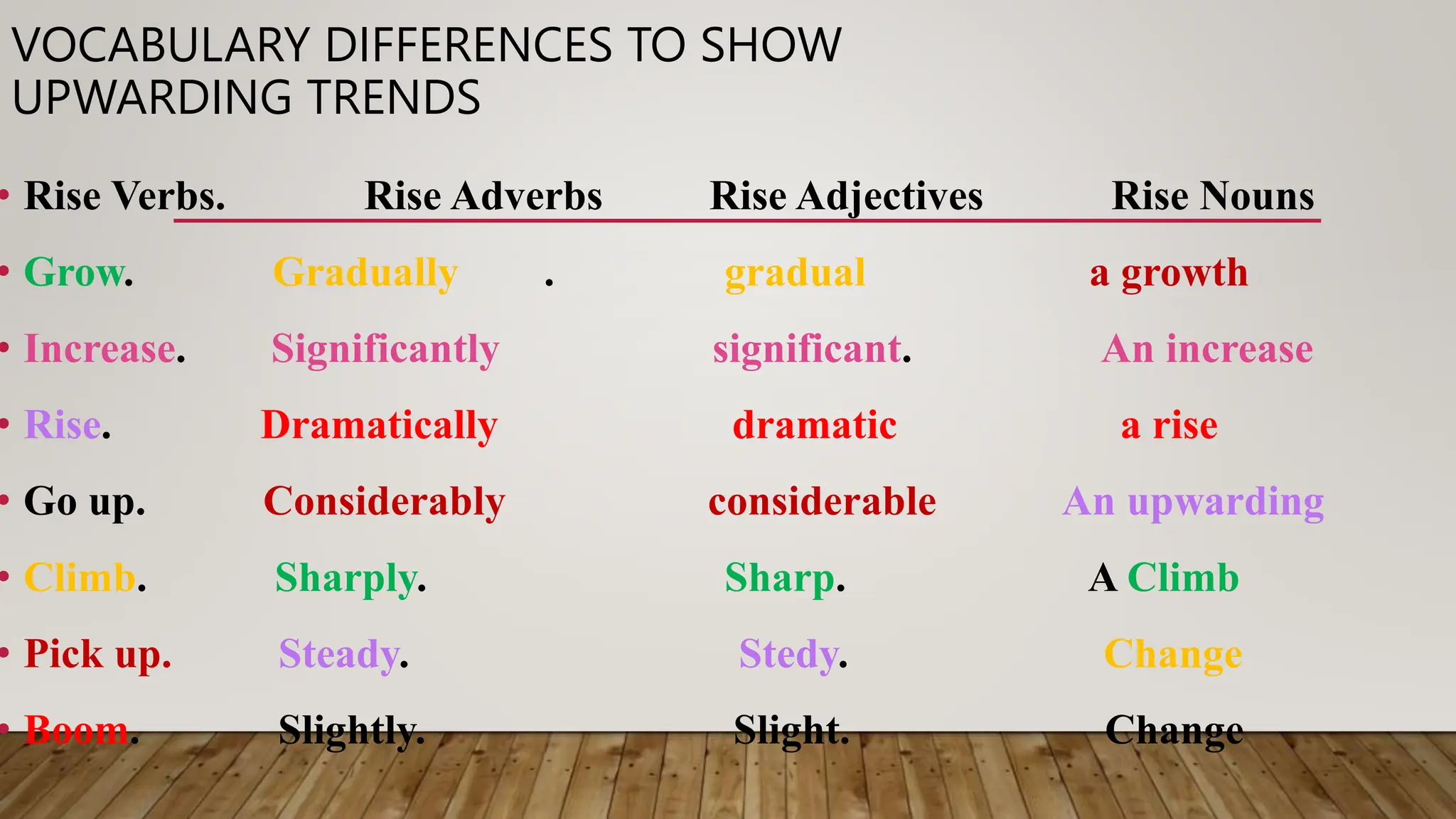
VOCABULARY DIFFERENCES TO SHOW
UPWARDING TRENDS
• Rise Verbs. Rise Adverbs Rise Adjectives Rise Nouns
• Grow. Gradually . gradual a growth
• Increase. Significantly significant. An increase
• Rise. Dramatically dramatic a rise
• Go up. Considerably considerable An upwarding
• Climb. Sharply. Sharp. A Climb
• Pick up. Steady. Stedy. Change
• Boom. Slightly. Slight. Change
OCABULARY DIFFERENCES TO SHOW
DOWNWARDING TRIENDS
Fail verb. Fail Noun
• Decrease. a decrease
• Drop. a drop
• Fall. a fall
• Decline. a decline
• Go down

Presentation made for appplying naiop.pptx

  • 1.
  • 2.
    LEARN VOCABULARY BANK FOREXAM FILE FIVE FROM FLORIDA
  • 3.
  • 4.
    SECTION OF ACADEMICAND GENERAL IELTS EXAM
  • 6.
  • 7.
    LISTENING QUESTIONS DISINTEGRATION •By order in answer sheet • Questions 1-6 • Questions 7-10 • Questions 11-14 • Questions 15-20 • Questions 21-26 • Questions 27-30 • Questions 31-40 • By number of writings • Write ONE WORD ONLY for each answer • Write NO MORE THAN TWO WORDS for each answer. • Write NO MORE THAN TWO WORDS AND/OR A NUMBER for each answer. • Write NO MORE THAN THREE WORDS AND/OR A NUMBER for each answer.
  • 8.
    TO IDENTIFY TYPEOF QUESTION • Complete the notes below=NOTE COMPLETION • Complete the table below=TABLE COMPLETION • Complete the sentences below.=SENTENCE COMPLETION • Choose the correct letter. A. В or C.=MULTIPLE CHOICE • Complete the flow-chart below=FLOW-CHART COMPLETION • Choose FOUR answers from the box=MULTIPLE CHOICE IN BOX
  • 9.
    HOW TO DEALWITH NOTE COMPLETION BEFORE LISTENING • (!)Look at heading/what does it mean • FOR EX:PRESTON PARK RUN • (!)Look at the body/guess type of word • FOR EX:in front of the ……………………..(where) DURING LISTENING • (!) Usually notes will be in dialogue • (!)Find the Answerist • (!)Pay attention to Parasites • (!)Pay attention to change in idea • (!)write grmmatical correct answer
  • 10.
    HOW DEAL WITHTABLE COMPLETION BEFORE LISTENING • (!)Look at the main heading/what does it mean • PACTON-ON-SEA BUS TOUR • (!)look at subheadings/what are they about • Bus stops Location. Things to see • (!)understand line of answers/is it rain or snake • (!)pay attention to first sentence • take key words fully • (!)guess coming word by grammar DURING LISTENING • (!)Match your keywords/be ready for extended answer • (!)Match needed grammar word • (!)check your answer by subheading • (!)If you can’t locate well keep going • (!)There can be extra info listen up
  • 11.
    HOW TO DEALWITH SENTENCE COMPLETION BEFORE LISTENING • (!)Read the sentence fully • (!)Understand what kind of/type of word is missing • Take main words/details • Give question to the sentence DURING LISTENING • Keep listening until you match your main words • Be carefully for paraphrase/synonym/negative • Each answer can be summary • If you can’t find one skip and keep going
  • 12.
    HOW TO DEALWITH MULTIPLE CHOICE BEFORE LISTENING • (!)Read questions/what are they saying • (!)Take main words from question • (!) find diferences between answers/highlight them • (!)Try to understand speakers’ ideas by paraphrasing • Pay Attention to sentence tense DURING LISTENING • (!)Listen and delete Ng from variants • Guess the false • (!)Don’t spend a lot of time for one question • (!)Try to remember speakers names and voices • (!)if it discussion pay attention to last aggrement • (!)if speaker speaks general things it can be connected to one variant
  • 13.
    HOW TO DEALWITH FLOW-CHART COMPLETION BEFORE LISTENING • (!)Pay attention to headings/what does it mean • (!)read the questions and take meaning • (!)pay attention to their order • Guess the answer by grammar DURING LISTENING • (!)try to listen fully • (!)Write needed count of words
  • 14.
  • 15.
    TYPES OF LINEGRAPH TRENDS
  • 16.
    IMPORTANT INFORMATIONS INLINE GRAPH • Graph information: Graph quantity: • Graph heading: Graph period:
  • 17.
    OVER ALL ANALYSISOF THE LINE GRAPH GRAPH • To do it we need to find • How many trends(upwarding/downwarding/flactuate/no change) • Where is rapid changes(boom/fall-down)
  • 18.
    TYPES OF PLANINGFOR BODY PARAGRAPHS IN LINE GRAPHG COMMON WAY • All common things in all trends • Rises • Falies COMPARISON WAY • All differences in all trends • One rise other fail • One fail other rise
  • 19.
    VOCABULARY DIFFERENCES TOSHOW UPWARDING TRENDS • Rise Verbs. Rise Adverbs Rise Adjectives Rise Nouns • Grow. Gradually . gradual a growth • Increase. Significantly significant. An increase • Rise. Dramatically dramatic a rise • Go up. Considerably considerable An upwarding • Climb. Sharply. Sharp. A Climb • Pick up. Steady. Stedy. Change • Boom. Slightly. Slight. Change
  • 20.
    OCABULARY DIFFERENCES TOSHOW DOWNWARDING TRIENDS Fail verb. Fail Noun • Decrease. a decrease • Drop. a drop • Fall. a fall • Decline. a decline • Go down