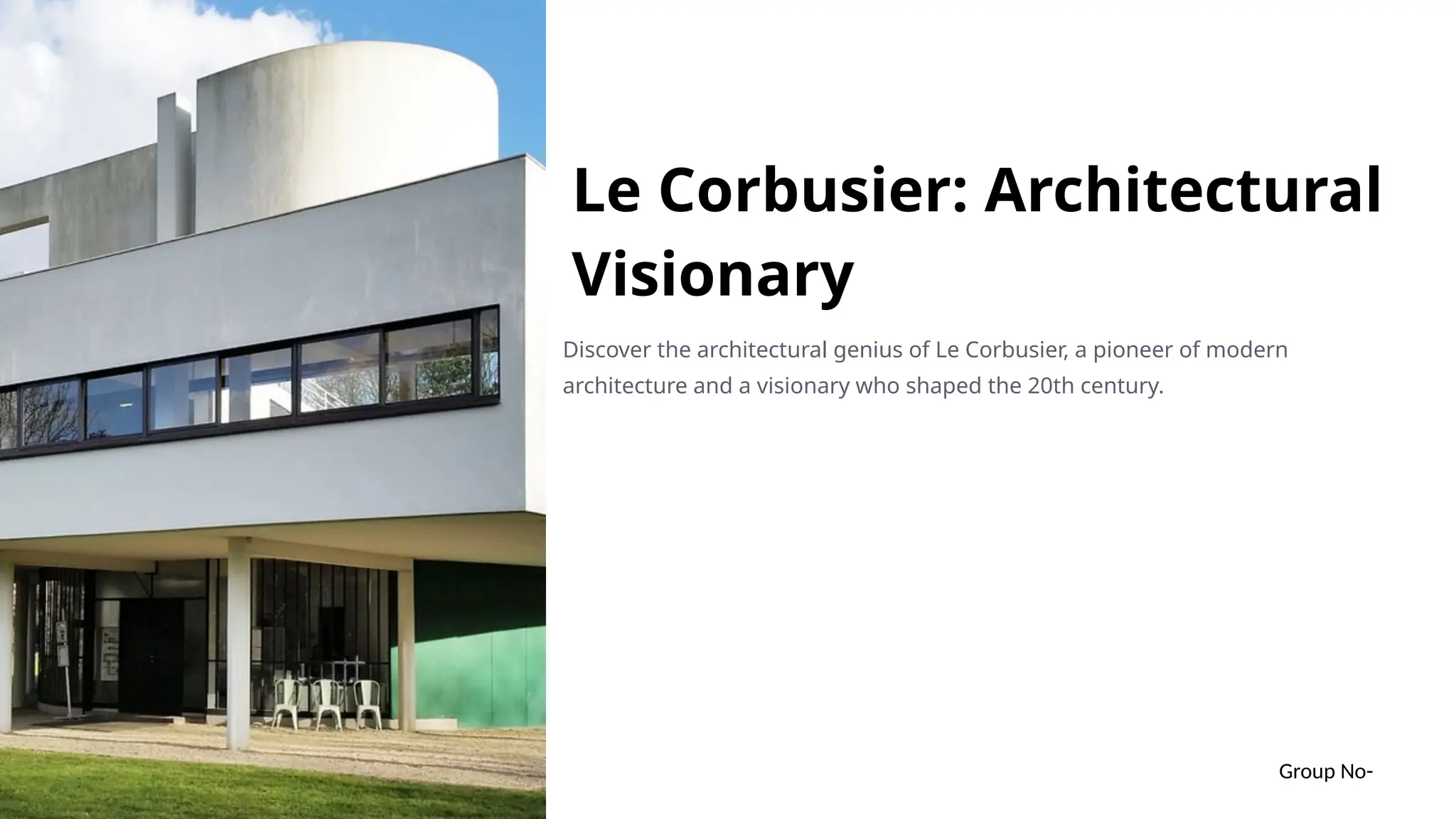
Le Corbusier: Architectural
Visionary
Discover the architectural genius of Le Corbusier, a pioneer of modern
architecture and a visionary who shaped the 20th century.
Group No-
Biography and Early Life
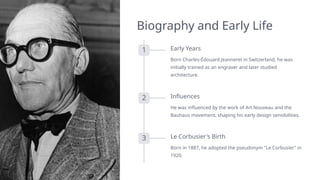
1 Early Years
Born Charles-Édouard Jeanneret in Switzerland, he was
initially trained as an engraver and later studied
architecture.
2 Influences
He was influenced by the work of Art Nouveau and the
Bauhaus movement, shaping his early design sensibilities.
3 Le Corbusier's Birth
Born in 1887, he adopted the pseudonym "Le Corbusier" in
1920.
Design Philosophy and
Principles
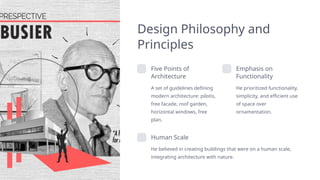
Five Points of
Architecture
A set of guidelines defining
modern architecture: pilotis,
free facade, roof garden,
horizontal windows, free
plan.
Emphasis on
Functionality
He prioritized functionality,
simplicity, and efficient use
of space over
ornamentation.
Human Scale
He believed in creating buildings that were on a human scale,
integrating architecture with nature.
Evaluation of Le Corbusier's
Design Style
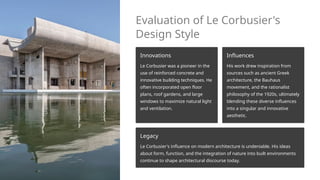
Innovations
Le Corbusier was a pioneer in the
use of reinforced concrete and
innovative building techniques. He
often incorporated open floor
plans, roof gardens, and large
windows to maximize natural light
and ventilation.
Influences
His work drew inspiration from
sources such as ancient Greek
architecture, the Bauhaus
movement, and the rationalist
philosophy of the 1920s, ultimately
blending these diverse influences
into a singular and innovative
aesthetic.
Legacy
Le Corbusier's influence on modern architecture is undeniable. His ideas
about form, function, and the integration of nature into built environments
continue to shape architectural discourse today.
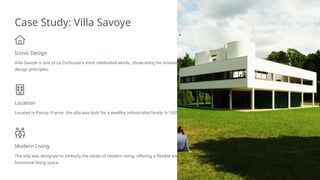
Case Study: Villa Savoye
Iconic Design
Villa Savoye is one of Le Corbusier's most celebrated works, showcasing his innovative
design principles.
Location
Located in Poissy, France, the villa was built for a wealthy industrialist family in 1929.
Modern Living
The villa was designed to embody the ideals of modern living, offering a flexible and
functional living space.
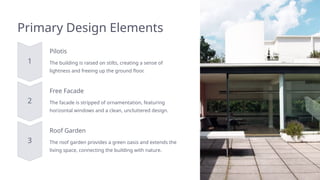
Primary Design Elements
Pilotis
The building is raised on stilts, creating a sense of
lightness and freeing up the ground floor.
Free Facade
The facade is stripped of ornamentation, featuring
horizontal windows and a clean, uncluttered design.
Roof Garden
The roof garden provides a green oasis and extends the
living space, connecting the building with nature.
Articulation of Design Elements
1
Geometric Purity
The villa's design is characterized by its simple, geometric forms, reflecting Le
Corbusier's emphasis on functionality and clarity.
2
Compositional Harmony
The interplay of volumes, lines, and planes creates a sense of visual
balance and order, enhancing the villa's overall aesthetic appeal.
3
Functional Integration
Each design element serves a specific purpose, ensuring
that form follows function and creating a cohesive and
practical living environment.
2
1
3
Transformation of Elements
1
Fluid Circulation
The villa's open plan and integrated staircase encourage movement and connection between different
levels of the building, promoting a sense of fluidity and openness.
2
Spatial Continuity
The use of large windows and open spaces allows for seamless transitions between
interior and exterior environments, blurring the lines between inside and outside.
3
Experiential Architecture
Le Corbusier's design approach aimed to create an immersive
and experiential architecture that actively engaged its users,
fostering a sense of connection with the surrounding
environment.
Solid-Void Relationship and Configuration
1
Solid Forms
The building's solid forms create a sense of volume and enclosure, providing a sense of privacy.
2
Open Spaces
The open spaces, such as terraces and balconies, allow for a sense of
connection to the outside world.
3
Dynamic Interaction
The play between solid and void creates a dynamic and
visually stimulating architectural experience.

presentation LE COURBOSIER DFNAsNF8UQWEnfudf8A+

  • 1.
    Le Corbusier: Architectural Visionary Discoverthe architectural genius of Le Corbusier, a pioneer of modern architecture and a visionary who shaped the 20th century. Group No-
  • 2.
    Biography and EarlyLife 1 Early Years Born Charles-Édouard Jeanneret in Switzerland, he was initially trained as an engraver and later studied architecture. 2 Influences He was influenced by the work of Art Nouveau and the Bauhaus movement, shaping his early design sensibilities. 3 Le Corbusier's Birth Born in 1887, he adopted the pseudonym "Le Corbusier" in 1920.
  • 3.
    Design Philosophy and Principles FivePoints of Architecture A set of guidelines defining modern architecture: pilotis, free facade, roof garden, horizontal windows, free plan. Emphasis on Functionality He prioritized functionality, simplicity, and efficient use of space over ornamentation. Human Scale He believed in creating buildings that were on a human scale, integrating architecture with nature.
  • 4.
    Evaluation of LeCorbusier's Design Style Innovations Le Corbusier was a pioneer in the use of reinforced concrete and innovative building techniques. He often incorporated open floor plans, roof gardens, and large windows to maximize natural light and ventilation. Influences His work drew inspiration from sources such as ancient Greek architecture, the Bauhaus movement, and the rationalist philosophy of the 1920s, ultimately blending these diverse influences into a singular and innovative aesthetic. Legacy Le Corbusier's influence on modern architecture is undeniable. His ideas about form, function, and the integration of nature into built environments continue to shape architectural discourse today.
  • 5.
    Case Study: VillaSavoye Iconic Design Villa Savoye is one of Le Corbusier's most celebrated works, showcasing his innovative design principles. Location Located in Poissy, France, the villa was built for a wealthy industrialist family in 1929. Modern Living The villa was designed to embody the ideals of modern living, offering a flexible and functional living space.
  • 6.
    Primary Design Elements Pilotis Thebuilding is raised on stilts, creating a sense of lightness and freeing up the ground floor. Free Facade The facade is stripped of ornamentation, featuring horizontal windows and a clean, uncluttered design. Roof Garden The roof garden provides a green oasis and extends the living space, connecting the building with nature.
  • 7.
    Articulation of DesignElements 1 Geometric Purity The villa's design is characterized by its simple, geometric forms, reflecting Le Corbusier's emphasis on functionality and clarity. 2 Compositional Harmony The interplay of volumes, lines, and planes creates a sense of visual balance and order, enhancing the villa's overall aesthetic appeal. 3 Functional Integration Each design element serves a specific purpose, ensuring that form follows function and creating a cohesive and practical living environment. 2 1 3
  • 8.
    Transformation of Elements 1 FluidCirculation The villa's open plan and integrated staircase encourage movement and connection between different levels of the building, promoting a sense of fluidity and openness. 2 Spatial Continuity The use of large windows and open spaces allows for seamless transitions between interior and exterior environments, blurring the lines between inside and outside. 3 Experiential Architecture Le Corbusier's design approach aimed to create an immersive and experiential architecture that actively engaged its users, fostering a sense of connection with the surrounding environment.
  • 9.
    Solid-Void Relationship andConfiguration 1 Solid Forms The building's solid forms create a sense of volume and enclosure, providing a sense of privacy. 2 Open Spaces The open spaces, such as terraces and balconies, allow for a sense of connection to the outside world. 3 Dynamic Interaction The play between solid and void creates a dynamic and visually stimulating architectural experience.