Doing Business with
AFRICA
April 12, 2016
Sabina Zunguze
CEO, Beautiful Options USA (dba A Gift To Africa)
VP, Organization of Women in International Trade
Past President, African Chamber of Commerce of Utah
Presentation to Tampa
Women Business
Centre
AFRICA
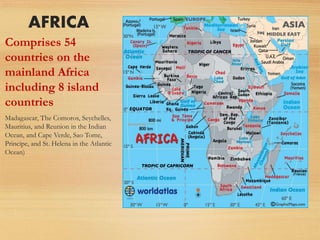
Comprises 54
countries on the
mainland Africa
including 8 island
countries
Madagascar, The Comoros, Seychelles,
Mauritius, and Reunion in the Indian
Ocean, and Cape Verde, Sao Tome,
Principe, and St. Helena in the Atlantic
Ocean)
Why Sub-Sahara Africa?
• 2012 , eight of the twenty fastest growing economies in the
world were in sub-Saharan Africa according to the IMF..
• (AGOA), a trade preference program that provides duty-
free entry into the United States for almost all African
products, has helped expand and diversify African exports to
the United States, while at the same time fostering an
improved business environment in many African countries
through eligibility requirements.
• President’s June 2013 visit to SSA to expand its
collaboration with regional economic communities in Africa,
EAC and increase EAC exports to the United States by 40%.
Why Sub-Sahara Africa?
• In 2012, Exports to SSA from US totaled $22.5
billion and Imports totaled $49.6 billion.
• The top U.S. export markets in sub-Saharan Africa for 2012
were: South Africa ($7.6 billion), Nigeria ($5.0 billion), Angola ($1.5
billion), Ghana ($1.3 billion), and Ethiopia ($1.3 billion). Machinery,
Vehicles, Aircraft, Mineral Fuel and Cereals.
• Top US Imports from Nigeria, Angola, South Africa and
Gabon. Crude Oil, Precious Stones, Vehicles, Cocoa and Ores
Doing Business in Africa
• Understand the areas of need and high profit. For Start-Ups :
Don’t Come without being Informed
• Educate yourself about Africa from sources other than the
Discovery Channel. Consult with the Chamber of Commerce,
the Embassy, or traders in the country of your interest. Get
information about your business interest from Chambers of
Commerce or business consultants. Educate Yourself
• Develop a sound business and marketing strategy. Understand
their environment, tailor your product to the environment Don’t
Communicate the Wrong Attitude
• Identify reliable business partners in Africa either by yourself or
through the Chamber of Commerce or the relevant Embassies.
Don’t Get Trapped in the Web of Brokers and Connections
DOING BUSINESS IN AFRICA
• Visit the location if you intend to establish a company or an
outlet. Don’t Expect to Do Business in Africa and Not Be
There.
• Follow up on every arrangement to make sure that conditions
and terms are fully understood and are being implemented.
• Arm yourself with a lot of patience and keep an open
mind because communication and correspondence from
Africa may not flow as smoothly or as fast as you may expect.
• Understand the cultural environment of the African country in
which you intend to do business. Don’t Go It Alone
DOING BUSINESS IN AFRICA
• Use a consultant, especially those that have a real
understanding of Africa. Be mindful of the three Ps
of African business:
Pensiveness,Patience,nd Perseverance. Pensiveness
demands the use of common sense. Success demands a
lot of patience. Above all, you must persevere and be
persistent but polite.
• Lucrative as it may be, the African market is not
without pitfalls. Keep your guard up and insist on
cash transactions as far as possible.
• Establish direct contacts with your business
counterparts in Africa
DOING BUSINESS IN AFRICADOING BUSINESS IN AFRICA
WOMEN DOING BUSINESS IN AFRICA
Gender Inequalities that may affect you:
• Personal security, the performance of the
judiciary, and the time and cost required to
register, license, and operate a business
• For the most part the regulatory environment
may be “gender-neutral” in principle but with
possibly gender-differentiated outcomes in
practice
SECURITY
• Political The key is to keep abreast of
current situation in countries where events
e.g. elections can have a significant bearing
on the security situation.
• Legal: The executive must negotiate a
swathe of challenges, from start-up
regulations to ambiguous tax payments.
• Personal: Cumbersome logistics, poor
infrastructure, abundant red tape, a shortage
of skilled workers
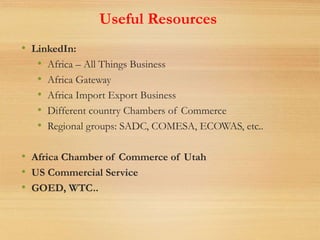
Useful Resources
• LinkedIn:
• Africa – All Things Business
• Africa Gateway
• Africa Import Export Business
• Different country Chambers of Commerce
• Regional groups: SADC, COMESA, ECOWAS, etc..
• Africa Chamber of Commerce of Utah
• US Commercial Service
• GOED, WTC..
Thank You..

presentation doing biz with africa 2016

  • 1.
    Doing Business with AFRICA April12, 2016 Sabina Zunguze CEO, Beautiful Options USA (dba A Gift To Africa) VP, Organization of Women in International Trade Past President, African Chamber of Commerce of Utah Presentation to Tampa Women Business Centre
  • 2.
    AFRICA Comprises 54 countries onthe mainland Africa including 8 island countries Madagascar, The Comoros, Seychelles, Mauritius, and Reunion in the Indian Ocean, and Cape Verde, Sao Tome, Principe, and St. Helena in the Atlantic Ocean)
  • 3.
    Why Sub-Sahara Africa? •2012 , eight of the twenty fastest growing economies in the world were in sub-Saharan Africa according to the IMF.. • (AGOA), a trade preference program that provides duty- free entry into the United States for almost all African products, has helped expand and diversify African exports to the United States, while at the same time fostering an improved business environment in many African countries through eligibility requirements. • President’s June 2013 visit to SSA to expand its collaboration with regional economic communities in Africa, EAC and increase EAC exports to the United States by 40%.
  • 4.
    Why Sub-Sahara Africa? •In 2012, Exports to SSA from US totaled $22.5 billion and Imports totaled $49.6 billion. • The top U.S. export markets in sub-Saharan Africa for 2012 were: South Africa ($7.6 billion), Nigeria ($5.0 billion), Angola ($1.5 billion), Ghana ($1.3 billion), and Ethiopia ($1.3 billion). Machinery, Vehicles, Aircraft, Mineral Fuel and Cereals. • Top US Imports from Nigeria, Angola, South Africa and Gabon. Crude Oil, Precious Stones, Vehicles, Cocoa and Ores
  • 5.
    Doing Business inAfrica • Understand the areas of need and high profit. For Start-Ups : Don’t Come without being Informed • Educate yourself about Africa from sources other than the Discovery Channel. Consult with the Chamber of Commerce, the Embassy, or traders in the country of your interest. Get information about your business interest from Chambers of Commerce or business consultants. Educate Yourself • Develop a sound business and marketing strategy. Understand their environment, tailor your product to the environment Don’t Communicate the Wrong Attitude • Identify reliable business partners in Africa either by yourself or through the Chamber of Commerce or the relevant Embassies. Don’t Get Trapped in the Web of Brokers and Connections DOING BUSINESS IN AFRICA
  • 6.
    • Visit thelocation if you intend to establish a company or an outlet. Don’t Expect to Do Business in Africa and Not Be There. • Follow up on every arrangement to make sure that conditions and terms are fully understood and are being implemented. • Arm yourself with a lot of patience and keep an open mind because communication and correspondence from Africa may not flow as smoothly or as fast as you may expect. • Understand the cultural environment of the African country in which you intend to do business. Don’t Go It Alone DOING BUSINESS IN AFRICA
  • 7.
    • Use aconsultant, especially those that have a real understanding of Africa. Be mindful of the three Ps of African business: Pensiveness,Patience,nd Perseverance. Pensiveness demands the use of common sense. Success demands a lot of patience. Above all, you must persevere and be persistent but polite. • Lucrative as it may be, the African market is not without pitfalls. Keep your guard up and insist on cash transactions as far as possible. • Establish direct contacts with your business counterparts in Africa DOING BUSINESS IN AFRICADOING BUSINESS IN AFRICA
  • 8.
    WOMEN DOING BUSINESSIN AFRICA Gender Inequalities that may affect you: • Personal security, the performance of the judiciary, and the time and cost required to register, license, and operate a business • For the most part the regulatory environment may be “gender-neutral” in principle but with possibly gender-differentiated outcomes in practice
  • 9.
    SECURITY • Political Thekey is to keep abreast of current situation in countries where events e.g. elections can have a significant bearing on the security situation. • Legal: The executive must negotiate a swathe of challenges, from start-up regulations to ambiguous tax payments. • Personal: Cumbersome logistics, poor infrastructure, abundant red tape, a shortage of skilled workers
  • 10.
    Useful Resources • LinkedIn: •Africa – All Things Business • Africa Gateway • Africa Import Export Business • Different country Chambers of Commerce • Regional groups: SADC, COMESA, ECOWAS, etc.. • Africa Chamber of Commerce of Utah • US Commercial Service • GOED, WTC..
  • 11.