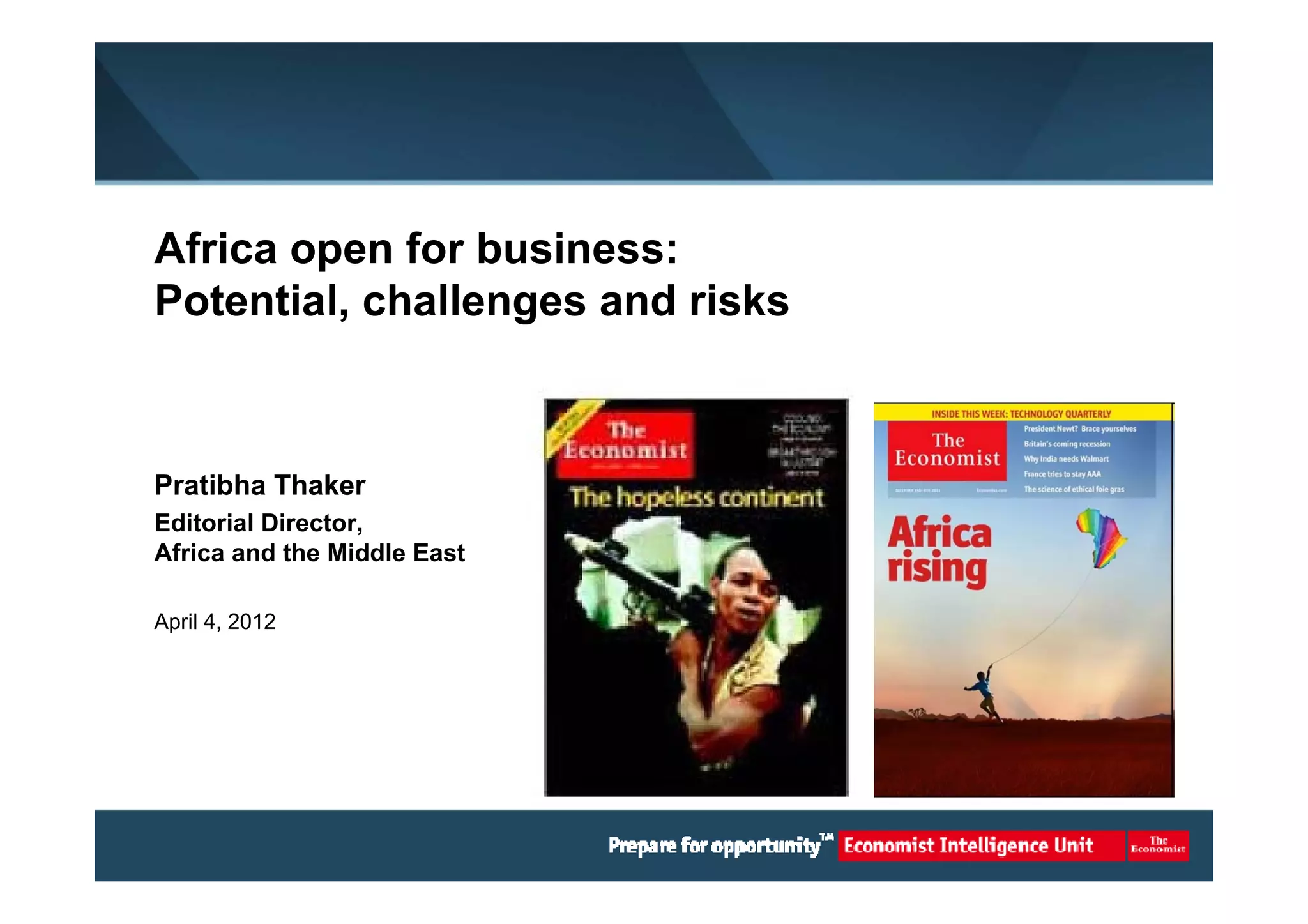
Africa open for business: 
Potential, challenges and risks 
Pratibha Thaker 
Editorial Director, 
Africa and the Middle East 
April 4, 2012
About the Economist Intelligence Unit (EIU) 
Research arm of The Economist Group 
for business executives 
380 analysts and industry specialists worldwide covering 
• Analysis and forecasting for over 200 countries 
and territories 
• Risk assessment 
• Industry data and trends: 
automotive, consumer goods, energy, 
financial services, healthcare, technology 
• Market sizing 
• Custom client research 
Visit www.eiu.com to register for free 
macroeconomic information on 187 countries
Today’s Presenter 
Pat Thaker 
Regional Director, 
Africa
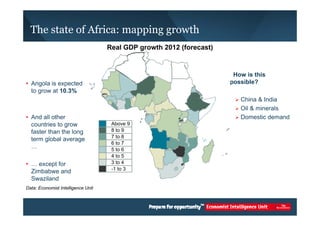
The state of Africa: mapping growth 
Data: Economist Intelligence Unit 
• How is this 
possible? 
¾ China & India 
¾ Oil & minerals 
¾ Domestic demand 
Real GDP growth 2012 (forecast) 
• Angola is expected 
to grow at 10.3% 
• And all other 
countries to grow 
faster than the long 
term global average 
… 
• … except for 
Zimbabwe and 
Swaziland 
Above 9 
8 to 9 
7 to 8 
6 to 7 
5 to 6 
4 to 5 
3 to 4 
-1 to 3
The engines of growth 
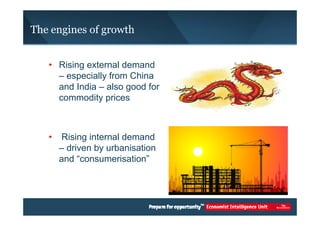
• Rising external demand 
– especially from China 
and India – also good for 
commodity prices 
• Rising internal demand 
– driven by urbanisation 
and “consumerisation”
A Consumer boom 
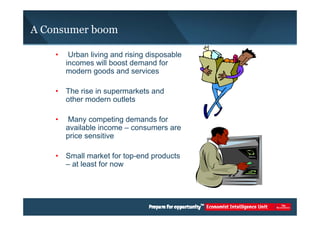
• Urban living and rising disposable 
incomes will boost demand for 
modern goods and services 
• The rise in supermarkets and 
other modern outlets 
• Many competing demands for 
available income – consumers are 
price sensitive 
• Small market for top-end products 
– at least for now
FDI slips but will recover 
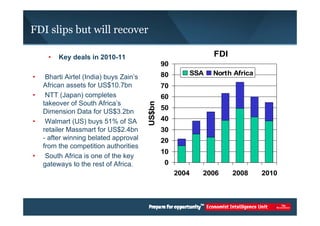
• Key deals in 2010-11 
• Bharti Airtel (India) buys Zain’s 
African assets for US$10.7bn 
• NTT (Japan) completes 
takeover of South Africa’s 
Dimension Data for US$3.2bn 
• Walmart (US) buys 51% of SA 
retailer Massmart for US$2.4bn 
- after winning belated approval 
from the competition authorities 
• South Africa is one of the key 
gateways to the rest of Africa. 
FDI 
90 
80 
70 
60 
50 
40 
30 
20 
10 
0 
2004 2006 2008 2010 
US$bn 
SSA North Africa
The impact of regional integration 
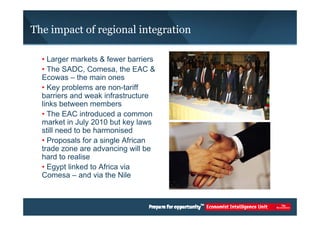
• Larger markets & fewer barriers 
• The SADC, Comesa, the EAC & 
Ecowas – the main ones 
• Key problems are non-tariff 
barriers and weak infrastructure 
links between members 
• The EAC introduced a common 
market in July 2010 but key laws 
still need to be harmonised 
• Proposals for a single African 
trade zone are advancing will be 
hard to realise 
• Egypt linked to Africa via 
Comesa – and via the Nile
The business climate 
• Although improving, Africa is still the worst region in the world 
to do business. African countries dominate the lower reaches 
of the World Bank’s Doing Business In rankings 
• Key obstacles include: 
1. Cost and difficulty of setting up a business 
2. Skills shortages and labour market restrictions 
3. High taxes – and complex tax systems 
4. Dealing with licenses – and registering property 
5. Enforcing contracts
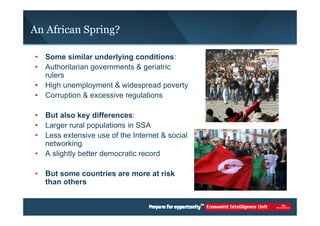
An African Spring? 
• Some similar underlying conditions: 
• Authoritarian governments & geriatric 
rulers 
• High unemployment & widespread poverty 
• Corruption & excessive regulations 
• But also key differences: 
• Larger rural populations in SSA 
• Less extensive use of the Internet & social 
networking 
• A slightly better democratic record 
• But some countries are more at risk 
than others
Questions and Answers
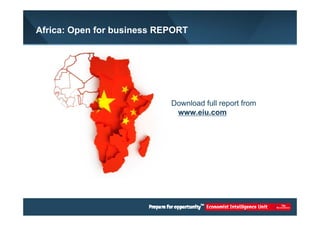
Africa: Open for business REPORT 
Download full report from 
www.eiu.com
Thank you. 
Contact for more information: 
Holly Donahue 
Senior Marketing Manager 
Economist Intelligence Unit 
hollydonahue@economist.com 
+44 (0)20 7576 8379

Africa open for business potential, challenges and risks

  • 1.
    Africa open forbusiness: Potential, challenges and risks Pratibha Thaker Editorial Director, Africa and the Middle East April 4, 2012
  • 2.
    About the EconomistIntelligence Unit (EIU) Research arm of The Economist Group for business executives 380 analysts and industry specialists worldwide covering • Analysis and forecasting for over 200 countries and territories • Risk assessment • Industry data and trends: automotive, consumer goods, energy, financial services, healthcare, technology • Market sizing • Custom client research Visit www.eiu.com to register for free macroeconomic information on 187 countries
  • 3.
    Today’s Presenter PatThaker Regional Director, Africa
  • 4.
    The state ofAfrica: mapping growth Data: Economist Intelligence Unit • How is this possible? ¾ China & India ¾ Oil & minerals ¾ Domestic demand Real GDP growth 2012 (forecast) • Angola is expected to grow at 10.3% • And all other countries to grow faster than the long term global average … • … except for Zimbabwe and Swaziland Above 9 8 to 9 7 to 8 6 to 7 5 to 6 4 to 5 3 to 4 -1 to 3
  • 5.
    The engines ofgrowth • Rising external demand – especially from China and India – also good for commodity prices • Rising internal demand – driven by urbanisation and “consumerisation”
  • 6.
    A Consumer boom • Urban living and rising disposable incomes will boost demand for modern goods and services • The rise in supermarkets and other modern outlets • Many competing demands for available income – consumers are price sensitive • Small market for top-end products – at least for now
  • 7.
    FDI slips butwill recover • Key deals in 2010-11 • Bharti Airtel (India) buys Zain’s African assets for US$10.7bn • NTT (Japan) completes takeover of South Africa’s Dimension Data for US$3.2bn • Walmart (US) buys 51% of SA retailer Massmart for US$2.4bn - after winning belated approval from the competition authorities • South Africa is one of the key gateways to the rest of Africa. FDI 90 80 70 60 50 40 30 20 10 0 2004 2006 2008 2010 US$bn SSA North Africa
  • 8.
    The impact ofregional integration • Larger markets & fewer barriers • The SADC, Comesa, the EAC & Ecowas – the main ones • Key problems are non-tariff barriers and weak infrastructure links between members • The EAC introduced a common market in July 2010 but key laws still need to be harmonised • Proposals for a single African trade zone are advancing will be hard to realise • Egypt linked to Africa via Comesa – and via the Nile
  • 9.
    The business climate • Although improving, Africa is still the worst region in the world to do business. African countries dominate the lower reaches of the World Bank’s Doing Business In rankings • Key obstacles include: 1. Cost and difficulty of setting up a business 2. Skills shortages and labour market restrictions 3. High taxes – and complex tax systems 4. Dealing with licenses – and registering property 5. Enforcing contracts
  • 10.
    An African Spring? • Some similar underlying conditions: • Authoritarian governments & geriatric rulers • High unemployment & widespread poverty • Corruption & excessive regulations • But also key differences: • Larger rural populations in SSA • Less extensive use of the Internet & social networking • A slightly better democratic record • But some countries are more at risk than others
  • 11.
  • 12.
    Africa: Open forbusiness REPORT Download full report from www.eiu.com
  • 13.
    Thank you. Contactfor more information: Holly Donahue Senior Marketing Manager Economist Intelligence Unit hollydonahue@economist.com +44 (0)20 7576 8379