TOPIC
INTRODUCTION TO PSYCHOLOGY
DEFINITION
Psychology is the scientific study of mind and behavior, according to american
psychological association. It is the study of the mind, how it works, and how it
affects behavior.
Meaning of psychology
 First stage> “study of soul”
 Second stage> “study of mind”
 Third stage> “study of consciousness”
Origin of psychology
The word psychology is originally derived from two Greek words i.e.; 'psycho’
and logos’. 'psycho’meaning ‘soul’ and 'logos’ meaning study. So, originally
psychology means the study of soul or science of the soul.
As a science of behavior
It is the latest meaning of psychology. Psychology tells us about our behavior.
Behavior includes all the activities that man does. It includes internal and
external behavior, conscious as well as unconscious behavior. Behavior can be
observed. All psychologists are agreed on this meaning of psychology.
Early schools of thought
 Structuralism
 Functionalism
 Gestalt psychology
 Behaviorism
 psychoanalysis
 Humanistic psychology
 Cognitive psychology
Structuralism
 Regarded as the first school of thought in psychology
 Focused on breaking down mental processes into most basic components
 Major thinkers
1. Wilhelm Wundt
2. Edward titchener
 Techniques> introspection to analyze the inner processes of the human mind.
Functionalism
 Formed as reaction to the structuralism school of thought
 Influenced by the work of William James
 It functioned on the minds functions and adoptions
 Not associated with a single dominant theorist
 Major thinkers including John Dewey , James Rowland Angles , Harvey Carr
Gestalt psychology
 Based upon the idea that we experience things as unified holes
 Began in Germany and Austria during the late nineteenth century
 In response to the molecular approach of structuralism
Behaviorism
 Dominant school of thought during the ninteen fifty’s
 Based upon the work of thinkers such as John B Watson , Ivan Pavlov ,
B.F.Skinner
 All behavior can be explained by environmental causes rather than by internal
forces
 Focused on observe able behavior
Psychoanalysis
 Founded by Sigmund Freud
 Emphasized the influence of the unconscious mind on behavior
 Psychological problems rooted in conflicts between the conscious and
unconscious mind
 Personality development is heavely influenced by the events of early
childhood
Levels of mind
Elements of mind
Humanistic psychology
 Developed as response to psychoanalysis and behaviorism
 Focused on individual free will, personal growth and concept of self
actualization
 Emphasis on helping people achieve and full fill their potential
 Major thinkers Abraham Maslow, Carl Rogers
Congnitive psychology
 Studies mental processes including how people think, perceive, remember
and learn
 Emerge during the ninteen fifty’s response to behaviorism
 Influential theories of this school of thought was the stages of congnitive
development theory proposed by jean Piaget
Branches of psychology
Abnormal psychology
General psychology
Behavioral Psychology
Biological psychology
Cognitive psychology
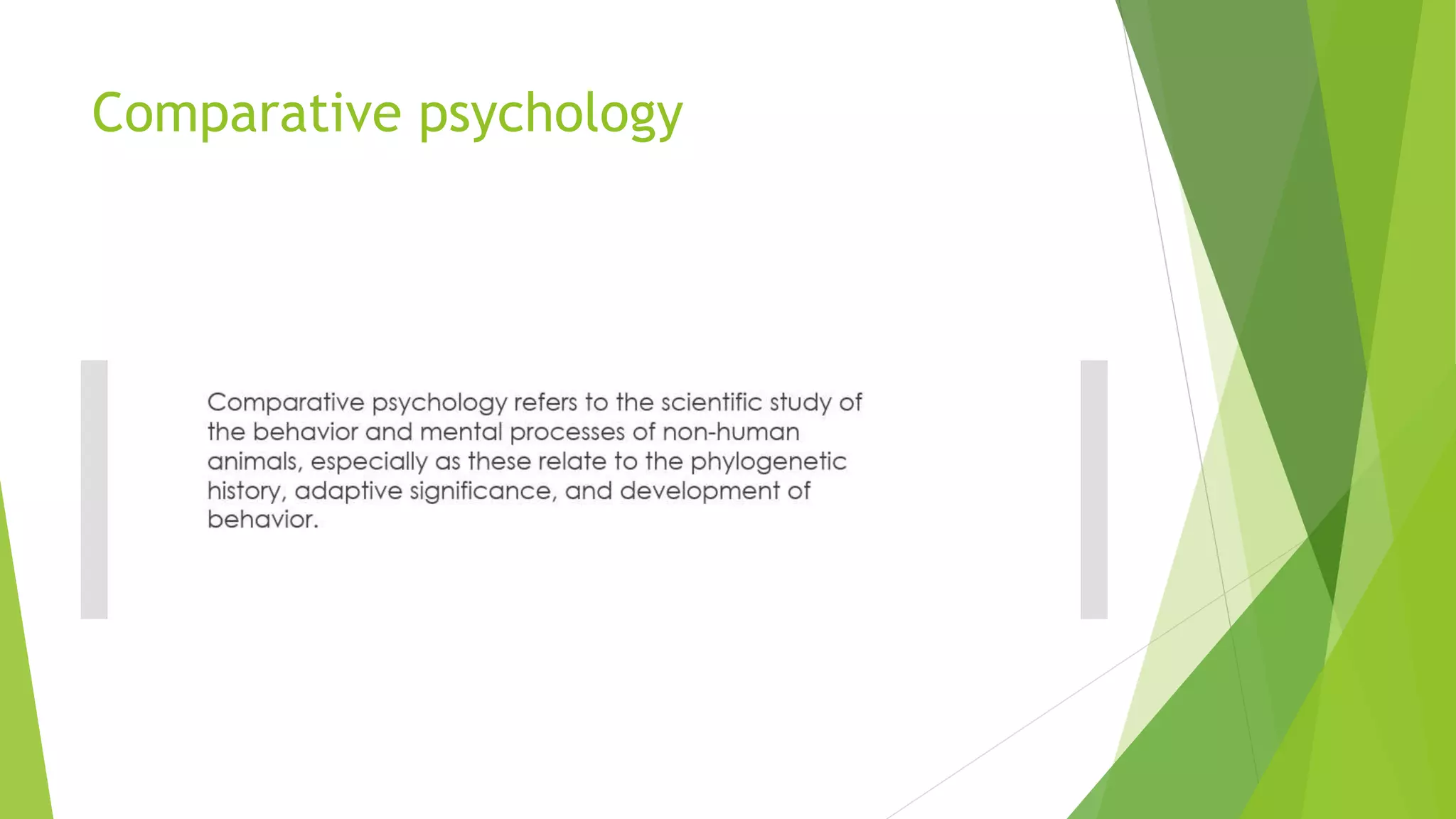
Comparative psychology
Cross cultural psychology
Developmental psychology
Educational psychology
Experimental psychology
Forensic psychology
Health psychology
Personality psychology
Social psychology
Research methods
Intersection method
Observation method
Anecdotal method
Experimental method
Case study method
Questionare method
The application of psychology in nursing
 Better Interactions with patients
Following psychology best practices can help you more successfully treat patients
of various ages, genders, and backgrounds. For instance, children might feel
fearful of interacting with adults they don’t know, so you can leverage
psychology to make your young patient feel more comfortable.
Proper patient assessments
Sometimes, patients struggle to find the right words to communicate how they’re
feeling. Or they might even try to hide how they’re actually coping with a
diagnosis. It’s important that you can evaluate the emotional state of your
patients. This helps you make more educated decisions regarding their
treatment.
More efficient care plans
Different emotions, like anxiety and depression, can impact a patient’s physical
recovery. Stress can raise blood pressure, apathy can hinder treatment, and
misery can cause insomnia.
For example, on the surface, a patient with high blood pressure seems to just
need medication for blood pressure. But their anxiety might be the primary
cause behind the high vital sign.
Stronger communication skills
Knowing how to address and respond to sick patients is an important quality that
nurses must possess, and it requires an understanding of psychology.
For instance, if a patient is in pain, they might grow agitated. You’ll want to do
what you can to ease the pain while calming the patient in a non-hostile manner.
Or perhaps your patient is anxious about an upcoming procedure. You’ll want to
clearly communicate what they should expect in a way that eases their worry
and offers support.
THANK YOU
🏵🏵🏵🏵

Presentation developmental psychology.pptx

  • 1.
  • 2.
    DEFINITION Psychology is thescientific study of mind and behavior, according to american psychological association. It is the study of the mind, how it works, and how it affects behavior.
  • 3.
    Meaning of psychology First stage> “study of soul”  Second stage> “study of mind”  Third stage> “study of consciousness”
  • 4.
    Origin of psychology Theword psychology is originally derived from two Greek words i.e.; 'psycho’ and logos’. 'psycho’meaning ‘soul’ and 'logos’ meaning study. So, originally psychology means the study of soul or science of the soul.
  • 5.
    As a scienceof behavior It is the latest meaning of psychology. Psychology tells us about our behavior. Behavior includes all the activities that man does. It includes internal and external behavior, conscious as well as unconscious behavior. Behavior can be observed. All psychologists are agreed on this meaning of psychology.
  • 6.
    Early schools ofthought  Structuralism  Functionalism  Gestalt psychology  Behaviorism  psychoanalysis  Humanistic psychology  Cognitive psychology
  • 7.
    Structuralism  Regarded asthe first school of thought in psychology  Focused on breaking down mental processes into most basic components  Major thinkers 1. Wilhelm Wundt 2. Edward titchener  Techniques> introspection to analyze the inner processes of the human mind.
  • 8.
    Functionalism  Formed asreaction to the structuralism school of thought  Influenced by the work of William James  It functioned on the minds functions and adoptions  Not associated with a single dominant theorist  Major thinkers including John Dewey , James Rowland Angles , Harvey Carr
  • 9.
    Gestalt psychology  Basedupon the idea that we experience things as unified holes  Began in Germany and Austria during the late nineteenth century  In response to the molecular approach of structuralism
  • 10.
    Behaviorism  Dominant schoolof thought during the ninteen fifty’s  Based upon the work of thinkers such as John B Watson , Ivan Pavlov , B.F.Skinner  All behavior can be explained by environmental causes rather than by internal forces  Focused on observe able behavior
  • 11.
    Psychoanalysis  Founded bySigmund Freud  Emphasized the influence of the unconscious mind on behavior  Psychological problems rooted in conflicts between the conscious and unconscious mind  Personality development is heavely influenced by the events of early childhood
  • 12.
  • 13.
  • 14.
    Humanistic psychology  Developedas response to psychoanalysis and behaviorism  Focused on individual free will, personal growth and concept of self actualization  Emphasis on helping people achieve and full fill their potential  Major thinkers Abraham Maslow, Carl Rogers
  • 15.
    Congnitive psychology  Studiesmental processes including how people think, perceive, remember and learn  Emerge during the ninteen fifty’s response to behaviorism  Influential theories of this school of thought was the stages of congnitive development theory proposed by jean Piaget
  • 16.
  • 18.
  • 19.
  • 20.
  • 21.
  • 22.
  • 23.
  • 24.
  • 25.
  • 26.
  • 27.
  • 28.
  • 29.
  • 30.
  • 31.
  • 32.
  • 33.
  • 34.
  • 35.
  • 36.
  • 37.
  • 38.
  • 39.
    The application ofpsychology in nursing  Better Interactions with patients Following psychology best practices can help you more successfully treat patients of various ages, genders, and backgrounds. For instance, children might feel fearful of interacting with adults they don’t know, so you can leverage psychology to make your young patient feel more comfortable.
  • 40.
    Proper patient assessments Sometimes,patients struggle to find the right words to communicate how they’re feeling. Or they might even try to hide how they’re actually coping with a diagnosis. It’s important that you can evaluate the emotional state of your patients. This helps you make more educated decisions regarding their treatment.
  • 41.
    More efficient careplans Different emotions, like anxiety and depression, can impact a patient’s physical recovery. Stress can raise blood pressure, apathy can hinder treatment, and misery can cause insomnia. For example, on the surface, a patient with high blood pressure seems to just need medication for blood pressure. But their anxiety might be the primary cause behind the high vital sign.
  • 42.
    Stronger communication skills Knowinghow to address and respond to sick patients is an important quality that nurses must possess, and it requires an understanding of psychology. For instance, if a patient is in pain, they might grow agitated. You’ll want to do what you can to ease the pain while calming the patient in a non-hostile manner. Or perhaps your patient is anxious about an upcoming procedure. You’ll want to clearly communicate what they should expect in a way that eases their worry and offers support.
  • 43.