The Many Pasts of Public History:
The Path through theAHA
American Historical Association Meeting
New York City
January 3, 2015
Chair: Marla Miller: @MarlaatUMass
Speakers: Rob Townsend: @rbthisted
Denise Meringolo: @DDMeringolo
Will Walker: @WIllCooperstown
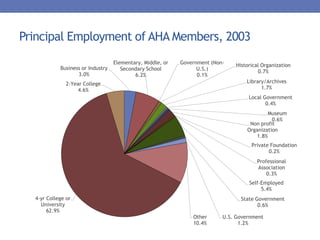
Principal Employment of AHA Members, 2003
Business or Industry
3.0%
Elementary, Middle, or
Secondary School
6.2%
Government (Non-
U.S.)
0.1%
Historical Organization
0.7%
Library/Archives
1.7%
Local Government
0.4%
Museum
0.6%
Non profit
Organization
1.8%
Private Foundation
0.2%
Professional
Association
0.3%
Self-Employed
5.4%
State Government
0.6%
U.S. Government
1.2%
Other
10.4%
4-yr College or
University
62.9%
2-Year College
4.6%
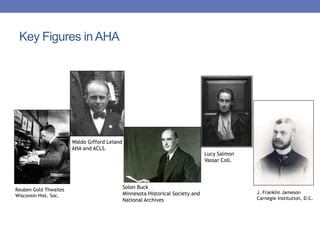
Key Figures in AHA
Reuben Gold Thwaites
Wisconsin Hist. Soc.
Solon Buck
Minnesota Historical Society and
National Archives
Waldo Gifford Leland
AHA and ACLS.
J. Franklin Jameson
Carnegie Institution, D.C.
Lucy Salmon
Vassar Coll.
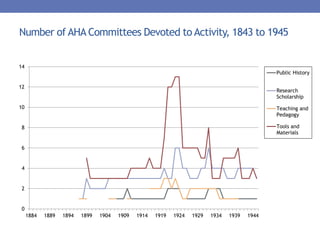
Number of AHA Committees Devoted to Activity, 1843 to 1945
0
2
4
6
8
10
12
14
1884 1889 1894 1899 1904 1909 1914 1919 1924 1929 1934 1939 1944
Public History
Research
Scholarship
Teaching and
Pedagogy
Tools and
Materials
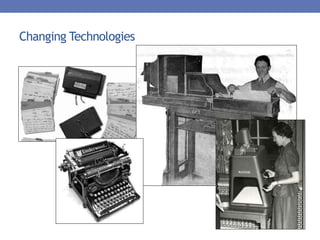
Changing Technologies
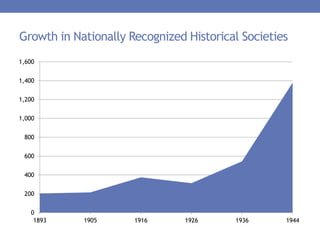
Growth in Nationally Recognized Historical Societies
0
200
400
600
800
1,000
1,200
1,400
1,600
1893 1905 1916 1926 1936 1944
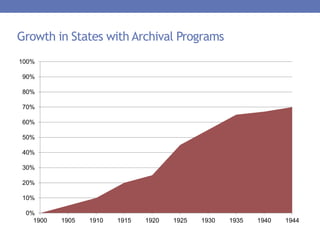
Growth in States with Archival Programs
0%
10%
20%
30%
40%
50%
60%
70%
80%
90%
100%
1900 1905 1910 1915 1920 1925 1930 1935 1940 1944
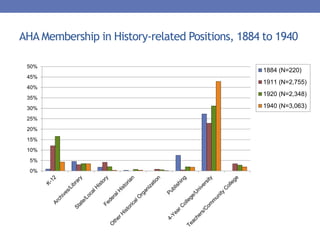
AHA Membership in History-related Positions, 1884 to 1940
0%
5%
10%
15%
20%
25%
30%
35%
40%
45%
50%
1884 (N=220)
1911 (N=2,755)
1920 (N=2,348)
1940 (N=3,063)
For additional questions
please e-mail me at
rtownsend@amacad.org

The Many Pasts of Public History: The Path through the AHA

  • 1.
    The Many Pastsof Public History: The Path through theAHA American Historical Association Meeting New York City January 3, 2015 Chair: Marla Miller: @MarlaatUMass Speakers: Rob Townsend: @rbthisted Denise Meringolo: @DDMeringolo Will Walker: @WIllCooperstown
  • 2.
    Principal Employment ofAHA Members, 2003 Business or Industry 3.0% Elementary, Middle, or Secondary School 6.2% Government (Non- U.S.) 0.1% Historical Organization 0.7% Library/Archives 1.7% Local Government 0.4% Museum 0.6% Non profit Organization 1.8% Private Foundation 0.2% Professional Association 0.3% Self-Employed 5.4% State Government 0.6% U.S. Government 1.2% Other 10.4% 4-yr College or University 62.9% 2-Year College 4.6%
  • 3.
    Key Figures inAHA Reuben Gold Thwaites Wisconsin Hist. Soc. Solon Buck Minnesota Historical Society and National Archives Waldo Gifford Leland AHA and ACLS. J. Franklin Jameson Carnegie Institution, D.C. Lucy Salmon Vassar Coll.
  • 4.
    Number of AHACommittees Devoted to Activity, 1843 to 1945 0 2 4 6 8 10 12 14 1884 1889 1894 1899 1904 1909 1914 1919 1924 1929 1934 1939 1944 Public History Research Scholarship Teaching and Pedagogy Tools and Materials
  • 5.
  • 6.
    Growth in NationallyRecognized Historical Societies 0 200 400 600 800 1,000 1,200 1,400 1,600 1893 1905 1916 1926 1936 1944
  • 7.
    Growth in Stateswith Archival Programs 0% 10% 20% 30% 40% 50% 60% 70% 80% 90% 100% 1900 1905 1910 1915 1920 1925 1930 1935 1940 1944
  • 8.
    AHA Membership inHistory-related Positions, 1884 to 1940 0% 5% 10% 15% 20% 25% 30% 35% 40% 45% 50% 1884 (N=220) 1911 (N=2,755) 1920 (N=2,348) 1940 (N=3,063)
  • 9.
    For additional questions pleasee-mail me at rtownsend@amacad.org