NAMAZThe ritual prayers prescribed by Islam to be observed five times a day
GROUP MEMBERS
Sharmeen Anwar
Shaista Kanwal
Sania Shoaib
Rizwana M.Younus
Kiran Pervaiz
Areeba Arif
NAMAZ
What is NAMAZ ?
Namaz is only one way to communicate
with Allah Almighty.
Namaz is one of the most important and
second pillar of Islam.
Namaz is the first thing to be asked on
the day of judgment.
STEPS OF NAMAZ AND THEIR BENEFIT
RukuQayam JalsaSajdha Salaam
QAYAM
In qayam Muslim place their hands, right over left. This
position extends concentration, causes further relaxation of
leg and back, generate feelings of humility, modesty and
piety.
This position normalises blood pressure and breathing, thus
providing many benefits to asthma and heart patients due to
peace physically and mentally.
In this position feet have to straight facing the qibla. Straight
feet allow the veins to remain upright without any bend.
QAYAM
Eyes focused at the point where forehead is placed in sajdah,
ideal to reduce stress. This posture pools the blood in the lower
part of the body.
The takbir (Allahu akbar) and Qiyam (standing) together are found
to improve posture, balance and self-awareness.
In this position the body gains peace as the Qur'an is being
recited. The recitation has a healing effect on the body. It has been
suggested by research that the healing is due to the effect of the
arabic sounds.
RUKU
 Ruku stretches the muscles of the lower back, thighs,
legs and calves and allows blood to be pumped in the
upper torso. It tones the musles of the stomach,
abdomen and kidneys.
 Ruku saves a person from getting a kidney stone and if
one has stones, they will come out shortly.
 Ruku exerts abdominal pressure thereby eases
constipation.
RUKU
 This position also promotes a greater flow of
blood into the upper regions of body
particularly to the head, eyes, ears, nose brain
and lungs to be released. Over time this
improves brain function
 Namaz Ruku is effective in developing
flexibility to shoulder, elbowm wrist, knees and
ankle regions
 When a person goes to the position of Sajdah or
prostration his whole body is in active motion. In this
position a person’s forehead touches the ground while
his hands are placed at the sides. The Holy Prophet
advised not to put the forearms flatly on the ground but
to keep them elevated above ground and this is better
for the forearm and arm muscles. This thing is also
mentioned by the science.
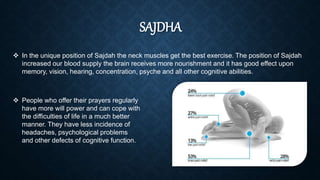
 Sajdah is a unique position as this is the only position in
which brain (or head) becomes lower than the heart and
hence for the first time the blood gushes towards the
brain whereas in all other positions the brain is above
the heart when it has to work against gravity to send
blood to the brain.
SAJDHA
 In the unique position of Sajdah the neck muscles get the best exercise. The position of Sajdah
increased our blood supply the brain receives more nourishment and it has good effect upon
memory, vision, hearing, concentration, psyche and all other cognitive abilities.
 People who offer their prayers regularly
have more will power and can cope with
the difficulties of life in a much better
manner. They have less incidence of
headaches, psychological problems
and other defects of cognitive function.
SAJDHA
JALSA
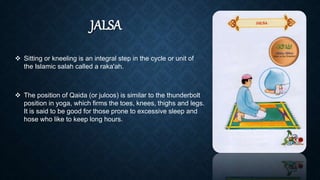
 Sitting or kneeling is an integral step in the cycle or unit of
the Islamic salah called a raka'ah.
 The position of Qaida (or juloos) is similar to the thunderbolt
position in yoga, which firms the toes, knees, thighs and legs.
It is said to be good for those prone to excessive sleep and
hose who like to keep long hours.
JALSA
 for men, the heel of the right foot is curled up and the
weight of the leg and part of the body rests upon it. This
aids detoxification of the liver and stimulates peristaltic
actions of the large intestine.
 Women keep both soles up,underneath their
bodies. The body returns to even greater relaxation
and the posture assists digestion by forcing the
content of the stomach downward.
SALAAM
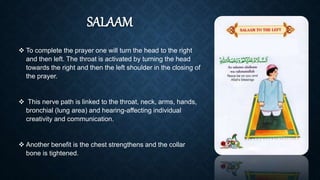
 To complete the prayer one will turn the head to the right
and then left. The throat is activated by turning the head
towards the right and then the left shoulder in the closing of
the prayer.
 This nerve path is linked to the throat, neck, arms, hands,
bronchial (lung area) and hearing-affecting individual
creativity and communication.
 Another benefit is the chest strengthens and the collar
bone is tightened.
SALAAM
 Salam is the excellent position for treating neck
problems and pains.
 It is also a helpful exercise to relax the shoulder
and upper back muscles.
 Experts state that this prayer position Salam
allows the nerves to feel relaxed thus putting an
end to joint pains in the body.

Presentation

  • 2.
    NAMAZThe ritual prayersprescribed by Islam to be observed five times a day
  • 3.
    GROUP MEMBERS Sharmeen Anwar ShaistaKanwal Sania Shoaib Rizwana M.Younus Kiran Pervaiz Areeba Arif
  • 4.
    NAMAZ What is NAMAZ? Namaz is only one way to communicate with Allah Almighty. Namaz is one of the most important and second pillar of Islam. Namaz is the first thing to be asked on the day of judgment.
  • 5.
    STEPS OF NAMAZAND THEIR BENEFIT RukuQayam JalsaSajdha Salaam
  • 6.
    QAYAM In qayam Muslimplace their hands, right over left. This position extends concentration, causes further relaxation of leg and back, generate feelings of humility, modesty and piety. This position normalises blood pressure and breathing, thus providing many benefits to asthma and heart patients due to peace physically and mentally. In this position feet have to straight facing the qibla. Straight feet allow the veins to remain upright without any bend.
  • 7.
    QAYAM Eyes focused atthe point where forehead is placed in sajdah, ideal to reduce stress. This posture pools the blood in the lower part of the body. The takbir (Allahu akbar) and Qiyam (standing) together are found to improve posture, balance and self-awareness. In this position the body gains peace as the Qur'an is being recited. The recitation has a healing effect on the body. It has been suggested by research that the healing is due to the effect of the arabic sounds.
  • 8.
    RUKU  Ruku stretchesthe muscles of the lower back, thighs, legs and calves and allows blood to be pumped in the upper torso. It tones the musles of the stomach, abdomen and kidneys.  Ruku saves a person from getting a kidney stone and if one has stones, they will come out shortly.  Ruku exerts abdominal pressure thereby eases constipation.
  • 9.
    RUKU  This positionalso promotes a greater flow of blood into the upper regions of body particularly to the head, eyes, ears, nose brain and lungs to be released. Over time this improves brain function  Namaz Ruku is effective in developing flexibility to shoulder, elbowm wrist, knees and ankle regions
  • 10.
     When aperson goes to the position of Sajdah or prostration his whole body is in active motion. In this position a person’s forehead touches the ground while his hands are placed at the sides. The Holy Prophet advised not to put the forearms flatly on the ground but to keep them elevated above ground and this is better for the forearm and arm muscles. This thing is also mentioned by the science.  Sajdah is a unique position as this is the only position in which brain (or head) becomes lower than the heart and hence for the first time the blood gushes towards the brain whereas in all other positions the brain is above the heart when it has to work against gravity to send blood to the brain. SAJDHA
  • 11.
     In theunique position of Sajdah the neck muscles get the best exercise. The position of Sajdah increased our blood supply the brain receives more nourishment and it has good effect upon memory, vision, hearing, concentration, psyche and all other cognitive abilities.  People who offer their prayers regularly have more will power and can cope with the difficulties of life in a much better manner. They have less incidence of headaches, psychological problems and other defects of cognitive function. SAJDHA
  • 12.
    JALSA  Sitting orkneeling is an integral step in the cycle or unit of the Islamic salah called a raka'ah.  The position of Qaida (or juloos) is similar to the thunderbolt position in yoga, which firms the toes, knees, thighs and legs. It is said to be good for those prone to excessive sleep and hose who like to keep long hours.
  • 13.
    JALSA  for men,the heel of the right foot is curled up and the weight of the leg and part of the body rests upon it. This aids detoxification of the liver and stimulates peristaltic actions of the large intestine.  Women keep both soles up,underneath their bodies. The body returns to even greater relaxation and the posture assists digestion by forcing the content of the stomach downward.
  • 14.
    SALAAM  To completethe prayer one will turn the head to the right and then left. The throat is activated by turning the head towards the right and then the left shoulder in the closing of the prayer.  This nerve path is linked to the throat, neck, arms, hands, bronchial (lung area) and hearing-affecting individual creativity and communication.  Another benefit is the chest strengthens and the collar bone is tightened.
  • 15.
    SALAAM  Salam isthe excellent position for treating neck problems and pains.  It is also a helpful exercise to relax the shoulder and upper back muscles.  Experts state that this prayer position Salam allows the nerves to feel relaxed thus putting an end to joint pains in the body.