U N I V E R S I T Y O F T H E P U N J A B
D E P A R T M E N T O F Z O O L O G Y
S U B M I T T E D B Y - A M N A S H A H I D
R O L L N O - B S 6 E 3 6 F 2 1
S U B M I T T E D T O - D R . Z U L F I Q A R
S I LV E R
P H E A S A N T
W E LC O M E
• Specie Name:-
• Silver Pheasant
• Scientific Name:-
• Lophura nycthemera
I U C N S TAT U S : -
• Population Trend
• Decreasing
• POPULATION STATUS
• Least concern (LC)
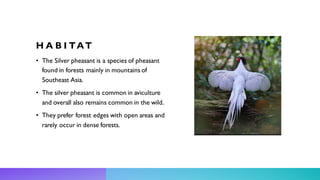
H A B I TAT
• The Silver pheasant is a species of pheasant
found in forests mainly in mountains of
Southeast Asia.
• The silver pheasant is common in aviculture
and overall also remains common in the wild.
• They prefer forest edges with open areas and
rarely occur in dense forests.
B I O L O G I C A L I N F O R M AT I O N
• Color
• Male is black and white in color
• Female is mainly brown.
• Both sexes have a bare red face and red legs.
• LENGTH
• 55-125 CM
• WEIGHT
• 1-2 KG
G E O G R A P H I C A L D I S T R I B U T I O N
• CONTINENTS
• Asia
• SUBCONTINENTS
• Southeast Asia
• COUNTRIES
• Cambodia, China, Myanmar, Thailand
• Viet Nam, Laos, Argentina
• BIOGEOGRAPHICAL REALMS
• Indomalayan
• WWF BIOMES
• Tropical moist forests
• Diet and Nutrition
• Silver pheasantsare
herbivores (granivores,
frugivores).
• They feed mainly on
seeds and fruits.
• They also take
invertebrates according to
the season.
B E H A V I O R
• Silver pheasants are gregarious ground-dwelling birds that are usually seen in small
flocks.
• Silver pheasants are active during the day and prefer to forage in the morning and in
the evening.
• They spend most of their life on the ground and will fly only to escape danger.
• These birds communicate with the help of loud whistles, high-pitched chirping and
during the courtship display, males produce cackles and grunts.
• Threats
• Silver pheasants are fairly common, however, some populations are rare due to
degradation and the loss of habitat.
• Conservative measure
• Save their habitat
. Aforestation
• Reforestation
• Prevent from predators (foxes,badgers,corvids)
• Prevent from hunting
I N T E R E S T I N G F A C T S
• During courtship displays, the head ornaments of Silver pheasants become bright in color
while usually, they are duller and reduced.
• The Silver pheasant chicks are covered with brown down that provides them good
camouflage when they are outside of the nest.
• Pheasants have excellent eyesight and a sense of hearing which help them to quickly detect
predators.
• Pheasants can run at a speed of 8-10 miles per hour (13-16 km/h) and fly at the speed of
35-45 miles per hour (56-72 km/h). They are also able to swim.
• During the summer, pheasants breathe rapidly in order to maintain stable body
temperature
T H A N K S F O R YO U R T I M E

Presentation 37 Silver Pheasant.pdf

  • 1.
    U N IV E R S I T Y O F T H E P U N J A B D E P A R T M E N T O F Z O O L O G Y S U B M I T T E D B Y - A M N A S H A H I D R O L L N O - B S 6 E 3 6 F 2 1 S U B M I T T E D T O - D R . Z U L F I Q A R S I LV E R P H E A S A N T
  • 2.
    W E LCO M E
  • 3.
    • Specie Name:- •Silver Pheasant • Scientific Name:- • Lophura nycthemera
  • 4.
    I U CN S TAT U S : - • Population Trend • Decreasing • POPULATION STATUS • Least concern (LC)
  • 5.
    H A BI TAT • The Silver pheasant is a species of pheasant found in forests mainly in mountains of Southeast Asia. • The silver pheasant is common in aviculture and overall also remains common in the wild. • They prefer forest edges with open areas and rarely occur in dense forests.
  • 6.
    B I OL O G I C A L I N F O R M AT I O N • Color • Male is black and white in color • Female is mainly brown. • Both sexes have a bare red face and red legs. • LENGTH • 55-125 CM • WEIGHT • 1-2 KG
  • 7.
    G E OG R A P H I C A L D I S T R I B U T I O N • CONTINENTS • Asia • SUBCONTINENTS • Southeast Asia • COUNTRIES • Cambodia, China, Myanmar, Thailand • Viet Nam, Laos, Argentina • BIOGEOGRAPHICAL REALMS • Indomalayan • WWF BIOMES • Tropical moist forests
  • 8.
    • Diet andNutrition • Silver pheasantsare herbivores (granivores, frugivores). • They feed mainly on seeds and fruits. • They also take invertebrates according to the season.
  • 9.
    B E HA V I O R • Silver pheasants are gregarious ground-dwelling birds that are usually seen in small flocks. • Silver pheasants are active during the day and prefer to forage in the morning and in the evening. • They spend most of their life on the ground and will fly only to escape danger. • These birds communicate with the help of loud whistles, high-pitched chirping and during the courtship display, males produce cackles and grunts.
  • 10.
    • Threats • Silverpheasants are fairly common, however, some populations are rare due to degradation and the loss of habitat. • Conservative measure • Save their habitat . Aforestation • Reforestation • Prevent from predators (foxes,badgers,corvids) • Prevent from hunting
  • 11.
    I N TE R E S T I N G F A C T S • During courtship displays, the head ornaments of Silver pheasants become bright in color while usually, they are duller and reduced. • The Silver pheasant chicks are covered with brown down that provides them good camouflage when they are outside of the nest. • Pheasants have excellent eyesight and a sense of hearing which help them to quickly detect predators. • Pheasants can run at a speed of 8-10 miles per hour (13-16 km/h) and fly at the speed of 35-45 miles per hour (56-72 km/h). They are also able to swim. • During the summer, pheasants breathe rapidly in order to maintain stable body temperature
  • 12.
    T H AN K S F O R YO U R T I M E