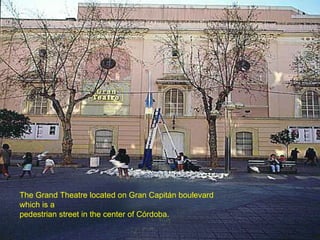
The Grand Theatre located on Gran Capitán boulevard
which is a
pedestrian street in the center of Córdoba.
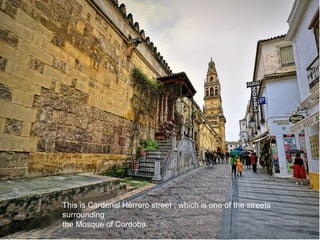
This is Cardenal Herrero street , which is one of the streets
surrounding
the Mosque of Cordoba.
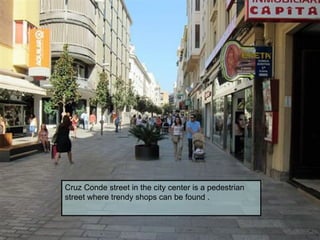
Cruz Conde street in the city center is a pedestrian
street where trendy shops can be found .
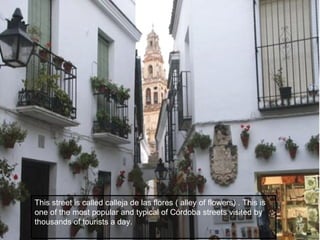
This street is called calleja de las flores ( alley of flowers) . This is
one of the most popular and typical of Córdoba streets visited by
thousands of tourists a day.
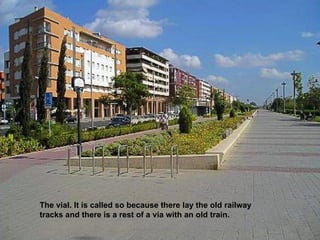
The vial. It is called so because there lay the old railway
tracks and there is a rest of a via with an old train.
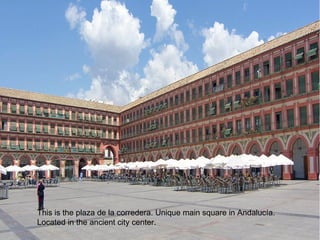
This is the plaza de la corredera. Unique main square in Andalucía.
Located in the ancient city center.
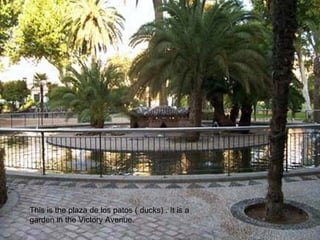
This is the plaza de los patos ( ducks) . It is a
garden in the Victory Avenue.
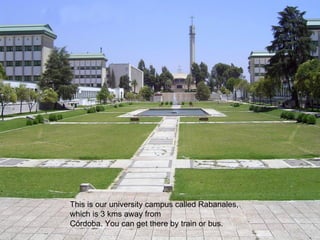
This is our university campus called Rabanales,
which is 3 kms away from
Córdoba. You can get there by train or bus.
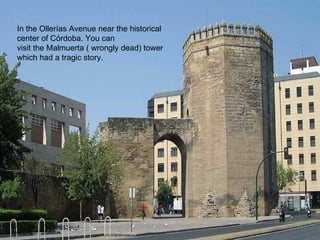
In the Ollerías Avenue near the historical
center of Córdoba. You can
visit the Malmuerta ( wrongly dead) tower
which had a tragic story.
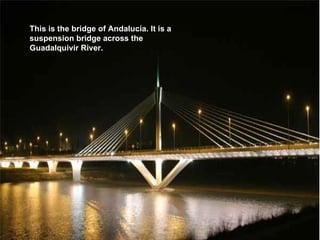
This is the bridge of Andalucía. It is a
suspension bridge across the
Guadalquivir River.
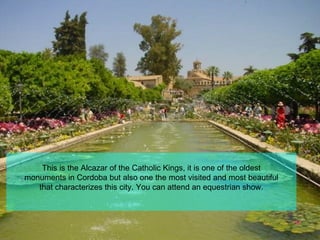
This is the Alcazar of the Catholic Kings, it is one of the oldest
monuments in Cordoba but also one the most visited and most beautiful
   that characterizes this city. You can attend an equestrian show.
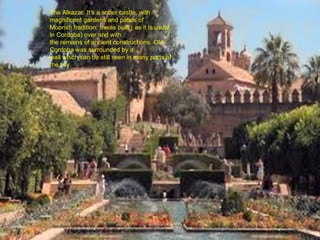
The Alkazar: It’s a sober castle, with
magnificent gardens and patios of
Moorish tradition. It was built ( as it is usual
in Cordoba) over and with
the remains of ancient constructions. Old
Cordoba was surrounded by a
wall which can be still seen in many parts of
the city.
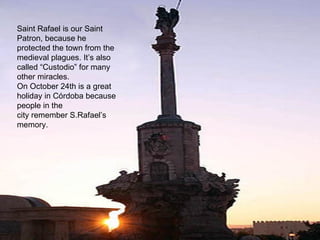
Saint Rafael is our Saint
Patron, because he
protected the town from the
medieval plagues. It’s also
called “Custodio” for many
other miracles.
On October 24th is a great
holiday in Córdoba because
people in the
city remember S.Rafael’s
memory.
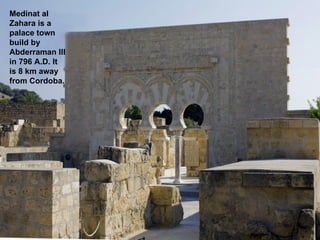
Medinat al
Zahara is a
palace town
build by
Abderraman III
in 796 A.D. It
is 8 km away
from Cordoba.
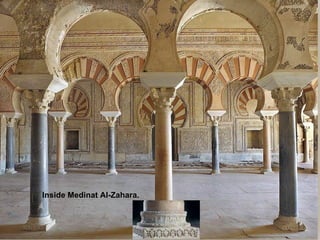
Inside Medinat Al-Zahara.
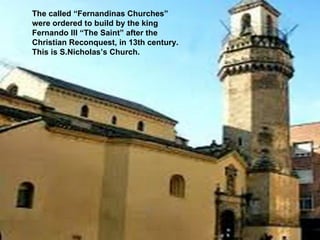
The called “Fernandinas Churches”
were ordered to build by the king
Fernando III “The Saint” after the
Christian Reconquest, in 13th century.
This is S.Nicholas’s Church.
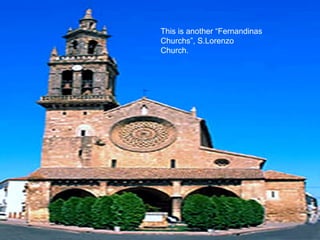
This is another “Fernandinas
Churchs”, S.Lorenzo
Church.
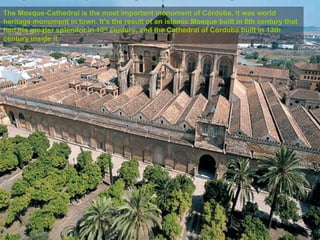
The Mosque-Cathedral is the most important monument of Córdoba, it was world
heritage monument in town. It’s the result of an islamic Mosque built in 8th century that
had his greater splendor in 10th century, and the Cathedral of Córdoba built in 13th
century inside it.
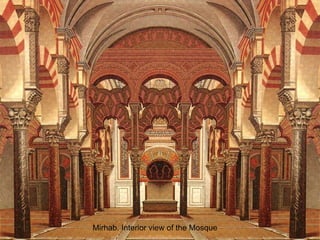
Mirhab. Interior view of the Mosque
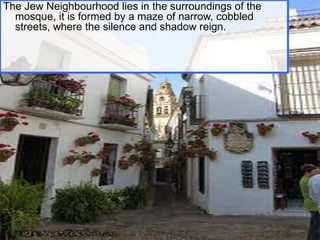
The Jew Neighbourhood lies in the surroundings of the
  mosque, it is formed by a maze of narrow, cobbled
  streets, where the silence and shadow reign.
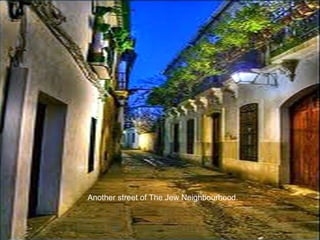
Another street of The Jew Neighbourhood.
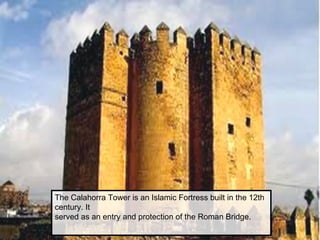
The Calahorra Tower is an Islamic Fortress built in the 12th
century. It
served as an entry and protection of the Roman Bridge.
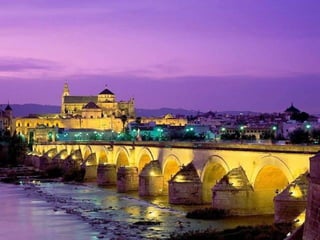
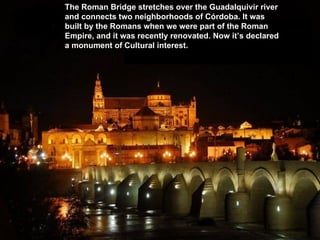
The Roman Bridge stretches over the Guadalquivir river
and connects two neighborhoods of Córdoba. It was
built by the Romans when we were part of the Roman
Empire, and it was recently renovated. Now it’s declared
a monument of Cultural interest.
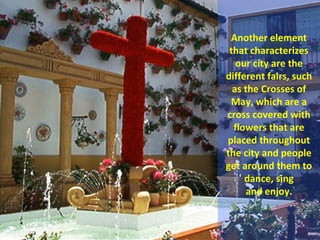
Another element
 that characterizes
   our city are the
different fairs, such
  as the Crosses of
 May, which are a
cross covered with
  flowers that are
placed throughout
the city and people
get around them to
     dance, sing
     and enjoy.
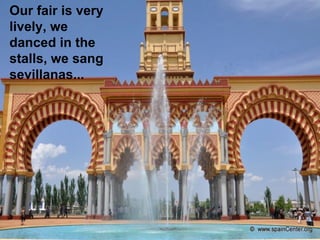
Our fair is very
lively, we
danced in the
stalls, we sang
sevillanas...
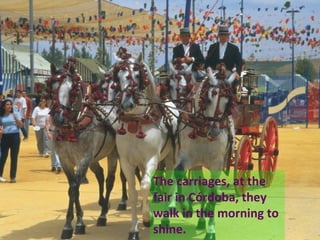
The carriages, at the
fair in Córdoba, they
walk in the morning to
shine.
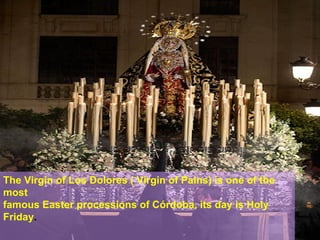
The Virgin of Los Dolores ( Virgin of Pains) is one of the
most
famous Easter processions of Córdoba, its day is Holy
Friday.
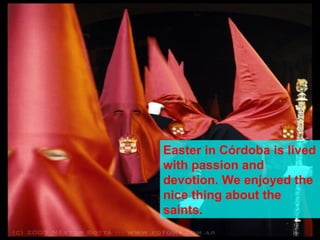
Easter in Córdoba is lived
with passion and
devotion. We enjoyed the
nice thing about the
saints.
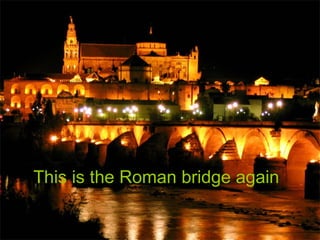
This is the Roman bridge again
Presentacion cordoba 3ºc

Presentacion cordoba 3ºc

  • 8.
    The Grand Theatrelocated on Gran Capitán boulevard which is a pedestrian street in the center of Córdoba.
  • 9.
    This is CardenalHerrero street , which is one of the streets surrounding the Mosque of Cordoba.
  • 10.
    Cruz Conde streetin the city center is a pedestrian street where trendy shops can be found .
  • 11.
    This street iscalled calleja de las flores ( alley of flowers) . This is one of the most popular and typical of Córdoba streets visited by thousands of tourists a day.
  • 12.
    The vial. Itis called so because there lay the old railway tracks and there is a rest of a via with an old train.
  • 13.
    This is theplaza de la corredera. Unique main square in Andalucía. Located in the ancient city center.
  • 14.
    This is theplaza de los patos ( ducks) . It is a garden in the Victory Avenue.
  • 15.
    This is ouruniversity campus called Rabanales, which is 3 kms away from Córdoba. You can get there by train or bus.
  • 16.
    In the OlleríasAvenue near the historical center of Córdoba. You can visit the Malmuerta ( wrongly dead) tower which had a tragic story.
  • 17.
    This is thebridge of Andalucía. It is a suspension bridge across the Guadalquivir River.
  • 18.
    This is theAlcazar of the Catholic Kings, it is one of the oldest monuments in Cordoba but also one the most visited and most beautiful that characterizes this city. You can attend an equestrian show.
  • 19.
    The Alkazar: It’sa sober castle, with magnificent gardens and patios of Moorish tradition. It was built ( as it is usual in Cordoba) over and with the remains of ancient constructions. Old Cordoba was surrounded by a wall which can be still seen in many parts of the city.
  • 20.
    Saint Rafael isour Saint Patron, because he protected the town from the medieval plagues. It’s also called “Custodio” for many other miracles. On October 24th is a great holiday in Córdoba because people in the city remember S.Rafael’s memory.
  • 21.
    Medinat al Zahara isa palace town build by Abderraman III in 796 A.D. It is 8 km away from Cordoba.
  • 22.
  • 23.
    The called “FernandinasChurches” were ordered to build by the king Fernando III “The Saint” after the Christian Reconquest, in 13th century. This is S.Nicholas’s Church.
  • 24.
    This is another“Fernandinas Churchs”, S.Lorenzo Church.
  • 25.
    The Mosque-Cathedral isthe most important monument of Córdoba, it was world heritage monument in town. It’s the result of an islamic Mosque built in 8th century that had his greater splendor in 10th century, and the Cathedral of Córdoba built in 13th century inside it.
  • 26.
    Mirhab. Interior viewof the Mosque
  • 27.
    The Jew Neighbourhoodlies in the surroundings of the mosque, it is formed by a maze of narrow, cobbled streets, where the silence and shadow reign.
  • 28.
    Another street ofThe Jew Neighbourhood.
  • 29.
    The Calahorra Toweris an Islamic Fortress built in the 12th century. It served as an entry and protection of the Roman Bridge.
  • 30.
    The Roman Bridgestretches over the Guadalquivir river and connects two neighborhoods of Córdoba. It was built by the Romans when we were part of the Roman Empire, and it was recently renovated. Now it’s declared a monument of Cultural interest.
  • 31.
    Another element thatcharacterizes our city are the different fairs, such as the Crosses of May, which are a cross covered with flowers that are placed throughout the city and people get around them to dance, sing and enjoy.
  • 32.
    Our fair isvery lively, we danced in the stalls, we sang sevillanas...
  • 33.
    The carriages, atthe fair in Córdoba, they walk in the morning to shine.
  • 34.
    The Virgin ofLos Dolores ( Virgin of Pains) is one of the most famous Easter processions of Córdoba, its day is Holy Friday.
  • 35.
    Easter in Córdobais lived with passion and devotion. We enjoyed the nice thing about the saints.
  • 36.
    This is theRoman bridge again

Editor's Notes