PRESENT SIMPLE
I eat, you eat, he eats…
EXAMPLES
 British people like animals.
 They live in houses with gardens.
 My husband works from 9 to 5 pm
 Ann has three children.
AFFIRMATIVE
 Use the infinitive verb:

 I play tennis / We live in Spain
 For HE / SHE / IT we use infinitive verb + -s / -es / -ies
 He works / he plays/ he lives
 She watches / she finishes / she goes / she does
 She studies

 The spelling rules are the same as for the plurals.
NEGATIVE
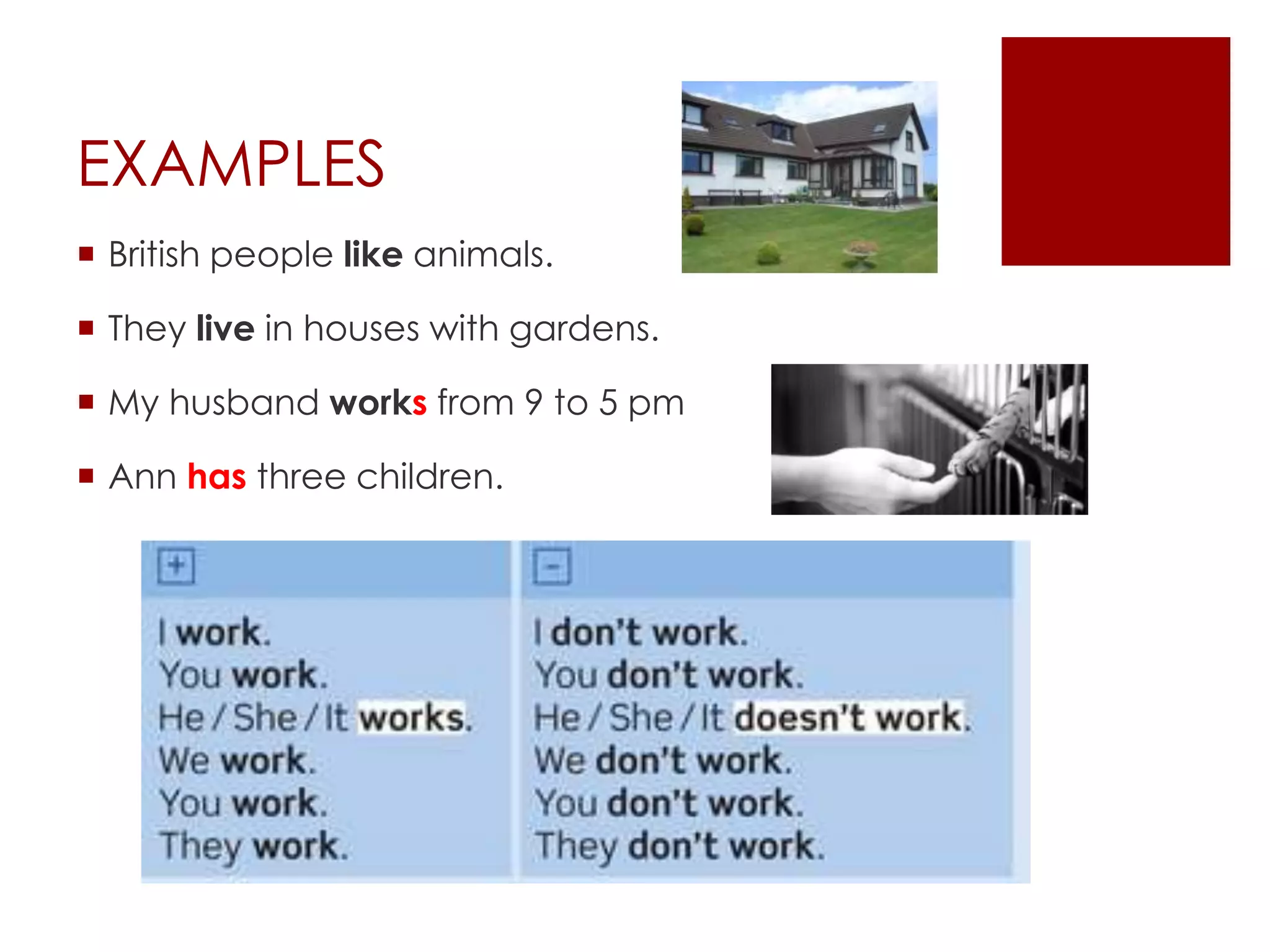
 Use DON’T or DOESN’T + infinitive verb
 Don’t = do not
 Doesn’t = does not
 REMEMBER!!!
 He doesn’t work (right)

 NOT “He doesn’t works” (wrong)
EXCEPTIONS
 3rd person singular:
 I have

He has

 I do

He does

 I say

He says

Present simple

  • 1.
    PRESENT SIMPLE I eat,you eat, he eats…
  • 2.
    EXAMPLES  British peoplelike animals.  They live in houses with gardens.  My husband works from 9 to 5 pm  Ann has three children.
  • 3.
    AFFIRMATIVE  Use theinfinitive verb:  I play tennis / We live in Spain  For HE / SHE / IT we use infinitive verb + -s / -es / -ies  He works / he plays/ he lives  She watches / she finishes / she goes / she does  She studies  The spelling rules are the same as for the plurals.
  • 4.
    NEGATIVE  Use DON’Tor DOESN’T + infinitive verb  Don’t = do not  Doesn’t = does not  REMEMBER!!!  He doesn’t work (right)  NOT “He doesn’t works” (wrong)
  • 5.
    EXCEPTIONS  3rd personsingular:  I have He has  I do He does  I say He says