PRESENT PERFECT SIMPLE REBECA ALONSO DE LA MADRID MARI CARMEN SANSANO GOMEZ SONIA RODRIGUEZ GARCIA
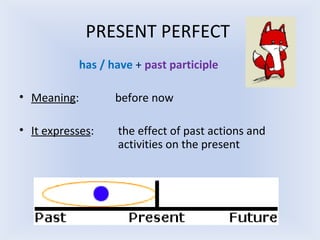
PRESENT PERFECT  has / have  +  past participle Meaning :  before now It expresses :  the effect of past actions and   activities on the present
PRESENT PERFECT  FORM Positive and negative  Question Short answer I We You  They ‘ ve haven ‘ t lived  in Rome. He She ‘ s hasn ‘ t How long  have I we you known  Peter? How long  has   she  he Have you always  lived  In Budapest? Yes, I  have . No, I  haven ‘ t .
PRESENT PERFECT  USE The Present Perfect expresses: An action that began in the past and still continues  (unfinished past) We ’ ve   lived  in the same house  for  25 years. Peter ’ s   worked  as a teacher  since  2000. How long  have  you  known  each other? They ’ ve been  married   for  20 years. We use  for  with a  period of time   and  since  with a  point in time . For Two years A month A few minutes Half an hour ages Since 1970 The end of the class August 8 o ‘ clock Christmas
PRESENT PERFECT  USE The Present Perfect expresses: 2.  An experience that happened at some time in one ’ s life . The action is in the  past and finished , but the  effects  of the action are  still felt . When the action happened is not important. I ’ ve   been  to the United States.  (I still remember) She ’ s   written  poetry and children ’ s stories.   (in her writing career) Have  you ever  had  an operation?  (at any time in your life up to now) The adverbs  ever ,  never , and  before  are common with this use. Have you  ever  been to Australia? I ‘ ve  never  tried bungee jumping. I haven ‘ t tried susshi  before .
PRESENT PERFECT  USE The Present Perfect expresses: 3.  A past action that has a present result. The action is usually in the recent past. The taxi  hasn ’ t  arrived  yet.  (We ’ re still waiting for it.) What  have  you  done  to your lip?  (It ’ s bleeding.)   The adverbs  yet ,  already , and  just  are common with this use. I haven ‘ t done my homework  yet .  (Negative) Has the postman been  yet ?  (Question) I ‘ ve  already  done my homework. She ‘ s  just  had some good news.
END

Present Perfect

  • 1.
    PRESENT PERFECT SIMPLEREBECA ALONSO DE LA MADRID MARI CARMEN SANSANO GOMEZ SONIA RODRIGUEZ GARCIA
  • 2.
    PRESENT PERFECT has / have + past participle Meaning : before now It expresses : the effect of past actions and activities on the present
  • 3.
    PRESENT PERFECT FORM Positive and negative Question Short answer I We You They ‘ ve haven ‘ t lived in Rome. He She ‘ s hasn ‘ t How long have I we you known Peter? How long has she he Have you always lived In Budapest? Yes, I have . No, I haven ‘ t .
  • 4.
    PRESENT PERFECT USE The Present Perfect expresses: An action that began in the past and still continues (unfinished past) We ’ ve lived in the same house for 25 years. Peter ’ s worked as a teacher since 2000. How long have you known each other? They ’ ve been married for 20 years. We use for with a period of time and since with a point in time . For Two years A month A few minutes Half an hour ages Since 1970 The end of the class August 8 o ‘ clock Christmas
  • 5.
    PRESENT PERFECT USE The Present Perfect expresses: 2. An experience that happened at some time in one ’ s life . The action is in the past and finished , but the effects of the action are still felt . When the action happened is not important. I ’ ve been to the United States. (I still remember) She ’ s written poetry and children ’ s stories. (in her writing career) Have you ever had an operation? (at any time in your life up to now) The adverbs ever , never , and before are common with this use. Have you ever been to Australia? I ‘ ve never tried bungee jumping. I haven ‘ t tried susshi before .
  • 6.
    PRESENT PERFECT USE The Present Perfect expresses: 3. A past action that has a present result. The action is usually in the recent past. The taxi hasn ’ t arrived yet. (We ’ re still waiting for it.) What have you done to your lip? (It ’ s bleeding.) The adverbs yet , already , and just are common with this use. I haven ‘ t done my homework yet . (Negative) Has the postman been yet ? (Question) I ‘ ve already done my homework. She ‘ s just had some good news.
  • 7.