Learning Outcome
3 Prepare Sauces
Required for Menu
Item
TLE G-10
Sauces- One of the important components of a dish is the sauce.
 Sauces serve a particular function in the composition of a dish. These enhance the
taste of the food to be served as well as add moisture or succulence to food that are
cooked dry.
 Sauces also enhance the appearance of a dish
 A sauce that includes a flavor complementary to a food brings out the flavor of that
food
 It defines and enriches the overall taste and its texture.
 Sauce is a fluid dressing for poultry, meat, fish, dessert and other culinary products.
• Sauce is a flavorful liquid, usually thickened that is used to
season, flavor and enhance other foods. It adds:
1. Moistness
2. Flavor
3. Richness
4. Appearance (color and shine)
 5. Appeal
Basic Sauces for Meat, Vegetables, and Fish
1. White sauce - Its basic ingredient is milk which is
thickened with flour enriched with butter.
2. Veloute sauce- Its chief ingredients are veal, chicken
and fish broth, thickened with blonde roux.
3. Hollandaise – It is a rich emulsified sauce made
from butter, egg yolks, lemon juice and cayenne.
• Emulsion – (as fat in milk) consists of liquid dispersed with
or without an emulsifier in another liquid that usually
would not mix together.
• 4. Brown sauce / Espagnole – It is a brown roux-based
sauce made with margarine or butter, flavor and brown
stock.
• 5. Tomato – It is made from stock (ham/pork) and
tomato products seasoned with spices and herbs.
• A. Variation of Sauces
• 1. Hot Sauces – made just before they are to be
used.
• 2. Cold sauces – cooked ahead of time, then
cooled, covered, and placed in the refrigerator to
chill.
B. Thickening Agents
Thickening agent – thickens sauce to the right consistency. The sauce
must be thick enough to cling lightly to the food.
 Starches are the most commonly used thickeners for sauce making.
Flour is the principal starch used.
 Starch granules are separated in two ways:
 • Mixing the starch with fat. Example: roux
 • Mixing the starch with a cold liquid. Example: slurry
 Roux – is a cooked mixture of equal parts by weight of fat and flour.
Fat
A. Clarified butter. Using clarified butter
results to finest sauces because of its
flavor.
B. Margarine. Used as a substitute for butter
because of its lower cost.
C. Animal fat. Chicken fat, beef drippings and
lard.
D. Vegetable oil and shortening. Can be used
for roux, but it adds no flavor.
2. Flour
The thickening power of flour depends on its
starch content. Bread flour is commonly used in
commercial cooking. It is sometimes browned
for use in brown roux. Heavily browned flour
has only 1/3 the thickening power of not brown
flour.
A roux must be cooked so that the sauce does not have a raw, starchy taste of flour. The kinds of roux differ on how much they are cooked.
White roux – cooked just enough to cook the raw taste of
flour; used for béchamel and other white sauces based on
milk.
Blond roux – cooked little longer to a slightly darker color;
used for veloutés´.
Brown roux – cooked to a light brown
color and a nutty aroma. Flour may be
browned before adding to the fat. It
contributes flavor and color to brown
sauces.
C. Common Problems in Sauce
• 1. Discarding
• 2. oiling-off
• 3. poor texture
• 4. syneresis (weeping)
• 5. oil streaking
Basic Finishing Techniques
in Sauce Making
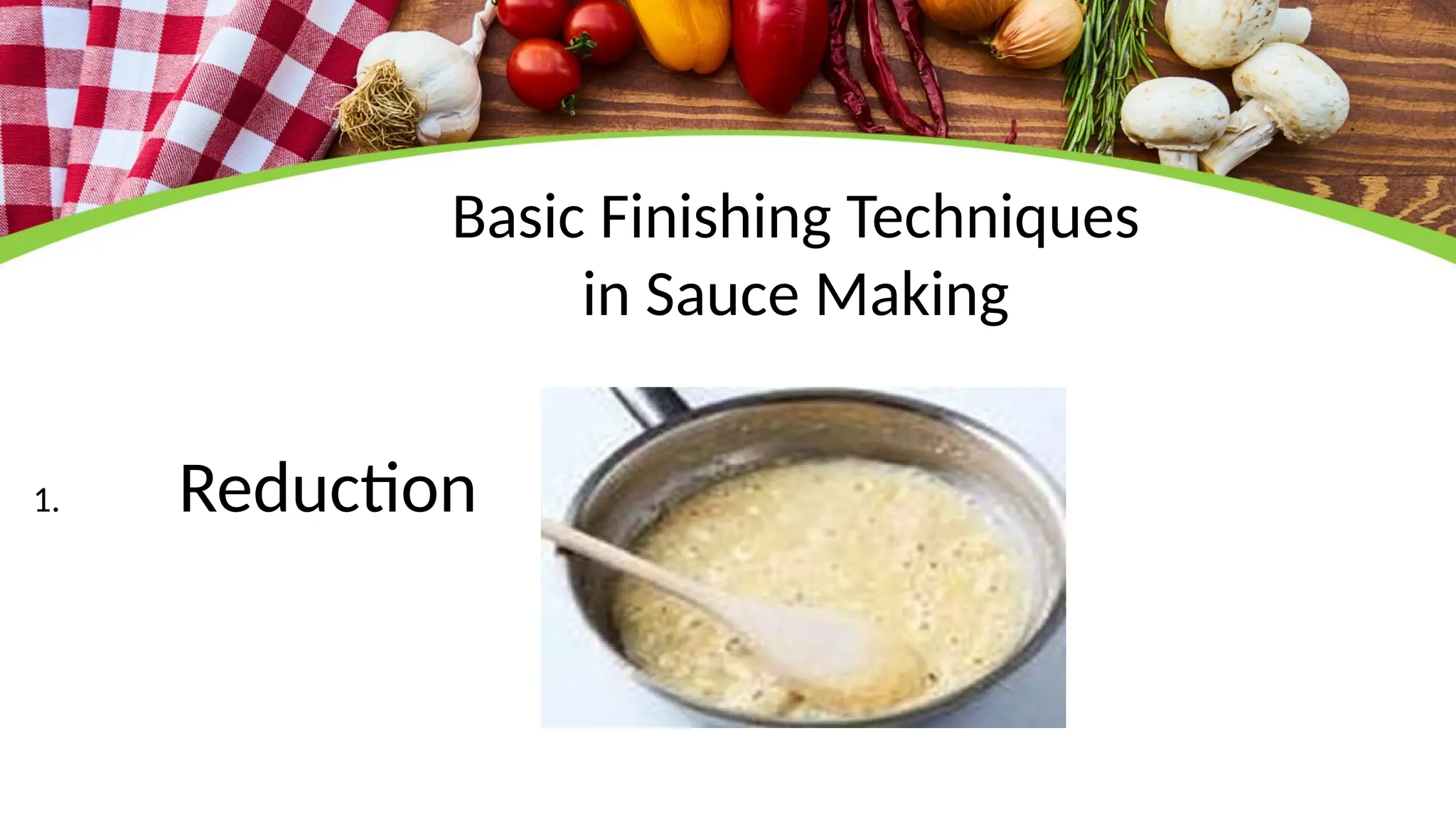
1. Reduction
 Using reduction to concentrate basic flavors.
 The water evaporates when simmered. The sauce becomes more
concentrated and more flavorful.
 Using reduction to adjust textures
 The sauce may be simmered until it reaches the desired thickness.
Stock or other liquid may be added to thickened sauce to thin it
out, then simmer to reduce to the right consistency.
 Using reduction to add new flavors.
 Glazes or reduced stocks are added to sauces to give flavor.
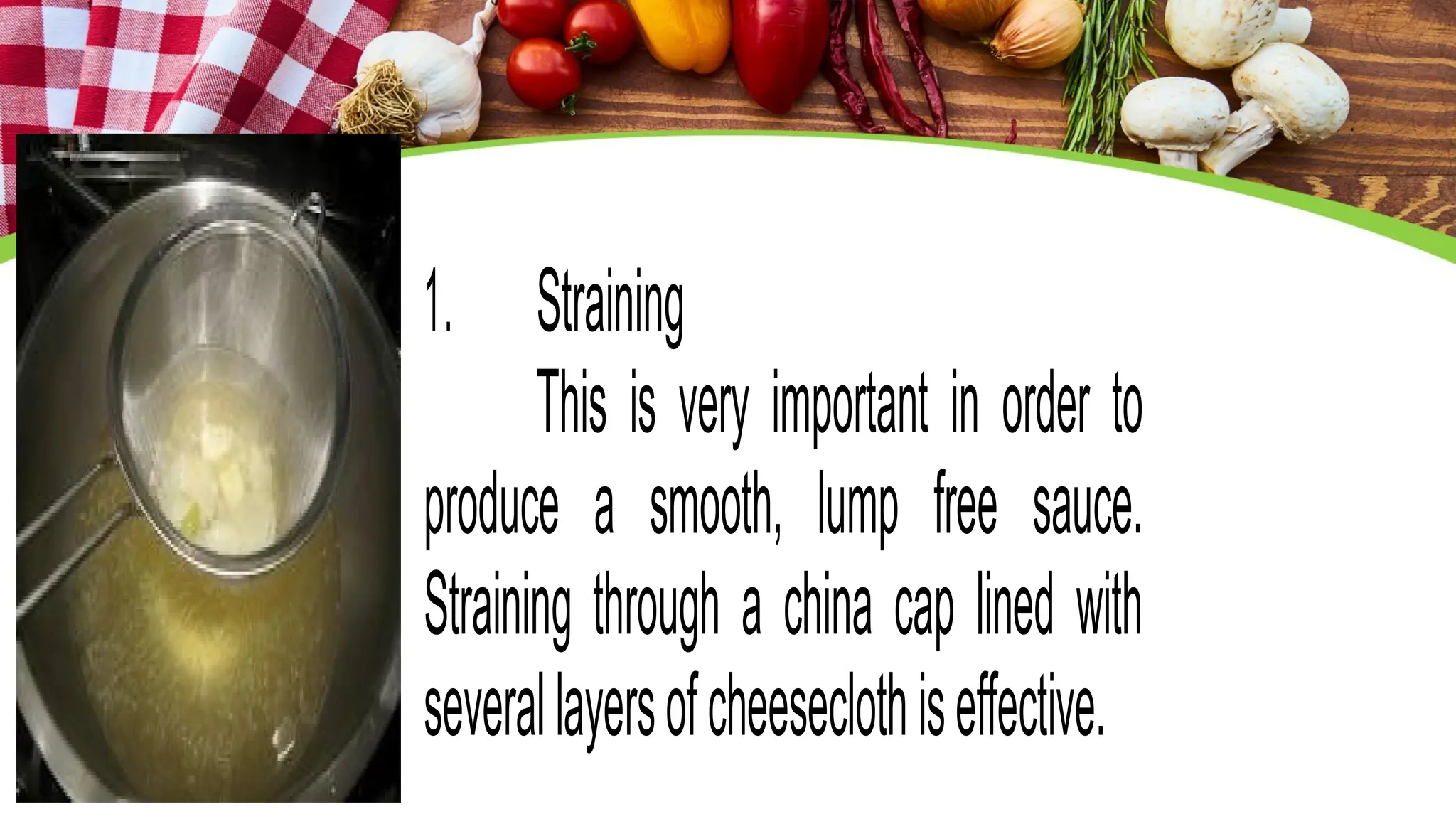
1. Straining
This is very important in order to
produce a smooth, lump free sauce.
Straining through a china cap lined with
severallayersofcheeseclothiseffective.
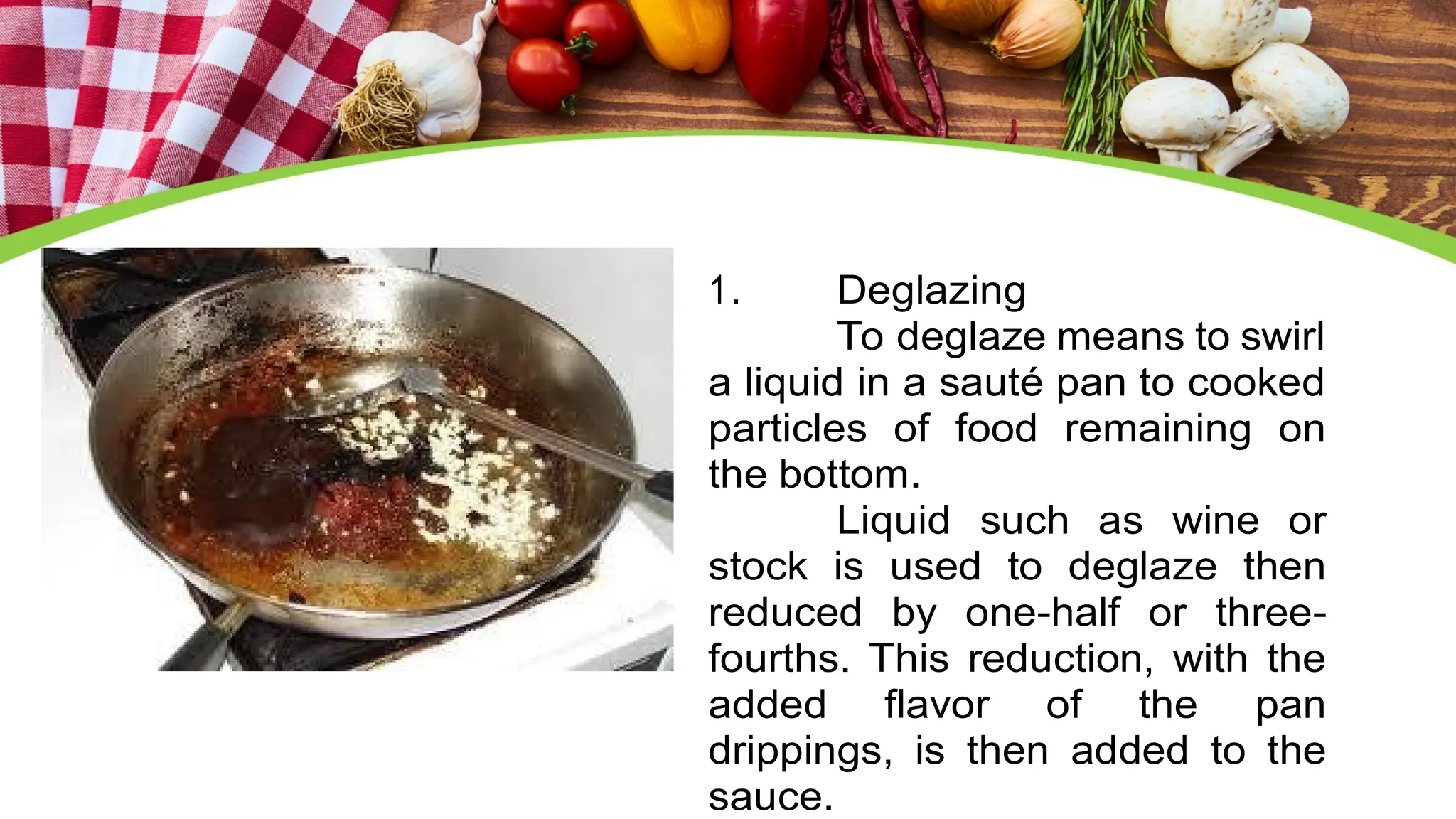
1. Deglazing
To deglaze means to swirl
a liquid in a sauté pan to cooked
particles of food remaining on
the bottom.
Liquid such as wine or
stock is used to deglaze then
reduced by one-half or three-
fourths. This reduction, with the
added flavor of the pan
drippings, is then added to the
sauce.
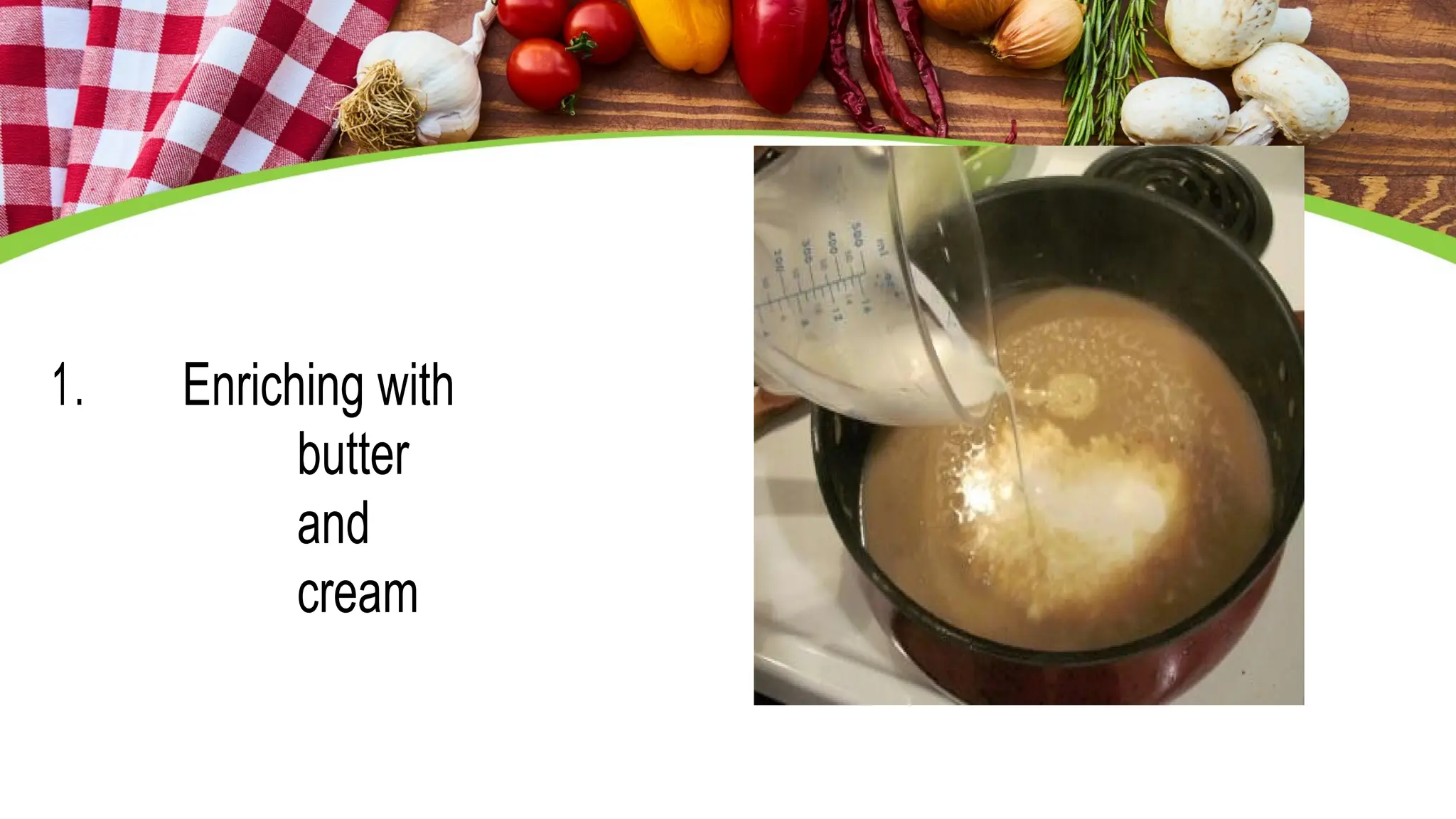
1. Enriching with
butter
and
cream
• Liaison mixture of egg yolks and cream added to sauce to
give extra richness and
smoothness.
• Heavy cream- added to give flavor and richness to sauce
• Butter - Add softened butter to hot sauce and swirl until it
melts. Serve immediately to
prevent separation of butter. Butter gives extra shine and
smoothness to the sauce.
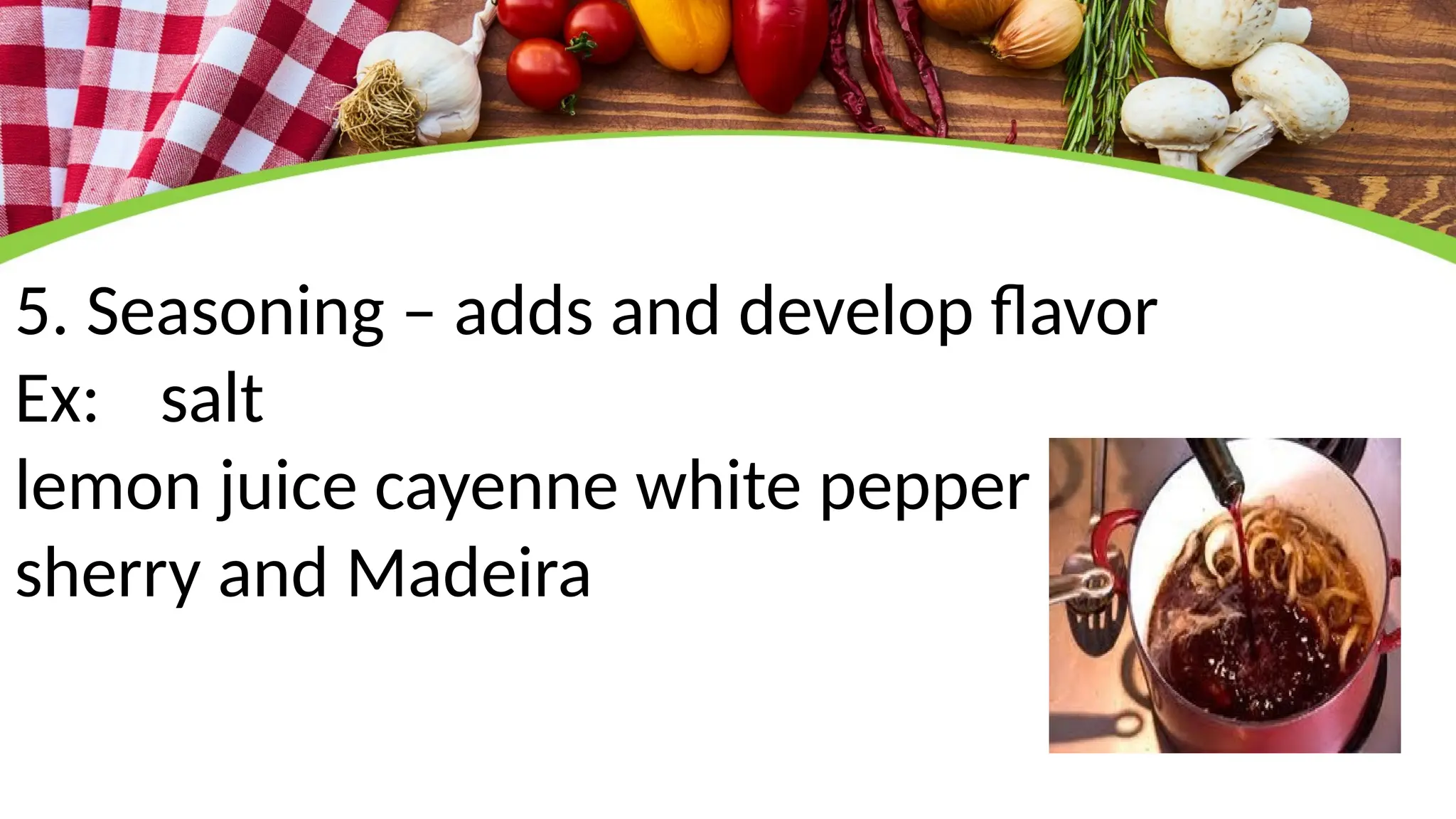
5. Seasoning – adds and develop flavor
Ex: salt
lemon juice cayenne white pepper
sherry and Madeira
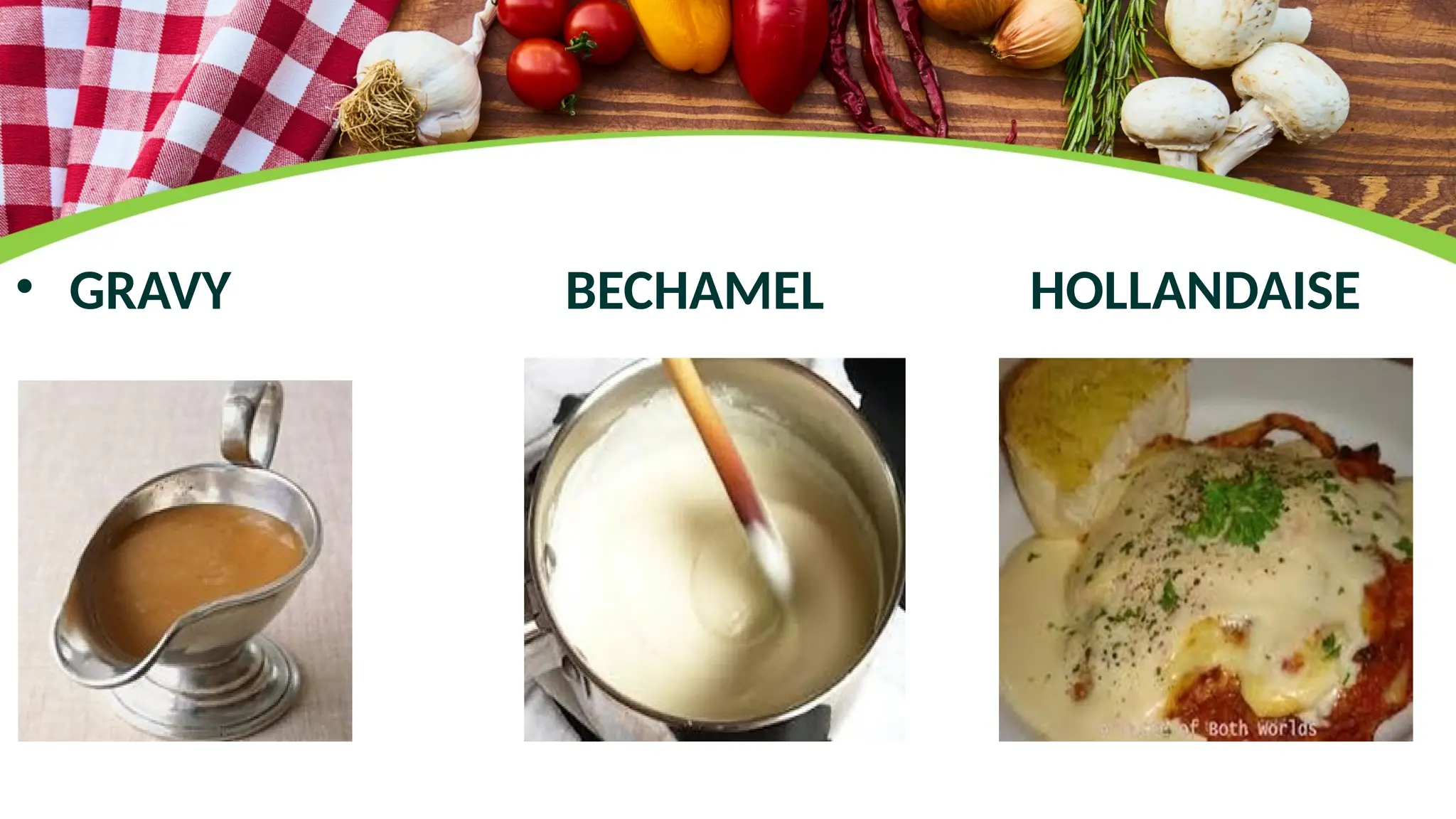
• GRAVY BECHAMEL HOLLANDAISE
Learning Outcome 4 Store and
Reconstitute Stocks, Sauces and Soups
Storage of Stocks/Sauces and Soups
 Stock is a clear, flavored liquid that freezes
well.
 once a stock has been used to make a sauce,
the sauce itself should not be frozen.
Storage of Stocks/Sauces and Soups
 The stock should never be put in the
refrigerator while it is hot.
 A good way to cool the stock is to place the
hot stock pot in a sink full of cold water and
ice cubes until it is lukewarm but it should
not exceed one hour.
Storing Equipment
1. Glass/Plastic Container
2. Stock pot
3. Refrigerator
• Ways to Reconstitute Stocks,
Sauce and Soup
1. by adding water
2. By using other liquid like evaporating
milk, coconut milk, and fruit juices

sauces-230123232238-af324cf2.ppt additional lecture notesx

  • 1.
    Learning Outcome 3 PrepareSauces Required for Menu Item TLE G-10
  • 2.
    Sauces- One ofthe important components of a dish is the sauce.  Sauces serve a particular function in the composition of a dish. These enhance the taste of the food to be served as well as add moisture or succulence to food that are cooked dry.  Sauces also enhance the appearance of a dish  A sauce that includes a flavor complementary to a food brings out the flavor of that food  It defines and enriches the overall taste and its texture.  Sauce is a fluid dressing for poultry, meat, fish, dessert and other culinary products.
  • 3.
    • Sauce isa flavorful liquid, usually thickened that is used to season, flavor and enhance other foods. It adds: 1. Moistness 2. Flavor 3. Richness 4. Appearance (color and shine)  5. Appeal
  • 4.
    Basic Sauces forMeat, Vegetables, and Fish 1. White sauce - Its basic ingredient is milk which is thickened with flour enriched with butter. 2. Veloute sauce- Its chief ingredients are veal, chicken and fish broth, thickened with blonde roux. 3. Hollandaise – It is a rich emulsified sauce made from butter, egg yolks, lemon juice and cayenne.
  • 5.
    • Emulsion –(as fat in milk) consists of liquid dispersed with or without an emulsifier in another liquid that usually would not mix together. • 4. Brown sauce / Espagnole – It is a brown roux-based sauce made with margarine or butter, flavor and brown stock. • 5. Tomato – It is made from stock (ham/pork) and tomato products seasoned with spices and herbs.
  • 6.
    • A. Variationof Sauces • 1. Hot Sauces – made just before they are to be used. • 2. Cold sauces – cooked ahead of time, then cooled, covered, and placed in the refrigerator to chill.
  • 7.
    B. Thickening Agents Thickeningagent – thickens sauce to the right consistency. The sauce must be thick enough to cling lightly to the food.  Starches are the most commonly used thickeners for sauce making. Flour is the principal starch used.  Starch granules are separated in two ways:  • Mixing the starch with fat. Example: roux  • Mixing the starch with a cold liquid. Example: slurry  Roux – is a cooked mixture of equal parts by weight of fat and flour.
  • 8.
    Fat A. Clarified butter.Using clarified butter results to finest sauces because of its flavor. B. Margarine. Used as a substitute for butter because of its lower cost. C. Animal fat. Chicken fat, beef drippings and lard. D. Vegetable oil and shortening. Can be used for roux, but it adds no flavor.
  • 9.
    2. Flour The thickeningpower of flour depends on its starch content. Bread flour is commonly used in commercial cooking. It is sometimes browned for use in brown roux. Heavily browned flour has only 1/3 the thickening power of not brown flour.
  • 10.
    A roux mustbe cooked so that the sauce does not have a raw, starchy taste of flour. The kinds of roux differ on how much they are cooked. White roux – cooked just enough to cook the raw taste of flour; used for béchamel and other white sauces based on milk. Blond roux – cooked little longer to a slightly darker color; used for veloutés´.
  • 11.
    Brown roux –cooked to a light brown color and a nutty aroma. Flour may be browned before adding to the fat. It contributes flavor and color to brown sauces.
  • 12.
    C. Common Problemsin Sauce • 1. Discarding • 2. oiling-off • 3. poor texture • 4. syneresis (weeping) • 5. oil streaking
  • 13.
    Basic Finishing Techniques inSauce Making 1. Reduction
  • 14.
     Using reductionto concentrate basic flavors.  The water evaporates when simmered. The sauce becomes more concentrated and more flavorful.  Using reduction to adjust textures  The sauce may be simmered until it reaches the desired thickness. Stock or other liquid may be added to thickened sauce to thin it out, then simmer to reduce to the right consistency.  Using reduction to add new flavors.  Glazes or reduced stocks are added to sauces to give flavor.
  • 15.
    1. Straining This isvery important in order to produce a smooth, lump free sauce. Straining through a china cap lined with severallayersofcheeseclothiseffective.
  • 16.
    1. Deglazing To deglazemeans to swirl a liquid in a sauté pan to cooked particles of food remaining on the bottom. Liquid such as wine or stock is used to deglaze then reduced by one-half or three- fourths. This reduction, with the added flavor of the pan drippings, is then added to the sauce.
  • 17.
  • 18.
    • Liaison mixtureof egg yolks and cream added to sauce to give extra richness and smoothness. • Heavy cream- added to give flavor and richness to sauce • Butter - Add softened butter to hot sauce and swirl until it melts. Serve immediately to prevent separation of butter. Butter gives extra shine and smoothness to the sauce.
  • 19.
    5. Seasoning –adds and develop flavor Ex: salt lemon juice cayenne white pepper sherry and Madeira
  • 20.
    • GRAVY BECHAMELHOLLANDAISE
  • 21.
    Learning Outcome 4Store and Reconstitute Stocks, Sauces and Soups
  • 22.
    Storage of Stocks/Saucesand Soups  Stock is a clear, flavored liquid that freezes well.  once a stock has been used to make a sauce, the sauce itself should not be frozen.
  • 23.
    Storage of Stocks/Saucesand Soups  The stock should never be put in the refrigerator while it is hot.  A good way to cool the stock is to place the hot stock pot in a sink full of cold water and ice cubes until it is lukewarm but it should not exceed one hour.
  • 24.
    Storing Equipment 1. Glass/PlasticContainer 2. Stock pot 3. Refrigerator
  • 25.
    • Ways toReconstitute Stocks, Sauce and Soup 1. by adding water 2. By using other liquid like evaporating milk, coconut milk, and fruit juices