Preoperative Care: A
ComprehensiveGuide
Welcome, future clinicians! In this presentation, we will delve into the critical
aspects of preoperative care, a cornerstone of safe and effective surgical
outcomes. Understanding this phase is paramount for all medical professionals
involved in patient care, ensuring thorough assessment, preparation, and
optimization before surgical intervention. We will cover the essential stages of the
perioperative period, detailed patient assessment techniques, crucial
investigations, and strategies for managing specific preoperative challenges.
by العمري محمد
2.
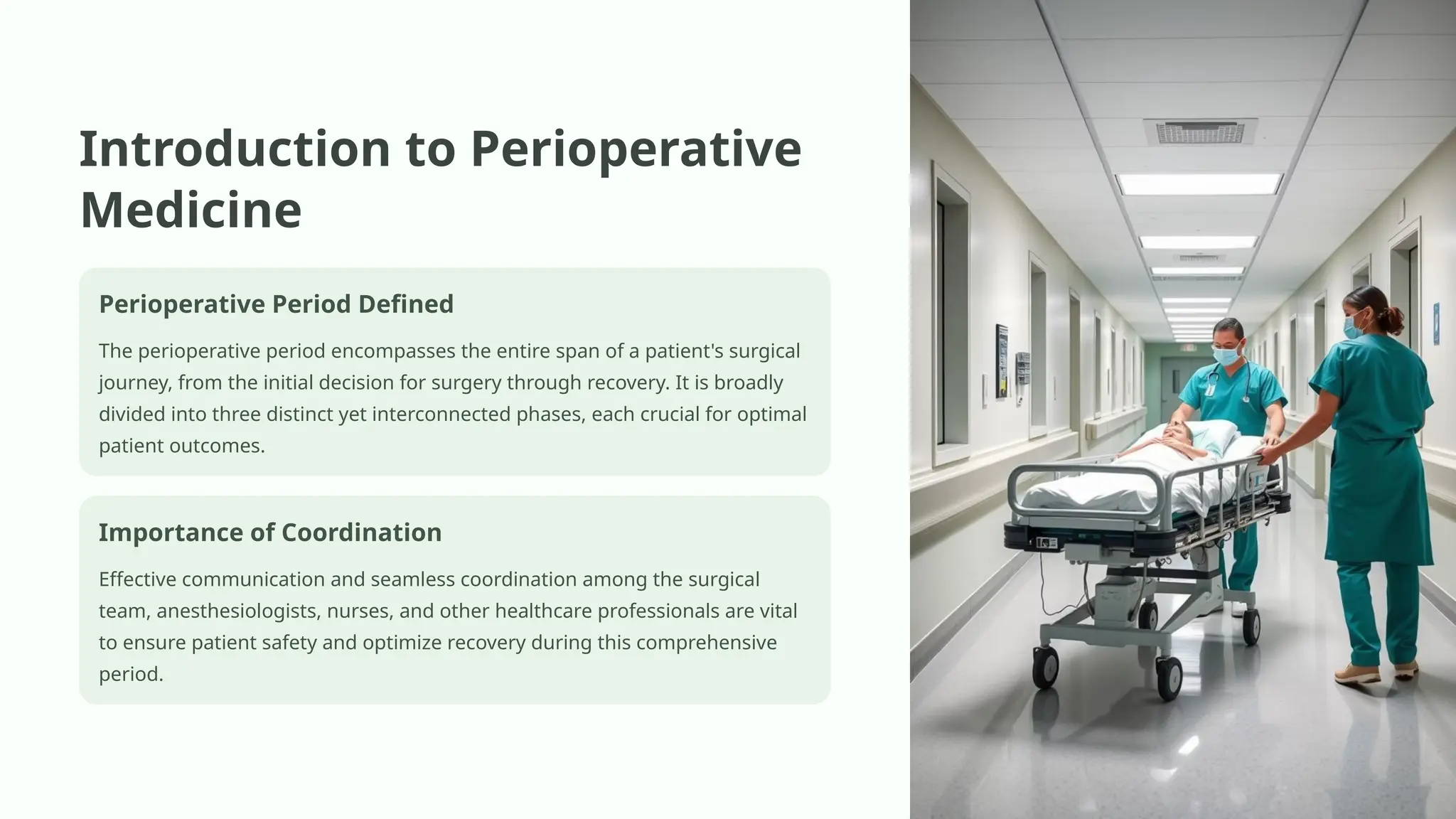
Introduction to Perioperative
Medicine
PerioperativePeriod Defined
The perioperative period encompasses the entire span of a patient's surgical
journey, from the initial decision for surgery through recovery. It is broadly
divided into three distinct yet interconnected phases, each crucial for optimal
patient outcomes.
Importance of Coordination
Effective communication and seamless coordination among the surgical
team, anesthesiologists, nurses, and other healthcare professionals are vital
to ensure patient safety and optimize recovery during this comprehensive
period.
3.
Phases of thePerioperative Journey
1
Preoperative Phase
This phase begins when the decision for surgical intervention is
made and concludes with the patient's transfer to the operating
room table. It involves comprehensive patient assessment, risk
stratification, and preparation to ensure the patient is in the best
possible condition for surgery.
2
Intraoperative Phase
Starting when the patient is transferred to the operating room
table, this phase covers the actual surgical procedure and ends
when the patient is admitted to the postanesthesia care unit
(PACU). During this time, the surgical team focuses on safe and
effective execution of the procedure.
3
Postoperative Phase
This phase commences with the patient's admission to the PACU
and extends through their follow-up evaluation in the clinical
setting or at home. It focuses on recovery from anesthesia and
surgery, pain management, monitoring for complications, and
rehabilitation.
4.
Patient Assessment: TheFoundation
A thorough patient assessment is the bedrock of safe preoperative care. This comprehensive evaluation involves gathering detailed
information about the patient's medical history, conducting a physical examination, and ordering relevant investigations. The goal is to
identify potential risks, optimize the patient's health status, and formulate an individualized care plan.
1 Comprehensive History Taking
Gathering a detailed medical history is the first critical step.
This includes current symptoms, past medical conditions,
surgical history, medications, allergies, social history
(smoking, alcohol, recreational drugs), and family medical
history. Special attention should be paid to cardiac,
respiratory, renal, and endocrine systems.
2 Thorough Physical Examination
A systematic physical examination provides objective
information about the patient's overall health. This should
cover all major organ systems, including cardiovascular,
respiratory, gastrointestinal, neurological, and
musculoskeletal assessments. Vital signs, general
appearance, and specific findings relevant to the planned
surgery are crucial.
5.
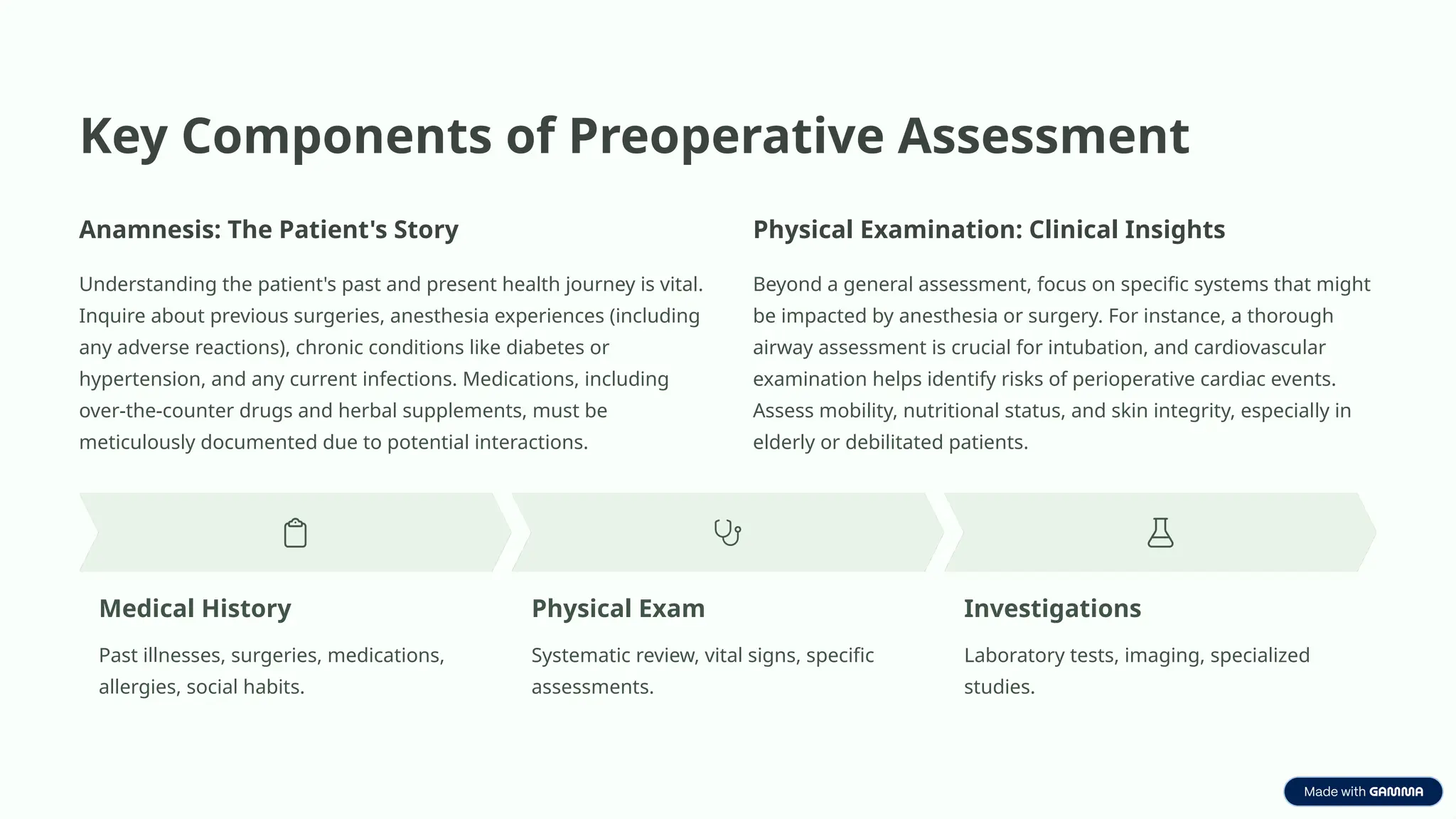
Key Components ofPreoperative Assessment
Anamnesis: The Patient's Story
Understanding the patient's past and present health journey is vital.
Inquire about previous surgeries, anesthesia experiences (including
any adverse reactions), chronic conditions like diabetes or
hypertension, and any current infections. Medications, including
over-the-counter drugs and herbal supplements, must be
meticulously documented due to potential interactions.
Physical Examination: Clinical Insights
Beyond a general assessment, focus on specific systems that might
be impacted by anesthesia or surgery. For instance, a thorough
airway assessment is crucial for intubation, and cardiovascular
examination helps identify risks of perioperative cardiac events.
Assess mobility, nutritional status, and skin integrity, especially in
elderly or debilitated patients.
Medical History
Past illnesses, surgeries, medications,
allergies, social habits.
Physical Exam
Systematic review, vital signs, specific
assessments.
Investigations
Laboratory tests, imaging, specialized
studies.
6.
Investigations: Guiding ClinicalDecisions
Preoperative investigations are tailored to the individual patient and the planned surgical procedure. They serve to confirm diagnoses, assess
organ function, identify occult conditions, and evaluate the overall risk for surgery and anesthesia. The choice of tests is not standardized but
rather guided by specific clinical factors.
1 Type of Surgery
Major surgeries typically necessitate a
broader range of investigations
compared to minor procedures. The
extent of physiological stress and
potential blood loss dictates the need
for comprehensive baseline data.
2 Patient-Specific Factors
Individual patient characteristics,
such as age, genetic predispositions,
and family history, play a crucial role.
For example, a sickle cell test would
be performed for patients with a
family history of sickle cell disease to
prevent perioperative complications.
3 Comorbidities
Pre-existing medical conditions
significantly influence the choice of
investigations. Patients with severe
asthma, for instance, may require
peak flow rates to assess respiratory
function, while those with cardiac
disease might need advanced
cardiovascular assessments.
7.
Essential Preoperative LaboratoryTests
Routine Blood Tests
A Full Blood Count (FBC) provides essential information on
hemoglobin levels (for anemia), white blood cell count (for
infection), and platelet count (for clotting). Urea and Electrolytes
(U&Es) assess renal function and electrolyte balance, which can be
critical for fluid management and cardiac stability.
Cardiac Assessment
An Electrocardiography (ECG) is a fundamental cardiac
assessment, particularly for patients over 65 years of age or those
with a history of rheumatic fever, diabetes, cardiovascular, renal,
and cerebrovascular disease. Its necessity also depends on whether
the surgery is minor, intermediate, or major, reflecting the cardiac
stress anticipated.
65+
Age for ECG
Mandatory for patients over this
age or with specific
comorbidities.
1
FBC Importance
Initial screening for anemia,
infection, and clotting disorders.
3
U&E Focus
Critical for renal function,
hydration, and electrolyte
balance.
8.
Specialized Preoperative Investigations
Respiratoryand Coagulation Assessments
A Chest Radiograph is indicated for patients with cardiac failure,
severe COPD, acute respiratory symptoms, pulmonary cancer,
metastasis, effusions, or pulmonary tuberculosis, to assess lung
status and rule out active disease. A Clotting screen is crucial if
there's a history suggestive of a bleeding diathesis, liver disease,
eclampsia, cholestasis, a family history of bleeding disorder, or if
the patient is on antithrombotic/anticoagulant agents.
Other Essential Tests
Urinalysis: Screens for urinary tract infections, renal disease, and
diabetes.
Pregnancy Test: Mandatory for any woman of child-bearing age to
ensure fetal safety before anesthesia and surgery.
Blood glucose and HbA1c: Provides insight into glycemic control,
crucial for diabetic patients to prevent perioperative hyperglycemia.
9.
Advanced Diagnostic Modalities
Beyondroutine tests, certain patient conditions or surgical complexities warrant more advanced diagnostic evaluations. These specialized
investigations provide deeper insights into organ function and disease severity, enabling tailored preoperative optimization strategies.
Arterial Blood Gases (ABGs): Provide vital information on oxygenation, ventilation, and acid-base status, indispensable in acute or chronic
severe respiratory conditions and metabolic disturbances.
Liver Function Tests (LFTs): Essential in patients with jaundice, known or suspected hepatitis, cirrhosis, malignancy, or those with poor
nutritional status, to assess hepatic synthetic and excretory function.
Radiological Views and Recent Imaging: Reviewing previous or obtaining new imaging (e.g., X-rays, CT scans, MRIs) is crucial for
understanding anatomical variations, disease extent, and surgical planning, especially in complex cases or those involving orthopedic,
neurological, or abdominal procedures.
10.
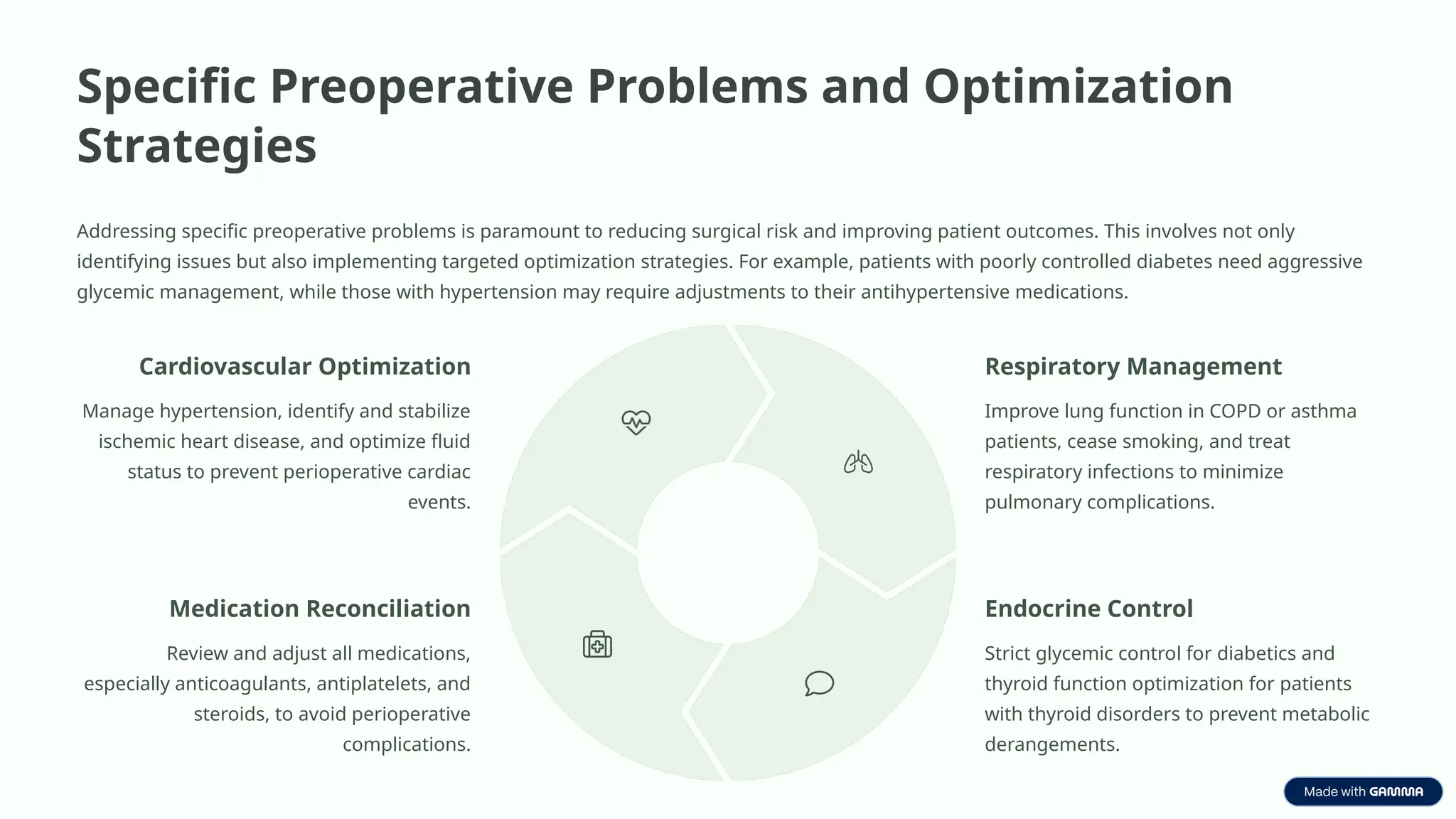
Specific Preoperative Problemsand Optimization
Strategies
Addressing specific preoperative problems is paramount to reducing surgical risk and improving patient outcomes. This involves not only
identifying issues but also implementing targeted optimization strategies. For example, patients with poorly controlled diabetes need aggressive
glycemic management, while those with hypertension may require adjustments to their antihypertensive medications.
Cardiovascular Optimization
Manage hypertension, identify and stabilize
ischemic heart disease, and optimize fluid
status to prevent perioperative cardiac
events.
Respiratory Management
Improve lung function in COPD or asthma
patients, cease smoking, and treat
respiratory infections to minimize
pulmonary complications.
Endocrine Control
Strict glycemic control for diabetics and
thyroid function optimization for patients
with thyroid disorders to prevent metabolic
derangements.
Medication Reconciliation
Review and adjust all medications,
especially anticoagulants, antiplatelets, and
steroids, to avoid perioperative
complications.








![Preoperative preparation for HO's [Autosaved].pptx](https://cdn.slidesharecdn.com/ss_thumbnails/preoperativepreparationforhosautosaved-250125002123-1aeea3d4-thumbnail.jpg?width=640&height=640&fit=bounds)


