9/28/15	
  
1	
  
Precision Medicine in
Oncology – an Informatics
Perspective
September 22nd, 2015
Warren Kibbe, PhD
NCI Center for Biomedical Informatics
2
1.  Precision Medicine
2.  Pre-clinical models
3.  TCGA
4.  Genomic Data Commons
5.  Cloud Pilots
Slides	
  are	
  from	
  many	
  sources,	
  but	
  special	
  thanks	
  to	
  	
  
Drs.	
  Harold	
  Varmus,	
  Doug	
  Lowy,	
  Jim	
  Doroshow,	
  Lou	
  Staudt	
  
9/28/15	
  
2	
  
Photo	
  by	
  F.	
  Collins	
  
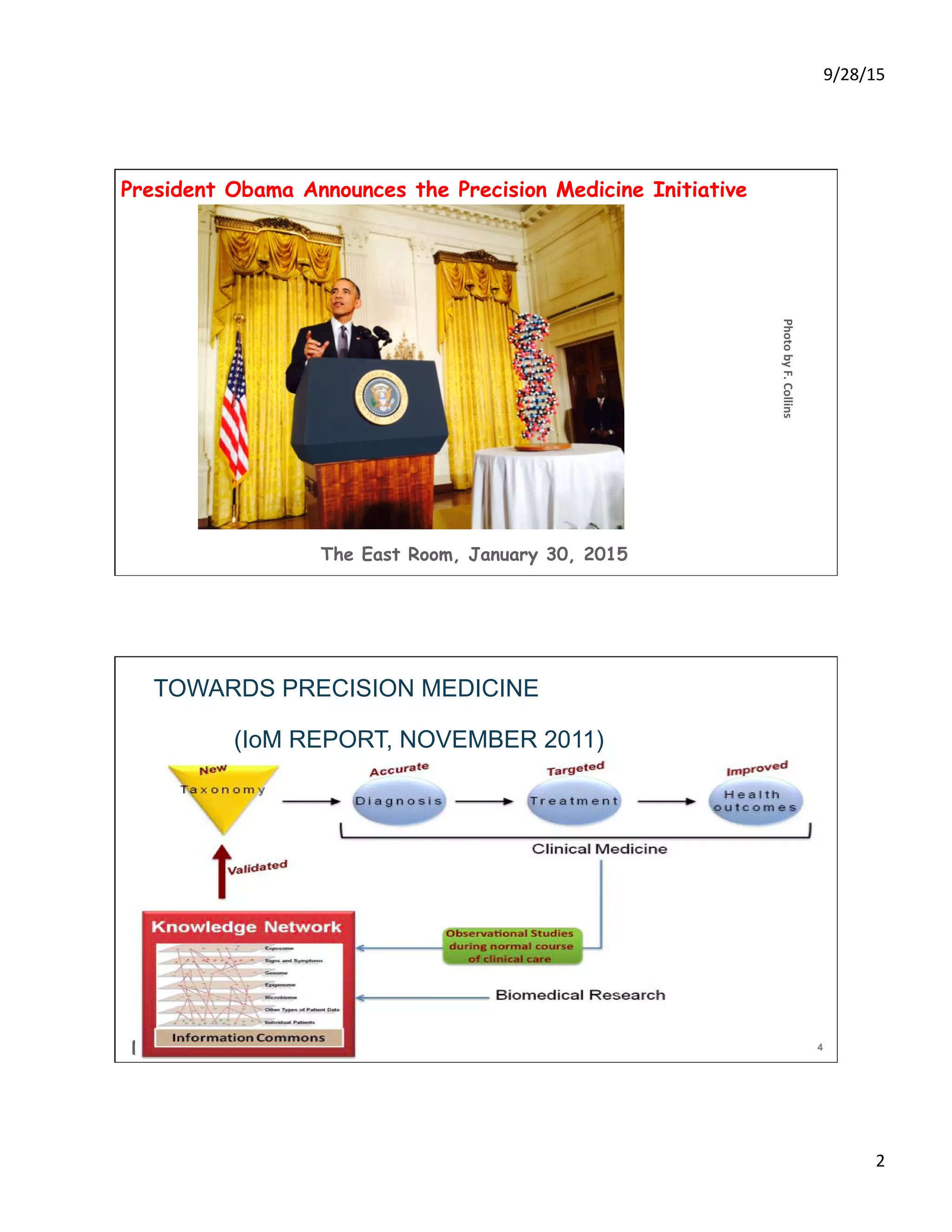
President Obama Announces the Precision Medicine Initiative
The East Room, January 30, 2015
4
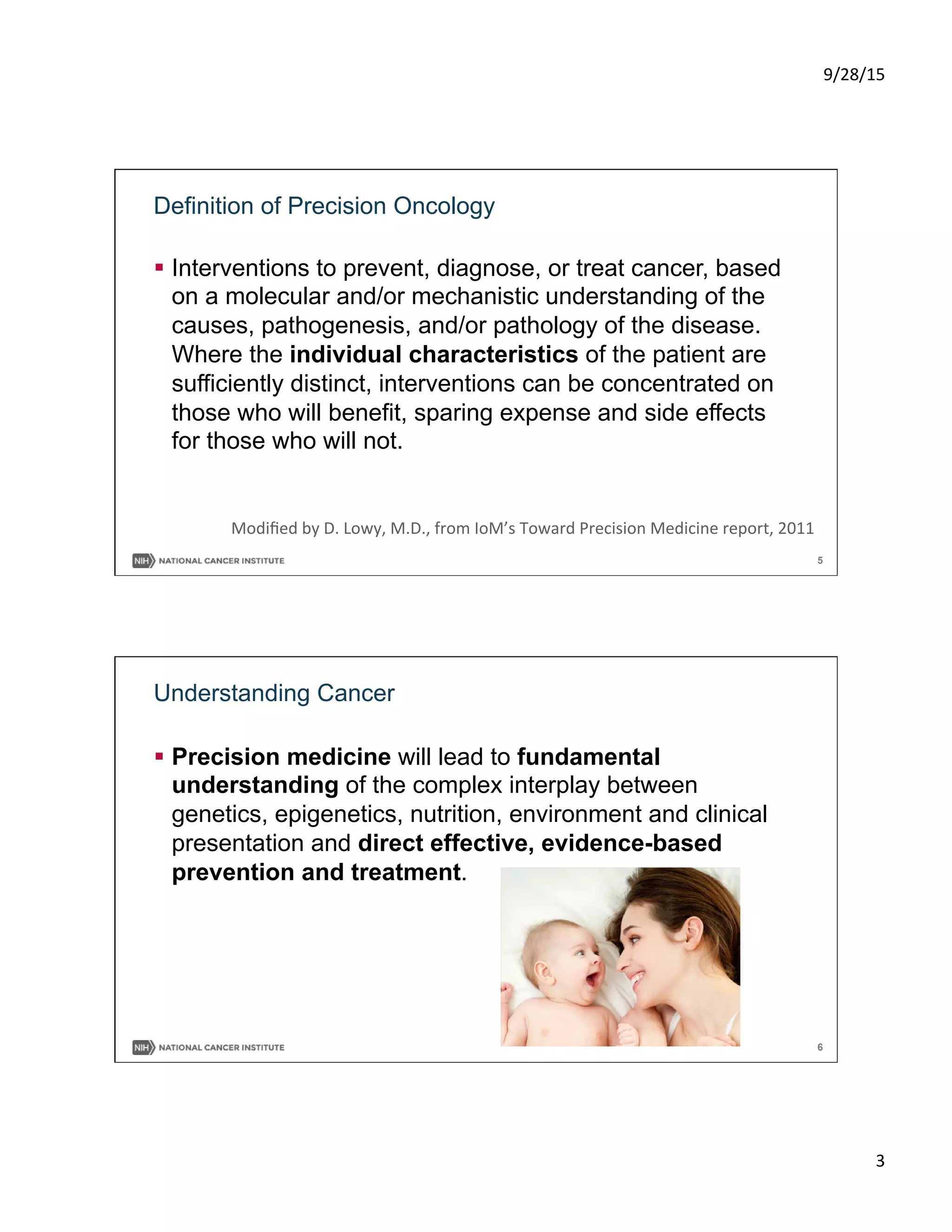
TOWARDS PRECISION MEDICINE
(IoM REPORT, NOVEMBER 2011)
9/28/15	
  
3	
  
5
Definition of Precision Oncology
§  Interventions to prevent, diagnose, or treat cancer, based
on a molecular and/or mechanistic understanding of the
causes, pathogenesis, and/or pathology of the disease.
Where the individual characteristics of the patient are
sufficiently distinct, interventions can be concentrated on
those who will benefit, sparing expense and side effects
for those who will not.
Modified	
  by	
  D.	
  Lowy,	
  M.D.,	
  from	
  IoM’s	
  Toward	
  Precision	
  Medicine	
  report,	
  2011	
  
6
Understanding Cancer
§  Precision medicine will lead to fundamental
understanding of the complex interplay between
genetics, epigenetics, nutrition, environment and clinical
presentation and direct effective, evidence-based
prevention and treatment.
9/28/15	
  
4	
  
7
What is Cancer?
§  Cancer is a disease where cells ‘lose’ the normal controls that enable
them to participate as productive, stable members of tissues, organs
and organ systems. The process of developing cancer is usually
viewed as having three phases
§  Initiation, where some of the normal control processes define the cell
type, inter-cellular communication with other cells, and normal
responses to cell-cell signaling are altered
§  Proliferation, where cancerous cells ‘take over’ normal processes and
begin to proliferate
§  Metastasis, where the cancerous cell leave their normal location and
invade other tissues
8
Cancer Statistics
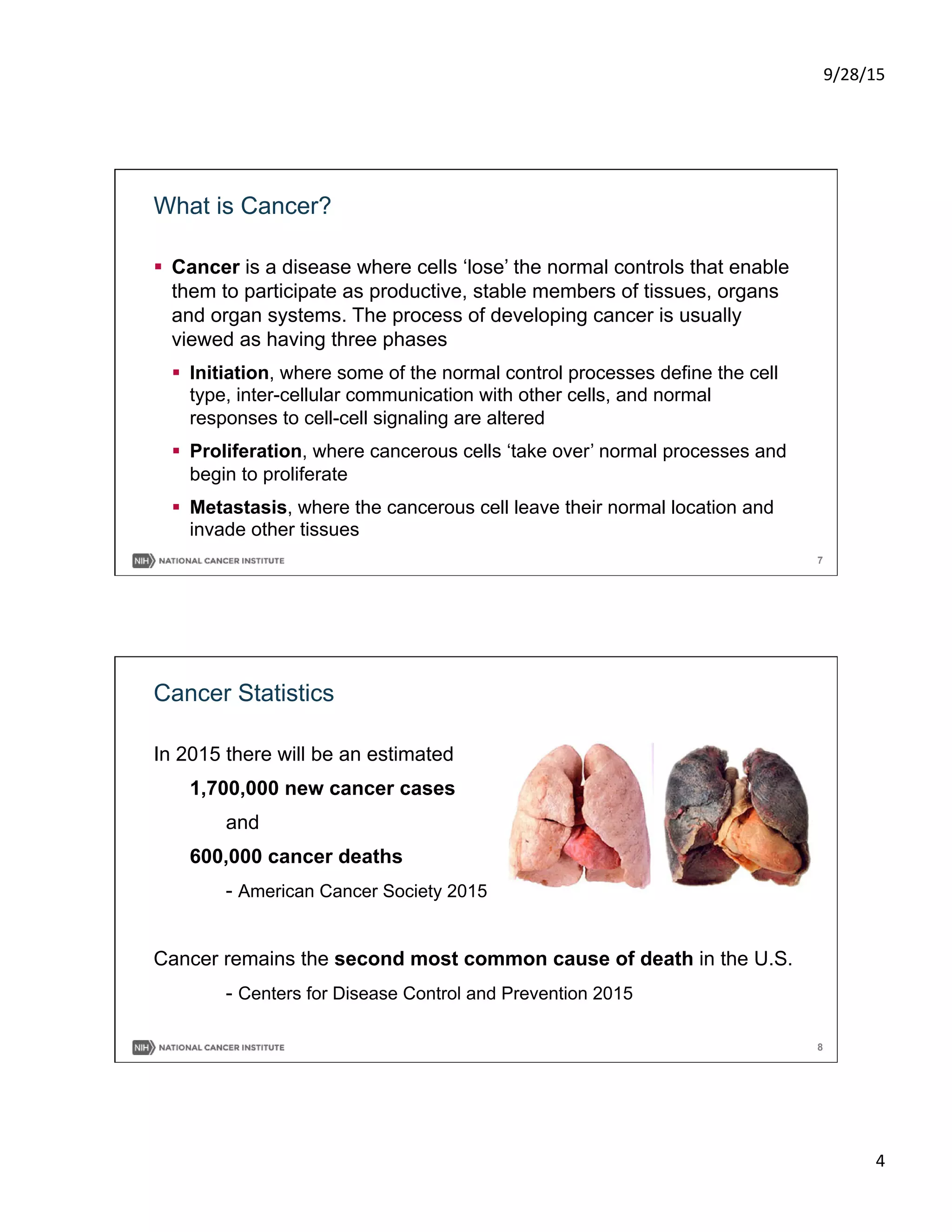
In 2015 there will be an estimated
1,700,000 new cancer cases
and
600,000 cancer deaths
- American Cancer Society 2015
Cancer remains the second most common cause of death in the U.S.
- Centers for Disease Control and Prevention 2015
9/28/15	
  
5	
  
9
Survivorship is on the rise
Today there are 14 million Americans alive with a history of cancer.
It is estimated that by 2024, the population of cancer survivors will
increase to almost 19 million: 9.3 million males and 9.6 million females
- American Cancer Society 2015
10
The hope
§  We need to do what the HIV/AIDS research community did in the last
30 years, turn a certain death sentence into a managed, chronic
disease.
§  Like the HIV/AIDS story for the course of the HIV infection, we believe
that cancer has multiple pathways that are altered during the course of
the disease, and that targeted therapies hitting multiple involved
signaling pathways, metabolic pathways, receptors can block and
prevent disease progression
§  Unlike HIV, the course of cancer is more individualized and involves
different molecular actors depending on the cancer and the individual
9/28/15	
  
6	
  
11
The frustration
We already know how to remove >50% of the cancer burden in the U.S.
Consistent nutrition, exercise & sleep – estimate(10-30%)
Tobacco control (smoking cessation) – ~25%
HPV and HCV immunization – ~20%
Behavior change is hard. Impacting the behavior of a broad population is
harder.
12
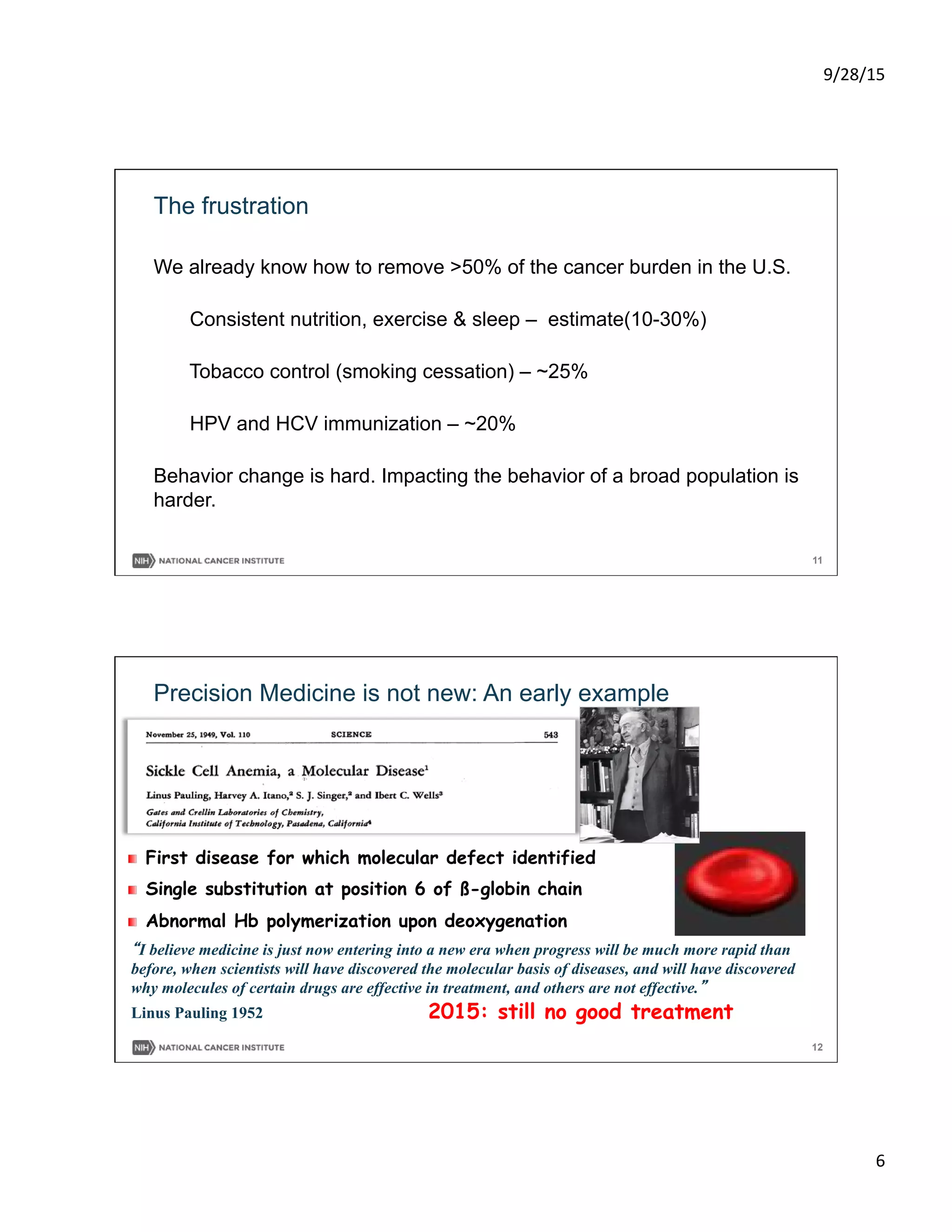
Precision Medicine is not new: An early example
First disease for which molecular defect identified
Single substitution at position 6 of ß-globin chain
Abnormal Hb polymerization upon deoxygenation
“I believe medicine is just now entering into a new era when progress will be much more rapid than
before, when scientists will have discovered the molecular basis of diseases, and will have discovered
why molecules of certain drugs are effective in treatment, and others are not effective.”
Linus Pauling 1952 2015: still no good treatment
9/28/15	
  
7	
  
13
The NCI Mission
& the PMI for
Oncology
•  NCI Mission: To help people live
longer, healthier lives by supporting
research to reduce the incidence of
cancer and to improve the outlook for
patients who develop cancer
•  Precision Medicine Initiative for
Oncology: Significantly expand our
efforts to improve cancer treatment
through genomics
14
What Problems are We Trying to Solve?
Precision	
  Medicine	
  	
  
Ini5a5ve	
  in	
  Oncology	
  
•  For most of its 70-year history,
systemic cancer treatment has relied
on therapies that are marginally more
toxic to malignant cells than to normal
tissues
•  Molecular molecules that predict
benefit, response, or resistance in the
clinic have been lacking for many
cancers
9/28/15	
  
8	
  
15
Proposed Solution to these Problems
Use genomics and other high
throughput technologies including
imaging to identify, create
predictive signatures, and
target molecular vulnerabilities
of individual cancers
Precision	
  Medicine	
  	
  
Ini5a5ve	
  in	
  Oncology	
  
16
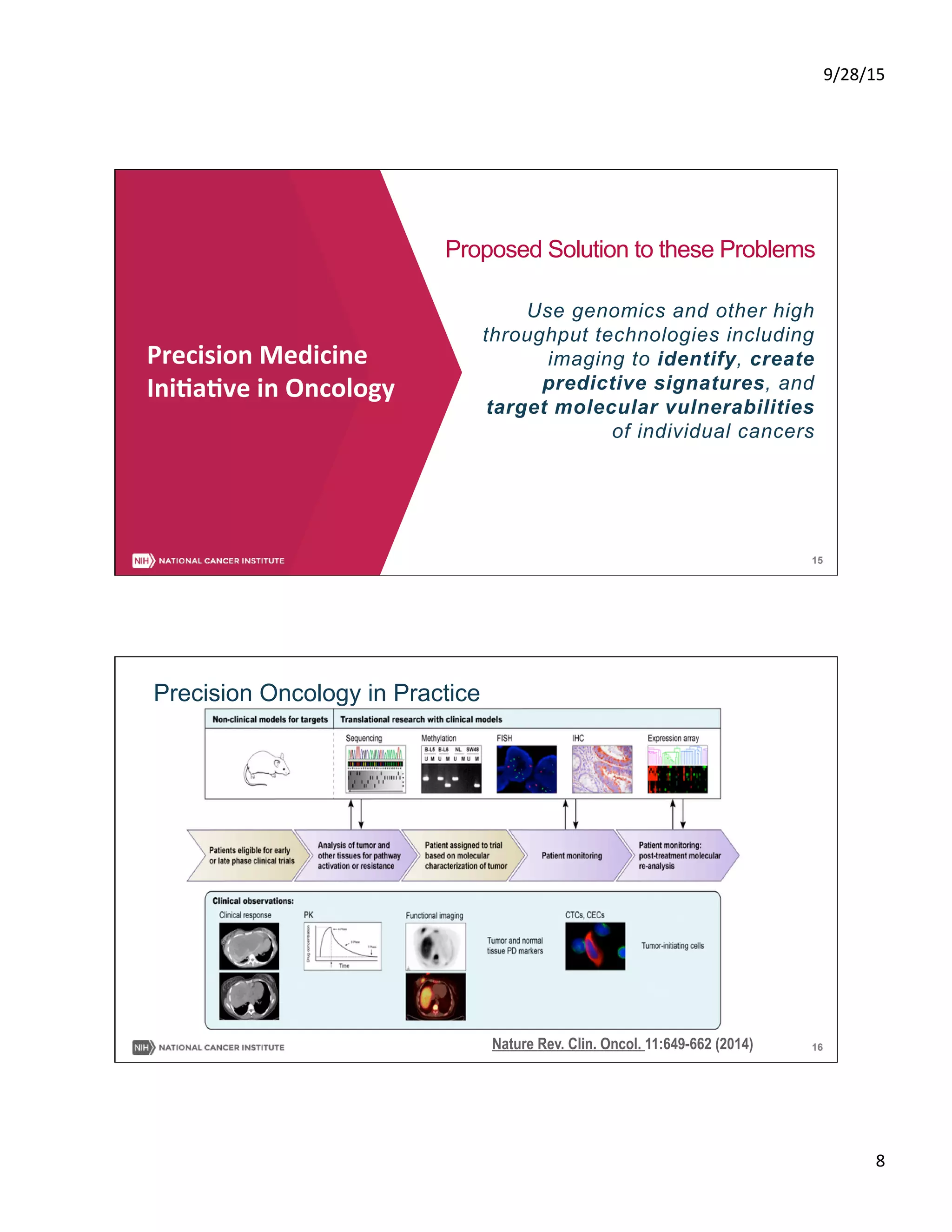
Precision Oncology in Practice
Nature Rev. Clin. Oncol. 11:649-662 (2014)
9/28/15	
  
9	
  
17
Precision Oncology
Trials Launched
2014:
MPACT
Lung MAP
ALCHEMIST
Exceptional Responders
2015:
NCI-MATCH
ALK Inhibitor
MET Inhibitor
NCI-MATCH: Features
[Molecular Analysis for Therapy Choice]
• Foundational treatment/discovery
trial; assigns therapy based on
molecular abnormalities, not site of
tumor origin for patients without
available standard therapy
• Regulatory umbrella for phase II
drugs/studies from > 20 companies;
single agents or combinations
• Available nationwide (2400 sites)
• Accrual began mid-August 2015
NCI MATCH
• Conduct	
  across	
  2400	
  NCI-­‐supported	
  sites	
  
• Pay	
  for	
  on-­‐study	
  and	
  at	
  progression	
  biopsies	
  
• Ini5al	
  es5mate:	
  screen	
  3000	
  pa5ents	
  to	
  complete	
  
	
  20	
  phase	
  II	
  trials	
  
1CR,	
  PR,	
  SD,	
  and	
  PD	
  as	
  defined	
  by	
  RECIST	
  
2Stable	
  disease	
  is	
  assessed	
  relaSve	
  to	
  tumor	
  status	
  at	
  re-­‐iniSaSon	
  of	
  study	
  agent	
  
3Rebiopsy;	
  if	
  addiSonal	
  mutaSons,	
  offer	
  new	
  targeted	
  therapy	
  
,2	
  
9/28/15	
  
10	
  
19
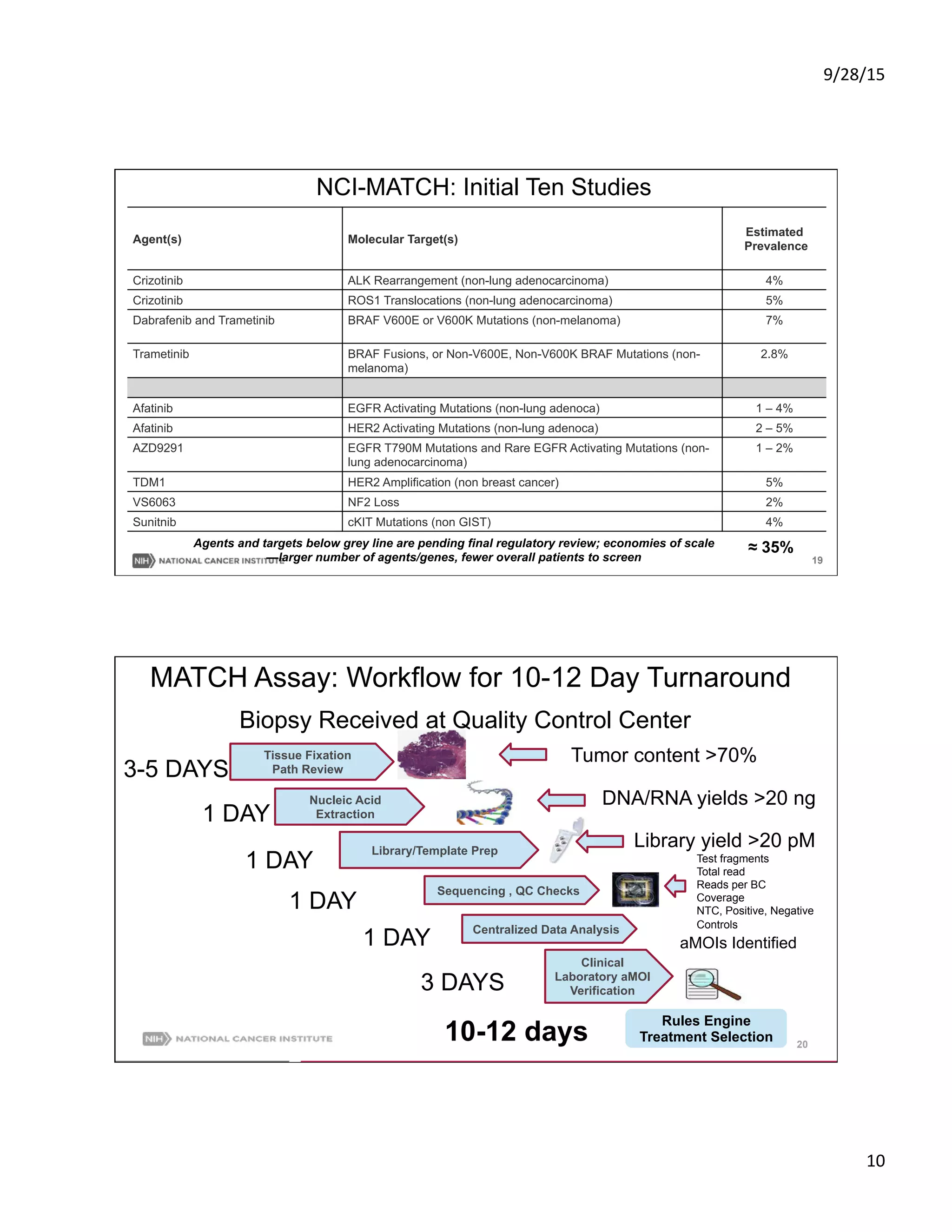
NCI-MATCH: Initial Ten Studies
Agents and targets below grey line are pending final regulatory review; economies of scale
—larger number of agents/genes, fewer overall patients to screen
Agent(s) Molecular Target(s)
Estimated
Prevalence
Crizotinib ALK Rearrangement (non-lung adenocarcinoma) 4%
Crizotinib ROS1 Translocations (non-lung adenocarcinoma) 5%
Dabrafenib and Trametinib BRAF V600E or V600K Mutations (non-melanoma) 7%
Trametinib BRAF Fusions, or Non-V600E, Non-V600K BRAF Mutations (non-
melanoma)
2.8%
Afatinib EGFR Activating Mutations (non-lung adenoca) 1 – 4%
Afatinib HER2 Activating Mutations (non-lung adenoca) 2 – 5%
AZD9291 EGFR T790M Mutations and Rare EGFR Activating Mutations (non-
lung adenocarcinoma)
1 – 2%
TDM1 HER2 Amplification (non breast cancer) 5%
VS6063 NF2 Loss 2%
Sunitnib cKIT Mutations (non GIST) 4%
≈ 35%
20
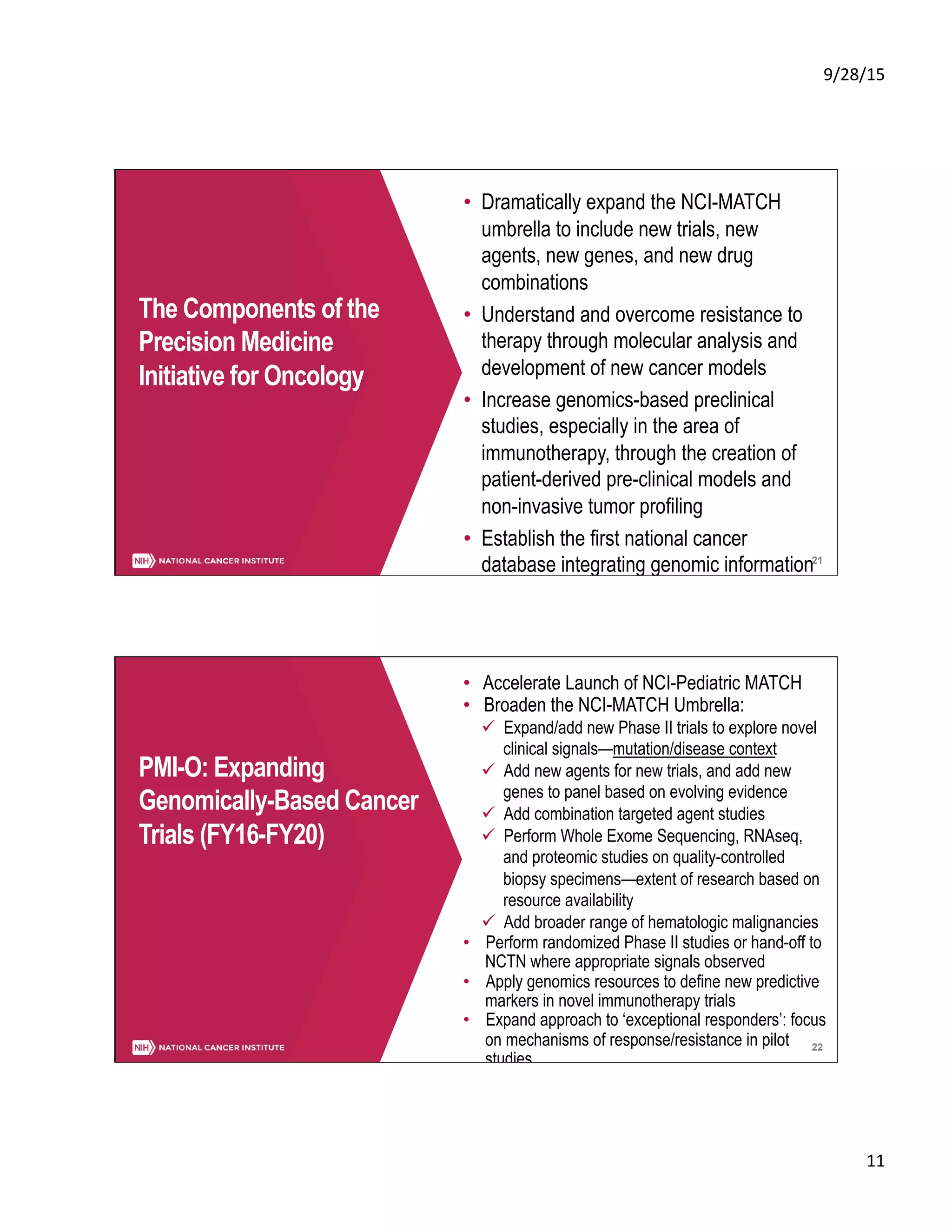
MATCH Assay: Workflow for 10-12 Day Turnaround
Tissue Fixation
Path Review
Nucleic Acid
Extraction
Library/Template Prep
Sequencing , QC Checks
Clinical
Laboratory aMOI
Verification
Biopsy Received at Quality Control Center
1 DAY
1 DAY
1 DAY
1 DAY
3 DAYS
10-12 days
Tumor content >70%
Centralized Data Analysis
DNA/RNA yields >20 ng
Library yield >20 pM
Test fragments
Total read
Reads per BC
Coverage
NTC, Positive, Negative
Controls
aMOIs Identified
Rules Engine
Treatment Selection
3-5 DAYS
9/28/15	
  
11	
  
21
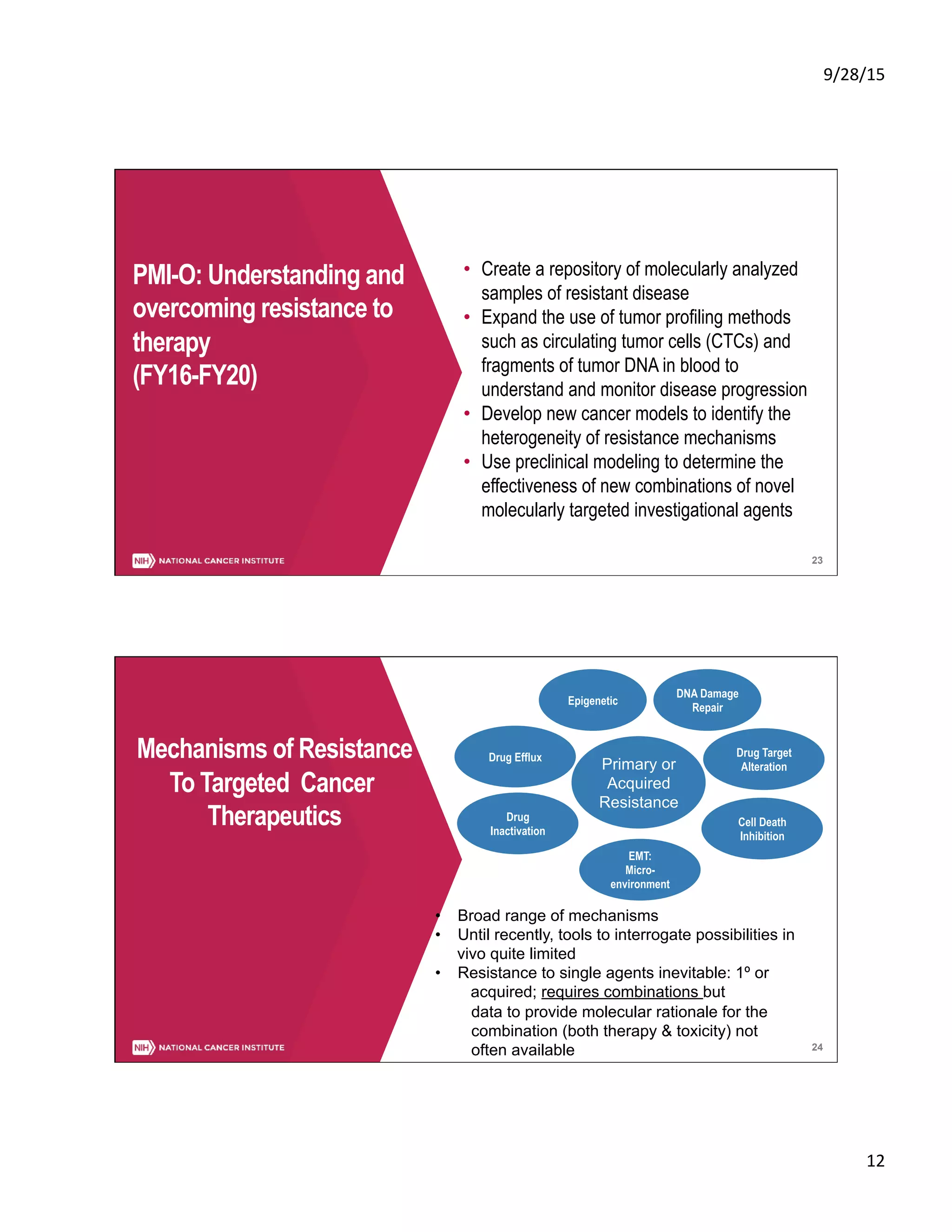
The Components of the
Precision Medicine
Initiative for Oncology
•  Dramatically expand the NCI-MATCH
umbrella to include new trials, new
agents, new genes, and new drug
combinations
•  Understand and overcome resistance to
therapy through molecular analysis and
development of new cancer models
•  Increase genomics-based preclinical
studies, especially in the area of
immunotherapy, through the creation of
patient-derived pre-clinical models and
non-invasive tumor profiling
•  Establish the first national cancer
database integrating genomic information
with clinical response and outcome: to
accelerate understanding of cancer and
improve its treatment
22
PMI-O: Expanding
Genomically-Based Cancer
Trials (FY16-FY20)
•  Accelerate Launch of NCI-Pediatric MATCH
•  Broaden the NCI-MATCH Umbrella:
ü  Expand/add new Phase II trials to explore novel
clinical signals—mutation/disease context
ü  Add new agents for new trials, and add new
genes to panel based on evolving evidence
ü  Add combination targeted agent studies
ü  Perform Whole Exome Sequencing, RNAseq,
and proteomic studies on quality-controlled
biopsy specimens—extent of research based on
resource availability
ü  Add broader range of hematologic malignancies
•  Perform randomized Phase II studies or hand-off to
NCTN where appropriate signals observed
•  Apply genomics resources to define new predictive
markers in novel immunotherapy trials
•  Expand approach to ‘exceptional responders’: focus
on mechanisms of response/resistance in pilot
studies
9/28/15	
  
12	
  
23
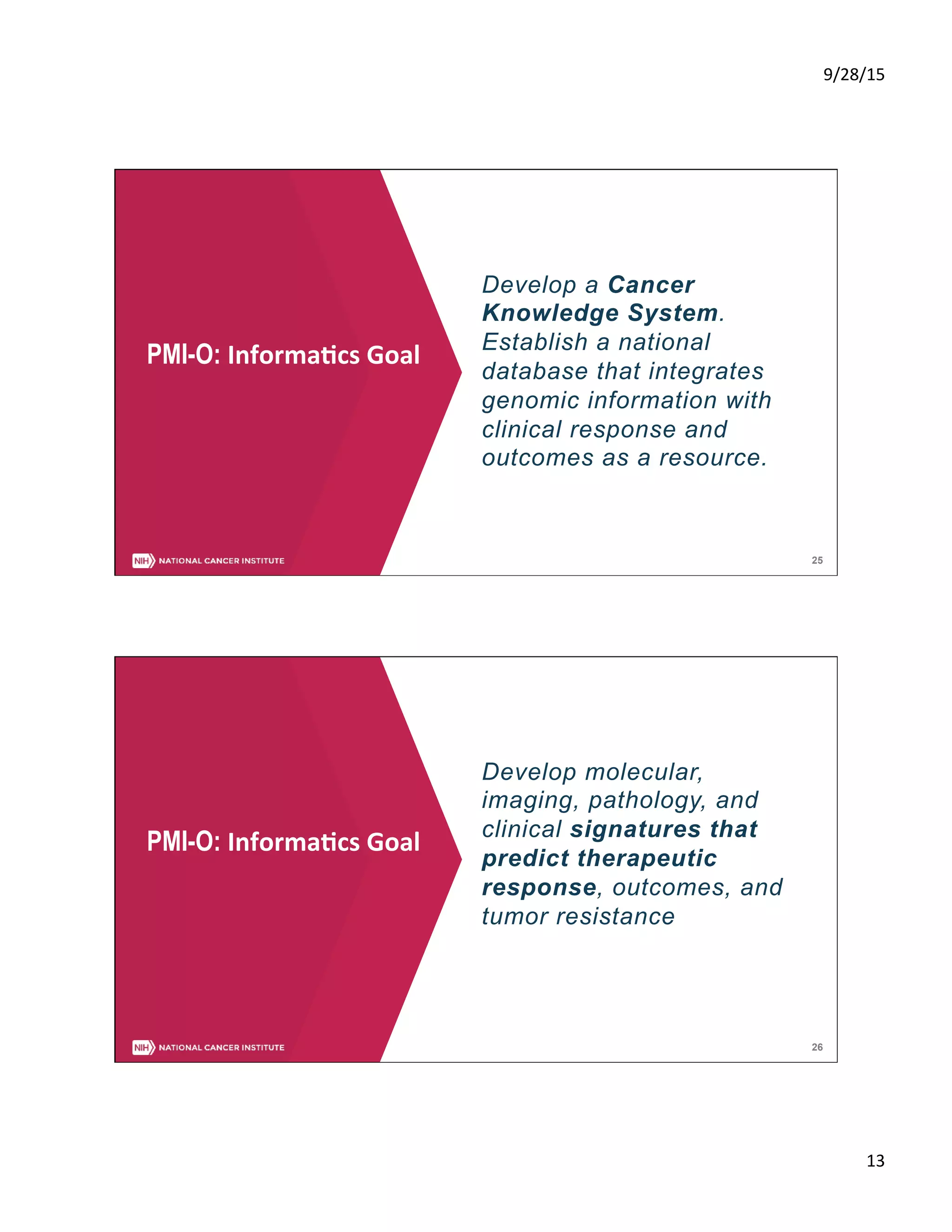
PMI-O: Understanding and
overcoming resistance to
therapy
(FY16-FY20)
•  Create a repository of molecularly analyzed
samples of resistant disease
•  Expand the use of tumor profiling methods
such as circulating tumor cells (CTCs) and
fragments of tumor DNA in blood to
understand and monitor disease progression
•  Develop new cancer models to identify the
heterogeneity of resistance mechanisms
•  Use preclinical modeling to determine the
effectiveness of new combinations of novel
molecularly targeted investigational agents
24
Mechanisms of Resistance
To Targeted Cancer
Therapeutics
Primary or
Acquired
Resistance
Epigenetic
DNA Damage
Repair
Drug Efflux
Drug
Inactivation
EMT:
Micro-
environment
Cell Death
Inhibition
Drug Target
Alteration
•  Broad range of mechanisms
•  Until recently, tools to interrogate possibilities in
vivo quite limited
•  Resistance to single agents inevitable: 1º or
acquired; requires combinations but
data to provide molecular rationale for the
combination (both therapy & toxicity) not
often available
9/28/15	
  
13	
  
25
Develop a Cancer
Knowledge System.
Establish a national
database that integrates
genomic information with
clinical response and
outcomes as a resource.
PMI-O: Informa5cs	
  Goal	
  
26
Develop molecular,
imaging, pathology, and
clinical signatures that
predict therapeutic
response, outcomes, and
tumor resistance
PMI-O: Informa5cs	
  Goal	
  
9/28/15	
  
14	
  
27
Build multi-scale,
predictive computational
biology models for
understanding cancer
biology and informing
therapy. Develop detailed
cancer pathway models to
create targeted
combination therapies in
cancer. This approach has
transformed HIV therapy
and has the potential to do
the same in cancer
PMI-O: Informa5cs	
  Goal	
  
28
The Cancer Genomic Data
Commons (GDC) is an existing
effort to standardize and
simplify submission of genomic
data to NCI and follow the
principles of FAIR -Findable,
Accessible, Interoperable,
Reusable. The GDC is part of
the NIH Big Data to Knowledge
(BD2K) initiative and an
example of the NIH Data
Commons
Genomic Data Commons
9/28/15	
  
15	
  
The	
  Genomic	
  Data	
  Commons	


FacilitaSng	
  the	
  idenSficaSon	
  of	
  molecular	
  
subtypes	
  of	
  cancer	
  and	
  potenSal	
  drug	
  targets	
  
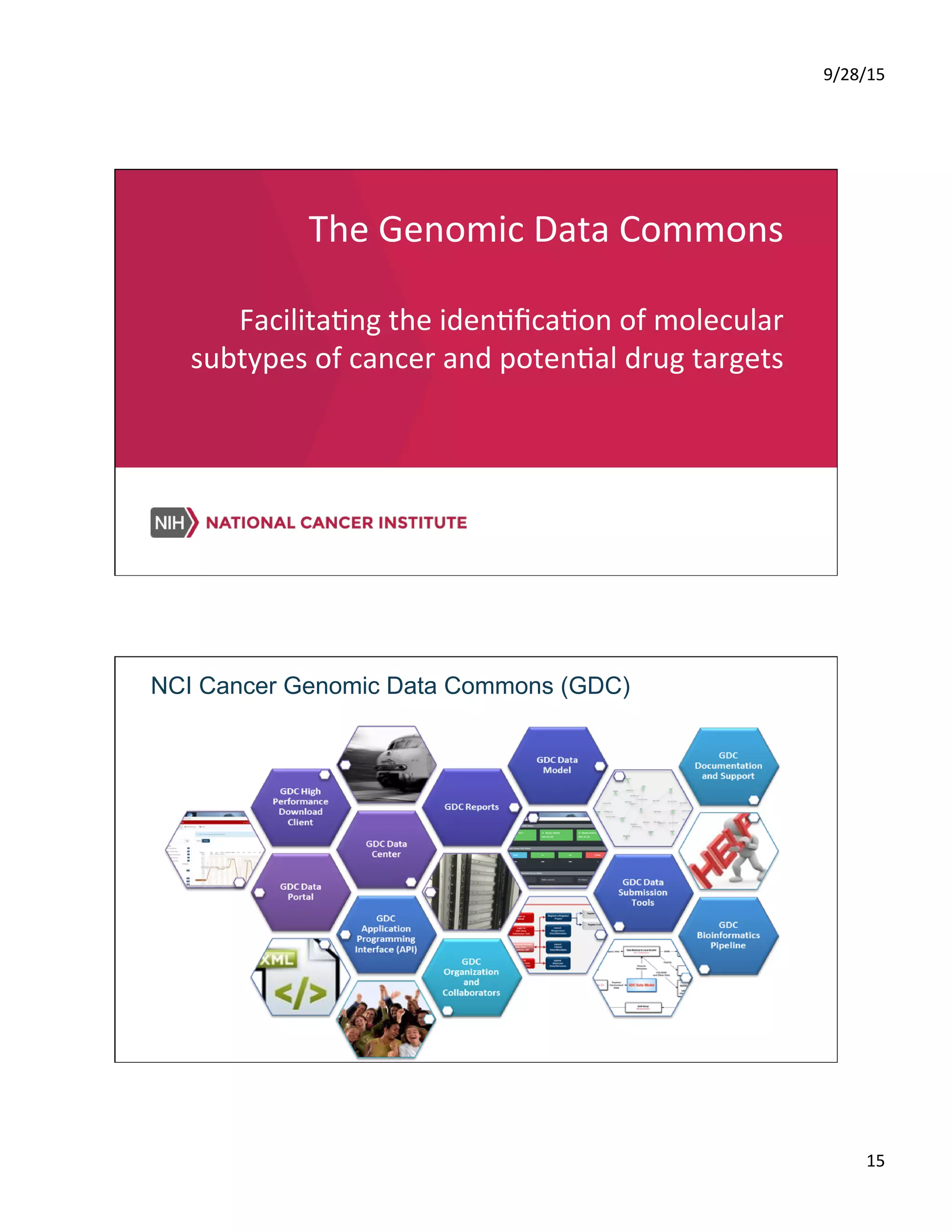
NCI Cancer Genomic Data Commons (GDC)
9/28/15	
  
16	
  
31
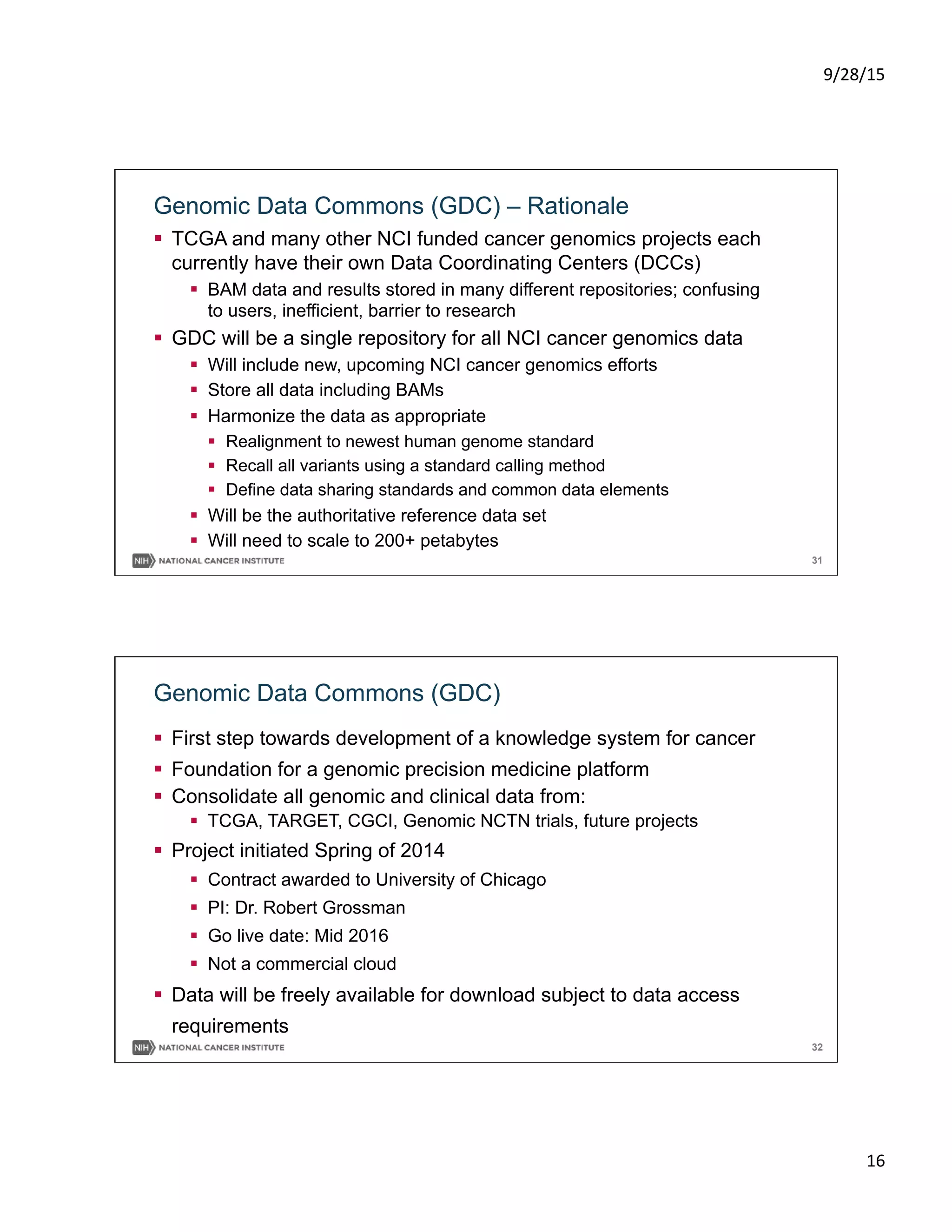
Genomic Data Commons (GDC) – Rationale
§  TCGA and many other NCI funded cancer genomics projects each
currently have their own Data Coordinating Centers (DCCs)
§  BAM data and results stored in many different repositories; confusing
to users, inefficient, barrier to research
§  GDC will be a single repository for all NCI cancer genomics data
§  Will include new, upcoming NCI cancer genomics efforts
§  Store all data including BAMs
§  Harmonize the data as appropriate
§  Realignment to newest human genome standard
§  Recall all variants using a standard calling method
§  Define data sharing standards and common data elements
§  Will be the authoritative reference data set
§  Will need to scale to 200+ petabytes
32
Genomic Data Commons (GDC)
§  First step towards development of a knowledge system for cancer
§  Foundation for a genomic precision medicine platform
§  Consolidate all genomic and clinical data from:
§  TCGA, TARGET, CGCI, Genomic NCTN trials, future projects
§  Project initiated Spring of 2014
§  Contract awarded to University of Chicago
§  PI: Dr. Robert Grossman
§  Go live date: Mid 2016
§  Not a commercial cloud
§  Data will be freely available for download subject to data access
requirements
9/28/15	
  
17	
  
The	
  NCI	
  Cancer	
  Genomics	
  	
  
Cloud	
  Pilots	


Understanding how to meet the research
community’s need to analyze large-scale cancer
genomic and clinical data
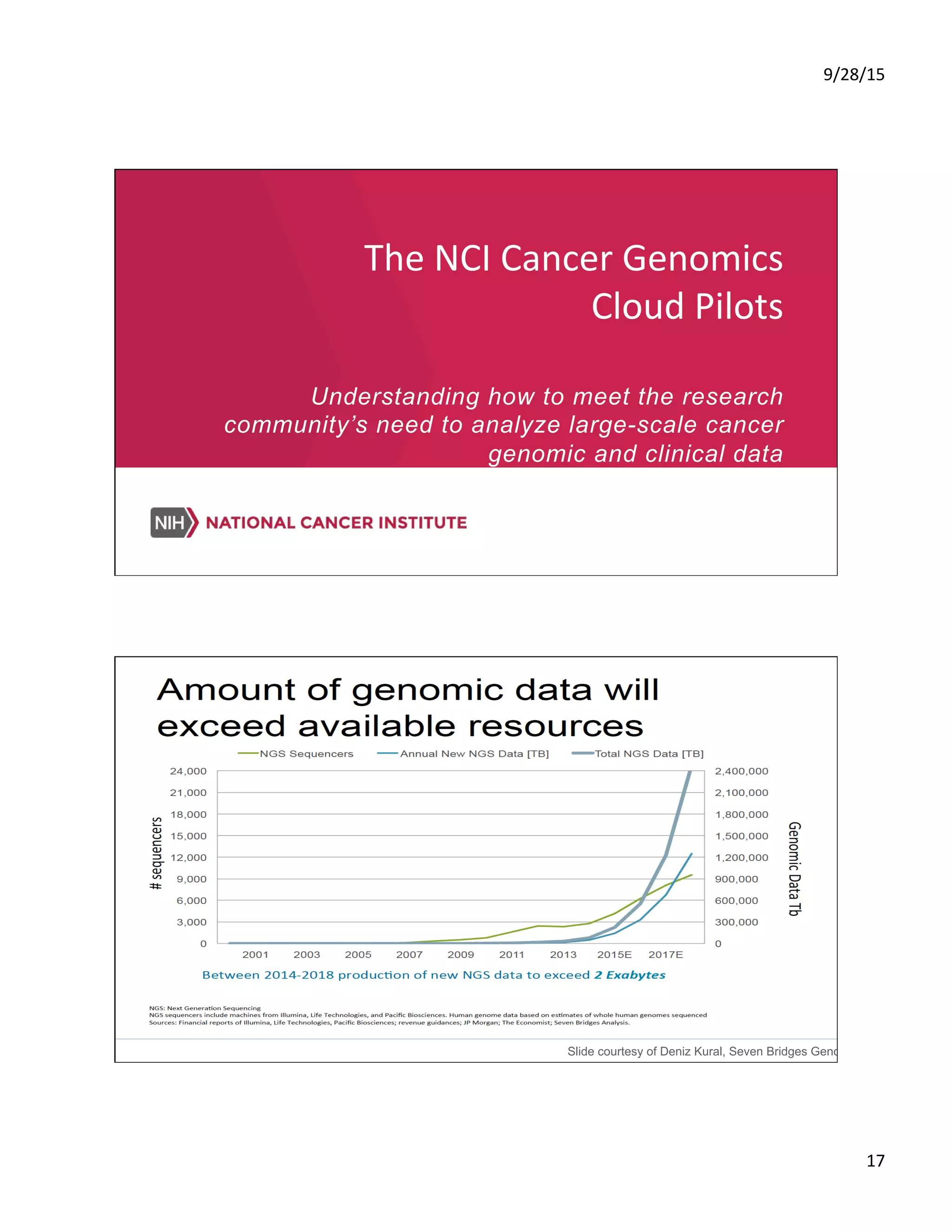
Slide courtesy of Deniz Kural, Seven Bridges Genomics
9/28/15	
  
18	
  
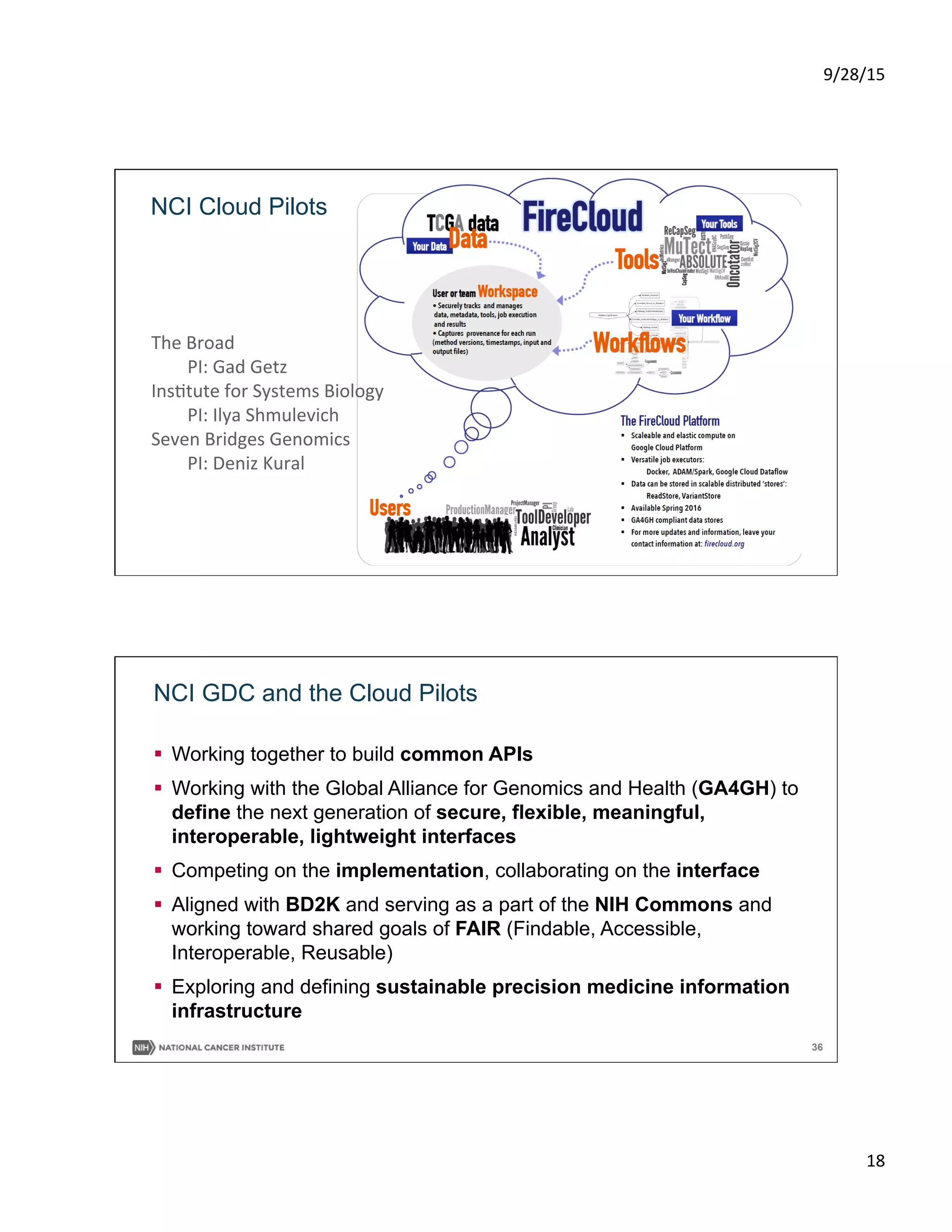
NCI Cloud Pilots
The	
  Broad	
  
	
  PI:	
  Gad	
  Getz	
  
InsStute	
  for	
  Systems	
  Biology	
  
	
  PI:	
  Ilya	
  Shmulevich	
  
Seven	
  Bridges	
  Genomics	
  
	
  PI:	
  Deniz	
  Kural	
  
36
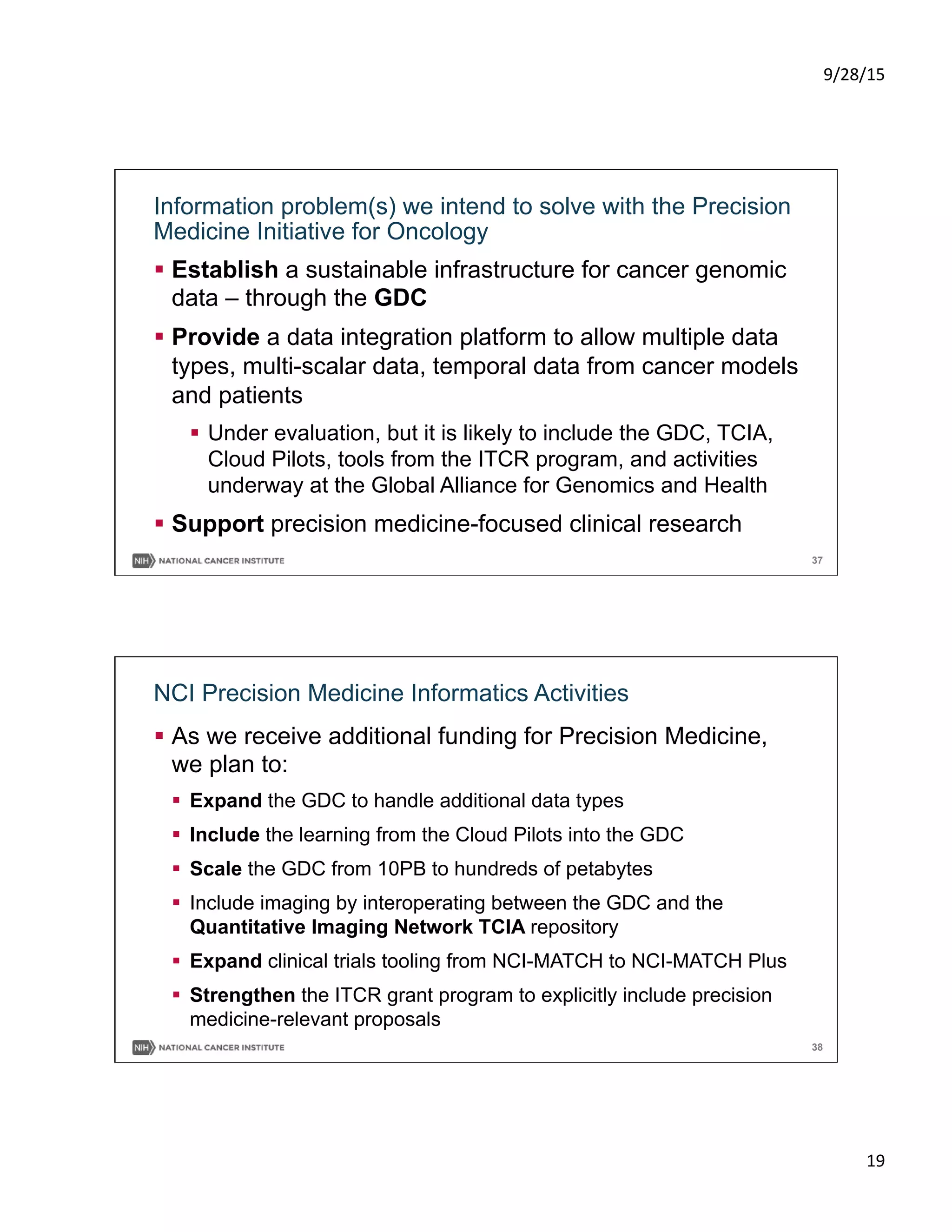
NCI GDC and the Cloud Pilots
§  Working together to build common APIs
§  Working with the Global Alliance for Genomics and Health (GA4GH) to
define the next generation of secure, flexible, meaningful,
interoperable, lightweight interfaces
§  Competing on the implementation, collaborating on the interface
§  Aligned with BD2K and serving as a part of the NIH Commons and
working toward shared goals of FAIR (Findable, Accessible,
Interoperable, Reusable)
§  Exploring and defining sustainable precision medicine information
infrastructure
9/28/15	
  
19	
  
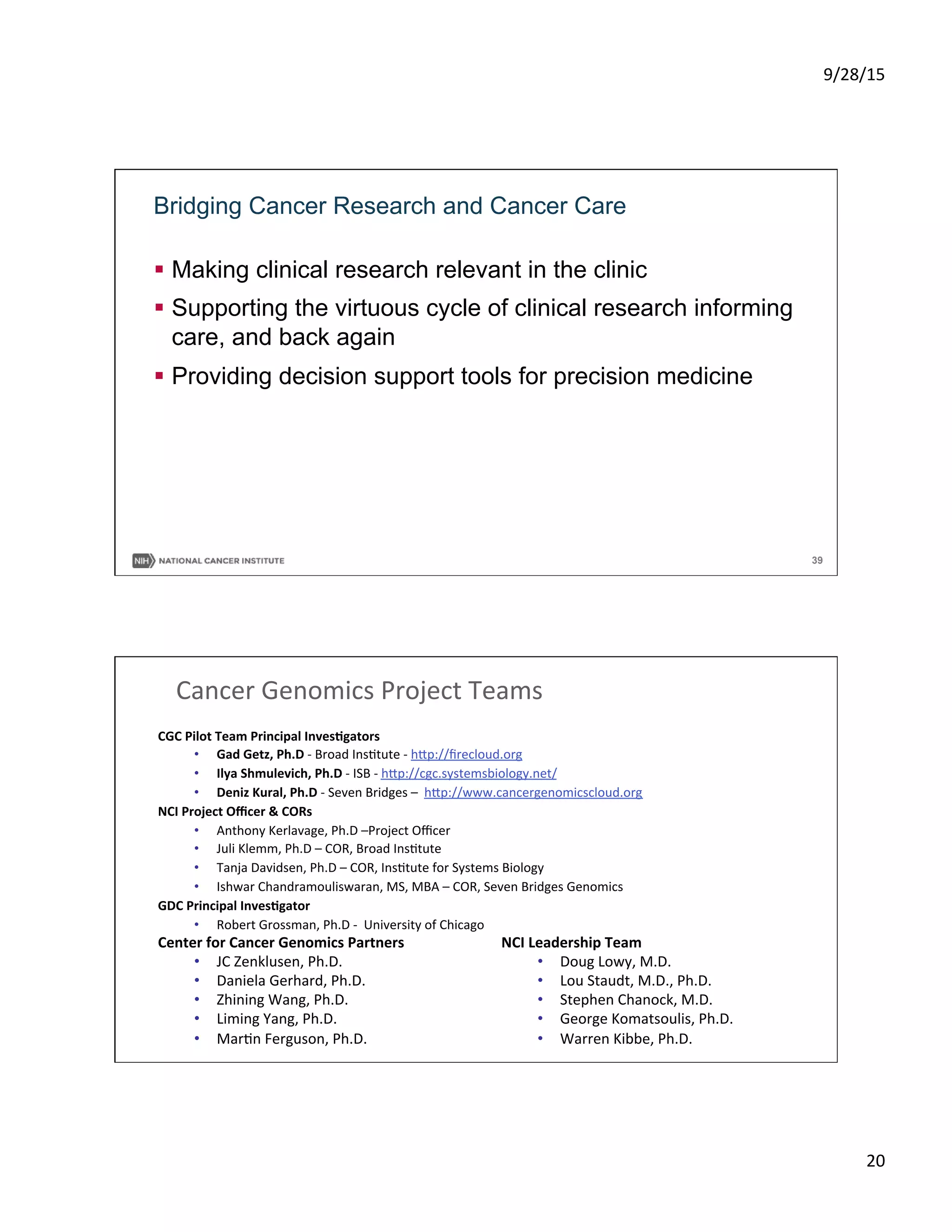
37
Information problem(s) we intend to solve with the Precision
Medicine Initiative for Oncology
§  Establish a sustainable infrastructure for cancer genomic
data – through the GDC
§  Provide a data integration platform to allow multiple data
types, multi-scalar data, temporal data from cancer models
and patients
§  Under evaluation, but it is likely to include the GDC, TCIA,
Cloud Pilots, tools from the ITCR program, and activities
underway at the Global Alliance for Genomics and Health
§  Support precision medicine-focused clinical research
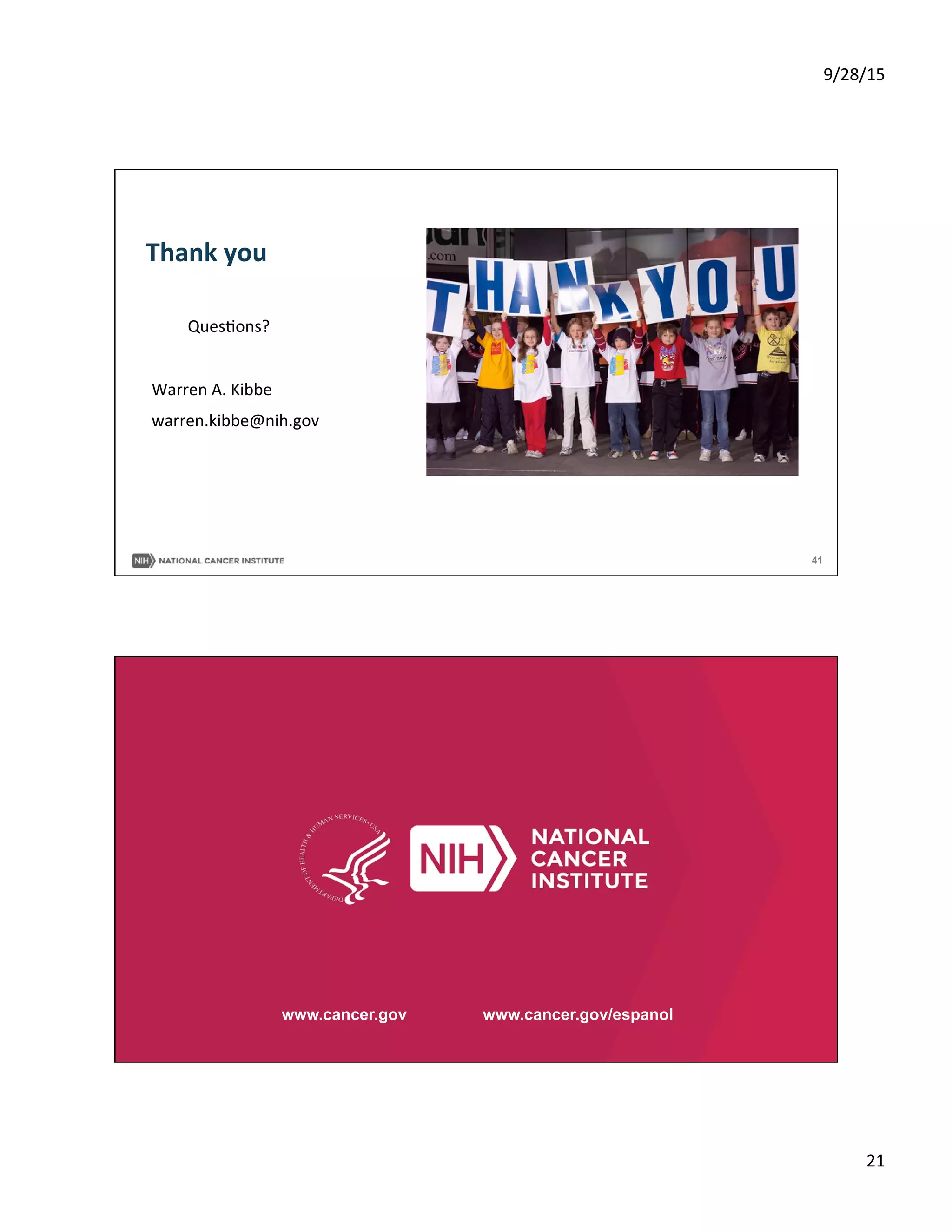
38
NCI Precision Medicine Informatics Activities
§  As we receive additional funding for Precision Medicine,
we plan to:
§  Expand the GDC to handle additional data types
§  Include the learning from the Cloud Pilots into the GDC
§  Scale the GDC from 10PB to hundreds of petabytes
§  Include imaging by interoperating between the GDC and the
Quantitative Imaging Network TCIA repository
§  Expand clinical trials tooling from NCI-MATCH to NCI-MATCH Plus
§  Strengthen the ITCR grant program to explicitly include precision
medicine-relevant proposals
9/28/15	
  
20	
  
39
Bridging Cancer Research and Cancer Care
§  Making clinical research relevant in the clinic
§  Supporting the virtuous cycle of clinical research informing
care, and back again
§  Providing decision support tools for precision medicine
CGC	
  Pilot	
  Team	
  Principal	
  Inves5gators	
  	
  
•  Gad	
  Getz,	
  Ph.D	
  -­‐	
  Broad	
  InsStute	
  -­‐	
  h_p://firecloud.org	


•  Ilya	
  Shmulevich,	
  Ph.D	
  -­‐	
  ISB	
  -­‐	
  h_p://cgc.systemsbiology.net/	


•  Deniz	
  Kural,	
  Ph.D	
  -­‐	
  Seven	
  Bridges	
  –	
  	
  h_p://www.cancergenomicscloud.org	


NCI	
  Project	
  Officer	
  &	
  CORs	
  
•  Anthony	
  Kerlavage,	
  Ph.D	
  –Project	
  Officer	
  
•  Juli	
  Klemm,	
  Ph.D	
  –	
  COR,	
  Broad	
  InsStute	
  
•  Tanja	
  Davidsen,	
  Ph.D	
  –	
  COR,	
  InsStute	
  for	
  Systems	
  Biology	
  	
  
•  Ishwar	
  Chandramouliswaran,	
  MS,	
  MBA	
  –	
  COR,	
  Seven	
  Bridges	
  Genomics	
  
GDC	
  Principal	
  Inves5gator	
  
•  Robert	
  Grossman,	
  Ph.D	
  -­‐	
  	
  University	
  of	
  Chicago	


Cancer	
  Genomics	
  Project	
  Teams	
  	
  
NCI	
  Leadership	
  Team	
  
•  Doug	
  Lowy,	
  M.D.	
  
•  Lou	
  Staudt,	
  M.D.,	
  Ph.D.	
  
•  Stephen	
  Chanock,	
  M.D.	
  
•  George	
  Komatsoulis,	
  Ph.D.	
  
•  Warren	
  Kibbe,	
  Ph.D.	
  
Center	
  for	
  Cancer	
  Genomics	
  Partners	
  
•  JC	
  Zenklusen,	
  Ph.D.	
  
•  Daniela	
  Gerhard,	
  Ph.D.	
  
•  Zhining	
  Wang,	
  Ph.D.	
  
•  Liming	
  Yang,	
  Ph.D.	
  
•  MarSn	
  Ferguson,	
  Ph.D.	
  
9/28/15	
  
21	
  
41
	
  QuesSons?	


Warren	
  A.	
  Kibbe	
  
warren.kibbe@nih.gov	
  
Thank	
  you	
  
www.cancer.gov www.cancer.gov/espanol

Precision Medicine in Oncology Informatics

  • 1.
    9/28/15   1   PrecisionMedicine in Oncology – an Informatics Perspective September 22nd, 2015 Warren Kibbe, PhD NCI Center for Biomedical Informatics 2 1.  Precision Medicine 2.  Pre-clinical models 3.  TCGA 4.  Genomic Data Commons 5.  Cloud Pilots Slides  are  from  many  sources,  but  special  thanks  to     Drs.  Harold  Varmus,  Doug  Lowy,  Jim  Doroshow,  Lou  Staudt  
  • 2.
    9/28/15   2   Photo  by  F.  Collins   President Obama Announces the Precision Medicine Initiative The East Room, January 30, 2015 4 TOWARDS PRECISION MEDICINE (IoM REPORT, NOVEMBER 2011)
  • 3.
    9/28/15   3   5 Definitionof Precision Oncology §  Interventions to prevent, diagnose, or treat cancer, based on a molecular and/or mechanistic understanding of the causes, pathogenesis, and/or pathology of the disease. Where the individual characteristics of the patient are sufficiently distinct, interventions can be concentrated on those who will benefit, sparing expense and side effects for those who will not. Modified  by  D.  Lowy,  M.D.,  from  IoM’s  Toward  Precision  Medicine  report,  2011   6 Understanding Cancer §  Precision medicine will lead to fundamental understanding of the complex interplay between genetics, epigenetics, nutrition, environment and clinical presentation and direct effective, evidence-based prevention and treatment.
  • 4.
    9/28/15   4   7 Whatis Cancer? §  Cancer is a disease where cells ‘lose’ the normal controls that enable them to participate as productive, stable members of tissues, organs and organ systems. The process of developing cancer is usually viewed as having three phases §  Initiation, where some of the normal control processes define the cell type, inter-cellular communication with other cells, and normal responses to cell-cell signaling are altered §  Proliferation, where cancerous cells ‘take over’ normal processes and begin to proliferate §  Metastasis, where the cancerous cell leave their normal location and invade other tissues 8 Cancer Statistics In 2015 there will be an estimated 1,700,000 new cancer cases and 600,000 cancer deaths - American Cancer Society 2015 Cancer remains the second most common cause of death in the U.S. - Centers for Disease Control and Prevention 2015
  • 5.
    9/28/15   5   9 Survivorshipis on the rise Today there are 14 million Americans alive with a history of cancer. It is estimated that by 2024, the population of cancer survivors will increase to almost 19 million: 9.3 million males and 9.6 million females - American Cancer Society 2015 10 The hope §  We need to do what the HIV/AIDS research community did in the last 30 years, turn a certain death sentence into a managed, chronic disease. §  Like the HIV/AIDS story for the course of the HIV infection, we believe that cancer has multiple pathways that are altered during the course of the disease, and that targeted therapies hitting multiple involved signaling pathways, metabolic pathways, receptors can block and prevent disease progression §  Unlike HIV, the course of cancer is more individualized and involves different molecular actors depending on the cancer and the individual
  • 6.
    9/28/15   6   11 Thefrustration We already know how to remove >50% of the cancer burden in the U.S. Consistent nutrition, exercise & sleep – estimate(10-30%) Tobacco control (smoking cessation) – ~25% HPV and HCV immunization – ~20% Behavior change is hard. Impacting the behavior of a broad population is harder. 12 Precision Medicine is not new: An early example First disease for which molecular defect identified Single substitution at position 6 of ß-globin chain Abnormal Hb polymerization upon deoxygenation “I believe medicine is just now entering into a new era when progress will be much more rapid than before, when scientists will have discovered the molecular basis of diseases, and will have discovered why molecules of certain drugs are effective in treatment, and others are not effective.” Linus Pauling 1952 2015: still no good treatment
  • 7.
    9/28/15   7   13 TheNCI Mission & the PMI for Oncology •  NCI Mission: To help people live longer, healthier lives by supporting research to reduce the incidence of cancer and to improve the outlook for patients who develop cancer •  Precision Medicine Initiative for Oncology: Significantly expand our efforts to improve cancer treatment through genomics 14 What Problems are We Trying to Solve? Precision  Medicine     Ini5a5ve  in  Oncology   •  For most of its 70-year history, systemic cancer treatment has relied on therapies that are marginally more toxic to malignant cells than to normal tissues •  Molecular molecules that predict benefit, response, or resistance in the clinic have been lacking for many cancers
  • 8.
    9/28/15   8   15 ProposedSolution to these Problems Use genomics and other high throughput technologies including imaging to identify, create predictive signatures, and target molecular vulnerabilities of individual cancers Precision  Medicine     Ini5a5ve  in  Oncology   16 Precision Oncology in Practice Nature Rev. Clin. Oncol. 11:649-662 (2014)
  • 9.
    9/28/15   9   17 PrecisionOncology Trials Launched 2014: MPACT Lung MAP ALCHEMIST Exceptional Responders 2015: NCI-MATCH ALK Inhibitor MET Inhibitor NCI-MATCH: Features [Molecular Analysis for Therapy Choice] • Foundational treatment/discovery trial; assigns therapy based on molecular abnormalities, not site of tumor origin for patients without available standard therapy • Regulatory umbrella for phase II drugs/studies from > 20 companies; single agents or combinations • Available nationwide (2400 sites) • Accrual began mid-August 2015 NCI MATCH • Conduct  across  2400  NCI-­‐supported  sites   • Pay  for  on-­‐study  and  at  progression  biopsies   • Ini5al  es5mate:  screen  3000  pa5ents  to  complete    20  phase  II  trials   1CR,  PR,  SD,  and  PD  as  defined  by  RECIST   2Stable  disease  is  assessed  relaSve  to  tumor  status  at  re-­‐iniSaSon  of  study  agent   3Rebiopsy;  if  addiSonal  mutaSons,  offer  new  targeted  therapy   ,2  
  • 10.
    9/28/15   10   19 NCI-MATCH:Initial Ten Studies Agents and targets below grey line are pending final regulatory review; economies of scale —larger number of agents/genes, fewer overall patients to screen Agent(s) Molecular Target(s) Estimated Prevalence Crizotinib ALK Rearrangement (non-lung adenocarcinoma) 4% Crizotinib ROS1 Translocations (non-lung adenocarcinoma) 5% Dabrafenib and Trametinib BRAF V600E or V600K Mutations (non-melanoma) 7% Trametinib BRAF Fusions, or Non-V600E, Non-V600K BRAF Mutations (non- melanoma) 2.8% Afatinib EGFR Activating Mutations (non-lung adenoca) 1 – 4% Afatinib HER2 Activating Mutations (non-lung adenoca) 2 – 5% AZD9291 EGFR T790M Mutations and Rare EGFR Activating Mutations (non- lung adenocarcinoma) 1 – 2% TDM1 HER2 Amplification (non breast cancer) 5% VS6063 NF2 Loss 2% Sunitnib cKIT Mutations (non GIST) 4% ≈ 35% 20 MATCH Assay: Workflow for 10-12 Day Turnaround Tissue Fixation Path Review Nucleic Acid Extraction Library/Template Prep Sequencing , QC Checks Clinical Laboratory aMOI Verification Biopsy Received at Quality Control Center 1 DAY 1 DAY 1 DAY 1 DAY 3 DAYS 10-12 days Tumor content >70% Centralized Data Analysis DNA/RNA yields >20 ng Library yield >20 pM Test fragments Total read Reads per BC Coverage NTC, Positive, Negative Controls aMOIs Identified Rules Engine Treatment Selection 3-5 DAYS
  • 11.
    9/28/15   11   21 TheComponents of the Precision Medicine Initiative for Oncology •  Dramatically expand the NCI-MATCH umbrella to include new trials, new agents, new genes, and new drug combinations •  Understand and overcome resistance to therapy through molecular analysis and development of new cancer models •  Increase genomics-based preclinical studies, especially in the area of immunotherapy, through the creation of patient-derived pre-clinical models and non-invasive tumor profiling •  Establish the first national cancer database integrating genomic information with clinical response and outcome: to accelerate understanding of cancer and improve its treatment 22 PMI-O: Expanding Genomically-Based Cancer Trials (FY16-FY20) •  Accelerate Launch of NCI-Pediatric MATCH •  Broaden the NCI-MATCH Umbrella: ü  Expand/add new Phase II trials to explore novel clinical signals—mutation/disease context ü  Add new agents for new trials, and add new genes to panel based on evolving evidence ü  Add combination targeted agent studies ü  Perform Whole Exome Sequencing, RNAseq, and proteomic studies on quality-controlled biopsy specimens—extent of research based on resource availability ü  Add broader range of hematologic malignancies •  Perform randomized Phase II studies or hand-off to NCTN where appropriate signals observed •  Apply genomics resources to define new predictive markers in novel immunotherapy trials •  Expand approach to ‘exceptional responders’: focus on mechanisms of response/resistance in pilot studies
  • 12.
    9/28/15   12   23 PMI-O:Understanding and overcoming resistance to therapy (FY16-FY20) •  Create a repository of molecularly analyzed samples of resistant disease •  Expand the use of tumor profiling methods such as circulating tumor cells (CTCs) and fragments of tumor DNA in blood to understand and monitor disease progression •  Develop new cancer models to identify the heterogeneity of resistance mechanisms •  Use preclinical modeling to determine the effectiveness of new combinations of novel molecularly targeted investigational agents 24 Mechanisms of Resistance To Targeted Cancer Therapeutics Primary or Acquired Resistance Epigenetic DNA Damage Repair Drug Efflux Drug Inactivation EMT: Micro- environment Cell Death Inhibition Drug Target Alteration •  Broad range of mechanisms •  Until recently, tools to interrogate possibilities in vivo quite limited •  Resistance to single agents inevitable: 1º or acquired; requires combinations but data to provide molecular rationale for the combination (both therapy & toxicity) not often available
  • 13.
    9/28/15   13   25 Developa Cancer Knowledge System. Establish a national database that integrates genomic information with clinical response and outcomes as a resource. PMI-O: Informa5cs  Goal   26 Develop molecular, imaging, pathology, and clinical signatures that predict therapeutic response, outcomes, and tumor resistance PMI-O: Informa5cs  Goal  
  • 14.
    9/28/15   14   27 Buildmulti-scale, predictive computational biology models for understanding cancer biology and informing therapy. Develop detailed cancer pathway models to create targeted combination therapies in cancer. This approach has transformed HIV therapy and has the potential to do the same in cancer PMI-O: Informa5cs  Goal   28 The Cancer Genomic Data Commons (GDC) is an existing effort to standardize and simplify submission of genomic data to NCI and follow the principles of FAIR -Findable, Accessible, Interoperable, Reusable. The GDC is part of the NIH Big Data to Knowledge (BD2K) initiative and an example of the NIH Data Commons Genomic Data Commons
  • 15.
    9/28/15   15   The  Genomic  Data  Commons     FacilitaSng  the  idenSficaSon  of  molecular   subtypes  of  cancer  and  potenSal  drug  targets   NCI Cancer Genomic Data Commons (GDC)
  • 16.
    9/28/15   16   31 GenomicData Commons (GDC) – Rationale §  TCGA and many other NCI funded cancer genomics projects each currently have their own Data Coordinating Centers (DCCs) §  BAM data and results stored in many different repositories; confusing to users, inefficient, barrier to research §  GDC will be a single repository for all NCI cancer genomics data §  Will include new, upcoming NCI cancer genomics efforts §  Store all data including BAMs §  Harmonize the data as appropriate §  Realignment to newest human genome standard §  Recall all variants using a standard calling method §  Define data sharing standards and common data elements §  Will be the authoritative reference data set §  Will need to scale to 200+ petabytes 32 Genomic Data Commons (GDC) §  First step towards development of a knowledge system for cancer §  Foundation for a genomic precision medicine platform §  Consolidate all genomic and clinical data from: §  TCGA, TARGET, CGCI, Genomic NCTN trials, future projects §  Project initiated Spring of 2014 §  Contract awarded to University of Chicago §  PI: Dr. Robert Grossman §  Go live date: Mid 2016 §  Not a commercial cloud §  Data will be freely available for download subject to data access requirements
  • 17.
    9/28/15   17   The  NCI  Cancer  Genomics     Cloud  Pilots     Understanding how to meet the research community’s need to analyze large-scale cancer genomic and clinical data Slide courtesy of Deniz Kural, Seven Bridges Genomics
  • 18.
    9/28/15   18   NCICloud Pilots The  Broad    PI:  Gad  Getz   InsStute  for  Systems  Biology    PI:  Ilya  Shmulevich   Seven  Bridges  Genomics    PI:  Deniz  Kural   36 NCI GDC and the Cloud Pilots §  Working together to build common APIs §  Working with the Global Alliance for Genomics and Health (GA4GH) to define the next generation of secure, flexible, meaningful, interoperable, lightweight interfaces §  Competing on the implementation, collaborating on the interface §  Aligned with BD2K and serving as a part of the NIH Commons and working toward shared goals of FAIR (Findable, Accessible, Interoperable, Reusable) §  Exploring and defining sustainable precision medicine information infrastructure
  • 19.
    9/28/15   19   37 Informationproblem(s) we intend to solve with the Precision Medicine Initiative for Oncology §  Establish a sustainable infrastructure for cancer genomic data – through the GDC §  Provide a data integration platform to allow multiple data types, multi-scalar data, temporal data from cancer models and patients §  Under evaluation, but it is likely to include the GDC, TCIA, Cloud Pilots, tools from the ITCR program, and activities underway at the Global Alliance for Genomics and Health §  Support precision medicine-focused clinical research 38 NCI Precision Medicine Informatics Activities §  As we receive additional funding for Precision Medicine, we plan to: §  Expand the GDC to handle additional data types §  Include the learning from the Cloud Pilots into the GDC §  Scale the GDC from 10PB to hundreds of petabytes §  Include imaging by interoperating between the GDC and the Quantitative Imaging Network TCIA repository §  Expand clinical trials tooling from NCI-MATCH to NCI-MATCH Plus §  Strengthen the ITCR grant program to explicitly include precision medicine-relevant proposals
  • 20.
    9/28/15   20   39 BridgingCancer Research and Cancer Care §  Making clinical research relevant in the clinic §  Supporting the virtuous cycle of clinical research informing care, and back again §  Providing decision support tools for precision medicine CGC  Pilot  Team  Principal  Inves5gators     •  Gad  Getz,  Ph.D  -­‐  Broad  InsStute  -­‐  h_p://firecloud.org         •  Ilya  Shmulevich,  Ph.D  -­‐  ISB  -­‐  h_p://cgc.systemsbiology.net/       •  Deniz  Kural,  Ph.D  -­‐  Seven  Bridges  –    h_p://www.cancergenomicscloud.org       NCI  Project  Officer  &  CORs   •  Anthony  Kerlavage,  Ph.D  –Project  Officer   •  Juli  Klemm,  Ph.D  –  COR,  Broad  InsStute   •  Tanja  Davidsen,  Ph.D  –  COR,  InsStute  for  Systems  Biology     •  Ishwar  Chandramouliswaran,  MS,  MBA  –  COR,  Seven  Bridges  Genomics   GDC  Principal  Inves5gator   •  Robert  Grossman,  Ph.D  -­‐    University  of  Chicago     Cancer  Genomics  Project  Teams     NCI  Leadership  Team   •  Doug  Lowy,  M.D.   •  Lou  Staudt,  M.D.,  Ph.D.   •  Stephen  Chanock,  M.D.   •  George  Komatsoulis,  Ph.D.   •  Warren  Kibbe,  Ph.D.   Center  for  Cancer  Genomics  Partners   •  JC  Zenklusen,  Ph.D.   •  Daniela  Gerhard,  Ph.D.   •  Zhining  Wang,  Ph.D.   •  Liming  Yang,  Ph.D.   •  MarSn  Ferguson,  Ph.D.  
  • 21.
    9/28/15   21   41  QuesSons?     Warren  A.  Kibbe   warren.kibbe@nih.gov   Thank  you   www.cancer.gov www.cancer.gov/espanol