PR and Media
6th February 2014
Who is Padua Communications?
• Set up in 2009 by Nicky Rudd
• Grown quickly – we now have a team
of 11 specialists

• Based in Woking, Surrey
• National and international clients
across all disciplines

• Most of our work comes from
referrals
Our aim:
We work in partnership with our clients
to help them create a conversation with
their target audiences – whether that is
customers, partners or the media
through a range of activities
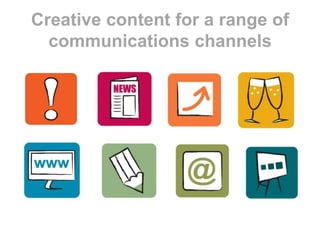
Creative content for a range of
communications channels
Why do customers work with us?
We have great testimonials and accolades
What I’m covering in this session:

• What makes a good news story?
(planning content)
• What is a press release?
• How to sell in a story
• 10 things you should know before
dealing with the media
What makes a good news story?

• Client versus journalist
• What’s the headline you’re after?
• Know your target audience and match it
with a readership audience
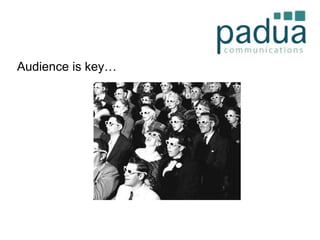
Audience is key…
Perseverance and regular
communication required!
•
•
•
•
•
•

•
Appointments
•
New staff
•
Turnover
CSR projects
New customer wins •
•
Mergers

Partnerships
Redundancies
New products and
services
Award wins
Events
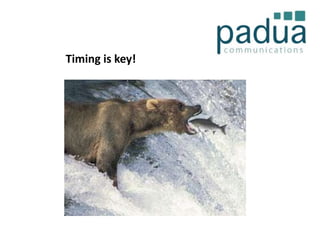
Timing is key!
So what is a press release?
• A press release is a short summary of a piece of
news, which you can use to let journalists know the key
elements of your story.
• Its most important feature is that it needs to be topical it should make clear what's new and is not marketing
fluff!
• You use press releases as part of a marketing strategy
to let the media know what you’re up to: forthcoming
events, new customer wins, fundraising
announcements, new appointments, charity
(CSR), sponsorship.
What do journalists want?
Journalists want:
Well-presented, clear, concise copy that:
 saves the journalist time and energy
 doesn’t require them to phone to establish key facts
 is easily edited for use
What should a press release include?
•
•
•
•
•
•
•
•
•

Who?
What?
Why?
Where?
When?
How?
Contact details and notes to editors
Photo/Image (300dpi minimum for print)
Think about your medium – is it visual for TV?
More precisely…
• It should have a title that grabs the attention of the
reader
• Think of the benefits to the audience
(reader, viewer, listener)
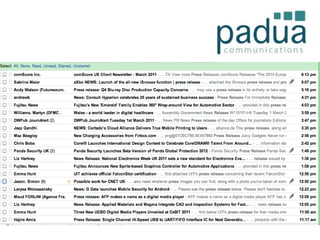
• Journalists get sent hundreds of releases and many
don’t bother opening their emails, so think about
what you are putting in the subject line…
What else?
• The 1st paragraph is crucial and should include all of your
why, where, when, who, what and how information
• Keep it short and simple – the whole release should be no
longer than 2 sides of A4 and if you can get everything on one
side, even better
• Job titles should not be capitalised
• Don’t use capitals, bold or italics
• Quotes – Use quotes to back up the story, where relevant (they
should be further down the release)
• Use the format - Name, title, company says: “…”
A bit about formatting…
• The title should be in bold and don’t go mad with
capitals
• Sub-title (optional)
• A press release is written in the 3rd person
• 1.5 point spacing
• Boilerplate at end with contact details
• Notes to editors at end
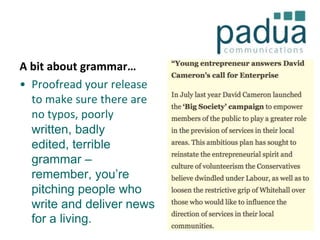
A bit about grammar…
• Proofread your release
to make sure there are
no typos, poorly
written, badly
edited, terrible
grammar –
remember, you’re
pitching people who
write and deliver news
for a living.
‘Good writing is about making reading easy’
Think about your language
• Don’t use jargon and acronyms
• A company is always referred to in the
singular, eg.
‘Padua Communications is doing this talk’
• Words from one to nine and numbers from
10 upwards
• Words to watch:
-

revolutionary, unique
whilst (actually means whereas) – you probably mean while
it’s and its
CDs not CD’s
Also:
don’t utilise, use
don’t request, ask
don’t relinquish, give up
don’t terminate, end
How should a press release be used?
• Journalists are swamped with information
“I get roughly 100-200 emails a day. I delete 95% of news
releases that come into my inbox.”
• Remember the audience!!
• Different approaches – can be issued to selected
publications (different PR agencies/people have different
approaches)

DON’T PHONE AND ASK A PUBLICATION
WHETHER THEY GOT YOUR PRESS RELEASE!
How to sell in a story…
• Research and preparation
• Timing and time
• Email – what else are you offering? Exclusive interview
with the CEO? A visit to a new site?
• Phone
• Email again
• Phone, email, phone…
• Try a different publication or new approach
10 things you should know before dealing
with the media
• Press day and lead time
you have a spokesperson?
• Publication and readership
• Contact details on press
details
release
• Who you should be
• You won’t get to see copy
contacting?
• Have some media training/do
• When you should contact
some preparation about your
them and how they get their
key messages (only 3 at a
information
time!)
• Decent image (300dpi)
• Phone and email details
• Format of information – do
Let us help you…

www.paduacommunications.com
Tel: 0203 282 7570

PR & Media

  • 1.
    PR and Media 6thFebruary 2014
  • 2.
    Who is PaduaCommunications? • Set up in 2009 by Nicky Rudd • Grown quickly – we now have a team of 11 specialists • Based in Woking, Surrey • National and international clients across all disciplines • Most of our work comes from referrals
  • 3.
    Our aim: We workin partnership with our clients to help them create a conversation with their target audiences – whether that is customers, partners or the media through a range of activities
  • 4.
    Creative content fora range of communications channels
  • 5.
    Why do customerswork with us? We have great testimonials and accolades
  • 6.
    What I’m coveringin this session: • What makes a good news story? (planning content) • What is a press release? • How to sell in a story • 10 things you should know before dealing with the media
  • 7.
    What makes agood news story? • Client versus journalist • What’s the headline you’re after? • Know your target audience and match it with a readership audience
  • 8.
  • 10.
    Perseverance and regular communicationrequired! • • • • • • • Appointments • New staff • Turnover CSR projects New customer wins • • Mergers Partnerships Redundancies New products and services Award wins Events
  • 11.
  • 12.
    So what isa press release? • A press release is a short summary of a piece of news, which you can use to let journalists know the key elements of your story. • Its most important feature is that it needs to be topical it should make clear what's new and is not marketing fluff! • You use press releases as part of a marketing strategy to let the media know what you’re up to: forthcoming events, new customer wins, fundraising announcements, new appointments, charity (CSR), sponsorship.
  • 13.
    What do journalistswant? Journalists want: Well-presented, clear, concise copy that:  saves the journalist time and energy  doesn’t require them to phone to establish key facts  is easily edited for use
  • 14.
    What should apress release include? • • • • • • • • • Who? What? Why? Where? When? How? Contact details and notes to editors Photo/Image (300dpi minimum for print) Think about your medium – is it visual for TV?
  • 15.
    More precisely… • Itshould have a title that grabs the attention of the reader • Think of the benefits to the audience (reader, viewer, listener) • Journalists get sent hundreds of releases and many don’t bother opening their emails, so think about what you are putting in the subject line…
  • 17.
    What else? • The1st paragraph is crucial and should include all of your why, where, when, who, what and how information • Keep it short and simple – the whole release should be no longer than 2 sides of A4 and if you can get everything on one side, even better • Job titles should not be capitalised • Don’t use capitals, bold or italics • Quotes – Use quotes to back up the story, where relevant (they should be further down the release) • Use the format - Name, title, company says: “…”
  • 18.
    A bit aboutformatting… • The title should be in bold and don’t go mad with capitals • Sub-title (optional) • A press release is written in the 3rd person • 1.5 point spacing • Boilerplate at end with contact details • Notes to editors at end
  • 19.
    A bit aboutgrammar… • Proofread your release to make sure there are no typos, poorly written, badly edited, terrible grammar – remember, you’re pitching people who write and deliver news for a living.
  • 20.
    ‘Good writing isabout making reading easy’ Think about your language • Don’t use jargon and acronyms • A company is always referred to in the singular, eg. ‘Padua Communications is doing this talk’ • Words from one to nine and numbers from 10 upwards
  • 21.
    • Words towatch: - revolutionary, unique whilst (actually means whereas) – you probably mean while it’s and its CDs not CD’s Also: don’t utilise, use don’t request, ask don’t relinquish, give up don’t terminate, end
  • 22.
    How should apress release be used? • Journalists are swamped with information “I get roughly 100-200 emails a day. I delete 95% of news releases that come into my inbox.” • Remember the audience!! • Different approaches – can be issued to selected publications (different PR agencies/people have different approaches) DON’T PHONE AND ASK A PUBLICATION WHETHER THEY GOT YOUR PRESS RELEASE!
  • 23.
    How to sellin a story… • Research and preparation • Timing and time • Email – what else are you offering? Exclusive interview with the CEO? A visit to a new site? • Phone • Email again • Phone, email, phone… • Try a different publication or new approach
  • 24.
    10 things youshould know before dealing with the media • Press day and lead time you have a spokesperson? • Publication and readership • Contact details on press details release • Who you should be • You won’t get to see copy contacting? • Have some media training/do • When you should contact some preparation about your them and how they get their key messages (only 3 at a information time!) • Decent image (300dpi) • Phone and email details • Format of information – do
  • 25.
    Let us helpyou… www.paduacommunications.com Tel: 0203 282 7570