Course Title: Automotive Tribology
Course Code: AUT 518b
Cr. Hours 3
Prerequisites : Fluid Mechanics, solid Mechanics , Material science
Target group: MSc 2nd year Automotive Technology Student
Semester I
Academic Year 2023/24
Periods : Monday Morning 8:00-12:00
Venue: Room_6
Instructor: Hailemariam N. (Ph.D.)
COURSE OUTLINE
1
2.Friction and Wear Nature of metal surfaces
2.1.Introduction to Solid Surface
Characterization
2.2. Friction
2.3. wear and wear mechanism
Deliverables
2
Chapter Two
2. Friction and
Wear Nature of
metal surfaces
3
2.1. Introduction to Solid Surface Characterization
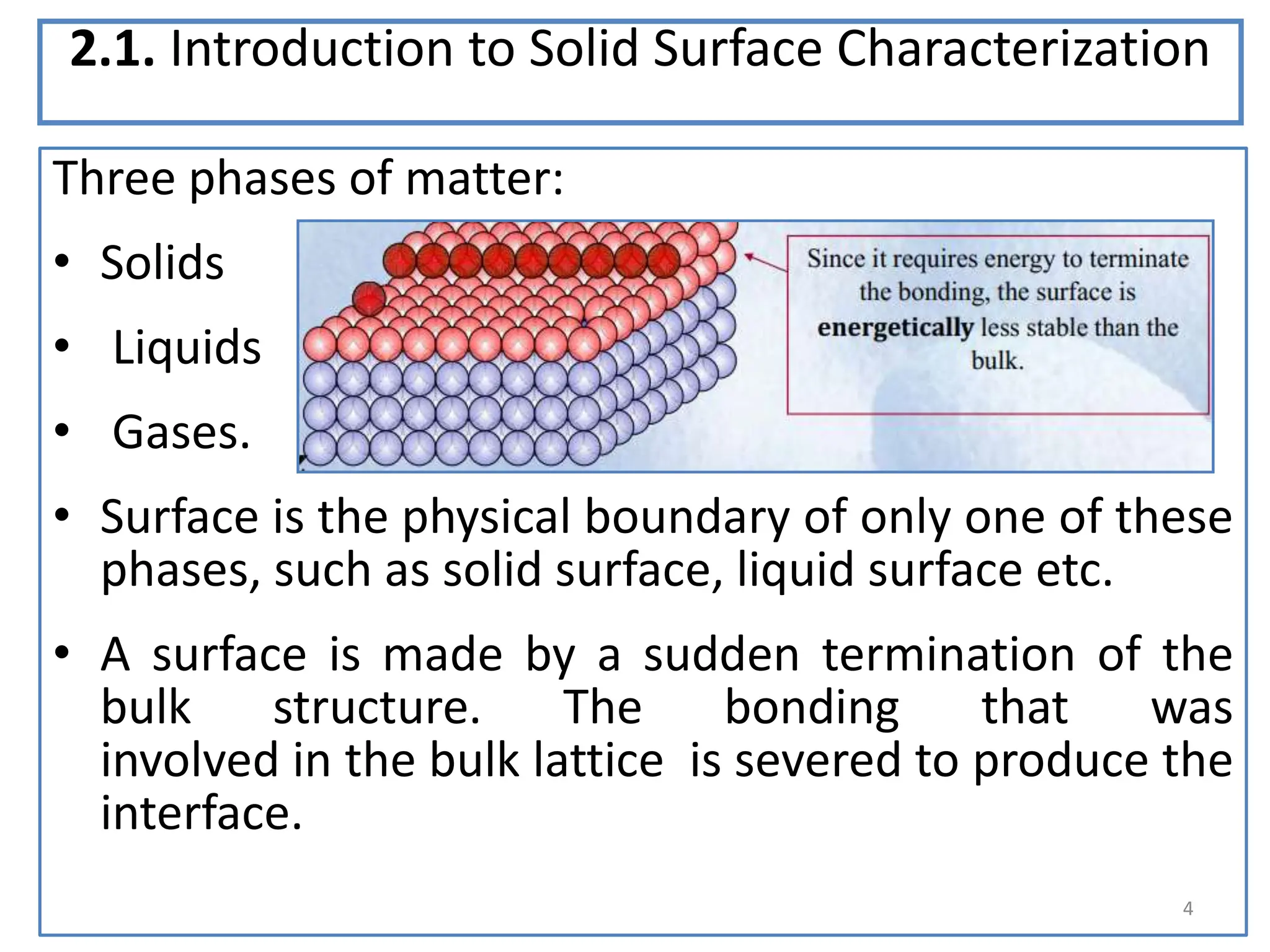
Three phases of matter:
• Solids
• Liquids
• Gases.
• Surface is the physical boundary of only one of these
phases, such as solid surface, liquid surface etc.
• A surface is made by a sudden termination of the
bulk structure. The bonding that was
involved in the bulk lattice is severed to produce the
interface.
4
2.1. Introduction to Solid Surface Characterization
5
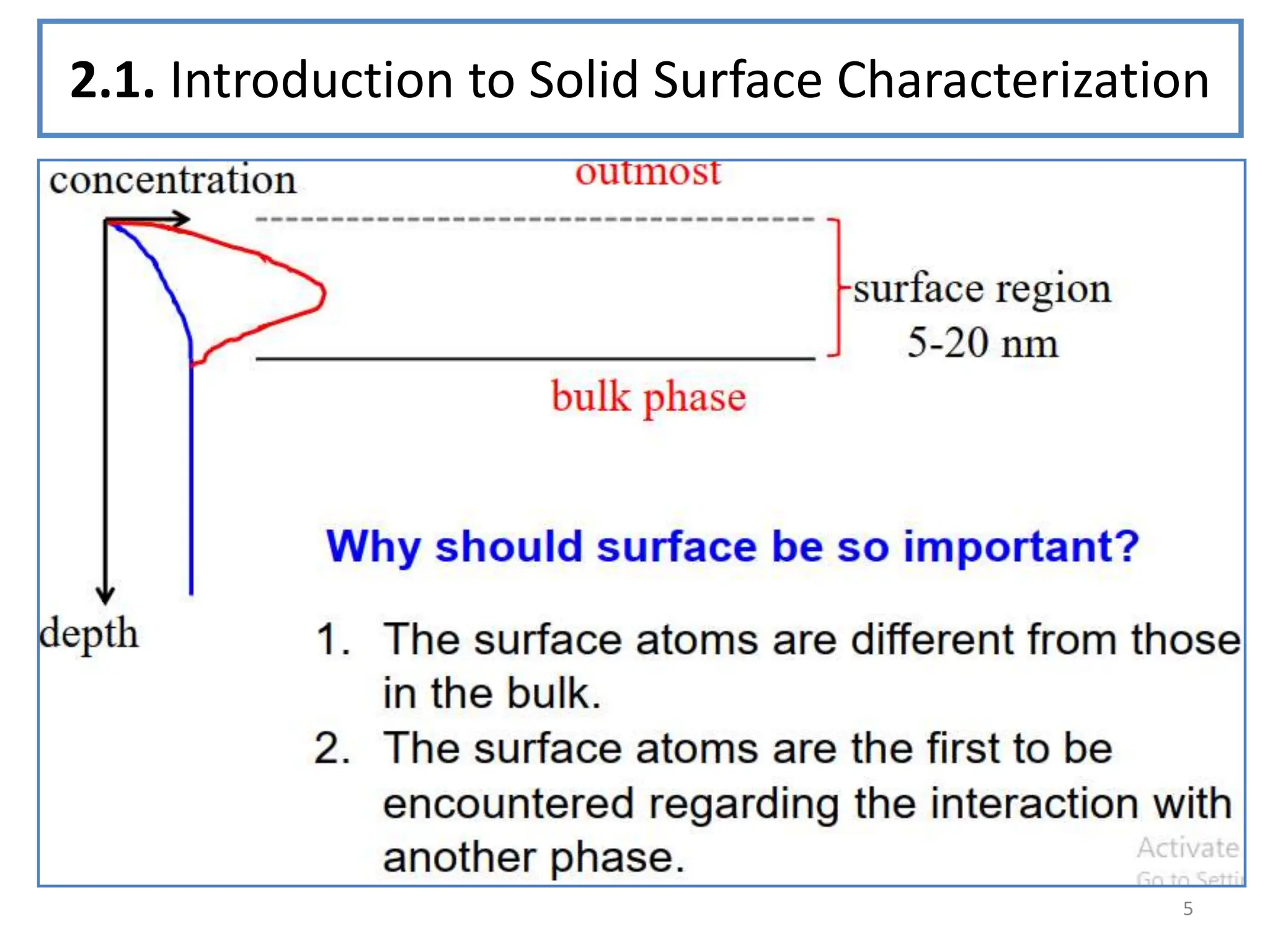
2.1. Introduction to Solid Surface Characterization
A solid surface, (a solid-gas or solid-liquid interface)
has a complex structure and complex properties
dependent upon:
• Nature of solids,
• Method of surface preparation,
• Interaction b/n the surface and the environment.
• It is the surface which interfaces with its
environment, and the surface reactivity will
determine how well the material behavior in its
intended function. 6
2.1. Introduction to Solid Surface Characterization
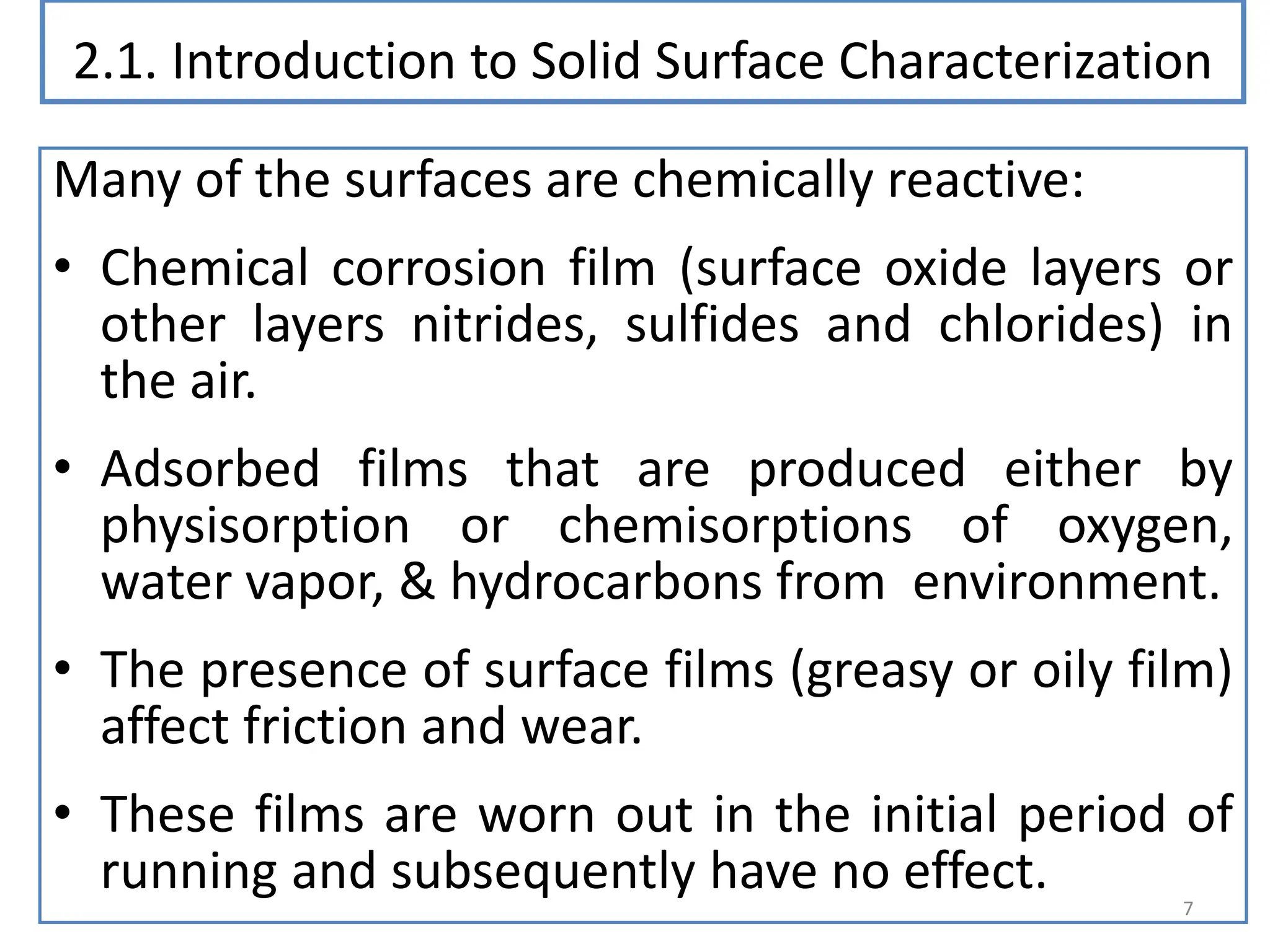
Many of the surfaces are chemically reactive:
• Chemical corrosion film (surface oxide layers or
other layers nitrides, sulfides and chlorides) in
the air.
• Adsorbed films that are produced either by
physisorption or chemisorptions of oxygen,
water vapor, & hydrocarbons from environment.
• The presence of surface films (greasy or oily film)
affect friction and wear.
• These films are worn out in the initial period of
running and subsequently have no effect. 7
2.1. Introduction to Solid Surface Characterization
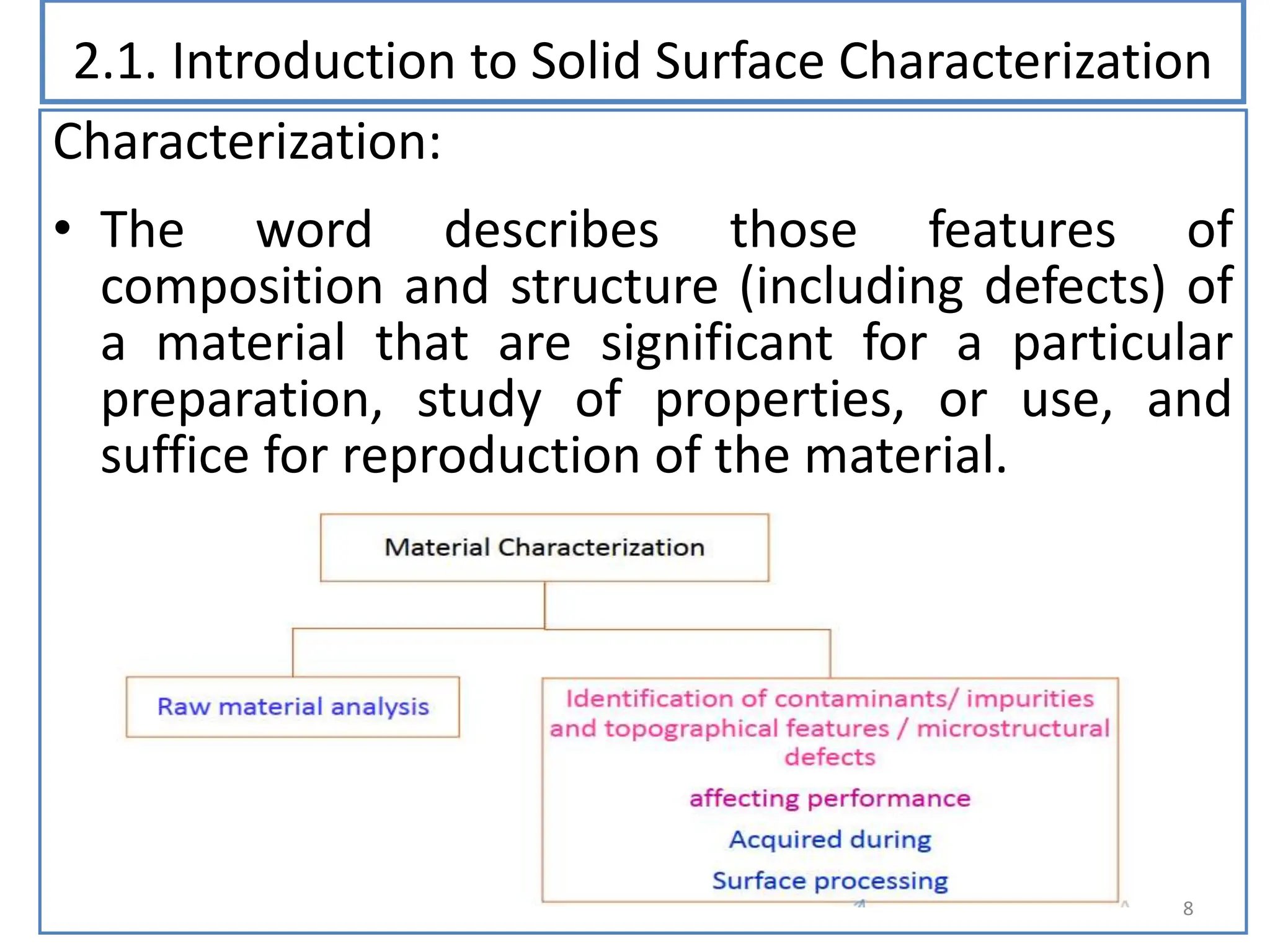
Characterization:
• The word describes those features of
composition and structure (including defects) of
a material that are significant for a particular
preparation, study of properties, or use, and
suffice for reproduction of the material.
8
2.1. Introduction to Solid Surface Characterization
• Solid surfaces (irrespective of the method of formation)
contain deviations or irregularities from the prescribed
geometrical form (Surface texture)
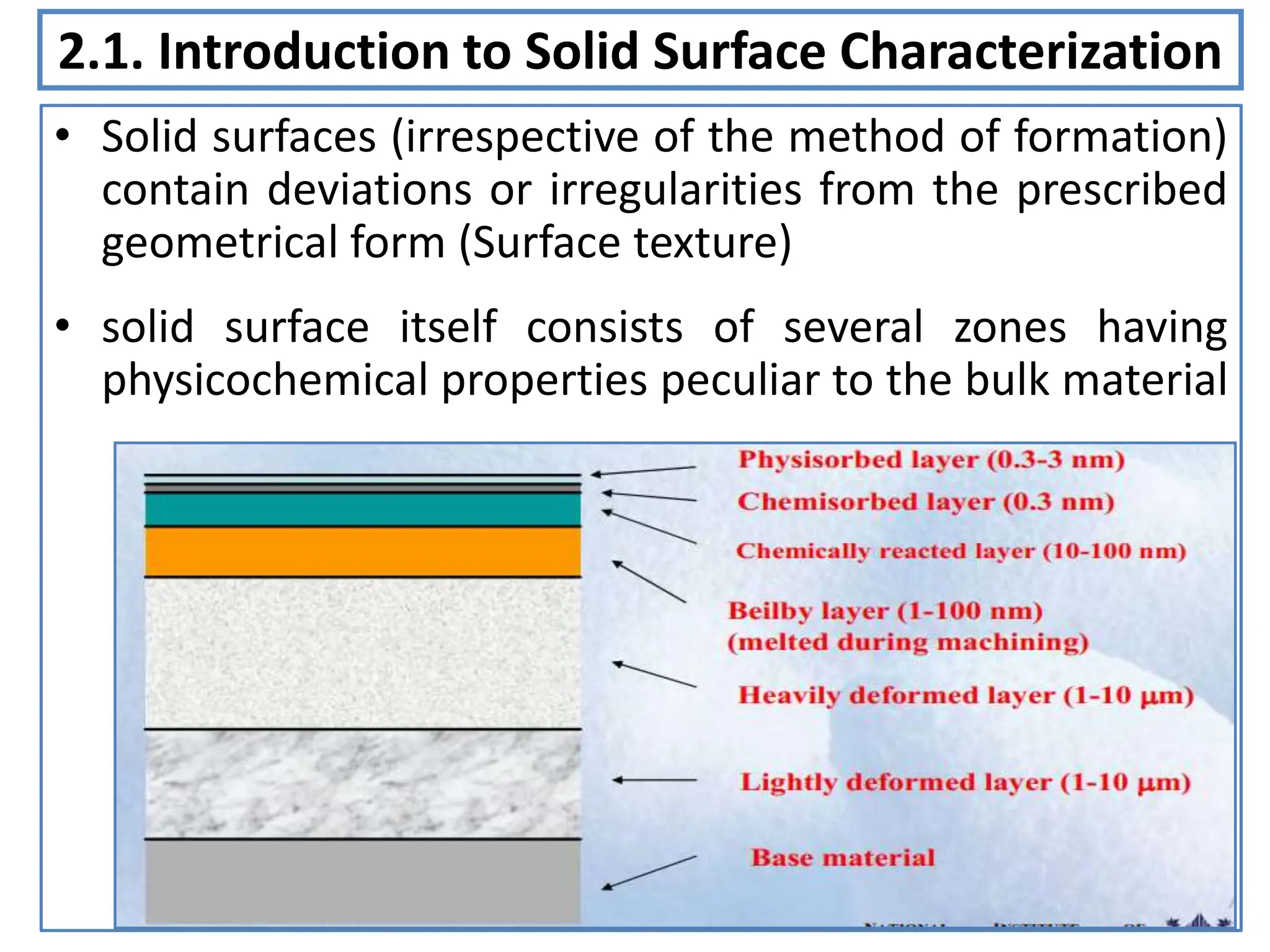
• solid surface itself consists of several zones having
physicochemical properties peculiar to the bulk material
9
2.1. Introduction to Solid Surface Characterization
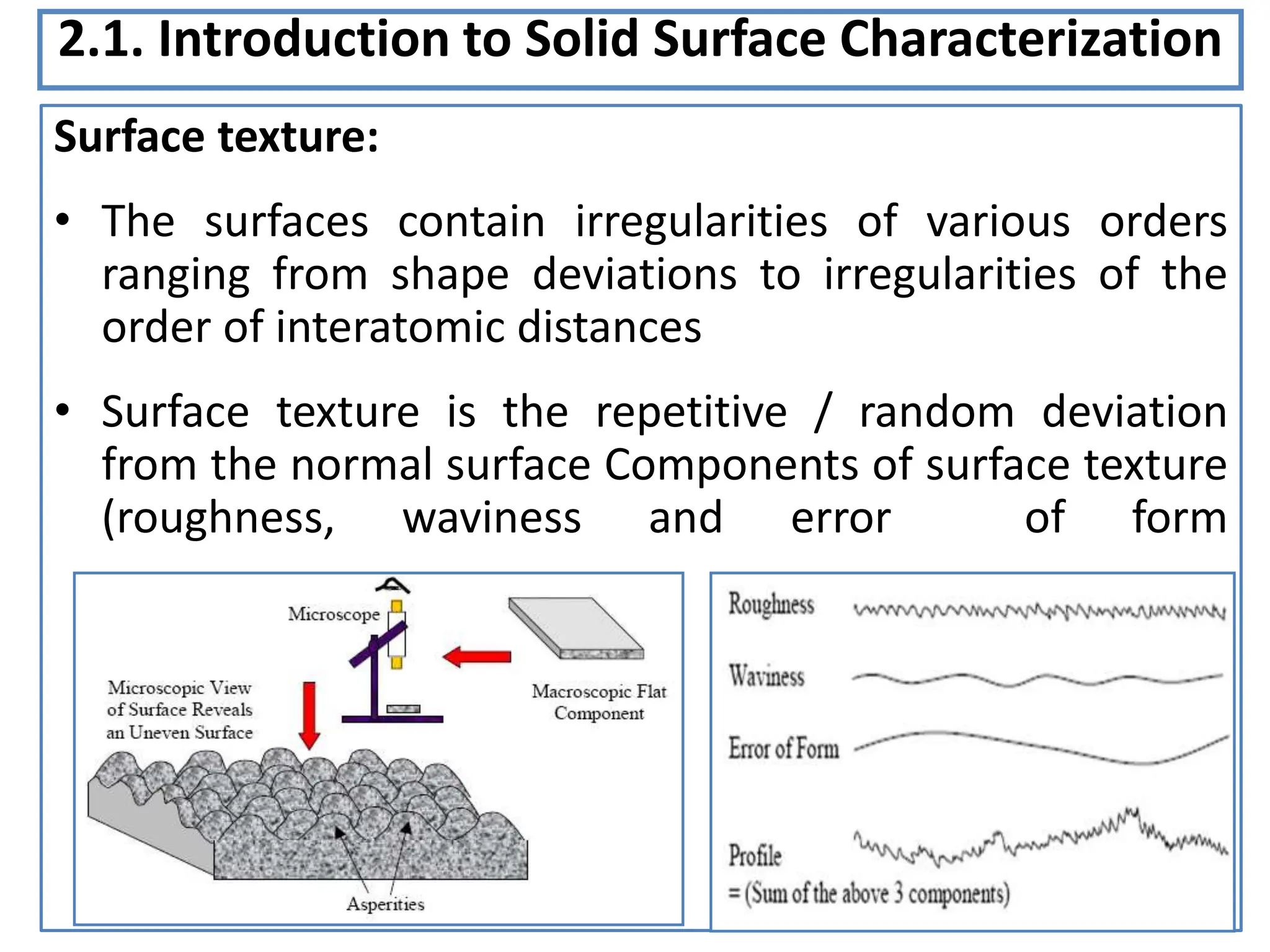
Surface texture:
• The surfaces contain irregularities of various orders
ranging from shape deviations to irregularities of the
order of interatomic distances
• Surface texture is the repetitive / random deviation
from the normal surface Components of surface texture
(roughness, waviness and error of form
10
2.1. Introduction to Solid Surface Characterization
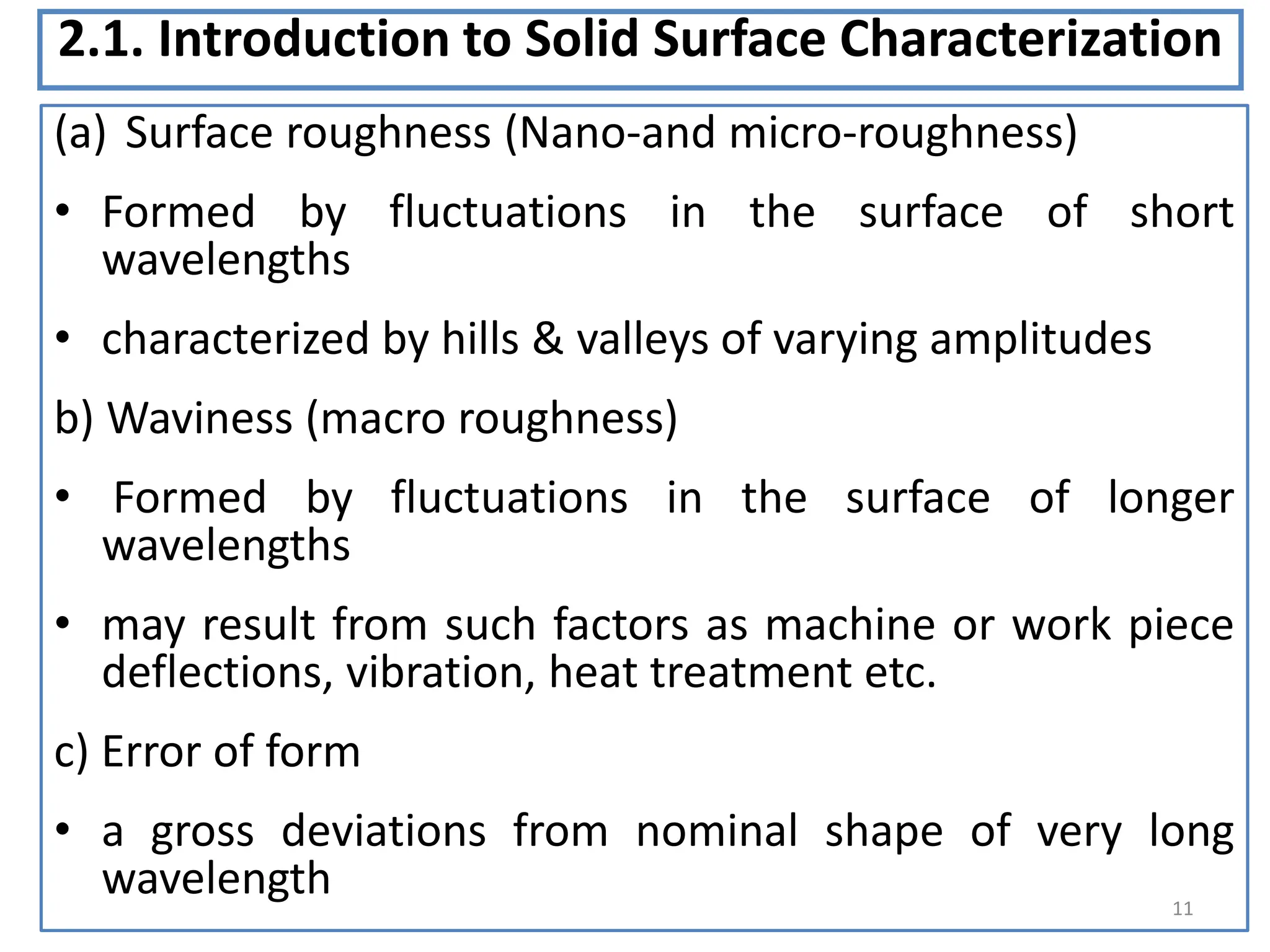
(a) Surface roughness (Nano-and micro-roughness)
• Formed by fluctuations in the surface of short
wavelengths
• characterized by hills & valleys of varying amplitudes
b) Waviness (macro roughness)
• Formed by fluctuations in the surface of longer
wavelengths
• may result from such factors as machine or work piece
deflections, vibration, heat treatment etc.
c) Error of form
• a gross deviations from nominal shape of very long
wavelength 11
2.1. Introduction to Solid Surface Characterization
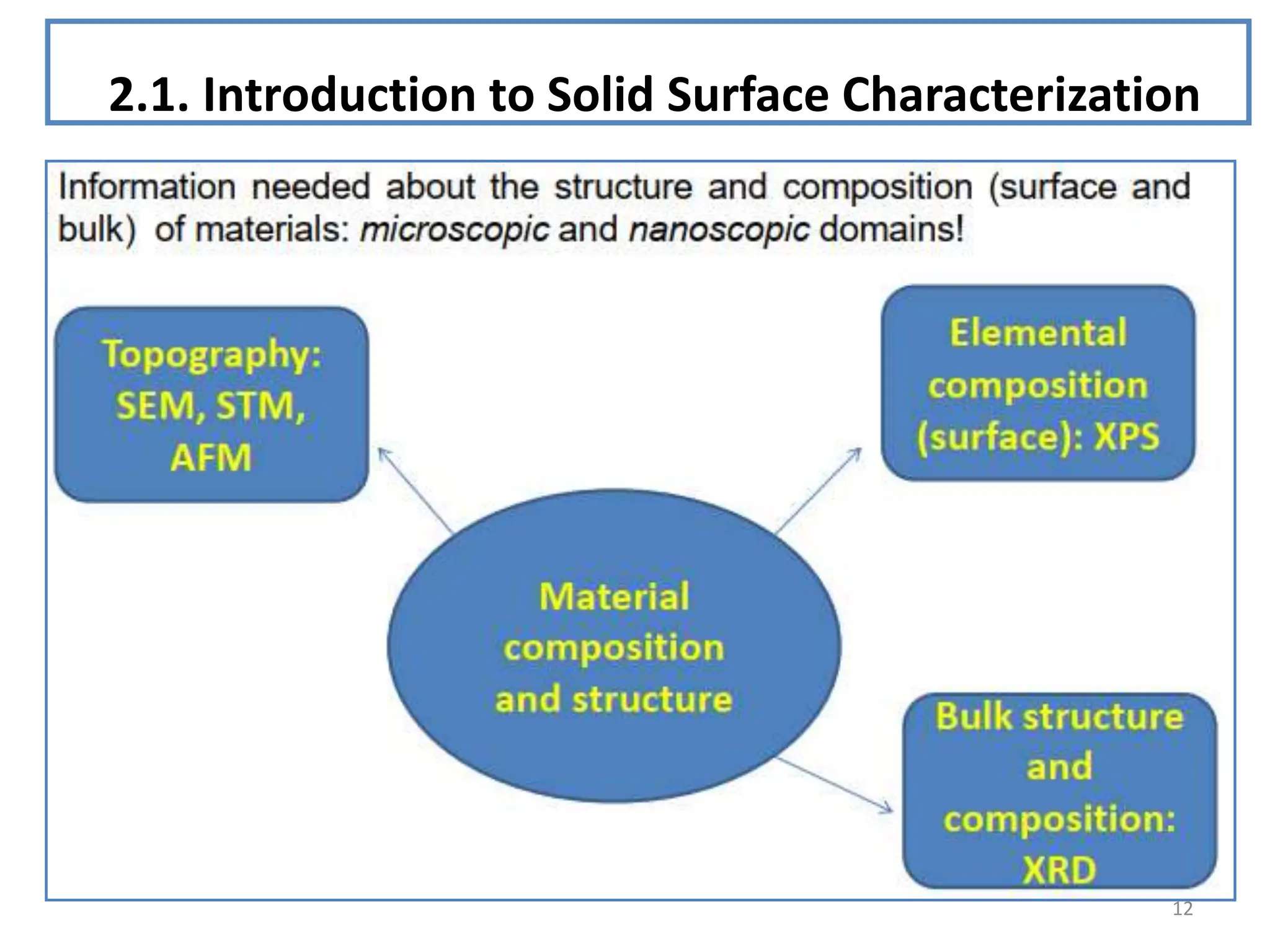
12
2.1. Introduction to Solid Surface Characterization
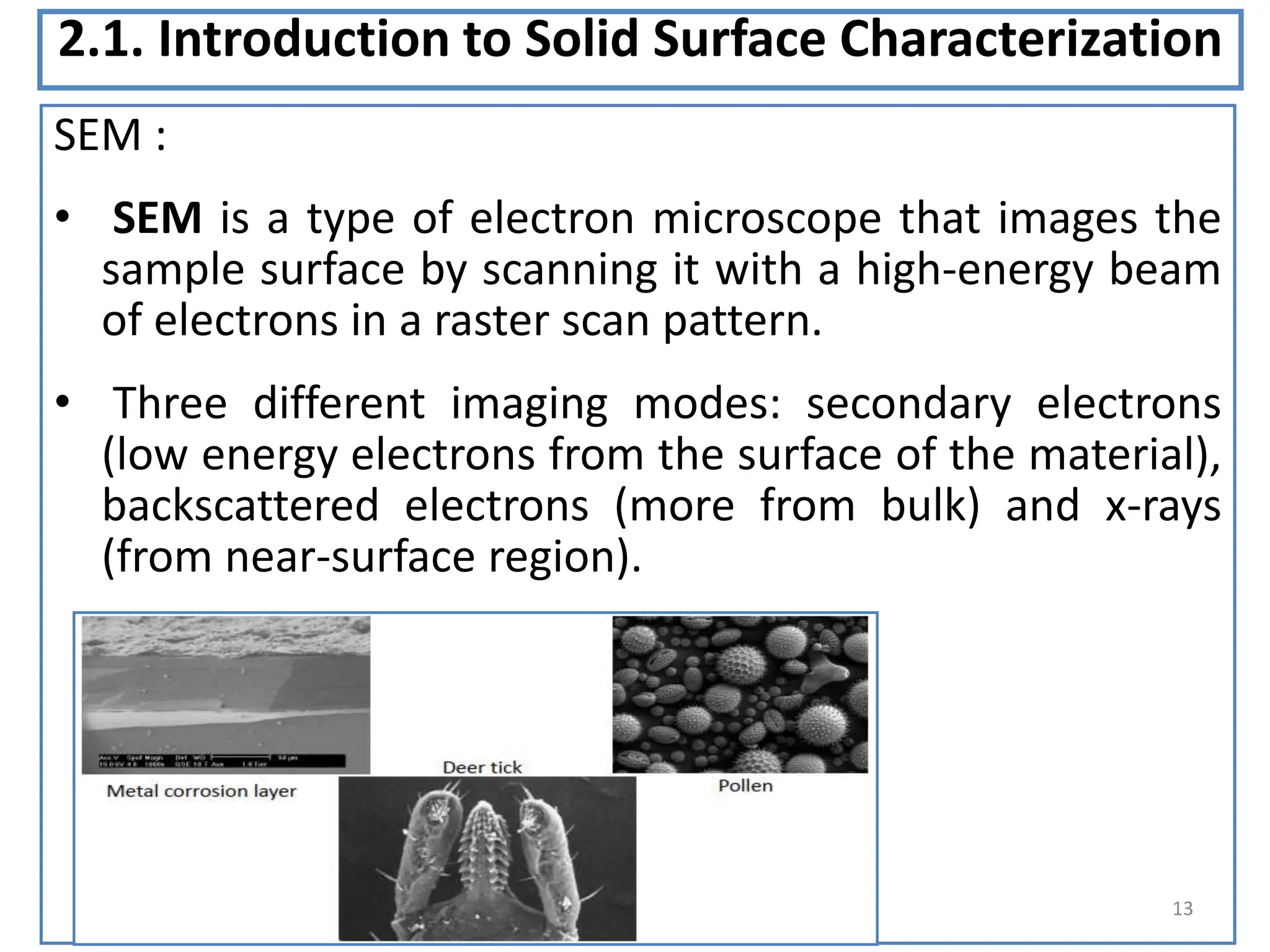
SEM :
• SEM is a type of electron microscope that images the
sample surface by scanning it with a high-energy beam
of electrons in a raster scan pattern.
• Three different imaging modes: secondary electrons
(low energy electrons from the surface of the material),
backscattered electrons (more from bulk) and x-rays
(from near-surface region).
13
14
2.1. Introduction to Solid Surface Characterization
15
2.1. Introduction to Solid Surface Characterization
16
2.1. Introduction to Solid Surface Characterization
17
2.1. Introduction to Solid Surface Characterization
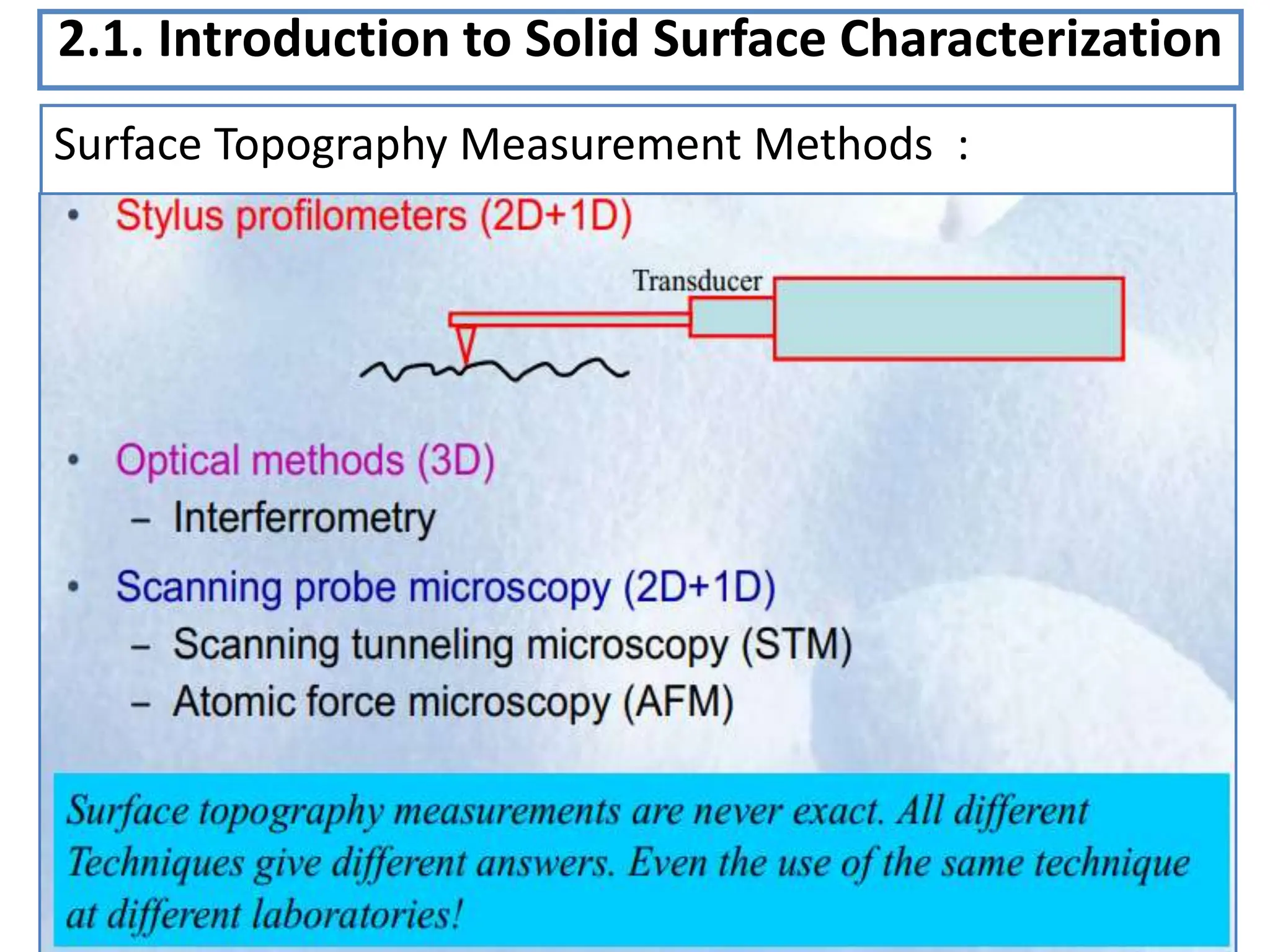
Surface Topography Measurement Methods :
18
19
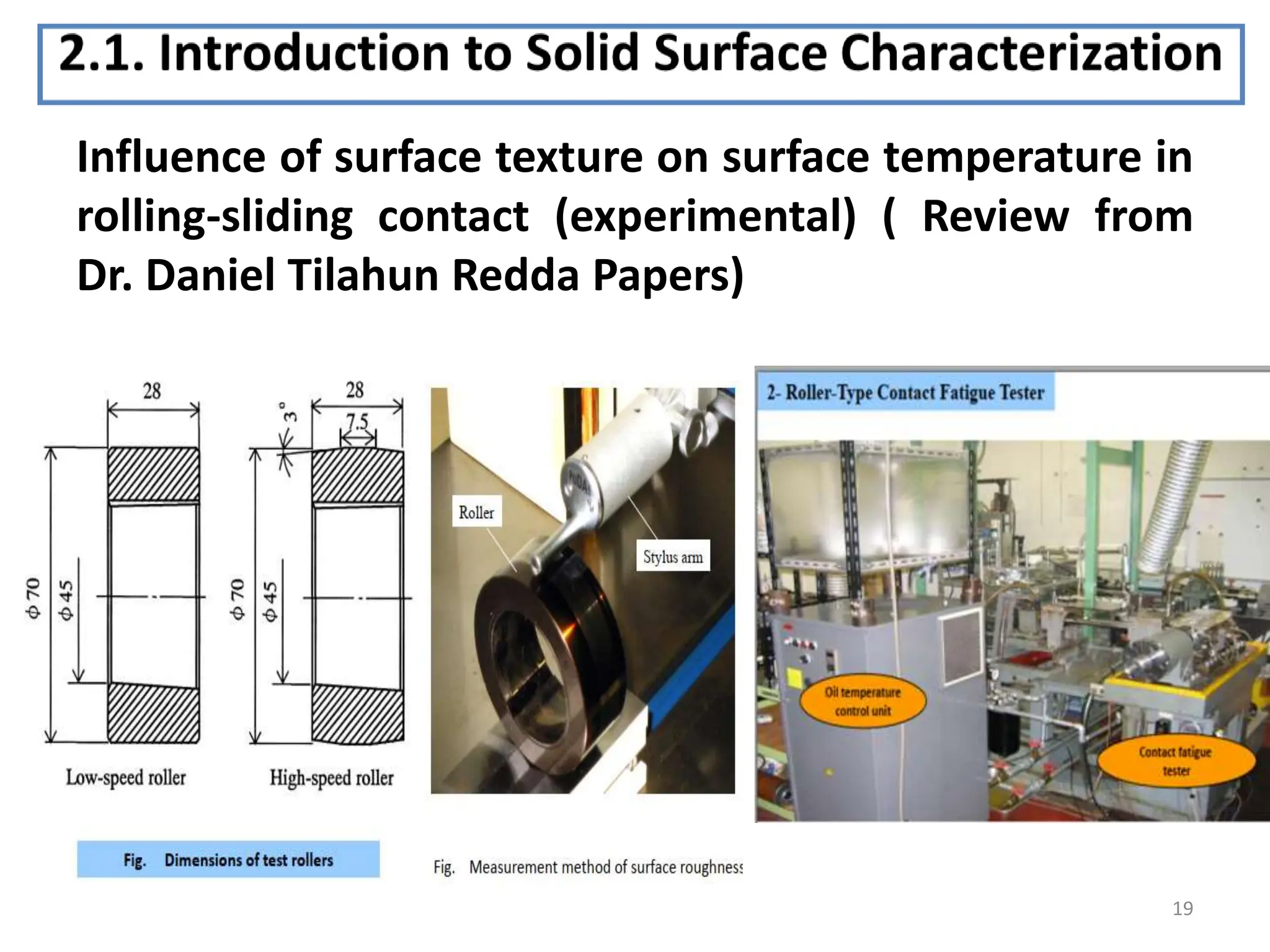
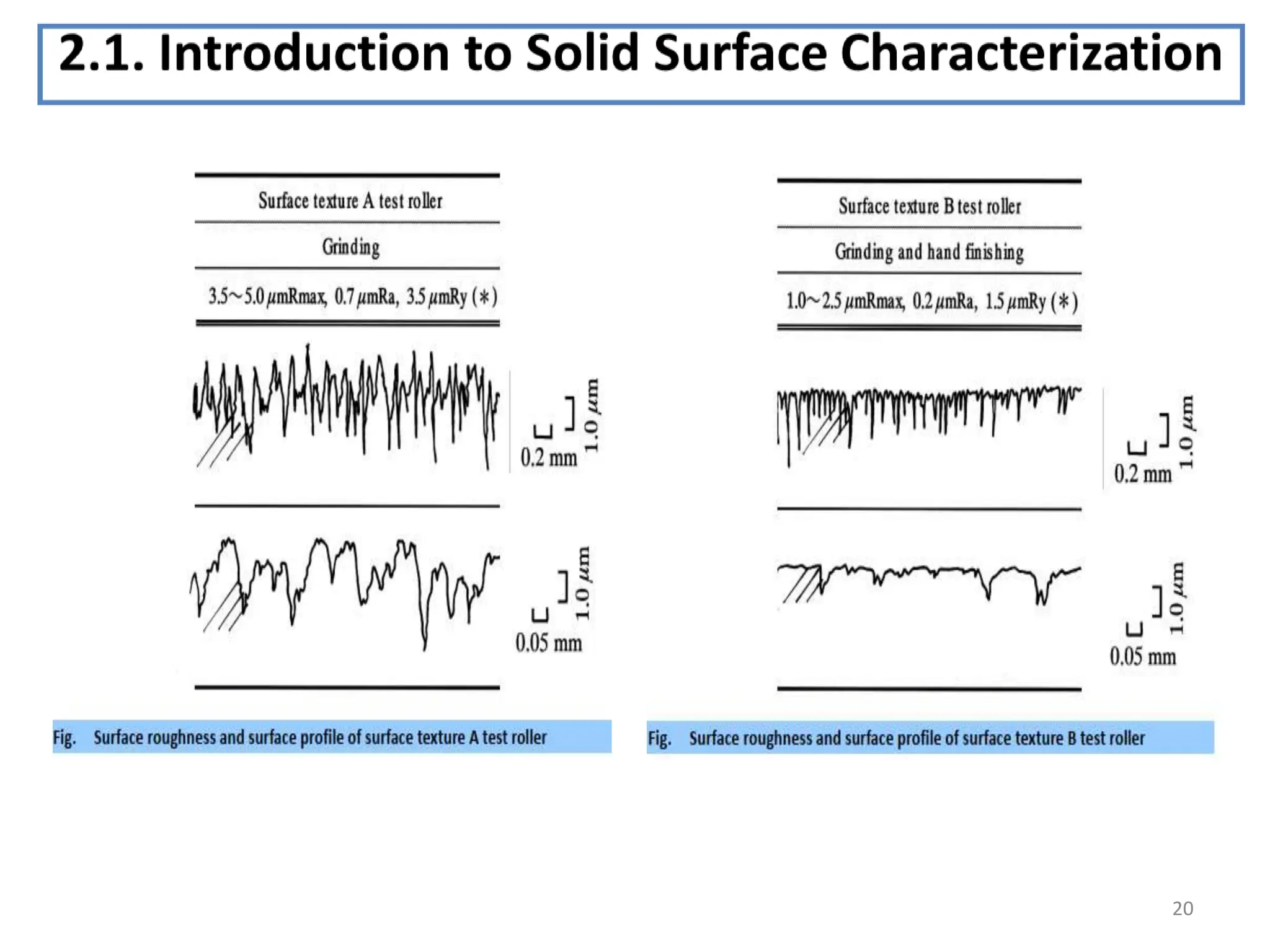
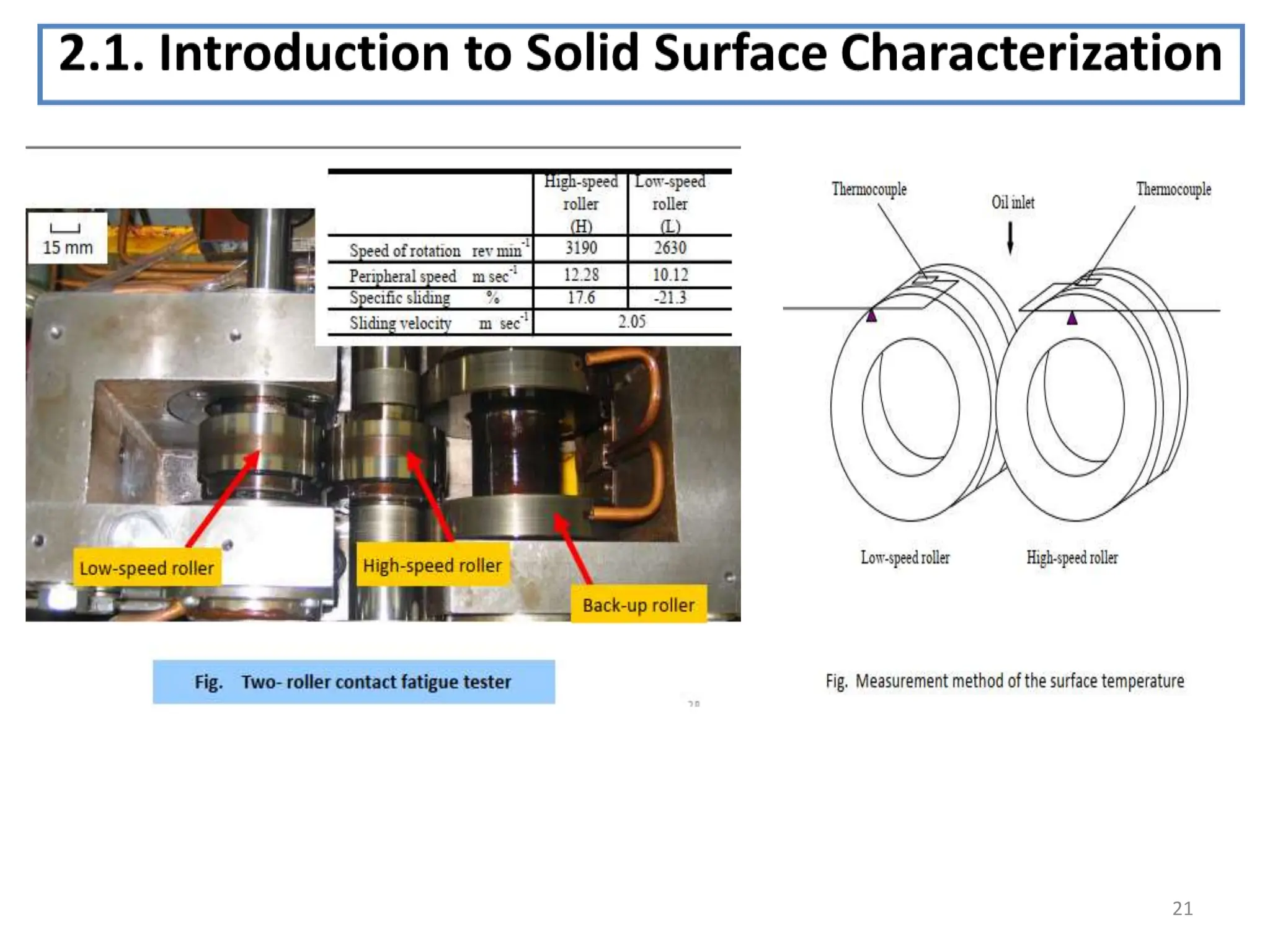
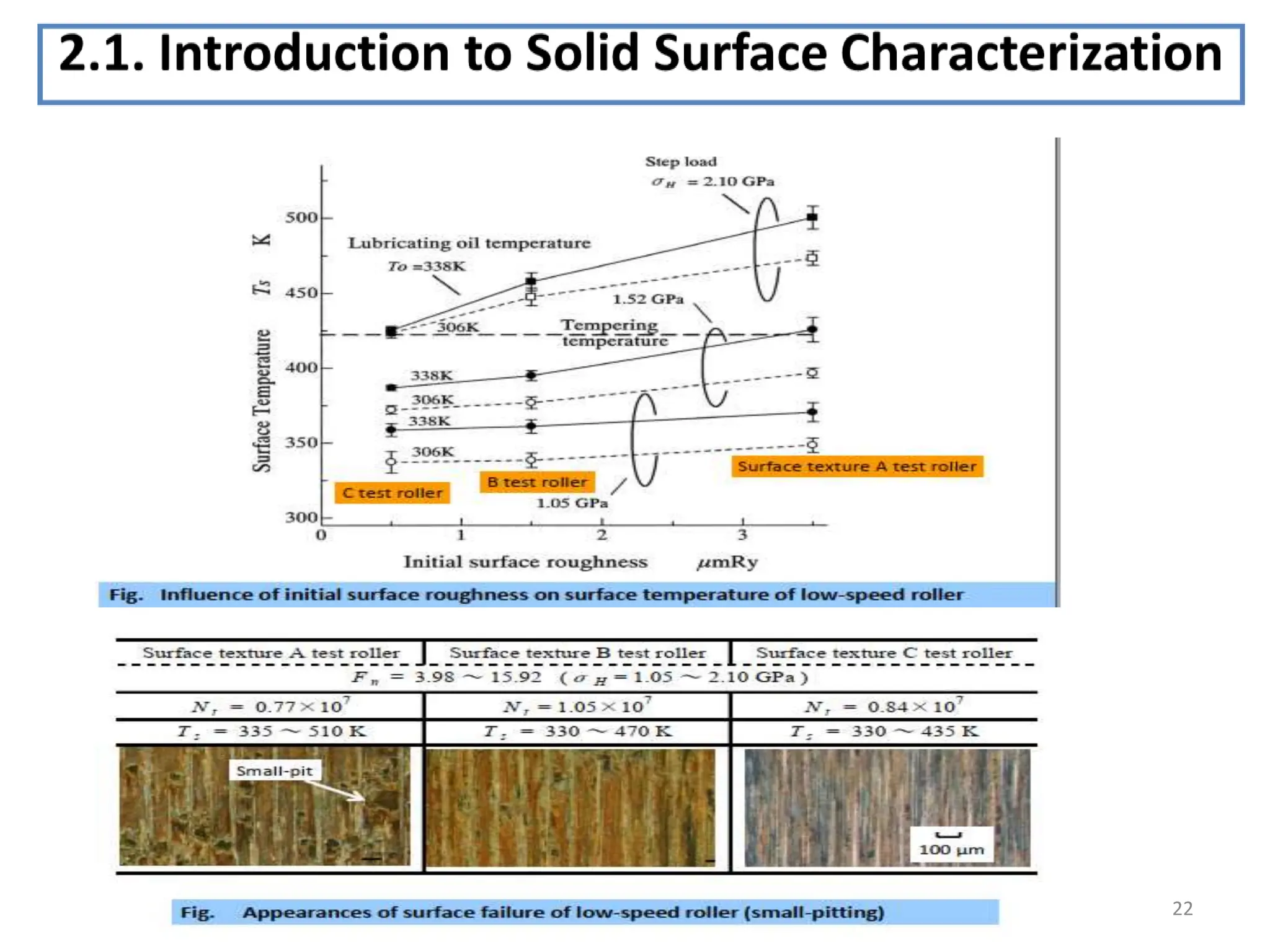
Influence of surface texture on surface temperature in
rolling-sliding contact (experimental) ( Review from
Dr. Daniel Tilahun Redda Papers)
20
21
22
Reference books :
Reference Book:
1. Surface Analysis Methods in Material Science
• Edited by D.J. O’Connor, B.A. Sexton, R.St.C.
Smart (Springer, 1992)
2. An Introduction to Surface Analysis by XPS and
AES
• John F. Watts and John Wolstenholme (John
Wiley & Sons, 2003)
23
24

ppt_chapter 2.1_2023.pp

  • 1.
    Course Title: AutomotiveTribology Course Code: AUT 518b Cr. Hours 3 Prerequisites : Fluid Mechanics, solid Mechanics , Material science Target group: MSc 2nd year Automotive Technology Student Semester I Academic Year 2023/24 Periods : Monday Morning 8:00-12:00 Venue: Room_6 Instructor: Hailemariam N. (Ph.D.) COURSE OUTLINE 1
  • 2.
    2.Friction and WearNature of metal surfaces 2.1.Introduction to Solid Surface Characterization 2.2. Friction 2.3. wear and wear mechanism Deliverables 2
  • 3.
    Chapter Two 2. Frictionand Wear Nature of metal surfaces 3
  • 4.
    2.1. Introduction toSolid Surface Characterization Three phases of matter: • Solids • Liquids • Gases. • Surface is the physical boundary of only one of these phases, such as solid surface, liquid surface etc. • A surface is made by a sudden termination of the bulk structure. The bonding that was involved in the bulk lattice is severed to produce the interface. 4
  • 5.
    2.1. Introduction toSolid Surface Characterization 5
  • 6.
    2.1. Introduction toSolid Surface Characterization A solid surface, (a solid-gas or solid-liquid interface) has a complex structure and complex properties dependent upon: • Nature of solids, • Method of surface preparation, • Interaction b/n the surface and the environment. • It is the surface which interfaces with its environment, and the surface reactivity will determine how well the material behavior in its intended function. 6
  • 7.
    2.1. Introduction toSolid Surface Characterization Many of the surfaces are chemically reactive: • Chemical corrosion film (surface oxide layers or other layers nitrides, sulfides and chlorides) in the air. • Adsorbed films that are produced either by physisorption or chemisorptions of oxygen, water vapor, & hydrocarbons from environment. • The presence of surface films (greasy or oily film) affect friction and wear. • These films are worn out in the initial period of running and subsequently have no effect. 7
  • 8.
    2.1. Introduction toSolid Surface Characterization Characterization: • The word describes those features of composition and structure (including defects) of a material that are significant for a particular preparation, study of properties, or use, and suffice for reproduction of the material. 8
  • 9.
    2.1. Introduction toSolid Surface Characterization • Solid surfaces (irrespective of the method of formation) contain deviations or irregularities from the prescribed geometrical form (Surface texture) • solid surface itself consists of several zones having physicochemical properties peculiar to the bulk material 9
  • 10.
    2.1. Introduction toSolid Surface Characterization Surface texture: • The surfaces contain irregularities of various orders ranging from shape deviations to irregularities of the order of interatomic distances • Surface texture is the repetitive / random deviation from the normal surface Components of surface texture (roughness, waviness and error of form 10
  • 11.
    2.1. Introduction toSolid Surface Characterization (a) Surface roughness (Nano-and micro-roughness) • Formed by fluctuations in the surface of short wavelengths • characterized by hills & valleys of varying amplitudes b) Waviness (macro roughness) • Formed by fluctuations in the surface of longer wavelengths • may result from such factors as machine or work piece deflections, vibration, heat treatment etc. c) Error of form • a gross deviations from nominal shape of very long wavelength 11
  • 12.
    2.1. Introduction toSolid Surface Characterization 12
  • 13.
    2.1. Introduction toSolid Surface Characterization SEM : • SEM is a type of electron microscope that images the sample surface by scanning it with a high-energy beam of electrons in a raster scan pattern. • Three different imaging modes: secondary electrons (low energy electrons from the surface of the material), backscattered electrons (more from bulk) and x-rays (from near-surface region). 13
  • 14.
    14 2.1. Introduction toSolid Surface Characterization
  • 15.
    15 2.1. Introduction toSolid Surface Characterization
  • 16.
    16 2.1. Introduction toSolid Surface Characterization
  • 17.
    17 2.1. Introduction toSolid Surface Characterization
  • 18.
    2.1. Introduction toSolid Surface Characterization Surface Topography Measurement Methods : 18
  • 19.
    19 Influence of surfacetexture on surface temperature in rolling-sliding contact (experimental) ( Review from Dr. Daniel Tilahun Redda Papers)
  • 20.
  • 21.
  • 22.
  • 23.
    Reference books : ReferenceBook: 1. Surface Analysis Methods in Material Science • Edited by D.J. O’Connor, B.A. Sexton, R.St.C. Smart (Springer, 1992) 2. An Introduction to Surface Analysis by XPS and AES • John F. Watts and John Wolstenholme (John Wiley & Sons, 2003) 23
  • 24.