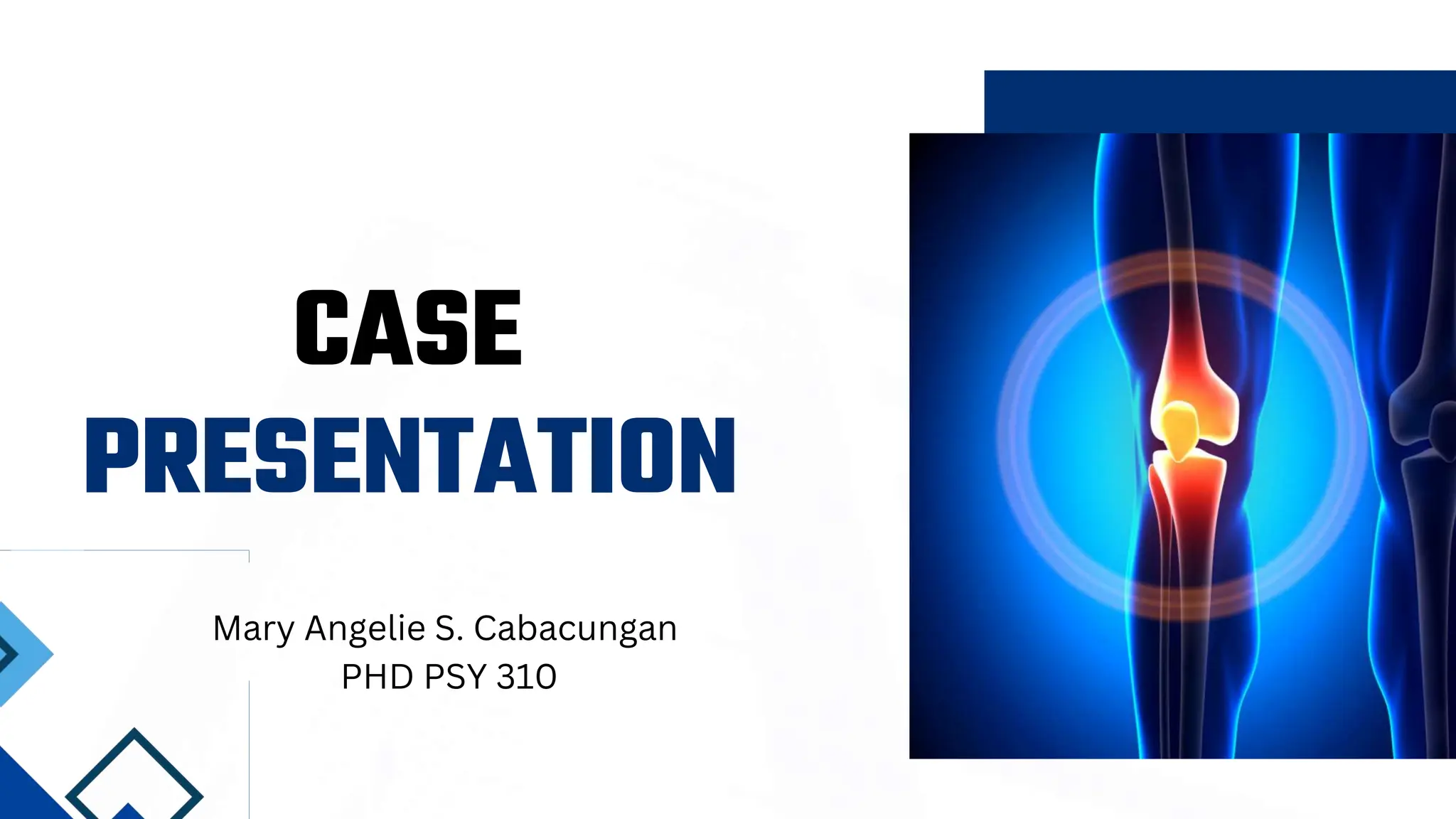
CASE
PRESENTATION
Mary Angelie S. Cabacungan
PHD PSY 310
PERSONAL INFORMATION
Name: Tita VB
Birthday: July 21, 1973
Age: 50 years old
Sex: Female
Present Address: Edmonton, Alberta Canada
Civil Status: Single
Religion: United Methodist Church
Present job: Home care nurse
Case History
• Diagnosed with Stage 3 Multiple
Myeloma at age 50
• Had undergone total knee replacement
surgery or knee arthroplasty in July 2019.
• She was into keto diet.
• No family history of similar conditions or
consanguinity.
• Family history of high blood pressure
(father’s side) and mother died from
pneumonia.
• Disease was diagnosed through the
quarterly check up with her
physiotherapist.
Case History cont.
Tita VB undergoes induction
chemotherapy with bortezomib and
dexamethasone followed by autologous
stem cell transplant (ASCT) with high-
dose melphalan followed by
consolidation with bortezomib and
dexamethasone for another two cycles.
Case History cont.
• Adjunctive treatment consisted of
bisphosphonate at the beginning of
every cycle and the use of
analgesics.
• Tita VB uses crutches when walking
and undergoes physical therapy.
• Acyclovir and
trimethoprim/sulfamethoxazole were
given prophylactically.
Physical Effects
• Pain in the back (spine) hips, and knees
• Constipation during the first cycle of
chemotherapy
• Muscle weakness
• Drowsiness
• Nausea and abdominal pain (after
chemotherapy)
• Tiredness, headaches
• Bruises around the eyes
• Changes in skin color or texture
• Edema (swelling) in the face, ankles, legs
• Feeling anxious, worried and fear of being
vulnerable so Tita VB pushes her family away
whenever they ask about her level of pain or try
to assist her (especially when she was
diagnosed)
• She tries her best to walk with her dog and tries
to do gardening.
• Financial concerns because treatment is very
expensive.
• Schedule of family members who will assist Tita
VB and look after her.
Family and Social
Effects
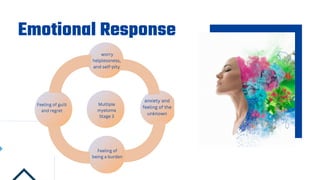
Emotional Response
worry
helplessness,
and self-pity
anxiety and
feeling of the
unknown
Feeling of
being a burden
Multiple
myeloma
Stage 3
Feeling of guilt
and regret
Goals of the
Treatment Plan
The goals of the treatment plan for multiple myeloma
are to:
• Reduce the amount of myeloma cells in the body as
quickly as possible.
• Improve quality of life through psychological
interventions in order to empower the patient.
• Prolong overall survival.
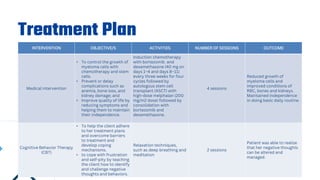
Treatment Plan
INTERVENTION OBJECTIVE/S ACTIVITIES NUMBER OF SESSIONS OUTCOME
Medical intervention
• To control the growth of
myeloma cells with
chemotherapy and stem
cells.
• Prevent or delay
complications such as
anemia, bone loss, and
kidney damage; and
• Improve quality of life by
reducing symptoms and
helping them to maintain
their independence.
Induction chemotherapy
with bortezomib and
dexamethasone (40 mg on
days 1–4 and days 8–11)
every three weeks for four
cycles followed by
autologous stem cell
transplant (ASCT) with
high-dose melphalan (200
mg/m2 dose) followed by
consolidation with
bortezomib and
dexamethasone.
4 sessions
Reduced growth of
myeloma cells and
improved conditions of
RBC, bones and kidneys.
Maintained independence
in doing basic daily routine.
Cognitive Behavior Therapy
(CBT)
• To help the client adhere
to her treatment plans
and overcome barriers
to treatment and
develop coping
mechanisms.
• to cope with frustration
and self-pity by teaching
the client how to identify
and challenge negative
thoughts and behaviors.
Relaxation techniques,
such as deep breathing and
meditation
2 sessions
Patient was able to realize
that her negative thoughts
can be altered and
managed.
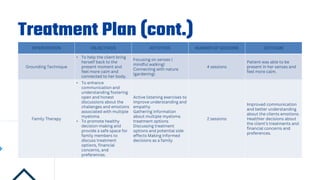
Treatment Plan (cont.)
INTERVENTION OBJECTIVE/S ACTIVITIES NUMBER OF SESSIONS OUTCOME
Grounding Technique
• To help the client bring
herself back to the
present moment and
feel more calm and
connected to her body.
Focusing on senses (
mindful walking)
Connecting with nature
(gardening)
4 sessions
Patient was able to be
present in her senses and
feel more calm.
Family Therapy
• To enhance
communication and
understanding fostering
open and honest
discussions about the
challenges and emotions
associated with multiple
myeloma.
• To promote healthy
decision-making and
provide a safe space for
family members to
discuss treatment
options, financial
concerns, and
preferences.
Active listening exercises to
improve understanding and
empathy
Gathering information
about multiple myeloma
treatment options
Discussing treatment
options and potential side
effects Making informed
decisions as a family
2 sessions
Improved communication
and better understanding
about the clients emotions.
Healthier decisions about
the client’s treatments and
financial concerns and
preferences.
THANK YOU

Case presentation_Health Psychology.pptx

  • 1.
    CASE PRESENTATION Mary Angelie S.Cabacungan PHD PSY 310
  • 2.
    PERSONAL INFORMATION Name: TitaVB Birthday: July 21, 1973 Age: 50 years old Sex: Female Present Address: Edmonton, Alberta Canada Civil Status: Single Religion: United Methodist Church Present job: Home care nurse
  • 3.
    Case History • Diagnosedwith Stage 3 Multiple Myeloma at age 50 • Had undergone total knee replacement surgery or knee arthroplasty in July 2019. • She was into keto diet. • No family history of similar conditions or consanguinity. • Family history of high blood pressure (father’s side) and mother died from pneumonia. • Disease was diagnosed through the quarterly check up with her physiotherapist.
  • 4.
    Case History cont. TitaVB undergoes induction chemotherapy with bortezomib and dexamethasone followed by autologous stem cell transplant (ASCT) with high- dose melphalan followed by consolidation with bortezomib and dexamethasone for another two cycles.
  • 5.
    Case History cont. •Adjunctive treatment consisted of bisphosphonate at the beginning of every cycle and the use of analgesics. • Tita VB uses crutches when walking and undergoes physical therapy. • Acyclovir and trimethoprim/sulfamethoxazole were given prophylactically.
  • 6.
    Physical Effects • Painin the back (spine) hips, and knees • Constipation during the first cycle of chemotherapy • Muscle weakness • Drowsiness • Nausea and abdominal pain (after chemotherapy) • Tiredness, headaches • Bruises around the eyes • Changes in skin color or texture • Edema (swelling) in the face, ankles, legs
  • 7.
    • Feeling anxious,worried and fear of being vulnerable so Tita VB pushes her family away whenever they ask about her level of pain or try to assist her (especially when she was diagnosed) • She tries her best to walk with her dog and tries to do gardening. • Financial concerns because treatment is very expensive. • Schedule of family members who will assist Tita VB and look after her. Family and Social Effects
  • 8.
    Emotional Response worry helplessness, and self-pity anxietyand feeling of the unknown Feeling of being a burden Multiple myeloma Stage 3 Feeling of guilt and regret
  • 9.
    Goals of the TreatmentPlan The goals of the treatment plan for multiple myeloma are to: • Reduce the amount of myeloma cells in the body as quickly as possible. • Improve quality of life through psychological interventions in order to empower the patient. • Prolong overall survival.
  • 10.
    Treatment Plan INTERVENTION OBJECTIVE/SACTIVITIES NUMBER OF SESSIONS OUTCOME Medical intervention • To control the growth of myeloma cells with chemotherapy and stem cells. • Prevent or delay complications such as anemia, bone loss, and kidney damage; and • Improve quality of life by reducing symptoms and helping them to maintain their independence. Induction chemotherapy with bortezomib and dexamethasone (40 mg on days 1–4 and days 8–11) every three weeks for four cycles followed by autologous stem cell transplant (ASCT) with high-dose melphalan (200 mg/m2 dose) followed by consolidation with bortezomib and dexamethasone. 4 sessions Reduced growth of myeloma cells and improved conditions of RBC, bones and kidneys. Maintained independence in doing basic daily routine. Cognitive Behavior Therapy (CBT) • To help the client adhere to her treatment plans and overcome barriers to treatment and develop coping mechanisms. • to cope with frustration and self-pity by teaching the client how to identify and challenge negative thoughts and behaviors. Relaxation techniques, such as deep breathing and meditation 2 sessions Patient was able to realize that her negative thoughts can be altered and managed.
  • 11.
    Treatment Plan (cont.) INTERVENTIONOBJECTIVE/S ACTIVITIES NUMBER OF SESSIONS OUTCOME Grounding Technique • To help the client bring herself back to the present moment and feel more calm and connected to her body. Focusing on senses ( mindful walking) Connecting with nature (gardening) 4 sessions Patient was able to be present in her senses and feel more calm. Family Therapy • To enhance communication and understanding fostering open and honest discussions about the challenges and emotions associated with multiple myeloma. • To promote healthy decision-making and provide a safe space for family members to discuss treatment options, financial concerns, and preferences. Active listening exercises to improve understanding and empathy Gathering information about multiple myeloma treatment options Discussing treatment options and potential side effects Making informed decisions as a family 2 sessions Improved communication and better understanding about the clients emotions. Healthier decisions about the client’s treatments and financial concerns and preferences.
  • 12.