CHAPTER 1:
Competency Based
Assessment
COMPETENCY
• the acquired knowledge, skills and attitude in accordance to the standard
performance in the workplace.
• the possession and application of knowledge, skills and attitudes to the
standard of performance required in the workplace (TESDA Circular No. 059,
s. 2020)
• the knowledge, skills, attitudes and values required for the performance and
is conducted by the supervisor. (TESDA-OP-AS-01)
• the observable and vital knowledge, skills and attitude which are translation of
capabilities deemed essential for organizational success. (CSC Competency
Model Building Intervention, as cited in TESDA Circular No. 119 s. 2019)
COMPETENCY STANDARD (CS)
• defines the knowledge, skills, and values required for competent performance in the
industry. (TESDA Circular No. 41, s. 2017)
• a specification of performance determined by the organization which sets out the
skills, knowledge, and attitudes required to operate effectively in employment.
Competency standards are made up of units of competency, which are themselves
made up of elements of competency, together with performance criteria, a range of
variables, and an evidence guide. (TESDA Circular No. 119, s. 2019) (TESDA-OP-
AS-0)
• refer to the industry-determined specification of competencies required for effective
work performance. They are expressed as outcomes and they focus on workplace
activity rather than training or personal attributes and capture the ability to apply
skills in new situations and changing work organization. (TR Framework per TESDA
Board Resolution No. 2014-04)
UNIT OF COMPETENCY
• a component of the competency standard stating a specific key
function or role in a particular job or occupation serving as a basis
for training an individual to gain specific knowledge, skills, and
attitude needed to satisfy the special demands or requirements of
a particular situation.
• Is the smallest unit that can be assessed and recognized.
BASIC COMPETENCY
• refer to non-technical skills (knowledge, skills and attitudes) that
everybody will need in order to perform satisfactorily at work and
in society and are considered portable and transferable
irrespective of jobs and industrial settings.
• These competencies are integrated with 21ST CENTURY SKILLS,
referring to a broad set of knowledge, skills, work habits, and
character traits believed to be critically important to success in
today’s world, particularly in contemporary careers and
workplaces.
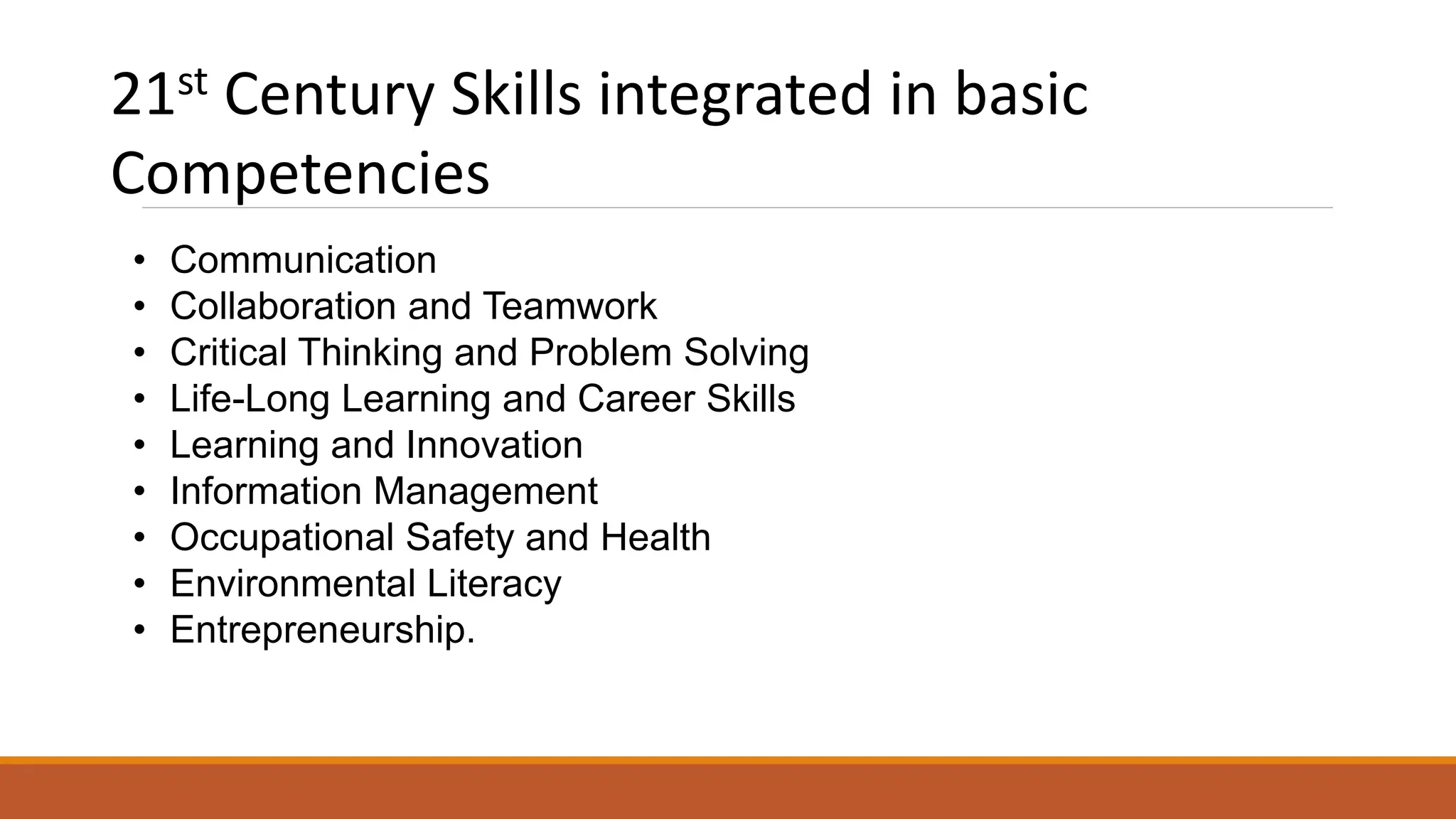
21st Century Skills integrated in basic
Competencies
• Communication
• Collaboration and Teamwork
• Critical Thinking and Problem Solving
• Life-Long Learning and Career Skills
• Learning and Innovation
• Information Management
• Occupational Safety and Health
• Environmental Literacy
• Entrepreneurship.
COMMON COMPETENCY
• refer to the units of competency required of workers in a particular
sector. These are sector-specific but not as specialized or highly
technical in nature as the core competencies. (Training
Regulations Framework per TESDA Board Resolution No. 2014-
04)
• refers to the required knowledge, skills and attitude for an
individual working in a particular industry.
CORE COMPETENCY
• these are specialized units of competency required of workers
that are unique in a particular area of work. They are sector
specific and may pertain to a stream of technology or specialty
job with a particular industry or sector. (Training Regulations
Framework per TESDA Board Resolution No. 2014-04)
• the specialized units of competency required to individual workers
for a particular area of work. It is specific for the industry sector’s
practices and technology.
ELEMENTS OF COMPETENCY
• the building blocks of a unit of competency. It describes in
outcome terms the functions that a person who works in a
particular area of work is able to perform. (Training Regulations
Framework per TESDA Board Resolution No. 2014-04)
• the components of the required knowledge, skills and attitude as
the basis of performance criteria that an individual must be
performed to complete the work activity.
PERFORMANCE CRITERIA
• are evaluative statements that specify what is to be assessed and
the required level of performance.
RANGE OF VARIABLES
• it describes the circumstances or context in which the work is to
be performed. (TESDA Training Regulations Framework per TB
Resolution No. 2014-04)
• it defines the boundaries within which the unit of competency
applies.
EVIDENCE GUIDE
• as used in TESDA, this term refers to a component of the unit of
competency that defines or identifies the evidence required to
determine the competence of the individual. It provides
information on critical aspects of competency, resource
implications, methods of assessment and context of assessment.
• the reference for the unit of competency which contains the
components as basis to determine the competence of an
individual.
COMPETENCY ASSESSMENT
• the process of collecting evidence to determine the acquired
knowledge, skills and attitude of an individual in accordance with
the standard performance expected at the workplace. (TESDA
Circular No. 107, s. 2021)
• the process of collecting evidence and making judgments on
whether competency has been achieved. (TESDA Circular No.
075 s., 2020)

PPT Report Competency.ppt hdhjshdhsmjxje

  • 1.
  • 2.
    COMPETENCY • the acquiredknowledge, skills and attitude in accordance to the standard performance in the workplace. • the possession and application of knowledge, skills and attitudes to the standard of performance required in the workplace (TESDA Circular No. 059, s. 2020) • the knowledge, skills, attitudes and values required for the performance and is conducted by the supervisor. (TESDA-OP-AS-01) • the observable and vital knowledge, skills and attitude which are translation of capabilities deemed essential for organizational success. (CSC Competency Model Building Intervention, as cited in TESDA Circular No. 119 s. 2019)
  • 3.
    COMPETENCY STANDARD (CS) •defines the knowledge, skills, and values required for competent performance in the industry. (TESDA Circular No. 41, s. 2017) • a specification of performance determined by the organization which sets out the skills, knowledge, and attitudes required to operate effectively in employment. Competency standards are made up of units of competency, which are themselves made up of elements of competency, together with performance criteria, a range of variables, and an evidence guide. (TESDA Circular No. 119, s. 2019) (TESDA-OP- AS-0) • refer to the industry-determined specification of competencies required for effective work performance. They are expressed as outcomes and they focus on workplace activity rather than training or personal attributes and capture the ability to apply skills in new situations and changing work organization. (TR Framework per TESDA Board Resolution No. 2014-04)
  • 4.
    UNIT OF COMPETENCY •a component of the competency standard stating a specific key function or role in a particular job or occupation serving as a basis for training an individual to gain specific knowledge, skills, and attitude needed to satisfy the special demands or requirements of a particular situation. • Is the smallest unit that can be assessed and recognized.
  • 5.
    BASIC COMPETENCY • referto non-technical skills (knowledge, skills and attitudes) that everybody will need in order to perform satisfactorily at work and in society and are considered portable and transferable irrespective of jobs and industrial settings. • These competencies are integrated with 21ST CENTURY SKILLS, referring to a broad set of knowledge, skills, work habits, and character traits believed to be critically important to success in today’s world, particularly in contemporary careers and workplaces.
  • 6.
    21st Century Skillsintegrated in basic Competencies • Communication • Collaboration and Teamwork • Critical Thinking and Problem Solving • Life-Long Learning and Career Skills • Learning and Innovation • Information Management • Occupational Safety and Health • Environmental Literacy • Entrepreneurship.
  • 7.
    COMMON COMPETENCY • referto the units of competency required of workers in a particular sector. These are sector-specific but not as specialized or highly technical in nature as the core competencies. (Training Regulations Framework per TESDA Board Resolution No. 2014- 04) • refers to the required knowledge, skills and attitude for an individual working in a particular industry.
  • 8.
    CORE COMPETENCY • theseare specialized units of competency required of workers that are unique in a particular area of work. They are sector specific and may pertain to a stream of technology or specialty job with a particular industry or sector. (Training Regulations Framework per TESDA Board Resolution No. 2014-04) • the specialized units of competency required to individual workers for a particular area of work. It is specific for the industry sector’s practices and technology.
  • 9.
    ELEMENTS OF COMPETENCY •the building blocks of a unit of competency. It describes in outcome terms the functions that a person who works in a particular area of work is able to perform. (Training Regulations Framework per TESDA Board Resolution No. 2014-04) • the components of the required knowledge, skills and attitude as the basis of performance criteria that an individual must be performed to complete the work activity.
  • 10.
    PERFORMANCE CRITERIA • areevaluative statements that specify what is to be assessed and the required level of performance.
  • 11.
    RANGE OF VARIABLES •it describes the circumstances or context in which the work is to be performed. (TESDA Training Regulations Framework per TB Resolution No. 2014-04) • it defines the boundaries within which the unit of competency applies.
  • 12.
    EVIDENCE GUIDE • asused in TESDA, this term refers to a component of the unit of competency that defines or identifies the evidence required to determine the competence of the individual. It provides information on critical aspects of competency, resource implications, methods of assessment and context of assessment. • the reference for the unit of competency which contains the components as basis to determine the competence of an individual.
  • 13.
    COMPETENCY ASSESSMENT • theprocess of collecting evidence to determine the acquired knowledge, skills and attitude of an individual in accordance with the standard performance expected at the workplace. (TESDA Circular No. 107, s. 2021) • the process of collecting evidence and making judgments on whether competency has been achieved. (TESDA Circular No. 075 s., 2020)