Web Design Principles
5th
Edition
Chapter Twelve
Putting It All Together
2
Objectives
• Apply the design, layout, and CSS skills you
learned throughout this book by building a
home page for a Web site
• Describe the design process and decisions a
Web designer must make in a standards-based
development process
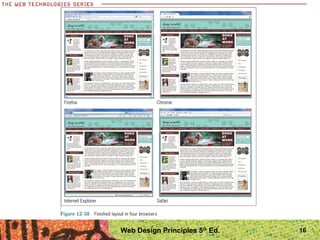
• Test your work in multiple browsers for
consistency as you progress
Web Design Principles 5th
Ed.
The Initial Design Process
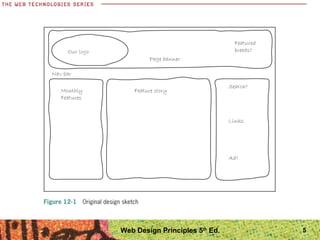
• The clients sketched out a basic idea for the
site, shown in Figure 12-1
• They also submitted a Web site specification
document to the graphic designer providing
background information about the audience,
content, and design of the Web site
Web Design Principles 5th
Ed. 4
5Web Design Principles 5th
Ed.
6Web Design Principles 5th
Ed.
7Web Design Principles 5th
Ed.
8Web Design Principles 5th
Ed.
9Web Design Principles 5th
Ed.
10Web Design Principles 5th
Ed.
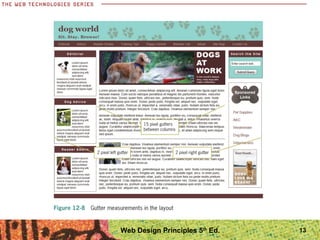
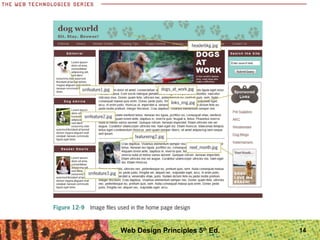
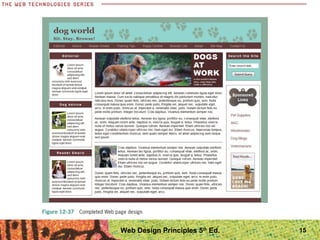
Creating the Mock-up Web Page
12Web Design Principles 5th
Ed.
13Web Design Principles 5th
Ed.
14Web Design Principles 5th
Ed.
15Web Design Principles 5th
Ed.
16Web Design Principles 5th
Ed.
17
Summary
• The design process is iterative
• Use CSS properties to create interesting
designs
• Use CSS to control your typography
• Use box model properties to control white
space
• CSS page layout properties let you create
navigation bars and column-based layouts
• Use a wrapper for fixed page layouts
Web Design Principles 5th
Ed.
18
Summary
• With CSS box model properties, you gain
precise control over the white space within
table columns and between different
elements in a page design
• Using simple tables to hold the page design
together ensures that more users will see the
Web page as you designed it for them
Web Design Principles 5th
Ed.

Ppt ch12