The Tale of Genji
Romantic Hero How is Genji described? Feelings, not actions  Tears (p. 117) The Imperial Court Power politics Rituals of Love Lover, artist, poet
Heian Court Society Heian Period (794-1185)  Establishment of capital in Heianky ō Court Ranks 10 in all, 3 top ones can become princes Decline of Emperor’s power Growth of Private Estates ( sh ō en ) Rise of Fujiwara Clan Huge landholder
Fujiwara Regent System (959-1068) Emperor Prime Minister Minister of the Left  Minister of the Right  Major Counselor Cabinet  8 Ministries Advisor Imperial Consort Crown Prince =Future Emperor Marriage politics Regent Kanpaku
The  Monogatari Vernacular tale Tale of the Bamboo Cutter  (909) Tales of Ise  (947) Invention of  Kana A way to write spoken Japanese Main writers are women, lower aristocracy  Sei Shonagon,  The Pillow Book Murasaki Shikibu, The Tale of Genji
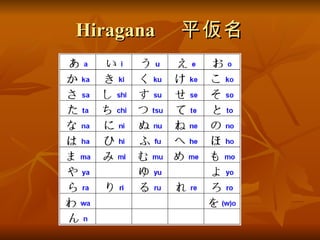
Hiragana  平仮名
Murasaki Shikibu ( 970?-1014?)  The name Wrote  Tale of Genji (Genji monogatari )  And  Murasaki Shikibu Diary  (1010) Fujiwara Branch, daughter of  Provincial Governor Married 999, husband died in two years, one daughter Served as lady-in-waiting in Empress  Shôshi’s literary salon 1005 Genji  circulating by1022 (54 books)
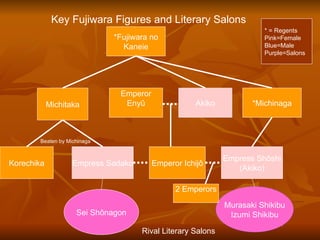
Key Fujiwara Figures and Literary Salons  Empress Sh ô shi (Akiko) Emperor Ichijô Empress Sadako *Michinaga Korechika Michitaka *Fujiwara no Kaneie Akiko Emperor Eny û Sei Sh ônagon Murasaki Shikibu Izumi Shikibu Rival Literary Salons * = Regents Pink=female Blue=male Purple=salons * = Regents Pink=Female Blue=Male Purple=Salons 2 Emperors Beaten by Michinaga
Why is  Tale of Genji  so famous? First novel Buddhist theme of Impermanence ( mono no aware ) First Psychological novel Model classic for 1000 years Structure 1-33: Glory and Youth 34-41: Conflict and Death 42-44: (authorship questioned) 45-54: Uji chapters
Chapter 1: Paulownia Court  Probably written later stories circulated  hand to hand serialized later ones inserted Set in vague time, but Fujiwara period Genji’s parents Emperor Lowly concubine, without backing Birth of Genji, “shining prince” Korean physiognomist Becomes a “commoner” p. 15
The Lowly Concubine Ranking of multiple wives (emperor’s consorts) Women named by residence Kokiden Court Paulownia Court Analogy to Yang Gui Fei Bo Juyi “Song of Everlasting Sorrow” 12 “ In the sky, as birds that share a wing. On earth, as trees that share a branch.”
Inside the Royal Palace  Emperor’s Quarters Paulownia Court
Youth of Shining Prince Beauty, but not of highest status “Jewel,” “private treasure”  p. 4 Blessed by the heavens, p. 120  Precocious Musical talent Capping ceremony Marries daughter of Minister of Left at 12
Pop Quiz Please be quiet and put your notes away Write your name and section time
Genji and Psychoanalysis Freud and the Oedipus Complex Every boy falls in love with mother and wants to supplant his father Stage of psychological development Genji, the Emperor, and Fujitsubo Fujitsubo: surrogate mother Longs for mother at 12 Eventually Son/Stepmother become lovers, Fujitsubo pregnant, baby resembles Genji and later becomes emperor
Love in ancient Japan Love never about happiness, fulfillment Unsatisfied longing  Sadness of  parting Fear of abandonment Raging jealousy Mortality Mono no aware Aesthetic reaction to ephemerality Symbolized by seasons
Chapter 4: Genji’s youth Experience with women (125) Flirts Rokujo (lady of the 6th ward) Older Extremely cultivated Sanjo (lady of the 3rd Ward) also Aoi Political marriage Cold
Map of Kyoto (Heianky ō )
Evening Faces Genji’s Nurse Members of aristocracy raised by nurses Koremitsu  “ Pure Land Buddhism” Neighborhoods in the city 128 Similarity with Genji’s mother story Love and inferior social status Woman dies
Yugao
Evening Faces First contact: sent a fan with poem Common poetic “vehicle” Calligraphy “suggested cultivation and taste” Concealment of identities  Yugao taken away and dies in strange place  Spirit Possession, p. 130 Pollution of hero, p. 132  Funeral and 49 days
Poetry Allusion to poetry (Kokinshuu) Poetry as conversational exchange Poetry in courting, p. 129 Form of poetry Short, 31 syllables Tanka Translated as couplets
Physical Beauty
Kaimami  “peeping through space”
Murasaki Shikibu nikki ekotoba (early 13 th  C)
Shinto Pre-scientific explanation of phenomena of nature, nature as filled with spirits Three-fold division Heaven, world of spirits Earth, human realm Underworld, burial of dead Purity in Shinto: washing of body
Superstitions Horoscopes Unlucky directions, connected with season, time of day, etc. Spiritual possession 130 Pollution or defilement

Pp genj imonogatari_

  • 1.
  • 2.
    Romantic Hero Howis Genji described? Feelings, not actions Tears (p. 117) The Imperial Court Power politics Rituals of Love Lover, artist, poet
  • 3.
    Heian Court SocietyHeian Period (794-1185) Establishment of capital in Heianky ō Court Ranks 10 in all, 3 top ones can become princes Decline of Emperor’s power Growth of Private Estates ( sh ō en ) Rise of Fujiwara Clan Huge landholder
  • 4.
    Fujiwara Regent System(959-1068) Emperor Prime Minister Minister of the Left Minister of the Right Major Counselor Cabinet 8 Ministries Advisor Imperial Consort Crown Prince =Future Emperor Marriage politics Regent Kanpaku
  • 5.
    The MonogatariVernacular tale Tale of the Bamboo Cutter (909) Tales of Ise (947) Invention of Kana A way to write spoken Japanese Main writers are women, lower aristocracy Sei Shonagon, The Pillow Book Murasaki Shikibu, The Tale of Genji
  • 6.
  • 7.
    Murasaki Shikibu (970?-1014?) The name Wrote Tale of Genji (Genji monogatari ) And Murasaki Shikibu Diary (1010) Fujiwara Branch, daughter of Provincial Governor Married 999, husband died in two years, one daughter Served as lady-in-waiting in Empress Shôshi’s literary salon 1005 Genji circulating by1022 (54 books)
  • 8.
    Key Fujiwara Figuresand Literary Salons Empress Sh ô shi (Akiko) Emperor Ichijô Empress Sadako *Michinaga Korechika Michitaka *Fujiwara no Kaneie Akiko Emperor Eny û Sei Sh ônagon Murasaki Shikibu Izumi Shikibu Rival Literary Salons * = Regents Pink=female Blue=male Purple=salons * = Regents Pink=Female Blue=Male Purple=Salons 2 Emperors Beaten by Michinaga
  • 9.
    Why is Tale of Genji so famous? First novel Buddhist theme of Impermanence ( mono no aware ) First Psychological novel Model classic for 1000 years Structure 1-33: Glory and Youth 34-41: Conflict and Death 42-44: (authorship questioned) 45-54: Uji chapters
  • 10.
    Chapter 1: PaulowniaCourt Probably written later stories circulated hand to hand serialized later ones inserted Set in vague time, but Fujiwara period Genji’s parents Emperor Lowly concubine, without backing Birth of Genji, “shining prince” Korean physiognomist Becomes a “commoner” p. 15
  • 11.
    The Lowly ConcubineRanking of multiple wives (emperor’s consorts) Women named by residence Kokiden Court Paulownia Court Analogy to Yang Gui Fei Bo Juyi “Song of Everlasting Sorrow” 12 “ In the sky, as birds that share a wing. On earth, as trees that share a branch.”
  • 12.
    Inside the RoyalPalace Emperor’s Quarters Paulownia Court
  • 13.
    Youth of ShiningPrince Beauty, but not of highest status “Jewel,” “private treasure” p. 4 Blessed by the heavens, p. 120 Precocious Musical talent Capping ceremony Marries daughter of Minister of Left at 12
  • 14.
    Pop Quiz Pleasebe quiet and put your notes away Write your name and section time
  • 15.
    Genji and PsychoanalysisFreud and the Oedipus Complex Every boy falls in love with mother and wants to supplant his father Stage of psychological development Genji, the Emperor, and Fujitsubo Fujitsubo: surrogate mother Longs for mother at 12 Eventually Son/Stepmother become lovers, Fujitsubo pregnant, baby resembles Genji and later becomes emperor
  • 16.
    Love in ancientJapan Love never about happiness, fulfillment Unsatisfied longing Sadness of parting Fear of abandonment Raging jealousy Mortality Mono no aware Aesthetic reaction to ephemerality Symbolized by seasons
  • 17.
    Chapter 4: Genji’syouth Experience with women (125) Flirts Rokujo (lady of the 6th ward) Older Extremely cultivated Sanjo (lady of the 3rd Ward) also Aoi Political marriage Cold
  • 18.
    Map of Kyoto(Heianky ō )
  • 19.
    Evening Faces Genji’sNurse Members of aristocracy raised by nurses Koremitsu “ Pure Land Buddhism” Neighborhoods in the city 128 Similarity with Genji’s mother story Love and inferior social status Woman dies
  • 20.
  • 21.
    Evening Faces Firstcontact: sent a fan with poem Common poetic “vehicle” Calligraphy “suggested cultivation and taste” Concealment of identities Yugao taken away and dies in strange place Spirit Possession, p. 130 Pollution of hero, p. 132 Funeral and 49 days
  • 22.
    Poetry Allusion topoetry (Kokinshuu) Poetry as conversational exchange Poetry in courting, p. 129 Form of poetry Short, 31 syllables Tanka Translated as couplets
  • 23.
  • 24.
    Kaimami “peepingthrough space”
  • 25.
    Murasaki Shikibu nikkiekotoba (early 13 th C)
  • 26.
    Shinto Pre-scientific explanationof phenomena of nature, nature as filled with spirits Three-fold division Heaven, world of spirits Earth, human realm Underworld, burial of dead Purity in Shinto: washing of body
  • 27.
    Superstitions Horoscopes Unluckydirections, connected with season, time of day, etc. Spiritual possession 130 Pollution or defilement