Downloaded 645 times
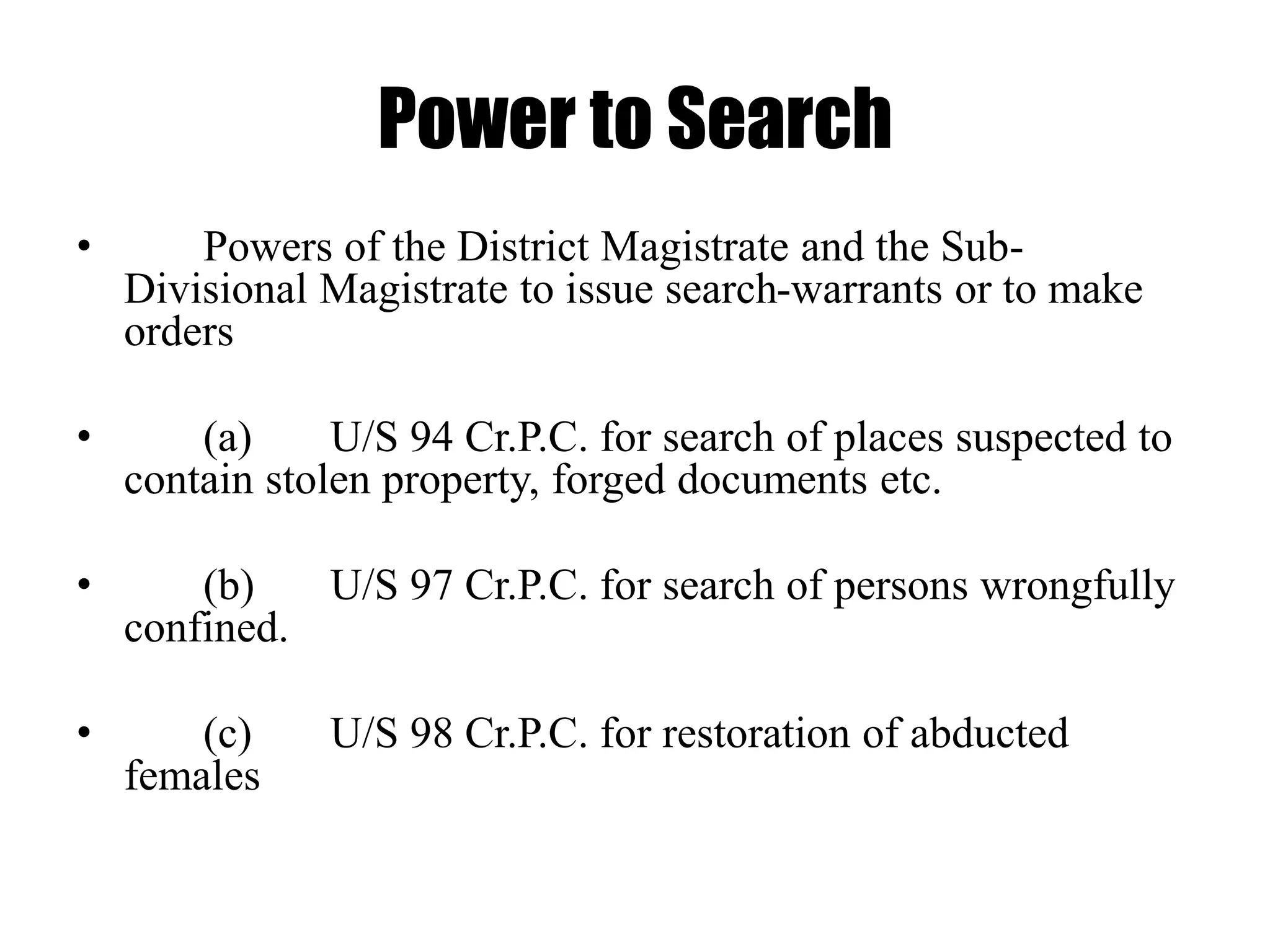
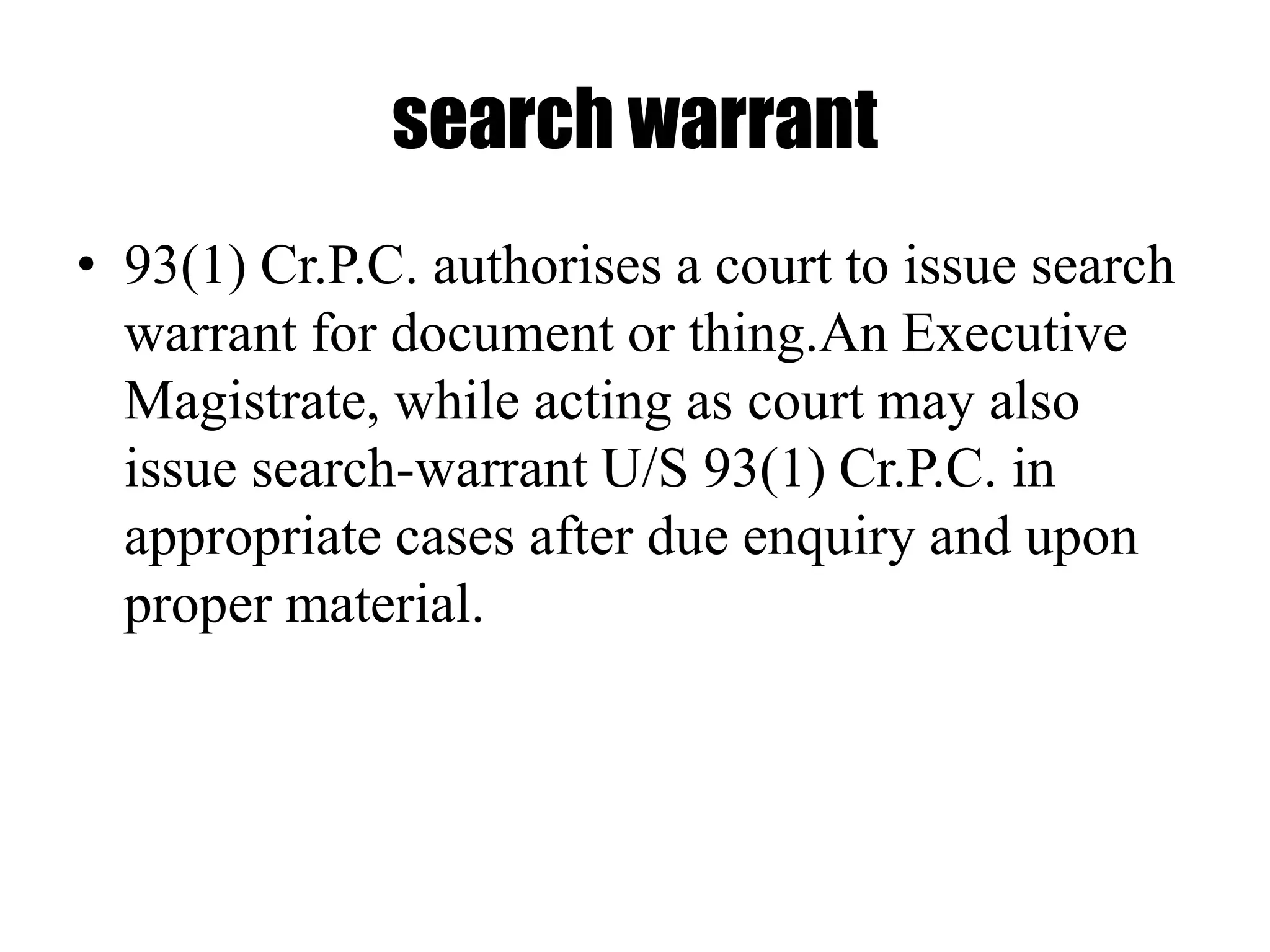
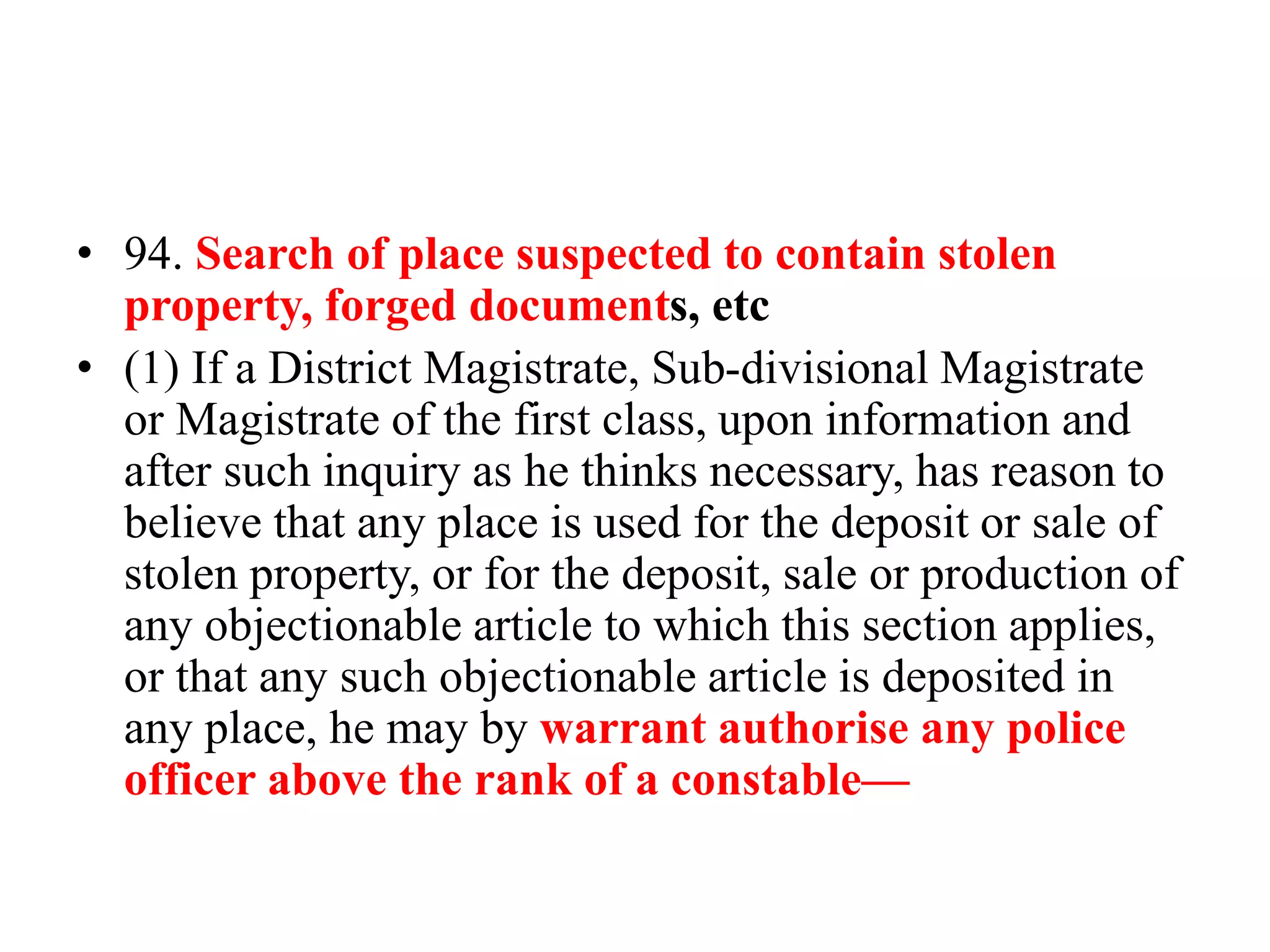
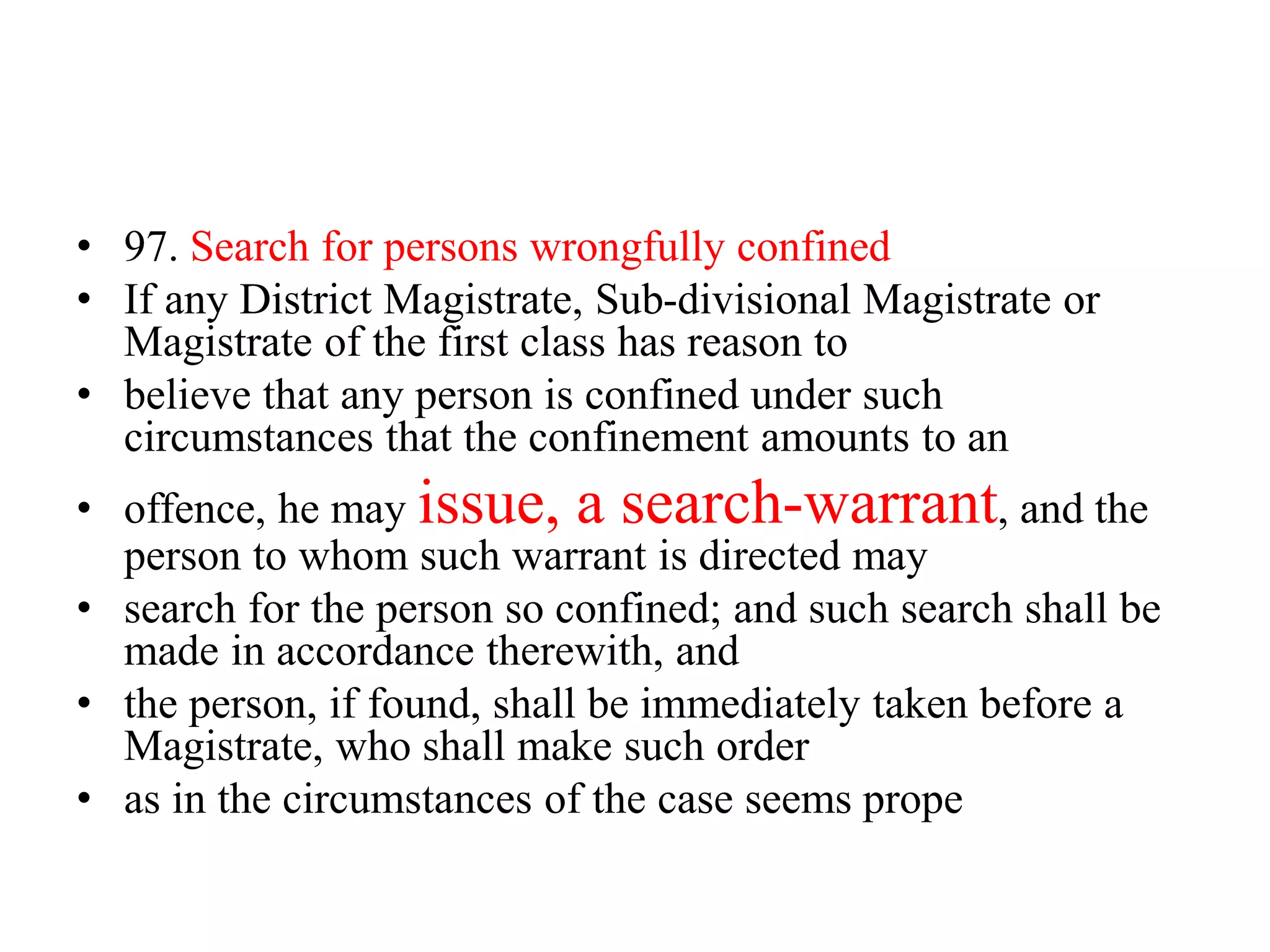
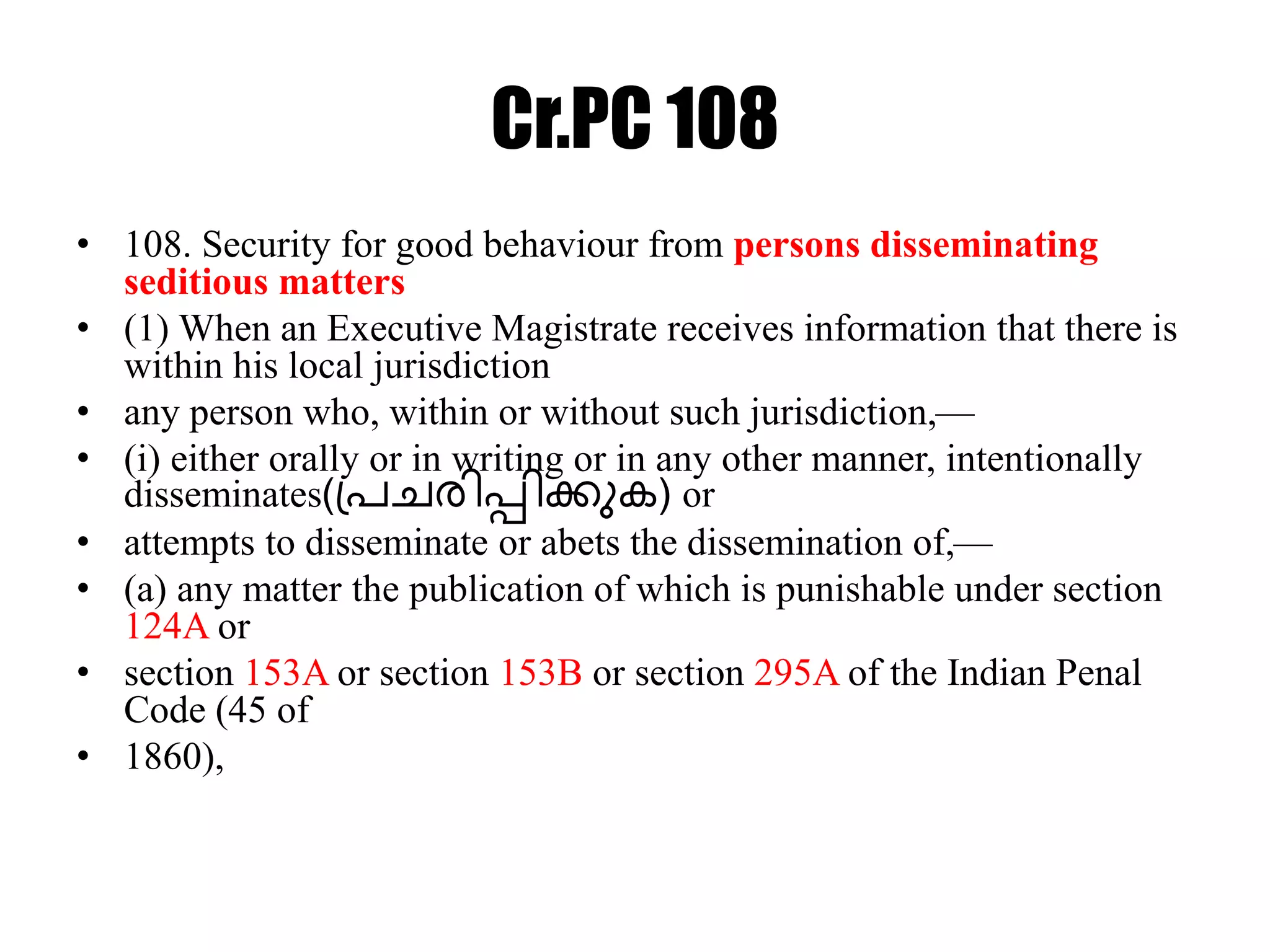
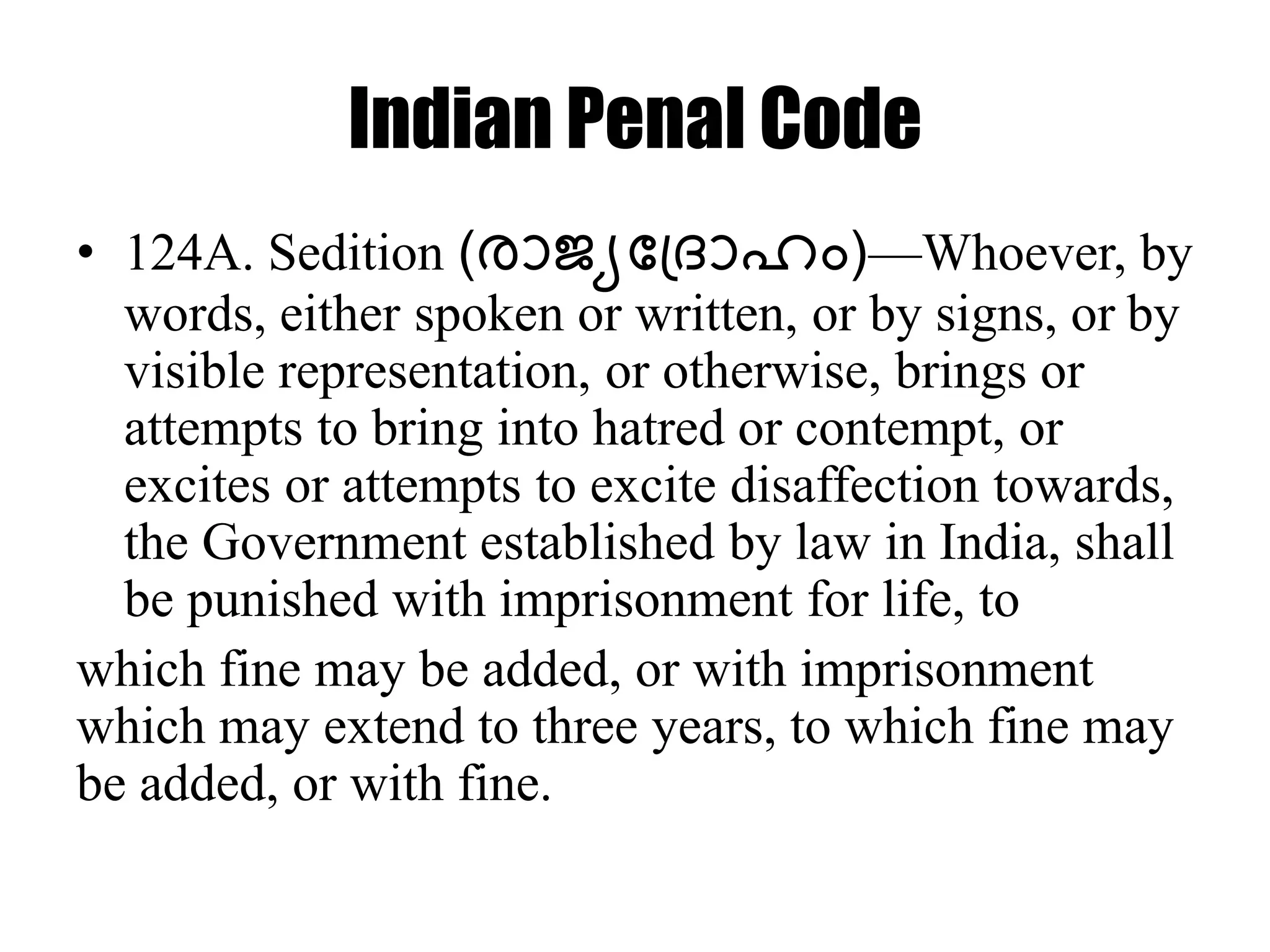
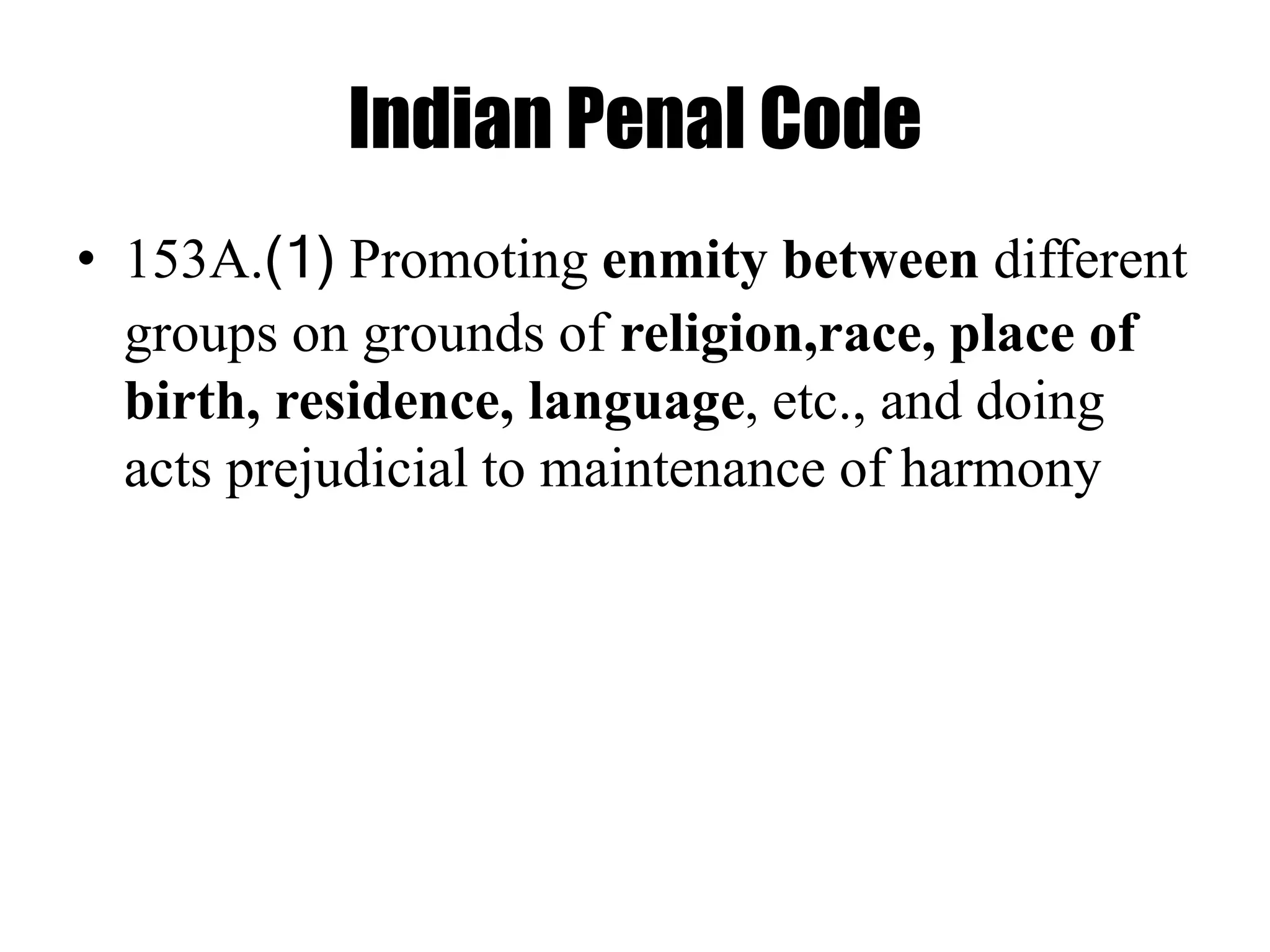
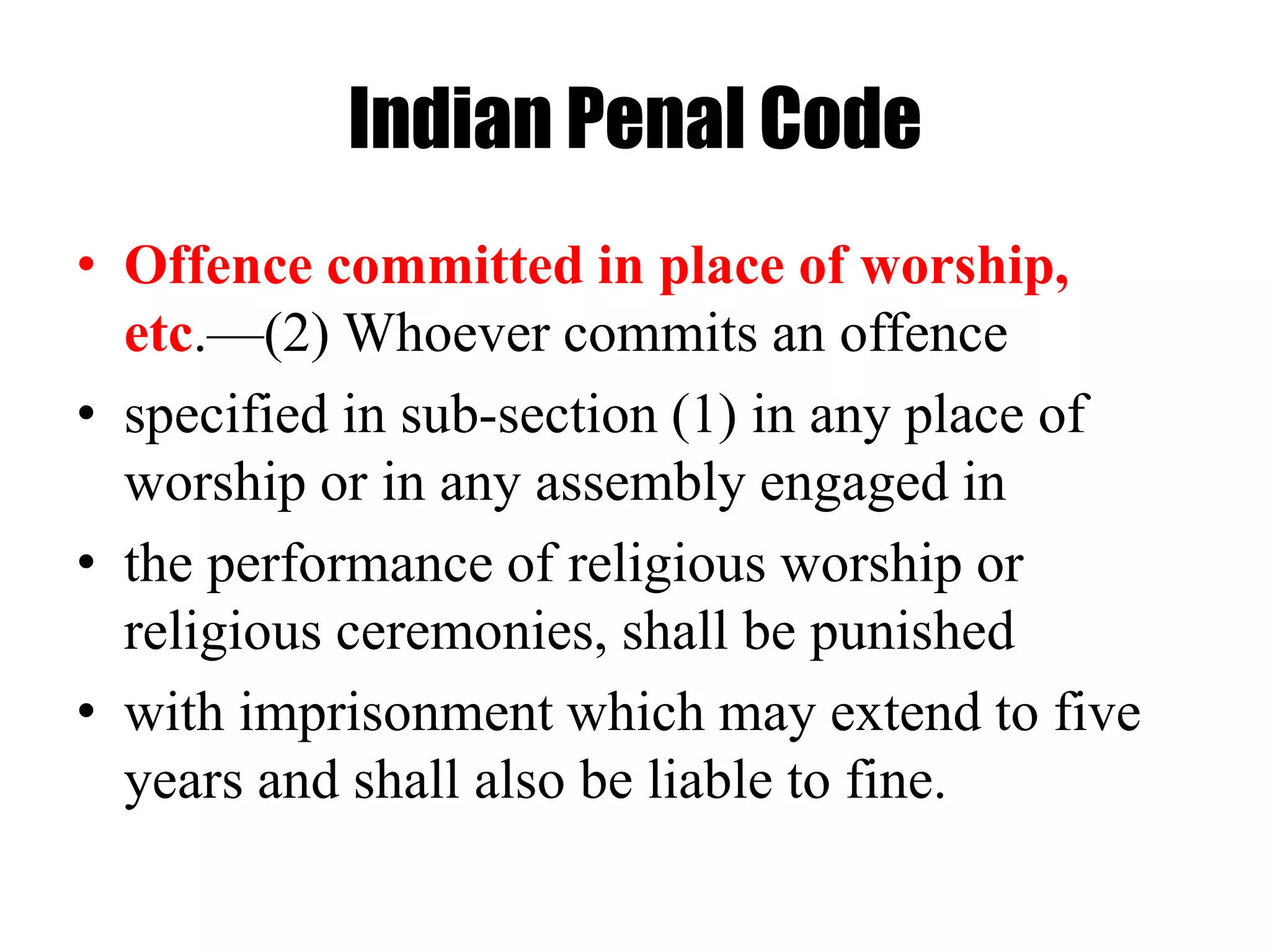
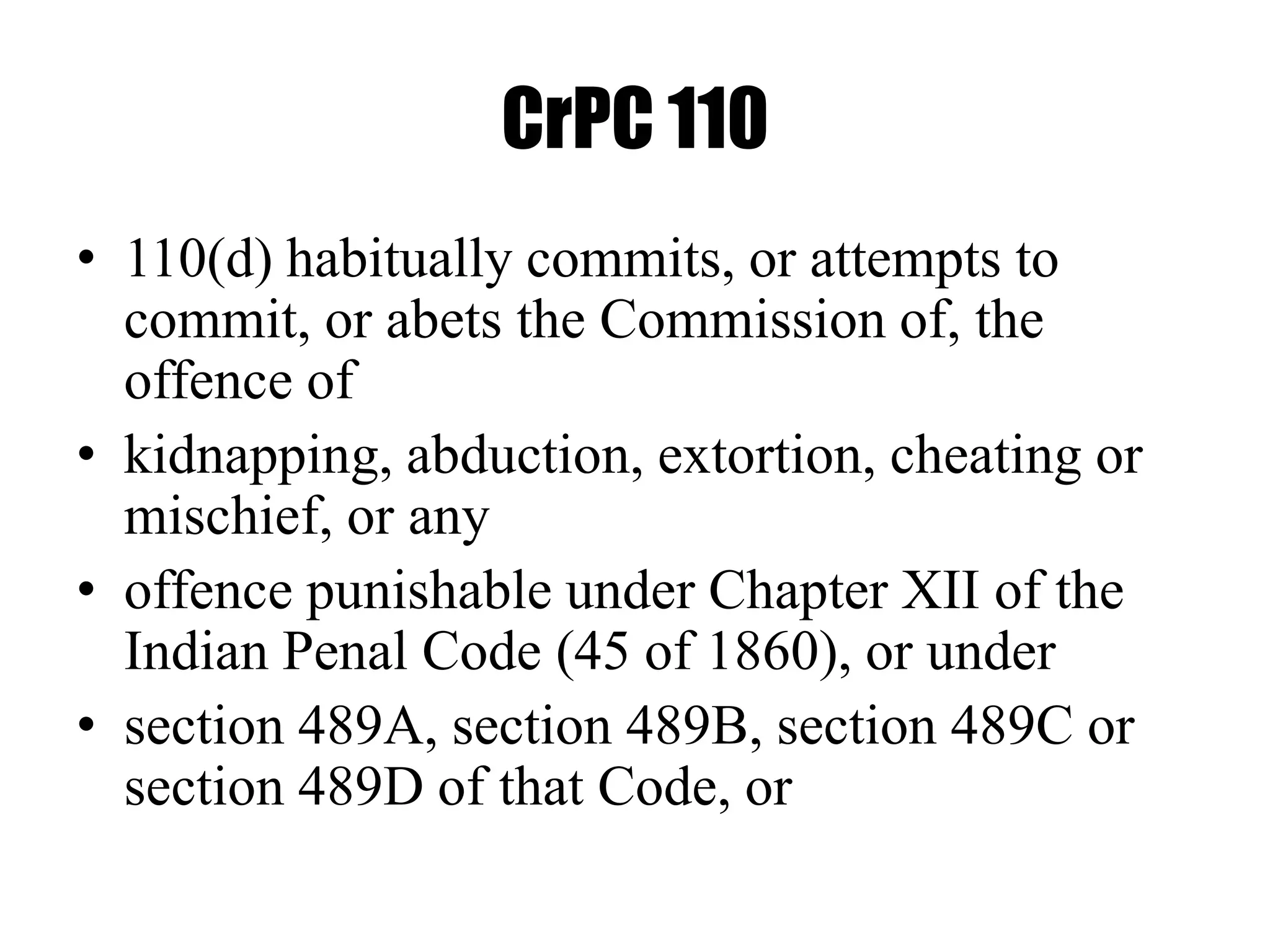
 makes, produces, publishes or keeps
for sale, imports, exports, conveys, sells, lets to
• hire, distributes, publicly exhibits or in any
other manner puts into circulation any
• obscene matter such as is referred to in section
292 of the Indian Penal Code (45 of
• 1860),(I P C 292. Sale, etc., of obscene books,
etc.—)](https://image.slidesharecdn.com/powersanddutiesofexecutivemagistrates-140521132930-phpapp02/75/Powers-and-duties-of-executive-magistrates-50-2048.jpg)
![THE DRUGS AND COSMETICS ACT, 1940
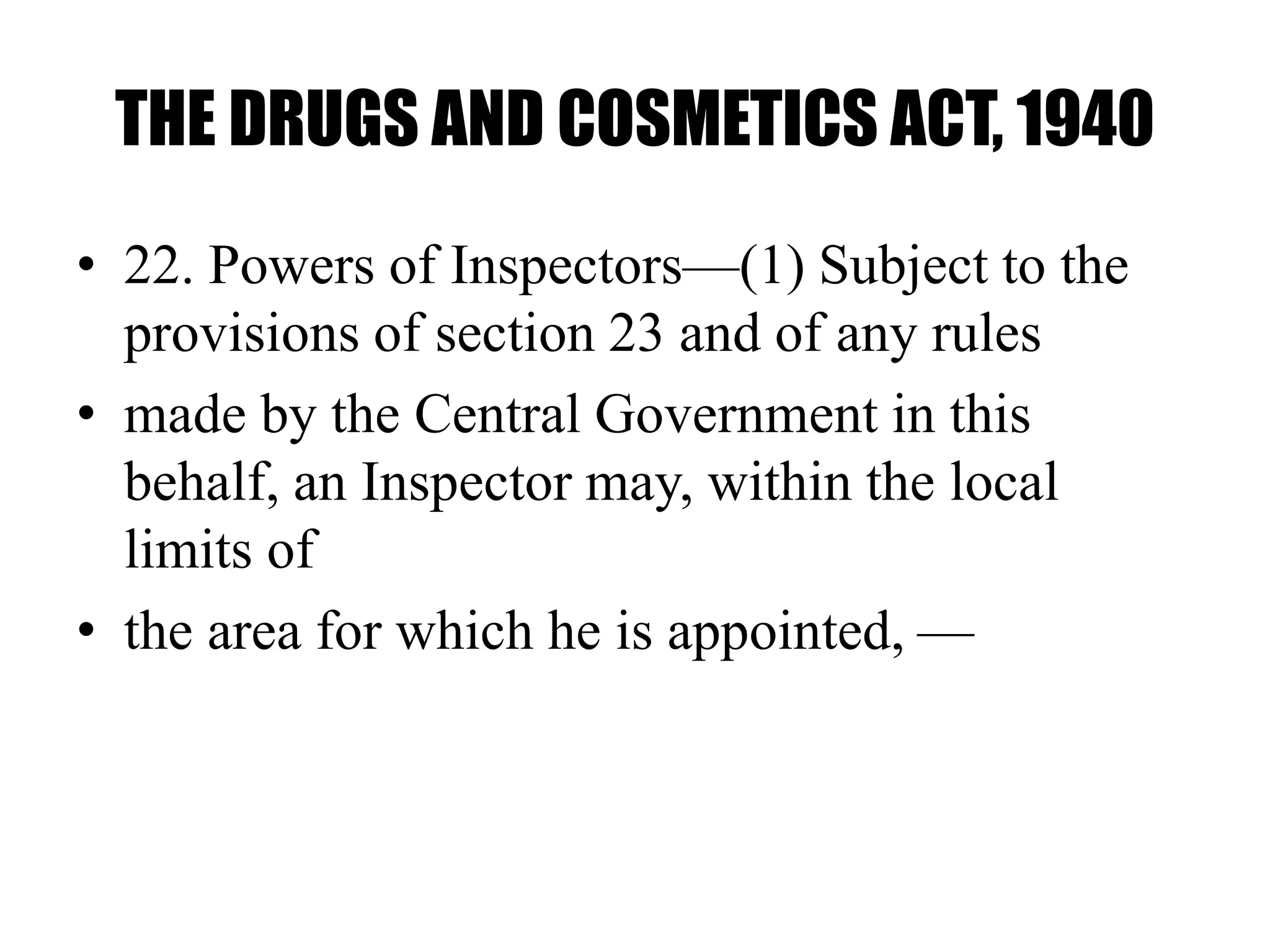
• 22(2) The provisions of the Code of Criminal
Procedure, 2[1973 (2 of 1974)] shall, so far as
• may be, apply to any search or seizure under
this Chapter as they apply to any search or
• seizure made under the authority of a warrant
issued under section 2[94] of the said Code.](https://image.slidesharecdn.com/powersanddutiesofexecutivemagistrates-140521132930-phpapp02/75/Powers-and-duties-of-executive-magistrates-58-2048.jpg)
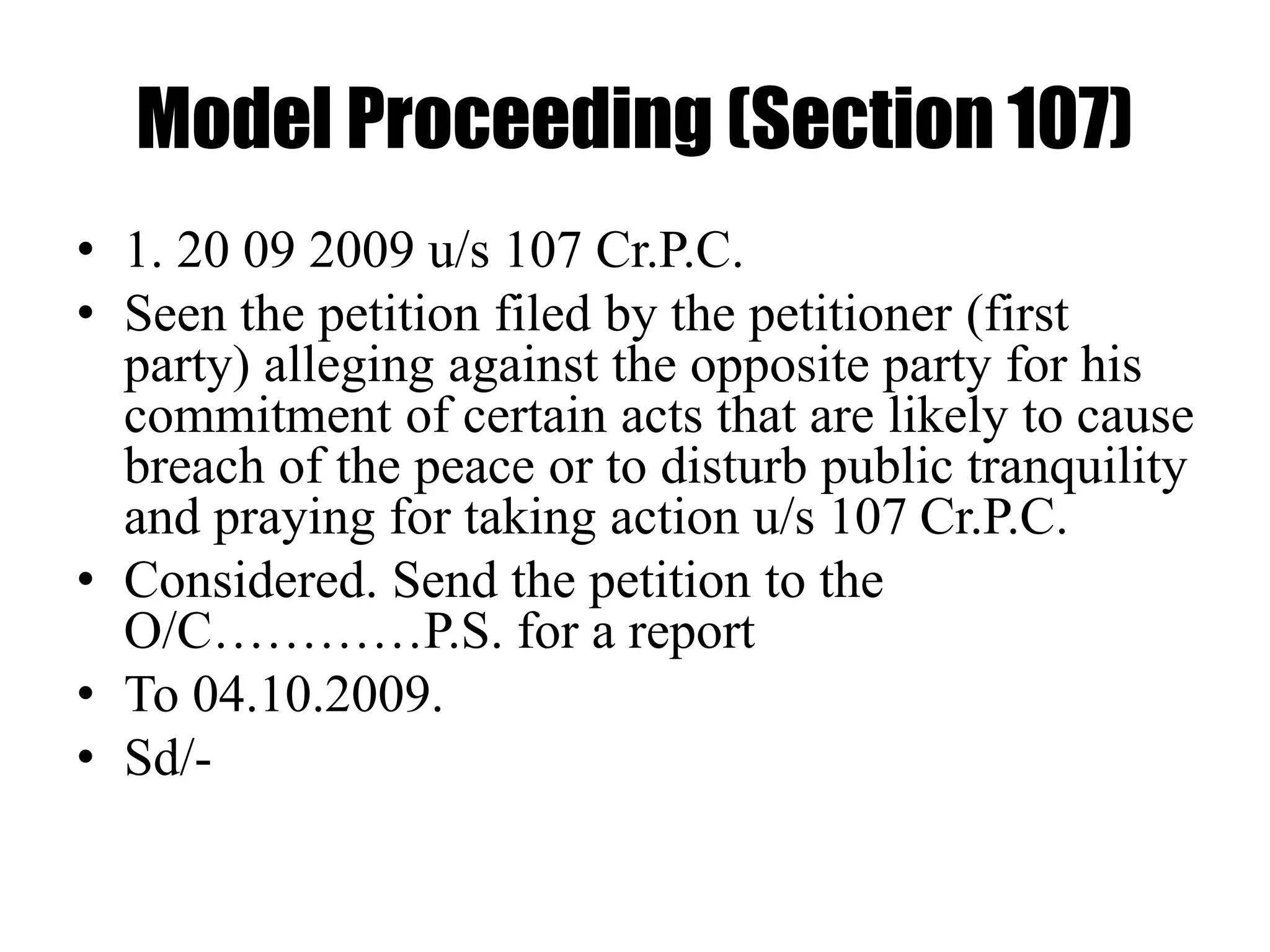
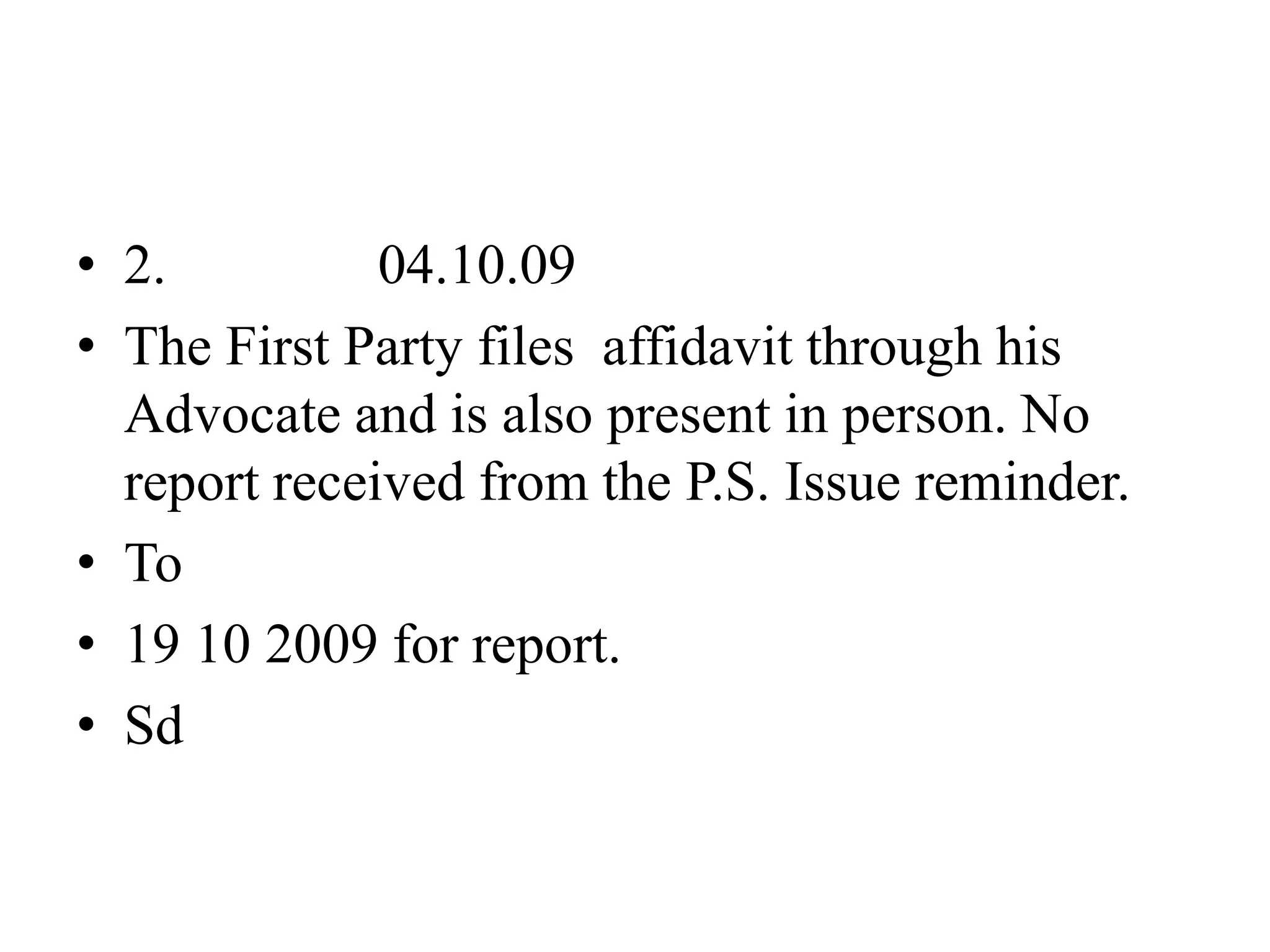
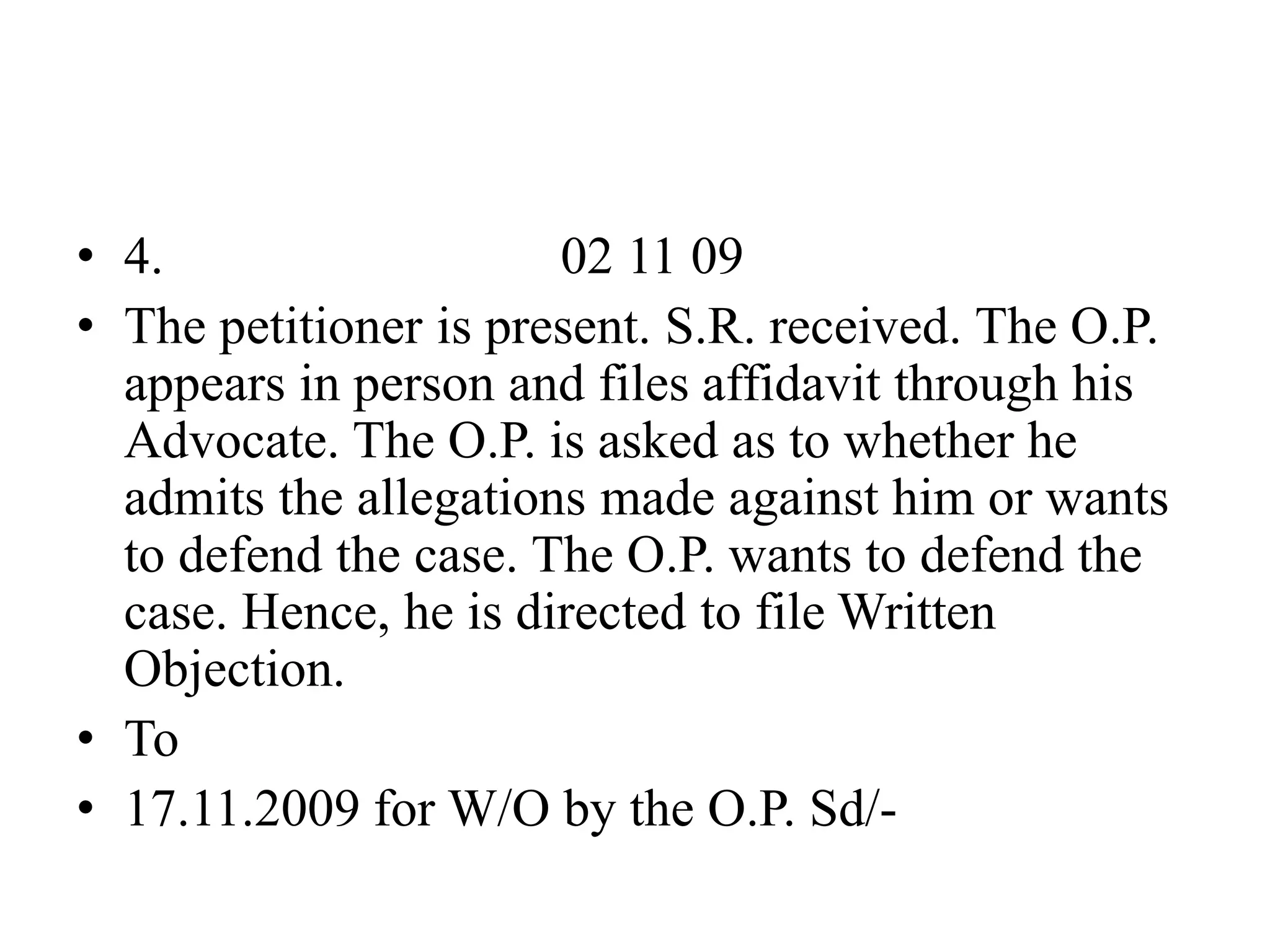
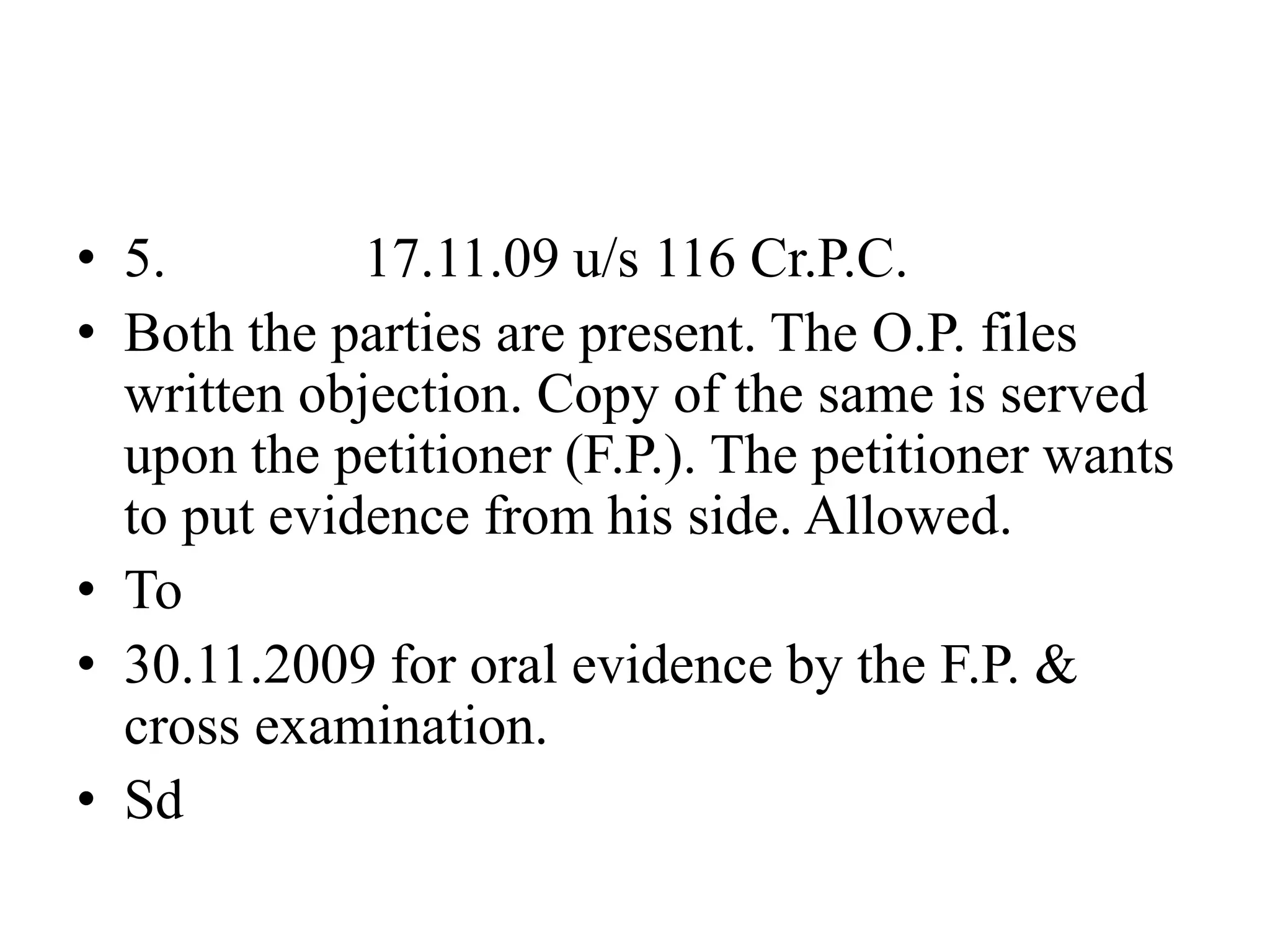
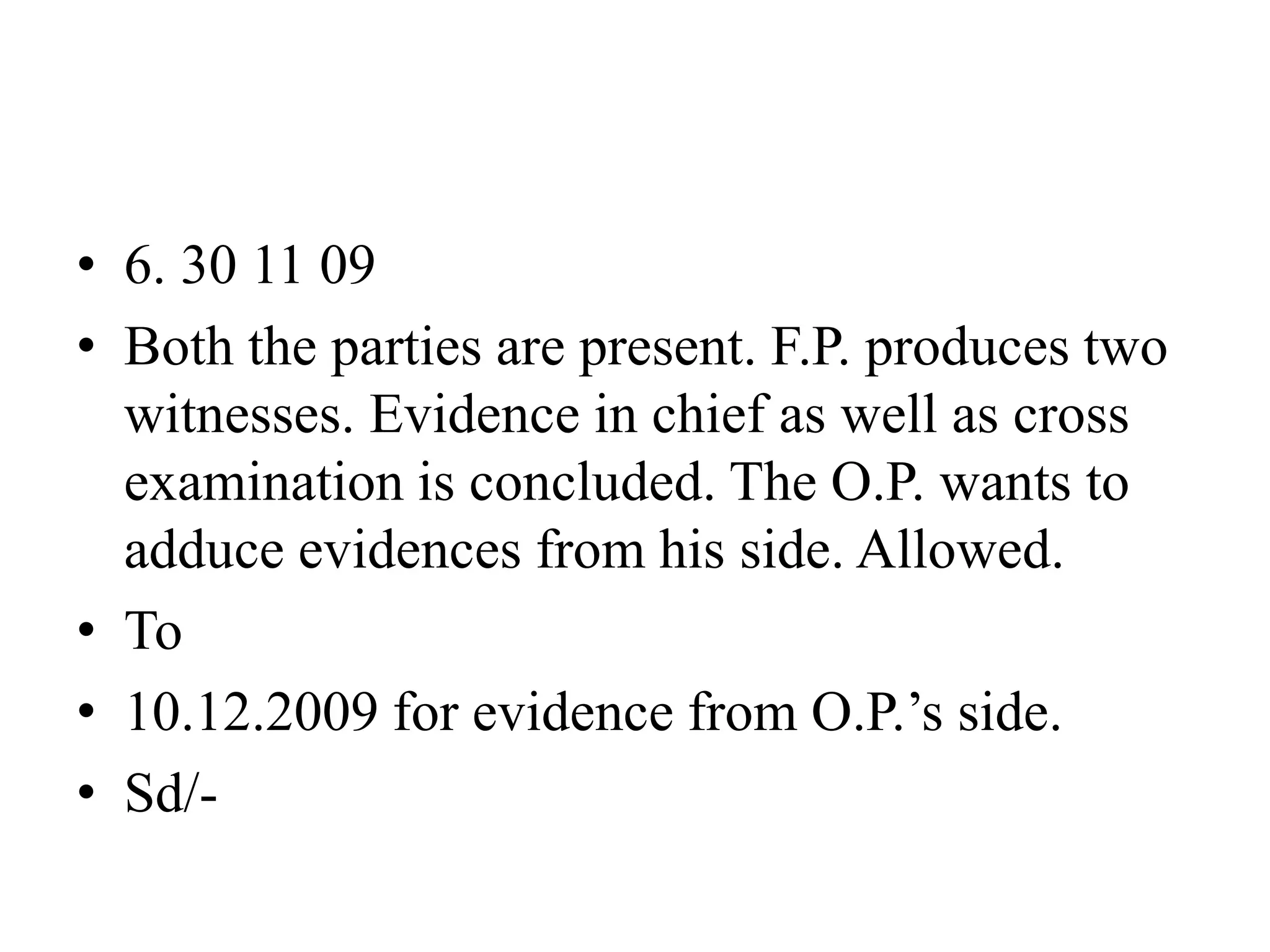
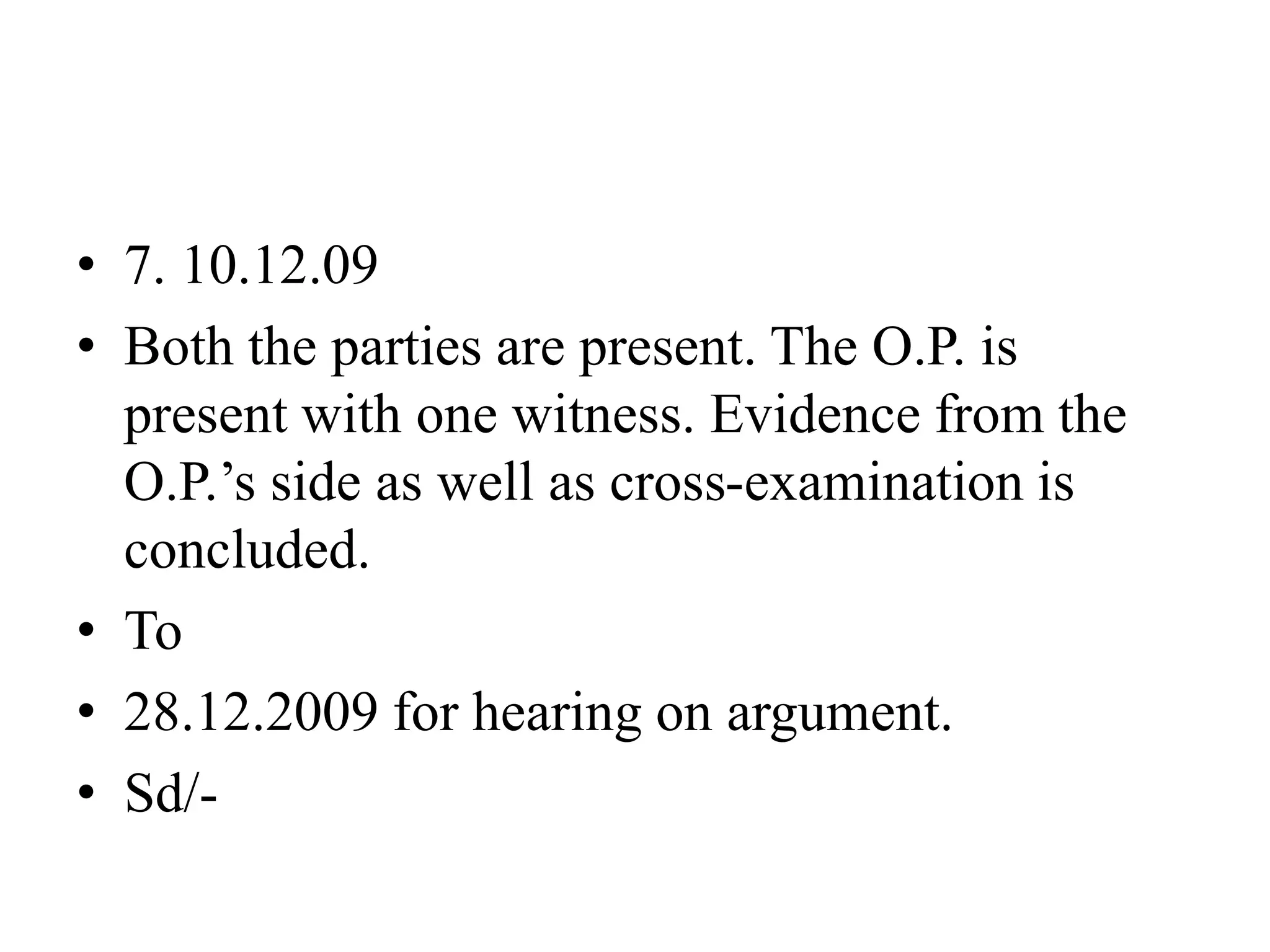
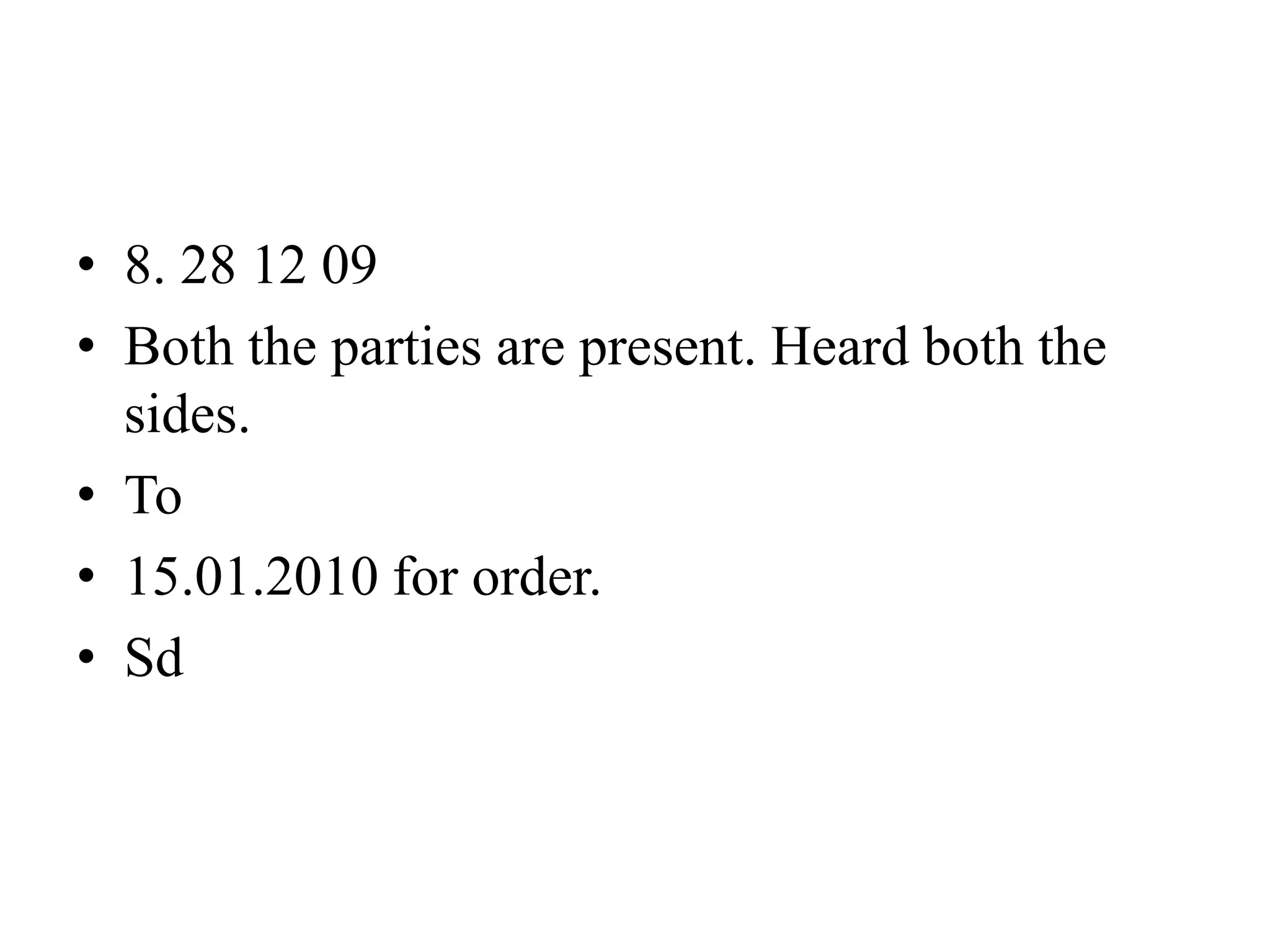
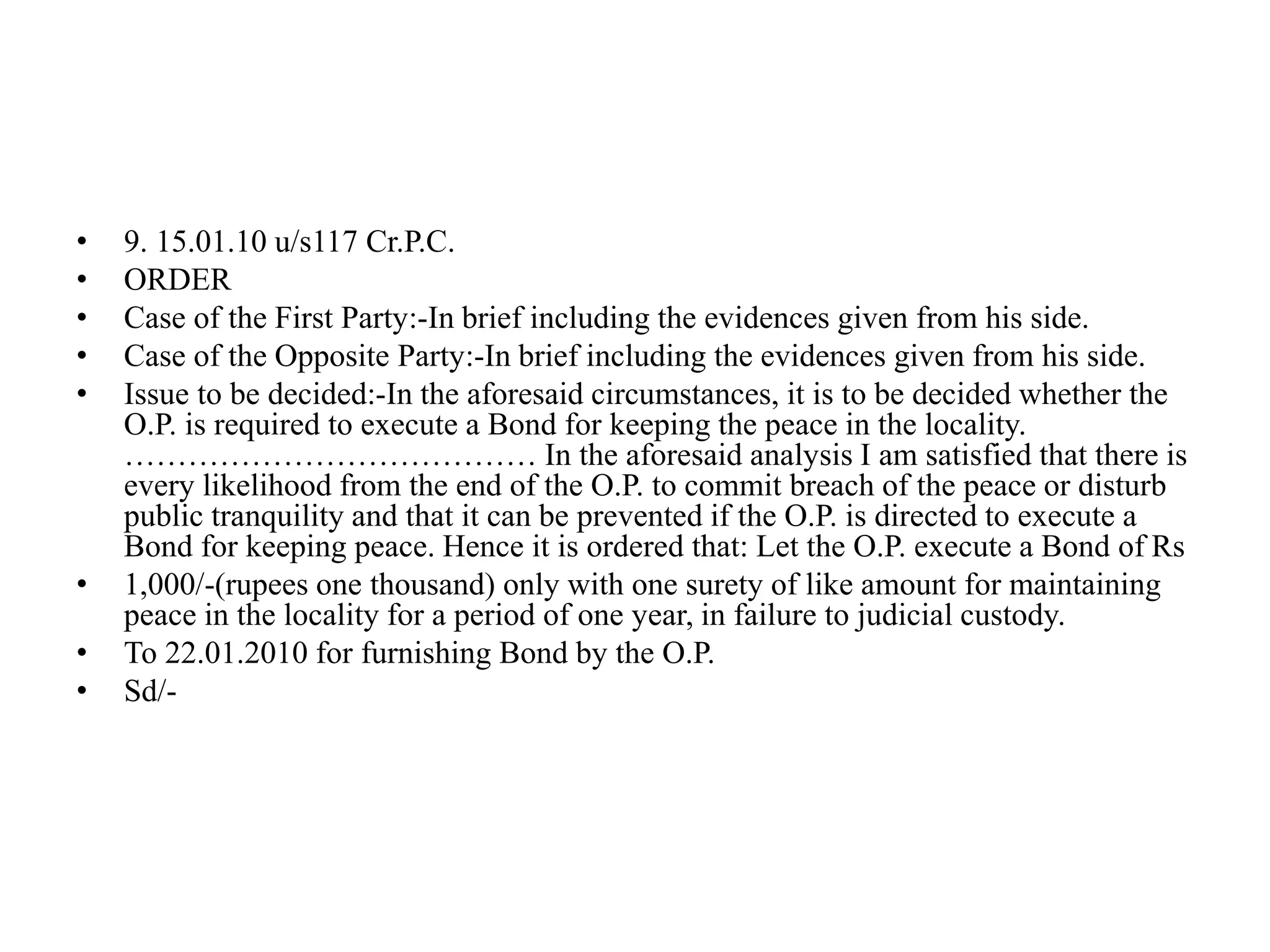



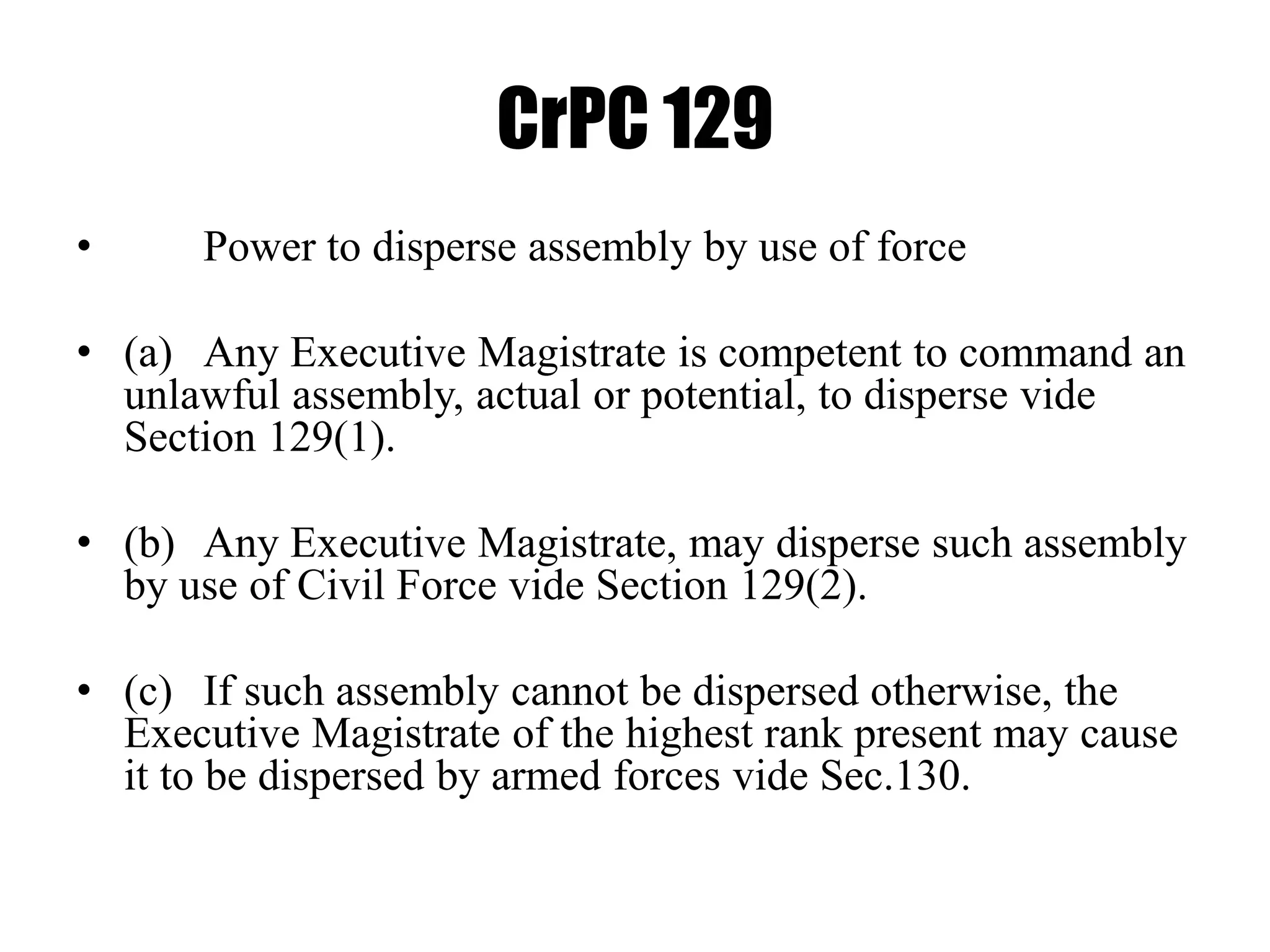
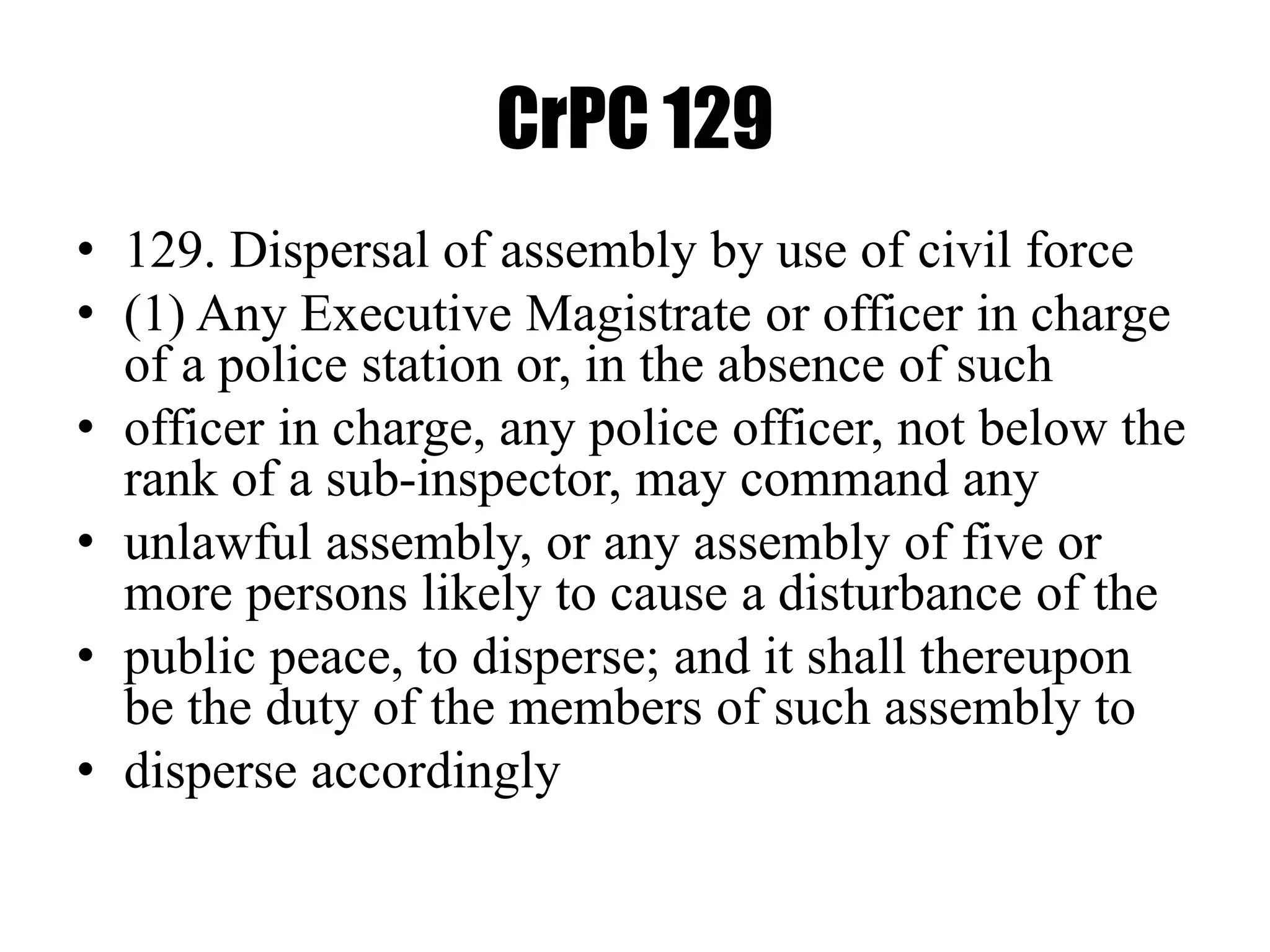
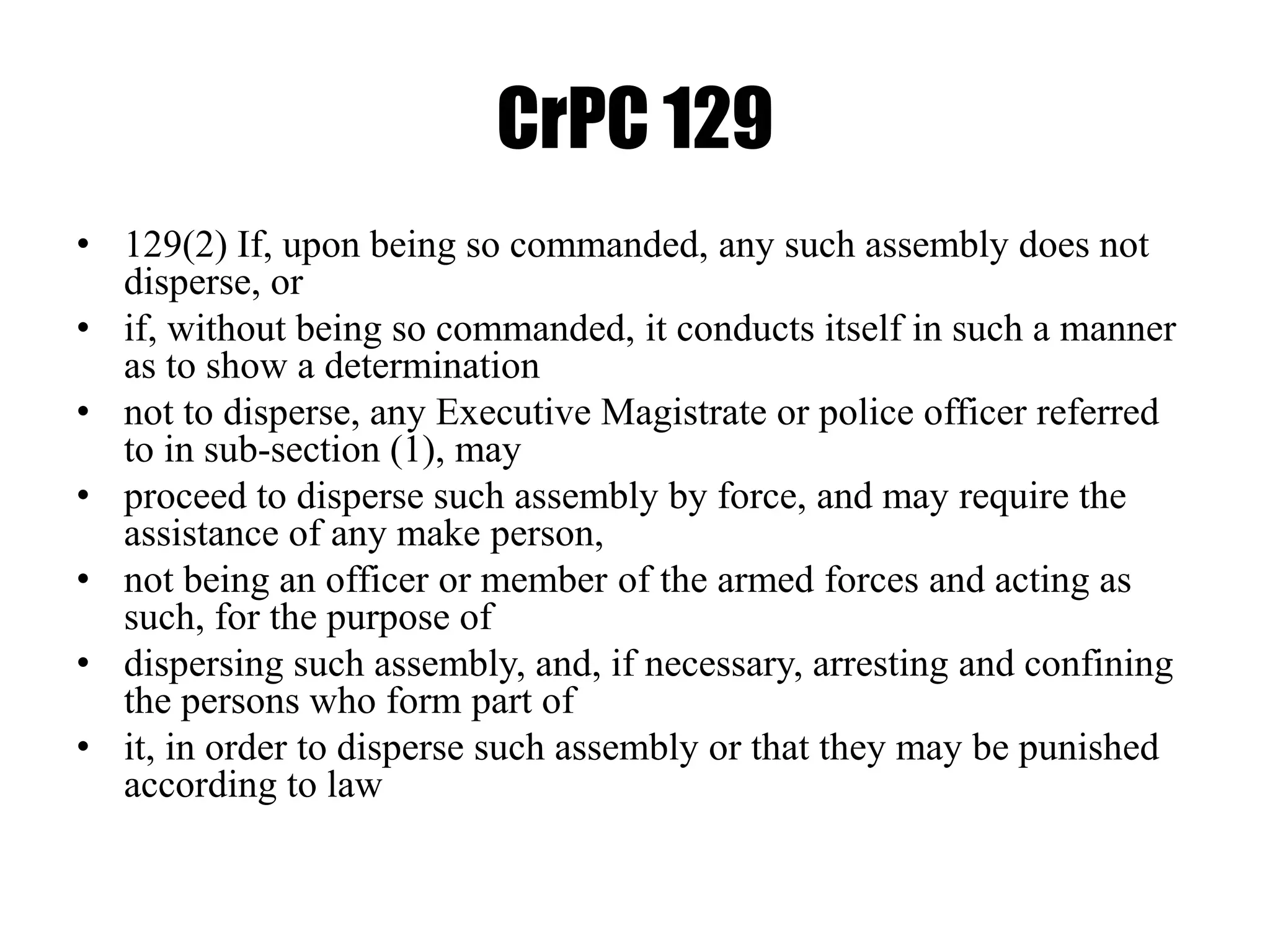
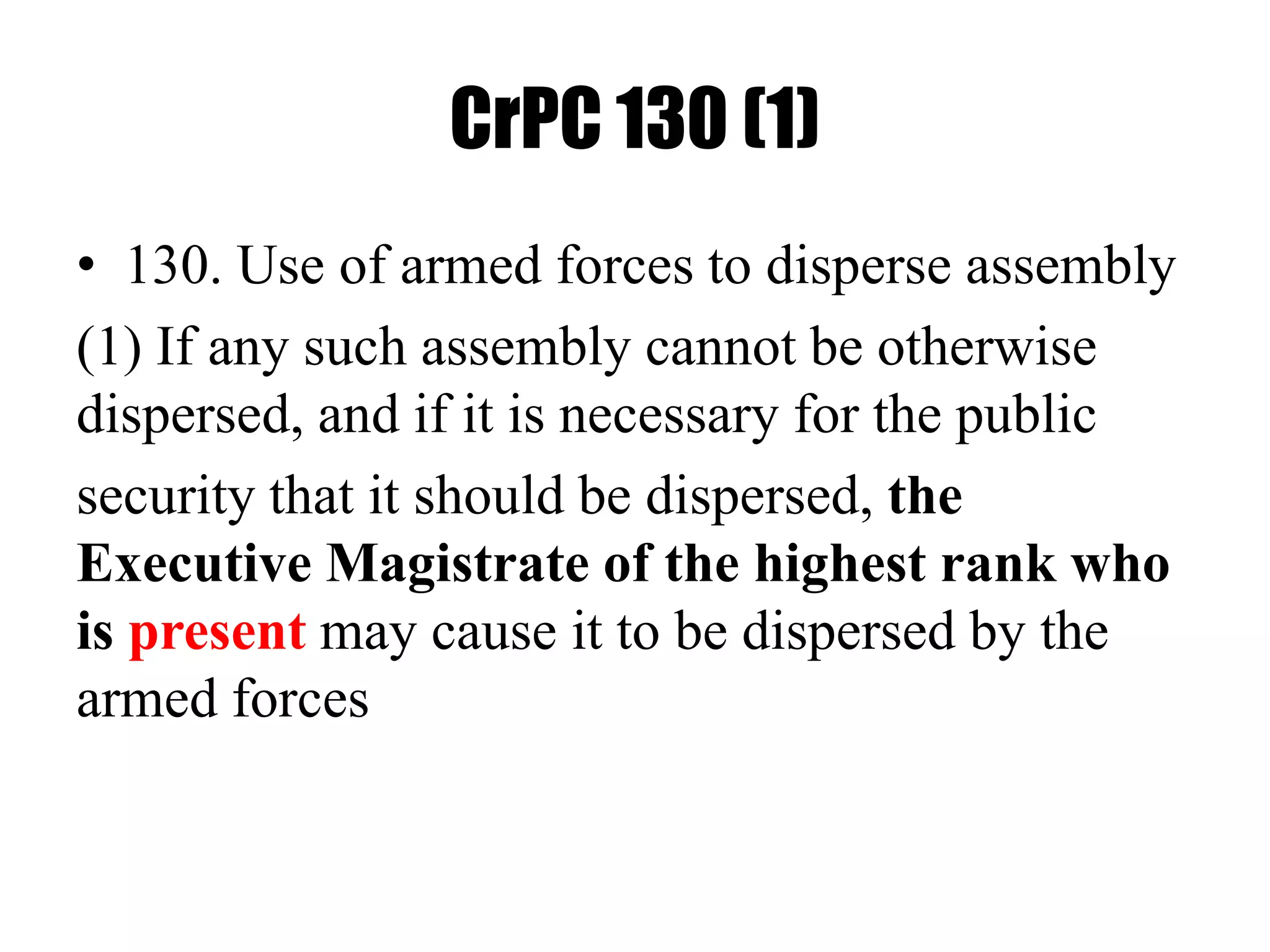
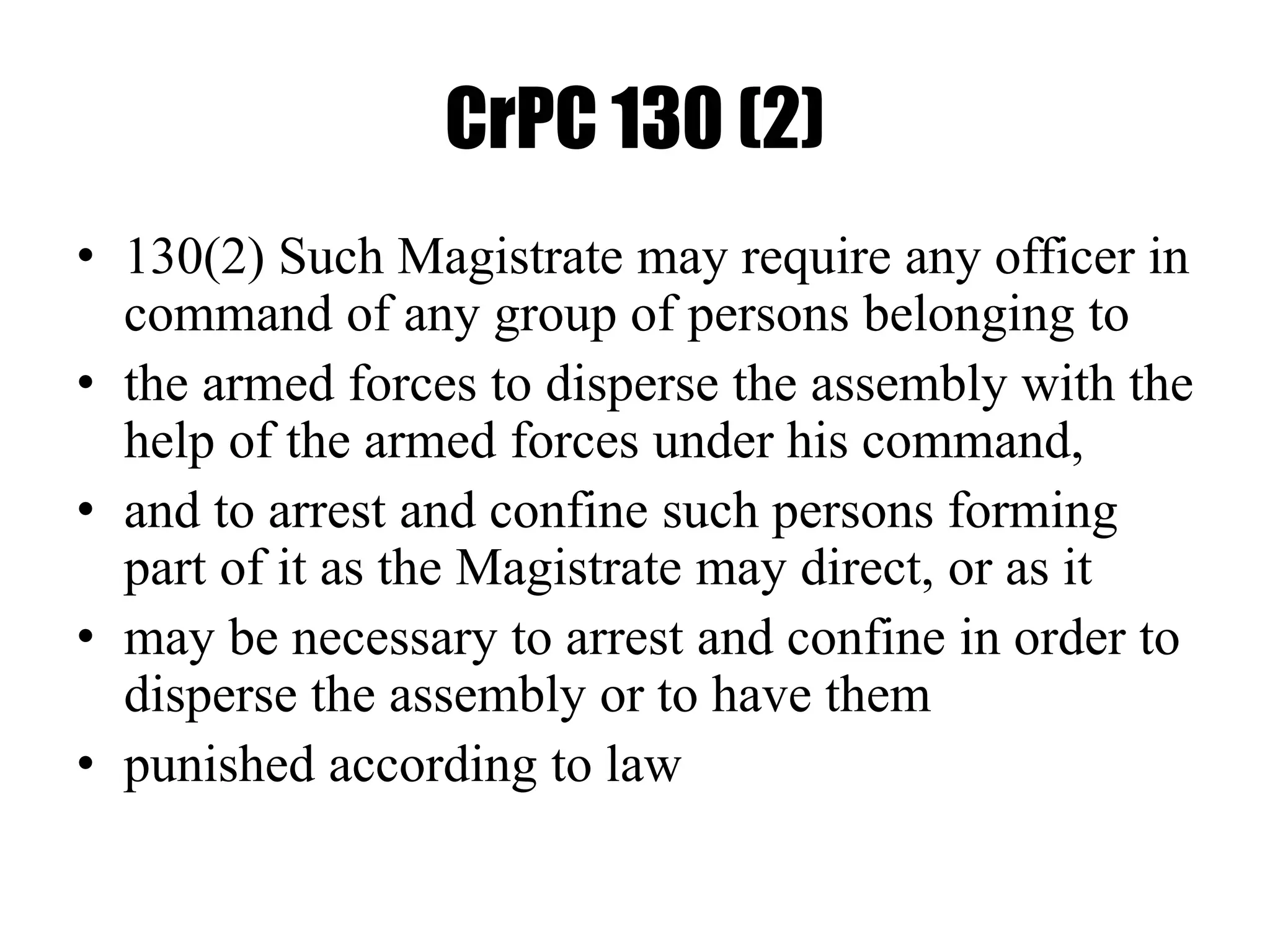
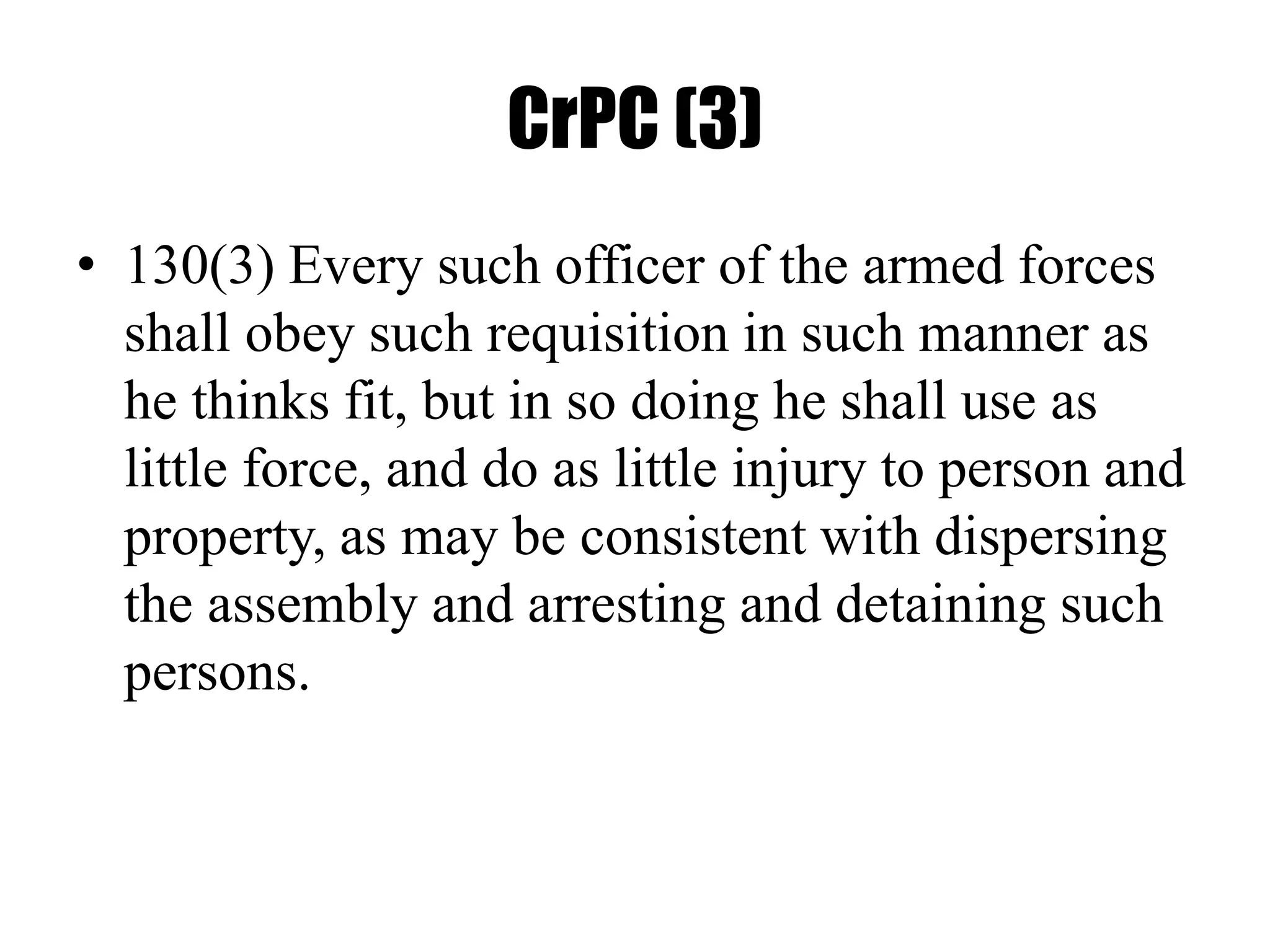
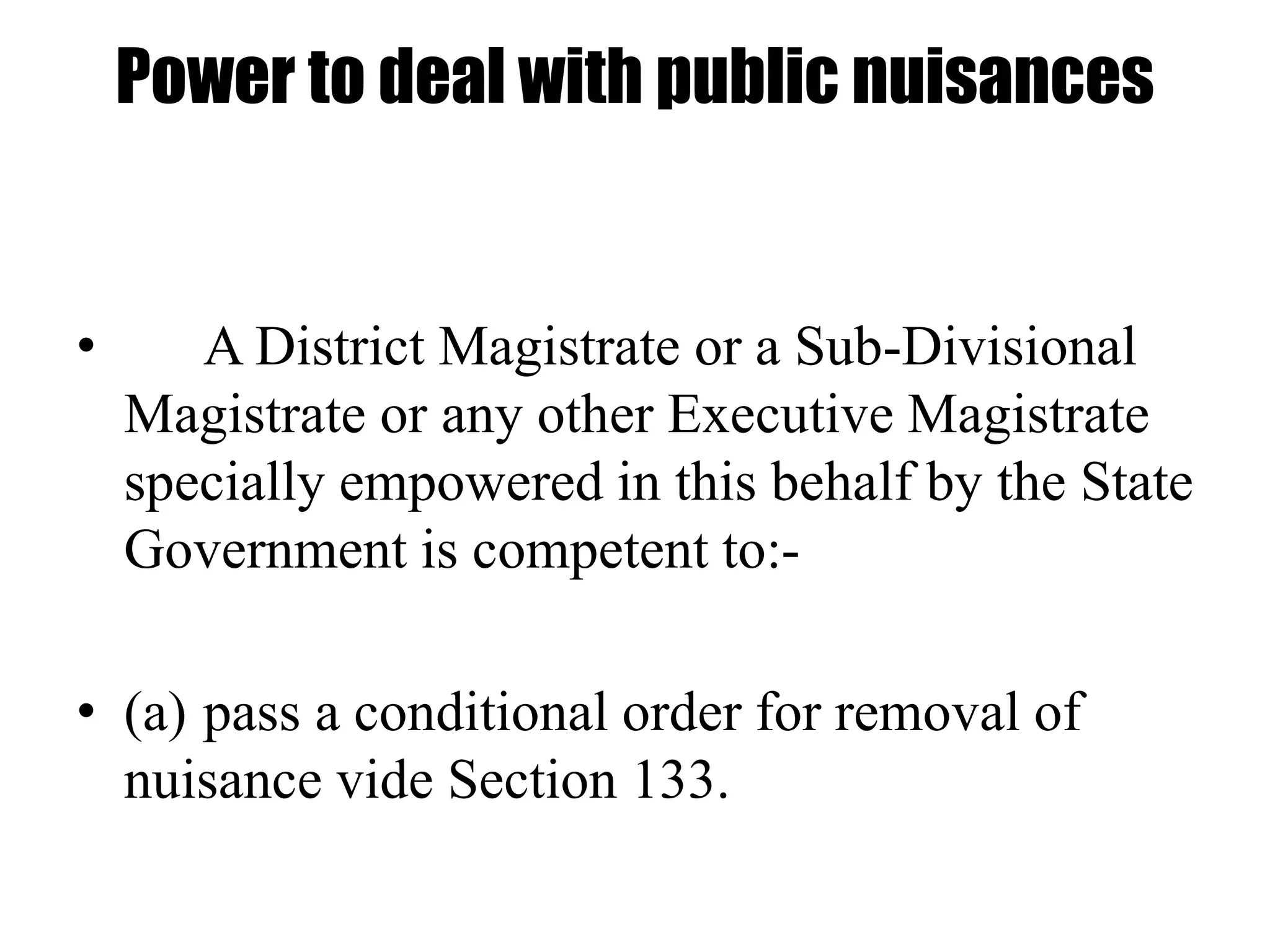
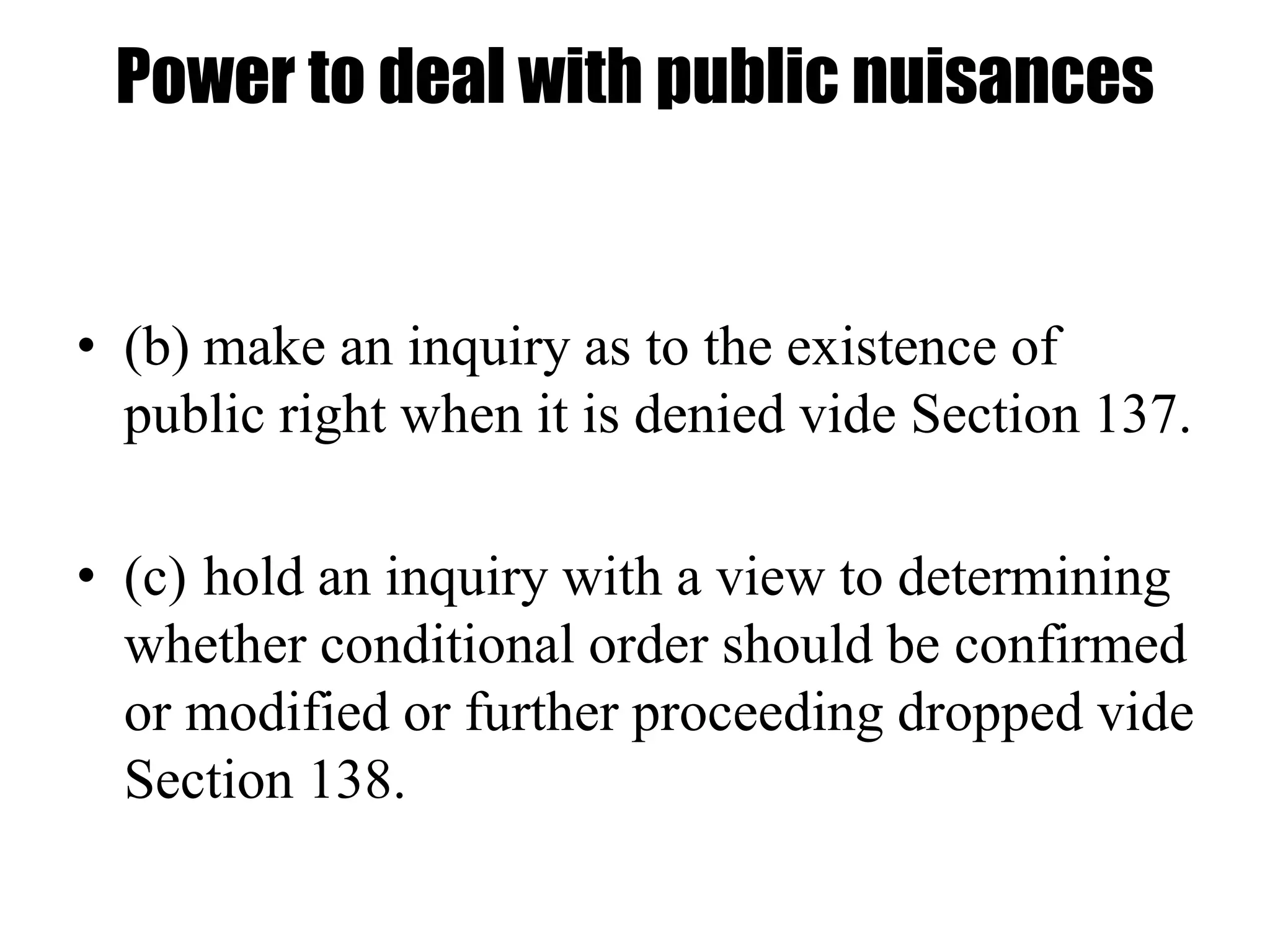
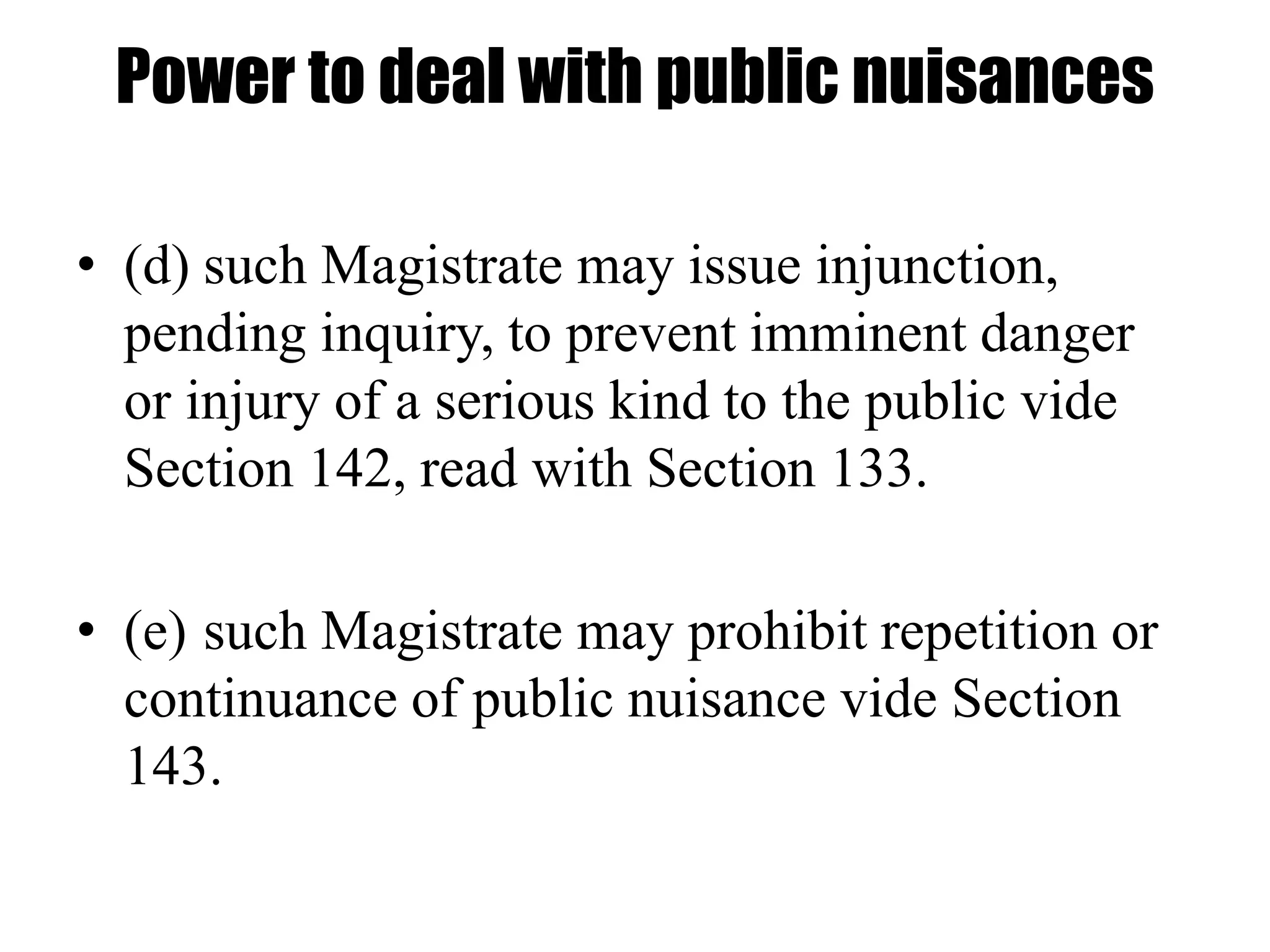
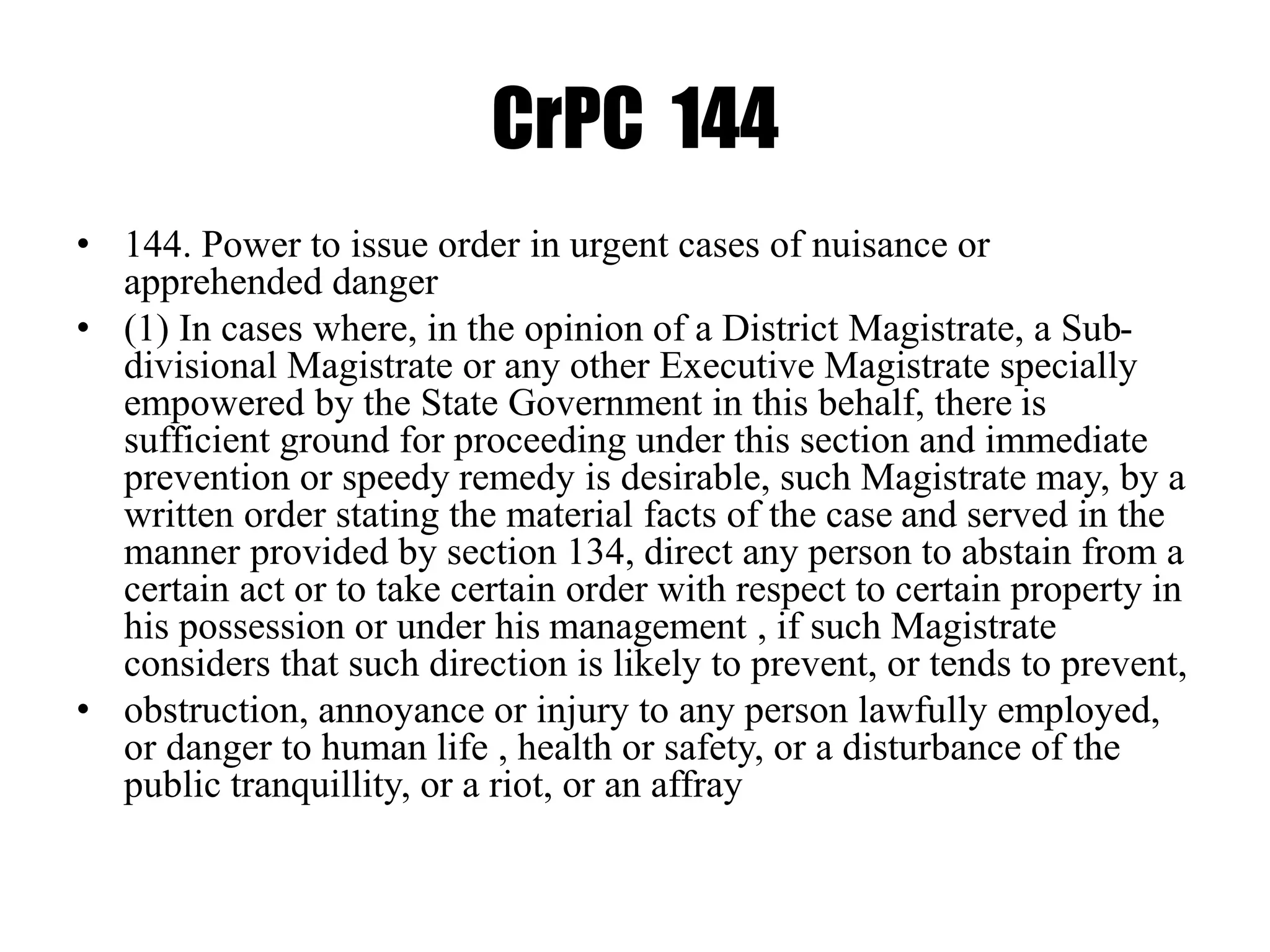
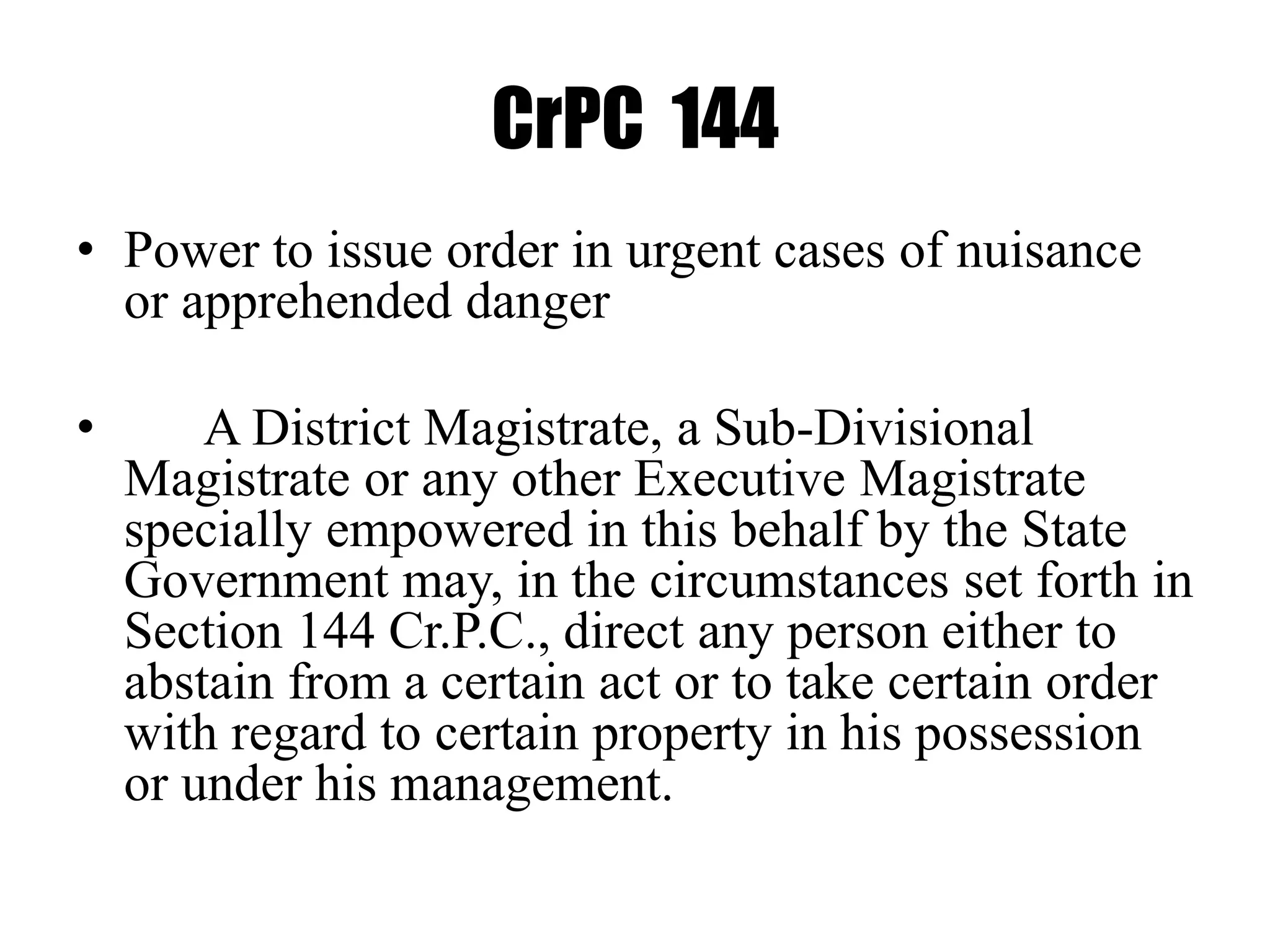
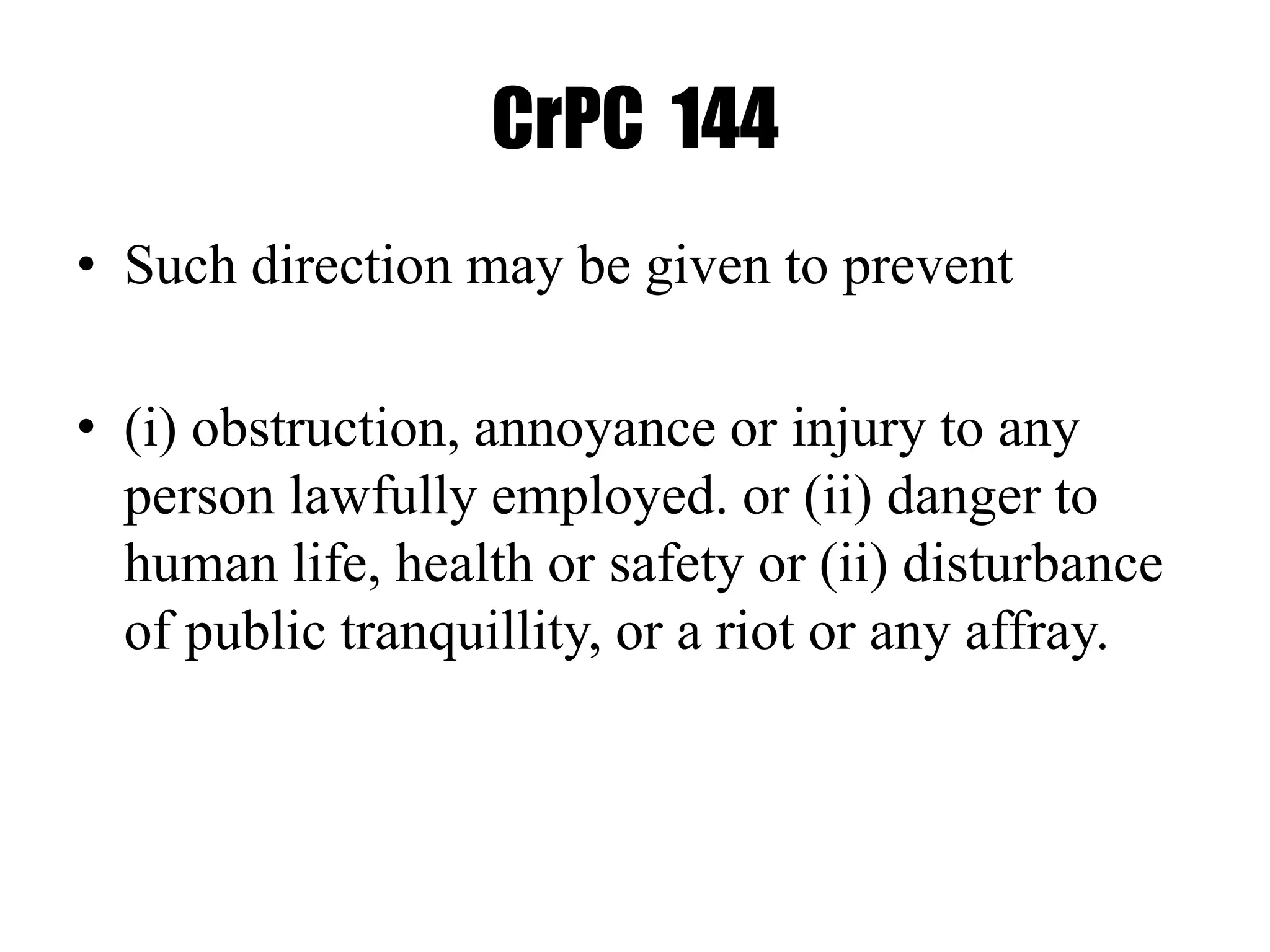
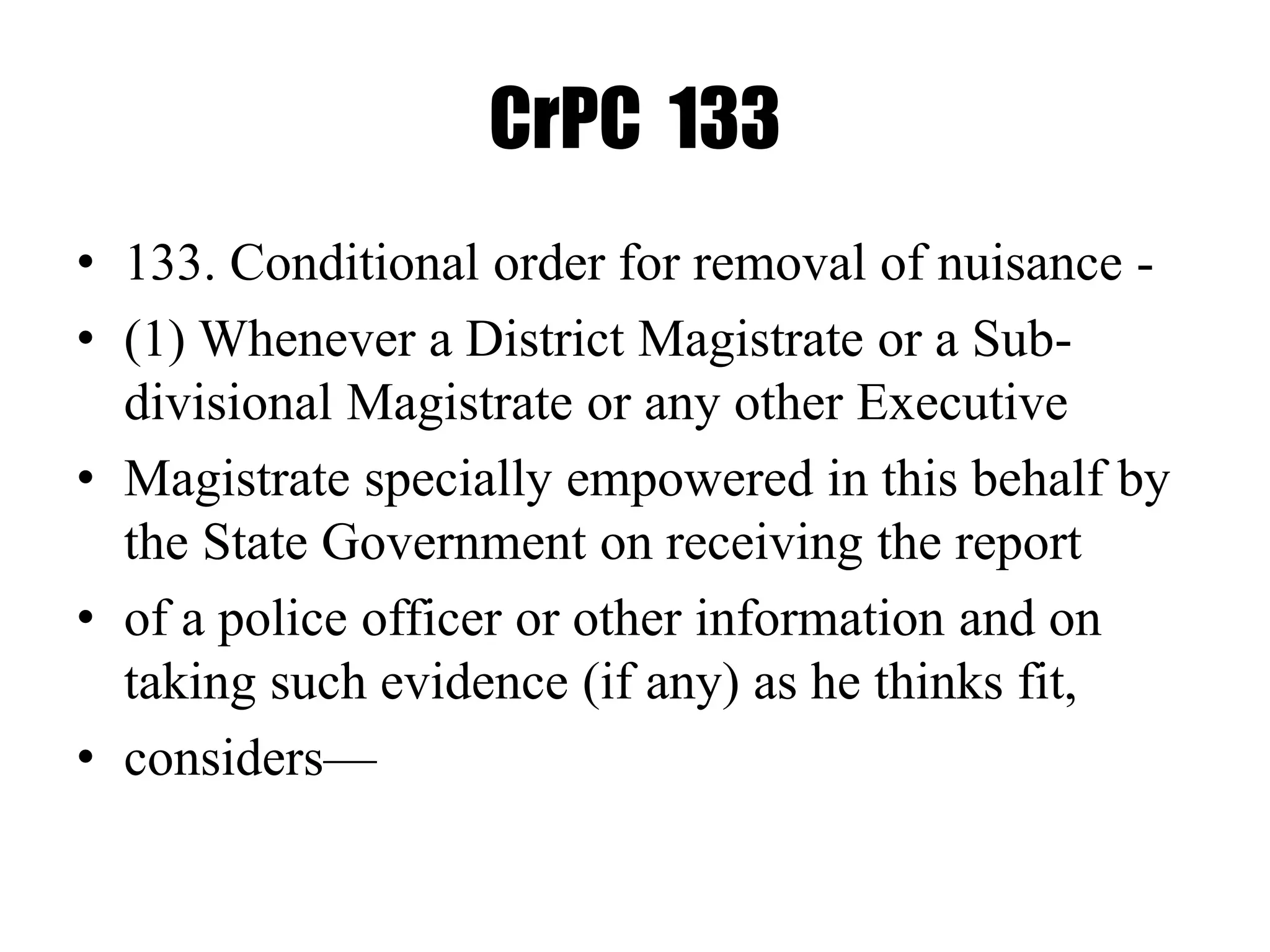
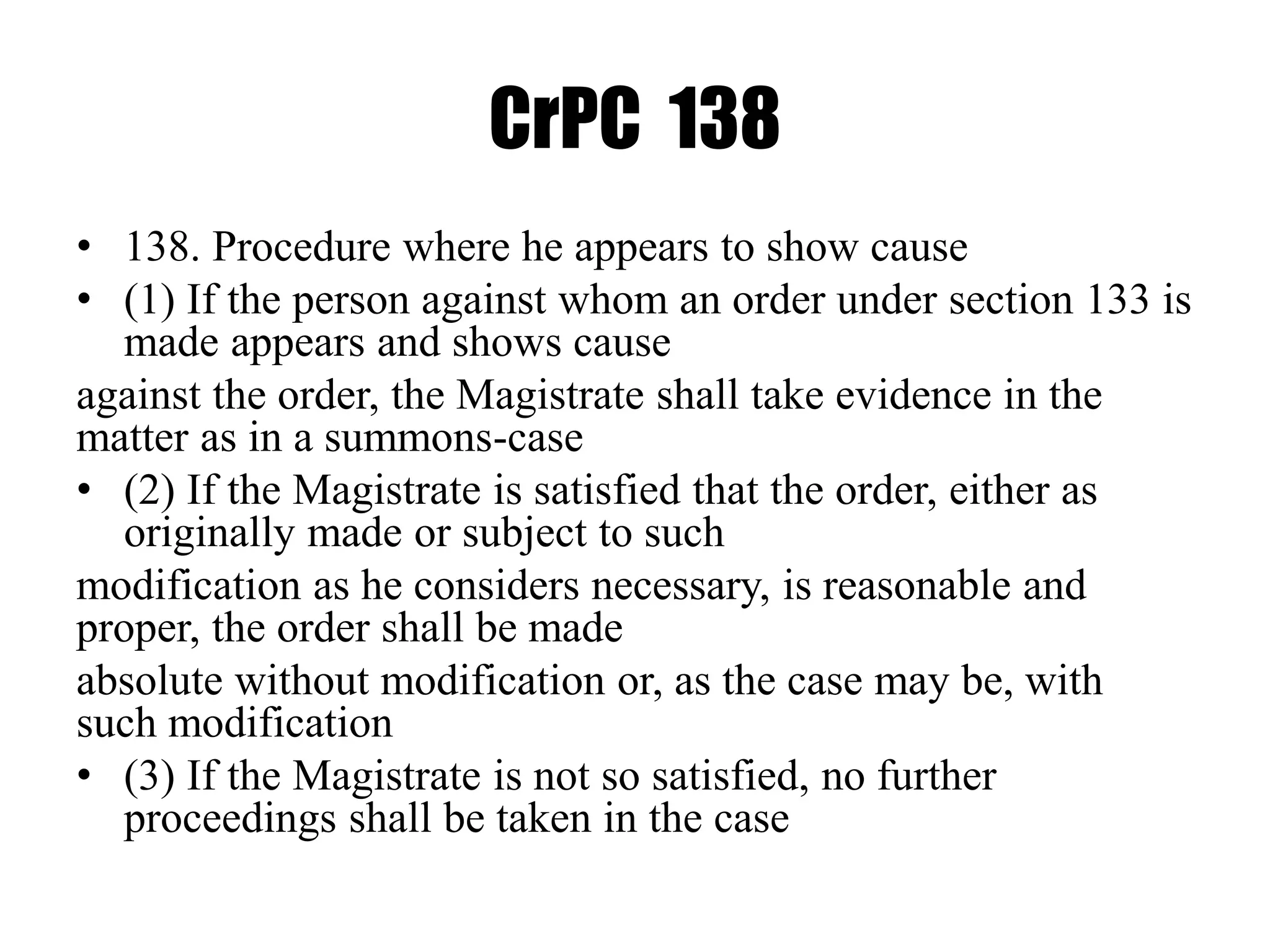












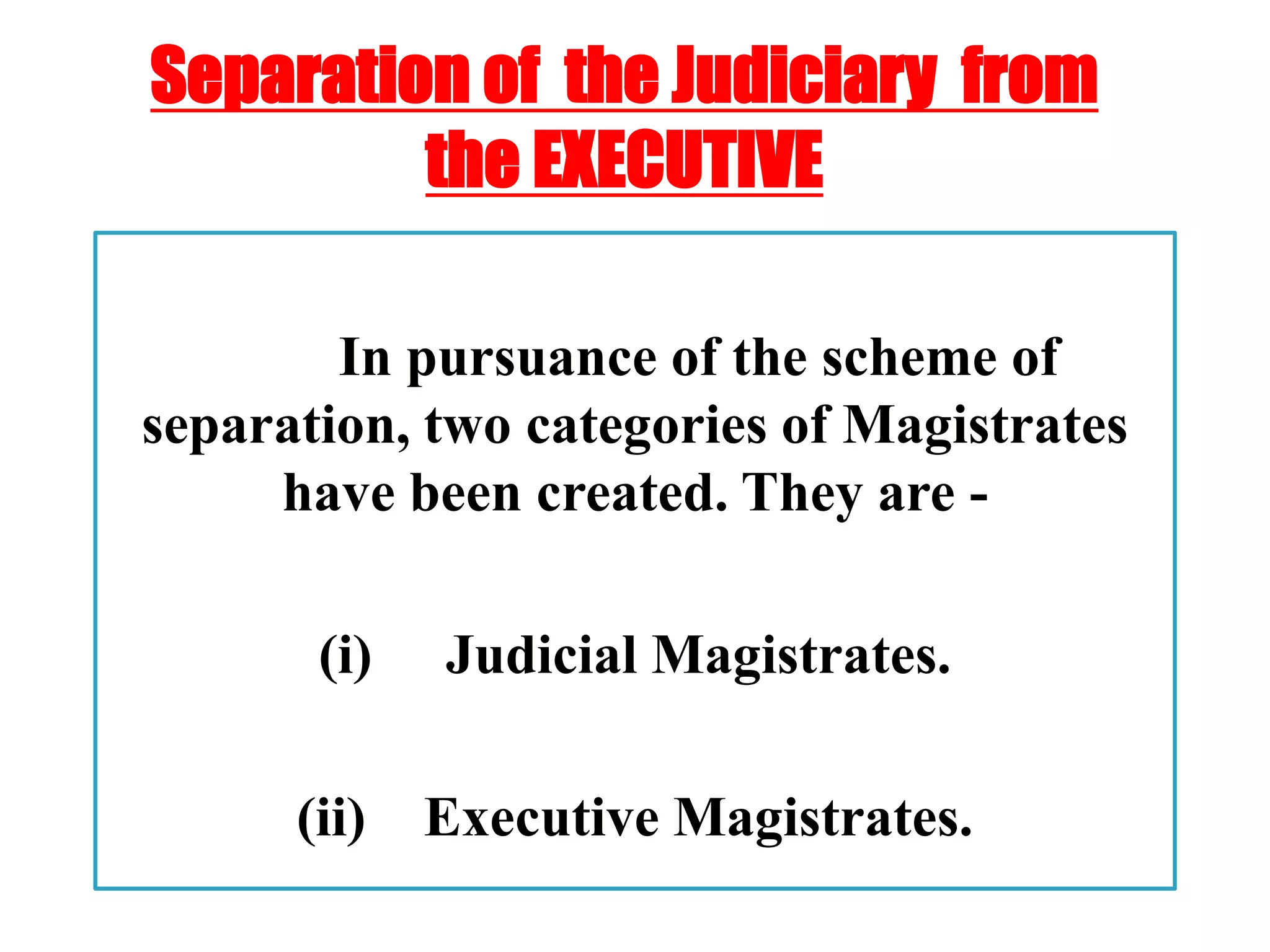
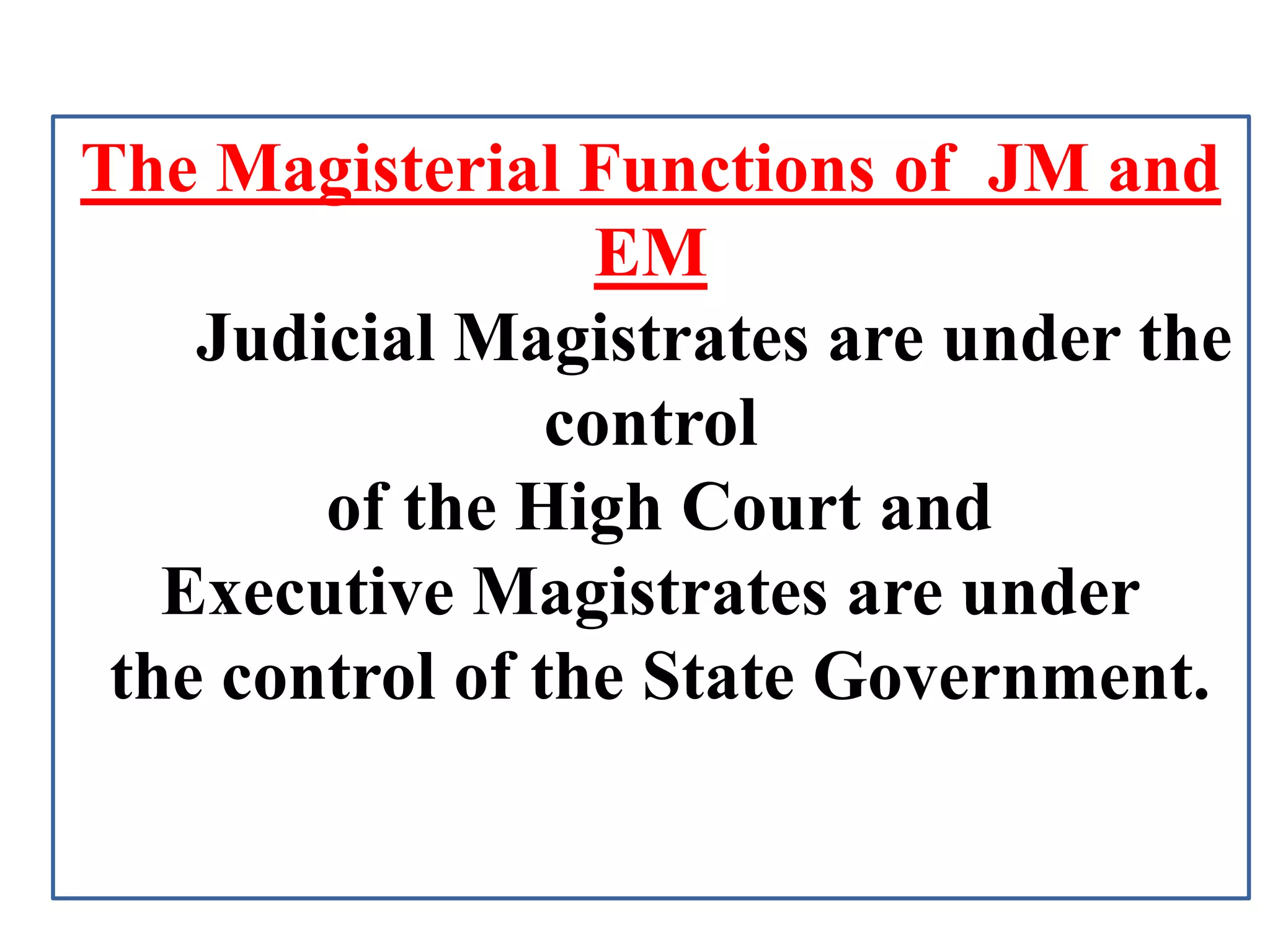
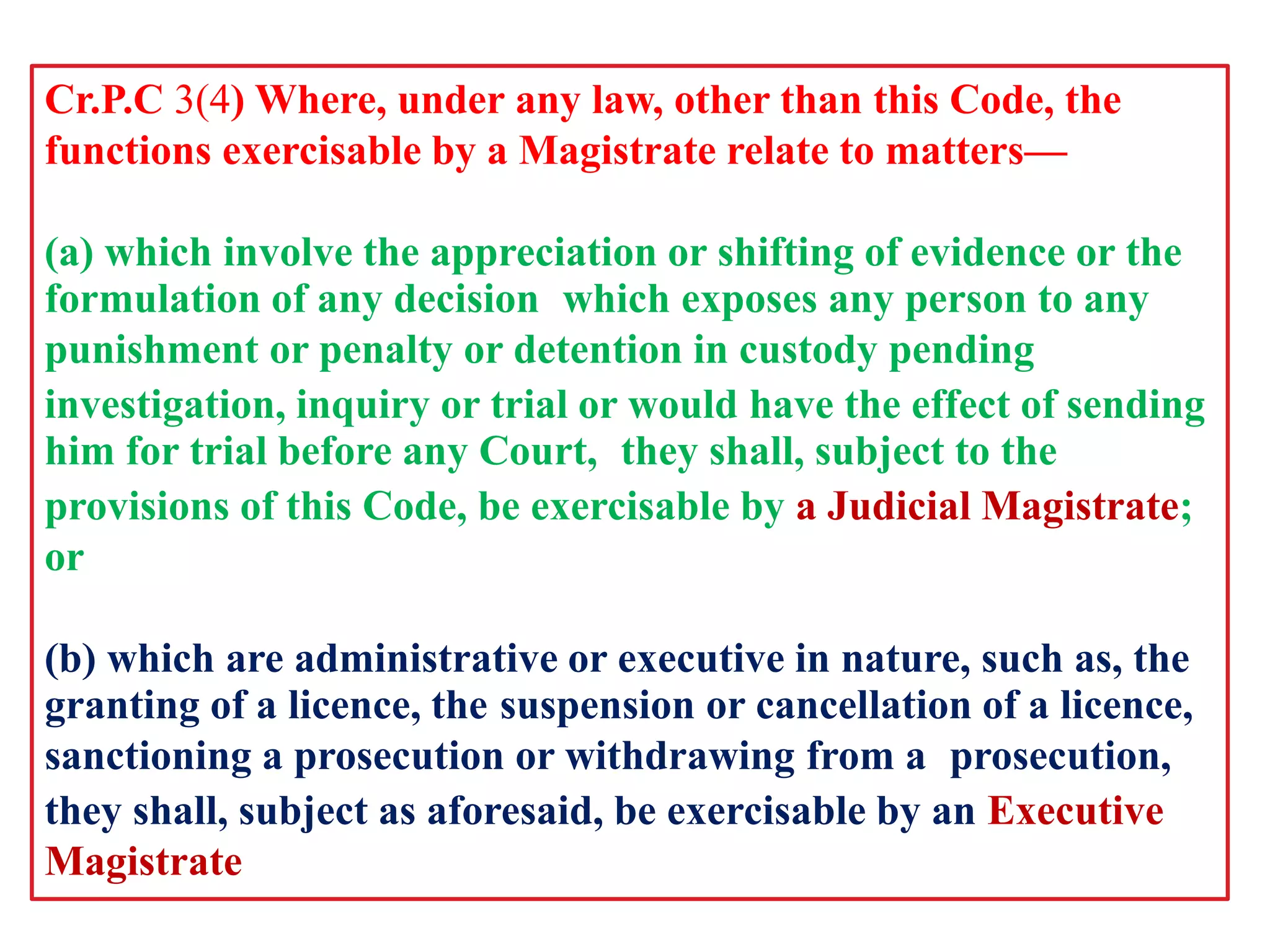
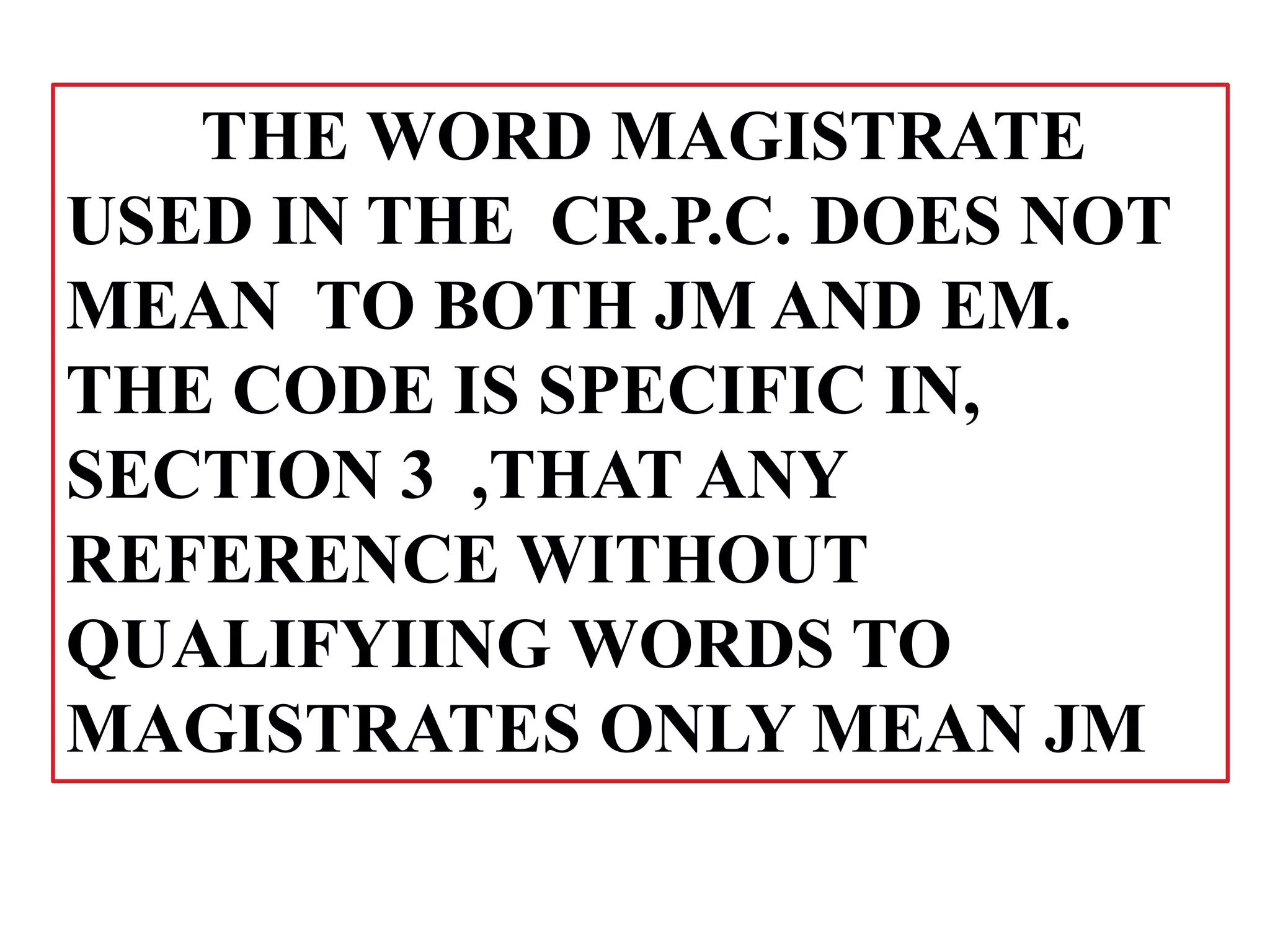
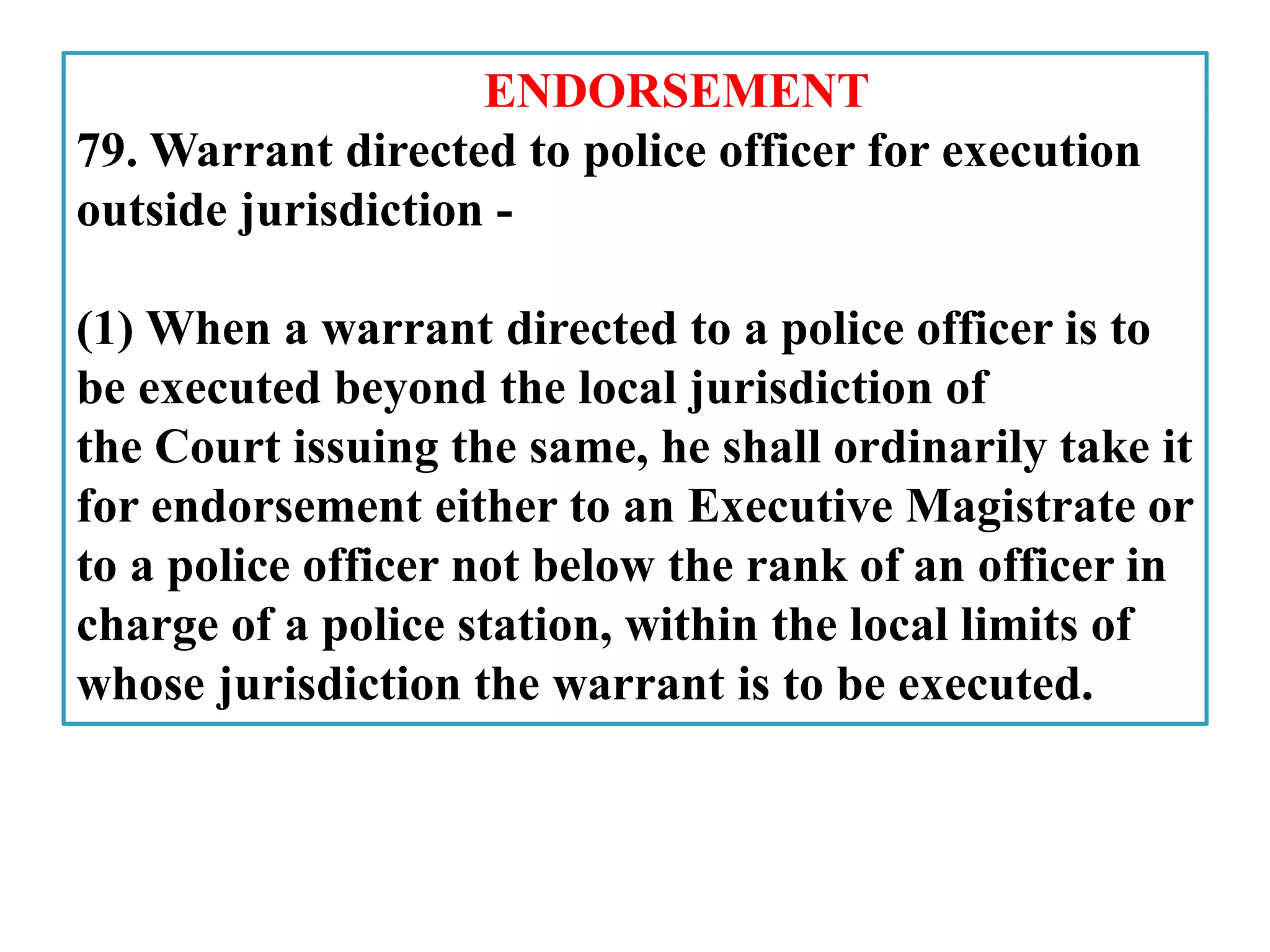
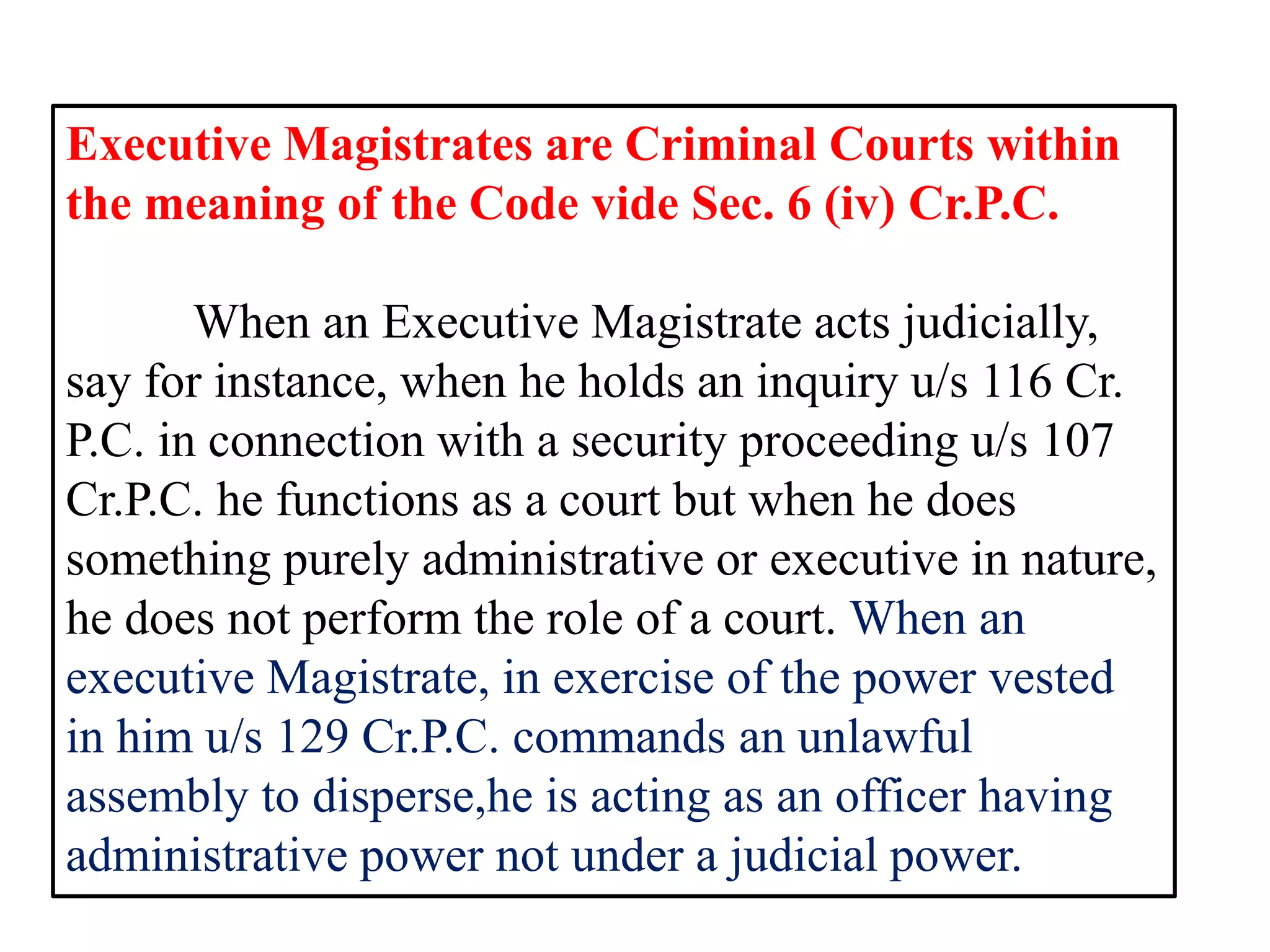
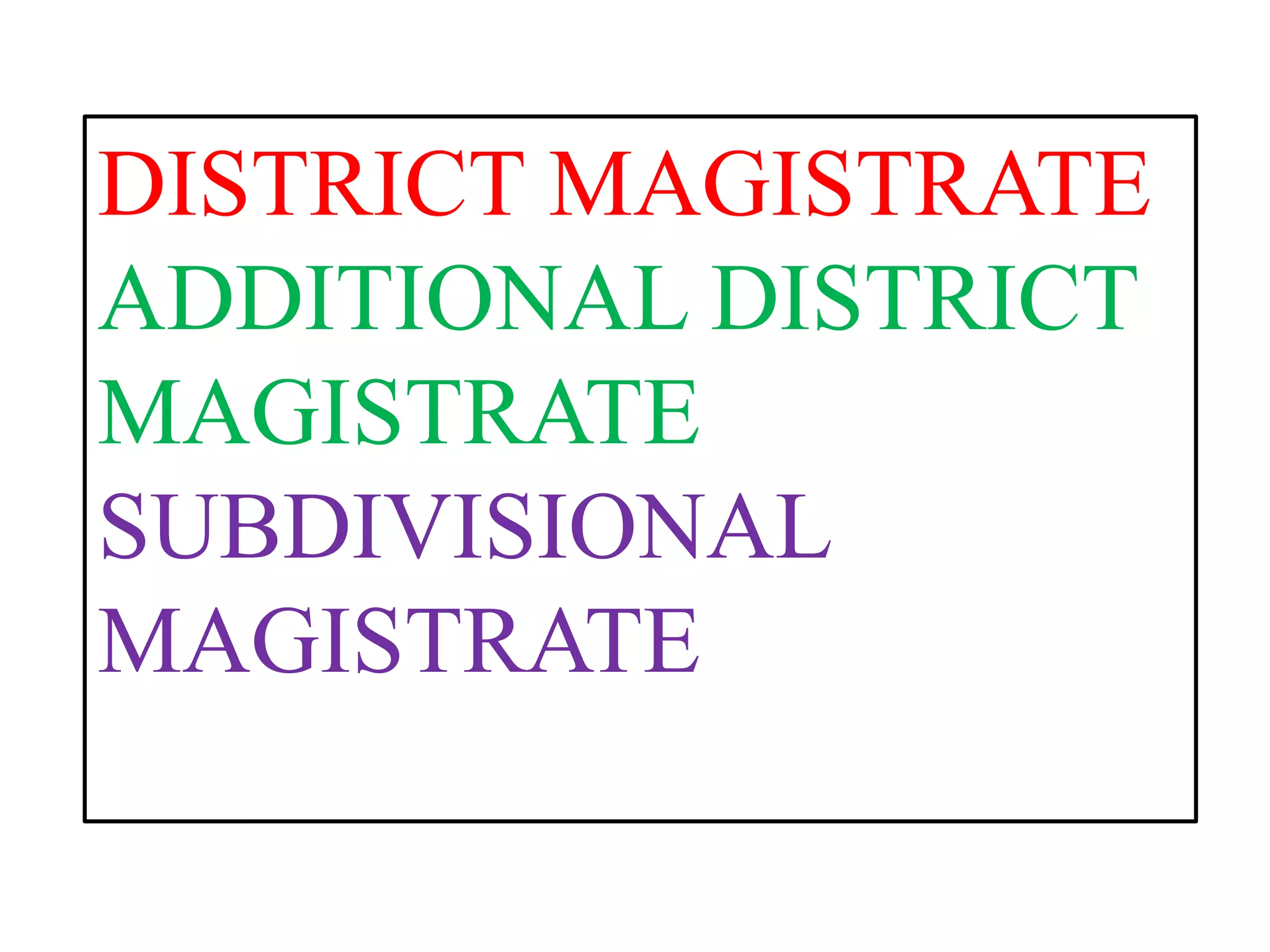
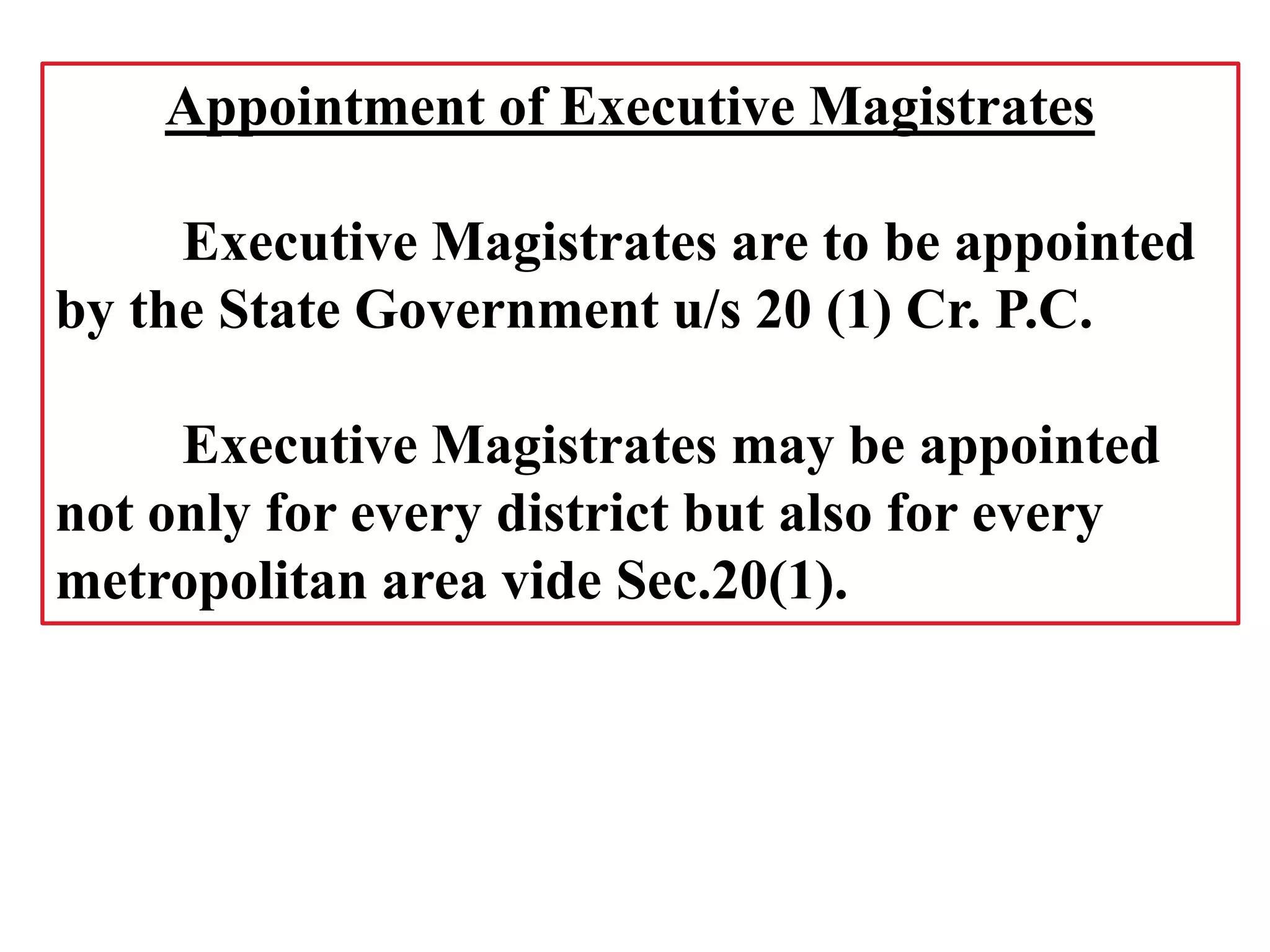
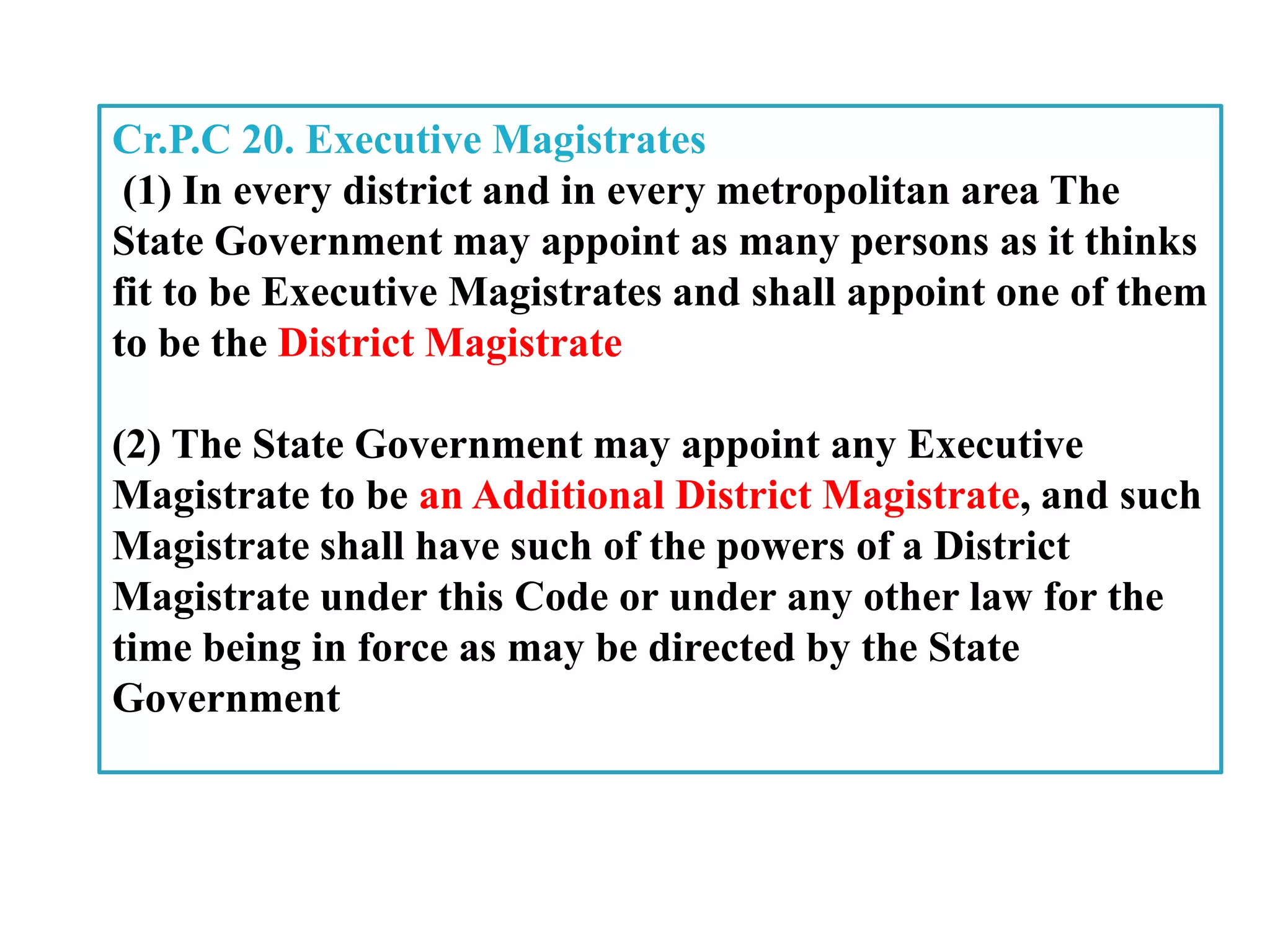
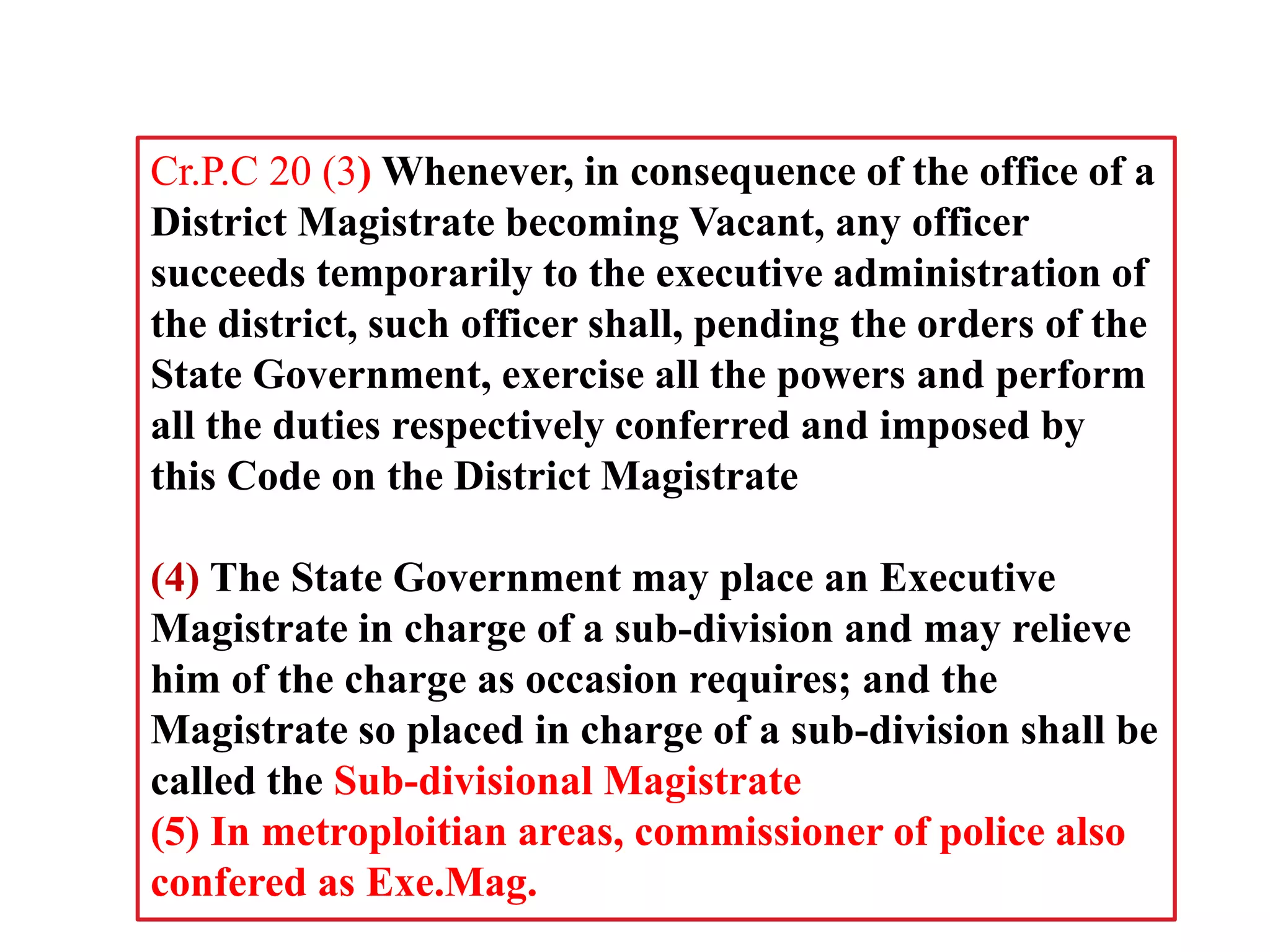
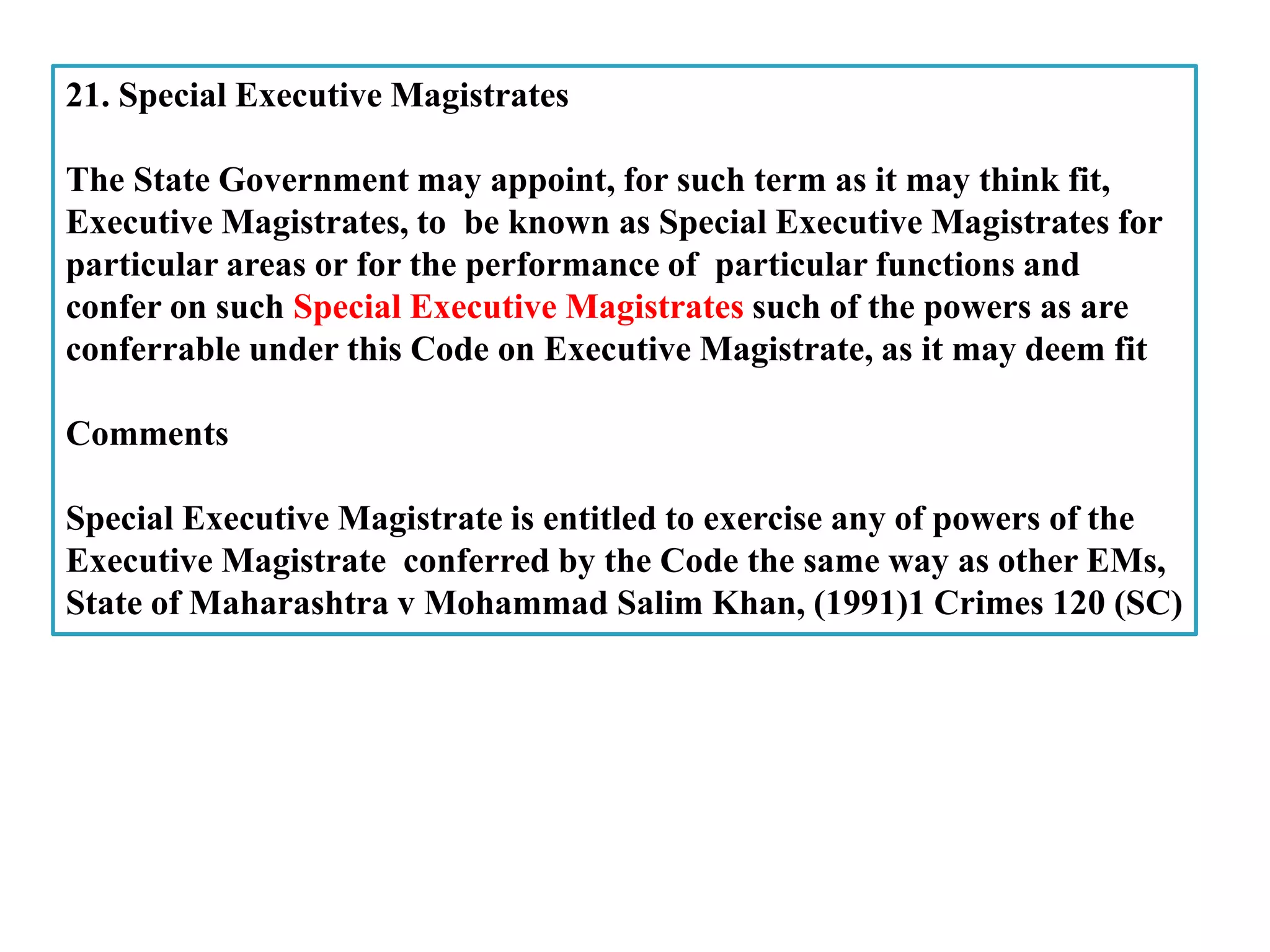
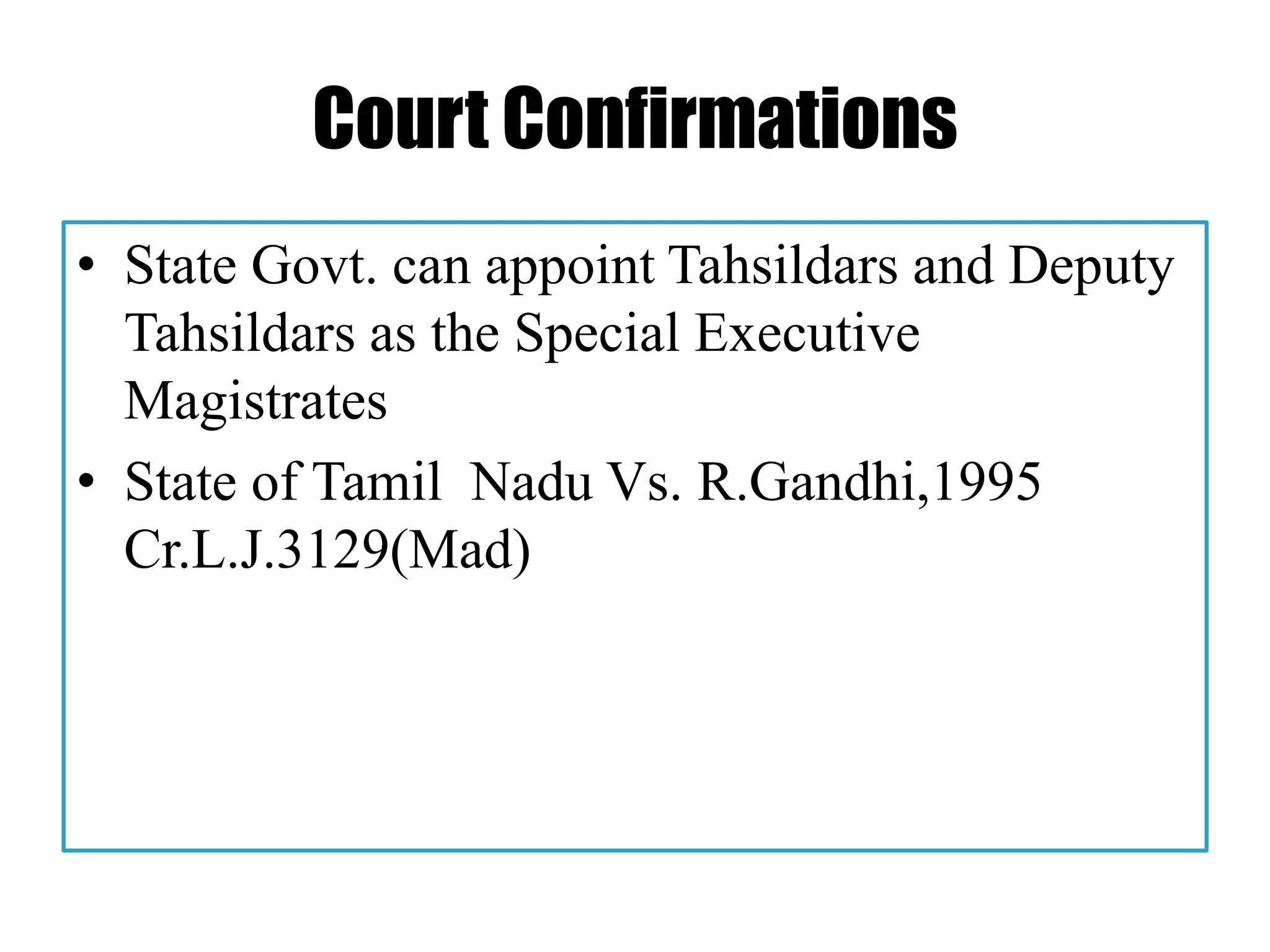
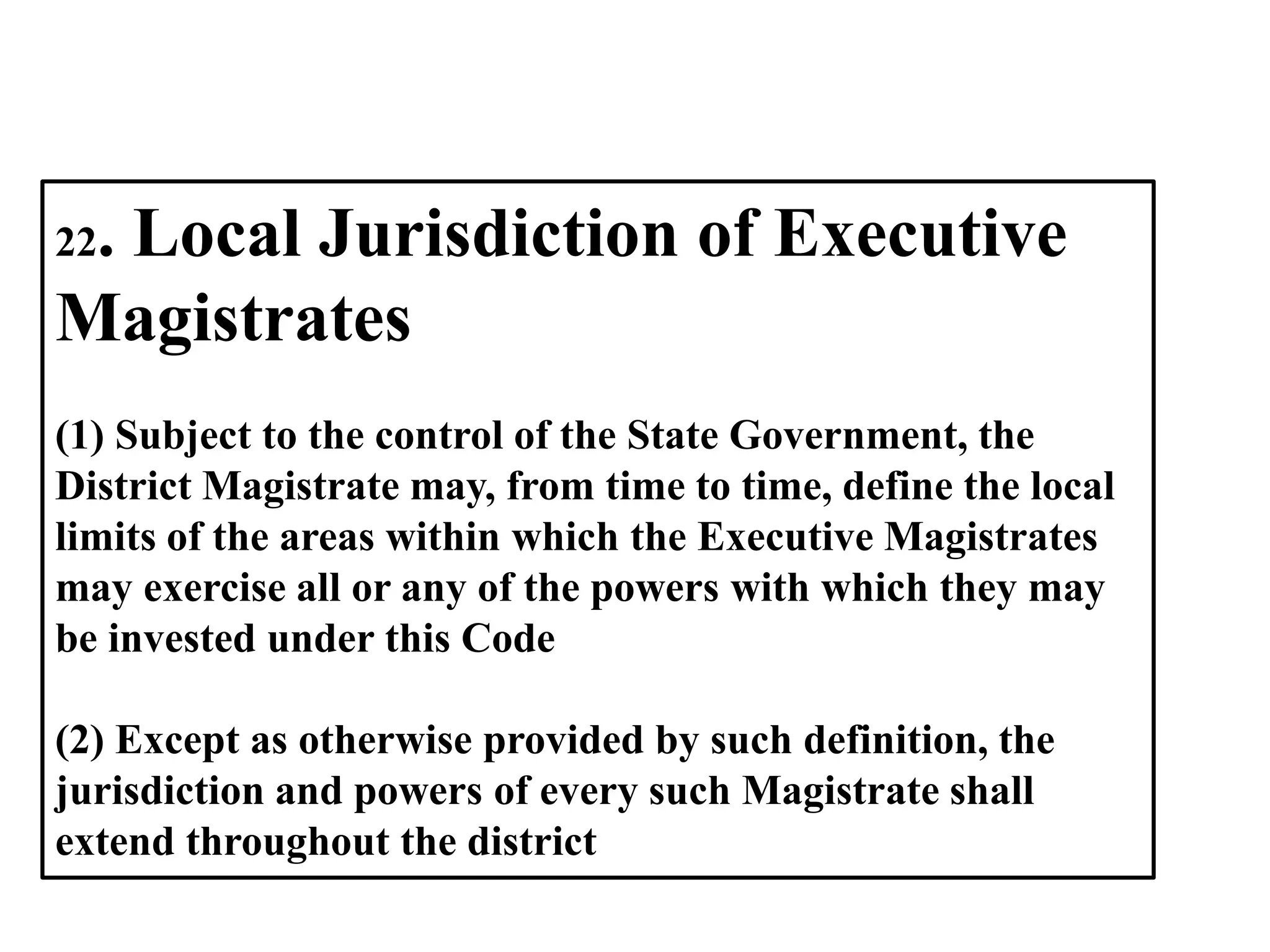
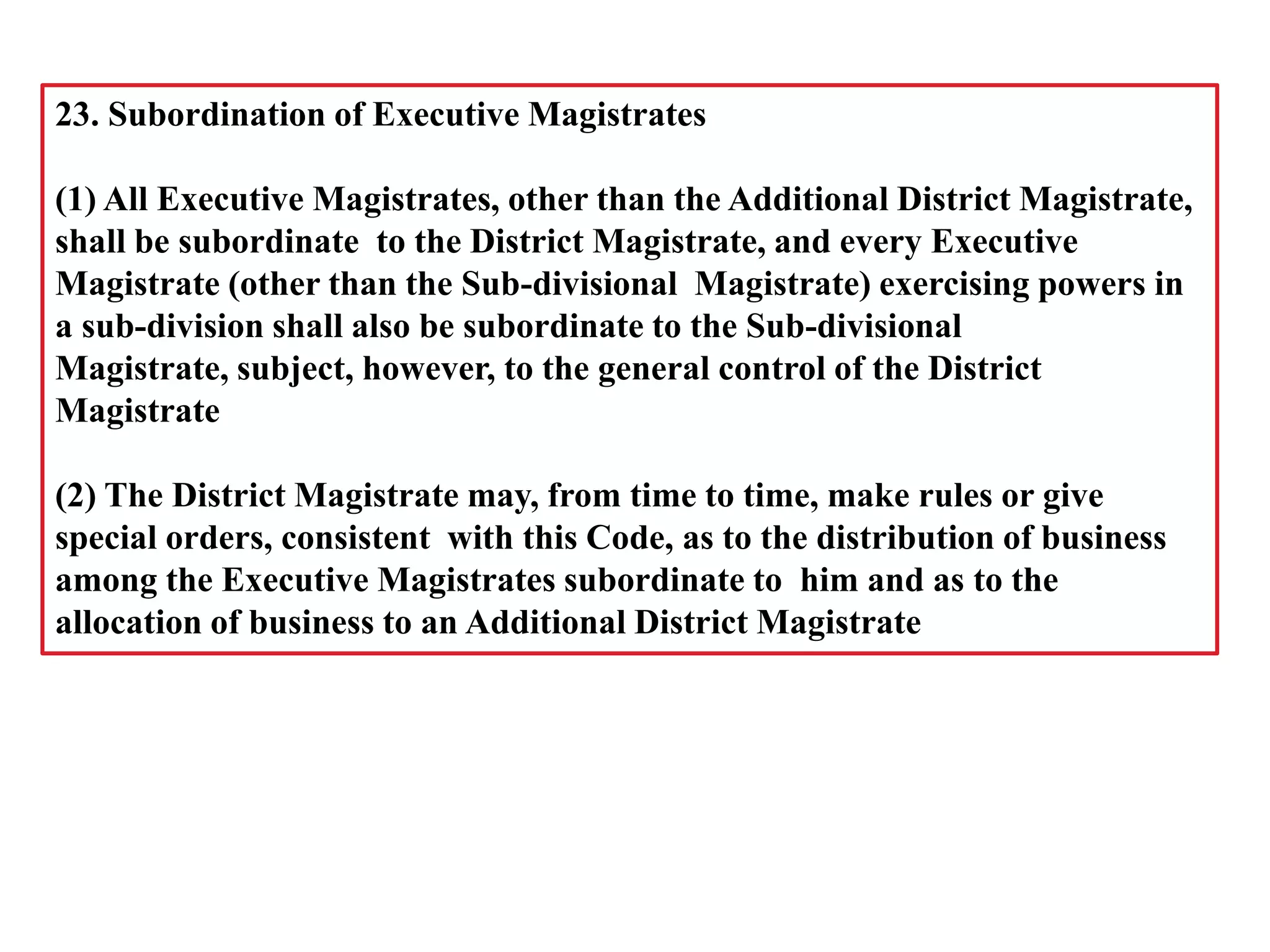
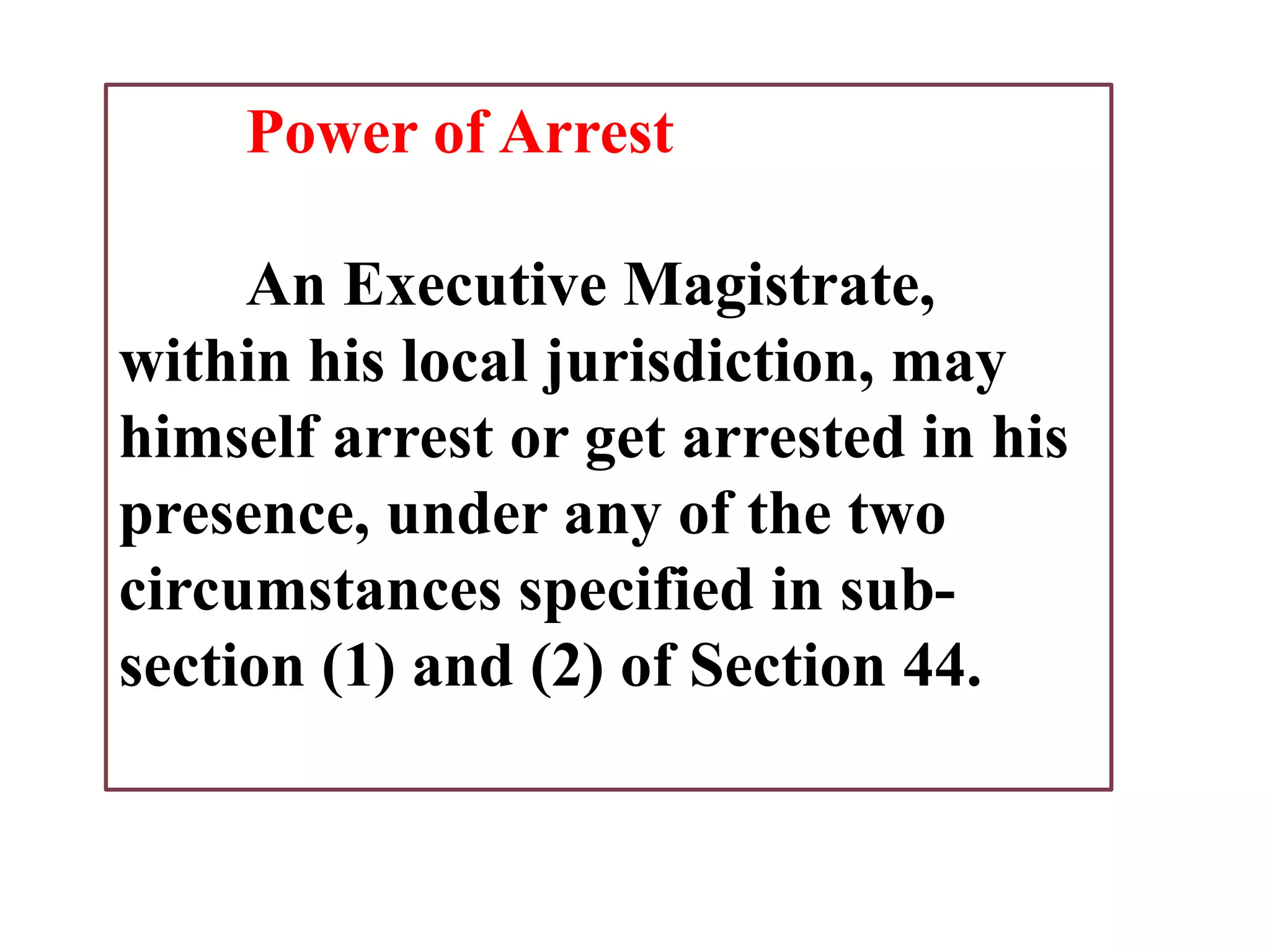
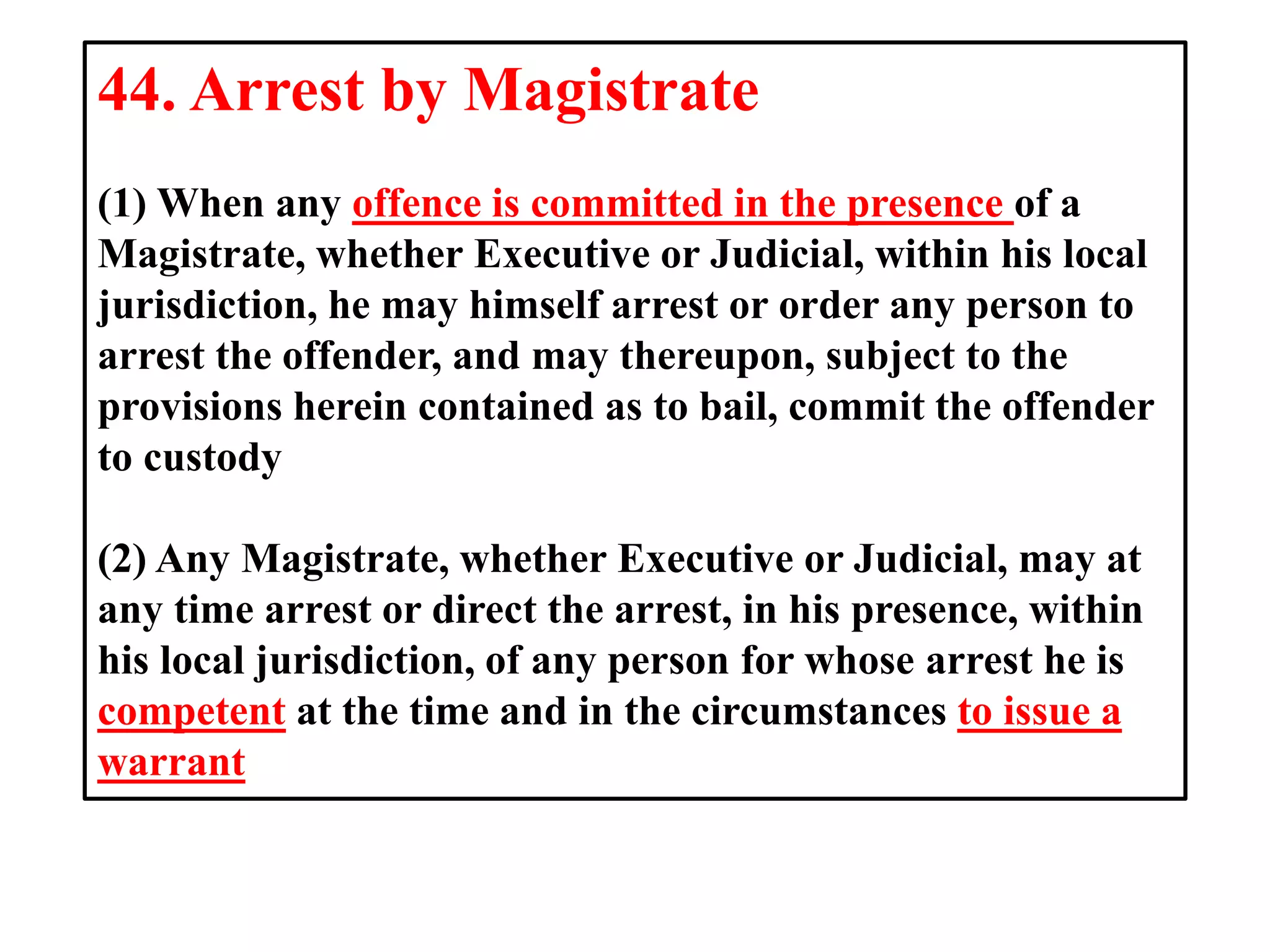
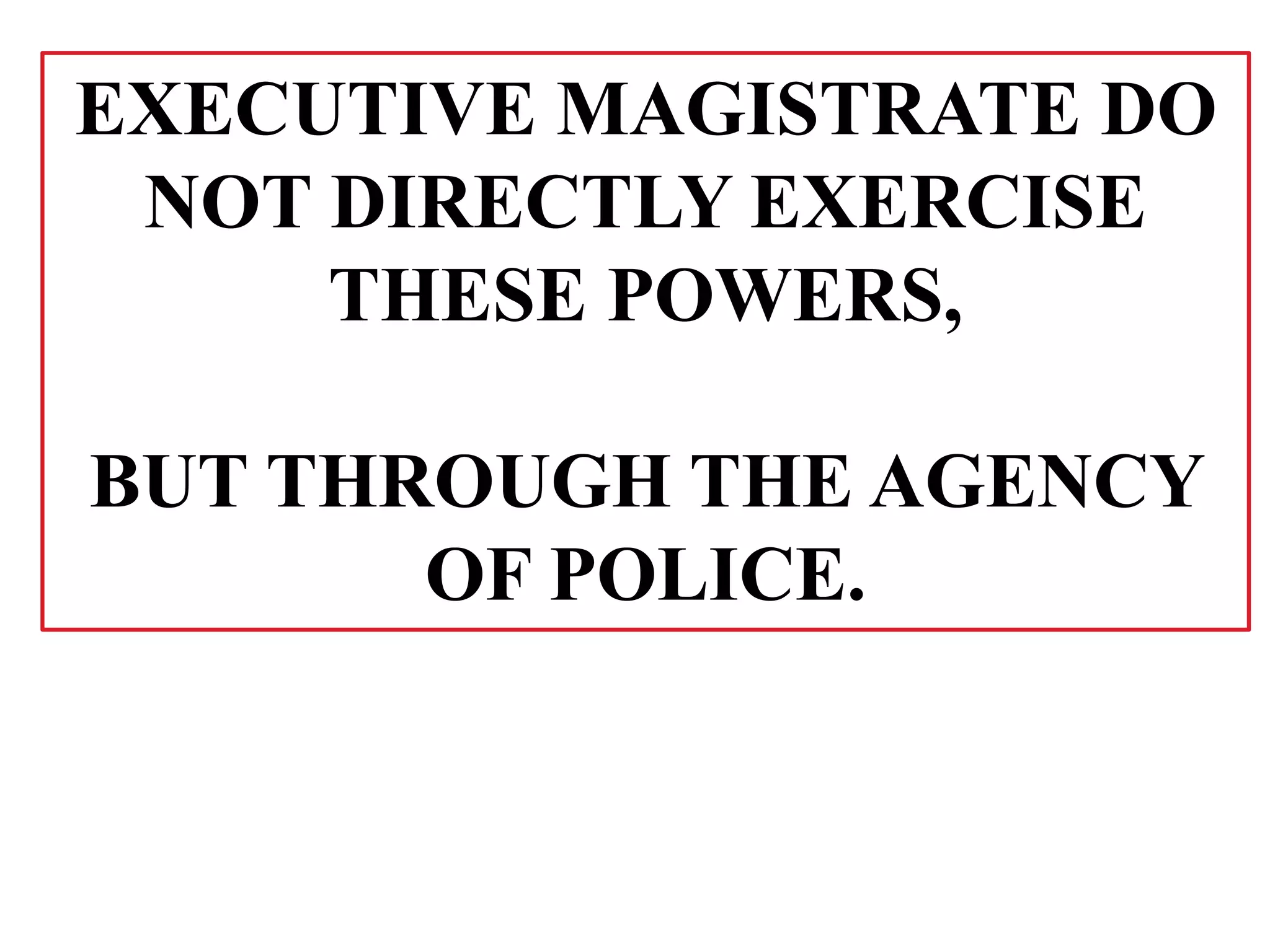
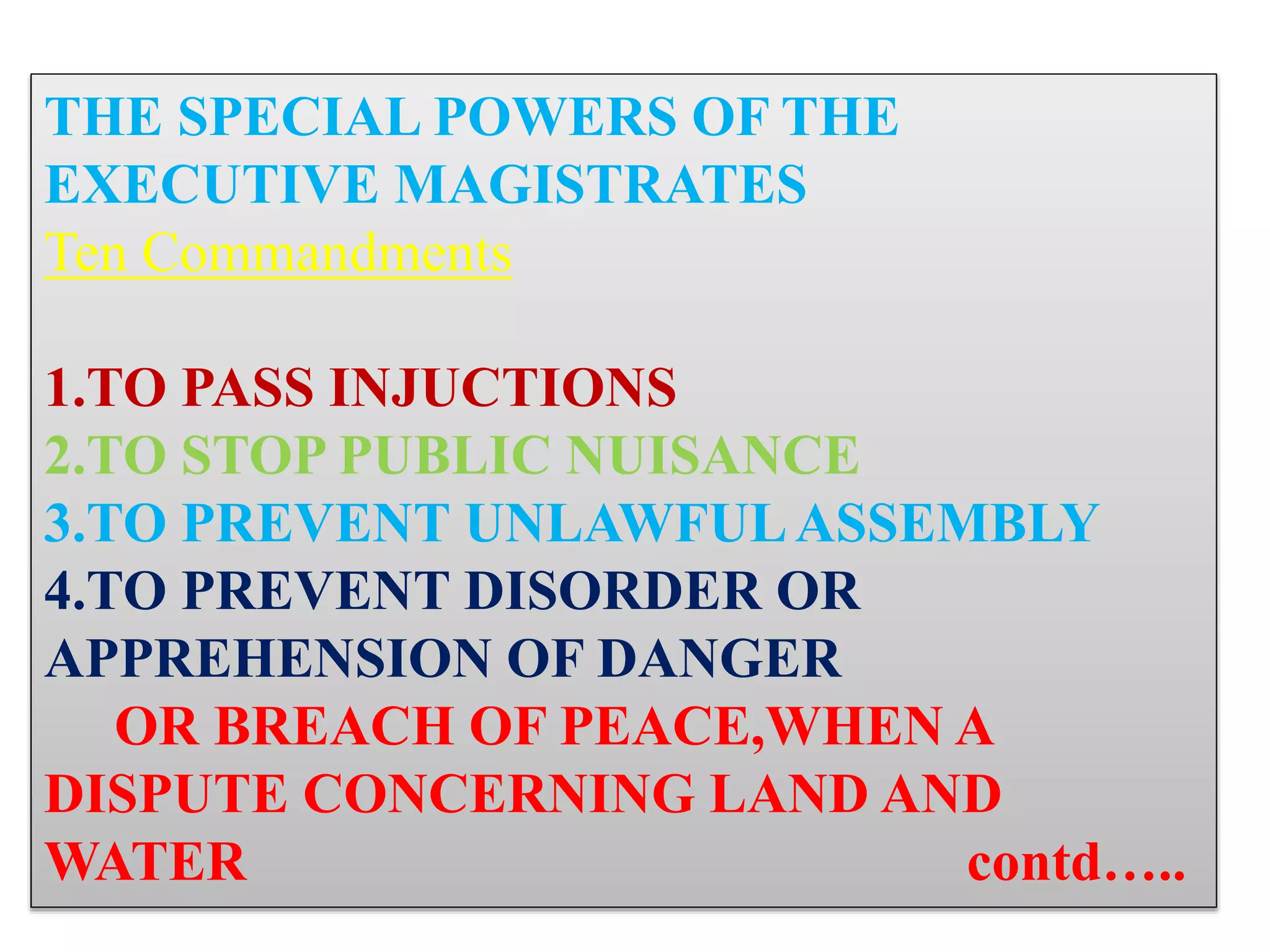
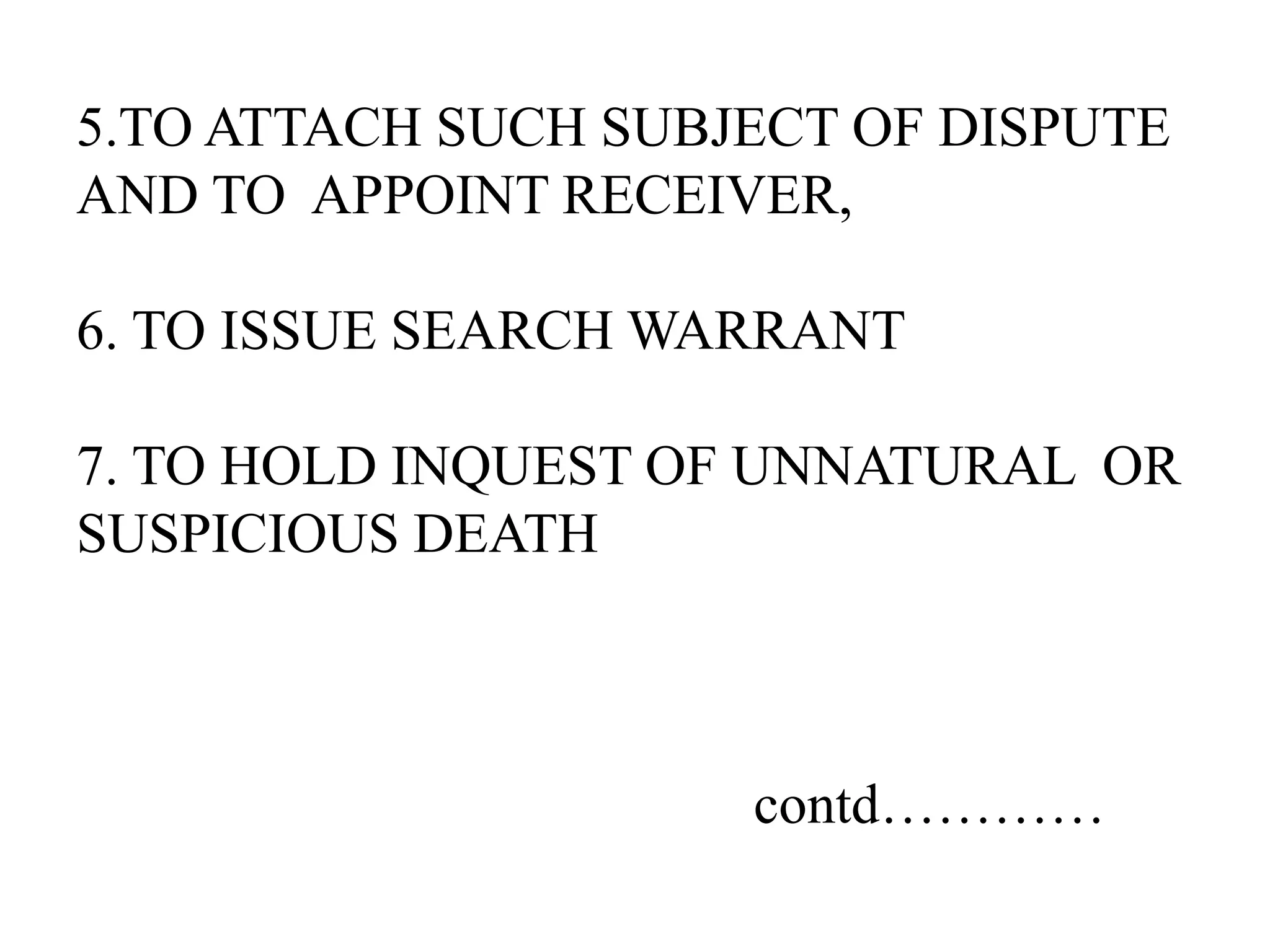
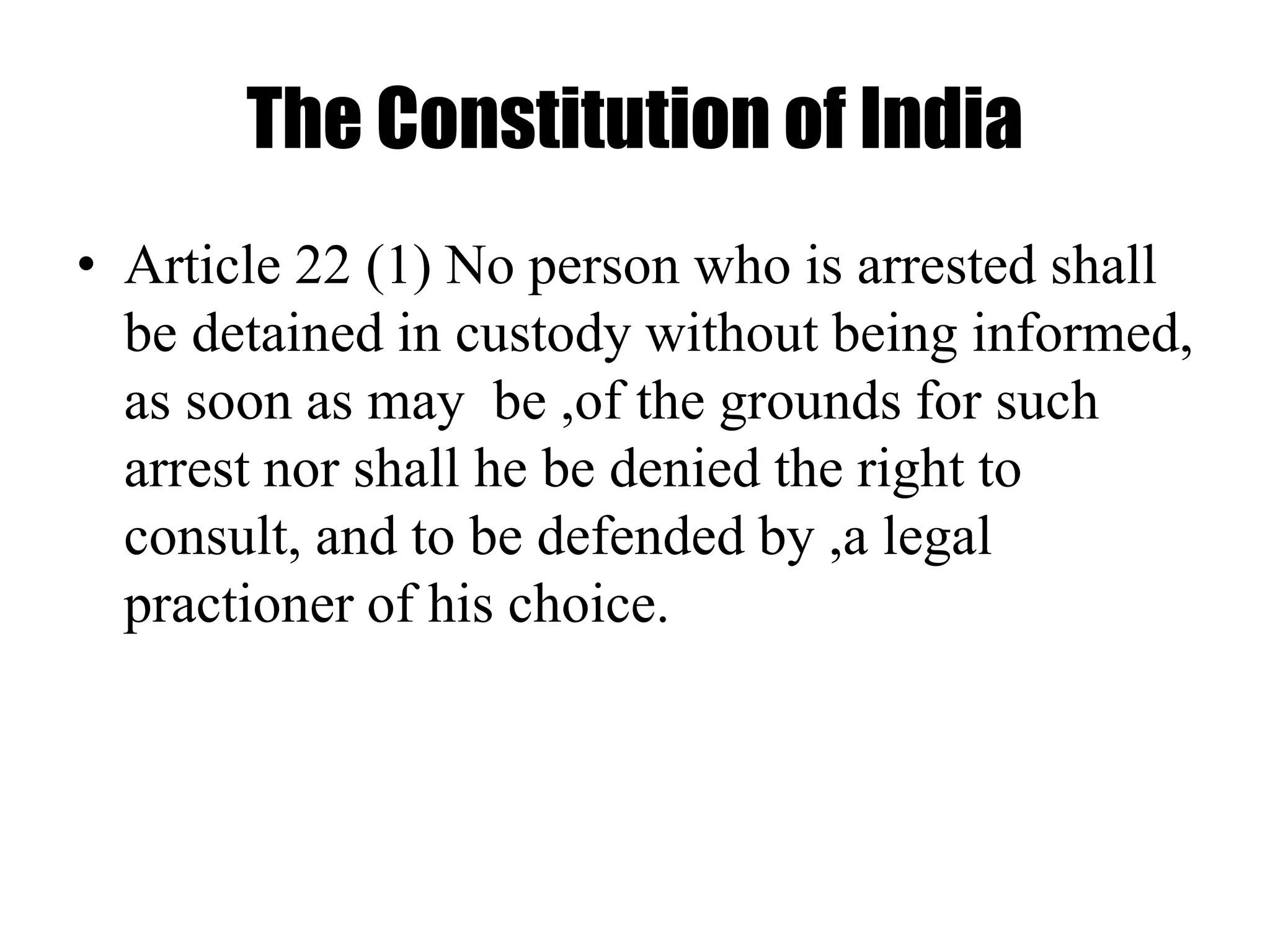
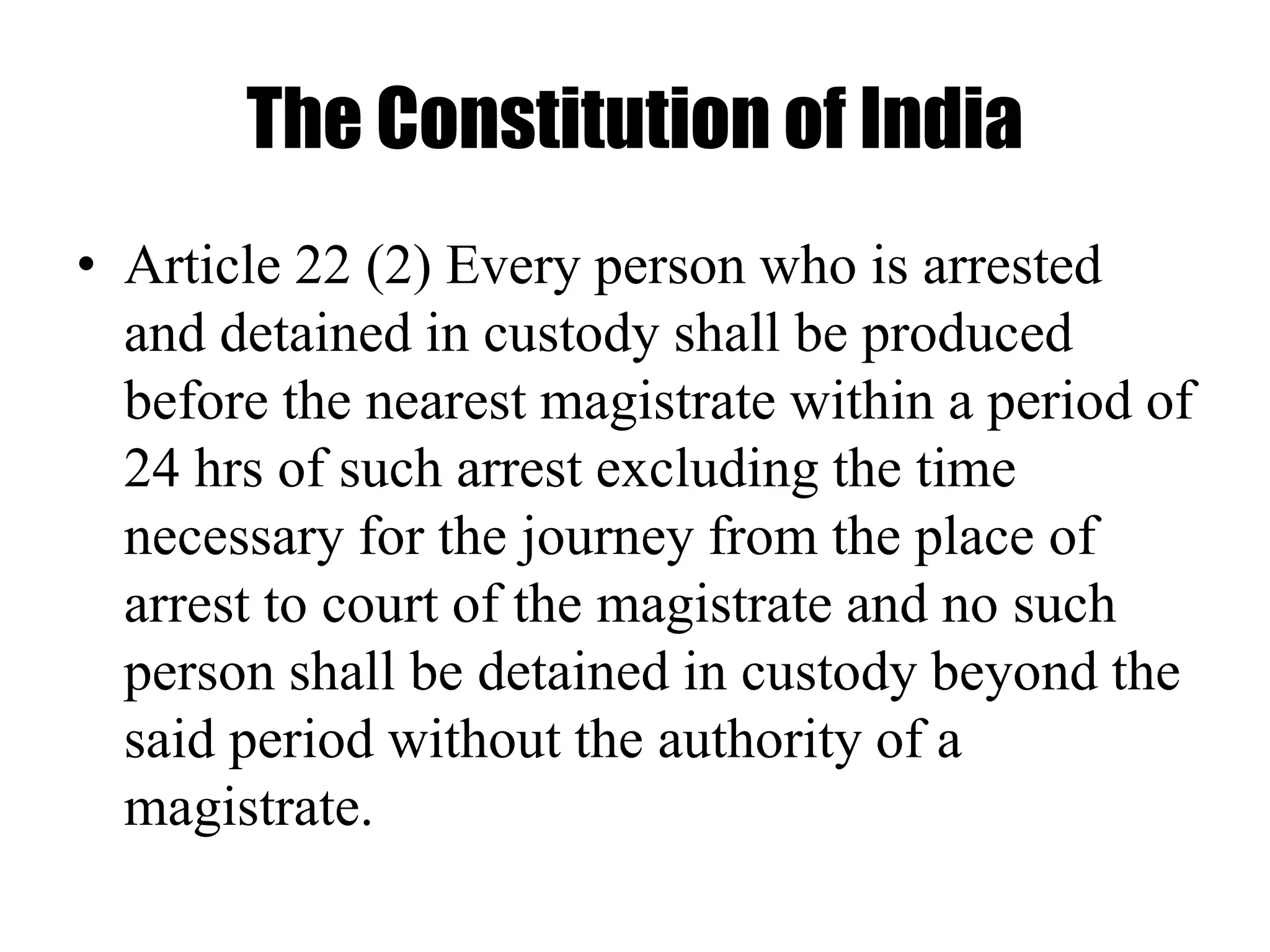
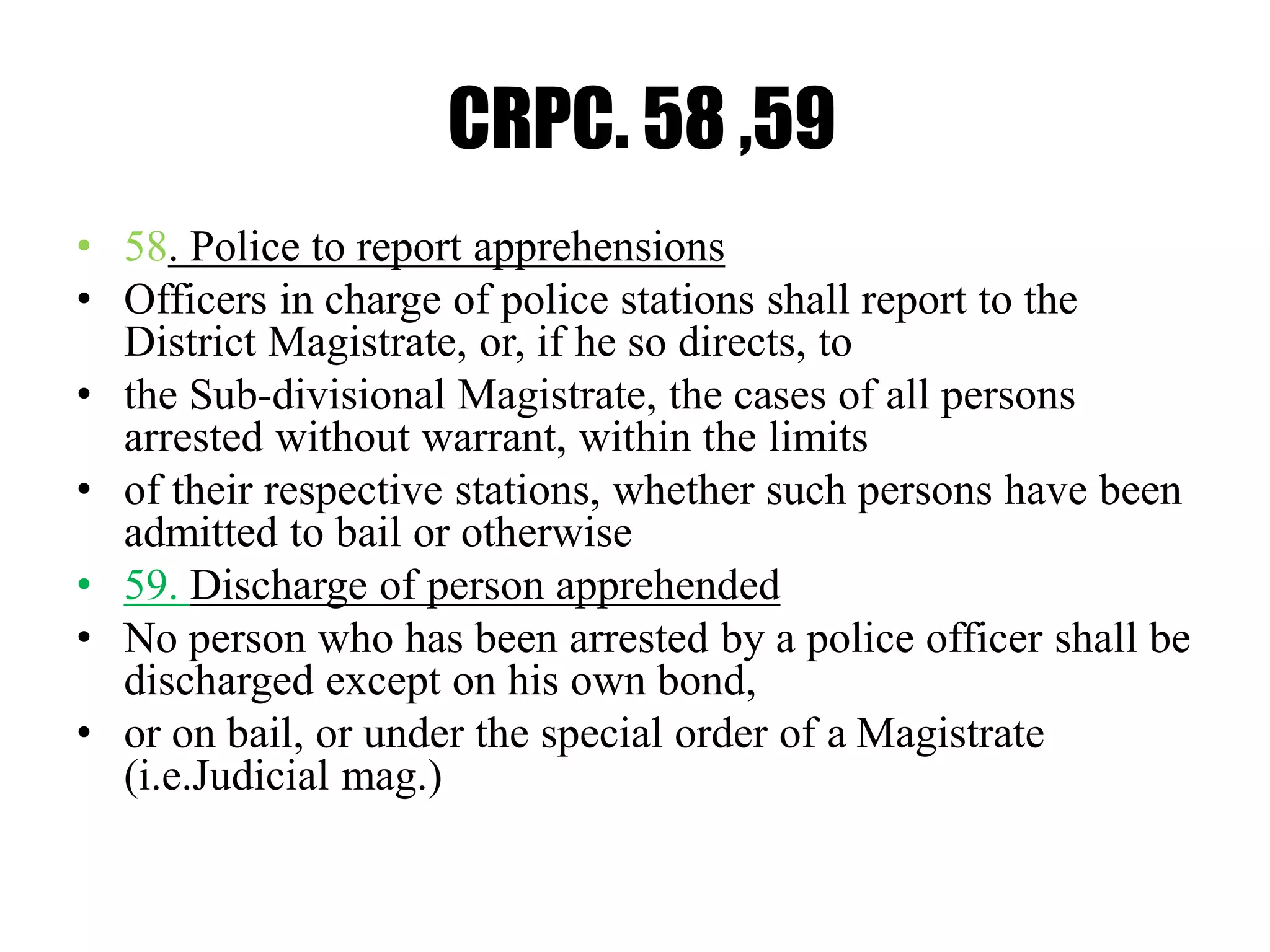
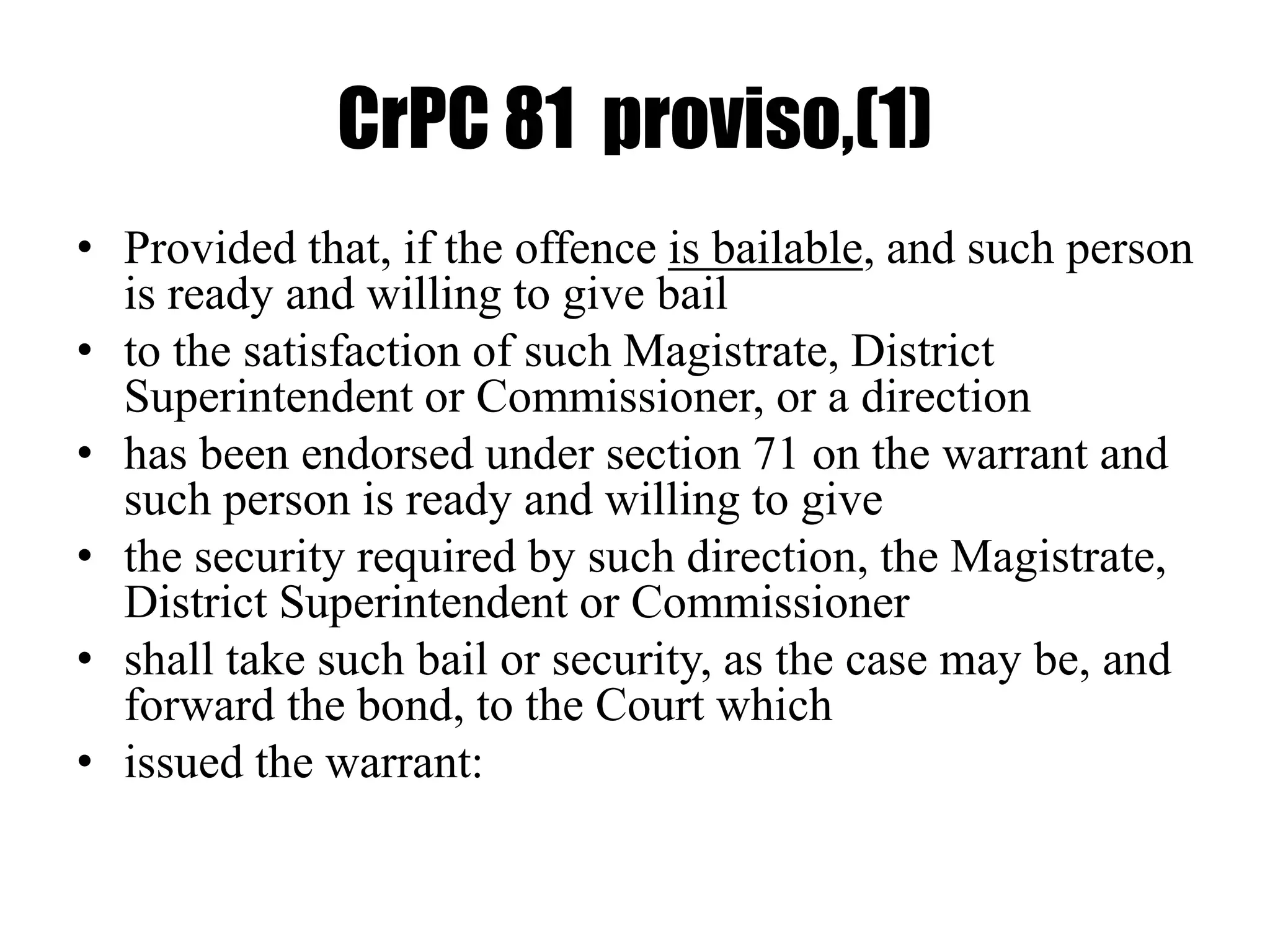
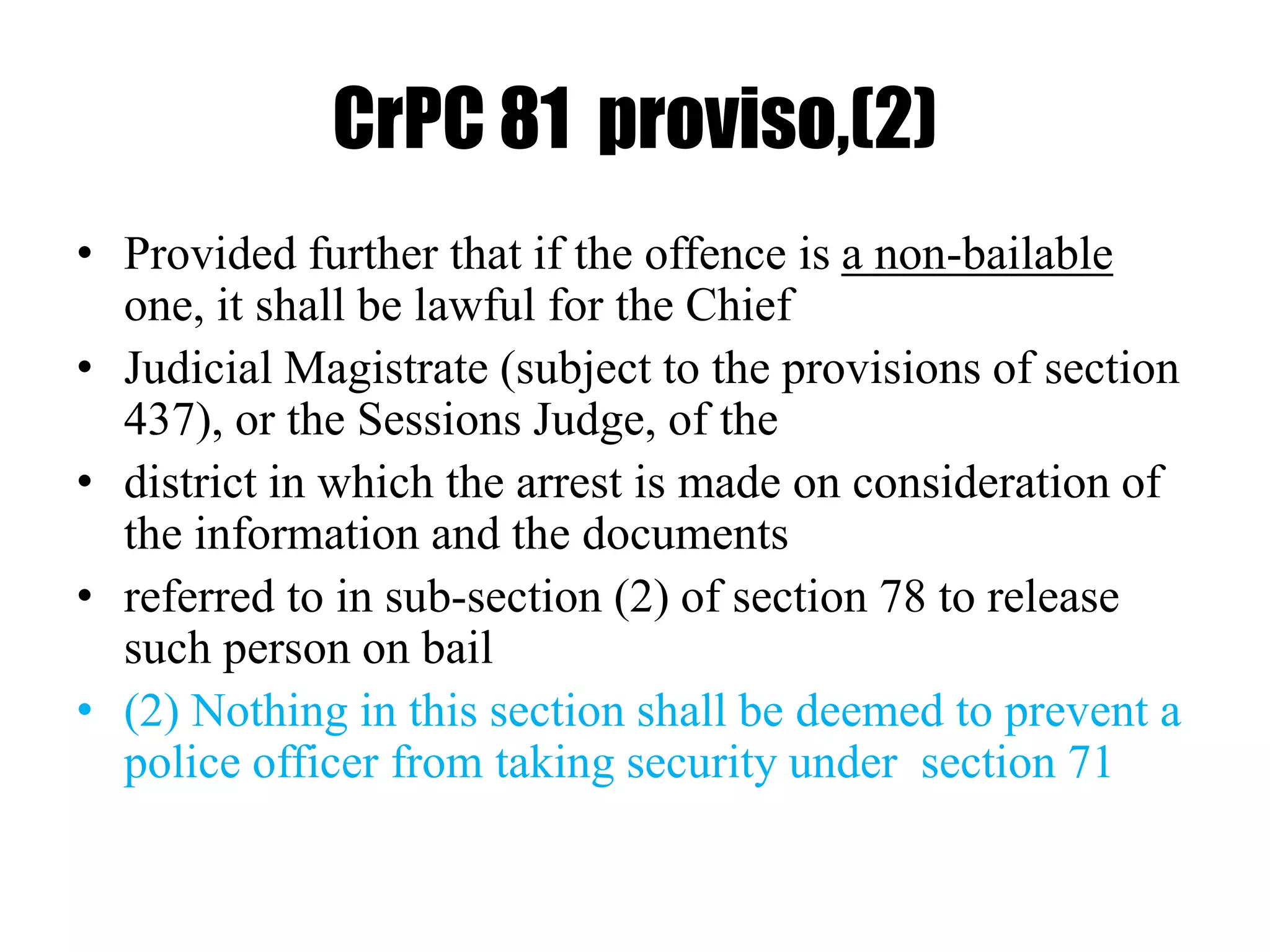
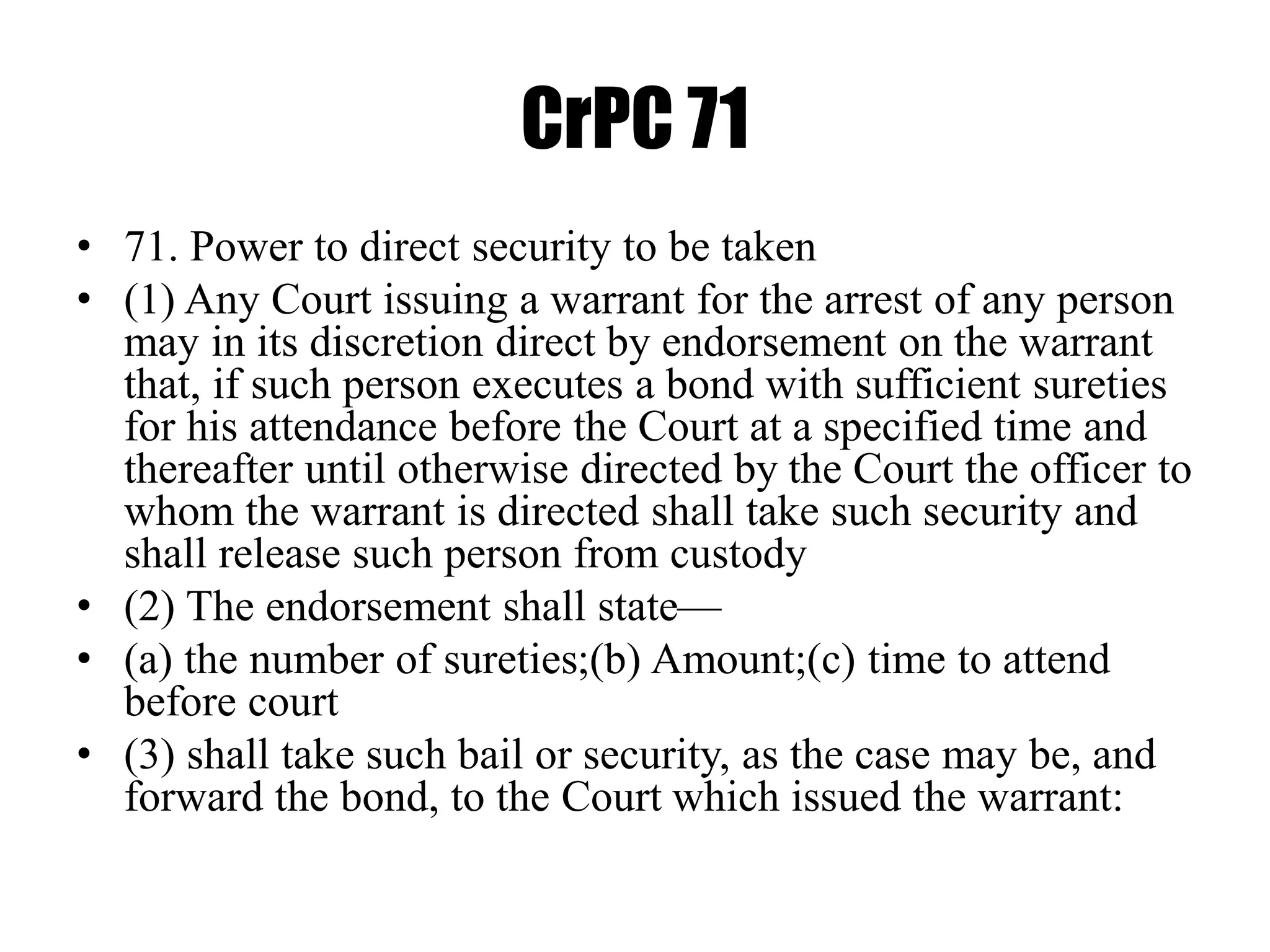
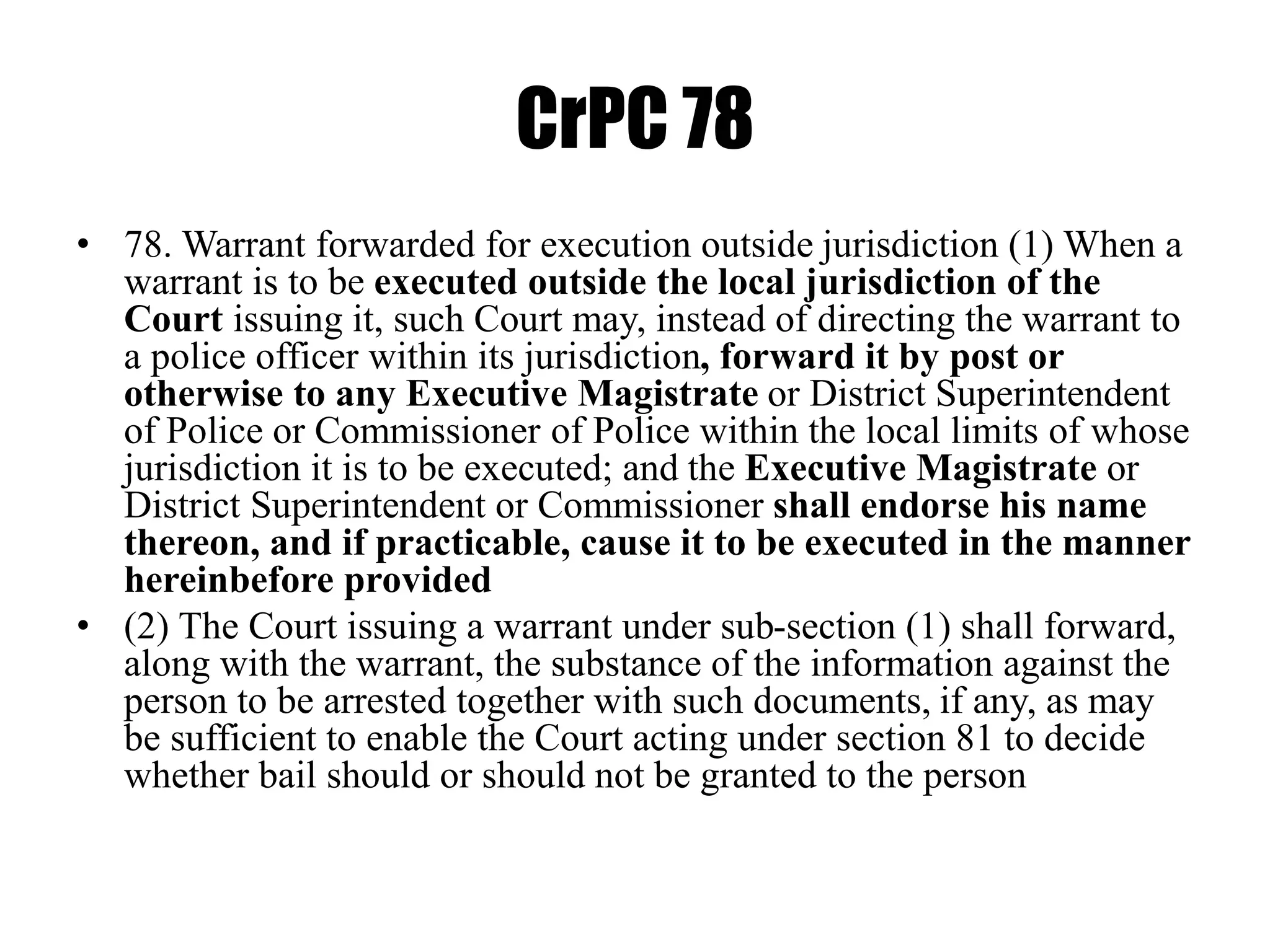
Executive Magistrates are appointed by state governments and have administrative and executive powers under criminal law, in contrast to judicial magistrates who are part of the judiciary. Some key powers of executive magistrates include issuing search warrants, preventing public nuisances, dispersing unlawful assemblies, holding inquests of unnatural deaths, and taking security from arrested persons for their attendance in court. They are subordinate to district and sub-divisional magistrates and do not directly exercise arrest powers but through the police.


![മലയാളം [Autosaved]](https://cdn.slidesharecdn.com/ss_thumbnails/autosaved-140810121653-phpapp01-thumbnail.jpg?width=640&height=640&fit=bounds)


