VERBAL
LEARNING
MODEL
What is verbal learning?
is a key area of cognitive development,
where children develop language skills
through various processes like
imitation, repetition, and interaction
with their environment.
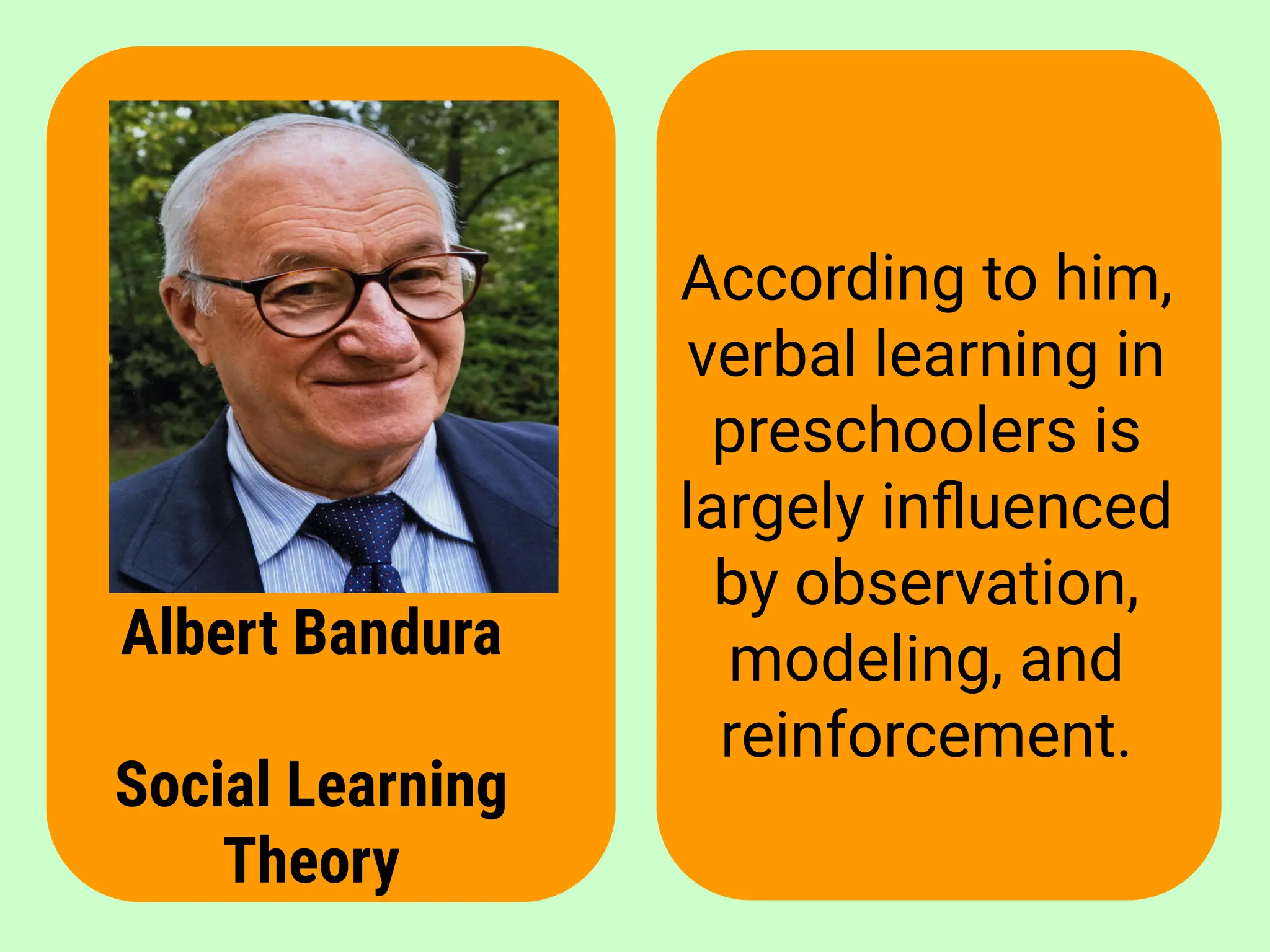
Albert Bandura
Social Learning
Theory
According to him,
verbal learning in
preschoolers is
largely influenced
by observation,
modeling, and
reinforcement.
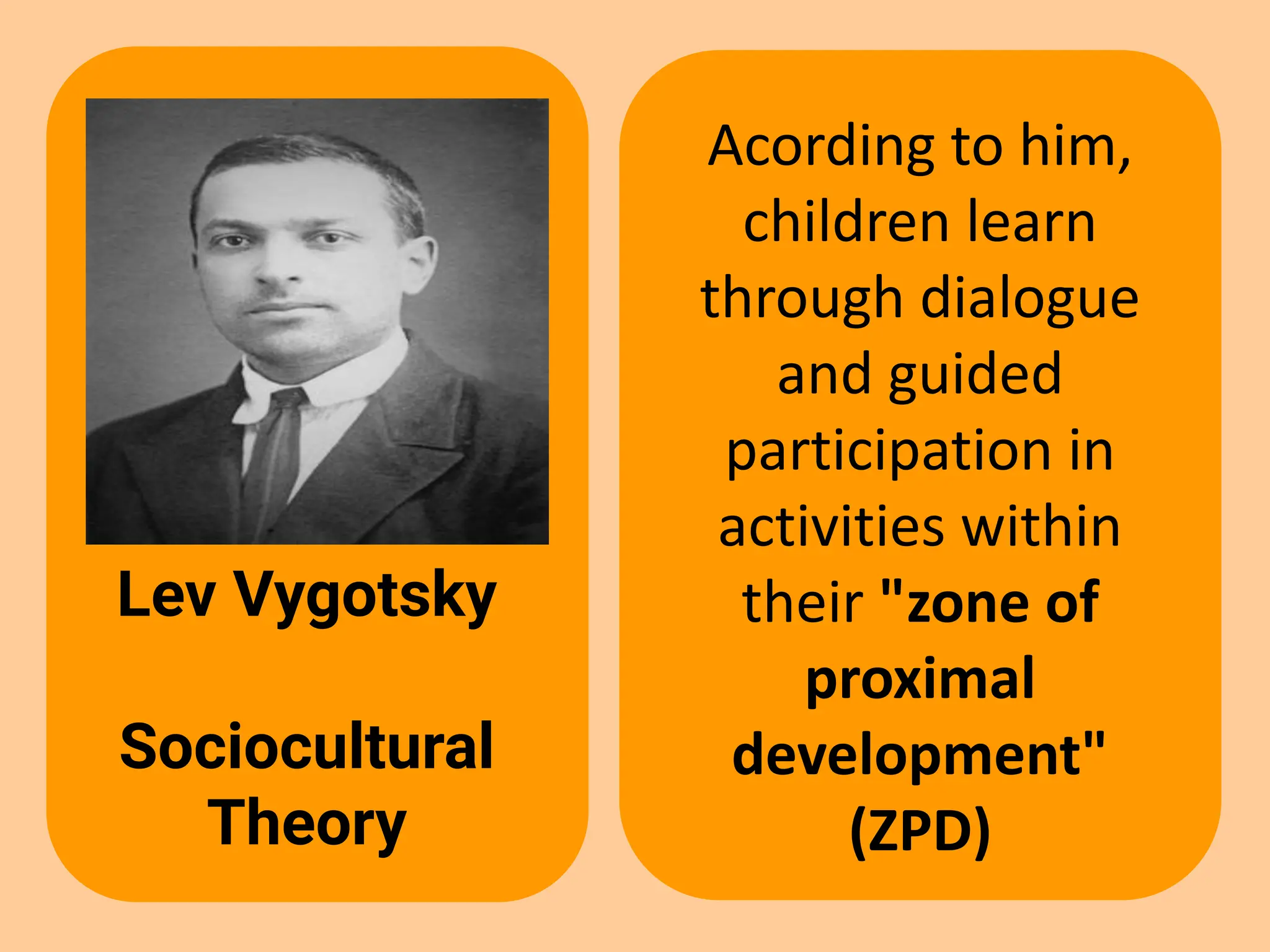
Lev Vygotsky
Sociocultural
Theory
Acording to him,
children learn
through dialogue
and guided
participation in
activities within
their "zone of
proximal
development"
(ZPD)
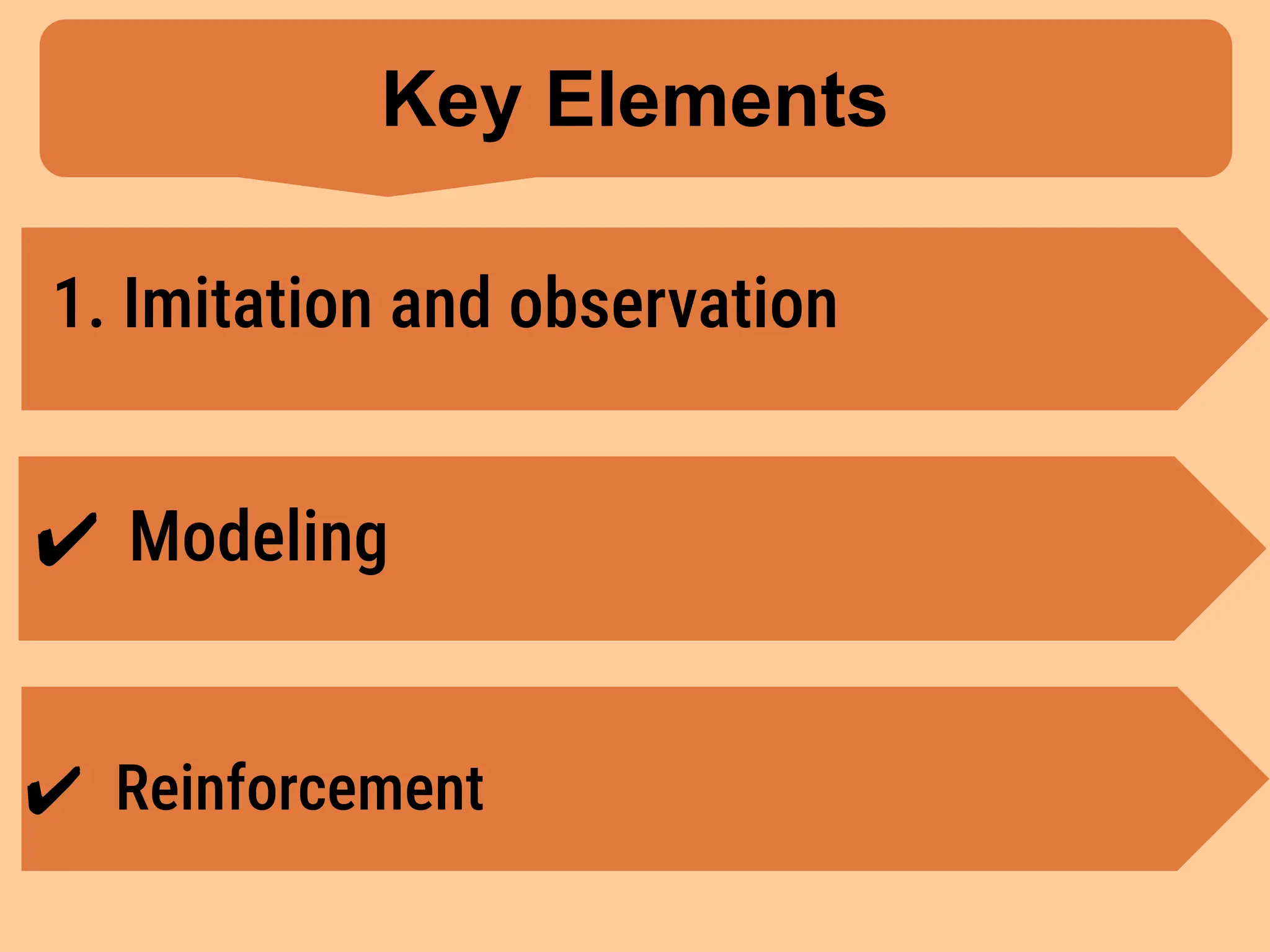
Key Elements
1. Imitation and observation
✔ Modeling
✔ Reinforcement
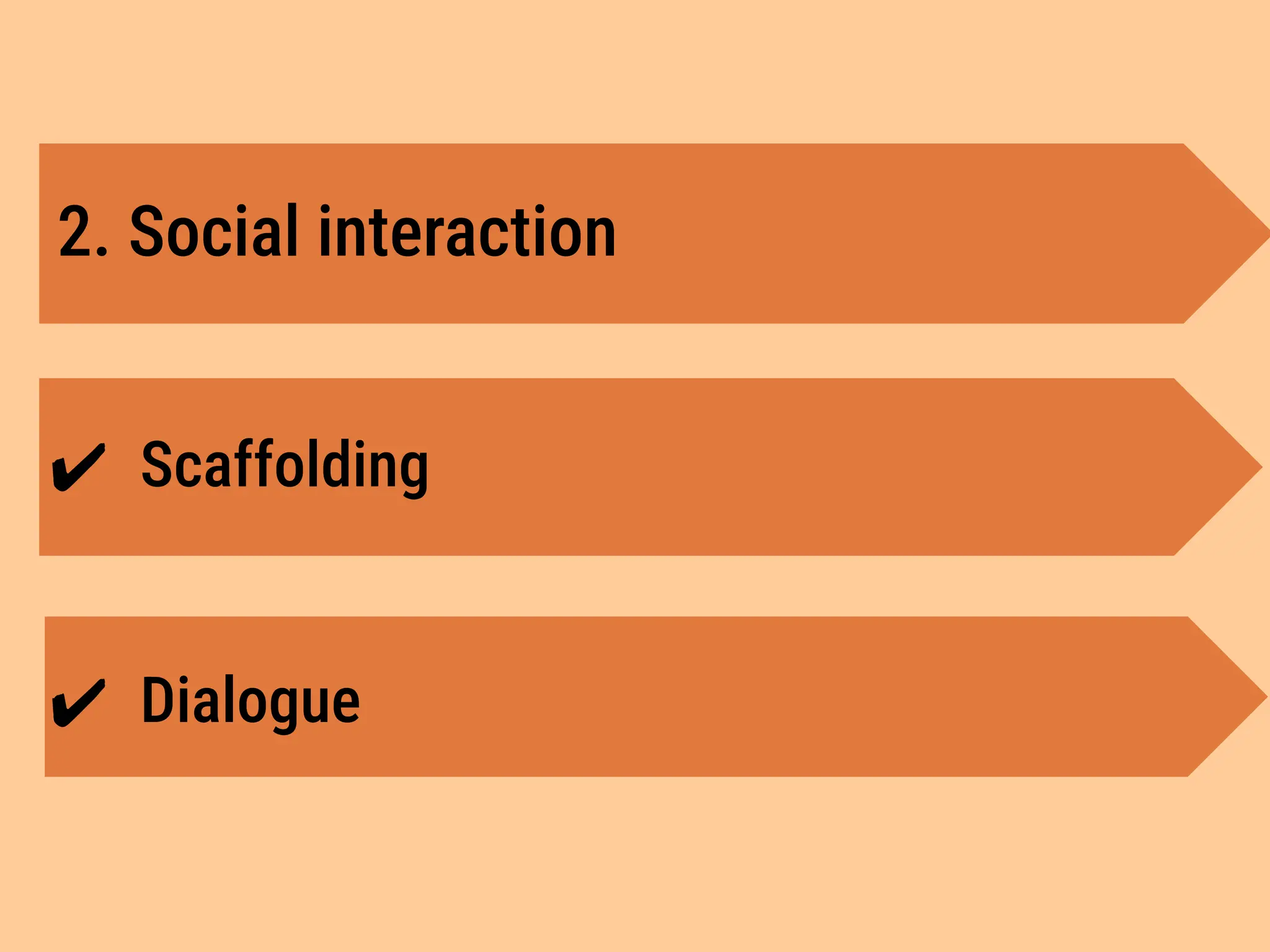
2. Social interaction
✔ Scaffolding
✔ Dialogue
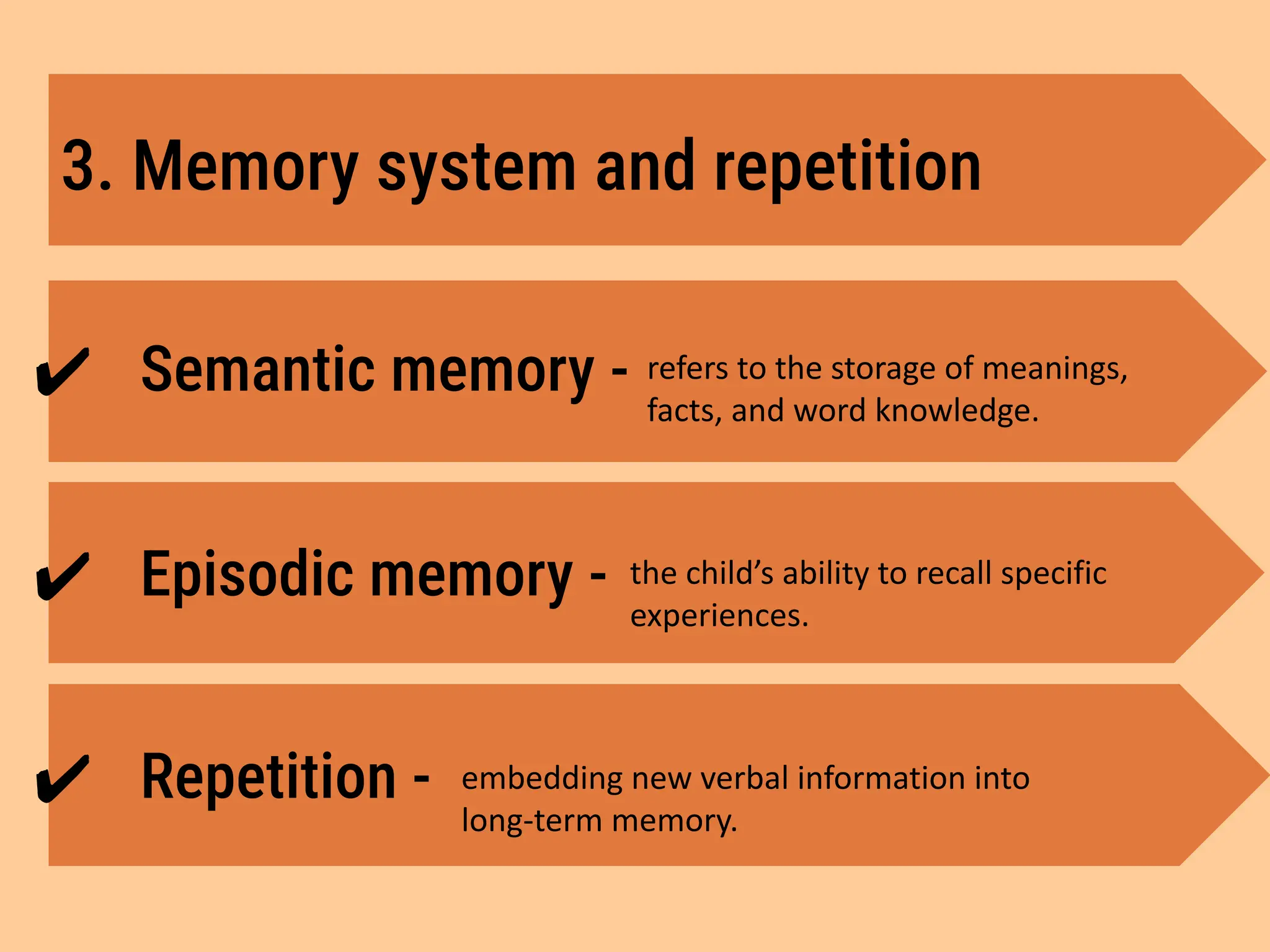
3. Memory system and repetition
✔ Semantic memory -
✔ Repetition -
✔ Episodic memory -
refers to the storage of meanings,
facts, and word knowledge.
the child’s ability to recall specific
experiences.
embedding new verbal information into
long-term memory.
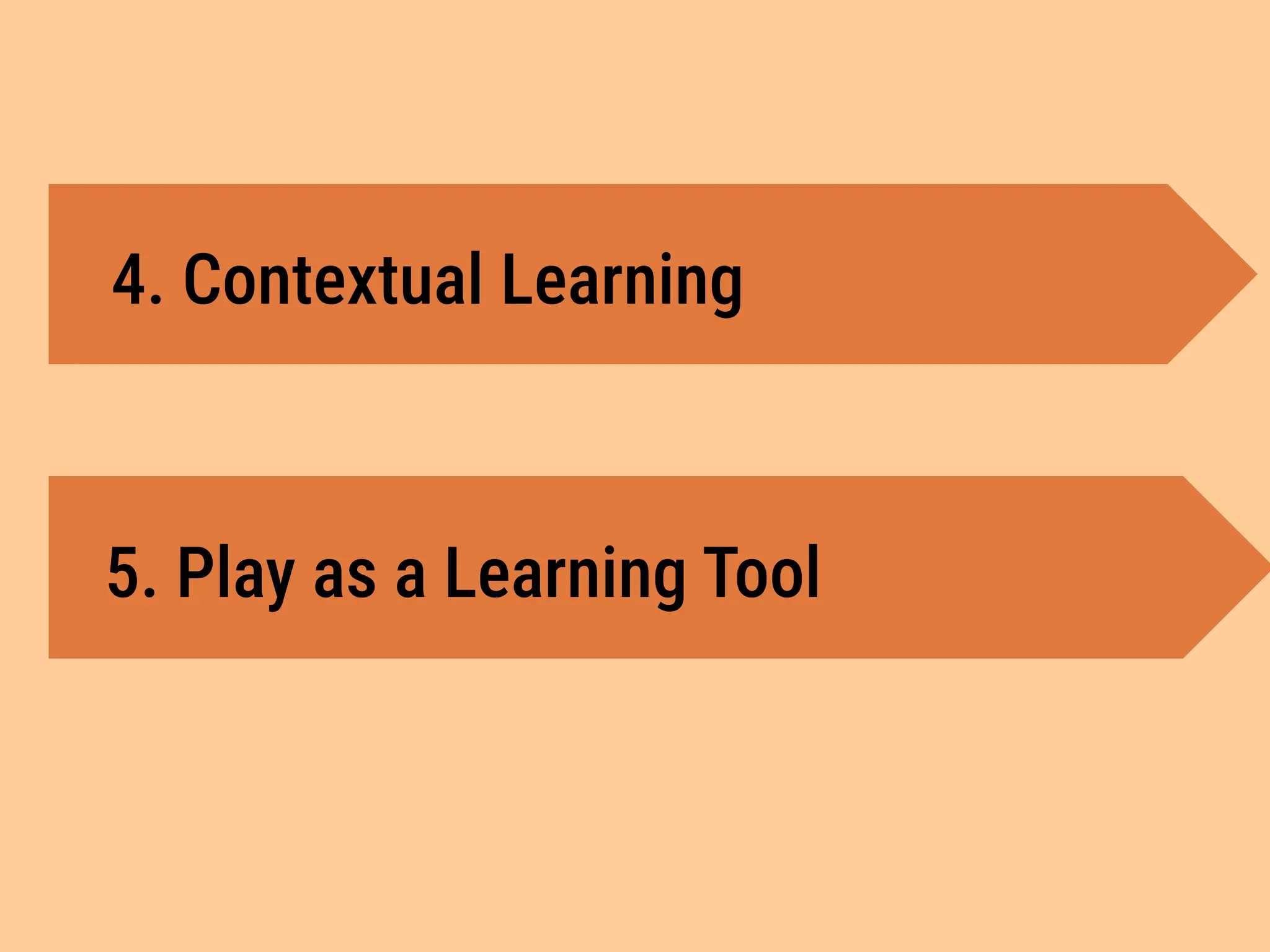
4. Contextual Learning
5. Play as a Learning Tool
Application in Educational Settings
Dialogic Reading
Songs and Rhymes
DISCOVERY
LEARNING
MODEL
What is discovery learning?
is an instructional model based on the idea
that learners should build knowledge by
exploring and discovering information for
themselves rather than simply receiving
information passively.
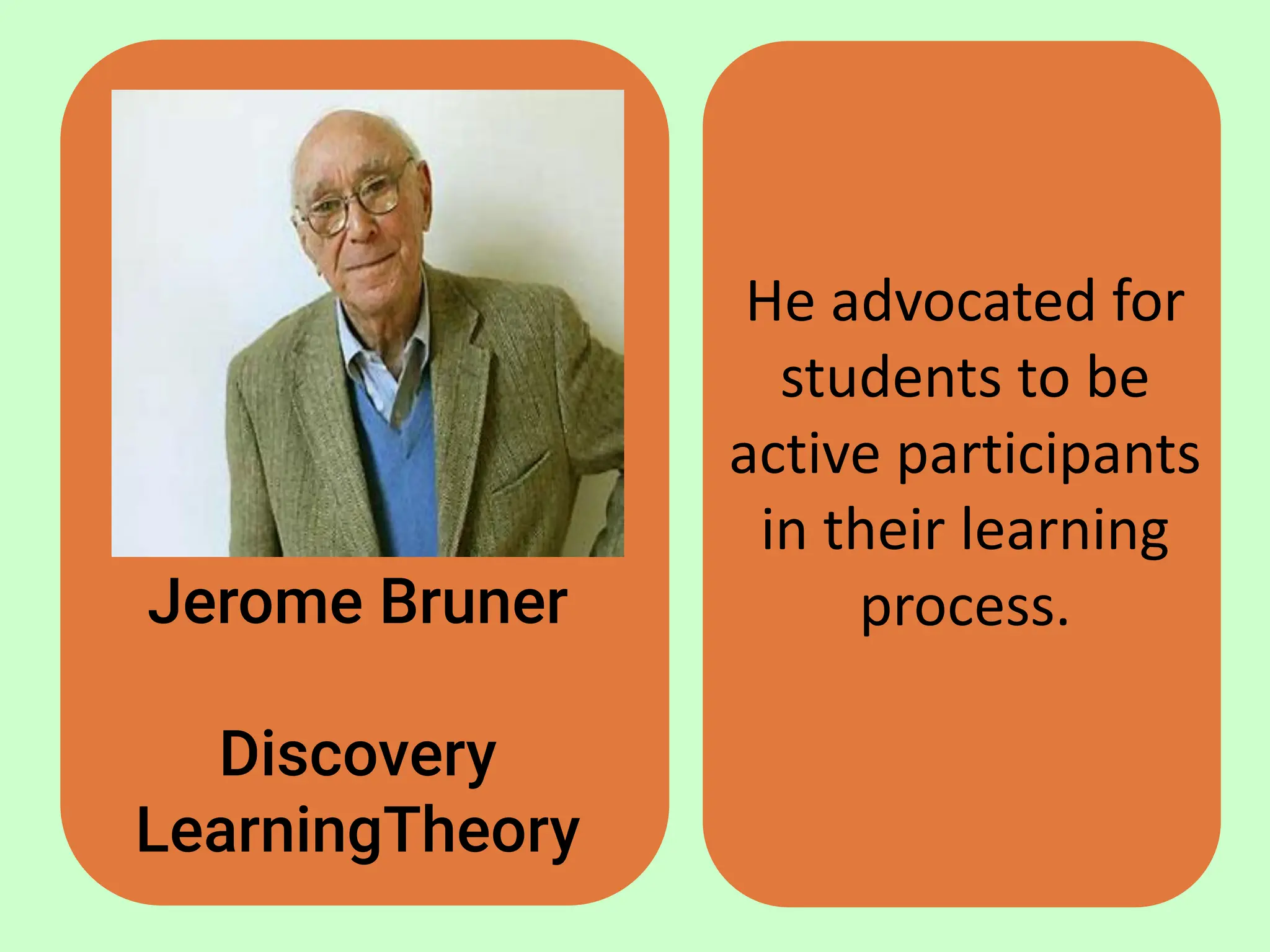
Jerome Bruner
Discovery
LearningTheory
He advocated for
students to be
active participants
in their learning
process.
Key
Characteristics of
Discovery
Learning
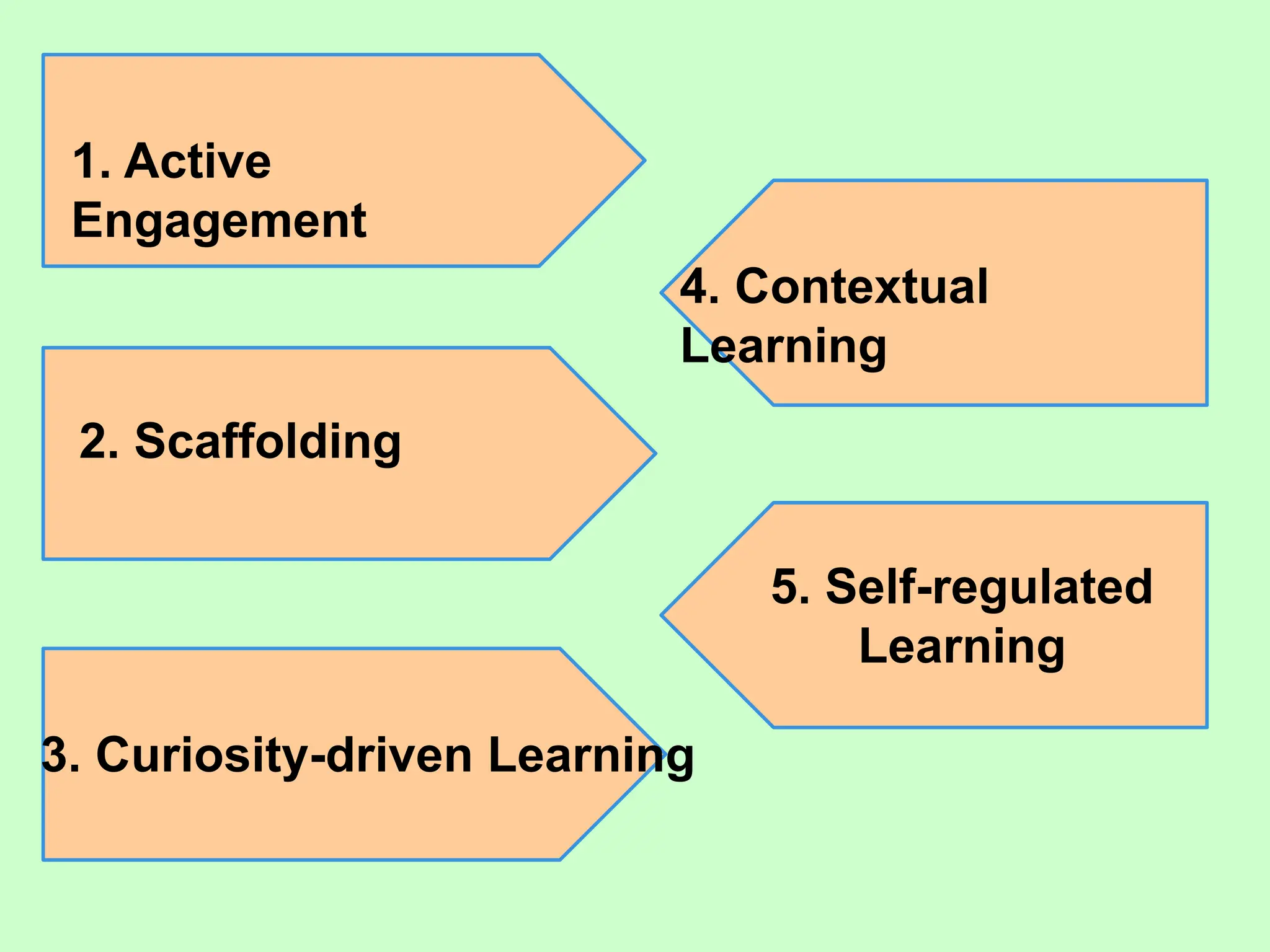
5. Self-regulated
Learning
1. Active
Engagement
2. Scaffolding
3. Curiosity-driven Learning
4. Contextual
Learning
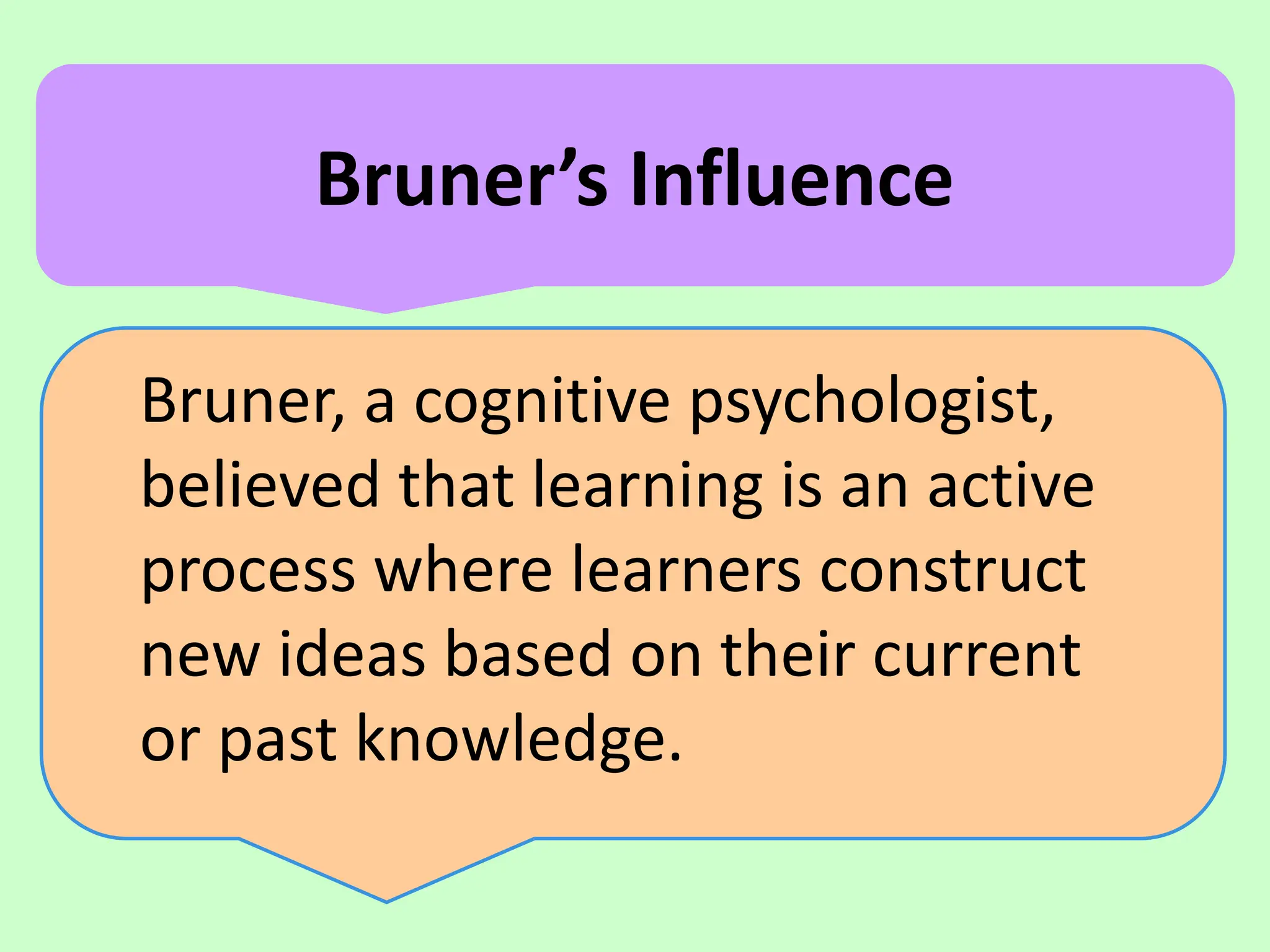
Bruner’s Influence
Bruner, a cognitive psychologist,
believed that learning is an active
process where learners construct
new ideas based on their current
or past knowledge.
Thank you so much
for listening!

Powerpoint presentation on Verbal Learning Model