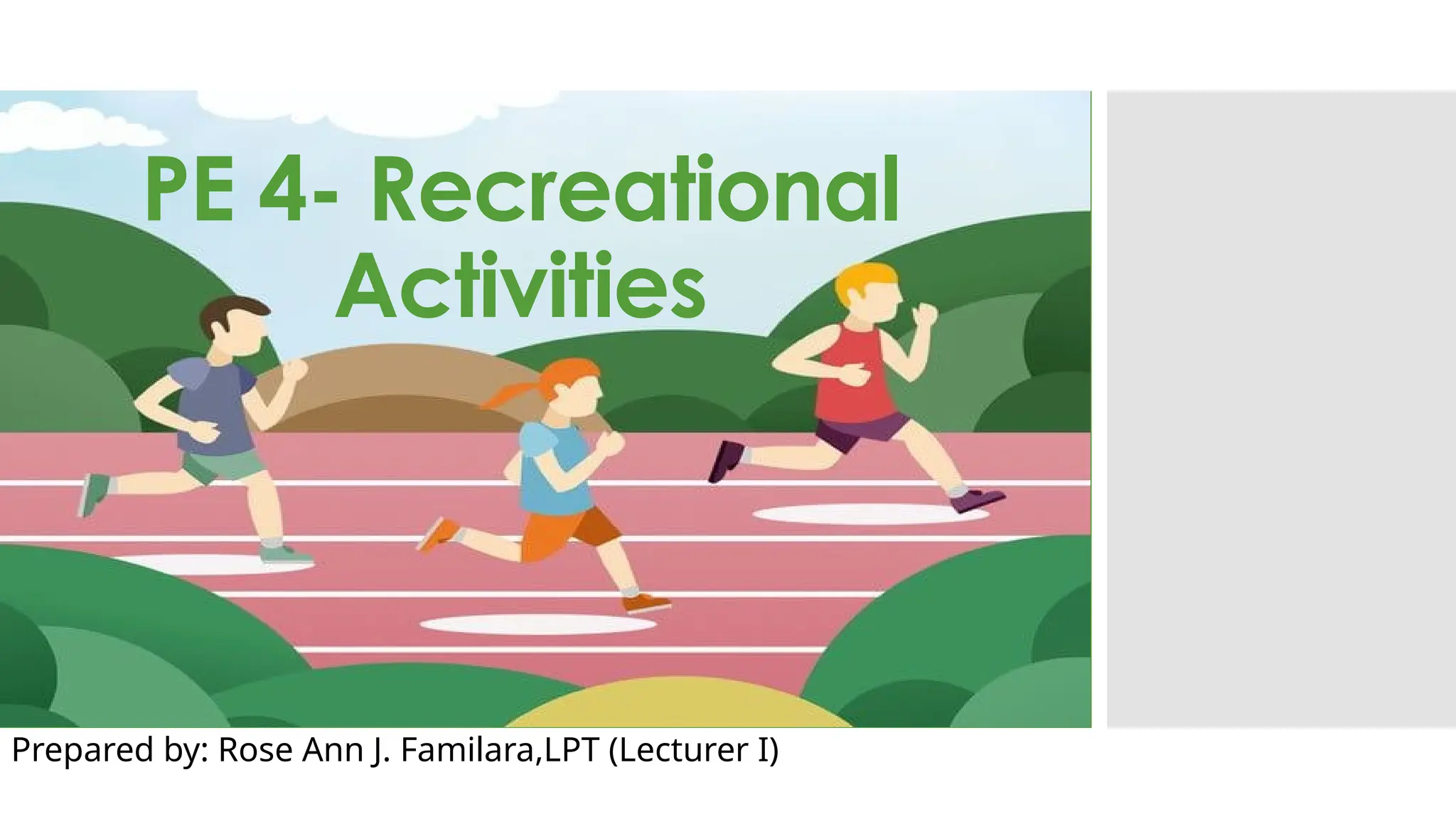
PE 4- Recreational
Activities
Prepared by: Rose Ann J. Familara,LPT (Lecturer I)
Definition of
Recreational
Activity &
Development,
importance &
objectives.
LESSON 1:
Objectives:
At the end of the lesson students should
be able to:
Clarify the meaning of Recreational
Activity& development, and explain its
significance in physical fitness
development & maintenance.
Recreational
activities
 Recreational activities can help people
relax, de-stress, and improve their
mood. When choosing recreational
activities, it's important to select
activities that are enjoyable and fit your
interests and abilities. It's also important
to be safe and responsible when
participating in any recreational
activity.
Difference
between
Play and
Recreation
 Play is a spontaneous physical activity
for children.
 Recreaton is re-creatve, organized,
relaxing activity for adults.
Outdoor activities
Hiking, camping, running, biking,
canoeing, kayaking, rock climbing,
sailing, skiing, sky diving, and surfing
Indoor activities
Reading, watching movies or TV shows,
playing board games or video games,
doing puzzles, cooking or baking, and
exercising
Social activities
Spending time with friends and family
Physical activities
Aerobics, dancing, gymnastics, martial
arts, yoga, badminton, squash, tennis,
archery, athletics, bowling, cycling,
equestrian, skateboarding, swimming,
walking
BENEFITS OF
RECREATION
Physical benefits
•Cardiovascular health: Recreation can reduce the
risk of coronary heart disease and stroke.
•Bone health: Recreation can help prevent
osteoporosis.
•Diabetes: Recreation can help prevent diabetes.
•Cancer: Recreation can help prevent certain types
of cancer, including breast, colon, and lung
cancer.
•Back health: Recreation can help prevent and
rehabilitate back problems.
•Sleep: Recreation can improve sleep quality.
•Stamina: Recreation can increase stamina.
BENEFITS OF
RECREATION
Mental benefits
•Stress relief: Recreation can reduce stress
levels.
•Mental health: Recreation can improve
mental health and psychological well-
being.
•Brain stimulation: Recreation can stimulate
the brain and help neurons grow and fire.
BENEFITS OF
RECREATION
Social benefits
•Community connection: Recreation can
help people feel connected to their
community.
•Social bonding: Recreation can
strengthen social bonds and create a
sense of belonging.
•Diversity and inclusion: Recreation can
promote understanding and respect
across different cultures.
BENEFITS OF
RECREATION
Environmental benefits
•Pollution reduction: Recreation can
promote the use of active transportation,
like walking and cycling, which can reduce
pollution.
•Open space preservation: Recreation can
help protect open space and natural areas
BENEFITS OF
RECREATION
Personal development
 Recreational activities can help
develop personal development and
growth, self esteem, and self reliance.
BENEFITS OF
RECREATION
Creativity
 Recreational activities can help allow
creative expression and a sense of
accomplishment.
Development
in Recreation
Recreation development
is the process of improving
tourist attractions and
facilities, and includes the
sustainable use of natural
resources for recreational
activities. Some factors that
have contributed to the
growth of recreation include:
Development
in Recreation
 Increased discretionary time: People have
more time for leisure due to longer life
expectancies and fewer hours spent working to
survive.
 New technologies: Technology has promoted
the growth of recreation.
 Public interest in health: People are more
interested in health, which can lead to more
recreation.
 Commercialization: The commercialization of
recreational offerings has increased.
 Services for people with disabilities: More
services are available for people with
disabilities.
 Expanding roles for women: Women have
taken on more roles.
Classification
of
Recreational
Activities
LESSON 2:
POWERPOINT IN PE4-RECREATIONAL_ACTIVITIES

POWERPOINT IN PE4-RECREATIONAL_ACTIVITIES

  • 1.
    PE 4- Recreational Activities Preparedby: Rose Ann J. Familara,LPT (Lecturer I)
  • 2.
    Definition of Recreational Activity & Development, importance& objectives. LESSON 1: Objectives: At the end of the lesson students should be able to: Clarify the meaning of Recreational Activity& development, and explain its significance in physical fitness development & maintenance.
  • 3.
    Recreational activities  Recreational activitiescan help people relax, de-stress, and improve their mood. When choosing recreational activities, it's important to select activities that are enjoyable and fit your interests and abilities. It's also important to be safe and responsible when participating in any recreational activity.
  • 4.
    Difference between Play and Recreation  Playis a spontaneous physical activity for children.  Recreaton is re-creatve, organized, relaxing activity for adults.
  • 5.
    Outdoor activities Hiking, camping,running, biking, canoeing, kayaking, rock climbing, sailing, skiing, sky diving, and surfing
  • 6.
    Indoor activities Reading, watchingmovies or TV shows, playing board games or video games, doing puzzles, cooking or baking, and exercising
  • 7.
    Social activities Spending timewith friends and family
  • 8.
    Physical activities Aerobics, dancing,gymnastics, martial arts, yoga, badminton, squash, tennis, archery, athletics, bowling, cycling, equestrian, skateboarding, swimming, walking
  • 9.
    BENEFITS OF RECREATION Physical benefits •Cardiovascularhealth: Recreation can reduce the risk of coronary heart disease and stroke. •Bone health: Recreation can help prevent osteoporosis. •Diabetes: Recreation can help prevent diabetes. •Cancer: Recreation can help prevent certain types of cancer, including breast, colon, and lung cancer. •Back health: Recreation can help prevent and rehabilitate back problems. •Sleep: Recreation can improve sleep quality. •Stamina: Recreation can increase stamina.
  • 10.
    BENEFITS OF RECREATION Mental benefits •Stressrelief: Recreation can reduce stress levels. •Mental health: Recreation can improve mental health and psychological well- being. •Brain stimulation: Recreation can stimulate the brain and help neurons grow and fire.
  • 11.
    BENEFITS OF RECREATION Social benefits •Communityconnection: Recreation can help people feel connected to their community. •Social bonding: Recreation can strengthen social bonds and create a sense of belonging. •Diversity and inclusion: Recreation can promote understanding and respect across different cultures.
  • 12.
    BENEFITS OF RECREATION Environmental benefits •Pollutionreduction: Recreation can promote the use of active transportation, like walking and cycling, which can reduce pollution. •Open space preservation: Recreation can help protect open space and natural areas
  • 13.
    BENEFITS OF RECREATION Personal development Recreational activities can help develop personal development and growth, self esteem, and self reliance.
  • 14.
    BENEFITS OF RECREATION Creativity  Recreationalactivities can help allow creative expression and a sense of accomplishment.
  • 15.
    Development in Recreation Recreation development isthe process of improving tourist attractions and facilities, and includes the sustainable use of natural resources for recreational activities. Some factors that have contributed to the growth of recreation include:
  • 16.
    Development in Recreation  Increaseddiscretionary time: People have more time for leisure due to longer life expectancies and fewer hours spent working to survive.  New technologies: Technology has promoted the growth of recreation.  Public interest in health: People are more interested in health, which can lead to more recreation.  Commercialization: The commercialization of recreational offerings has increased.  Services for people with disabilities: More services are available for people with disabilities.  Expanding roles for women: Women have taken on more roles.
  • 17.