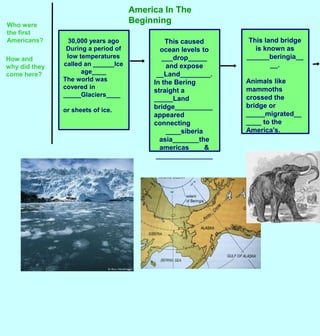
America In The BeginningWho were the first Americans?This land bridge is known as ______beringia____.Animals like mammoths crossed the bridge or _____migrated______ to the America's. This caused ocean levels to ___drop_____  and expose __Land________.In the Bering straight a _____Land bridge__________ appeared connecting ____siberiaasia_______theamericas____& _______________30,000 years ago During a period of low temperatures called an ______Ice age____The world was covered in _____Glaciers____ or sheets of ice. How and why did they come here?
America In The BeginningWhat happened when they came to America?The ice age ended __warming__________ up glaciers causing water levels to ___land bridge_______ covering up the ___mammoths______ ________.Some animals died off like ____________.Living in many different parts of the Americas the Natives needed to adjust or ___adapt______ to every thing in the new surrounds that made up each of their own ________environments survivr_____in order to __________.  How did they meet their new needs?Hunter's in Asia who moved from place to place to find food or _____nomads________ followed the mammoths and spread out or  ___migrated________ to the America's
How did Native Americans adjust to the new environments?America In The BeginningDifferent groups in different environments developed their own beliefs and ways of life or ________culture_______.  Groups in the same environments adapted similar life styles, and language creating ____cultural region___   _________.Many Native American have these things in common.1. Nature has a ___spirit_____.2. No one can own __land________.4. Only use what is ___needed_______.5. trade__________ was important to most societiesLiving in many different parts of the Americas the Natives used the different natural _______resources____ in their own different environments for food, clothing, and shelter. What did they have in common?
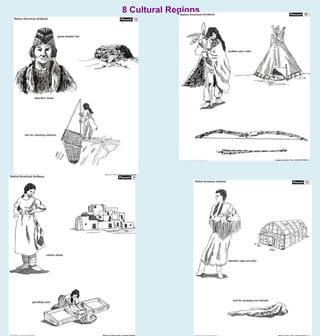
8 Cultural RegionsCaliforniaGreat BasinGreat PlainsSouth EastNorth West CoastPlateauEastern WoodlandsSouth WestNorthwest CoastWest coastplateuNorthEastCalifroniaSouthWestSouthEastnia
8 Cultural Regions
North West CoastWeather:long cold winterscool summersheavy rainfallNatural Resources:ocean/beachesthick forests of fir, spruce, and cedarrugged mountainsseafood/salmondeer, moose, bear, elk, beaver, mountain goatsCultureTools Used Cedar Canoes To hunt Natural Resources Ocean Beaches Thick Woods Of Fur Spruce And Cedar Rugged Mountains SeaFood Salmon Deer Moose Bear Elk
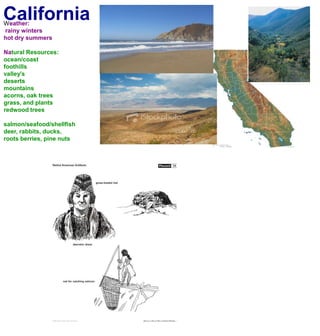
CaliforniaWeather: rainy wintershot dry summersNatural Resources:ocean/coastfoothillsvalley'sdesertsmountainsacorns, oak treesgrass, and plantsredwood treessalmon/seafood/shellfishdeer, rabbits, ducks, roots berries, pine nuts
Great BasinWeather:little rainhot during the day cold at nightNatural Resources:mostly dessertlow areas surrounded by mountains at the edgeswith valleys that had seasonal lakes and streamsplants that need little water likegrasses, sagebrush, pinon trees, at the outer edges pine trees, and willowsmall animals rabbits, lizards, grasshoppers, snakes sometimes ducks , duck eggs during certain seasons seeds,berries pine nuts, roots, cattail
PlateauWeather:long cold winterscomfortable summers Natural Resources:mountains with dense forests in areasflatter in the center with drier grass landsriversdriftwood, mud, dirt,grass and sage brushfish, antelope, deer, seedsonions, carrots, camas roots, salmon
Great PlainsWeather:cold winters hot summersNatural Resources:mountains surrounding edgestreeless grasslands in the centereast more water and softer soilwest drier dense grassBuffalo and smaller animals
South WestWeather:high temperatureslittle rain dry/aridNatural Resources:mountains, canyonsdesserts, flat top mesasrivers, little waterclay, brightly colored plants, cottoncorn, beans, squash, peppers, rabbits
Eastern WoodlandsWeather:snowy winters , rainNatural Resources:rivers, ocean/coastlots of lakes and streamsForests, plants, maple trees, elm,deer, bears, beavers, birds, fishcorn, sunflowers, tobacco, vegetables,nuts, berries
South EastWeather:long warm humid summersmild wintersNatural Resources:rivers, ocean/coastFertile coastal plainsmountains, swampsTrees, clay, shells, corn, beans, squash, pumpkins, sunflowers, sweet potatoessquirrels, rabbits, turkeys, deer, alligators, turtles,wild rice, persimmons

PowerPoint

  • 1.
    America In TheBeginningWho were the first Americans?This land bridge is known as ______beringia____.Animals like mammoths crossed the bridge or _____migrated______ to the America's. This caused ocean levels to ___drop_____ and expose __Land________.In the Bering straight a _____Land bridge__________ appeared connecting ____siberiaasia_______theamericas____& _______________30,000 years ago During a period of low temperatures called an ______Ice age____The world was covered in _____Glaciers____ or sheets of ice. How and why did they come here?
  • 2.
    America In TheBeginningWhat happened when they came to America?The ice age ended __warming__________ up glaciers causing water levels to ___land bridge_______ covering up the ___mammoths______ ________.Some animals died off like ____________.Living in many different parts of the Americas the Natives needed to adjust or ___adapt______ to every thing in the new surrounds that made up each of their own ________environments survivr_____in order to __________. How did they meet their new needs?Hunter's in Asia who moved from place to place to find food or _____nomads________ followed the mammoths and spread out or ___migrated________ to the America's
  • 3.
    How did NativeAmericans adjust to the new environments?America In The BeginningDifferent groups in different environments developed their own beliefs and ways of life or ________culture_______. Groups in the same environments adapted similar life styles, and language creating ____cultural region___ _________.Many Native American have these things in common.1. Nature has a ___spirit_____.2. No one can own __land________.4. Only use what is ___needed_______.5. trade__________ was important to most societiesLiving in many different parts of the Americas the Natives used the different natural _______resources____ in their own different environments for food, clothing, and shelter. What did they have in common?
  • 4.
    8 Cultural RegionsCaliforniaGreatBasinGreat PlainsSouth EastNorth West CoastPlateauEastern WoodlandsSouth WestNorthwest CoastWest coastplateuNorthEastCalifroniaSouthWestSouthEastnia
  • 5.
  • 7.
    North West CoastWeather:longcold winterscool summersheavy rainfallNatural Resources:ocean/beachesthick forests of fir, spruce, and cedarrugged mountainsseafood/salmondeer, moose, bear, elk, beaver, mountain goatsCultureTools Used Cedar Canoes To hunt Natural Resources Ocean Beaches Thick Woods Of Fur Spruce And Cedar Rugged Mountains SeaFood Salmon Deer Moose Bear Elk
  • 8.
    CaliforniaWeather: rainy wintershotdry summersNatural Resources:ocean/coastfoothillsvalley'sdesertsmountainsacorns, oak treesgrass, and plantsredwood treessalmon/seafood/shellfishdeer, rabbits, ducks, roots berries, pine nuts
  • 9.
    Great BasinWeather:little rainhotduring the day cold at nightNatural Resources:mostly dessertlow areas surrounded by mountains at the edgeswith valleys that had seasonal lakes and streamsplants that need little water likegrasses, sagebrush, pinon trees, at the outer edges pine trees, and willowsmall animals rabbits, lizards, grasshoppers, snakes sometimes ducks , duck eggs during certain seasons seeds,berries pine nuts, roots, cattail
  • 10.
    PlateauWeather:long cold winterscomfortablesummers Natural Resources:mountains with dense forests in areasflatter in the center with drier grass landsriversdriftwood, mud, dirt,grass and sage brushfish, antelope, deer, seedsonions, carrots, camas roots, salmon
  • 11.
    Great PlainsWeather:cold wintershot summersNatural Resources:mountains surrounding edgestreeless grasslands in the centereast more water and softer soilwest drier dense grassBuffalo and smaller animals
  • 12.
    South WestWeather:high temperatureslittlerain dry/aridNatural Resources:mountains, canyonsdesserts, flat top mesasrivers, little waterclay, brightly colored plants, cottoncorn, beans, squash, peppers, rabbits
  • 13.
    Eastern WoodlandsWeather:snowy winters, rainNatural Resources:rivers, ocean/coastlots of lakes and streamsForests, plants, maple trees, elm,deer, bears, beavers, birds, fishcorn, sunflowers, tobacco, vegetables,nuts, berries
  • 14.
    South EastWeather:long warmhumid summersmild wintersNatural Resources:rivers, ocean/coastFertile coastal plainsmountains, swampsTrees, clay, shells, corn, beans, squash, pumpkins, sunflowers, sweet potatoessquirrels, rabbits, turkeys, deer, alligators, turtles,wild rice, persimmons