DISTRIBUTION OF
PSEUDOSCORPION IN HONEY
BEE COLONIES (APIS MELIFERA
AND APIS CERENA ) IN NEPAL.
Umesh Acharya
INTRODUCTION
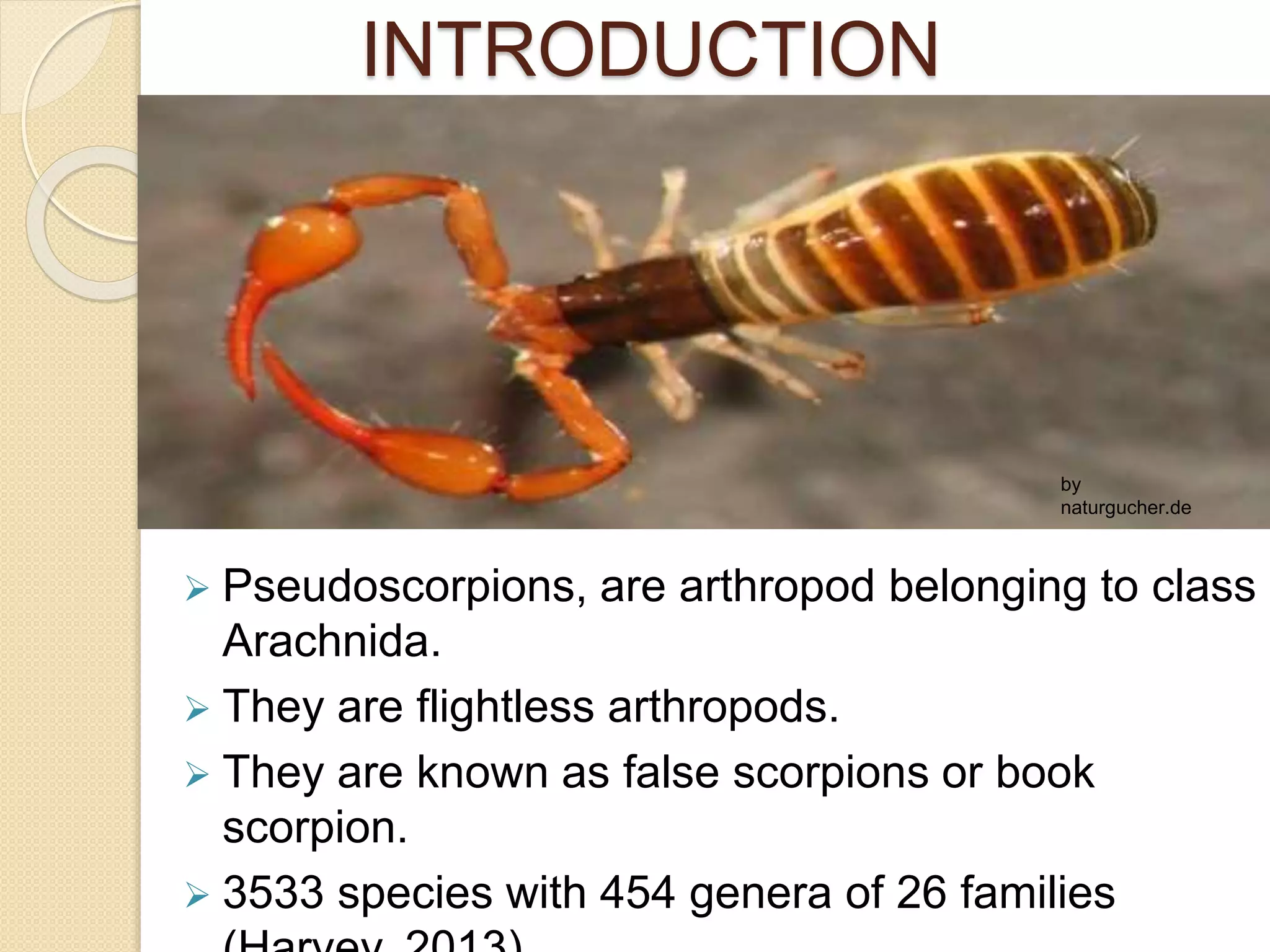
 Pseudoscorpions, are arthropod belonging to class
Arachnida.
 They are flightless arthropods.
 They are known as false scorpions or book
scorpion.
 3533 species with 454 genera of 26 families
by
naturgucher.de
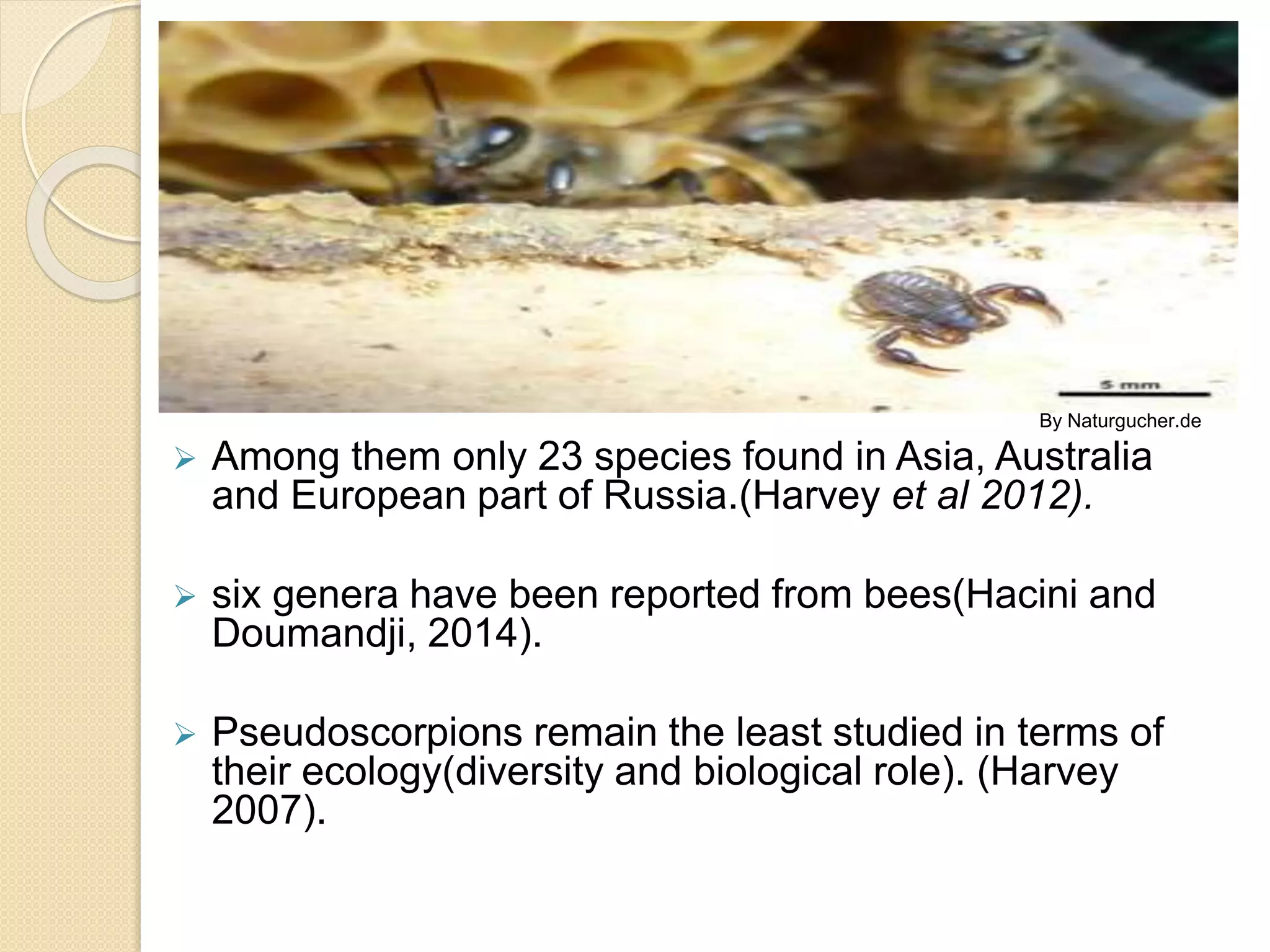
 Among them only 23 species found in Asia, Australia
and European part of Russia.(Harvey et al 2012).
 six genera have been reported from bees(Hacini and
Doumandji, 2014).
 Pseudoscorpions remain the least studied in terms of
their ecology(diversity and biological role). (Harvey
2007).
By Naturgucher.de
OBJECTIVE
 To study distribution of pseudoscorpion in
honey bees colonies.
HYPOTHESIS
Ho: Pseudoscorpions associate
symbiotically with honey bee colonies.
H1: Pseudoscorpions does not
associate symbiotically with honey
bee colonies.
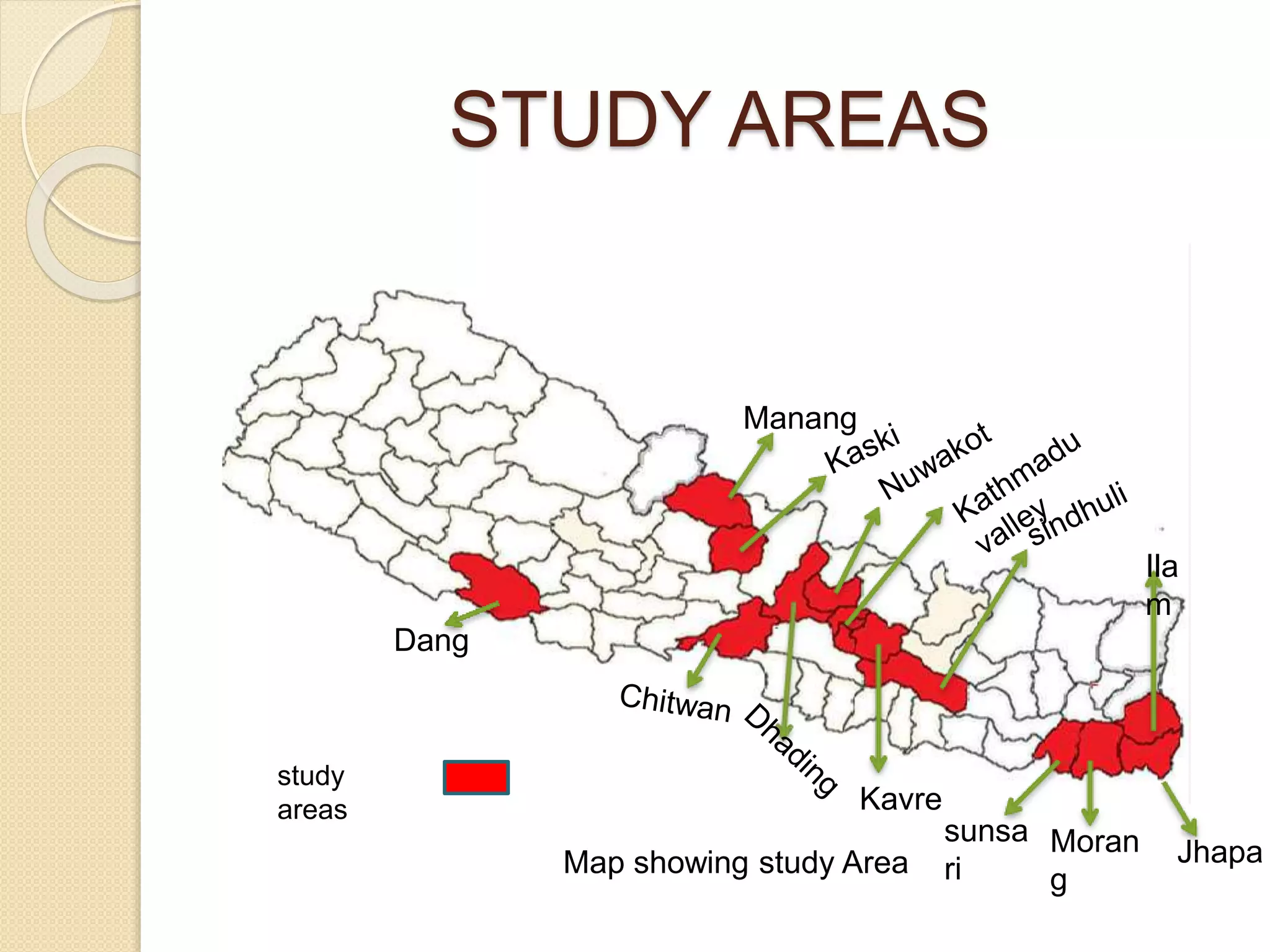
STUDY AREAS
Dang
Manang
Kavre
Ila
m
sunsa
ri
Moran
g
Jhapa
study
areas
Map showing study Area
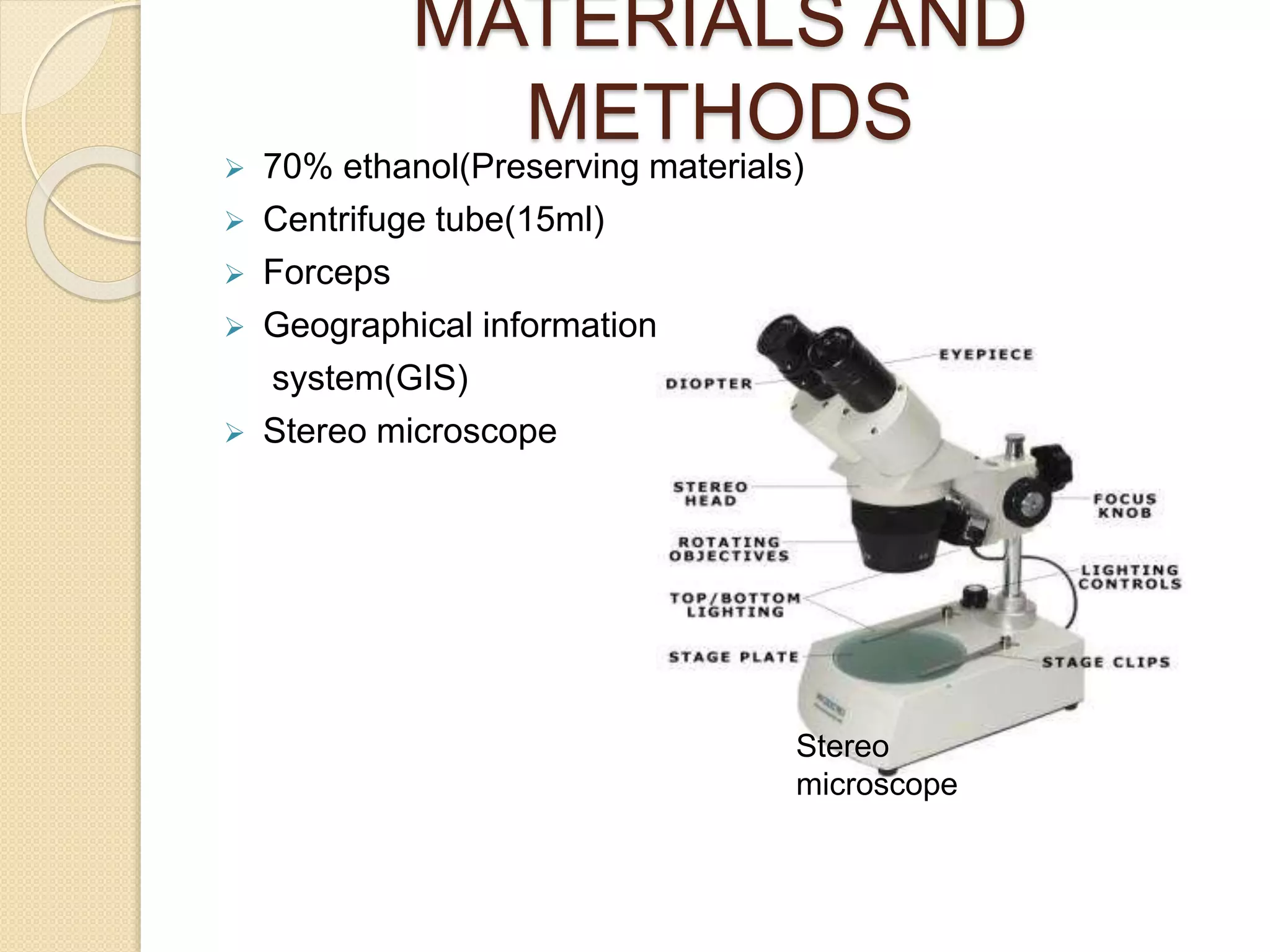
MATERIALS AND
METHODS
 70% ethanol(Preserving materials)
 Centrifuge tube(15ml)
 Forceps
 Geographical information
system(GIS)
 Stereo microscope
Stereo
microscope
METHODS
SURVEY OF PSEUDOSCORPION:
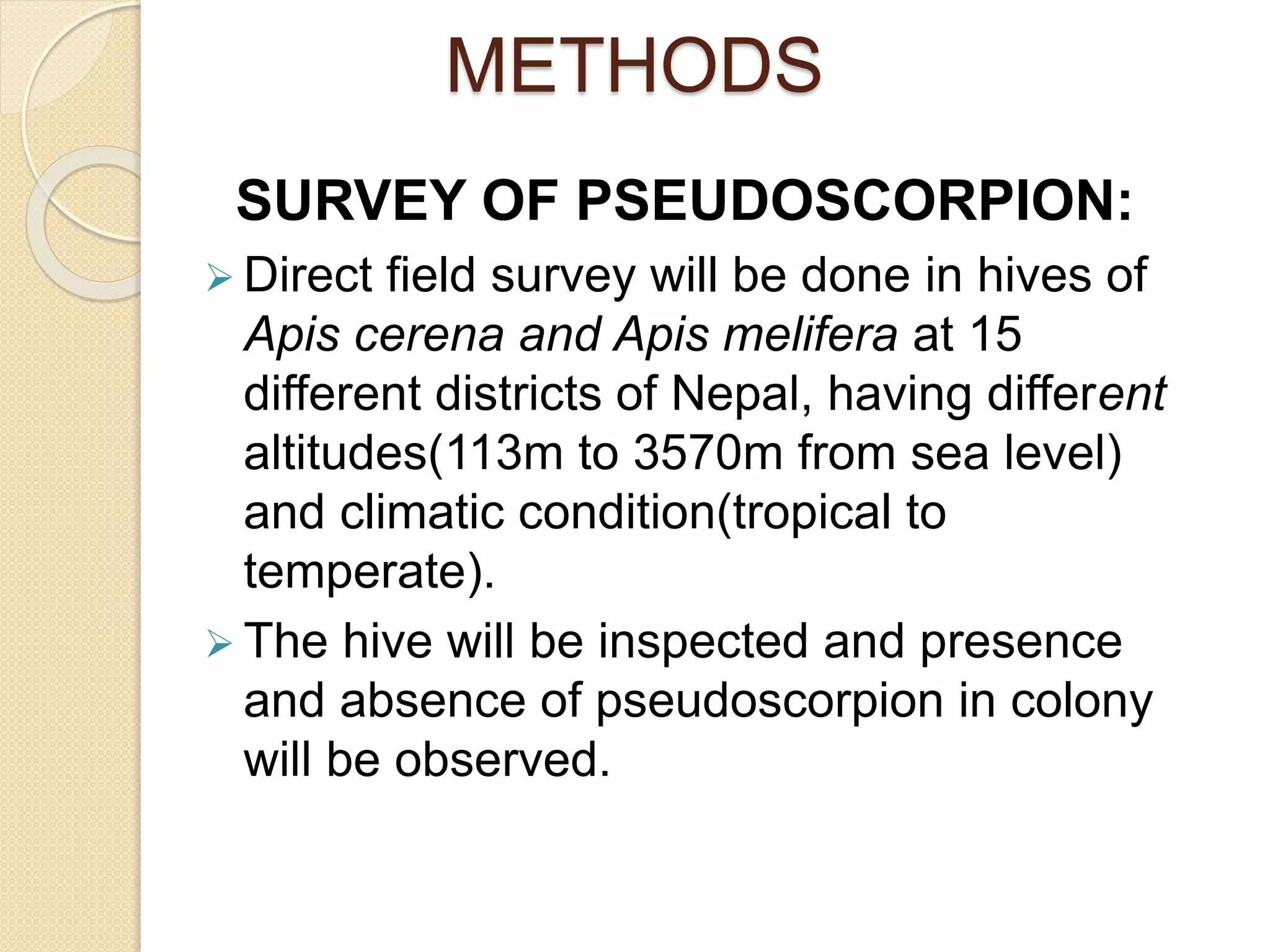
 Direct field survey will be done in hives of
Apis cerena and Apis melifera at 15
different districts of Nepal, having different
altitudes(113m to 3570m from sea level)
and climatic condition(tropical to
temperate).
 The hive will be inspected and presence
and absence of pseudoscorpion in colony
will be observed.
COLLECTION OF PSEUDOSCORPION
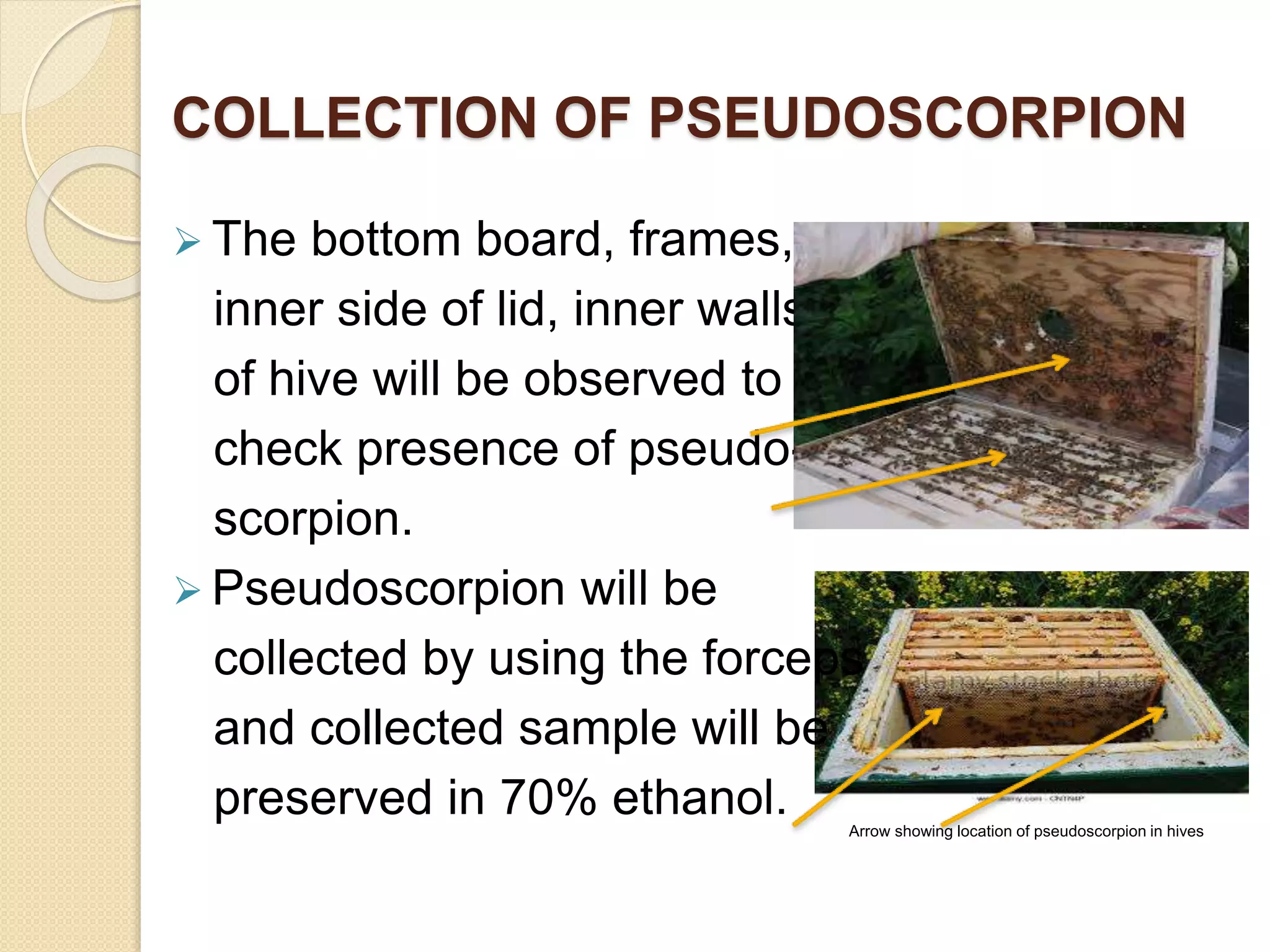
Arrow showing location of pseudoscorpion in hives
 The bottom board, frames,
inner side of lid, inner walls
of hive will be observed to
check presence of pseudo-
scorpion.
 Pseudoscorpion will be
collected by using the forceps
and collected sample will be
preserved in 70% ethanol.
SLIDE PREPARATION &
IDENTIFICATION
Disection will be required for examination
of specimen for taxonomic purposes.
In most cases a chela, pedipalp
chelicera and one leg I and one leg IV
will be removed from the specimen.
Temporary slide mounts will be prepared
using lactic acid (hoff 1949) and
Nelson(2005).
The measurent of morphological study
will be done for identification.
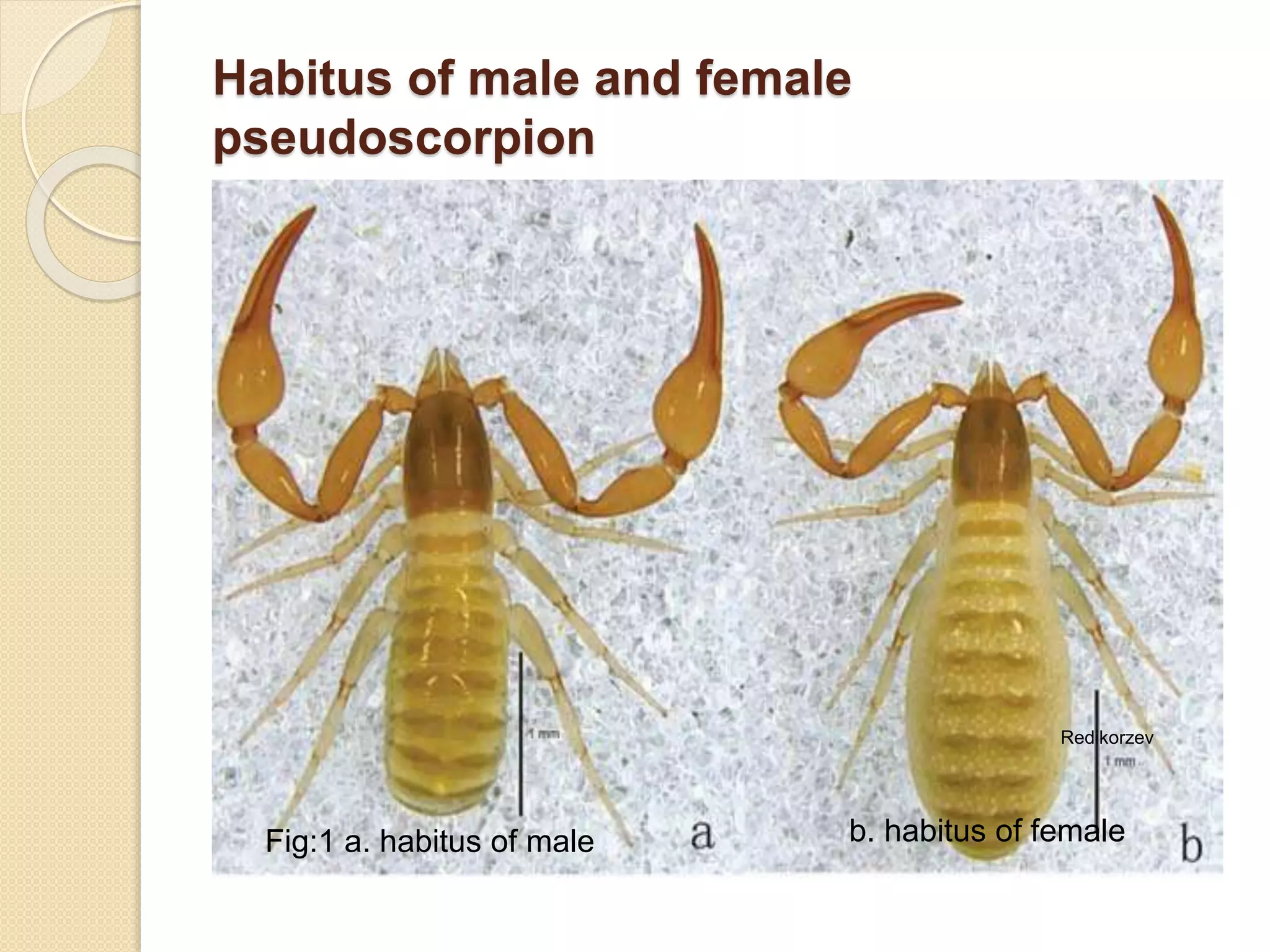
Habitus of male and female
pseudoscorpion
Redikorzev
Fig:1 a. habitus of male b. habitus of female
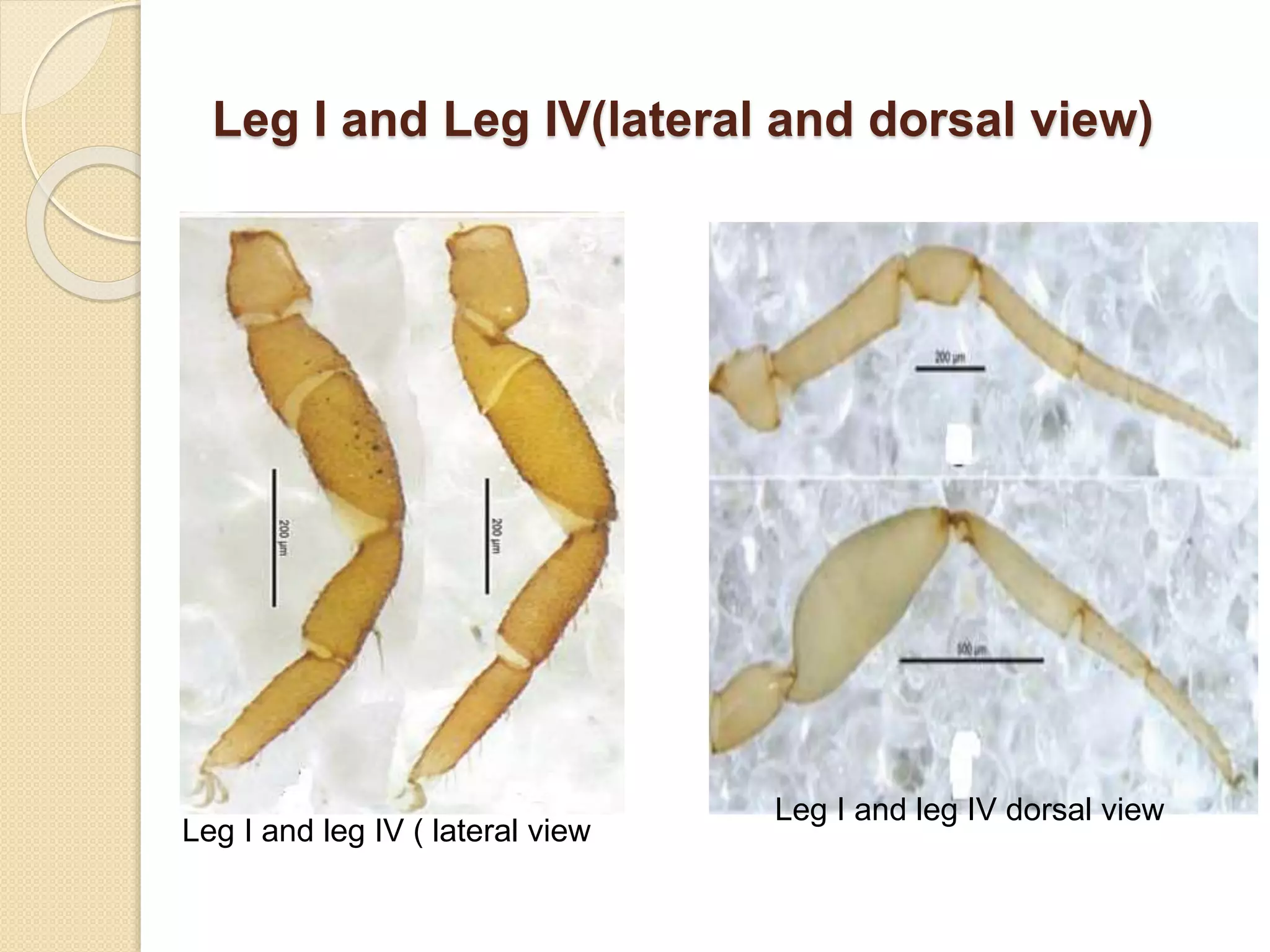
Leg I and Leg IV(lateral and dorsal view)
Leg I and leg IV ( lateral view
Leg I and leg IV dorsal view
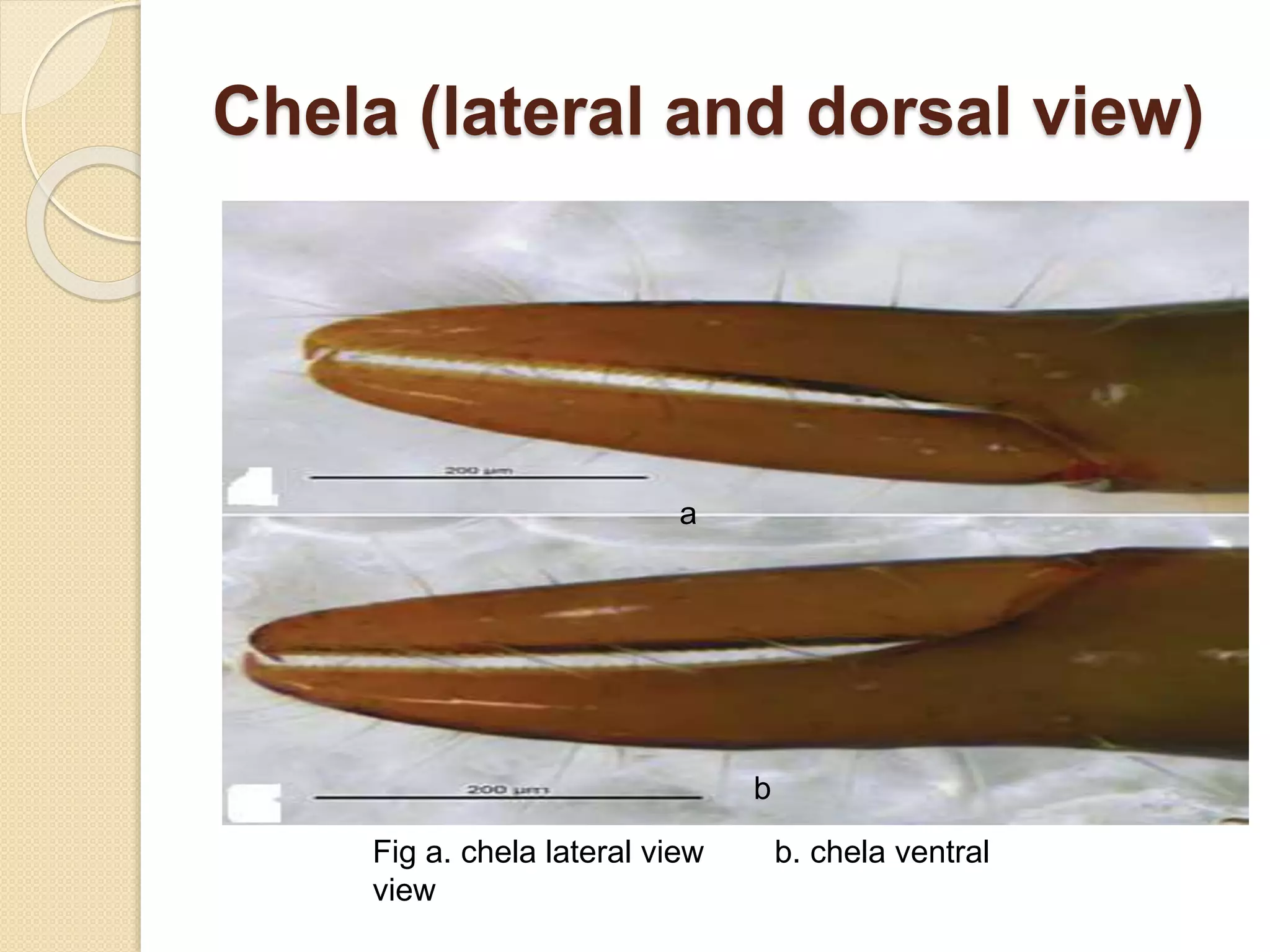
Chela (lateral and dorsal view)
a
b
Fig a. chela lateral view b. chela ventral
view
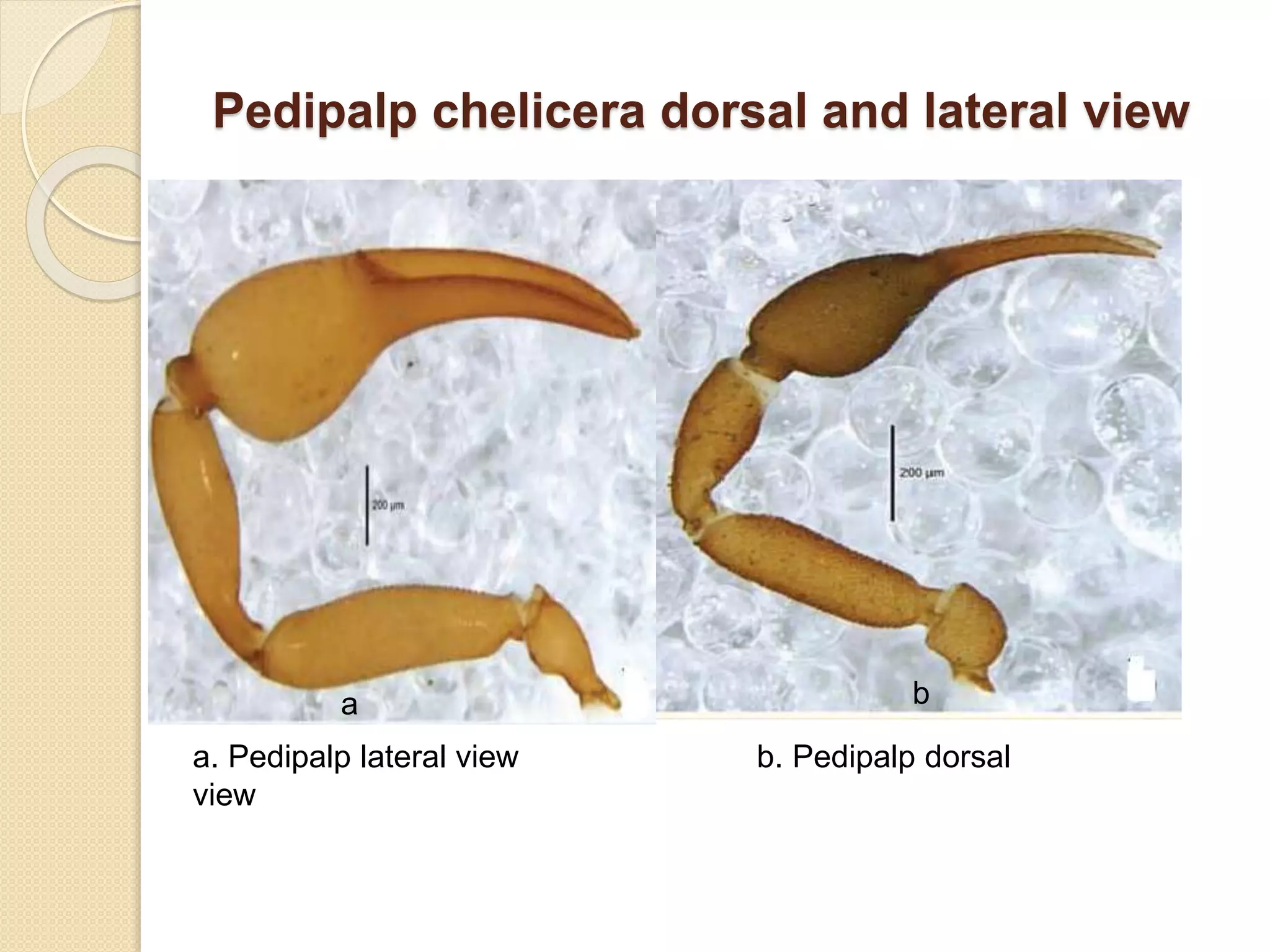
Pedipalp chelicera dorsal and lateral view
a. Pedipalp lateral view b. Pedipalp dorsal
view
a b
EXPECTED RESULT
The distribution pattern of
pseudoscorpion in honey bee colonies
in Nepal will be developed.
 Pseudoscorpion in honey bee colonies
will be identified.
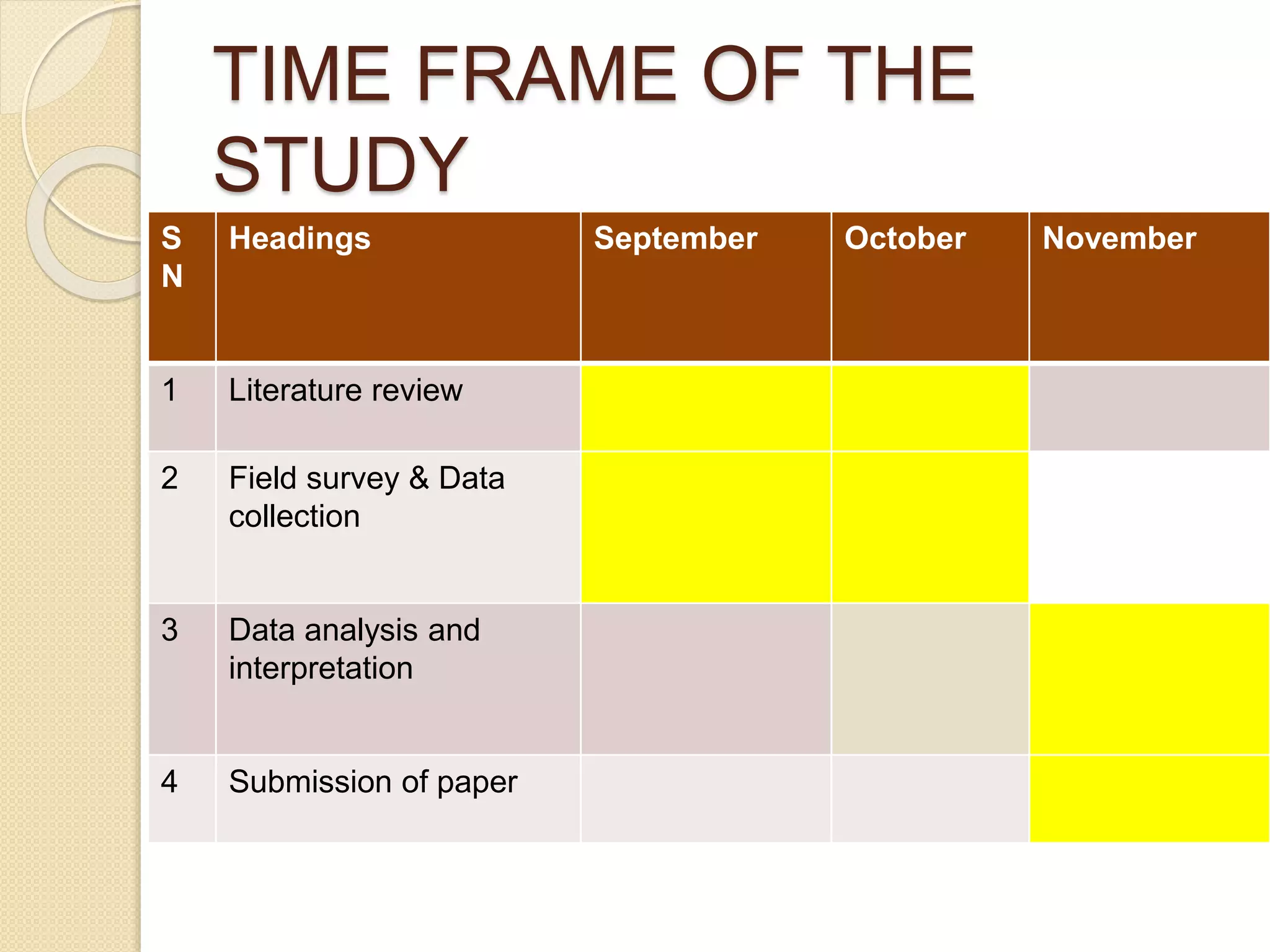
TIME FRAME OF THE
STUDY
S
N
Headings September October November
1 Literature review
2 Field survey & Data
collection
3 Data analysis and
interpretation
4 Submission of paper
REFERENCES
 Sammet, k. and kurine, O. 2016.
Pseudoscorpions(Arachnida Pseudoscorpiones in
Estonia): new records and an annotated checklist.
Journal of entomologica
fennica,Entomologicafennica:Pp149-163.
 Fombang, A.,Nkoba, k, and Raina s.k. 2014.
Occurrence of pseudoscorpions Ellingsenius
ugandanus and paratemnoides pallidus in honey
bee colonies in Cameroon. Journal of Agricultural
research Pp 76-96.
 Thapa, R.,Wongsiri, S., lyeol.,and soo. C.Y. 2015
Predatory behavior of pseudoscorpions
Ellingsenius indicus associated with Himalayan
apis cerena. Journal of apicultural research.
Power point of proposal of Pseudoscorpion in Nepal

Power point of proposal of Pseudoscorpion in Nepal

  • 1.
    DISTRIBUTION OF PSEUDOSCORPION INHONEY BEE COLONIES (APIS MELIFERA AND APIS CERENA ) IN NEPAL. Umesh Acharya
  • 2.
    INTRODUCTION  Pseudoscorpions, arearthropod belonging to class Arachnida.  They are flightless arthropods.  They are known as false scorpions or book scorpion.  3533 species with 454 genera of 26 families by naturgucher.de
  • 3.
     Among themonly 23 species found in Asia, Australia and European part of Russia.(Harvey et al 2012).  six genera have been reported from bees(Hacini and Doumandji, 2014).  Pseudoscorpions remain the least studied in terms of their ecology(diversity and biological role). (Harvey 2007). By Naturgucher.de
  • 4.
    OBJECTIVE  To studydistribution of pseudoscorpion in honey bees colonies.
  • 5.
    HYPOTHESIS Ho: Pseudoscorpions associate symbioticallywith honey bee colonies. H1: Pseudoscorpions does not associate symbiotically with honey bee colonies.
  • 6.
  • 7.
    MATERIALS AND METHODS  70%ethanol(Preserving materials)  Centrifuge tube(15ml)  Forceps  Geographical information system(GIS)  Stereo microscope Stereo microscope
  • 8.
    METHODS SURVEY OF PSEUDOSCORPION: Direct field survey will be done in hives of Apis cerena and Apis melifera at 15 different districts of Nepal, having different altitudes(113m to 3570m from sea level) and climatic condition(tropical to temperate).  The hive will be inspected and presence and absence of pseudoscorpion in colony will be observed.
  • 9.
    COLLECTION OF PSEUDOSCORPION Arrowshowing location of pseudoscorpion in hives  The bottom board, frames, inner side of lid, inner walls of hive will be observed to check presence of pseudo- scorpion.  Pseudoscorpion will be collected by using the forceps and collected sample will be preserved in 70% ethanol.
  • 10.
    SLIDE PREPARATION & IDENTIFICATION Disectionwill be required for examination of specimen for taxonomic purposes. In most cases a chela, pedipalp chelicera and one leg I and one leg IV will be removed from the specimen. Temporary slide mounts will be prepared using lactic acid (hoff 1949) and Nelson(2005). The measurent of morphological study will be done for identification.
  • 11.
    Habitus of maleand female pseudoscorpion Redikorzev Fig:1 a. habitus of male b. habitus of female
  • 12.
    Leg I andLeg IV(lateral and dorsal view) Leg I and leg IV ( lateral view Leg I and leg IV dorsal view
  • 13.
    Chela (lateral anddorsal view) a b Fig a. chela lateral view b. chela ventral view
  • 14.
    Pedipalp chelicera dorsaland lateral view a. Pedipalp lateral view b. Pedipalp dorsal view a b
  • 15.
    EXPECTED RESULT The distributionpattern of pseudoscorpion in honey bee colonies in Nepal will be developed.  Pseudoscorpion in honey bee colonies will be identified.
  • 16.
    TIME FRAME OFTHE STUDY S N Headings September October November 1 Literature review 2 Field survey & Data collection 3 Data analysis and interpretation 4 Submission of paper
  • 17.
    REFERENCES  Sammet, k.and kurine, O. 2016. Pseudoscorpions(Arachnida Pseudoscorpiones in Estonia): new records and an annotated checklist. Journal of entomologica fennica,Entomologicafennica:Pp149-163.  Fombang, A.,Nkoba, k, and Raina s.k. 2014. Occurrence of pseudoscorpions Ellingsenius ugandanus and paratemnoides pallidus in honey bee colonies in Cameroon. Journal of Agricultural research Pp 76-96.  Thapa, R.,Wongsiri, S., lyeol.,and soo. C.Y. 2015 Predatory behavior of pseudoscorpions Ellingsenius indicus associated with Himalayan apis cerena. Journal of apicultural research.