By Venus
(Asst. Professor)
 Meaning of Poverty
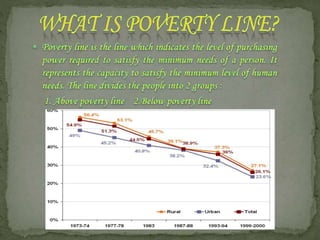
 What is Poverty Line
 Poverty Line in India
 Poverty Trends in India
 Causes of Poverty
 Measures to remove Poverty
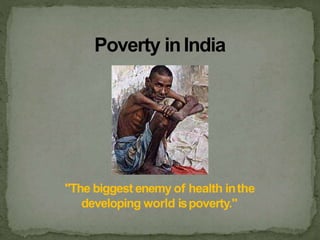
Poverty inIndia
"The biggest enemy of health inthe
developing world ispoverty."
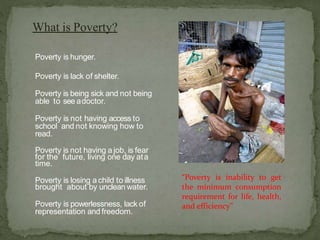
What is Poverty?
Poverty is hunger.
Poverty is lack of shelter.
Poverty is being sick and not being
able to see adoctor.
Poverty is not having access to
school and not knowing how to
read.
Poverty is not having a job, is fear
for the future, living one day ata
time.
Poverty is losing a child to illness
brought about by unclean water.
Poverty is powerlessness, lack of
representation and freedom.
“Poverty is inability to get
the minimum consumption
requirement for life, health,
and efficiency”
RELATIVE POVERTY
 Under Relative poverty the
economic conditions of different
regionsorcountriesis compared. The
capita income and the national
income are the two indicators of
relative poverty.
 According to the UNO those
countries aretreated poorwhose per
capita income is less than US $725
perannum.
ABSOLUTE POVERTY
 Absolute poverty refers to the
measureof poverty , keepingin view
the percapita intake of caloriesand
minimumlevelof consumption.
 Per capita income :
Nationalincome
Population
 Rapid Population Growth
With 135,63,20,297 (1.35 billion approx.) 2 0 1 8 people, India is
currently the world's second largest country.
 Shortage of Capital and Able Entrepreneurship
 Lack of Inclusive Economic Growth
 Sluggish Agricultural Performance
 Non-implementation of Land Reforms
 Unemployment and Under-employment
 Inflation and Food Prices
 Under Utilized Resources
 Social Factors
 Laws of inheritance, caste system, traditions and customs are putting
hindrances
 Political Factors
 the development plans have been guided by political interests
 Unequal Distribution of Income
 Problem of Distribution
 Lack of Industrialisation
 Corruption
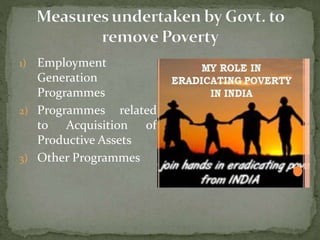
1) Employment
Generation
Programmes
2) Programmes related
to Acquisition of
Productive Assets
3) Other Programmes
2. Programmes related to Acquisition of
Productive Assets
 Differential Rate of Interest Scheme
 Pardhan Mantri Gramodya yojana
 Concessional Loans to start cottage & Small
Industries
3. Other Programmes
 Minimum Needs Programmes
 Annapurna
 Shiksha Sahayog Yojana
 Rural Housing Schemes
 Pradhan Mantri Gramin Awaas Yojana.
 Bharat Nirman
 Indra Gandhi Awas Yojana
Poverty in India 2018

Poverty in India 2018

  • 1.
  • 2.
     Meaning ofPoverty  What is Poverty Line  Poverty Line in India  Poverty Trends in India  Causes of Poverty  Measures to remove Poverty
  • 3.
    Poverty inIndia "The biggestenemy of health inthe developing world ispoverty."
  • 4.
    What is Poverty? Povertyis hunger. Poverty is lack of shelter. Poverty is being sick and not being able to see adoctor. Poverty is not having access to school and not knowing how to read. Poverty is not having a job, is fear for the future, living one day ata time. Poverty is losing a child to illness brought about by unclean water. Poverty is powerlessness, lack of representation and freedom. “Poverty is inability to get the minimum consumption requirement for life, health, and efficiency”
  • 5.
    RELATIVE POVERTY  UnderRelative poverty the economic conditions of different regionsorcountriesis compared. The capita income and the national income are the two indicators of relative poverty.  According to the UNO those countries aretreated poorwhose per capita income is less than US $725 perannum. ABSOLUTE POVERTY  Absolute poverty refers to the measureof poverty , keepingin view the percapita intake of caloriesand minimumlevelof consumption.  Per capita income : Nationalincome Population
  • 7.
     Rapid PopulationGrowth With 135,63,20,297 (1.35 billion approx.) 2 0 1 8 people, India is currently the world's second largest country.  Shortage of Capital and Able Entrepreneurship  Lack of Inclusive Economic Growth  Sluggish Agricultural Performance  Non-implementation of Land Reforms  Unemployment and Under-employment
  • 8.
     Inflation andFood Prices  Under Utilized Resources  Social Factors  Laws of inheritance, caste system, traditions and customs are putting hindrances  Political Factors  the development plans have been guided by political interests  Unequal Distribution of Income  Problem of Distribution  Lack of Industrialisation  Corruption
  • 9.
    1) Employment Generation Programmes 2) Programmesrelated to Acquisition of Productive Assets 3) Other Programmes
  • 10.
    2. Programmes relatedto Acquisition of Productive Assets  Differential Rate of Interest Scheme  Pardhan Mantri Gramodya yojana  Concessional Loans to start cottage & Small Industries 3. Other Programmes  Minimum Needs Programmes  Annapurna  Shiksha Sahayog Yojana  Rural Housing Schemes  Pradhan Mantri Gramin Awaas Yojana.  Bharat Nirman  Indra Gandhi Awas Yojana