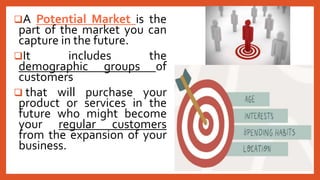
A Potential Market is the
part of the market you can
capture in the future.
It includes the
demographic groups of
customers
 that will purchase your
product or services in the
future who might become
your regular customers
from the expansion of your
business.
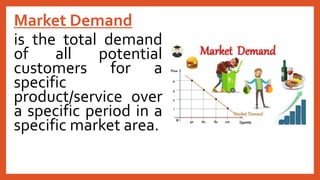
Market Demand
is the total demand
of all potential
customers for a
specific
product/service over
a specific period in a
specific market area.
Value-
consumers have different needs
and buying capacities,
consumers assign varying
values on the same product or
service.
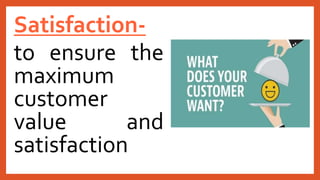
Satisfaction-
to ensure the
maximum
customer
value and
satisfaction
Products are considered tangible
goods wherein the goods can be seen
and touched.
Services are the intangible goods
wherein you will be paid according to
your profession, skills, and talents.
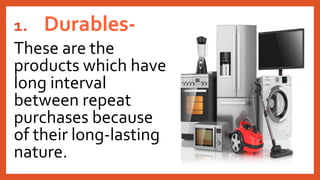
1. Durables-
These are the
products which have
long interval
between repeat
purchases because
of their long-lasting
nature.
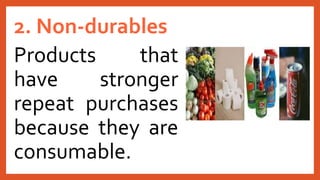
2. Non-durables
Products that
have stronger
repeat purchases
because they are
consumable.
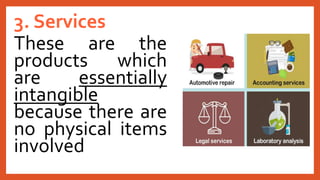
3. Services
These are the
products which
are essentially
intangible
because there are
no physical items
involved
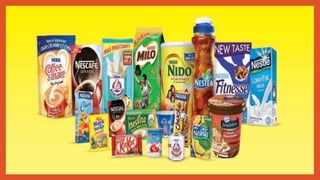
1. Convenience Products
Have the lowest risk and lowest effort
in buying the products because
consumers will not spend a lot of time
or money in buying those products and
can be sold by wholesales.
For instance, Toothpaste, toilet paper,
drinks, food, and deodorants, etc.
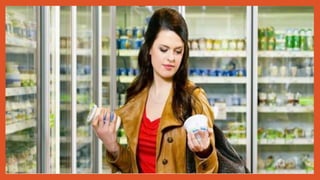
2. Preference Products
are consumer goods that have the
specific preferences for brands or
suppliers but are willing to make
substitution when necessary.
Ex. Palmolive shampoo
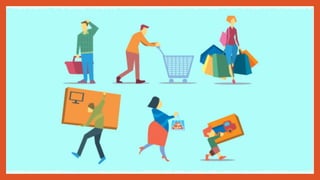
3. Shopping Products
are products that consumers feel are worth the
time and effort to compare with other competing
products.
(example: tiles)
•They are durable
•The rate of purchase is infrequent
•Opportunity cost is high
•Less availability
4. Specialty Products
specialty goods have rare
features and unique designs
and they don’t have
homogenous products.
For instance, designer clothing,
high specification laptop, sports
Potential Market.pptx

Potential Market.pptx

  • 2.
    A Potential Marketis the part of the market you can capture in the future. It includes the demographic groups of customers  that will purchase your product or services in the future who might become your regular customers from the expansion of your business.
  • 3.
    Market Demand is thetotal demand of all potential customers for a specific product/service over a specific period in a specific market area.
  • 4.
    Value- consumers have differentneeds and buying capacities, consumers assign varying values on the same product or service.
  • 6.
  • 7.
    Products are consideredtangible goods wherein the goods can be seen and touched. Services are the intangible goods wherein you will be paid according to your profession, skills, and talents.
  • 9.
    1. Durables- These arethe products which have long interval between repeat purchases because of their long-lasting nature.
  • 10.
    2. Non-durables Products that havestronger repeat purchases because they are consumable.
  • 11.
    3. Services These arethe products which are essentially intangible because there are no physical items involved
  • 13.
    1. Convenience Products Havethe lowest risk and lowest effort in buying the products because consumers will not spend a lot of time or money in buying those products and can be sold by wholesales. For instance, Toothpaste, toilet paper, drinks, food, and deodorants, etc.
  • 15.
    2. Preference Products areconsumer goods that have the specific preferences for brands or suppliers but are willing to make substitution when necessary. Ex. Palmolive shampoo
  • 17.
    3. Shopping Products areproducts that consumers feel are worth the time and effort to compare with other competing products. (example: tiles) •They are durable •The rate of purchase is infrequent •Opportunity cost is high •Less availability
  • 19.
    4. Specialty Products specialtygoods have rare features and unique designs and they don’t have homogenous products. For instance, designer clothing, high specification laptop, sports