Post-Harvest Handling and
Transportation Methods that
Allow Small-Scale Growers To
Deliver Top-Quality Produce
Jeff Kindhart, University of
Illinois
Why are good post harvest
practices important?
High-quality, disease free produce
with a good shelf life is a result of
good production practices, proper
handling during harvest, and
appropriate post harvest handling
and storage. ---- ATTRA, Post
harvest handling of fruits and
vegetables
Maintain Quality

   Appearance
   Texture
   Flavor
   Nutritive value
Protect Food Safety

   Maintain good sanitation
   Avoid introduction of pathogens
   Keep from spoilage
Reduce Losses Between
Harvest and Consumption
   Improves efficiency
   Improves profitability
Process begins the moment
produce is harvested
   Avoid rough handling
    – Train workers – what and how
   Use appropriate harvesting container
   Try to avoid harvest in excessive heat
   Keep product as cool as possible while
    awaiting transport to the packing shed
    – Shade
    – Get to the shed
Packing Methods

   None ????

   Field packing

   Packing shed
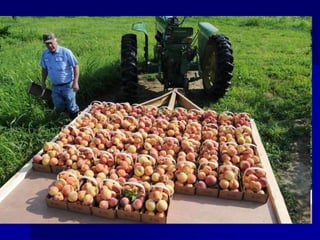
Field packing

   Picking into final package
    – Reduced handling and associated damage
    – Reduces labor cost
    – Strawberries and peaches


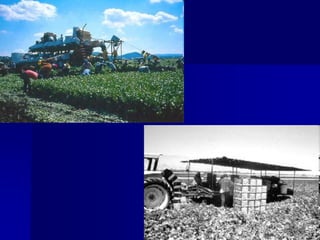
   Self propelled field packing systems
    – Peppers and snap beans
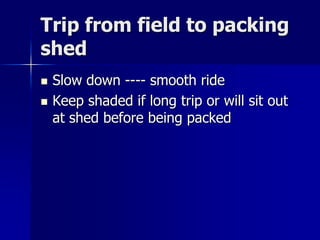
Trip from field to packing
shed
   Slow down ---- smooth ride
   Keep shaded if long trip or will sit out
    at shed before being packed
Packing Shed
Packing Shed

   Roof with or without sides
   Packing line
   Cold storage area
   Loading dock
Packing line

   Should be appropriate for size of your
    operation
   Should be designed to work with
    commodity you grow
   Vary widely by producer
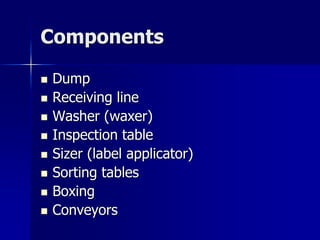
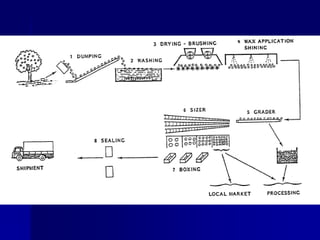
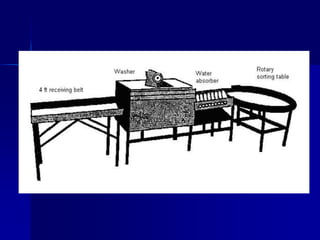
Components

   Dump
   Receiving line
   Washer (waxer)
   Inspection table
   Sizer (label applicator)
   Sorting tables
   Boxing
   Conveyors
Cold Storage

   Most important factor for maintaining
    quality
    – Removes field heat
    – Lowers respiration
    – Reduces water loss
    – Decreases sensitivity to ethylene
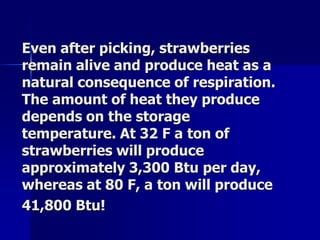
Even after picking, strawberries
remain alive and produce heat as a
natural consequence of respiration.
The amount of heat they produce
depends on the storage
temperature. At 32 F a ton of
strawberries will produce
approximately 3,300 Btu per day,
whereas at 80 F, a ton will produce
41,800 Btu!
Why cool?

   Suppress enzymatic degradation and
    respiratory activity (softening)
   Slow or inhibit water loss (wilting)
   Slow or inhibit the growth of decay-
    producing microorganisms (molds and
    bacteria)
   Reduce production of ethylene (a
    ripening agent) or minimize the
    product's reaction to ethylene.
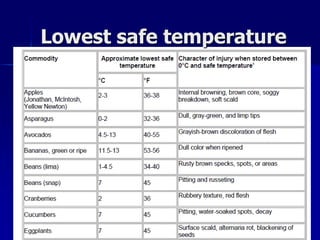
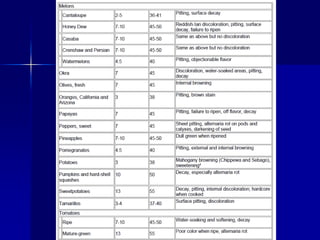
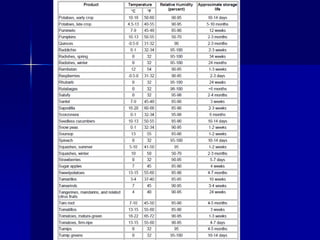
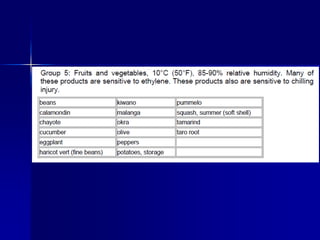
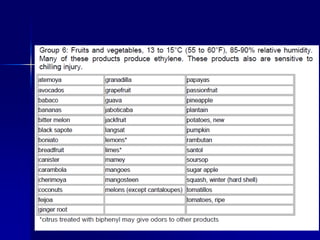
Lowest safe temperature
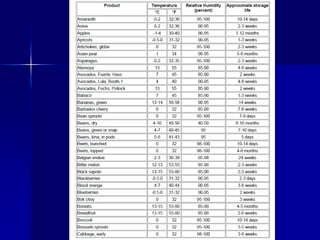
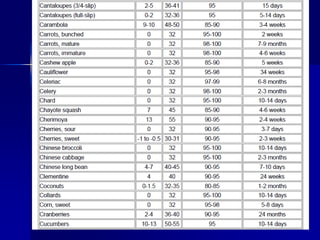
Cold storage
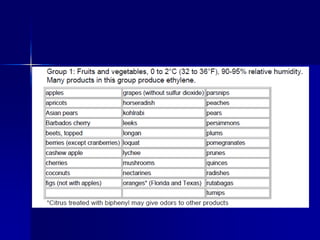
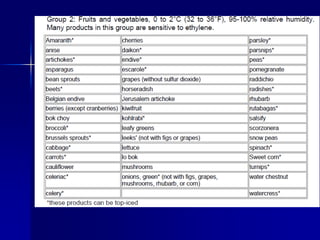
compatibility
   Ethylene
    – Producer
    – Sensative
   Similar temperature
   Similar relative humidity
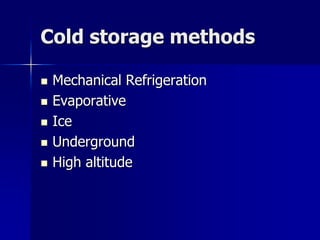
Cold storage methods

   Mechanical Refrigeration
   Evaporative
   Ice
   Underground
   High altitude
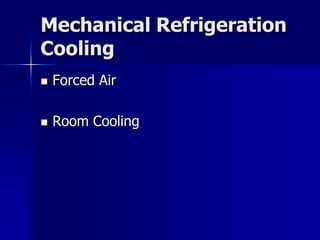
Mechanical Refrigeration
Cooling
   Forced Air

   Room Cooling
Introduction to
       Proper Postharvest Cooling and Handling Methods


                                                  Prepared by
                         M. D. Boyette, Extension Agricultural Engineering Specialist
                                L. G. Wilson, Extension Horticulture Specialist
                                  E. A. Estes, Extension Marketing Specialist
  Sponsored by the Energy Division, North Carolina Department of Commerce, with petroleum violation
escrow funds, in cooperation with the Agricultural Extension Service, North Carolina State University. Any
opinions, findings, conclusions, or recommendations expressed herein are those of the authors and do not
             reflect the views of the Energy Division, North Carolina Department of Commerce.
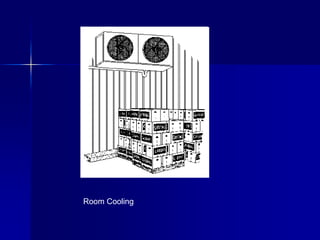
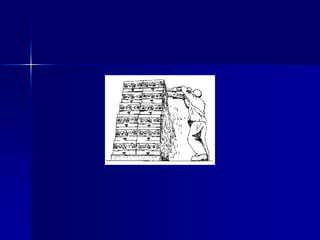
Room Cooling
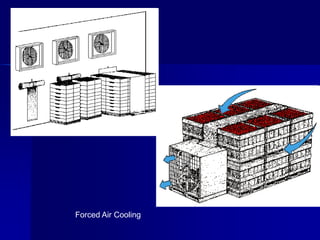
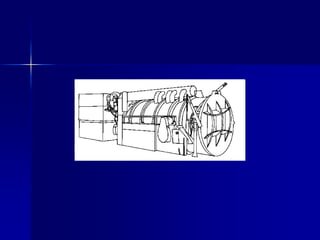
Forced Air Cooling
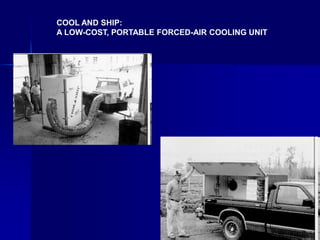
COOL AND SHIP:
A LOW-COST, PORTABLE FORCED-AIR COOLING UNIT
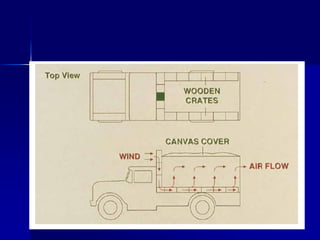
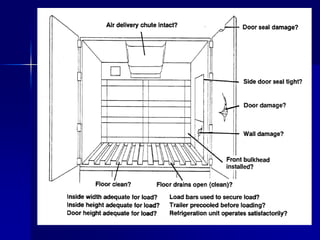
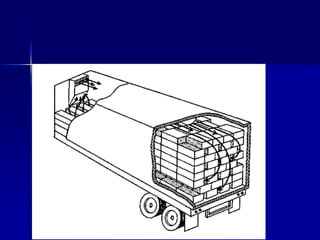
Transportation Methods

   Open Vehicle
   Refrigerated Vehicle
    – Box Truck
    – Tractor Trailer
Resources
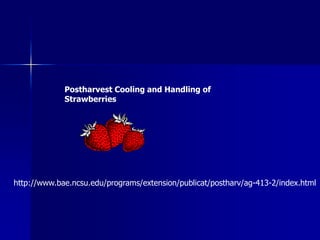
Postharvest Cooling and Handling of
             Strawberries


http://www.bae.ncsu.edu/programs/extension/publicat/postharv/ag-413-2/index.html

Post Harvest Handling And Transportation

  • 1.
    Post-Harvest Handling and TransportationMethods that Allow Small-Scale Growers To Deliver Top-Quality Produce Jeff Kindhart, University of Illinois
  • 2.
    Why are goodpost harvest practices important?
  • 3.
    High-quality, disease freeproduce with a good shelf life is a result of good production practices, proper handling during harvest, and appropriate post harvest handling and storage. ---- ATTRA, Post harvest handling of fruits and vegetables
  • 6.
    Maintain Quality  Appearance  Texture  Flavor  Nutritive value
  • 11.
    Protect Food Safety  Maintain good sanitation  Avoid introduction of pathogens  Keep from spoilage
  • 12.
    Reduce Losses Between Harvestand Consumption  Improves efficiency  Improves profitability
  • 13.
    Process begins themoment produce is harvested  Avoid rough handling – Train workers – what and how  Use appropriate harvesting container  Try to avoid harvest in excessive heat  Keep product as cool as possible while awaiting transport to the packing shed – Shade – Get to the shed
  • 14.
    Packing Methods  None ????  Field packing  Packing shed
  • 15.
    Field packing  Picking into final package – Reduced handling and associated damage – Reduces labor cost – Strawberries and peaches  Self propelled field packing systems – Peppers and snap beans
  • 20.
    Trip from fieldto packing shed  Slow down ---- smooth ride  Keep shaded if long trip or will sit out at shed before being packed
  • 21.
  • 22.
    Packing Shed  Roof with or without sides  Packing line  Cold storage area  Loading dock
  • 23.
    Packing line  Should be appropriate for size of your operation  Should be designed to work with commodity you grow  Vary widely by producer
  • 24.
    Components  Dump  Receiving line  Washer (waxer)  Inspection table  Sizer (label applicator)  Sorting tables  Boxing  Conveyors
  • 30.
    Cold Storage  Most important factor for maintaining quality – Removes field heat – Lowers respiration – Reduces water loss – Decreases sensitivity to ethylene
  • 31.
    Even after picking,strawberries remain alive and produce heat as a natural consequence of respiration. The amount of heat they produce depends on the storage temperature. At 32 F a ton of strawberries will produce approximately 3,300 Btu per day, whereas at 80 F, a ton will produce 41,800 Btu!
  • 33.
    Why cool?  Suppress enzymatic degradation and respiratory activity (softening)  Slow or inhibit water loss (wilting)  Slow or inhibit the growth of decay- producing microorganisms (molds and bacteria)  Reduce production of ethylene (a ripening agent) or minimize the product's reaction to ethylene.
  • 34.
  • 39.
    Cold storage compatibility  Ethylene – Producer – Sensative  Similar temperature  Similar relative humidity
  • 44.
    Cold storage methods  Mechanical Refrigeration  Evaporative  Ice  Underground  High altitude
  • 45.
    Mechanical Refrigeration Cooling  Forced Air  Room Cooling
  • 46.
    Introduction to Proper Postharvest Cooling and Handling Methods Prepared by M. D. Boyette, Extension Agricultural Engineering Specialist L. G. Wilson, Extension Horticulture Specialist E. A. Estes, Extension Marketing Specialist Sponsored by the Energy Division, North Carolina Department of Commerce, with petroleum violation escrow funds, in cooperation with the Agricultural Extension Service, North Carolina State University. Any opinions, findings, conclusions, or recommendations expressed herein are those of the authors and do not reflect the views of the Energy Division, North Carolina Department of Commerce.
  • 47.
  • 48.
  • 49.
    COOL AND SHIP: ALOW-COST, PORTABLE FORCED-AIR COOLING UNIT
  • 54.
    Transportation Methods  Open Vehicle  Refrigerated Vehicle – Box Truck – Tractor Trailer
  • 58.
  • 62.
    Postharvest Cooling andHandling of Strawberries http://www.bae.ncsu.edu/programs/extension/publicat/postharv/ag-413-2/index.html