GOALS:
 Goals are also called as objectives.
 Goals are desired outcomes or targets.
 They guide management decisions and form the criteria against
which the work results are measured.
TYPES OF GOALS:
 Financial goal
 Strategic goal
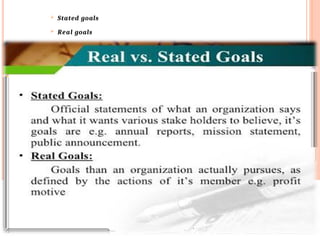
 Stated goals
 Real goals
“To bring inspiration and innovation to every athlete in the
world.”
“To be world’s high performance benchmark independent oil
and gas company”
“To be a global transformation partner”
PLANNING PROCESS:
 Planning is a process which contains number of steps within it.
 Planning process differs from organization to organization
and from objective to objective.
 With some minor modifications, process is applied for all types of
plans.
PLANNING PROCESS:
PLANNING PROCESS:
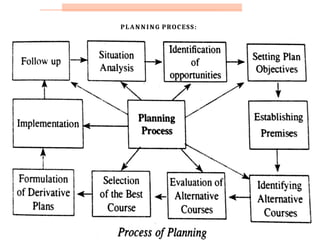
1. Situation analysis:
 Manager should collate all the information relevant to a given
activity for which planning is to made.
 Should analyze past experience, current trends and future scope.
 Helps to bring the issues and problems related to activity
to light.
PLANNING PROCESS:
2. Identification of opportunities:
 The exact planning starts.
 Identify the opportunity and carry out SWOT analysis.
 If the organization gets positive result, it would pass on to next
stage, else the opportunity would be dropped.
PLANNING PROCESS:
3. Objective setting:
 Represents the destination of an organization.
 Objectives of an organization and various departments are fixed.
 Timeline to finish the objectives are also fixed during this stage.
PLANNING PROCESS:
4. Planning premises:
 Denotes the circumstances under which the planning will
be undertaken.
 It represents the assumptions that are to be considered.
PLANNING PROCESS:
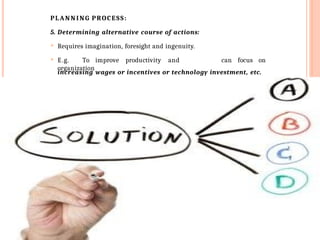
5. Determining alternative course of actions:
 Requires imagination, foresight and ingenuity.
 E.g. To improve productivity and
organization
can focus on
increasing wages or incentives or technology investment, etc.
PLANNING PROCESS:
6. Evaluation of alternatives:
 Analyzing various aspects and results of all the alternatives.
 Involves micro analysis of all the alternatives.
PLANNING PROCESS:
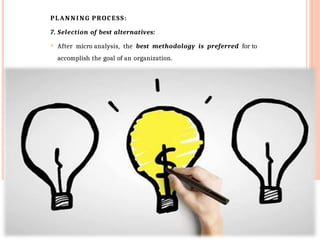
7. Selection of best alternatives:
 After micro analysis, the best methodology is preferred for to
accomplish the goal of an organization.
PLANNING PROCESS:
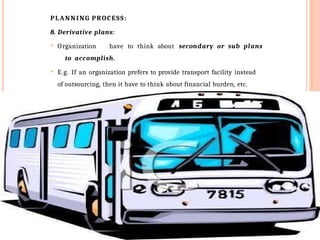
8. Derivative plans:
 Organization have to think about secondary or sub plans
to accomplish.
 E.g. If an organization prefers to provide transport facility instead
of outsourcing, then it have to think about financial burden, etc.
PLANNING PROCESS:
9. Implementation of plans:
 Communicating plan to all employees and providing instructions.
 Deploying facilities like raw materials, man power, machinery,
etc.
 Linking implementation with reward system and
ensuring execution.
PLANNING PROCESS:
10. Follow up:
 Monitoring the
consequences
of implementation, so that
necessary corrective actions can be to fine tune the plan.
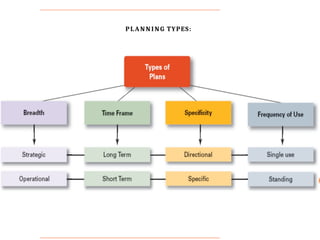
PLANNING TYPES:

Planning Process and different types of plan.pptx

  • 2.
    GOALS:  Goals arealso called as objectives.  Goals are desired outcomes or targets.  They guide management decisions and form the criteria against which the work results are measured.
  • 3.
    TYPES OF GOALS: Financial goal  Strategic goal
  • 4.
  • 5.
    “To bring inspirationand innovation to every athlete in the world.”
  • 6.
    “To be world’shigh performance benchmark independent oil and gas company”
  • 7.
    “To be aglobal transformation partner”
  • 9.
    PLANNING PROCESS:  Planningis a process which contains number of steps within it.  Planning process differs from organization to organization and from objective to objective.  With some minor modifications, process is applied for all types of plans.
  • 10.
  • 11.
    PLANNING PROCESS: 1. Situationanalysis:  Manager should collate all the information relevant to a given activity for which planning is to made.  Should analyze past experience, current trends and future scope.  Helps to bring the issues and problems related to activity to light.
  • 12.
    PLANNING PROCESS: 2. Identificationof opportunities:  The exact planning starts.  Identify the opportunity and carry out SWOT analysis.  If the organization gets positive result, it would pass on to next stage, else the opportunity would be dropped.
  • 13.
    PLANNING PROCESS: 3. Objectivesetting:  Represents the destination of an organization.  Objectives of an organization and various departments are fixed.  Timeline to finish the objectives are also fixed during this stage.
  • 14.
    PLANNING PROCESS: 4. Planningpremises:  Denotes the circumstances under which the planning will be undertaken.  It represents the assumptions that are to be considered.
  • 15.
    PLANNING PROCESS: 5. Determiningalternative course of actions:  Requires imagination, foresight and ingenuity.  E.g. To improve productivity and organization can focus on increasing wages or incentives or technology investment, etc.
  • 16.
    PLANNING PROCESS: 6. Evaluationof alternatives:  Analyzing various aspects and results of all the alternatives.  Involves micro analysis of all the alternatives.
  • 17.
    PLANNING PROCESS: 7. Selectionof best alternatives:  After micro analysis, the best methodology is preferred for to accomplish the goal of an organization.
  • 18.
    PLANNING PROCESS: 8. Derivativeplans:  Organization have to think about secondary or sub plans to accomplish.  E.g. If an organization prefers to provide transport facility instead of outsourcing, then it have to think about financial burden, etc.
  • 19.
    PLANNING PROCESS: 9. Implementationof plans:  Communicating plan to all employees and providing instructions.  Deploying facilities like raw materials, man power, machinery, etc.  Linking implementation with reward system and ensuring execution.
  • 20.
    PLANNING PROCESS: 10. Followup:  Monitoring the consequences of implementation, so that necessary corrective actions can be to fine tune the plan.
  • 21.