Planning in Engineering
Management
Name: Salim Al-Dyyaeni
ID:201810467
Instructor: Hasan A.Zidan
1
Engineering Management (ELE410)
Table of Contents
1. Introduction to Planning
2. Importance of Planning
3. Types of Planning
4. Steps in the Planning Process
5. Tools for Planning
6. Ethical Considerations in Planning
7. Challenges in Planning
8. Future of Planning in Engineering
9. Conclusion
2
Introduction to Planning
• What is planning?
• Definition of planning in engineering management.
• Overview of its role and significance.
• Brief on how planning interacts with other
management functions.
3
Importance of
Planning
Why planning is crucial in
engineering projects?
• Ensures resources are used efficiently
• Helps anticipate problems and adapt to
changes
• Improves risk management in complex
projects
• Supports the achievement of broader
engineering goals
4
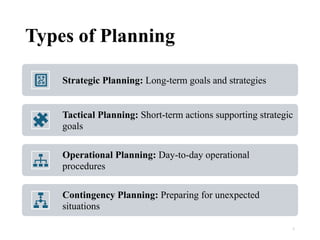
Types of Planning
Strategic Planning: Long-term goals and strategies
Tactical Planning: Short-term actions supporting strategic
goals
Operational Planning: Day-to-day operational
procedures
Contingency Planning: Preparing for unexpected
situations
5
Steps in Planning Process
Identify Objectives:
Clearly define project
goals
Gather Data: Collect
data relevant to the
project
Evaluate Alternatives:
Assess different
approaches
Implement Plan:
Execute the chosen
strategy
Monitor and Control:
Regularly track
progress and make
necessary adjustments
6
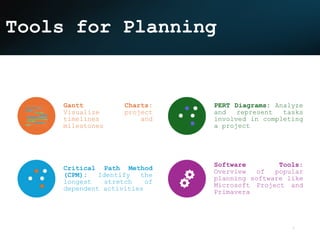
Tools for Planning
Gantt Charts:
Visualize project
timelines and
milestones
PERT Diagrams: Analyze
and represent tasks
involved in completing
a project
Critical Path Method
(CPM): Identify the
longest stretch of
dependent activities
Software Tools:
Overview of popular
planning software like
Microsoft Project and
Primavera
7
Ethical Considerations in Engineering
Planning
Challenges in
Ethical
Engineering
Planning
•Balancing cost, time, and ethical implications
•Dealing with conflicting interests and expectations among stakeholders
•Adapting to evolving ethical standards and regulations
Key Ethical
Considerations
Safety: Prioritizing the safety of both the end-users and the project team
Sustainability: Planning with a commitment to environmental
sustainability and resource conservation
Transparency: Maintaining transparency with stakeholders throughout
the project lifecycle
Compliance and Integrity: Adhering to legal standards and ethical
guidelines; avoiding corruption and ensuring fair practices
8
Challenges
in Planning
Common obstacles and
how to overcome them in
engineering projects:
 Handling
uncertainties and
risk factors
 Dealing with
resource
constraints
 Aligning team and
stakeholder
expectations. 9
Future of Planning in
Engineering
Emerging trends and technologies
affecting planning in engineering
 Technological advancements
impacting planning, like AI and big
data
 Increasing importance of
sustainability in planning
 Shifts in global engineering
standards and practices
10
Conclusi
on
11
Planning is a critical skill in
engineering management
that ensures projects are
completed on time, within
budget, and according to
specifications
Effective planning not only
helps in navigating
complexities and
uncertainties but also in
aligning various project
stakeholders and adapting to
changing conditions
As technology evolves, so
too does the landscape of
planning, necessitating
ongoing learning and
adaptation by professionals
in the field

Planning in Engineering Managements.pptx

  • 1.
    Planning in Engineering Management Name:Salim Al-Dyyaeni ID:201810467 Instructor: Hasan A.Zidan 1 Engineering Management (ELE410)
  • 2.
    Table of Contents 1.Introduction to Planning 2. Importance of Planning 3. Types of Planning 4. Steps in the Planning Process 5. Tools for Planning 6. Ethical Considerations in Planning 7. Challenges in Planning 8. Future of Planning in Engineering 9. Conclusion 2
  • 3.
    Introduction to Planning •What is planning? • Definition of planning in engineering management. • Overview of its role and significance. • Brief on how planning interacts with other management functions. 3
  • 4.
    Importance of Planning Why planningis crucial in engineering projects? • Ensures resources are used efficiently • Helps anticipate problems and adapt to changes • Improves risk management in complex projects • Supports the achievement of broader engineering goals 4
  • 5.
    Types of Planning StrategicPlanning: Long-term goals and strategies Tactical Planning: Short-term actions supporting strategic goals Operational Planning: Day-to-day operational procedures Contingency Planning: Preparing for unexpected situations 5
  • 6.
    Steps in PlanningProcess Identify Objectives: Clearly define project goals Gather Data: Collect data relevant to the project Evaluate Alternatives: Assess different approaches Implement Plan: Execute the chosen strategy Monitor and Control: Regularly track progress and make necessary adjustments 6
  • 7.
    Tools for Planning GanttCharts: Visualize project timelines and milestones PERT Diagrams: Analyze and represent tasks involved in completing a project Critical Path Method (CPM): Identify the longest stretch of dependent activities Software Tools: Overview of popular planning software like Microsoft Project and Primavera 7
  • 8.
    Ethical Considerations inEngineering Planning Challenges in Ethical Engineering Planning •Balancing cost, time, and ethical implications •Dealing with conflicting interests and expectations among stakeholders •Adapting to evolving ethical standards and regulations Key Ethical Considerations Safety: Prioritizing the safety of both the end-users and the project team Sustainability: Planning with a commitment to environmental sustainability and resource conservation Transparency: Maintaining transparency with stakeholders throughout the project lifecycle Compliance and Integrity: Adhering to legal standards and ethical guidelines; avoiding corruption and ensuring fair practices 8
  • 9.
    Challenges in Planning Common obstaclesand how to overcome them in engineering projects:  Handling uncertainties and risk factors  Dealing with resource constraints  Aligning team and stakeholder expectations. 9
  • 10.
    Future of Planningin Engineering Emerging trends and technologies affecting planning in engineering  Technological advancements impacting planning, like AI and big data  Increasing importance of sustainability in planning  Shifts in global engineering standards and practices 10
  • 11.
    Conclusi on 11 Planning is acritical skill in engineering management that ensures projects are completed on time, within budget, and according to specifications Effective planning not only helps in navigating complexities and uncertainties but also in aligning various project stakeholders and adapting to changing conditions As technology evolves, so too does the landscape of planning, necessitating ongoing learning and adaptation by professionals in the field