Soft Data-Augmented Risk Assessment and Automated Course
of Action Generation for Maritime Situational Awareness
by
Alex Plachkov
A thesis submitted to the
Faculty of Graduate and Postdoctoral Studies
in partial fulfillment of the requirements for the degree of
Master of Applied Science
in Electrical and Computer Engineering
Ottawa-Carleton Institute of Electrical and Computer Engineering
School of Electrical Engineering and Computer Science
Faculty of Engineering
University of Ottawa
© Alex Plachkov, Ottawa, Canada, 2016
ii
Abstract
This thesis presents a framework capable of integrating hard (physics-based) and soft
(people-generated) data for the purpose of achieving increased situational assessment (SA) and
effective course of action (CoA) generation upon risk identification. The proposed
methodology is realized through the extension of an existing Risk Management Framework
(RMF). In this work, the RMF’s SA capabilities are augmented via the injection of soft data
features into its risk modeling; the performance of these capabilities is evaluated via a newly-
proposed risk-centric information fusion effectiveness metric. The framework’s CoA
generation capabilities are also extended through the inclusion of people-generated data,
capturing important subject matter expertise and providing mission-specific requirements.
Furthermore, this work introduces a variety of CoA-related performance measures, used to
assess the fitness of each individual potential CoA, as well as to quantify the overall chance of
mission success improvement brought about by the inclusion of soft data. This
conceptualization is validated via experimental analysis performed on a combination of real-
world and synthetically-generated maritime scenarios. It is envisioned that the capabilities put
forth herein will take part in a greater system, capable of ingesting and seamlessly integrating
vast amounts of heterogeneous data, with the intent of providing accurate and timely situational
updates, as well as assisting in operational decision making.
iii
Acknowledgements
I would like to thank my supervisor, Dr. Voicu Groza, and co-supervisors: Dr. Rami
Abielmona, Dr. Diana Inkpen, and Dr. Emil Petriu. This work would not have been possible
without their encouragements, ongoing guidance, and endless insights. I would like to further
extend my deepest gratitude towards my colleagues Dr. Rafael Falcon and Jamieson
McCausland – thank you so much for all the valuable, thought-stimulating discussions!
Last, but certainly not least, a special thank you goes out to my family for all their
immeasurable patience, support, and optimism during this time.
This work has been partially supported through software tools provided by Larus
Technologies Corporation and funding provided by MITACS Accelerate programs.
iv
Table of Contents
Abstract....................................................................................................................................ii
Acknowledgements ................................................................................................................iii
Table of Contents................................................................................................................... iv
List of Figures.......................................................................................................................viii
List of Tables ........................................................................................................................... x
List of Abbreviations ............................................................................................................xii
Chapter 1. Introduction ......................................................................................................... 1
1.1 Motivation .............................................................................................................................3
1.2 Contributions.........................................................................................................................3
1.3 Organization ..........................................................................................................................5
Chapter 2. Background and Related Work.......................................................................... 6
2.1 Maritime Risk Analysis.........................................................................................................6
2.2 High-Level Information Fusion for Maritime Domain Awareness.......................................7
2.3 Data in High-Level Information Fusion................................................................................8
2.3.1 Soft Data Categories .......................................................................................................10
2.3.2 Data Imperfections..........................................................................................................11
2.4 Performance Evaluation in Hard-Soft Information Fusion .................................................13
2.4.1 Performance Metrics .......................................................................................................14
2.4.1.1 Input Information Quality Evaluation ....................................................................14
2.4.1.2 Fusion Algorithm Quality Evaluation ....................................................................16
2.4.1.3 System-Level Quality Evaluation...........................................................................17
2.4.2 Uncertainty Handling Capabilities..................................................................................19
2.5 Maritime Domain Basics.....................................................................................................19
v
2.5.1 Incident and Response Reports .......................................................................................20
2.5.2 Search Patterns................................................................................................................22
Chapter 3. Soft-Data Augmented Situational Assessment................................................ 25
3.1 Environment and Data Sources ...........................................................................................25
3.2 Soft-Data Extension of the Risk Management Framework.................................................26
3.2.1 Data Topic Groups..........................................................................................................27
3.2.2 Risk Features...................................................................................................................30
3.2.2.1 Regional Hostility Metric.......................................................................................30
3.2.2.2 Degree of Distress ..................................................................................................34
3.3 Performance Evaluation ......................................................................................................35
3.3.1 Instantaneous Information Fusion Effectiveness ............................................................37
3.3.1.1 Information Gain ....................................................................................................39
3.3.1.1.1 Information Benefit Ratio..................................................................................39
3.3.1.1.2 Risk Awareness Level .......................................................................................42
3.3.1.2 Information Quality................................................................................................42
3.3.1.2.1 Information Confidence.....................................................................................43
3.3.1.2.2 Overall Information Timeliness.........................................................................46
3.3.2 Gradual Information Fusion Effectiveness .....................................................................49
3.3.3 Robustness Analysis........................................................................................................50
3.3.3.1 Information Loss Tolerance ...................................................................................50
3.3.3.2 Use Case Coverage.................................................................................................51
3.3.4 Profitability Analysis ......................................................................................................52
3.4 Chapter Summary................................................................................................................52
Chapter 4. Soft-Data Augmented Course of Action Generation...................................... 53
4.1 Environment and Data Sources ...........................................................................................53
4.2 System Description and Blueprint.......................................................................................55
vi
4.2.1 Response Requirements Determination Module.............................................................58
4.2.1.1 Soft IE Submodule .................................................................................................58
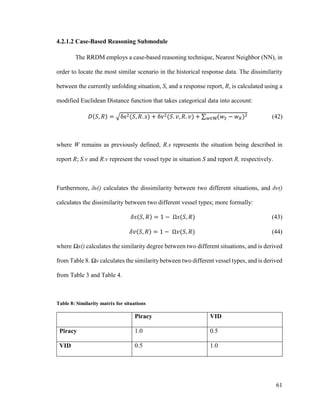
4.2.1.2 Case-Based Reasoning Submodule ........................................................................61
4.2.2 Asset Selection Module...................................................................................................62
4.2.2.1 Response Encoding ................................................................................................62
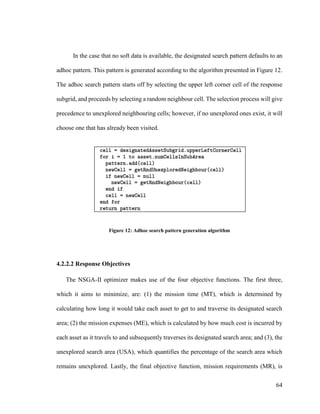
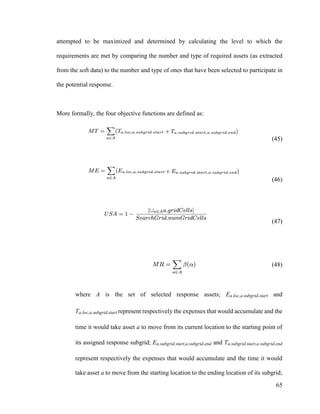
4.2.2.2 Response Objectives...............................................................................................64
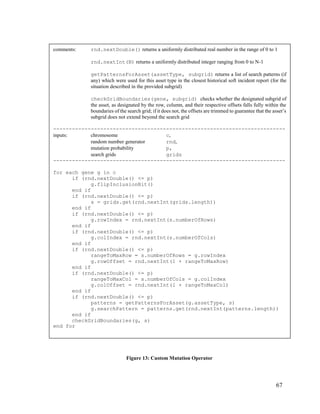
4.2.2.3 Evolving Operators.................................................................................................66
4.2.3 Asset Path Generation Module........................................................................................68
4.2.4 Response Enactment Module..........................................................................................68
4.2.5 Performance Assessment Module...................................................................................69
4.3 Chapter Summary................................................................................................................70
Chapter 5. Experimentation ................................................................................................ 71
5.1 Situational Assessment Experiments...................................................................................71
5.1.1 Experimental Configuration............................................................................................71
5.1.1.1 Coverage.................................................................................................................71
5.1.1.2 Overall Information Timeliness .............................................................................72
5.1.1.3 Reliability...............................................................................................................73
5.1.1.4 Data Topic Group Relevance .................................................................................74
5.1.2 Incident and Response Reports .......................................................................................75
5.1.3 Scenario 1: Malaysia/Singapore......................................................................................75
5.1.3.1 Regional Risk Assessment .....................................................................................77
5.1.3.2 Performance Evaluation and Empirical Analysis...................................................79
5.1.3.2.1 Instantaneous IFE ..............................................................................................79
5.1.3.2.2 Gradual IFE .......................................................................................................81
5.1.3.2.3 Profitability Analysis.........................................................................................82
5.1.3.2.4 Robustness Analysis..........................................................................................82
vii
5.1.4 Scenario 2: Bangladesh...................................................................................................84
5.1.4.1 Regional Risk Assessment .....................................................................................85
5.1.4.2 Performance Evaluation .........................................................................................86
5.1.4.2.1 Instantaneous IFE ..............................................................................................86
5.1.4.2.2 Gradual IFE .......................................................................................................88
5.1.4.2.3 Profitability Analysis.........................................................................................89
5.1.4.2.4 Robustness Analysis..........................................................................................90
5.2 Course of Action Generation Experiments..........................................................................91
5.2.1 Experimental Setup.........................................................................................................91
5.2.1.1 Response Simulation Environment ........................................................................91
5.2.2 Response Asset Characteristics.......................................................................................92
5.2.3 Experiment 1: Single Situation Handling – Canadian East Coast...................................93
5.2.3.1 Scenario Assets.......................................................................................................95
5.2.3.2 Experimental Results..............................................................................................97
5.2.4 Experiment 2: Concurrent Situation Handling – Somalian East Coast.........................101
5.2.4.1 Scenario Assets.....................................................................................................104
5.2.4.2 Experimental Results............................................................................................105
5.3 Chapter Summary..............................................................................................................114
Chapter 6. Concluding Remarks....................................................................................... 115
6.1 Looking Forward...............................................................................................................116
References............................................................................................................................ 118
viii
List of Figures
Figure 1: An example ReCAAP Incident and Response Report ............................................ 21
Figure 2: An example WWTTS report ................................................................................... 21
Figure 3: Track crawl search pattern, as presented in [66]..................................................... 22
Figure 4: Parallel track line search pattern, as presented in [65]............................................ 23
Figure 5: Outwards expanding square search pattern, as presented in [65]............................ 23
Figure 6: The RMF's SA components, adapted from [12]...................................................... 27
Figure 7: DTG Module ........................................................................................................... 28
Figure 8: Instantaneous information fusion effectiveness (i-IFE) hierarchy .......................... 37
Figure 9: Soft-data-driven response generation system.......................................................... 56
Figure 10: Example synthetic incident report with L3 information ....................................... 60
Figure 11: Example response grid with three designated subgrids......................................... 62
Figure 12: Adhoc search pattern generation algorithm........................................................... 64
Figure 13: Custom Mutation Operator.................................................................................... 67
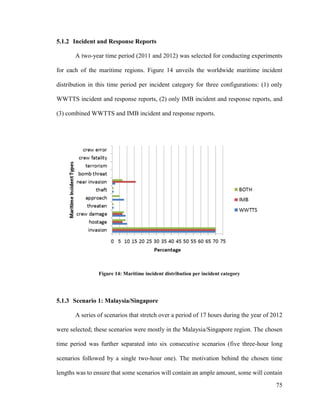
Figure 14: Maritime incident distribution per incident category............................................ 75
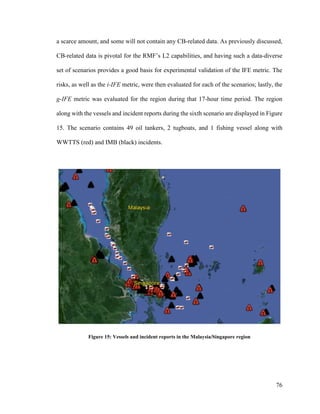
Figure 15: Vessels and incident reports in the Malaysia/Singapore region............................ 76
Figure 16: Malaysia/Singapore region risk assessment.......................................................... 78
Figure 17: i-IFE results in the Malaysia/Singapore region..................................................... 79
Figure 18: i-IFE subcomponents in the Malaysia/Singapore region ...................................... 80
Figure 19: Vessels and incident reports in the Bangladesh region ......................................... 84
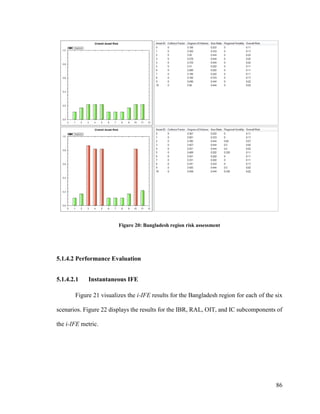
Figure 20: Bangladesh region risk assessment ....................................................................... 86
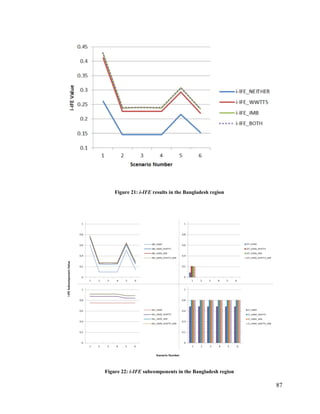
Figure 21: i-IFE results in the Bangladesh region.................................................................. 87
ix
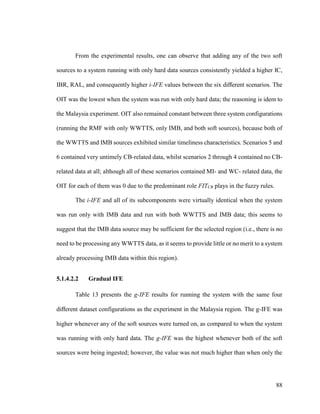
Figure 22: i-IFE subcomponents in the Bangladesh region.................................................... 87
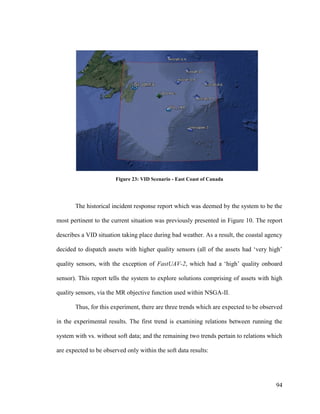
Figure 23: VID Scenario - East Coast of Canada ................................................................... 94
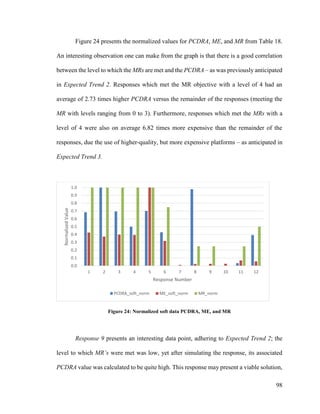
Figure 24: Normalized soft data PCDRA, ME, and MR........................................................ 98
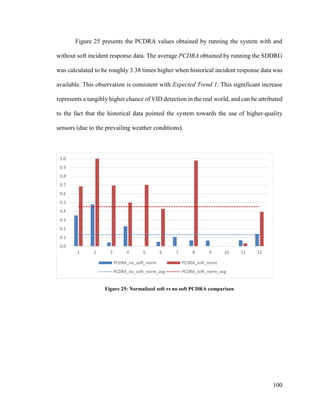
Figure 25: Normalized soft vs no soft PCDRA comparison................................................. 100
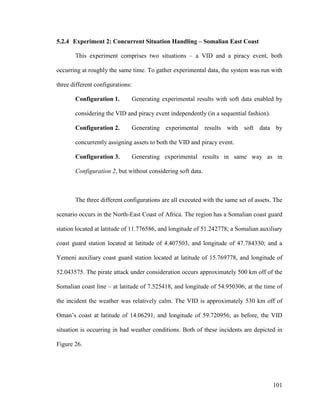
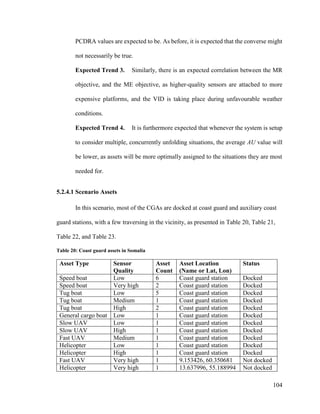
Figure 26: VID and piracy event in the North-East coast of Somalia .................................. 102
Figure 27: Most pertinent VID incident and response report in the Somalian region.......... 102
Figure 28: Most pertinent piracy incident and response report in the Somalian region....... 103
Figure 29: Normalized soft data PCDRA, ME, and MR for the concurrent VID and piracy
events111
Figure 30: Normalized soft vs no soft PCDRA comparison for the VID and piracy events 112
Figure 31: Average AU values for single VID, single piracy, and concurrent VID and piracy
events113
x
List of Tables
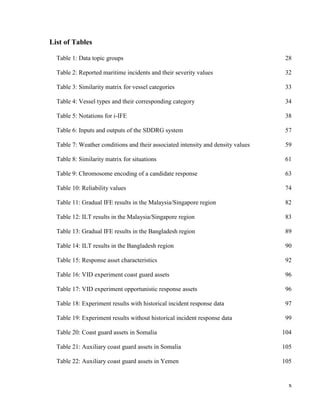
Table 1: Data topic groups 28
Table 2: Reported maritime incidents and their severity values 32
Table 3: Similarity matrix for vessel categories 33
Table 4: Vessel types and their corresponding category 34
Table 5: Notations for i-IFE 38
Table 6: Inputs and outputs of the SDDRG system 57
Table 7: Weather conditions and their associated intensity and density values 59
Table 8: Similarity matrix for situations 61
Table 9: Chromosome encoding of a candidate response 63
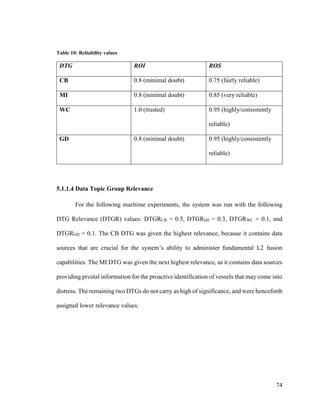
Table 10: Reliability values 74
Table 11: Gradual IFE results in the Malaysia/Singapore region 82
Table 12: ILT results in the Malaysia/Singapore region 83
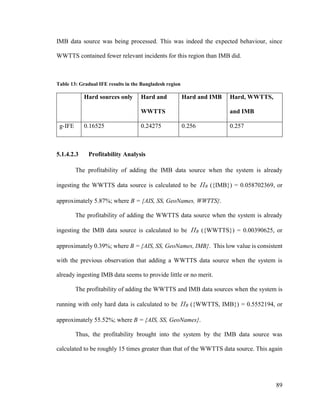
Table 13: Gradual IFE results in the Bangladesh region 89
Table 14: ILT results in the Bangladesh region 90
Table 15: Response asset characteristics 92
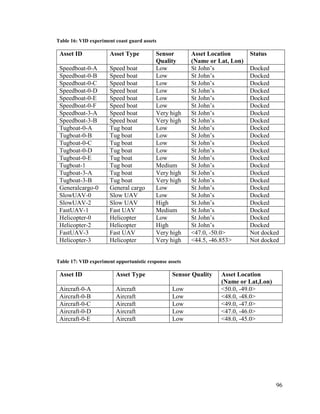
Table 16: VID experiment coast guard assets 96
Table 17: VID experiment opportunistic response assets 96
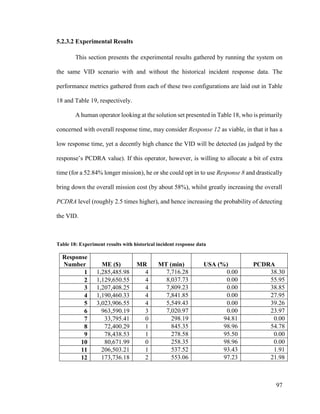
Table 18: Experiment results with historical incident response data 97
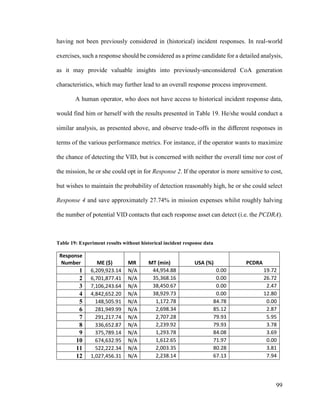
Table 19: Experiment results without historical incident response data 99
Table 20: Coast guard assets in Somalia 104
Table 21: Auxiliary coast guard assets in Somalia 105
Table 22: Auxiliary coast guard assets in Yemen 105
xi
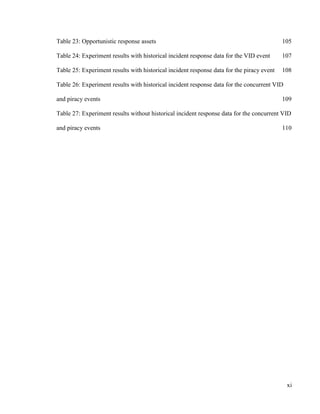
Table 23: Opportunistic response assets 105
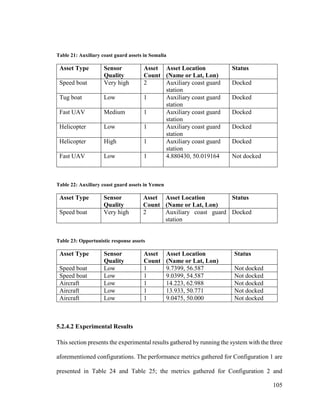
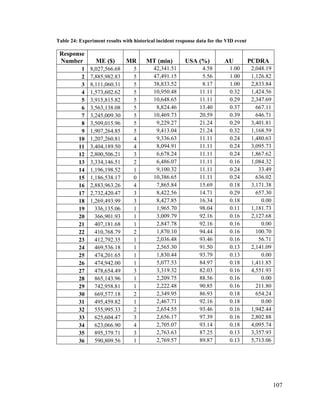
Table 24: Experiment results with historical incident response data for the VID event 107
Table 25: Experiment results with historical incident response data for the piracy event 108
Table 26: Experiment results with historical incident response data for the concurrent VID
and piracy events 109
Table 27: Experiment results without historical incident response data for the concurrent VID
and piracy events 110
xii
List of Abbreviations
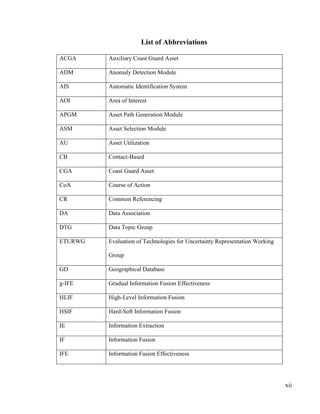
ACGA Auxiliary Coast Guard Asset
ADM Anomaly Detection Module
AIS Automatic Identification System
AOI Area of Interest
APGM Asset Path Generation Module
ASM Asset Selection Module
AU Asset Utilization
CB Contact-Based
CGA Coast Guard Asset
CoA Course of Action
CR Common Referencing
DA Data Association
DTG Data Topic Group
ETURWG Evaluation of Technologies for Uncertainty Representation Working
Group
GD Geographical Database
g-IFE Gradual Information Fusion Effectiveness
HLIF High-Level Information Fusion
HSIF Hard-Soft Information Fusion
IE Information Extraction
IF Information Fusion
IFE Information Fusion Effectiveness
xiii
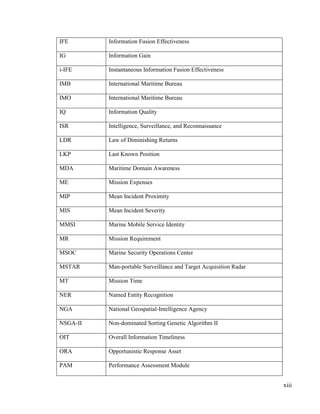
IFE Information Fusion Effectiveness
IG Information Gain
i-IFE Instantaneous Information Fusion Effectiveness
IMB International Maritime Bureau
IMO International Maritime Bureau
IQ Information Quality
ISR Intelligence, Surveillance, and Reconnaissance
LDR Law of Diminishing Returns
LKP Last Known Position
MDA Maritime Domain Awareness
ME Mission Expenses
MIP Mean Incident Proximity
MIS Mean Incident Severity
MMSI Marine Mobile Service Identity
MR Mission Requirement
MSOC Marine Security Operations Center
MSTAR Man-portable Surveillance and Target Acquisition Radar
MT Mission Time
NER Named Entity Recognition
NGA National Geospatial-Intelligence Agency
NSGA-II Non-dominated Sorting Genetic Algorithm II
OIT Overall Information Timeliness
ORA Opportunistic Response Asset
PAM Performance Assessment Module
xiv
PCDRA Potential Contact Detection Per Response Asset
QoI Quality of Information
QTF Quality Transfer Function
RAL Risk Awareness Level
REM Response Enactment Module
RHM Regional Hostility Metric
RMF Risk Management Framework
RRDM Response Requirements Determination Module
SA Situational Assessment
SAM Situation Assessment Module
SAR Synthetic Aperture Radar
SAW Situational Awareness
SDDRG Soft-Data-Driven Response Generation
SME Subject Matter Expert
URREF Uncertainty Representation and Reasoning Evaluation Framework
USA Unexplored Search Area
VaL Vessel at Large
VID Vessel in Distress
VPI Victim Pertinence Index
WC Weather Conditions
WWTTS Worldwide Threats to Shipping
1
Chapter 1. Introduction
Maritime Domain Awareness (MDA) can be summarized as the situational
knowledge of physical and environmental conditions that exist within or influence a
maritime region. The intended scope of this awareness includes all behaviours that could,
directly or indirectly, affect the security of the region, its economic activity or the local
environment [1] [2]. MDA is achieved via persistent monitoring of the maritime
environment, which allows for the identification of common trends and thus the detection
of anomalous behaviour. Achieving effective MDA also entails the efficient tasking of
maritime assets to counter illegal activities, as well as to assist in search and rescue (SAR)
efforts.
In order to obtain accurate MDA, information derived from multiple data sources
must be effectively captured, seamlessly integrated, and efficiently reasoned upon. Initial
solutions attempted to resolve these challenges through the use of low-level Information
Fusion (IF) modules; however, as the available data experienced exponential growth (in
terms of variety, volume, velocity, and veracity), these low-level modules became
inadequate [1]. To overcome this challenge, also referred to as the Big Data Problem, much
research has gone into the development and use of High-Level IF (HLIF) techniques. HLIF
is defined as Level 2 (L2) Fusion and above in the Joint Director of Laboratories
(JDL)/Data Fusion Information Group (DFIG) models [3] [4], and has been successfully
tasked with carrying out MDA processes (e.g., anomaly detection, trajectory prediction,
intent assessment, and threat assessment) [1] [5].
Traditionally, IF systems have relied on the use of ‘hard’ data, that is, data provided
by physical sensors, such as acoustic, radar, global positioning system (GPS), sonar, or
2
electro-optical sensors. This data is objective, structured, and quantitative, and maritime
operators often rely on hard data generated by vessel traffic in order to identify anomalous
or suspicious events at sea. Recently however, the IF community has recognized the
potential of exploiting information generated by ‘soft’ sensors (that is, people-generated
information). Conversely, this type of data is more subjective, qualitative, and transcribed
in a semi-structured or unstructured format (e.g., free form natural language text). Soft data
can be rich in context and provide cognitive inferences not otherwise captured by
traditional sensors (e.g., judged relationships among entities and/or events) and can thus be
used to further augment the situational awareness picture of the system. The exploitation
of this type of data, however, comes at a cost, as its content can be exposed to
bias/subjectivity, inaccuracy, imprecision, low repeatability, and conflict [6] [7]. Examples
of soft data sources in the maritime domain include textual reports on vessel sightings or
detailed descriptions of maritime incidents. It is therefore not surprising to see recent
attempts to construct and evaluate Hard-Soft IF (HSIF) frameworks [8] [9], as well as
efforts to incorporate soft information in maritime decision making like in [10], where
Natural Language Processing (NLP) methods were employed to draw out meaningful
information from soft data sources.
An HLIF system capable of constructing a risk-aware view of the environment (and
the dynamic entities within) can enable the proactive identification of hazards, dangers,
and vulnerabilities, which subsequently leads to the generation of suitable countermeasures
to mitigate said risks. Such a system has already been proposed in [11] [12] and termed by
the authors the Risk Management Framework (RMF), but considers only hard data sources.
3
1.1 Motivation
Maritime piracy and armed robbery at sea is estimated to cost the worldwide
economy annually anywhere between $1 Billion to $16 Billion US dollars1
, whilst SAR
efforts are estimated to cost the US coast guard alone approximately $680 Million USD
yearly2
. These numbers present a strong need for automated solutions in securing the
maritime areas by providing accurate and timely situational updates and assisting in
operational decision making. There are recent organizational initiatives to support
increased collaboration and maritime information sharing among participating nations
through internet networks precisely for this purpose, such as: (1) the Information Fusion
Centre (IFC) hosted by the Singapore Navy, where 35 countries are exchanging data and
collaborating on maritime operations, such as piracy hijacking events and SAR missions3
;
(2) the Information Sharing Centre (ISC) of the Regional Cooperation Agreement on
Combating Piracy and Armed Robbery against Ships in Asia (ReCAAP), also based in
Singapore, with a total of 20 currently collaborating nations4
; and (3) the International
Maritime Bureau’s Piracy Reporting Centre (IMB PRC), located in Malaysia, which is
responsible for disseminating piracy incident data to maritime security agencies around the
world [13].
1.2 Contributions
This study focuses on extending the RMF’s L2 and L3 fusion capabilities through
the inclusion of soft data for the purpose of increased SA and improved CoA generation.
1
http://worldmaritimenews.com/archives/134829/annual-global-cost-of-piracy-measured-in-billions/
2
http://www.theday.com/article/20091219/INTERACT010102/912199999/0/SHANE
3
https://www.mindef.gov.sg/imindef/press_room/official_releases/nr/2014/apr/04apr14_nr/04apr14_fs.html
4
http://www.recaap.org/AboutReCAAPISC.aspx
4
It is expected that the injection of soft data into the fusion processes will yield higher
mission-specific measures of performance, as this data encapsulates subject matter
expertise. To the best of my knowledge, this work is the first one to apply soft data to
automated CoA generation and performance evaluation in the maritime domain.
This work makes the following contributions:
1. The RMF’s L2 SA capabilities are enhanced through the inclusion of soft data
into its risk model. This is achieved by augmenting two of the risk features
pertaining to maritime vessels by the inclusion of information derived from the
processed soft data.
2. The proposed risk-centric IF Effectiveness (IFE) metric is capable of
quantifying the effectiveness of the L2 process; this metric is then employed to
illustrate and quantify the merit that the different soft sources provide to the L2
capabilities of the system. Furthermore, this metric is used to conduct an L2
process robustness analysis.
3. A new subsystem architecture is unveiled for the RMF’s L3 capabilities, which
includes a variety of modules supporting soft-data-augmented CoA generation.
4. A variety of L3 performance measures are proposed and used to assess the
fitness of individual potential CoAs, as well as to quantify the improved chance
of mission success brought about by inclusion of the soft data.
5
1.3 Organization
This thesis consists of six chapters. Chapter 2. consists of background and related
work information. The next two chapters cover the two principle components of the thesis:
Soft-Data Augmented Situational Assessment (Chapter 3) and Soft-Data Augmented
Course of Action Generation (Chapter 4). Chapter 5 lays out the experimentation, along
with the results and their analysis. Finally, Chapter 6 presents the concluding remarks and
addresses future research directions.
6
Chapter 2. Background and Related Work
2.1 Maritime Risk Analysis
Risk can be formally defined as the effect of uncertainty on an entity's objectives
[14]. A fundamental objective in MDA is the achievement of a comprehensive level of
situational awareness (SAW), and within this domain, uncertainty corresponds to the lack
of information to support such a level. SAW is defined as a state of knowledge of the
environment, achieved and maintained through one or many SA processes [15].
Augmenting the degree of SAW in MDA can be broken down into a number of sub-
problems, such as the enhancement of the collection and dissemination of data, as well as
the improvement of the multitude of algorithms involved in its processing. Popular
techniques employed for evaluating risk are probabilistic models, such as Bayesian
Networks in [16] [17], Hidden Markov Models (HMMs) in [18] [19], and Evidence-based
models in [20]. The common drawback of these approaches is that they greatly rely on a
priori knowledge, derived from statistical analysis of large collections of historical data
(e.g., event occurrence probabilities). Computational Intelligence (CI) techniques have also
been employed, such as in [12] and [21] where some of the risk features of assets are
quantified via Fuzzy Systems (FS). FS provide a natural, interpretable, yet effective basis
for incorporating domain expert knowledge into the risk assessment process.
7
2.2 High-Level Information Fusion for Maritime Domain Awareness
Machine learning algorithms that are employed in the maritime domain aim to
detect anomalies, or abnormal behaviors, in vessel activity data. Typically, these
algorithms are trained using information pertaining to normal vessel activities in order to
learn a normalcy model, and, when operational, they are used to detect any behaviour
deviating from that model (i.e., anomalous behaviour). Recent HLIF techniques that have
been employed for anomaly detection include neural networks [22] [23] [24], probabilistic
models [25] [26] [27] [28] [29] [30], clustering approaches [24] [31] [32] [33], as well as
evolutionary algorithms [34] [35]. These techniques typically fall under two categories –
unsupervised vs. supervised. Unsupervised techniques are popular due to their self-
governing nature – namely, their ability to discover hidden, meaningful structure in
unlabeled data. A good argument can, however, be made for supervised techniques, since
they incorporate domain expert knowledge into the learning process in the form of labelled
training data.
The benefit of including human operators and analysts in the anomaly detection
process itself (i.e., when the system is online) has been greatly underestimated in the
maritime domain [36]. For this reason, the involvement of people in traditional systems
has largely been only up to the point of constructing the anomaly model. There have been
recent attempts to incorporate humans into the MDA processes, such as in [22], where the
system can be directed for continuous online learning via operator intervention. Such
evolving systems are well-suited for large, complex, dynamic environments like the
maritime domain. Some recent research efforts [36] [37] are geared towards identifying
8
potential areas for visualization and human interaction during the anomaly detection
process for improving the performance of the detectors.
Within the Joint Director of Laboratories (JDL)/Data Fusion Information Group
(DFIG) models [3] [4] [38], Level 2 (L2) and Level 3 (L3) Information Fusion (IF) are
respectively defined as SA and Impact Assessment (IA), with the term High-Level IF
(HLIF) being defined as L2 and above. The role of L2 Fusion is to characterize the
presently unfolding situations through the automated analysis and identification of
relations existing between the entities being monitored, as well as between the entities and
the environment they reside in. Upon successful characterization of situations, L3 Fusion
proceeds with generating CoA recommendations and estimating their effects on the known
situations. Both levels have been successfully tasked with carrying out typical MDA
processes (e.g., anomaly detection, trajectory prediction, intent assessment, and threat
assessment) [1] [5]. The automatic generation of suitable CoAs in the maritime domain
using evolutionary multi-objective optimization (EMOO) has been addressed before in
[12] and [21] but considering only hard data sources. Soft data has been employed in [10]
at L2 Fusion to extract risk factors from reported maritime incidents. No studies in the
maritime world appear to consider supplementing or augmenting CoA generation through
the use of soft data.
2.3 Data in High-Level Information Fusion
Two broad categories of data exist in the IF domain, namely, hard and soft. Hard
data is generated by physical sensors, and hence it is typically provided in a numeric
format. Characteristics of this type of data are calibration, accuracy, structure, objectivity,
precision, repeatability, and high frequency [6] [7]. Soft data, on the other hand, is typically
9
generated and transcribed by humans in intelligence reports, surveillance reports, as well
as open source and social media [39] [40]. This type of data is provided in a textual format
which can either be structured (e.g., restricted language such as Controlled English [41])
or unstructured (e.g., free-form natural language). The exploitation of the information
provided by soft sensors comes at a cost, as its content can be exposed to bias/subjectivity,
inaccuracy, imprecision, low repeatability, and conflict [6] [7]. Soft data is incorporated
into HLIF systems by being processed through: Information Extraction (IE) modules,
Common Referencing (CR) modules, and Data Association (DA) modules.
IE modules attempt to draw out information of interest from each of the data
sources. The construction of the IE modules for soft data sources requires the elicitation of
a lexicon – a dictionary of terms that embody factors and entities of interest in the
environment [10]. This lexicon is then used for their automatic identification and
extraction.
CR modules convert the content provided by IE modules into a common format via,
for instance: (1) uncertainty alignment [42], as the heterogeneous data sources may express
it in inconsistent forms (e.g., hard sensor uncertainty is expressed in
probabilistic/quantitative format whereas soft sensor uncertainty is stated in
possibilistic/fuzzy terms due to the qualitative nature of linguistic expression); or (2)
temporal alignment [43], which is required when the disparate data sources present
temporal features in incongruent forms (e.g., exact timestamp vs. approximate time of day
vs. linguistic phrasing encompassing multiple verbal tense expressions).
The responsibility of DA modules is to effectively associate all of the available
evidence (from each of the data sources) for a unique entity. The same entities in the
10
environment being monitored can be characterized by multiple data sources, and thus, the
DA module must effectively join all of the available data for an entity into a single,
cumulative data structure (also frequently referred to as ‘cumulative evidence structure’)
[44].
2.3.1 Soft Data Categories
There are four distinct categories of soft data:
a. Observational data [40] [41] consists of reports written by human observers (e.g.,
intelligence data written by soldiers reporting on their patrol activities). It is
typically communicated in natural language. This type of data is semantically rich,
and when provided in a ‘controlled language’ format, it can reduce the
impreciseness and uncertainty. It can be, however, ambiguous and biased,
especially when not presented in a ‘controlled language’. Observational data is also
uncalibrated – two humans observing the same situation may provide different,
even conflicting, information about the situation.
b. Contextual data [40] [42] [45] [46] contains information that can be used to
characterize a situation or the surrounding environment of one; it is said to
‘surround’ a situation. This is information which does not characterize the entities
of interest in an IF system, but rather the environment in which they reside or the
situations to which they appertain. Contextual information is of two types: static
(e.g., GIS database) and dynamic (e.g., weather conditions). This type of
information is used to better understand the situation (e.g., by reducing the amount
of uncertainty present in the information extracted from the observational data
through the removal of ambiguities or addition of constraints). A large amount of
11
contextual information improves the situational understanding, but because it has
to be merged with observational data, the data assimilation operations become time
costly. Contextual data is also prone to inconsistencies and errors. No generic
context representation and exploitation frameworks exist; all attempts to exploit
context are tailored for the application at hand and thus the solutions are of limited
scalability and poor adaptability. This issue is recognized by the authors of [46],
who unveil a proposal for a middleware architecture to integrate this rich
information source into IF processes.
c. Open source and social media [40] (e.g., Blogs, Twitter, Facebook) data can be very
timely and typically arrives in a large volume. Arriving in a high volume, however,
implies potential difficulties in its processing. This soft data type is also largely
unstructured and uncontrolled.
d. Ontological data [40] [47] [48] aids in better understanding the observed situations
of the world by capturing entities, processes, events, and the relationships among
them in a particular domain. Its responsibility is to capture domain knowledge;
when used in conjunction with the hard data, it can provide a more accurate
situational understanding. Like with contextual data, augmenting the observational
data with ontological information comes at a computational cost.
2.3.2 Data Imperfections
Data imperfections have been well studied in the data fusion community and can
be classified in three broad categories [49] – uncertainty, granularity and imprecision.
Uncertainty results from ignorance about the true state of the real world, and uncertain
12
data often entails having an associated confidence degree between zero and one [49] [50].
Granularity refers to the ability to differentiate between different entities present in the
data. Imprecision can be further broken down into the following three categories:
vagueness, described as lacking detail in such a way that the entities in the data have no
direct correspondence with their referents in the world; ambiguity, which occurs when the
entities in the data can have more than one referent in the real world; and incompleteness,
which arises when the data possesses only partial information about the world [49] [51].
The following mathematical theories have been recently used in the HSIF
community to attempt to deal with imperfect data: Dempster-Shafer Evidence Theory
(DSET), Possibility Theory (PT), Random Finite Set Theory (RFST), and Markov Logic
Networks (MLNs). Specific details on each of the former three theories, as well as their
applicability, limitations, and use in data fusion can be found in [49]; details on MLNs can
be located in [26].
DSET was used to allow for decision making under uncertainty in a hard-soft data
fusion security system in [52], which is capable of assessing the threat level of situations
in which objects approach and/or cross a security perimeter. It was also used in [53] to
combine the uncertainties of data items in a fusion system containing only soft data.
Transferable Belief Model, an extension of DSET, was used to perform reasoning under
uncertainty and evaluation of the threat level caused by suspicious vessels in a hard-soft
data fusion system in [45]. It was also used to combine inconsistent data and assess how
much of the received data observations supported given hypotheses in a soft-data-only
fusion system in [54].
13
PT was used to integrate imprecise qualitative data in a soft fusion framework in
[42], and to model the uncertainty in soft data in an SA system in [55].
RFST was used in an HSIF framework in [56] to combine data from both hard and
soft sources and enhance the performance of Kalman Evidential Filter-based target
tracking.
MLNs were used in [26] to encode domain knowledge through first order logic
(FOL) expressions; the latter were assigned associated uncertainty weights, and fused with
real-time sensor data in order to detect maritime traffic anomalies.
2.4 Performance Evaluation in Hard-Soft Information Fusion
A natural interest in the field of HSIF is the quantification of the performance of
the fusion systems. Possessing the ability to evaluate the performance of such systems is
crucial for making key design and/or runtime decisions, such as which fusion algorithms
are most suitable given the available data sources, or what subset of the data sources
provides the highest benefit to the system (for situations in which it may be
computationally intractable to process all of the available data). When it comes to
evaluating performance of traditional fusion systems, the focus has largely been on
computing the various Measures of Performance (MOPs) and Measures of Effectiveness
(MOEs). MOPs are used to assess the ability of a fusion process to convert raw signal data
into intelligible information about an entity, whereas MOEs are used to assess the ability
of a fusion system as a whole to contribute to the successful completion of a mission [57]
[58]. Assessing the performance of modern HSIF systems, however, where people-
generated data is integrated in the fusion system, is still a burgeoning research area, and
14
there has been little work done in evaluating the performance of systems with individuals
integrated into the fusion process [58] [49] [59].
2.4.1 Performance Metrics
Innate differences between physical sensors and humans make it difficult or
impossible to use these MOPs and MOEs when people are integrated into the fusion
process; physical sensors can be calibrated for consistent performance, and although people
can be trained, the differences in internal factors (such as cognitive abilities, biases, and
stress) can cause unknown performance variation [42] [58] [59].
When it comes to evaluating performance, two broad classes of metrics have been
previously identified: quality-based metrics and runtime-based metrics; the
optimization of both classes typically involves conflicting objectives [8]. There currently
does not exist much in the area of runtime-based metrics – only algorithm computational
times are given, as in [44] [8]. Overall, more emphasis has been put into developing
quality-based metrics; the latter allow for the quantification of the performance of an IF
system. Gaining insight into the system's performance is crucial for unlocking answers to
questions such as which combinations of hard and soft data sources yield the highest value,
as well as which fusion algorithms are most suitable for these data sources. There are three
levels on which the quality of a fusion system can be judged: the input information level,
the fusion algorithm level, and the system level.
2.4.1.1 Input Information Quality Evaluation
The theory behind information quality evaluation is thorough, as it largely borrows
from existing fields (e.g., information theory). There is a myriad of quality dimensions
which have been identified (e.g., accuracy, timeliness, integrity, relevance, among others);
15
however, input information quality evaluation appears to have gained little traction in the
IF domain. A few relevant studies done in this area are [7] [39] [60] [61]; each of these
presents an ontology on the Quality of Information (QoI), as it pertains to IF. A prevailing
theme in these studies is that no universal methodology exists to assess QoI in a general IF
system. The dimensions used to evaluate the QoI are context-dependent (i.e., based on
specific user goals and objectives) and thus the manner in which the QoI is evaluated will
vary from one fusion system to another.
The quality level of a specific dimension can be evaluated using one of several
methods (not all are possible in every situation): a priori knowledge (e.g., training level of
a human observer), judgement of human experts, supervised learning from an existing
dataset, or conflict level of information between different sources, among others [39]. Once
the different information quality dimensions are evaluated, they can be integrated into a
single, concise, unified quality score (UQS). Different ways of achieving an UQS include:
the combination rule used in a mathematical framework in which the quality dimensions
are represented, if a mathematical framework is used; a weighted average of the individual
quality scores, normalized to unity; or the training of a neural network on a dataset labeled
with subjective UQS labels [39].
Guidelines for confidence levels that can be assigned to the estimated reliability
levels of information and information sources can be found in the US Military Standard
640 (MIL-STD-640) [62]; this standard provides quantitative labels for the otherwise
qualitative descriptions of the confidence levels found in the NATO Standardized
Agreement for Intelligence Reports - STANAG 2022.
16
2.4.1.2 Fusion Algorithm Quality Evaluation
Quality evaluation at the algorithmic level is typically treated like a classification
problem. Ground truth values of the expected output of fusion algorithms are generated by
human analysts, and Precision, Recall, and F-measure of the results are reported [42] [44]
[8]. For processing algorithms, performance is typically assessed based on the number of
detections or lack of detections of entities and relationships between entities. For DA,
evaluators are concerned with the number of correctly associated (true positives – TPs),
correctly not associated (true negatives – TNs), incorrectly associated (false positives –
FPs) and incorrectly not associated (false negatives – FNs) entities or relationships. For
state estimation, evaluation is done based on the performance of inexact graph matching
algorithms; i.e., the number of correctly identified, correctly not identified, incorrectly
identified, and incorrectly not identified instances of the template data graph within the
cumulative data graph. The performance of the uncertainty alignment process is difficult
to assess "due to the uncertain nature of the inferences" made by it [42] and it is thus
evaluated indirectly through process refinement (by observed improvements to results of
downstream fusion processes).
In order to assess the “true” performance of a fusion algorithm, any errors generated
by upstream processes must be accounted for, as was demonstrated in [8]. The system
evaluated in this research was an HSIF prototype ingesting the SYNCOIN (hard-soft)
dataset [58]. The output of both the hard and soft data processing algorithms was an
attributed data graph. It was the task of the DA algorithms to merge the distinct attributed
graphs into a cumulative evidence graph. The DA process was evaluated at two levels in
order to demonstrate the adverse effect upstream processes can have on downstream ones.
17
The evaluation at the first level disregards any errors that have been generated by upstream
processes, and thus simply calculates the aforementioned performance metrics (i.e.,
Precision, Recall, F-measure) with a solution key. The evaluation at the second level aimed
to determine the "true" performance of the DA process, and thus take into account upstream
errors (e.g., missing or incorrect entity typing generated by the upstream natural language
processing system), and determined the FPs and FNs as a result of these errors. The
identified entity pairs are then simply disregarded from the calculation of the performance
metrics. This approach was tested on three DA algorithms in [8], and each of them,
unsurprisingly, reported higher performance when the upstream errors were being
accounted for.
The limitation in this approach is that the performance of the algorithms is judged
only in an ‘offline’ mode; such methods do not allow for an understanding of the
instantaneous fusion quality of the results provided by the fusion system in a deployed
environment.
2.4.1.3 System-Level Quality Evaluation
This level of evaluation is concerned with the integrative performance of the
different components of an IF system – the input data, the fusion algorithms, as well as the
humans themselves, in the case of a human-in-the-loop (HITL) IF systems.
Some recent efforts to model fusion performance include the research performed in
[63], which is concerned with judging the quality of HITL fusion tools and aids (e.g.,
advanced human interaction displays, as well as social network analysis and collaboration
tools). The research was conducted on a cyber-infrastructure that was set up in order to
simulate real-world scenarios. The performance measures used were based on:
18
containment (number of events considered to be out of control), resource allocation
efficiency (by determining cumulative event intensities), and team information sharing
(e.g., frequency of communication interface use). The metrics were evaluated at different
time slots, thereby evaluating the impact of a situation on the performance, as the situation
was unfolding. Questionnaires given to the participants were also used to evaluate their SA
level.
More recently, in [60], the authors put forward the idea that, if a fusion system is
broken down to its most elementary modules, and if a quality transfer function (QTF) can
be determined for every module, then given the input quality of the data into the module,
the output quality can be determined via this function. With such a model, the data and its
quality are propagated together through the fusion processing pipeline, and therefore, one
can attain detailed insights into which modules are adversely affecting the QoI at any time
instant. The approach solves the issue of aggregating the data qualities from the different
modules of the HSIF system, because the last module in the pipeline will be providing a
global performance measure. If a complete behaviour model of each module cannot be
obtained, then experimentation can be performed to estimate the QTF. This
experimentation would require varying the input data quality of a module, determining the
output quality, and recording this input-output pair. Subsequently, the input-output pairs
could be used to determine the QTF via statistical methods (e.g., regression).
It is worth noting here that an IF system's performance can be multifaceted and with
conflicting objectives (e.g., not just concerned with meeting fusion goals, but also
minimizing the expenditure of resources that are required to achieve these goals) [42].
19
2.4.2 Uncertainty Handling Capabilities
Evaluating the manner in which uncertainty is dealt with in a fusion system has
been recently recognized as being distinct from evaluating how the overall system is
performing [64]. The Evaluation of Technologies for Uncertainty Representation Working
Group (ETURWG) is developing a comprehensive framework, namely the Uncertainty
Representation and Reasoning Evaluation Framework (URREF), which is concerned with
evaluating how uncertainty is managed (represented and reasoned with) in fusion systems
[64] [61] [65]. As part of this work, a comprehensive URREF ontology has been
constructed which specifies the concepts that are related to this evaluation. This ontology
is meant to be used as a guideline for selecting the actual criteria to be used as part of the
uncertainty evaluation in a particular fusion system.
2.5 Maritime Domain Basics
A maritime region is encompassed by a set of hard and soft data sources. This
region consists of an AOI selected for monitoring; vessels are traversing this area and are
tracked via active or passive sensing modalities, such as Synthetic Aperture Radar and
Automatic Identification System (AIS) transceivers. These physical (hard) sensors produce
periodical data about each of the vessels (speed, position, vessel type, course, etc.), which
is captured and processed at Marine Security Operations Centres (MSOCs). Textual reports
detailing specific sea incidents are submitted to maritime organizations, and can also be
used for processing within the MSOCs.
20
2.5.1 Incident and Response Reports
There are four openly available soft incident and response data sources in the maritime
domain:
a. International Maritime Bureau (IMB) Incident Reports5
b. National Geospatial-Intelligence Agency’s (NGA) Worldwide Threats to Shipping
(WWTTS) Incident Reports6
c. International Maritime Organization (IMO)7
d. Regional Cooperation Agreement on Combating Piracy and Armed Robbery against
Ships in Asia (ReCAAP)8
These unstructured and semi-structured data sources provide details on incidents, such
as: (1) the name of the vessel involved in the incident, (2) the type (category) of the vessel,
(3) the position and location of the incident, and (4) a brief transcription of the events that
occurred during the incident (e.g., armed pirates boarding the vessel). Additionally,
information on the type of actions taken by the crew, the consequences to the crew, as well
as the actions taken by the coastal agency is sometimes provided, though not consistently.
Coastal agency actions are also typically vague. Figure 1 and Figure 2 present examples of
ReCAAP and WWTTS reports, respectively.
5
https://icc-ccs.org/piracy-reporting-centre/live-piracy-report
6
http://msi.nga.mil/NGAPortal/MSI.portal?_nfpb=true&_pageLabel=msi_portal_page_64
7
www.imo.org/en/OurWork/Security/PiracyArmedRobbery/Reports
8
www.recaap.org/AlertsReports/IncidentReports
21
Figure 1: An example ReCAAP Incident and Response Report9
Figure 2: An example WWTTS report10
9
www.recaap.org/AlertsReports/IncidentReports
10
http://msi.nga.mil/NGAPortal/MSI.portal?_nfpb=true&_pageLabel=msi_portal_page_64
22
2.5.2 Search Patterns
In SAR operations, there are four popular types of search patterns with which
response assets can be tasked to execute. These are the Track Crawl, Parallel Track Line,
Outwards Expanding Square, and Inwards Expanding Square search patterns [66] [67].
The Track Crawl is a search pattern assigned to a vessel or an aircraft and tasks
them to follow the track of the vessel at large (VaL). This search pattern is used when the
VaL will most likely be close to its intended track. A visualization of this search pattern is
presented in Figure 3.
Figure 3: Track crawl search pattern, as presented in [67]
The Parallel Track Line is a search pattern providing uniform area coverage. This
pattern can be executed by one or more vessels and/or one or more aircraft. The vessels or
aircraft follow (in an outward fashion) parallel tracks along the expected drift direction of
the VaL. This search pattern is useful when the search area is large and the VaL last known
position (LKP) is not known with a good precision. A visual representation of this search
pattern is presented in Figure 4.
23
Figure 4: Parallel track line search pattern, as presented in [66]
The Outwards Expanding Square is a search pattern which starts at the VaL's LKP
and expands outward in concentric squares. In addition to vessels, the search pattern can
be used by an aircraft. Turns are 90 degrees. It is used when the VaL is thought to be within
a small area. A depiction of this search pattern is presented in Figure 5.
Figure 5: Outwards expanding square search pattern, as presented in [66]
24
Inwards Collapsing Square is a search pattern that is similar to the Outwards
Expanding Square; however, instead of starting off at the last known VaL position, this
location is visited last. It is used in the same situations as the outwards expanding square.
The depiction of this pattern is the same as the one presented in Figure 5, except with the
directionality of the arrows being reversed.
25
Chapter 3. Soft-Data Augmented Situational Assessment
SA capabilities of an IF system aim to characterize presently unfolding situations
through the automated analysis of input data. This section illustrates the soft-data
augmented methodology used for proactive identification of vessels which may fall under
distress. Along with this methodology, a new L2 performance metric is proposed.
Furthermore, it is demonstrated how this metric can be used to quantify the merit of the
different soft data sources, as well as how it can be applied to perform a robustness analysis
on the system.
3.1 Environment and Data Sources
A thorough description of the maritime environment can be found in Section 2.5.
The data sources used in this work to achieve SA in the maritime domain are:
a. AIS [Hard] – A passive data source providing vital ship information, such as the
vessel category it belongs to, its unique nine-digit Marine Mobile Service Identity
(MMSI) number and its spatio-temporal features (e.g., speed, position, vessel type,
course). The AIS feed was provided by exactEarth11
.
b. Sea State Reports [Hard] – A data source describing the motion of sea waves. The
information extracted from this data set is used in conjunction with the Douglas Sea
Scale12
. This data source was simulated, as access to sea state reports, in the regions
which were studied as part of this research was not available.
11
http://www.exactearth.com
12
http://en.wikipedia.org/wiki/Douglas_sea_scale
26
c. WWTTS [Soft] – An incident and response report data source, previously discussed
in Section 2.5.1. The reports span the entire world and are provided on a weekly
basis.
d. IMB [Soft] – A second incident and response report data source (refer to Section
2.5.1.). Reports from this source can be obtained in real-time, or in batch mode (on
a quarterly or annual basis). In addition to providing maritime crime information
similar in nature to WWTTS, this semi-structured data source also declares whether
an incident was successful or merely attempted (e.g., vessel boarding by pirates was
attempted but unsuccessful).
e. GeoNames Geographical Database [Soft] – A data source containing tuples of
location names and their geographical coordinates13
. It is used to supplement the
WWTTS and the IMB incident reports for incidents which report only general
locations (e.g., 50 nautical miles northeast of Jakarta), as they will be translated into
specific latitude and longitude values, via a distance and heading from a point
calculation.
3.2 Soft-Data Extension of the Risk Management Framework
Vessels in the maritime environment are characterized by the set of risk features
previously defined in the RMF [12]: (1) the Collision Factor, indicating the probability of
a vessel colliding with another maritime object; (2) the Sea State, capturing the risk posed
by the surrounding weather conditions at sea; (3) the Regional Hostility Metric, indicating
the degree of hostility of the region a vessel is navigating through; and (4) the Degree of
13
http://www.geonames.org/
27
Distress, a multifarious feature encompassing different distress factors such as the
environmental impact of a potential catastrophe involving the vessel, the threat to the
human lives aboard the vessel, etc. As they have been previously defined, all four risk
features are fully characterized by hard data sources.
This study extends the hard-source-based characterization methodology with two
real-world soft maritime incident soft sources (i.e., WWTTS and IMB). Figure 6 presents
the RMF’s components pertaining to L2 fusion processes.
Figure 6: The RMF's SA components, adapted from [12]
3.2.1 Data Topic Groups
This study proposes a grouping of data sources in the system according to the type
of information they provide. For instance, WWTTS and IMB provide incident reports of
very similar nature, and thus belong to the same group, namely, the Maritime Incidents
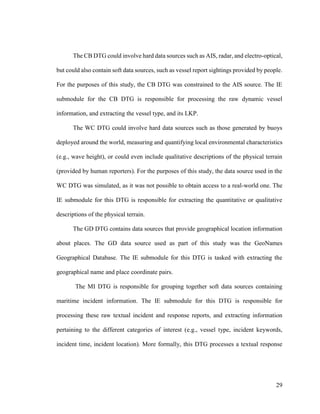
group. A detailed diagram of the DTG subcomponent is presented in Figure 7. This
subcomponent takes multiple data sources as input and is responsible for providing all the
information available on unique entities described by the input data sources.
28
Figure 7: DTG Module
The DTGs and their respective data sources currently present in the system are shown in
Table 1. Note that it is also possible for a single data source to belong to multiple DTGs, if
that source provides relevant information to each of those groups.
Table 1: Data topic groups
Data Topic Group Data Sources
Contact-Based (CB) AIS
Weather Conditions (WC) Sea State Reports
Geographical Databases (GD) GeoNames Geographical Database
Maritime Incidents (MI) WWTTS, IMB
29
The CB DTG could involve hard data sources such as AIS, radar, and electro-optical,
but could also contain soft data sources, such as vessel report sightings provided by people.
For the purposes of this study, the CB DTG was constrained to the AIS source. The IE
submodule for the CB DTG is responsible for processing the raw dynamic vessel
information, and extracting the vessel type, and its LKP.
The WC DTG could involve hard data sources such as those generated by buoys
deployed around the world, measuring and quantifying local environmental characteristics
(e.g., wave height), or could even include qualitative descriptions of the physical terrain
(provided by human reporters). For the purposes of this study, the data source used in the
WC DTG was simulated, as it was not possible to obtain access to a real-world one. The
IE submodule for this DTG is responsible for extracting the quantitative or qualitative
descriptions of the physical terrain.
The GD DTG contains data sources that provide geographical location information
about places. The GD data source used as part of this study was the GeoNames
Geographical Database. The IE submodule for this DTG is tasked with extracting the
geographical name and place coordinate pairs.
The MI DTG is responsible for grouping together soft data sources containing
maritime incident information. The IE submodule for this DTG is responsible for
processing these raw textual incident and response reports, and extracting information
pertaining to the different categories of interest (e.g., vessel type, incident keywords,
incident time, incident location). More formally, this DTG processes a textual response
30
report, and produces the set, R, containing relevant response information extracted from
the report:
𝑹 = {𝒗𝒆𝒔𝒔𝒆𝒍𝑻𝒚𝒑𝒆, 𝑲, 𝒊𝒏𝒄𝒊𝒅𝒆𝒏𝒕𝑻𝒊𝒎𝒆, 𝒊𝒏𝒄𝒊𝒅𝒆𝒏𝒕𝑳𝒐𝒄𝒂𝒕𝒊𝒐𝒏} (1)
where K is the set of incident keywords discovered in the report.
The MI IE submodule makes use of the Natural Language Processing (NLP) technique
called Named-Entity Recognition (NER) in order to extract information from the textual
incident report and construct the set R. There is a lexicon constructed for each of the
elements in the set R.
3.2.2 Risk Features
Two of the above risk features, namely the Degree of Distress and the Regional
Hostility Metric from [12], are augmented to include risk factors derived from the data
sources belonging in the MI DTG. The conceptual definitions of the two risk features
remain as previously stated in Section 3.2.
3.2.2.1 Regional Hostility Metric
The Regional Hostility Metric of vessel x, RHM(x), is formally defined as:
(2)
where wMIP, wMIS, and wVPI are used to respectively weigh: (a) the significance of vessel x's
proximity to known maritime incidents, (b) the importance of the severity of the incidents
around the vicinity of the vessel, and (c) the pertinence of the nearby incidents to the vessel.
31
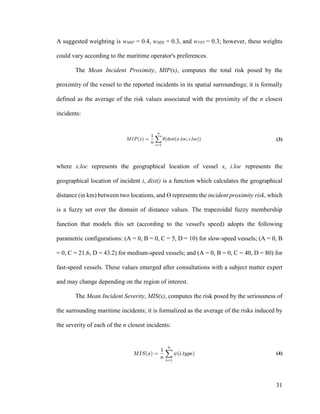
A suggested weighting is wMIP = 0.4, wMIS = 0.3, and wVPI = 0.3; however, these weights
could vary according to the maritime operator's preferences.
The Mean Incident Proximity, MIP(x), computes the total risk posed by the
proximity of the vessel to the reported incidents in its spatial surroundings; it is formally
defined as the average of the risk values associated with the proximity of the n closest
incidents:
(3)
where x.loc represents the geographical location of vessel x, i.loc represents the
geographical location of incident i, dist() is a function which calculates the geographical
distance (in km) between two locations, and Ɵ represents the incident proximity risk, which
is a fuzzy set over the domain of distance values. The trapezoidal fuzzy membership
function that models this set (according to the vessel's speed) adopts the following
parametric configurations: (A = 0, B = 0, C = 5, D = 10) for slow-speed vessels; (A = 0, B
= 0, C = 21.6, D = 43.2) for medium-speed vessels; and (A = 0, B = 0, C = 40, D = 80) for
fast-speed vessels. These values emerged after consultations with a subject matter expert
and may change depending on the region of interest.
The Mean Incident Severity, MIS(x), computes the risk posed by the seriousness of
the surrounding maritime incidents; it is formalized as the average of the risks induced by
the severity of each of the n closest incidents:
(4)
32
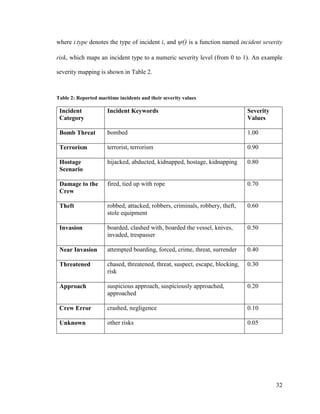
where i.type denotes the type of incident i, and ψ() is a function named incident severity
risk, which maps an incident type to a numeric severity level (from 0 to 1). An example
severity mapping is shown in Table 2.
Table 2: Reported maritime incidents and their severity values
Incident
Category
Incident Keywords Severity
Values
Bomb Threat bombed 1.00
Terrorism terrorist, terrorism 0.90
Hostage
Scenario
hijacked, abducted, kidnapped, hostage, kidnapping 0.80
Damage to the
Crew
fired, tied up with rope 0.70
Theft robbed, attacked, robbers, criminals, robbery, theft,
stole equipment
0.60
Invasion boarded, clashed with, boarded the vessel, knives,
invaded, trespasser
0.50
Near Invasion attempted boarding, forced, crime, threat, surrender 0.40
Threatened chased, threatened, threat, suspect, escape, blocking,
risk
0.30
Approach suspicious approach, suspiciously approached,
approached
0.20
Crew Error crashed, negligence 0.10
Unknown other risks 0.05
33
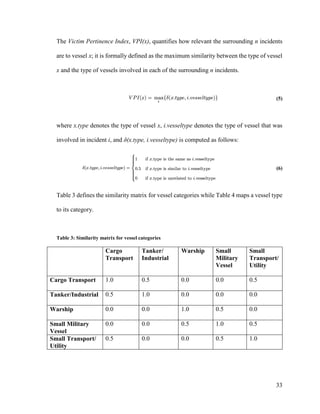
The Victim Pertinence Index, VPI(x), quantifies how relevant the surrounding n incidents
are to vessel x; it is formally defined as the maximum similarity between the type of vessel
x and the type of vessels involved in each of the surrounding n incidents.
(5)
where x.type denotes the type of vessel x, i.vesseltype denotes the type of vessel that was
involved in incident i, and δ(x.type, i.vesseltype) is computed as follows:
(6)
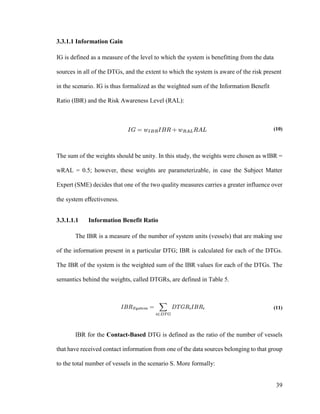
Table 3 defines the similarity matrix for vessel categories while Table 4 maps a vessel type
to its category.
Table 3: Similarity matrix for vessel categories
Cargo
Transport
Tanker/
Industrial
Warship Small
Military
Vessel
Small
Transport/
Utility
Cargo Transport 1.0 0.5 0.0 0.0 0.5
Tanker/Industrial 0.5 1.0 0.0 0.0 0.0
Warship 0.0 0.0 1.0 0.5 0.0
Small Military
Vessel
0.0 0.0 0.5 1.0 0.5
Small Transport/
Utility
0.5 0.0 0.0 0.5 1.0
34
Table 4: Vessel types and their corresponding category
Cargo Transport Tanker/Industrial Warship Small
Military
Vessel
Small
Transport/Utility
Bulk carrier Chemical tanker warship Coast guard
boat
Fishing trawler
Car carrier Heavy lift vessel Naval patrol
vessel
Japanese
harpoonists
Cargo ship Lpg tanker Militant anti-
whaling group
Carrier ship Mother vessel Skiff
Container ship Oil tanker Speed boat
Dry cargo vessel Product tanker Tug boat
General cargo
ship
Tanker Dredger
Livestock carrier Fishing vessel
Lng carrier vessel
Refrigerated
cargo ship
Merchant ship
3.2.2.2 Degree of Distress
The Degree of Distress of vessel x, DoD(x), is augmented from [12] with another
distress factor, the Risk of Attack, that will be derived from textual information mined
directly from the semi-structured maritime incident reports; it is formally defined as:
(7)
35
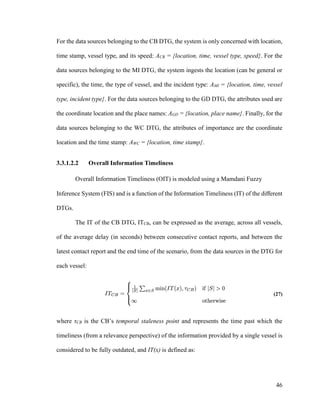
Where the integer values present a suggested weighing, and μRP(x), μRE(x), and μRF(x)
remain as previously defined as in [12] and μRA(x) is the probability that vessel x will be
attacked due to the category it belongs to (according to its vessel type). More formally,
μRA(x)is the square root of the conditional probability that x.category would be the subject
of a maritime incident I:
(8)
3.3 Performance Evaluation
As was discussed in Section 2.4, quantifying the effectiveness of an IF system is
still a burgeoning area in the fusion community. The prevalent theme in the IF quality
evaluation literature is that there is no commonly agreed-upon method and set of quality
measures that can be used to evaluate a general fusion system; this is largely because
quality is dependent on user objectives in a specific context [7] [60] [39] [61].
Recent attempts to quantify the IFE were [62] and [68], where the proposed metric
consists of three aspects: (1) the information gain, quantifying the aggregation level of
content provided by the data sources; (2) the information quality, which is a measure of
data characteristics such as timeliness and information confidence; and (3) the robustness
defined as the ability of the system to cope with real-world variation [68].
This research proposes a generic risk-aware IFE metric, capable of quantifying the
effectiveness of the HSIF process. Furthermore, an IFE evaluation from two perspectives
is formulated – from an instantaneous and from a gradual perspective. The typical
evaluation done in terms of comparing against ground truth values (computing Precision,
Recall, and F-measure) provides an overall (“averaged”) performance assessment;
36
however, it does not allow for an understanding of the instantaneous fusion quality of a
system. In a complex and dynamic environment, where decision makers need to act
promptly and decisively, gauging the instantaneous effectiveness of the fusion system
becomes of vital importance; as such, the metric is formulated in a way which does not
require knowledge of ground truth.
The goal of an Instantaneous IFE (i-IFE) metric is to permit for the evaluation of
the system effectiveness at any given point in time. This is an imperative feature for an IF
system to possess, as it provides real-time insights into the effect an unfolding scenario has
on the IF system.
A Gradual IFE (g-IFE) metric, on the other hand, is meant to efficiently and
accurately express the IFE of the system over a period of time. The gradual metric, then, is
an amalgamation of the effectiveness of the system over the set of scenarios which will
unfold in the region the IF system is monitoring. Thus, a g-IFE evaluator is a crucial system
component, as it can unlock the answer to questions such as: what group of data sources
yields the highest merit for a particular region, or for a particular period of time. An
advanced IF system will track its fusion effectiveness over the duration of its lifetime, and
will be capable of automatically determining the answers to such questions, and
reconfigure itself accordingly.
37
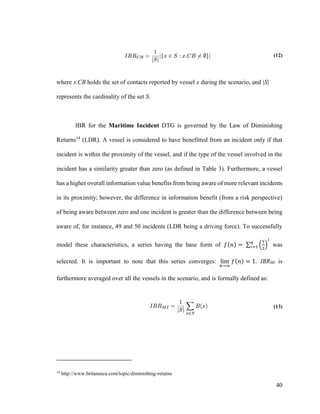
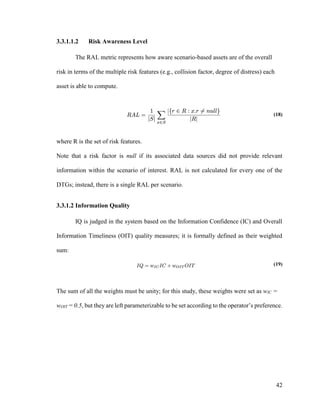
3.3.1 Instantaneous Information Fusion Effectiveness
As previously discussed, this research expands on the domain-agnostic
Information Gain (IG) and Information Quality (IQ) measures proposed in [62] and [68],
to formulate a risk-aware fusion effectiveness metric, whose building blocks are
presented in Figure 8.
Figure 8: Instantaneous information fusion effectiveness (i-IFE) hierarchy
38
From a top-level perspective, the i-IFE metric is calculated as the product of IG and IQ;
furthermore, i-IFE 𝜖 [0, 1].
(9)
Table 5 presents commonly used symbols in the equations from the subsequent sections.
Table 5: Notations for i-IFE
Symbol Definition
S a maritime scenario; a static snapshot (of configurable time length) of
the assets present in a particular region
Sendtime denotes a scenario's end time
x a maritime vessel
i a maritime incident
NRn(x.loc) the set of nearest n incident reports to vessel x
NRr(x.loc) the set of nearest relevant incident reports to vessel x
NWn(x.loc) the set of nearest weather condition measurements to vessel x
ING(x) the set of nearest n incidents which report only general locations, or
more formally:
𝐼 𝑁𝐺(𝑥) = { 𝑖 𝜖 𝑁𝑅 𝑛(𝑥. 𝑙𝑜𝑐) ∶ 𝑖. 𝑙𝑜𝑐𝑆𝑝𝑒𝑐𝑖𝑓𝑖𝑐 = 𝑛𝑢𝑙𝑙}
A the set of attributes across all data sources belonging to a particular data
topic group that are contributing to the fusion process
O the set of distinct objects present in the data sources which belong to a
particular data topic group
W the set of all possible objects (in the environment being monitored)
DTGR data topic group relevance – a weight meant to quantify the relevance of
the DTG to the fusion objectives.
39
3.3.1.1 Information Gain
IG is defined as a measure of the level to which the system is benefitting from the data
sources in all of the DTGs, and the extent to which the system is aware of the risk present
in the scenario. IG is thus formalized as the weighted sum of the Information Benefit
Ratio (IBR) and the Risk Awareness Level (RAL):
(10)
The sum of the weights should be unity. In this study, the weights were chosen as wIBR =
wRAL = 0.5; however, these weights are parameterizable, in case the Subject Matter
Expert (SME) decides that one of the two quality measures carries a greater influence over
the system effectiveness.
3.3.1.1.1 Information Benefit Ratio
The IBR is a measure of the number of system units (vessels) that are making use
of the information present in a particular DTG; IBR is calculated for each of the DTGs.
The IBR of the system is the weighted sum of the IBR values for each of the DTGs. The
semantics behind the weights, called DTGRs, are defined in Table 5.
(11)
IBR for the Contact-Based DTG is defined as the ratio of the number of vessels
that have received contact information from one of the data sources belonging to that group
to the total number of vessels in the scenario S. More formally:
40
(12)
where x.CB holds the set of contacts reported by vessel x during the scenario, and |S|
represents the cardinality of the set S.
IBR for the Maritime Incident DTG is governed by the Law of Diminishing
Returns14
(LDR). A vessel is considered to have benefitted from an incident only if that
incident is within the proximity of the vessel, and if the type of the vessel involved in the
incident has a similarity greater than zero (as defined in Table 3). Furthermore, a vessel
has a higher overall information value benefits from being aware of more relevant incidents
in its proximity; however, the difference in information benefit (from a risk perspective)
of being aware between zero and one incident is greater than the difference between being
aware of, for instance, 49 and 50 incidents (LDR being a driving force). To successfully
model these characteristics, a series having the base form of 𝑓(𝑛) = ∑ (
1
2
)
𝑖
𝑛
𝑖=1 was
selected. It is important to note that this series converges: lim
𝑛→∞
𝑓(𝑛) = 1. IBRMI is
furthermore averaged over all the vessels in the scenario, and is formally defined as:
(13)
14
http://www.britannica.com/topic/diminishing-returns
41
where:
(14)
IBR for the Weather Conditions DTG is the ratio of the number of vessels that had access
to WC information in their proximity to all the vessels in the scenario. More formally:
(15)
IBR for the Geographical Databases DTG is a measure of the number of vessels in the
scenario with maritime incidents in their proximity that only contained general locations,
and for which specific coordinate locations were successfully extracted from the data
sources belonging to the GD DTG. More formally:
(16)
where:
(17)
42
3.3.1.1.2 Risk Awareness Level
The RAL metric represents how aware scenario-based assets are of the overall
risk in terms of the multiple risk features (e.g., collision factor, degree of distress) each
asset is able to compute.
(18)
where R is the set of risk features.
Note that a risk factor is null if its associated data sources did not provide relevant
information within the scenario of interest. RAL is not calculated for every one of the
DTGs; instead, there is a single RAL per scenario.
3.3.1.2 Information Quality
IQ is judged in the system based on the Information Confidence (IC) and Overall
Information Timeliness (OIT) quality measures; it is formally defined as their weighted
sum:
(19)
The sum of all the weights must be unity; for this study, these weights were set as wIC =
wOIT = 0.5, but they are left parameterizable to be set according to the operator’s preference.
43
3.3.1.2.1 Information Confidence
IC is based on several information quality measures, namely Reliability of
Information (ROI), Reliability of Source (ROS), Validity (V), and Completeness
(C); it is formally defined as their weighted sum:
(20)
The sum of all the weights must be unity. For this research, the weights were all equal: wC
= wV = wROI = wROS = ¼, however, as with Equations (10) and (19), this is kept
parameterizable according to the operator’s preferences.
A. Reliability
ROS and ROI values have been defined according to the US Military Standard 640
(MIL-STD-640) [62], which provides quantitative values for the otherwise qualitative
descriptions of the reliability levels of information and source of information found in the
NATO Standardized Agreement for Intelligence Reports – STANAG 2022. The need for
assessing ROS and ROI separately stems from the fact that information's quality is
instantaneous, whereas a source's quality is enduring (i.e., based on previous experience
with that information source) [7]. An unreliable source may provide a reliable piece of
information at a certain point in time; the converse is also true.
B. Validity
Validity is defined as the “degree of truthfulness” in information [38]. In the RMF, this
degree will be judged by adherence to the expected format of the attributes of the data in a
particular DTG:
(21)
44
where the attributes for the CB and MI DTGs are ACB = AMI = {location, time, vessel type},
the attributes for WC are AWC = {location, time}, and the attribute for the GD DTG is AGD
= {location}. FC refers to format check, which returns unity if the attribute is in the correct
format, or zero otherwise. The format check of the coordinate returns unity if they are over
water, or zero if they are over land.
The overall Validity measure of the system is the weighted sum of the individual
Validity measures:
(22)
C. Completeness
The Completeness of a data source is broadly defined as the “proportion of missing
values” [60]. The authors in [69] expand on this notion by taking into account the total
information present in the real world. Completeness of a source then becomes a construct
which describes the amount of information provided by the source as compared to the total
amount of information present in the world (domain) which the source is describing. The
formalization is accomplished by introducing two dimensions of Completeness, namely
Coverage and Density.
The Completeness of a DTG (CDTG) is formalized as the product of the Coverage of
the DTG (CvDTG) and the Density of the DTG (dDTG):
(23)
45
The overall Completeness measure of the system is the weighted sum of the individual
DTG Completeness measures:
(24)
a. Coverage
The Coverage of an information source is defined as the ratio of the number of
objects present in the source to the total number of possible objects in the world. This
notion is expanded in the system by applying the Coverage to a DTG (i.e., the Coverage is
a measure applied to all the data sources belonging to the DTG):
(25)
where O and W remain as previously defined in Table 5.
The authors in [69] point out that it is not always possible to have explicit
knowledge of W, and therefore, in such a case, the coverage of a source can be only
estimated by a domain expert (an SME).
b. Density
The Density of an information source quantifies how much data the source provides
for each of the objects described within it; it is thus a measure of the number of non-null
attributes the source provides. The notion of Density is expanded within this research by
applying it to a DTG. More formally:
(26)
46
For the data sources belonging to the CB DTG, the system is only concerned with location,
time stamp, vessel type, and its speed: ACB = {location, time, vessel type, speed}. For the
data sources belonging to the MI DTG, the system ingests the location (can be general or
specific), the time, the type of vessel, and the incident type: AMI = {location, time, vessel
type, incident type}. For the data sources belonging to the GD DTG, the attributes used are
the coordinate location and the place names: AGD = {location, place name}. Finally, for the
data sources belonging to the WC DTG, the attributes of importance are the coordinate
location and the time stamp: AWC = {location, time stamp}.
3.3.1.2.2 Overall Information Timeliness
Overall Information Timeliness (OIT) is modeled using a Mamdani Fuzzy
Inference System (FIS) and is a function of the Information Timeliness (IT) of the different
DTGs.
The IT of the CB DTG, ITCB, can be expressed as the average, across all vessels,
of the average delay (in seconds) between consecutive contact reports, and between the
latest contact report and the end time of the scenario, from the data sources in the DTG for
each vessel:
(27)
where τCB is the CB’s temporal staleness point and represents the time past which the
timeliness (from a relevance perspective) of the information provided by a single vessel is
considered to be fully outdated, and IT(x) is defined as:
47
(28)
where t is the sorted collection of time stamps reported by vessel x in the scenario, x.t[1]
represents the first time stamp, and n is the number of time stamps reported by that same
vessel.
FITCB is the fuzzy variable whose crisp input is ITCB, and has the linguistic terms
CBRecent and CBOld.
The IT of the MI DTG, ITMI, is the average, across all vessels, of the average age
(in days) of each vessel’s n closest maritime incident reports to the scenario’s end time,
drawn from data sources belonging to the DTG:
(29)
where τMI is the MI’s temporal staleness point, and ITNRn(x) represents the timeliness of
the n nearest incident reports to vessel x, from the scenario’s end time, and is formally
defined as:
(30)
where x.t represents the last reported time by vessel x, and i.t represents the reported time
of incident i.
48
FITMI is the fuzzy variable whose crisp input is ITMI, and has the linguistic terms
MIRecent and MIOld.
The IT of the WC DTG, ITWC, is the average, across all vessels, of the age (in hours)
of each vessel’s closest weather condition reports drawn from the data sources in the DTG:
(31)
where τWC is the WC’s temporal staleness point, and ITNWn(x) represents the timeliness of
the n nearest weather reports to vessel x and is formally defined as:
(32)
where w.t represents the last reported time of the weather station w.
FITWC is the fuzzy variable whose crisp input is ITWC, and has the linguistic terms
WCRecent and WCOld.
OIT is then calculated as the center of gravity of the fuzzified output of the
Mamdani FIS:
 if FITCB is CBRecent and FITMI is MIRecent and FITWC is WCRecent
then OIT is OITRecent
 if FITCB is CBRecent and (FITMI is MIOld or FITWC is WCOld) then
OIT is OITAcceptable
 if FITCB is CBOld then OIT is OITOld
49
The set of membership functions associated with the OIT fuzzy variable are OITRecent,
OITAcceptable, and OITOld.
Note that the GD DTG does not contribute to the OIT metric because the group only
contains data sources with static (i.e., time-invariant) information. Also, FITCB is chosen
to play a predominant role in the above rules due the fact that the CB DTG contains the
information most vital to the system; the latter’s capability to accurately detect risk vastly
deteriorates when there is only very scarce and untimely CB-related data.
3.3.2 Gradual Information Fusion Effectiveness
The g-IFE metric is calculated as the trimmed, or truncated mean of the set of i-IFE
values collected for each of the scenarios present in a region over a user-specified time
period. The trimmed mean is chosen due to its robustness in relation to outliers [70]. Outlier
i-IFE values (i.e., ones that are unusually high or low) are possible when the system first
starts due to the data transmission rates (e.g., a scenario has very little CB data due to the
CB transmission rates, but in reality, the region has many maritime entities); however, as
the system remains active over a period of time, the knowledge of the entities which are
present grows, and outlier i-IFEs are no longer expected.
(33)
(34)
where R is the region , E is the set of ordered i-IFEs, and 𝐸̅{0.20} is the 20% trimmed
mean of E.
50
Since i-IFEs 𝜖 [0,1], from Equation (34) it follows that g-IFEs 𝜖 [0,1].
3.3.3 Robustness Analysis
As previously discussed, robustness is defined as the ability of a system to cope
with real-word variations [68]. Within the proposed HSIF system, robustness is judged via
Information Loss Tolerance (ILT) experiments and Use Case Coverage (UCC) analysis.
3.3.3.1 Information Loss Tolerance
An ILT analysis is done on the system by randomly dropping a defined percentage
of entities (e.g., incident information, weather condition measurements) and measuring the
new g-IFE values. These g-IFE values are then used to determine the effect this disturbance
has on the performance of the system.
In order to determine the ILT level, it is necessary to determine the disturbance
percentage the information loss has caused on the g-IFE metric:
(35)
where α represents the percentage gain (+) or loss (-) relative to g-IFE. The optimal case
is that α is equal to 0%, which occurs when the disturbance inserted into the system had no
effect on the g-IFE metric. Note that as previously discussed, g-IFE and g-IFE(InfoLoss)
are always positive values in the interval [0, 1].
The ILT can then be defined as follows:
51
(36)
where β represents a threshold percentage of allowed g-IFE metric variation. If the
percentage disturbance caused to the g-IFE metric is under the threshold, then the metric
is said to be tolerant of the information loss [suggested β = 0.05 (i.e., 5%)].
3.3.3.2 Use Case Coverage
The second aspect of robustness is UCC – the ratio of the total number of use cases in
which the system can be run whilst providing useful L2 fusion capabilities (i.e., the core
functionality is still available) to the total number of possible ways to run the system. If
there are X information sources, then there are 2X
use cases (i.e., all possible combinations
of the sources). The system’s UCC then can be determined as the total number of cases
(data source combinations) which would render the system useful divided by the total
number of possible combinations:
(37)
where D is the set of data sources used by the system, 2D
is the powerset of D, δ() is a
function that identifies the number of useful elements in the powerset (in the RMF context
– number of useful use cases).
52
3.3.4 Profitability Analysis
Profitability analysis can be conducted on the g-IFE metric by starting with a
baseline configuration (e.g., system running with AIS data only) and calculating the g-IFE
percent gain for another configuration (e.g., adding a new data source). This analysis will
demonstrate the underlying merit provided by the additional sources.
(38)
where ∏ (𝐴)𝐵 denotes the profitability – g-IFE percent gain or loss – achieved by adding a
set of sources A into the system, given a set, B, of baseline sources. Note that it is possible
to have infinite profit, but not infinite loss, as g-IFE can never be negative.
3.4 Chapter Summary
This chapter proposed a new L2 SA soft-data augmented extension to a recently
proposed RMF [12], for the purpose of proactively identifying vessels which may
fall in distress. A new L2-based IFE metric is proposed for the purpose of
evaluating instantaneous and gradual performance of the fusion process of the
system. Further presented were two types of analyses, Robustness and Profitability,
which can be performed on the basis of the IFE metric, for the purpose of: (1)
gauging the system’s ability to cope with real-world variation and (2) determining
the merit provided by different data sources, respectively.
53
Chapter 4. Soft-Data Augmented Course of Action Generation
An integral part of L3 fusion is the automatic generation of suitable CoAs to tend
(respond) to situations having been identified by the L2 modules of the system, typically
with the intention to lower a risk or a hazard present in the environment being monitored
by the system. This chapter proposes an architecture for a system capable of generating
automatic CoAs for multiple, concurrently unfolding situations, through the guidance of
soft data. This system integrates soft data, in the form of specific maritime incident and
response reports, into its CoA generation process with the expectation that it will yield a
higher chance of mission success, as judged by a mission-specific measure of performance,
PCDRA, as defined in Section 4.2.5. This expectation arises from the fact that such data
captures operational (e.g., incident response) mission knowledge, typically locked within
the minds of SMEs. The ability of handling concurrent situations is expected to yield lower
average asset utilization in missions (AU, also defined in Section 4.2.5) than when the same
situations are being processed independently by the system, due to a more optimal asset-
to-situation assignment.
Note that the term ‘Response’ is used to signify the act of tending to one or many
unfolding situations.
4.1 Environment and Data Sources
The maritime environment and available soft data sources remain as previously
described in Sections 3.1 and 2.5.1, respectively. Whilst the aforementioned data sources
supply sufficient L2-related information, they fail short in providing an adequate level of
L3-related information. Details on mission operations, such as what actions were taken by
coastal agencies to respond to the incident, are typically missing or undisclosed, and when
54
these details are present, they are quite vague in content. For instance, consider the incident
response report captured in Figure 1. The coastal agency action taken is listed as “a warship
and a helicopter came to the location”. The relevant pieces of information which can be
extracted from this data are that two assets of types warship and helicopter were
dispatched; however, there is no mention about other key details, such as what search
patterns, if any, these assets might have been executing in an attempt to locate the
perpetrators (the pirates in this particular case), nor is there any way to gage what sort of
characteristics these assets possess (in terms of their associated operational costs or speed
capabilities, or what kind of onboard equipment each has that can be used to aid in the
mission). These data sources also do not provide any description of the physical landscape
(e.g., cloud coverage, rain intensity).
For this reason, it was deemed necessary to construct synthetic incident reports,
which augment the original incident reports, by including more detailed operational
information. These synthetic reports do not deviate from the real-world ones in any aspect,
aside from the addition of information about: (1) what search patterns (as presented in
Section 2.5.2) if any, the assets were instructed to execute; (2) unique asset identifiers, so
that the system can be aware of the asset’s characteristics (what specific onboard detection
equipment the asset had, as well as the asset’s associated speed and cost to move); and
lastly, (3) a brief mention of the physical landscape of the response. More information on
synthetic incident response reports can be found in Section 4.2.1.1.
55
4.2 System Description and Blueprint
The Soft-Data-Driven Response Generation (SDDRG) system is capable of
performing its L3 duties through the aid of seven modules: (1) the Anomaly Detection
Module (ADM), which is responsible for determining the confidence levels for different
anomaly types (e.g., piracy events, vessels in distress) for each of the assets being
monitored; (2) the Situation Assessment Module (SAM), which determines the most
pressing situations the system will tend to; (3) the Response Requirements Determination
Module (RRDM), which uses historical incident data to infer the response requirements
based on the type of unfolding situations and the manner in which similar, previous
(historical) situations were dealt with; (4) the Asset Selection Module (ASM), which is
responsible for selecting the assets that will tend to the unfolding situations of interest; (5)
the Asset Path Generation Module (APGM), which generates tracks for all the assets, based
on their designated search areas and assigned search patterns; (6) the Response Enactment
Module (REM), which is responsible for carrying out the response simulation; and lastly,
(7) the L3 Performance Assessment Module (PAM), which tracks and calculates six
performance metrics, according to which each potential response is judged. The
architectural blueprint of the system is presented in Figure 9. This research focuses on the
development of L3 modules, which are all shaded in grey within the blueprint.
56
Figure 9: Soft-data-driven response generation system
57
Table 6 presents the inputs and outputs (IOs) for all the different modules of the SDDRG
system, as related to L3 fusion.
Table 6: Inputs and outputs of the SDDRG system
IO Name IO Description
Vessel locations IO coming from the L2 SA module. It specifies the last known
positions of the vessels that are involved in the most pressing
(as judge by a threshold value) situations that the system has to
deal with.
Vessel types IO coming from the L2 SA module. It specifies the type of
vessels that are involved in the most pressing situations that the
system has to deal with.
Situation types IO coming from the L2 SA module. It specifies the type of
situations the system shall deal with.
Asset types with
corresponding
search patterns and
onboard sensors
IO determined based on the historical response data. The most
similar scenarios to the currently unfolding situations are
located in the response data; similarity is based on: (1) the
currently unfolding situation types, (2) the vessels involved,
and (3) the prevailing (current) weather conditions. The RRDM
module then takes these historical scenarios, and outputs the
asset types, assigned search patterns, and onboard sensors that
partook in the historical missions.
Candidate response
assets
Assets that are candidates to be used within a response. This
includes coast guard assets, auxiliary coast guard assets, as well
as opportunistic platforms (i.e., ships or aircraft which are in the
vicinity and able to provide assistance, based on their
capabilities).
Potential responses A collection of potential responses, which can be enacted to
tend to the current situations. Each response has a collection of
assets that have been selected to participate. Each asset has a
designated search area to cover, with a specific search pattern to
be executed within the search area. Each asset also has an
assigned sensor with a particular quality level.
Assets with assigned
paths for each
potential response
A search path (a collection of sequential latitude, longitude, and
altitude values) is generated for each asset participating in a
response.
58
Sensor detections for
each potential
response
A statistical measure provided for each response. It quantifies
the likelihood of the assets detecting the VaL.
4.2.1 Response Requirements Determination Module
The RRDM uses characteristics of the currently unfolding situations and analyses the
soft, historical incident response data to determine the optimal asset requirements for the
mission to be carried out. The RRDM contains two submodules – the Soft IE Submodule
and the Case-Based Reasoning (CBR) Submodule, each of which are discussed in the
subsequent sections.
4.2.1.1 Soft IE Submodule
As with Section 3.2.1, the soft IE submodule is responsible for processing the raw
textual incident and response reports, and extracting information pertaining to the different
categories of interest through the NER technique. The difference from the previous
formulation in Equation (1) is that there are two additional categories of interest, capturing
L3 information:
𝑅′
= {𝑅, 𝑊, 𝐴} (39)
where 𝑅 remains as previously defined in Equation (1), repeated here for convenience:
R = {vesselType,K,incidentTime,incidentLocation}
A is the superset containing the sets of tuples of assets along with their assigned search
patterns, sensor types, and sensor qualities; and W is the set containing the weather-related
information surrounding the response:
59
A = {{asset1, searchpattern1, sensortype1, sensorquality1},
{asset2, searchpattern2, sensortype2, sensorquality2}, …,
{assetn, searchpatternn, sensortypen, sensorqualityn}} (40)
𝑊 = {𝑐𝑙𝑜𝑢𝑑𝐷𝑒𝑛𝑠𝑖𝑡𝑦, 𝑟𝑎𝑖𝑛𝐷𝑒𝑛𝑠𝑖𝑡𝑦} (41)
The elements in set A that are not immediately present in the soft report (i.e., the
sensor type and sensor quality) are retrieved based on the unique asset identified as being
present in the report.
The elements of the set W are all numerical values between 0 and 1, inclusively.
The intensity and density values selected to quantify the qualitative descriptions are
configurable by the human operator. Table 7 presents one possible configuration.
Table 7: Weather conditions and their associated intensity and density values
Weather Category Keywords Intensity/Density Value
Rain Extreme rain 1.00
Heavy rain 0.75
Moderate rain 0.50
Light rain 0.25
No rain, clear skies 0.00
Clouds Extremely dense clouds 1.00
Dense clouds 0.75
Moderate clouds 0.50
Light clouds 0.25
60
No clouds, clear skies 0.00
Figure 10 presents an example incident response report with the different elements
belonging to 𝑅′ highlighted.
Figure 10: Example synthetic incident report with L3 information
After the soft IE submodule processes this report, it will have the following form:
R = {bulk carrier, ceased transmitting AIS, 100 NM south east St John’s
Canada, incident time not found}
𝑅′ = {R, {{Helicopter-3, square in, SAR sensor, very high quality}, …
{Speedboat-3, parallel track line, MSTAR sensor, very high quality}},
{moderate rain, extremely dense clouds}}
61
4.2.1.2 Case-Based Reasoning Submodule
The RRDM employs a case-based reasoning technique, Nearest Neighbor (NN), in
order to locate the most similar scenario in the historical response data. The dissimilarity
between the currently unfolding situation, S, and a response report, R, is calculated using a
modified Euclidean Distance function that takes categorical data into account:
𝐷(𝑆, 𝑅) = √δs2(𝑆, 𝑅. 𝑠) + δv2(𝑆. 𝑣, 𝑅. 𝑣) + ∑ (𝑤𝑆 − 𝑤 𝑅)2
w∈W (42)
where W remains as previously defined; R.s represents the situation being described in
report R; S.v and R.v represent the vessel type in situation S and report R, respectively.
Furthermore, δs() calculates the dissimilarity between two different situations, and δv()
calculates the dissimilarity between two different vessel types; more formally:
𝛿𝑠(𝑆, 𝑅) = 1 − Ω𝑠(𝑆, 𝑅) (43)
𝛿𝑣(𝑆, 𝑅) = 1 − Ω𝑣(𝑆, 𝑅) (44)
where Ωs() calculates the similarity degree between two different situations, and is derived
from Table 8. Ωv calculates the similarity between two different vessel types, and is derived
from Table 3 and Table 4.
Table 8: Similarity matrix for situations
Piracy VID
Piracy 1.0 0.5
VID 0.5 1.0
62
4.2.2 Asset Selection Module
The ASM is responsible for selecting which response assets will be carrying out
the mission, based on the mission requirements (which define what specific types of assets
are required for each situation, as well as their associated onboard sensors). The module
provides a designated search area for each asset. Asset search area designation is optimized
with the popular Non-dominated Sorting Genetic Algorithm II (NSGA-II) [71]. This
algorithm is used for EMOO to produce a set of spread non-dominated candidate solutions
with varying degrees of mission latency, cost, response area gap sizes, and levels to which
they meet mission requirements.
4.2.2.1 Response Encoding
Whenever an incident is detected, a response grid pertaining to that incident is
generated and broken down into a square grid. Each cell is a square, which is entirely
enclosed within the sweep area of the smallest-sweeping sensor of any of the selected
assets. Figure 11 presents an example response grid, with three (coloured) subgrids, each
of which is assigned to a response asset. The grid also shows two continuous gaps in
coverage (in white).
Figure 11: Example response grid with three designated subgrids
63
Responses are encoded as four-layer chromosomes. Each gene represents an asset,
which is available to engage in the response. The first layer codifies an inclusion/exclusion
bit on the gene. The second layer encodes which response grid the asset will be exploring,
as there can be multiple response grids (in the case where multiple, concurrent situations
are unfolding). The third layer encodes the designated subgrid (within the selected response
grid in the second layer) for that asset, by encoding the row and column indices of the top
left corner location of the response grid, as well as the length and width of its designated
subgrid. The fourth layer encodes the type of search pattern the asset will have to execute.
The types of search patterns that an asset can execute are derived from the historical
incident response data. Assets already have specific sensors (specific types and qualities)
that are mounted on them; thus, the sensor details are not part of the encoding (assets cannot
swap equipment between one another), but are instead used as part of the calculation of the
Mission Requirements objective function presented in Section 4.2.2.2. The chromosome
encoding of a candidate response (mission) is presented in Table 9.
Table 9: Chromosome encoding of a candidate response
Asset A1 A2 A3 A4 … AN
Inclusion /
Exclusion
Include Exclude Include Include … Include
Designated
Search
Area
1 1 2 1 … 3
Designated
Subgrid
<0,0,2,3> <5,1,4,8> <3,0,5,4> <8,8,1,3> … <6,2,3,3>
Designated
Search
Pattern
Parallel
Track
Line
Parallel
Track
Line
Track
Crawl
Outwards
Expanding
Square
… Track
Crawl
64
In the case that no soft data is available, the designated search pattern defaults to an
adhoc pattern. This pattern is generated according to the algorithm presented in Figure 12.
The adhoc search pattern starts off by selecting the upper left corner cell of the response
subgrid, and proceeds by selecting a random neighbour cell. The selection process will give
precedence to unexplored neighbouring cells; however, if no unexplored ones exist, it will
choose one that has already been visited.
Figure 12: Adhoc search pattern generation algorithm
4.2.2.2 Response Objectives
The NSGA-II optimizer makes use of the four objective functions. The first three,
which it aims to minimize, are: (1) the mission time (MT), which is determined by
calculating how long it would take each asset to get to and traverse its designated search
area; (2) the mission expenses (ME), which is calculated by how much cost is incurred by
each asset as it travels to and subsequently traverses its designated search area; and (3), the
unexplored search area (USA), which quantifies the percentage of the search area which
remains unexplored. Lastly, the final objective function, mission requirements (MR), is
65
attempted to be maximized and determined by calculating the level to which the
requirements are met by comparing the number and type of required assets (as extracted
from the soft data) to the number and type of ones that have been selected to participate in
the potential response.
More formally, the four objective functions are defined as:
(45)
(46)
(47)
(48)
where A is the set of selected response assets; Ea.loc,a.subgrid.start and
Ta.loc,a.subgrid.start represent respectively the expenses that would accumulate and the
time it would take asset a to move from its current location to the starting point of
its assigned response subgrid; Ea.subgrid.start,a.subgrid.end and Ta.subgrid.start,a.subgrid.end
represent respectively the expenses that would accumulate and the time it would
take asset a to move from the starting location to the ending location of its subgrid;
66
a.gridCells is the set of grid cells belonging to the search grid that asset a is
responsible for visiting, υ is the union of such sets (for all selected assets);
SearchGrid.numGridCells returns the total number of grid cells that the search grid
contains; and β(α) is a function which returns 1 when the selected asset satisfies a
selection requirement, and 0 otherwise. Satisfying a selection requirement entails
the asset: (1) being of a required type (e.g., aircraft), and (2) having an onboard
sensor of equivalent or higher quality than the required quality.
If the system is running with historical response reports, NSGA-II will use all of
the above objective functions. However, if the system is running without any historical
response reports, the genetic optimizer ignores MR.
4.2.2.3 Evolving Operators
There are two types of evolving operators used in this study – a custom mutation
operator and a standard cross-over operator. The standard cross-over operator works by
randomly selecting a cross-over point and swapping the information in the four layers of
each parent chromosome before and after the point, thereby generating two offspring. The
custom mutation operator ensures that each layer of the gene is mutated based on an input
probability, as presented in Figure 13. The mutation operator is also responsible for
ensuring that if the asset’s subgrid boundaries extend beyond those of the full search grid
(as a result of the mutation), it will trim the subgrid to fall entirely within the search grid.
67
Figure 13: Custom Mutation Operator
comments: rnd.nextDouble() returns a uniformly distributed real number in the range of 0 to 1
rnd.nextInt(N) returns a uniformly distributed integer ranging from 0 to N-1
getPatternsForAsset(assetType, subgrid) returns a list of search patterns (if
any) which were used for this asset type in the closest historical soft incident report (for the
situation described in the provided subgrid)
checkGridBoundaries(gene, subgrid) checks whether the designated subgrid of
the asset, as designated by the row, column, and their respective offsets falls fully within the
boundaries of the search grid; if it does not, the offsets are trimmed to guarantee that the asset’s
subgrid does not extend beyond the search grid
--------------------------------------------------------------------------
inputs: chromosome c,
random number generator rnd,
mutation probability p,
search grids grids
--------------------------------------------------------------------------
for each gene g in c
if (rnd.nextDouble() <= p)
g.flipInclusionBit()
end if
if (rnd.nextDouble() <= p)
s = grids.get(rnd.nextInt(grids.length))
end if
if (rnd.nextDouble() <= p)
g.rowIndex = rnd.nextInt(s.numberOfRows)
end if
if (rnd.nextDouble() <= p)
g.colIndex = rnd.nextInt(s.numberOfCols)
end if
if (rnd.nextDouble() <= p)
rangeToMaxRow = s.numberOfRows = g.rowIndex
g.rowOffset = rnd.nextInt(1 + rangeToMaxRow)
end if
if (rnd.nextDouble() <= p)
rangeToMaxCol = s.numberOfCols = g.colIndex
g.colOffset = rnd.nextInt(1 + rangeToMaxCol)
end if
if (rnd.nextDouble() <= p)
patterns = getPatternsForAsset(g.assetType, s)
g.searchPattern = patterns.get(rnd.nextInt(patterns.length))
end if
checkGridBoundaries(g, s)
end for
68
4.2.3 Asset Path Generation Module
The APGM is a small module whose sole responsibility is to create actual search
paths for each asset. It has knowledge of the real-world geographical area that the NSGA-
II search grid covers; based on the collection of grid cells that each response asset has to
visit in this search grid, it generates an ordered collection of waypoints for every asset.
4.2.4 Response Enactment Module
The REM is responsible for carrying out a simulation of each potential response,
and providing high-fidelity sensor detection information from the sensors of each of the
assets participating in the response. In order to achieve this functionality, the REM’s
underpinning simulation engine of choice is a proprietary Intelligence, Surveillance, and
Reconnaissance (ISR) system developed by Larus Technologies15
. This system contains
models for Man-portable Surveillance and Target Acquisition Radar (MSTAR) and
Synthetic Aperture Radar (SAR) sensors. The ISR tool also accepts weather information,
which influences the probability of detection of the different sensors. The qualities of the
sensors (the power levels) that are aboard the assets also affect the probability of detection
of targets (the VaLs). More information related to this tool and its sensor models can be
found in Section 5.2.1.1.
15
https://www.larus.com/
69
4.2.5 Performance Assessment Module
There are six different metrics that are used to evaluate responses; these, along with
the details of each response are presented to the human operator, who proceeds to select
which response, if any, should be carried out, given his or her training, expertise and
intuition.
The first four metrics in the PAM are the previously defined objective functions
used by NSGA-II, and thus remain as previously defined in Section 4.2.2.2.
The fifth metric, termed Potential Contact Detection Per Response Asset (PCDRA),
quantifies the number of potential VaL contacts that are detected by each response asset
during the simulations. The higher this value is, the greater the probability of detecting the
VaL during the execution of the real-life mission. More formally, the PCDRA is defined
as:
𝑃𝐶𝐷𝑅𝐴 =
1
|𝐴|
∑ ∑ 𝜆 𝑎(𝑣. 𝐶)𝑣𝜀𝑉𝑎𝜀𝐴 (49)
where A is the set of response assets; V is the set of potential paths that the VaL could have
taken; v.C is the set containing the sorted collection of contacts in potential path v; and
𝜆 𝑎() is a function that takes in a set of potential contacts, and returns the number of those
that have been detected by asset a.
The sixth metric, termed Asset Utilization (AU), quantifies the percentage of assets
partaking in a response. More formally, AU is defined as:
𝐴𝑈 =
{𝑎 𝜀 𝐴 ∶ 𝑎.𝑝𝑎𝑟𝑡𝑖𝑐𝑖𝑝𝑎𝑡𝑒𝑠 = 𝑡𝑟𝑢𝑒}
|𝐴|
(50)
70
where A represents the set of assets.
4.3 Chapter Summary
This chapter proposed a system capable of generating automatic CoAs for multiple,
concurrently unfolding situations, through the guidance of soft data. It provides an
overview of the different system modules, required to achieve these desired L3
functionalities. Furthermore, a set of performance measures that can be used to assess
specific potential mission responses is proposed.
71
Chapter 5. Experimentation
This section presents the experiments conducted for the purpose of empirical
evaluation on the L2 and L3 methodologies described in Chapter 3 and Chapter 4.
5.1 Situational Assessment Experiments
Two regions are selected for the purpose of evaluating the risk-aware HSIF model,
and the practicability of the IFE metric. The first experiment is situated in the
Malaysia/Singapore region, whereas the second is set in the Bangladesh region. The former
region is a hotspot for maritime piracy, with an ever-increasing number of incidents16
, as
reported by the IMB. In contrast, the latter region was selected due to its relatively placid
nature.
5.1.1 Experimental Configuration
This section lays out the configuration of the system that was used for the
maritime experiments.
5.1.1.1 Coverage
The Coverage measures for CB, MI, and GD for these experiments are non-
computable, since it is not possible to be cognizant of all the entities that are present in the
maritime environment being described by the data sources (there is no access to ‘ground
truth’); the actual Coverage values are thus provided by domain experts, as is typically
done in such a case [69]. The values with which the system was run are as follows: CvCB
= CvMI = 0.6. These values were selected through SME feedback from Larus Technologies
16
http://maritime-executive.com/article/pirates-hijack-tanker-off-malaysian-coast
72
and IMB, respectively. Since the only data source present in the WC DTG was a simulated
one, this DTG’s Coverage value was set to be CvWC = 1.0. Furthermore, CvGD was
estimated to be 1.0, since the only data source currently present in the group is GeoNames
DB, a comprehensive database with over 10 million geographical names.
5.1.1.2 Overall Information Timeliness
The fuzzy linguistic terms of the OIT sub-component of the i-IFE metric were defined
according to maritime subject matter expertise (as provided by Larus Technologies), and
were constructed as follows:
• CBRecent(trapezoidal, A = 0, B = 0, C = 600, D = 1200), and
CBOld(trapezoidal, A = 600, B = 1200, C = ∞, D = ∞); units are in seconds. 

• MIRecent (trapezoidal, A = 0, B = 0, C = 500, D = 732), and
MIOld (trapezoidal, A = 500, B = 732, C = ∞, D = ∞); units are in days. 

• WCRecent (trapezoidal, A = 0, B = 0, C = 1, D = 2), and
WCOld (trapezoidal, A = 1, B = 2, C = ∞, D = ∞); units are in hours. 

• OITRecent (triangular, A = 0.5, B = 1, C = 1.5),
OITAcceptable(triangular, A = 0, B = 0.5, C = 1),
and OITOld (triangular, A = 0.5, B = 0, C = 1.5) 

The reader may notice that the OITRecent’s parameter C is set to 1.5, and that the
OITOld’s parameter A is set to -0.5; however, the range of values that the crisp OIT output
can take is in the region [0,1], as determined by the respective centroids of the OITRecent
and OITOld fuzzy linguistic terms. 

73
The temporal staleness points represent the point in time past which the timeliness
of the information provided by the DTGs is considered to be outdated, and this concept is
represented by the B parameter of their respective Old linguistic terms. Therefore, these
parameters were configured as follows: τCB = CBOld’s B parameter; τMI = MIOld’s B
parameter; and τWC = WCOld’s B parameter.
5.1.1.3 Reliability
The system was run with the reliability values presented in Table 10. The CB DTG
contains only the AIS data with the provider being exactEarth17
, which is the foremost
leader in satellite-based AIS data dissemination; thus, its ROS level was deemed to be high;
however, the ROI value was slightly reduced from the maximum as AIS data can be
intentionally spoofed. The MI DTG contains data provided by two governmental entities –
namely, NGA and IMB – both of which exhibit high degrees of reliability (ROS and ROI)
since their incident reports are peer-reviewed by maritime operators prior to their online
distribution. The WC DTG only contained simulated data, and was thus assigned the
highest reliability levels. The GD DTG contains a database of geo-locations which are
constantly revised (by users of the dataset through a wiki interface), and was thus assigned
high degrees of reliability as well.
17
http://www.exactearth.com/products/exactais#overview
74
Table 10: Reliability values
DTG ROI ROS
CB 0.8 (minimal doubt) 0.75 (fairly reliable)
MI 0.8 (minimal doubt) 0.85 (very reliable)
WC 1.0 (trusted) 0.95 (highly/consistently
reliable)
GD 0.8 (minimal doubt) 0.95 (highly/consistently
reliable)
5.1.1.4 Data Topic Group Relevance
For the following maritime experiments, the system was run with the following
DTG Relevance (DTGR) values: DTGRCB = 0.5, DTGRMI = 0.3, DTGRWC = 0.1, and
DTGRGD = 0.1. The CB DTG was given the highest relevance, because it contains data
sources that are crucial for the system’s ability to administer fundamental L2 fusion
capabilities. The MI DTG was given the next highest relevance, as it contains data sources
providing pivotal information for the proactive identification of vessels that may come into
distress. The remaining two DTGs do not carry as high of significance, and were henceforth
assigned lower relevance values.
75
5.1.2 Incident and Response Reports
A two-year time period (2011 and 2012) was selected for conducting experiments
for each of the maritime regions. Figure 14 unveils the worldwide maritime incident
distribution in this time period per incident category for three configurations: (1) only
WWTTS incident and response reports, (2) only IMB incident and response reports, and
(3) combined WWTTS and IMB incident and response reports.
Figure 14: Maritime incident distribution per incident category
5.1.3 Scenario 1: Malaysia/Singapore
A series of scenarios that stretch over a period of 17 hours during the year of 2012
were selected; these scenarios were mostly in the Malaysia/Singapore region. The chosen
time period was further separated into six consecutive scenarios (five three-hour long
scenarios followed by a single two-hour one). The motivation behind the chosen time
lengths was to ensure that some scenarios will contain an ample amount, some will contain
76
a scarce amount, and some will not contain any CB-related data. As previously discussed,
CB-related data is pivotal for the RMF’s L2 capabilities, and having such a data-diverse
set of scenarios provides a good basis for experimental validation of the IFE metric. The
risks, as well as the i-IFE metric, were then evaluated for each of the scenarios; lastly, the
g-IFE metric was evaluated for the region during that 17-hour time period. The region
along with the vessels and incident reports during the sixth scenario are displayed in Figure
15. The scenario contains 49 oil tankers, 2 tugboats, and 1 fishing vessel along with
WWTTS (red) and IMB (black) incidents.
Figure 15: Vessels and incident reports in the Malaysia/Singapore region
77
The WWTTS source provided 98 incident reports for the Malaysia region, whereas
the IMB data only provided 85; however, it is important to note that the IMB data source
was observed to be the one providing more relevant incidents with respect to the assets in
this region. The region was dominated by the presence of oil tankers – out of 52 vessels,
49 were oil tankers. The IMB source contained 17 incidents that were not captured by the
WWTTSS source, but all belonged to the Cargo Transport and Tanker/Industrial
categories (both of which are relevant to oil tankers). Whilst the latter data source provided
much more information about Small Transport/Utility-related incidents (30 incidents that
were not covered by IMB), they were not as relevant to the assets present in the region.
Since more relevant incidents were brought in by IMB than WWTTS, it is expected that a
system running with the former data will have a higher IBR than one running with only the
latter. Similarly, if a system is already running with WWTTS data, and IMB data is added
alongside the WWTTS, the IBR is not expected to increase by much.
5.1.3.1 Regional Risk Assessment
Figure 16 demonstrates a risk view of the Malaysia/Singapore region during the
sixth scenario. The top portion presents the risk picture without any of the soft maritime
incident data sources being ingested by the system (i.e., the MI DTG was deactivated) for
the 51 assets present in the scenario. The bottom portion depicts the computed asset risk
with both of the WWTTS and IMB data sources for the same scenario (with the same
assets). The vertical axis presents the computed risk level for each asset. As can be seen in
the bottom portion, the overall system-level risk has increased due to the relevant
information provided by the incident sources; specifically, the maritime incident
78
information increased the values associated with the Regional Hostility and the Degree of
Distress risk features.
Figure 16: Malaysia/Singapore region risk assessment
79
5.1.3.2 Performance Evaluation and Empirical Analysis
5.1.3.2.1 Instantaneous IFE
Figure 17 visualizes the i-IFE results for the Malaysia/Singapore region for each of the
six scenarios. Figure 18 unveils the results for the IBR, RAL, OIT, and IC
subcomponents of the i-IFE metric.
Figure 17: i-IFE results in the Malaysia/Singapore region
80
Figure 18: i-IFE subcomponents in the Malaysia/Singapore region
One can observe that adding any of the two soft sources to a system running with
only hard data sources, consistently yielded a higher IC, IBR, RAL, and consequently
higher i-IFE values between the six different scenarios. Furthermore, having both of the
soft sources ingested by the system caused the IBR and RAL to be consistently higher (as
opposed to the system being run with only a single one of the soft sources), due to the fact
that each of the incident sources brought in some relevant incident data. This observed rise
in IBR and RAL, and the steady nature of OIT and IC (between running the system with
81
both soft data sources as opposed to a single one) consequently caused the observed rise in
i-IFE results (as presented in Figure 17). The OIT was the lowest when the system was run
with only hard data. This was due to the fact that when there is no MI data available, the
timeliness value of the MI DTG going into the FIS (ITMI) is equal to infinity as previously
defined. OIT also remained constant between three system configurations (running the
RMF with only WWTTS, only IMB, and both soft sources) because both of the WWTTS
and IMB sources exhibited similar timeliness characteristics. Scenario 2 contained very
untimely CB-related data, whilst scenarios 3 and 4 contained no CB-related data at all;
although all of these scenarios contained MI- and WC-related data, the OIT was 0 due to
the predominant role FITCB plays in the fuzzy rules.
5.1.3.2.2 Gradual IFE
Table 11 presents the g-IFE results for running the system with four different
configurations –hard sources only, hard sources and WWTTS, hard sources and IMB, hard
as well as both soft sources. The g-IFE was higher whenever any of the soft sources were
turned on, as compared to when the system was running with only hard data. The metric
reported the highest value whenever both of the soft sources were being processed. The
small g-IFE increase seen when the WWTTS data source is added to the system when it is
already processing IMB data is mainly attributed to the observed increase in the IBR value
in each of the six scenarios; this was due to the fact that the WWTTS data source did bring
in some relevant incident information (incidents belonging to the Cargo Transport and
Tanker/Industrial categories) not already captured by IMB.
82
Table 11: Gradual IFE results in the Malaysia/Singapore region
Hard sources only Hard and
WWTTS
Hard and IMB Hard, WWTTS,
and IMB
g-IFE 0.20325 0.305 0.32075 0.326
5.1.3.2.3 Profitability Analysis
The profitability of adding the IMB data source when the system is already
ingesting the WWTTS data source is calculated to be ΠB({IMB}) = 0.068852459, or
approximately 6.89%; where B = {AIS, SS, GeoNames, WWTTS}.
The profitability of adding the WWTTS data source when the system is already
ingesting the IMB data source is calculated to be ΠB ({WWTTS}) = 0.016367888, or
approximately 1.64%; where B = {AIS, SS, GeoNames, IMB}.
The profitability of adding the WWTTS and IMB data sources when the system is
running with only hard data is calculated to be ΠB ({WWTTS, IMB}) = 0.603936, or
approximately 60.40%; where B = {AIS, SS, GeoNames}.
Hence, the IMB data source was calculated to be approximately 4.21 times more
profitable for this region. This is largely attributed to the more relevant information brought
into the system by IMB over WWTTS.
5.1.3.2.4 Robustness Analysis
As was defined in Section 3.3.3.1, ILT is concerned with randomly discarding
entities from data sources and observing the effect this disturbance has on the system via
83
the g-IFE calculation. The experiments performed consisted of randomly discarding 40%,
80%, and 95% of incidents from the soft data sources, and the weather measurements from
the weather conditions source. As can be seen from the results presented in Table 12, there
was a consistent and expected decline when more data was being discarded. The system
was judged to be approximately 83.51% tolerant of a disturbance that would cause it to
lose 95% of the input incident and weather data.
Table 12: ILT results in the Malaysia/Singapore region
Discarded Entities Percentage g-IFE ILT
40% 0.31375 1.000000000
80% 0.30150 0.924846626
95% 0.27225 0.835122699
From Section 3.3.3.2, UCC is a measure of the ratio of the total number of use cases
in which the system can be run whilst providing useful fusion capabilities. The core
functionalities within the RMF L2 fusion (SA) are risk modeling, risk assessment, as well
as the proactive identification of vessels in distress. The RMF currently cannot achieve any
of these functionalities without the AIS data source, which implies that any ‘useful’ use
case is one that includes AIS data. There are currently five data sources used by the system,
which implies 32 possible ways of running the system. From the 32, 16 of those are ones
that include the AIS data source (and are therefore ‘useful’). Thus, for this set of
experiments, UCC = 16/32 = 0.5.
84
5.1.4 Scenario 2: Bangladesh
The next set of experimental scenarios is situated in the Bangladesh region and
spans over a period of 16 hours during the year of 2012. The 16-hour time period was
separated into six consecutive scenarios, each of a three-hour length, except for the last
one, which was a single hour. The reasoning behind this partitioning was idem to the
Malaysia experiment – having a data-diverse set of scenarios for good experimental
validation. The risks as well as the i-IFE metric were evaluated for each of the scenarios,
and lastly, the g-IFE metric was evaluated for the region. The region, along with the vessels
and the maritime incidents during the sixth scenario, is displayed in Figure 19.
Figure 19: Vessels and incident reports in the Bangladesh region
85
In this experiment, WWTTS and IMB contained roughly an equal number of maritime
incidents (23 and 20 incidents, respectively). As in Malaysia, the Bangladesh region was
dominated by oil tankers (8 out of the 13 vessels), and IMB provided information about
three incident reports belonging to the Tanker/Industrial category, none of which were
captured by WWTTS. Both of the data sources brought in an equal amount of Cargo
Transport incident data. Thus, the IMB source provided more relevant information to the
region’s assets; it is therefore expected that a system running with this data will have a
slightly higher IBR than one running with only the WWTTS. Similarly, if a system is
already running with IMB data, and WWTTS data is added alongside the IMB, the IBR is
not expected to improve by much.
5.1.4.1 Regional Risk Assessment
Figure 20 demonstrates a risk view of the Bangladesh region during the sixth
scenario. The top portion presents the risk picture without any of the soft maritime incident
data sources being ingested by the system (i.e., the MI DTG was deactivated), whereas the
bottom portion depicts the computed asset risk with both of WWTTS and IMB data sources
for the same scenario, with the same 11 assets. As before, the vertical axis presents the
computer risk level for each asset. As can be seen in the bottom portion of the figure, the
information brought from the incident sources has increased the risk level (due to
heightened Regional Hostility and Degree of Distress values) for four of the assets.
86
Figure 20: Bangladesh region risk assessment
5.1.4.2 Performance Evaluation
5.1.4.2.1 Instantaneous IFE
Figure 21 visualizes the i-IFE results for the Bangladesh region for each of the six
scenarios. Figure 22 displays the results for the IBR, RAL, OIT, and IC subcomponents of
the i-IFE metric.
87
Figure 21: i-IFE results in the Bangladesh region
Figure 22: i-IFE subcomponents in the Bangladesh region
88
From the experimental results, one can observe that adding any of the two soft
sources to a system running with only hard data sources consistently yielded a higher IC,
IBR, RAL, and consequently higher i-IFE values between the six different scenarios. The
OIT was the lowest when the system was run with only hard data; the reasoning is idem to
the Malaysia experiment. OIT also remained constant between three system configurations
(running the RMF with only WWTTS, only IMB, and both soft sources), because both of
the WWTTS and IMB sources exhibited similar timeliness characteristics. Scenarios 5 and
6 contained very untimely CB-related data, whilst scenarios 2 through 4 contained no CB-
related data at all; although all of these scenarios contained MI- and WC- related data, the
OIT for each of them was 0 due to the predominant role FITCB plays in the fuzzy rules.
The i-IFE and all of its subcomponents were virtually identical when the system
was run only with IMB data and run with both WWTTS and IMB data; this seems to
suggest that the IMB data source may be sufficient for the selected region (i.e., there is no
need to be processing any WWTTS data, as it seems to provide little or no merit to a system
already processing IMB data within this region).
5.1.4.2.2 Gradual IFE
Table 13 presents the g-IFE results for running the system with the same four
different dataset configurations as the experiment in the Malaysia region. The g-IFE was
higher whenever any of the soft sources were turned on, as compared to when the system
was running with only hard data. The g-IFE was the highest whenever both of the soft
sources were being ingested; however, the value was not much higher than when only the
89
IMB data source was being processed. This was indeed the expected behaviour, since
WWTTS contained fewer relevant incidents for this region than IMB did.
Table 13: Gradual IFE results in the Bangladesh region
Hard sources only Hard and
WWTTS
Hard and IMB Hard, WWTTS,
and IMB
g-IFE 0.16525 0.24275 0.256 0.257
5.1.4.2.3 Profitability Analysis
The profitability of adding the IMB data source when the system is already
ingesting the WWTTS data source is calculated to be ΠB ({IMB}) = 0.058702369, or
approximately 5.87%; where B = {AIS, SS, GeoNames, WWTTS}.

The profitability of adding the WWTTS data source when the system is already
ingesting the IMB data source is calculated to be ΠB ({WWTTS}) = 0.00390625, or
approximately 0.39%; where B = {AIS, SS, GeoNames, IMB}. This low value is consistent
with the previous observation that adding a WWTTS data source when the system is
already ingesting IMB data seems to provide little or no merit.
The profitability of adding the WWTTS and IMB data sources when the system is
running with only hard data is calculated to be ΠB ({WWTTS, IMB}) = 0.5552194, or
approximately 55.52%; where B = {AIS, SS, GeoNames}.
Thus, the profitability brought into the system by the IMB data source was
calculated to be roughly 15 times greater than that of the WWTTS data source. This again
90
is attributed to the more relevant information brought into the system by IMB over
WWTTS.
5.1.4.2.4 Robustness Analysis
As was the case in the Malaysia/Singapore experiment, there were three
configurations used for running the ILT experiments – 40% of entities from the MI and
WC data discarded, 80% of entities discarded, and lastly, 95% of entities discarded. As can
be seen from the results presented in Table 14, there was a consistent and expected decline
when more data was being dropped. The system was judged to be approximately 73.64%
tolerant of a disturbance that would cause it to lose 95% of the input incident and weather
data. This ILT value is lower than the one of the Malaysia/Singapore experiment, due to
the fact that the Bangladesh region had much less available incident data (since there are
many less incidents). Conversely, the Malaysia/Singapore region contained an
overabundance of incident data, due to its hostile nature.
Table 14: ILT results in the Bangladesh region
Discarded Entities Percentage g-IFE ILT
40% 0.25625 1.000000000
80% 0.23150 0.900778210
95% 0.18925 0.736381323
UCC remains the same (UCC = 0.5) as it was in the Malaysia/Singapore
experiments due to the fact that the same data sources were employed for both of the
experiments.
91
5.2 Course of Action Generation Experiments
There are two types of experiments run through the SDDRG system. The first one
focuses on exploring the benefit provided by the soft incident response data in a single
situation occurring off the East Coast of Canada. In addition to exploring the value
provided by soft data, the second experiment explores a pair of events occurring off of the
East Coast of Africa in order to demonstrate the merit of considering multiple situations
concurrently.
5.2.1 Experimental Setup
In both of these experiments, NSGA-II was configured to run for 10,000
generations or 5 minutes, whichever came first. The study considers two evolving operators
(mutation and cross-over), as previously defined in Section 4.2.2.3. The crossover
probability was 0.9 and the mutation probability was 0.3. Due to restrictions of the
available multi-criteria decision analysis (MCDA) framework (under which the NSGA-II
implementation resides), no constraints were able to be imposed on the chromosomes. The
epsilon value for the Epsilon-Box Dominance Archive was 0.01, and the selection operator
used was a binary tournament.
5.2.1.1 Response Simulation Environment
As previously discussed, the sensor simulation engine used as part of this research
was Larus Technologies’ proprietary ISR tool. This simulator provided access to two radar
models: MSTAR and SAR. The latter sensors are ones that are mounted on air and space
platforms; they look down on targets located on the Earth’s surface. By contrast, the former
sensors are located near the surface of the Earth, often mounted on tall masts, lifting them
high above the ground. The height of the mast determines the distance to the horizon, past
92
which targets cannot be detected. The probability of target detection for both of these
sensor types is directly related to their corresponding power levels, as well as being directly
affected by the prevailing weather conditions in the region they are monitoring.
For the purposes of this work, it was necessary to augment the ISR tool’s data
processing capabilities. By default, this simulation platform processes data in real-time;
however, for the purposes of this research, it was necessary to obtain simulations for many
potential responses, spanning over long durations. Thus, the data processing capability was
augmented to be 1000 times faster than real-time. The simulations were performed on an
Intel i7 quad-core processor with 16 GB of RAM.
5.2.2 Response Asset Characteristics
Table 15 presents the maximum speed, the moving cost, and the sensor type and its
associated quality mounted on each of the different types of assets present in the VID
experiment. Within the system, MSTAR sensors are mounted on vessels, whereas the SAR
sensors are mounted on aerial platforms. Higher quality sensors are mounted on platforms
with higher operational costs. The quality of the sensor is determined by its associated
power level (i.e., higher quality means a higher-power sensor).
Table 15: Response asset characteristics
Asset Type Max Speed
(km/h)
Moving Cost
($/km)
Sensor
Quality
Sensor Type
Fast UAV 300
120 Low
SAR
140 Medium
160 High
180 Very high
Slow UAV 180
70 Low
SAR
90 Medium
110 High
130 Very high
Helicopter 200 75 Low SAR
93
95 Medium
115 High
135 Very high
Aircraft 170
40 Low
SAR
60 Medium
80 High
100 Very high
Tug boat 60
175 Low
MSTAR
195 Medium
215 High
235 Very high
Speed boat 100
40 Low
MSTAR
60 Medium
80 High
100 Very high
General cargo
boat
60
175 Low
MSTAR
195 Medium
215 High
225 Very high
5.2.3 Experiment 1: Single Situation Handling – Canadian East Coast
This scenario comprises a VID which needs to be located in the worst of weather
conditions – dense clouds with extreme rain. The incident is situated in the East Coast of
Canada, approximately 330 km from St John’s, Newfoundland. The LKP of the VID is at
latitude of 46.0, and longitude of -49.0. A visualization of the response region is presented
in Figure 23; there were 22 CGAs grounded at St John’s (not visualized), two non-
grounded CGAs (one helicopter and one fast UAV), and five ORAs (aircraft)
94
Figure 23: VID Scenario - East Coast of Canada
The historical incident response report which was deemed by the system to be the
most pertinent to the current situation was previously presented in Figure 10. The report
describes a VID situation taking place during bad weather. As a result, the coastal agency
decided to dispatch assets with higher quality sensors (all of the assets had ‘very high’
quality sensors, with the exception of FastUAV-2, which had a ‘high’ quality onboard
sensor). This report tells the system to explore solutions comprising of assets with high
quality sensors, via the MR objective function used within NSGA-II.
Thus, for this experiment, there are three trends which are expected to be observed
in the experimental results. The first trend is examining relations between running the
system with vs. without soft data; and the remaining two trends pertain to relations which
are expected to be observed only within the soft data results:
95
Expected Trend 1. It is anticipated that whenever simulations are run with the
soft data enabled (vs. disabled), there will be a higher chance of mission success,
as judged by the average PCDRA value obtained by running simulations on each
set of generated CoAs.
Expected Trend 2. Furthermore, it is expected that within the results generated
by running the system with soft data present, there will be a correlation between
the degree to which the MR objective is met, and the calculated PCDRA (i.e. the
better the MR objective is satisfied, the higher the probability of VID detection
should be). The reverse, however, may not be necessarily true, since the system
may conceive solutions, having not previously been identified or explored in the
soft data.
Expected Trend 3. Similarly, there is an expected correlation between the MR
and ME objectives, as higher-quality sensors are attached to more expensive
platforms.
5.2.3.1 Scenario Assets
In this scenario, most of the CGAs are docked at St John’s (Newfoundland, Canada)
which is located approximately at latitude of 47.555, and longitude of -52.7067. More
specifically, 22 of the CGAs are docked (eight speed boats, eight tug boats, one general
cargo boat, two slow UAVs, one fast UAV, and two helicopters), and the remaining two
CGAs are travelling in the surrounding area (one fast UAV and one helicopter). There are
also five ORAs in the vicinity, which can partake in the response (five aircraft). The details
of all these assets are presented in Table 16 and Table 17.
96
Table 16: VID experiment coast guard assets
Asset ID Asset Type Sensor
Quality
Asset Location
(Name or Lat, Lon)
Status
Speedboat-0-A Speed boat Low St John’s Docked
Speedboat-0-B Speed boat Low St John’s Docked
Speedboat-0-C Speed boat Low St John’s Docked
Speedboat-0-D Speed boat Low St John’s Docked
Speedboat-0-E Speed boat Low St John’s Docked
Speedboat-0-F Speed boat Low St John’s Docked
Speedboat-3-A Speed boat Very high St John’s Docked
Speedboat-3-B Speed boat Very high St John’s Docked
Tugboat-0-A Tug boat Low St John’s Docked
Tugboat-0-B Tug boat Low St John’s Docked
Tugboat-0-C Tug boat Low St John’s Docked
Tugboat-0-D Tug boat Low St John’s Docked
Tugboat-0-E Tug boat Low St John’s Docked
Tugboat-1 Tug boat Medium St John’s Docked
Tugboat-3-A Tug boat Very high St John’s Docked
Tugboat-3-B Tug boat Very high St John’s Docked
Generalcargo-0 General cargo Low St John’s Docked
SlowUAV-0 Slow UAV Low St John’s Docked
SlowUAV-2 Slow UAV High St John’s Docked
FastUAV-1 Fast UAV Medium St John’s Docked
Helicopter-0 Helicopter Low St John’s Docked
Helicopter-2 Helicopter High St John’s Docked
FastUAV-3 Fast UAV Very high <47.0, -50.0> Not docked
Helicopter-3 Helicopter Very high <44.5, -46.853> Not docked
Table 17: VID experiment opportunistic response assets
Asset ID Asset Type Sensor Quality Asset Location
(Name or Lat,Lon)
Aircraft-0-A Aircraft Low <50.0, -49.0>
Aircraft-0-B Aircraft Low <48.0, -48.0>
Aircraft-0-C Aircraft Low <49.0, -47.0>
Aircraft-0-D Aircraft Low <47.0, -46.0>
Aircraft-0-E Aircraft Low <48.0, -45.0>
97
5.2.3.2 Experimental Results
This section presents the experimental results gathered by running the system on
the same VID scenario with and without the historical incident response data. The
performance metrics gathered from each of these two configurations are laid out in Table
18 and Table 19, respectively.
A human operator looking at the solution set presented in Table 18, who is primarily
concerned with overall response time, may consider Response 12 as viable, in that it has a
low response time, yet a decently high chance the VID will be detected (as judged by the
response’s PCDRA value). If this operator, however, is willing to allocate a bit of extra
time (for a 52.84% longer mission), he or she could opt in to use Response 8 and drastically
bring down the overall mission cost (by about 58%), whilst greatly increasing the overall
PCDRA level (roughly 2.5 times higher), and hence increasing the probability of detecting
the VID.
Table 18: Experiment results with historical incident response data
Response
Number ME ($) MR MT (min) USA (%) PCDRA
1 1,285,485.98 4 7,716.28 0.00 38.30
2 1,129,650.55 4 8,037.73 0.00 55.95
3 1,207,408.25 4 7,809.23 0.00 38.85
4 1,190,460.33 4 7,841.85 0.00 27.95
5 3,023,906.55 4 5,549.43 0.00 39.26
6 963,590.19 3 7,020.97 0.00 23.97
7 33,795.41 0 298.19 94.81 0.00
8 72,400.29 1 845.35 98.96 54.78
9 78,438.53 1 278.58 95.50 0.00
10 80,671.99 0 258.35 98.96 0.00
11 206,503.21 1 537.52 93.43 1.91
12 173,736.18 2 553.06 97.23 21.98
98
Figure 24 presents the normalized values for PCDRA, ME, and MR from Table 18.
An interesting observation one can make from the graph is that there is a good correlation
between the level to which the MRs are met and the PCDRA – as was previously anticipated
in Expected Trend 2. Responses which met the MR objective with a level of 4 had an
average of 2.73 times higher PCDRA versus the remainder of the responses (meeting the
MR with levels ranging from 0 to 3). Furthermore, responses which met the MRs with a
level of 4 were also on average 6.82 times more expensive than the remainder of the
responses, due the use of higher-quality, but more expensive platforms – as anticipated in
Expected Trend 3.
Figure 24: Normalized soft data PCDRA, ME, and MR
Response 9 presents an interesting data point, adhering to Expected Trend 2; the
level to which MR’s were met was low, yet after simulating the response, its associated
PCDRA value was calculated to be quite high. This response may present a viable solution,
0.0
0.1
0.2
0.3
0.4
0.5
0.6
0.7
0.8
0.9
1.0
1 2 3 4 5 6 7 8 9 10 11 12
NormalizedValue
Response Number
PCDRA_soft_norm ME_soft_norm MR_norm
99
having not been previously considered in (historical) incident responses. In real-world
exercises, such a response should be considered as a prime candidate for a detailed analysis,
as it may provide valuable insights into previously-unconsidered CoA generation
characteristics, which may further lead to an overall response process improvement.
A human operator, who does not have access to historical incident response data,
would find him or herself with the results presented in Table 19. He/she would conduct a
similar analysis, as presented above, and observe trade-offs in the different responses in
terms of the various performance metrics. For instance, if the operator wants to maximize
the chance of detecting the VID, but is concerned with neither the overall time nor cost of
the mission, he or she could opt in for Response 2. If the operator is more sensitive to cost,
but wishes to maintain the probability of detection reasonably high, he or she could select
Response 4 and save approximately 27.74% in mission expenses whilst roughly halving
the number of potential VID contacts that each response asset can detect (i.e. the PCDRA).
Table 19: Experiment results without historical incident response data
Response
Number ME ($) MR MT (min) USA (%) PCDRA
1 6,209,923.14 N/A 44,954.88 0.00 19.72
2 6,701,877.41 N/A 35,368.16 0.00 26.72
3 7,106,243.64 N/A 38,450.67 0.00 2.47
4 4,842,652.20 N/A 38,929.73 0.00 12.80
5 148,505.91 N/A 1,172.78 84.78 0.00
6 281,949.99 N/A 2,698.34 85.12 2.87
7 291,217.74 N/A 2,707.28 79.93 5.95
8 336,652.87 N/A 2,239.92 79.93 3.78
9 375,789.14 N/A 1,293.78 84.08 3.69
10 674,632.95 N/A 1,612.65 71.97 0.00
11 522,222.34 N/A 2,003.35 80.28 3.81
12 1,027,456.31 N/A 2,238.14 67.13 7.94
100
Figure 25 presents the PCDRA values obtained by running the system with and
without soft incident response data. The average PCDRA obtained by running the SDDRG
was calculated to be roughly 3.38 times higher when historical incident response data was
available. This observation is consistent with Expected Trend 1. This significant increase
represents a tangibly higher chance of VID detection in the real world, and can be attributed
to the fact that the historical data pointed the system towards the use of higher-quality
sensors (due to the prevailing weather conditions).
Figure 25: Normalized soft vs no soft PCDRA comparison
0.0
0.1
0.2
0.3
0.4
0.5
0.6
0.7
0.8
0.9
1.0
1 2 3 4 5 6 7 8 9 10 11 12
PCDRA_no_soft_norm PCDRA_soft_norm
PCDRA_no_soft_norm_avg PCDRA_soft_norm_avg
101
5.2.4 Experiment 2: Concurrent Situation Handling – Somalian East Coast
This experiment comprises two situations – a VID and a piracy event, both
occurring at roughly the same time. To gather experimental data, the system was run with
three different configurations:
Configuration 1. Generating experimental results with soft data enabled by
considering the VID and piracy event independently (in a sequential fashion).
Configuration 2. Generating experimental results with soft data by
concurrently assigning assets to both the VID and piracy event.
Configuration 3. Generating experimental results in same way as in
Configuration 2, but without considering soft data.
The three different configurations are all executed with the same set of assets. The
scenario occurs in the North-East Coast of Africa. The region has a Somalian coast guard
station located at latitude of 11.776586, and longitude of 51.242778; a Somalian auxiliary
coast guard station located at latitude of 4.407503, and longitude of 47.784330; and a
Yemeni auxiliary coast guard station located at latitude of 15.769778, and longitude of
52.043575. The pirate attack under consideration occurs approximately 500 km off of the
Somalian coast line – at latitude of 7.525418, and longitude of 54.950306; at the time of
the incident the weather was relatively calm. The VID is approximately 530 km off of
Oman’s coast at latitude of 14.06291, and longitude of 59.720956; as before, the VID
situation is occurring in bad weather conditions. Both of these incidents are depicted in
Figure 26.
102
Figure 26: VID and piracy event in the North-East coast of Somalia
The historical incident response reports which were deemed by the system to be the
most pertinent to the VID and piracy incident situations are presented in Figure 27 and
Figure 28, respectively.
Figure 27: Most pertinent VID incident and response report in the Somalian region
On the 20th of May, coastal radars lost contact with a cargo ship at 13.5375 N, 50.6724
E. Following unsuccessful attempts to contact the crew, a search mission was launched.
Aircraft-3 was assigned a square in search pattern. Aircraft-2 was assigned a square
in search pattern. SlowUAV-3 was assigned a parallel track line search pattern.
Speedboat-3-A was assigned a square out pattern, and Speedboat-3-B was assigned a
square out pattern. Tugboat-3-A was assigned a square in pattern. Helicopter-3 was
assigned a parallel track line search pattern. Lastly, Tugboat-3-B was assigned a
parallel track line search pattern. At the time of the incident, there was moderate rain
present with extremely dense clouds.
103
Figure 28: Most pertinent piracy incident and response report in the Somalian region
The VID report describes an incident taking place during bad weather. As a result,
the coastal agency decided to dispatch assets with higher quality sensors (all of the assets
had ‘very high’ quality sensors, with the exception of Aircraft-2, which had a ‘high’ quality
onboard sensor). This report tells the system to explore solutions comprising of assets with
high quality sensors, via the MR objective function used within NSGA-II. The piracy event
report describes an incident taking place during favourable weather conditions, and as a
result, the coastal agency deployed assets with lower quality sensors (due to their cheaper
operational costs). These assets were also all assigned the track crawl pattern, which is used
when the VaL tracks are known ahead of time, as previously discussed in Section 2.5.2.
For this experiment there are four expected trends:
Expected Trend 1. It is anticipated that whenever simulations are run with the
soft data enabled (vs. disabled), there will be a higher chance of mission success,
as judged by the PCDRA value obtained via response simulations.
Expected Trend 2. It is also expected that within the results gathered by running
the system with soft data enabled, there will be a correlation between the level to
which MRs are met and the PCDRA value – the higher the MRs are, the higher the
While underway, an oil tanker was boarded by a group of pirates at 10.7687 N, 54.0480
E on August 17th. The intruders were carrying automatic rifles. The ship's alarm was
sounded and the master was able to send a distress call to the coast guard over the VHF
radio. The coast guard immediately dispatched response assets. FastUAV-0 was
assigned a track crawl search pattern. SlowUAV-0 was assigned a track crawl search
pattern. Speedboat-0-A was assigned a track crawl search pattern. Lastly, Speedboat-0-
B was assigned a track crawl search pattern. There was no rain and no clouds during
the mission.
104
PCDRA values are expected to be. As before, it is expected that the converse might
not necessarily be true.
Expected Trend 3. Similarly, there is an expected correlation between the MR
objective, and the ME objective, as higher-quality sensors are attached to more
expensive platforms, and the VID is taking place during unfavourable weather
conditions.
Expected Trend 4. It is furthermore expected that whenever the system is setup
to consider multiple, concurrently unfolding situations, the average AU value will
be lower, as assets will be more optimally assigned to the situations they are most
needed for.
5.2.4.1 Scenario Assets
In this scenario, most of the CGAs are docked at coast guard and auxiliary coast
guard stations, with a few traversing in the vicinity, as presented in Table 20, Table 21,
Table 22, and Table 23.
Table 20: Coast guard assets in Somalia
Asset Type Sensor
Quality
Asset
Count
Asset Location
(Name or Lat, Lon)
Status
Speed boat Low 6 Coast guard station Docked
Speed boat Very high 2 Coast guard station Docked
Tug boat Low 5 Coast guard station Docked
Tug boat Medium 1 Coast guard station Docked
Tug boat High 2 Coast guard station Docked
General cargo boat Low 1 Coast guard station Docked
Slow UAV Low 1 Coast guard station Docked
Slow UAV High 1 Coast guard station Docked
Fast UAV Medium 1 Coast guard station Docked
Helicopter Low 1 Coast guard station Docked
Helicopter High 1 Coast guard station Docked
Fast UAV Very high 1 9.153426, 60.350681 Not docked
Helicopter Very high 1 13.637996, 55.188994 Not docked
105
Table 21: Auxiliary coast guard assets in Somalia
Asset Type Sensor
Quality
Asset
Count
Asset Location
(Name or Lat, Lon)
Status
Speed boat Very high 2 Auxiliary coast guard
station
Docked
Tug boat Low 1 Auxiliary coast guard
station
Docked
Fast UAV Medium 1 Auxiliary coast guard
station
Docked
Helicopter Low 1 Auxiliary coast guard
station
Docked
Helicopter High 1 Auxiliary coast guard
station
Docked
Fast UAV Low 1 4.880430, 50.019164 Not docked
Table 22: Auxiliary coast guard assets in Yemen
Asset Type Sensor
Quality
Asset
Count
Asset Location
(Name or Lat, Lon)
Status
Speed boat Very high 2 Auxiliary coast guard
station
Docked
Table 23: Opportunistic response assets
Asset Type Sensor
Quality
Asset
Count
Asset Location
(Name or Lat, Lon)
Status
Speed boat Low 1 9.7399, 56.587 Not docked
Speed boat Low 1 9.0399, 54.587 Not docked
Aircraft Low 1 14.223, 62.988 Not docked
Aircraft Low 1 13.933, 50.771 Not docked
Aircraft Low 1 9.0475, 50.000 Not docked
5.2.4.2 Experimental Results
This section presents the experimental results gathered by running the system with the three
aforementioned configurations. The performance metrics gathered for Configuration 1 are
presented in Table 24 and Table 25; the metrics gathered for Configuration 2 and
106
Configuration 3 are laid out in Table 26 and Table 27, respectively. A human operator
looking at each of these solution sets could perform an analysis of the same form as the
one presented in Section 5.2.3.2, and observe the trade-offs between the different
performance metrics for each viable response. For instance, if this operator is presented
with the set of viable CoAs outlined in Table 26, and his or her foremost goal is to
maximize the probability of mission success, he or she would find him or herself opting
for Response 14, due it having the highest PCDRA value. If this same operator, however,
is really adamant on achieving a shorter mission, yet maintaining a relatively high chance
of success, he or she can opt in for Response 11, and observe a minute drop in PCDRA
(approximately 2%), whilst substantially lowering the mission time (by approximately
20%), at the expense of bringing in 17% more assets, thus, in turn yielding a much costlier
mission (approximately doubling the mission expenses). If, instead, the primary goals of
the mission were to minimize expenses and time, but maintain a reasonable chance of
mission success, the operator could decide on selecting Response 25 instead of Response
14, and experience a 92% cost saving through utilizing 56% less assets, whilst dropping
the chance of mission success by about 40%, but completing it approximately 87% quicker.
107
Table 24: Experiment results with historical incident response data for the VID event
Response
Number ME ($) MR MT (min) USA (%) AU PCDRA
1 8,027,566.68 5 42,341.51 4.58 1.00 2,048.19
2 7,885,982.83 5 47,491.15 5.56 1.00 1,126.82
3 8,111,060.31 5 38,833.52 8.17 1.00 2,833.84
4 1,573,602.62 5 10,950.48 11.11 0.32 1,424.56
5 3,915,815.82 5 10,648.65 11.11 0.29 2,347.69
6 3,563,138.08 5 8,824.46 13.40 0.37 667.11
7 3,245,009.30 5 10,469.73 20.59 0.39 646.71
8 3,509,015.96 5 9,229.27 21.24 0.29 3,401.81
9 1,907,264.85 5 9,413.04 21.24 0.32 1,168.59
10 1,207,260.81 4 9,336.63 11.11 0.24 1,480.63
11 3,404,189.50 4 8,094.91 11.11 0.24 3,095.73
12 2,800,506.21 3 6,678.24 11.11 0.24 1,867.62
13 3,334,146.51 2 6,486.07 11.11 0.16 1,084.32
14 1,196,198.52 1 9,100.32 11.11 0.24 33.49
15 1,186,538.17 0 10,386.65 11.11 0.24 636.02
16 2,883,963.26 4 7,865.84 15.69 0.18 3,171.38
17 2,732,420.47 3 8,422.56 14.71 0.29 657.30
18 1,269,493.99 3 8,427.85 16.34 0.18 0.00
19 336,135.06 1 1,965.70 98.04 0.11 1,181.73
20 366,901.93 1 3,009.79 92.16 0.16 2,127.68
21 407,181.68 1 2,847.78 92.16 0.16 0.00
22 410,768.79 2 1,870.10 94.44 0.16 100.70
23 412,792.35 1 2,036.48 93.46 0.16 56.71
24 469,536.18 1 2,565.30 91.50 0.13 2,141.09
25 474,201.65 1 1,830.44 93.79 0.13 0.00
26 474,942.00 1 5,077.53 84.97 0.18 1,411.85
27 478,654.49 3 3,319.32 82.03 0.16 4,551.93
28 865,143.96 1 2,209.75 88.56 0.16 0.00
29 742,958.81 1 2,222.48 90.85 0.16 211.80
30 669,577.18 2 2,349.95 86.93 0.18 654.24
31 495,459.82 1 2,467.71 92.16 0.18 0.00
32 555,995.33 2 2,654.55 93.46 0.16 1,942.44
33 625,604.47 3 2,656.17 97.39 0.16 2,802.88
34 623,066.90 4 2,705.07 93.14 0.18 4,095.74
35 895,379.71 3 2,763.63 87.25 0.13 3,357.93
36 590,809.56 1 2,769.57 89.87 0.13 5,713.06
108
Table 25: Experiment results with historical incident response data for the piracy event
Response
Number ME ($) MR MT (min) USA (%) AU PCDRA
1 1,205,877.58 4 5,194.59 0.00 0.26 47.85
2 782,033.43 4 5,595.24 0.00 0.37 567.65
3 1,891,831.75 4 3,034.84 0.00 0.18 0.00
4 2,489,054.34 4 2,808.51 0.00 0.42 0.00
5 525,687.49 4 7,885.31 2.13 0.29 2,562.11
6 1,361,847.08 4 4,133.14 4.26 0.32 82.31
7 724,486.06 4 5,185.42 4.26 0.37 0.00
8 686,499.20 4 6,947.19 8.51 0.18 9,114.95
9 1,261,975.06 4 4,936.31 8.51 0.39 391.56
10 756,360.87 3 9,190.38 0.00 0.29 7,229.74
11 1,583,621.63 3 4,223.74 0.00 0.37 85.64
12 727,407.69 3 9,340.28 0.00 0.34 3,689.20
13 520,107.23 4 7,801.61 8.51 0.37 5,244.28
14 658,711.67 3 5,812.16 8.51 0.26 158.95
15 786,615.66 4 5,099.45 10.64 0.26 40.11
16 552,121.98 3 7,428.26 10.64 0.42 367.75
17 482,646.10 4 7,239.69 12.77 0.29 3,738.67
18 1,098,136.80 3 4,874.27 12.77 0.29 0.00
19 30,528.07 3 457.92 91.49 0.18 1,424.49
20 33,519.04 4 502.79 97.87 0.29 816.39
21 41,056.21 4 615.84 95.74 0.24 1,540.06
22 47,687.49 4 715.31 93.62 0.26 422.33
23 56,135.47 4 495.31 93.62 0.34 28.32
24 56,528.07 4 847.92 78.72 0.32 3,271.76
25 58,658.32 4 279.33 97.87 0.26 0.00
26 79,886.41 4 319.55 95.74 0.21 0.00
27 83,085.41 3 395.64 93.62 0.26 0.00
28 91,854.85 3 102.06 95.74 0.32 14.06
29 124,221.54 4 138.02 91.49 0.42 47.82
30 124,170.82 4 177.39 97.87 0.26 0.00
31 215,906.23 4 308.44 87.23 0.26 0.00
32 101,741.33 4 406.97 93.62 0.26 0.00
33 123,102.32 2 434.48 89.36 0.24 0.00
34 111,914.05 4 447.66 91.49 0.37 13.02
35 334,721.19 4 478.17 85.11 0.32 0.00
36 103,005.28 4 490.50 87.23 0.26 0.00
109
Table 26: Experiment results with historical incident response data for the concurrent VID and
piracy events
Response
Number ME ($) MR MT (min) USA (%) AU PCDRA
1 4,834,063.04 9 15,932.18 5.56 0.50 2,157.89
2 3,476,417.78 9 19,426.49 5.56 0.50 2,324.64
3 2,760,890.87 9 24,591.68 5.56 0.53 3,931.71
4 3,326,576.50 9 21,696.21 6.62 0.47 3,801.53
5 4,380,268.82 9 19,222.61 8.75 0.50 3,756.52
6 3,266,435.12 9 20,358.44 9.40 0.47 3,050.36
7 6,819,214.81 9 15,512.54 9.81 0.50 1,898.66
8 3,958,445.49 9 17,459.30 9.81 0.45 2,073.21
9 3,069,187.84 9 23,252.14 10.87 0.50 5,139.91
10 3,303,858.68 8 18,625.57 5.56 0.50 1,761.11
11 4,363,752.32 8 15,248.65 5.56 0.55 5,983.43
12 6,170,019.36 8 12,636.36 5.56 0.50 5,087.69
13 2,162,415.50 8 19,402.55 5.56 0.42 2,945.65
14 2,162,683.92 7 19,059.54 5.56 0.47 6,111.16
15 3,562,036.83 7 14,875.21 5.56 0.42 1,733.54
16 6,078,016.77 7 12,558.36 5.56 0.37 1,207.70
17 4,490,155.94 7 13,361.84 5.56 0.32 1,960.40
18 1,536,382.22 6 15,233.23 5.56 0.29 5,939.57
19 47,441.37 4 418.60 99.51 0.16 0.00
20 82,272.60 2 1,234.09 96.81 0.18 4,699.35
21 110,011.96 5 833.52 99.35 0.24 0.00
22 158,258.43 4 692.48 95.74 0.13 627.89
23 168,796.34 3 2,095.24 91.17 0.29 1,727.25
24 176,579.65 2 2,368.03 90.10 0.18 777.33
25 178,111.40 3 2,498.49 90.18 0.21 3,644.22
26 197,966.64 5 1,187.80 98.37 0.16 0.00
27 208,540.81 4 1,734.72 94.03 0.37 322.85
28 613,272.41 3 1,114.06 90.02 0.13 140.08
29 482,314.79 4 1,279.73 94.20 0.24 0.00
30 794,417.29 4 1,370.88 88.13 0.29 0.00
31 610,605.52 6 1,373.27 92.88 0.34 266.78
32 239,448.10 6 1,387.07 97.55 0.24 261.69
33 467,097.27 5 1,393.23 96.40 0.34 0.00
34 499,409.47 5 1,393.71 95.17 0.24 0.00
35 617,746.59 4 1,571.96 91.18 0.32 0.00
36 277,642.18 6 1,584.64 96.16 0.26 0.00
110
Table 27: Experiment results without historical incident response data for the concurrent VID and
piracy events
Response
Number ME ($) MR MT (min) USA (%) AU PCDRA
1 11,513,181.05 N/A 58,510.49 5.31 0.68 962.22
2 8,901,833.17 N/A 45,922.80 5.52 0.47 2,438.34
3 13,672,103.81 N/A 70,527.69 12.99 0.61 4,357.51
4 5,588,108.09 N/A 29,937.43 16.83 0.42 2,549.64
5 5,662,395.05 N/A 36,686.29 17.74 0.45 2,449.84
6 10,093,867.21 N/A 58,952.20 17.81 0.58 2,729.82
7 14,819,678.87 N/A 64,503.97 20.83 0.55 2,301.55
8 10,440,040.30 N/A 46,018.40 23.49 0.71 1,676.61
9 6,839,576.67 N/A 44,472.14 24.68 0.58 1,744.59
10 3,204,248.81 N/A 35,054.10 24.59 0.45 2,430.50
11 7,785,889.30 N/A 27,565.89 24.56 0.63 888.18
12 6,290,527.37 N/A 29,561.66 24.43 0.55 399.07
13 320,982.25 N/A 3,776.19 93.59 0.29 559.89
14 346,909.19 N/A 1,940.12 97.42 0.24 2,062.12
15 376,949.73 N/A 3,809.79 92.43 0.13 0.00
16 427,679.63 N/A 3,670.54 91.33 0.26 2,669.21
17 430,426.37 N/A 2,922.62 93.82 0.21 3,349.09
18 458,576.79 N/A 2,949.04 91.17 0.29 0.00
19 482,209.57 N/A 2,016.22 95.99 0.29 2,066.21
20 498,922.49 N/A 3,479.90 91.37 0.21 1,267.41
21 548,303.57 N/A 6,108.44 89.87 0.24 0.00
22 554,922.14 N/A 5,353.02 86.44 0.24 710.89
23 570,916.96 N/A 4,269.25 87.21 0.32 1,371.80
24 646,477.34 N/A 2,733.89 93.62 0.24 286.64
25 817,129.30 N/A 2,063.48 91.04 0.18 0.00
26 793,929.33 N/A 2,479.98 95.42 0.24 312.37
27 687,945.33 N/A 2,603.53 94.64 0.29 903.91
28 963,492.26 N/A 2,760.56 90.80 0.18 149.68
29 929,249.82 N/A 3,443.25 90.84 0.32 1,321.18
30 954,728.10 N/A 3,681.70 88.59 0.26 0.00
31 1,389,045.33 N/A 3,891.62 87.53 0.29 157.00
32 1,709,989.41 N/A 3,966.70 85.12 0.34 499.94
33 740,869.56 N/A 4,099.92 83.44 0.26 0.00
34 2,163,312.56 N/A 4,228.47 80.44 0.21 2,747.29
35 680,549.66 N/A 4,722.85 88.07 0.39 11.44
36 1,491,999.69 N/A 4,908.18 81.72 0.29 0.00
111
Figure 29 presents the normalized values for PCDRA, ME, and MR from Table 26. it
can be observed that meeting MRs with a degree of 7 or more presents a 3.335 times
increase in PCDRA values as compared to the rest of the responses (i.e. the ones with MR
degree of less than 7); this increase comes at the expense of costlier responses –
approximately 10 times more expensive on average. Both of these observations fall in line
with Expected Trend 2 and Expected Trend 3. This increase in PCDRA and ME for high
values of MR is attributed to the fact that the requirements being derived from the soft data
for the VID situation are to select sensors with higher qualities (due to the prevailing
weather conditions), which happen to be mounted on costlier platforms.
Figure 29: Normalized soft data PCDRA, ME, and MR for the concurrent VID and piracy events
Figure 30 presents the PCDRA values obtained by running the system with and
without soft incident response data. Running the system with soft data enabled yielded a
0
0.1
0.2
0.3
0.4
0.5
0.6
0.7
0.8
0.9
1
1 2 3 4 5 6 7 8 9 101112131415161718192021222324252627282930313233343536
NormalizedValue
Response Number
ME_soft_norm PCDRA_soft_norm MR_norm
112
60% increase in PCDRA, which translates to a substantial increase in the probability of the
missions benefitting from soft data being successful. These observed results match the
anticipated PCDRA relations outlined in Expected Trend 1.
Figure 30: Normalized soft vs no soft PCDRA comparison for the VID and piracy events
Figure 31 presents the average AU values obtained by running the system in the
three different configurations. The findings presented are in line with Expected Trend 4.
The average AU in the multi-situation configuration was approximately 35%, whereas, in
the single-situation VID in and single-situation piracy incident, it was approximately 27%
and 30%, respectively. At best, the set of 27% and set of 30% of assets used in the two
0
0.1
0.2
0.3
0.4
0.5
0.6
0.7
0.8
0.9
1
1 2 3 4 5 6 7 8 9 10 11 12 13 14 15 16 17 18 19 20 21 22 23 24 25 26 27 28 29 30 31 32 33 34 35
NormalizedValue
Response Number
PCDRA_soft_norm PCDRA_no_soft_norm
PCDRA_soft_norm_avg PCDRA_no_soft_norm_avg
113
sequential situations is disjoint (i.e. the intersection of the 27% and the 30% set of assets
is the null set); this would amount to a total of 57% of average AU – significantly higher
than the 35% average utilization in the multi-situation simulations. This desired decline in
average AU occurring when the system is considering concurrently unfolding situations
also translates into lowered average response costs – about 20% lower, as compared to the
sum of the averages of the costs in the sequential, single situations. In practice however,
these two sets will be rarely disjoint, meaning that if the system were only considering
single situation scenarios, there would be a conflict in the selected assets between the
different situations (i.e. one asset being chosen to concurrently participate in more than one
situation), inevitably complicating the response selection process left to the human
operator. These results thus present a tangible benefit from an AU, a cost-effectiveness
perspective, and ultimately, a response selection perspective.
Figure 31: Average AU values for single VID, single piracy, and concurrent VID and piracy events
0
0.05
0.1
0.15
0.2
0.25
0.3
0.35
0.4
AUValue
AU_VID_avg AU_piracy_avg AU_concurrent_avg
114
5.3 Chapter Summary
The experiments conducted in this chapter validate the proposed soft-data-
augmented SA and CoA techniques through a series of maritime domain experiments.
Furthermore, performance metrics are proposed and utilized for each of the techniques. As
it pertains to SA, the proposed approach is used to proactively identify potential VID
situations through the use of two real-world soft incident data sources. The proposed IFE
metric is then used to demonstrate and quantify the exact benefit provided to the fusion
process by each of the soft sources within these two real-world scenarios. The proposed L3
fusion (CoA) methodology is validated through two synthetically generated experiments,
containing VID and pirate incidents. This methodology was demonstrated to successfully
generate viable responses with a number of conflicting objectives, whilst providing a
higher chance of mission success, whenever soft incident response data was utilized in the
system. Additionally, it was demonstrated how the CoA methodology is able to more
optimally assign assets to ongoing incidents, through its multi-situation handling
capabilities.
115
Chapter 6. Concluding Remarks
This study focused on extending an existing RMF’s L2 and L3 fusion capabilities
through the inclusion of soft data for the purpose of increased SA and improved CoA
generation. At the L2 level, the RMF’s (SA) risk model was enhanced via the augmentation
of two risk features, the Degree of Distress and the Regional Hostility Metric, with the
injection of information derived from soft maritime incident reports. At the L3 level, the
RMF’s capabilities were enhanced by proposing a new soft data-augmented CoA
subsystem architecture.
Performance metrics were introduced on both the L2 and L3 levels, and used to
quantify the value brought to the system by the inclusion of this type of data. The
experimental analysis conducted as part of this research demonstrated how the injection of
the soft data into the two fusion levels yielded higher mission-specific measures of
performance (as defined at each respective level). To the best of my knowledge, this work
is the first one to apply soft data to automated CoA generation and performance evaluation
in the maritime domain.
Parts of this work has been published in the form of Association for Computing
Machinery (ACM) and Institute of Electrical and Electronics Engineers (IEEE) conference
proceedings in [72] and [73], respectively, as well as orally presented at a Canadian
Tracking and Fusion Group (CTFG) workshop18
.
18
http://www.ctfg.ca/
116
6.1 Looking Forward
Although the proposed soft data-augmented L2 and L3 system has been run with
real-world (both hard and soft) data, and has been observed to generate feasible solutions,
it has yet to be tested out against the actual risks and threats present in a real environment.
Due to the wide breadth of techniques and technologies that this system relies upon, there
exists a vast landscape of potential future developments. Data analytics algorithms could
be employed to analyze the soft maritime incidents in order to identify incident trends for
the purpose of anticipating future attacks and thus generating proactive CoAs, so as to
prevent or deter these potential attacks (e.g., in the case of anticipated smuggling or pirate
attacks). The search patterns used in this research are part of the chromosome encoding,
but are currently only mutated between assets; future work could entail decomposing these
search patterns into collections of sub-pattern elements, and evolving (mutating and
crossing over) these finer granularity elements for the purpose of generating new (and
potentially more effective) patterns. In a real-world deployment of the system, it becomes
imperative that the asset track generator’s primary concern is asset collision avoidance;
such a constraint has not yet been imposed on generated asset tracks. Another valuable
improvement is to extend the MCDA framework (under which the NSGA-II algorithm
resides) to include constraint handling, so as to avoid generating infeasible solutions (e.g.,
solutions with extended overlap in search subgrids assigned to assets). Currently, when soft
data is available, the MR objective is only extracted from the closest-to-the-current-
situation incident report (via the NN algorithm); however, an improved approach could be
to have an asset requirements generalizer, which extracts mission requirements for the
current situation from multiple incident reports, via, for instance, a kNN approach or an
117
Artificial Neural Network (ANN). Further automated analysis of the soft data could be
performed so as to judge historical mission success levels, and attempt to identify which
response elements cause missions to fail. Such response elements could then become
chromosome constraints in the NSGA-II when generating suitable CoAs. For the purposes
of generating suitable responses adhering to more than four mission objectives, a new
category of optimization algorithms, Many-Objective Evolutionary Algorithms (MaOEAs)
[75], can also be explored.
118
References
[1] R. Abielmona, "Tackling big data in maritime domain awareness," Vanguard, pp.
42-43, August-September 2013.
[2] U.S. National Concept of Operations for Maritime Domain Awareness, 2007.
[3] E. Blasch and S. Plano, "DFIG level 5 (user refinement) issues supporting
situational assessment reasoning," in Information Fusion, 2005 8th International
Conference on, 2005.
[4] E. Blasch, I. Kadar, J. Salerno, M. M. Kokar, G. M. Powell, D. D. Corkill and E.
H. Ruspini, "Issues and Challenges in Situation Assessment (Level 2 Fusion),"
Journal of Advances in Information Fusion, vol. 1, pp. 122-139, December 2006.
[5] R. Falcon, R. Abielmona and E. Blasch, "Behavioral learning of vessel types with
fuzzy-rough decision trees," in Information Fusion (FUSION), 2014 17th
International Conference on, 2014.
[6] J. C. Rimland and J. Llinas, "Network and infrastructure considerations for hard
and soft information fusion processes," in Information Fusion (FUSION), 2012
15th International Conference on, 2012.
[7] A.-L. Jousselme, A.-C. Boury-Brisset, B. Debaque and D. Prevost,
"Characterization of hard and soft sources of information: A practical
illustration," in Information Fusion (FUSION), 2014 17th International
Conference on, 2014.
119
[8] G. A. Gross, D. R. Schlegel, J. J. Corso, J. Llinas, R. Nagi, S. C. Shapiro and
others, "Systemic test and evaluation of a hard+ soft information fusion
framework: Challenges and current approaches," in Information Fusion
(FUSION), 2014 17th International Conference on, 2014.
[9] D. L. Hall, M. McNeese, J. Llinas and T. Mullen, "A framework for dynamic
hard/soft fusion," in Information Fusion, 2008 11th International Conference on,
2008.
[10] A. H. Razavi, D. Inkpen, R. Falcon and R. Abielmona, "Textual risk mining for
maritime situational awareness," in 2014 IEEE International Inter-Disciplinary
Conference on Cognitive Methods in Situation Awareness and Decision Support
(CogSIMA), 2014.
[11] R. Falcon, R. Abielmona and A. Nayak, "An Evolving Risk Management
Framework for Wireless Sensor Networks," in Proceedings of the 2011 IEEE Int'l
Conference on Computational Intelligence for Measurement Systems and
Applications (CIMSA), 2011.
[12] R. Falcon and R. Abielmona, "A Response-Aware Risk Management Framework
for Search-and-Rescue Operations," in 2012 IEEE Congress on Evolutionary
Computation (CEC), 2012.
[13] C. K. Ioannis Chapsos, "Strengthening maritime security through cooperation,"
IOS Press, vol. 122, 2015.
[14] ISO, "Risk management: Principles and Guidelines," International Organization
for Standardization, no. 31000, 2009.
120
[15] P. H. Foo and G. W. Ng, "High-level Information Fusion: An Overview.,"
Journal of Advances in Information Fusion, vol. 8, no. 1, pp. 33-72, 2013.
[16] J. Montewka, S. Ehlers, F. Goerlandt, T. Hinz, K. Tabri and P. Kujala, "A
framework for risk assessment for maritime transportation systems--A case study
for open sea collisions involving RoPax vessels," Reliability Engineering &
System Safety, vol. 124, pp. 142-157, 2014.
[17] J. R. W. Merrick, J. R. Van Dorp and V. Dinesh, "Assessing Uncertainty in
Simulation-Based Maritime Risk Assessment," Risk Analysis, vol. 25, no. 3, pp.
731-743, 2005.
[18] X. Tan, Y. Zhang, X. Cui and H. Xi, "Using hidden markov models to evaluate
the real-time risks of network," in Knowledge Acquisition and Modeling
Workshop, 2008. KAM Workshop 2008. IEEE International Symposium on, 2008.
[19] K. Haslum and A. Arnes, "Real-time Risk Assessment using Continuous-time
Hidden Markov Models," in Proceedings of Int’l Conference on Computational
Intelligence and Security, 2006.
[20] A. Mazaheri, J. Montewka, J. Nisula and P. Kujala, "Usability of accident and
incident reports for evidence-based risk modeling--A case study on ship
grounding reports," Safety science, vol. 76, pp. 202-214, 2015.
[21] R. Falcon, R. Abielmona and S. Billings, "Risk-driven intent assessment and
response generation in maritime surveillance operations," in Cognitive Methods in
Situation Awareness and Decision Support (CogSIMA), 2015 IEEE International
Inter-Disciplinary Conference on, 2015.
121
[22] N. A. Bomberger, B. J. Rhodes, M. Seibert and A. M. Waxman, "Associative
learning of vessel motion patterns for maritime situation awareness," in
Information Fusion, 2006 9th International Conference on, 2006.
[23] B. J. Rhodes, N. A. Bomberger, M. Seibert and A. M. Waxman, "Maritime
situation monitoring and awareness using learning mechanisms," in Military
Communications Conference, 2005. MILCOM 2005. IEEE, 2005.
[24] R. Laxhammar, "Artificial intelligence for situation assessment," 2007.
[25] M. Guerriero, P. Willett, S. Coraluppi and C. Carthel, "Radar/AIS data fusion and
SAR tasking for maritime surveillance," in Information Fusion, 2008 11th
International Conference on, 2008.
[26] L. Snidaro, I. Visentini and K. Bryan, "Fusing uncertain knowledge and evidence
for maritime situational awareness via Markov Logic Networks," Information
Fusion, vol. 21, pp. 159-172, 2015.
[27] F. Johansson and G. Falkman, "Detection of vessel anomalies-a Bayesian network
approach," in Intelligent Sensors, Sensor Networks and Information, 2007. ISSNIP
2007. 3rd International Conference on, 2007.
[28] R. Laxhammar, G. Falkman and E. Sviestins, "Anomaly detection in sea traffic-a
comparison of the Gaussian mixture model and the kernel density estimator," in
Information Fusion, 2009. FUSION'09. 12th International Conference on, 2009.
[29] R. N. Carvalho, R. Haberlin, P. C. G. Costa, K. B. Laskey and K.-C. Chang,
"Modeling a probabilistic ontology for maritime domain awareness," in
122
Information Fusion (FUSION), 2011 Proceedings of the 14th International
Conference on, 2011.
[30] A. Bouejla, X. Chaze, F. Guarnieri and A. Napoli, "A Bayesian network to
manage risks of maritime piracy against offshore oil fields," Safety Science, vol.
68, pp. 222-230, 2014.
[31] H. Shao, N. Japkowicz, R. Abielmona and R. Falcon, "Vessel track correlation
and association using fuzzy logic and echo state networks," in Evolutionary
Computation (CEC), 2014 IEEE Congress on, 2014.
[32] N. Le Guillarme and X. Lerouvreur, "Unsupervised extraction of knowledge from
S-AIS data for maritime situational awareness," in Information Fusion (FUSION),
2013 16th International Conference on, 2013.
[33] G. Pallotta, M. Vespe and K. Bryan, "Vessel pattern knowledge discovery from
AIS data: A framework for anomaly detection and route prediction," Entropy, vol.
15, no. 6, pp. 2218-2245, 2013.
[34] C.-H. Chen, L. P. Khoo, Y. T. Chong and X. F. Yin, "Knowledge discovery using
genetic algorithm for maritime situational awareness," Expert Systems with
Applications, vol. 41, no. 6, pp. 2742-2753, 2014.
[35] L. Vanneschi, M. Castelli, E. Costa, A. Re, H. Vaz, V. Lobo and P. Urbano,
"Improving Maritime Awareness with Semantic Genetic Programming and Linear
Scaling: Prediction of Vessels Position Based on AIS Data," in Applications of
Evolutionary Computation, Springer, 2015, pp. 732-744.
123
[36] M. Riveiro and G. Falkman, "The role of visualization and interaction in maritime
anomaly detection," in IS&T/SPIE Electronic Imaging, 2011.
[37] M. Riveiro, G. Falkman and T. Ziemke, "Improving maritime anomaly detection
and situation awareness through interactive visualization," in Information Fusion,
2008 11th International Conference on, 2008.
[38] E. Blasch, E. Bosse and D. A. Lambert, High-Level Information Fusion
Management and Systems Design, Artech House, 2012.
[39] G. L. Rogova and E. Bosse, "Information quality in information fusion," in
Information Fusion (FUSION), 2010 13th Conference on, 2010.
[40] J. Llinas, "Information Fusion Process Design Issues for Hard and Soft
Information: Developing an Initial Prototype," in Intelligent Methods for Cyber
Warfare, Springer, 2015, pp. 129-149.
[41] A. Preece, D. Pizzocaro, D. Braines, D. Mott, G. de Mel and T. Pham,
"Integrating hard and soft information sources for D2D using controlled natural
language," in Information Fusion (FUSION), 2012 15th International Conference
on, 2012.
[42] M. P. Jenkins, G. A. Gross, A. M. Bisantz and R. Nagi, "Towards context aware
data fusion: Modeling and integration of situationally qualified human
observations to manage uncertainty in a hard+ soft fusion process," Information
Fusion , vol. 21, no. 0, pp. 130-144, 2015.
124
[43] D. McMaster, R. Nagi and K. Sambhoos, "Temporal alignment in soft
information processing," in Information Fusion (FUSION), 2011 Proceedings of
the 14th International Conference on, 2011.
[44] G. A. Gross, R. Nagi and others, "Test and evaluation of data association
algorithms in hard+ soft data fusion," in Information Fusion (FUSION), 2014 17th
International Conference on, 2014.
[45] J. Gómez-Romero, M. A. Serrano, J. García, J. M. Molina and G. Rogova,
"Context-based multi-level information fusion for harbor surveillance,"
Information Fusion , vol. 21, no. 0, pp. 173-186, 2015.
[46] J. G. a. J. L. L. Snidaro, "Context-based Information Fusion: A Survey and
Discussion," Information Fusion, vol. 25, pp. 16-31, 2015.
[47] A.-C. Boury-Brisset, "Ontology-based approach for information fusion," in
Information Fusion, 2003. Proceedings of the Sixth International Conference of,
2003.
[48] M. M. Kokar, C. J. Matheus and K. Baclawski, "Ontology-based situation
awareness," Information Fusion , vol. 10, no. 1, pp. 83-98, 2009.
[49] B. Khaleghi, A. Khamis, F. O. Karray and S. N. Razavi, "Multisensor data fusion:
A review of the state-of-the-art," Information Fusion, vol. 14, no. 1, pp. 28-44,
2013.
[50] P. Smets, "Imperfect information: Imprecision and uncertainty," in Uncertainty
Management in Information Systems, Springer, 1997, pp. 225-254.
125
[51] K. J. Laskey and K. B. Laskey, "Uncertainty Reasoning for the World Wide Web:
Report on the URW3-XG Incubator Group.," in URSW, 2008.
[52] K. Premaratne, M. N. Murthi, J. Zhang, M. Scheutz and P. H. Bauer, "A
Dempster-Shafer theoretic conditional approach to evidence updating for fusion
of hard and soft data," in Information Fusion, 2009. FUSION'09. 12th
International Conference on, 2009.
[53] S. Fossier, C. Laudy and F. Pichon, "Managing uncertainty in conceptual graph-
based soft information fusion," in Information Fusion (FUSION), 2013 16th
International Conference on, 2013.
[54] D. Stampouli, M. Brown and G. Powell, "Fusion of soft information using TBM,"
in Information Fusion (FUSION), 2010 13th Conference on, 2010.
[55] G. Gross, R. Nagi and K. Sambhoos, "A fuzzy graph matching approach in
intelligence analysis and maintenance of continuous situational awareness,"
Information Fusion, vol. 18, pp. 43-61, 2014.
[56] B. Khaleghi, A. Khamis and F. Karray, "Random finite set theoretic based
soft/hard data fusion with application for target tracking," in Multisensor Fusion
and Integration for Intelligent Systems (MFI), 2010 IEEE Conference on, 2010.
[57] M. Liggins II, D. Hall and J. Llinas, Handbook of multisensor data fusion: theory
and practice, CRC press, 2008.
[58] J. L. Graham, D. L. Hall and J. Rimland, "A COIN-inspired synthetic dataset for
qualitative evaluation of hard and soft fusion systems," in Information Fusion
(FUSION), 2011 Proceedings of the 14th International Conference on, 2011.
126
[59] D. L. Hall, J. Graham, L. D. More and J. C. Rimland, "Test and evaluation of
soft/hard information fusion systems: A test environment, methodology and initial
data sets," in Information Fusion (FUSION), 2010 13th Conference on, 2010.
[60] I.-G. Todoran, L. Lecornu, A. Khenchaf and J.-M. Le Caillec, "Information
quality evaluation in fusion systems," in Information Fusion (FUSION), 2013
16th International Conference on, 2013.
[61] E. Blasch, K. B. Laskey, A.-L. Jousselme, V. Dragos, P. C. G. Costa and J.
Dezert, "URREF reliability versus credibility in information fusion (STANAG
2511)," in Information Fusion (FUSION), 2013 16th International Conference on,
2013.
[62] E. P. Blasch, R. Breton and P. Valin, "Information fusion measures of
effectiveness (MOE) for decision support," in SPIE Defense, Security, and
Sensing, 2011.
[63] D. L. Hall, M. D. McNeese, D. B. Hellar, B. J. Panulla and W. Shumaker, "A
cyber infrastructure for evaluating the performance of human centered fusion," in
Information Fusion, 2009. FUSION'09. 12th International Conference on, 2009.
[64] P. C. G. Costa, K. B. Laskey, E. Blasch and A.-L. Jousselme, "Towards unbiased
evaluation of uncertainty reasoning: the URREF ontology," in Information Fusion
(FUSION), 2012 15th International Conference on, 2012.
[65] E. Blasch, A. Josang, J. Dezert, P. C. G. Costa and A.-L. Jousselme, "URREF
self-confidence in information fusion trust," in Information Fusion (FUSION),
2014 17th International Conference on, 2014.
127
[66] A. M. S. Authority, "National Search and Rescue Manual," 6 2014. [Online].
Available: https://natsar.amsa.gov.au/documents/NATSAR-
Manual/Australian%20National%20SAR%20Manual%20June%202014%20FIN
AL.pdf. [Accessed 12 07 2016].
[67] D. Timmins, "Canadian Coast Guard National Search and Rescue Manual," 6
2000. [Online]. Available: http://loki.cgc.gc.ca/cansarp/sarmanuals/nsm.pdf.
[Accessed 12 07 2016].
[68] E. Blasch, P. Valin and E. Bosse, "Measures of effectiveness for high-level
fusion," in 13th Conference on Information Fusion ({FUSION}), 2010.
[69] F. Naumann and J. C. Freytag, "Completeness of information sources," in
Proceedings of the International Workshop on Data Quality in Cooperative
Information Systems (DQCIS ‘03), 2003.
[70] P. Paatero, "Least squares formulation of robust non-negative factor analysis,"
Chemometrics and intelligent laboratory systems, vol. 37, no. 1, pp. 23-35, 1997.
[71] K. Deb, A. Pratap, S. Agarwal and T. Meyarivan, "A fast and elitist
multiobjective genetic algorithm: NSGA-II," IEEE transactions on evolutionary
computation, vol. 6, no. 2, pp. 182-197, 2002.
[72] A. Plachkov, R. Abielmona, M. Harb, R. Falcon, D. Inkpen, V. Groza and E.
Petriu, "Automatic Course of Action Generation using Soft Data for Maritime
Domain Awareness," in Proceedings of the 2016 on Genetic and Evolutionary
Computation Conference Companion, Denver, 2016.
128
[73] R. Falcon, R. Abielmona, S. Billings, A. Plachkov and H. Abbass, "Risk
management with hard-soft data fusion in maritime domain awareness," in
Computational Intelligence for Security and Defense Applications (CISDA), 2014
Seventh IEEE Symposium on, 2014.
[74] J. Li, B. Li, K. Tang and X. Yao, "Many-objective evolutionary algorithms: A
survey," ACM Computing Surveys (CSUR), vol. 48, no. 1, p. 13, 2015.
[75] J. Llinas, S. G. Dastidar, C. Bowman and K. Sambhoos, "Achieving "Fairness" in
Data Fusion Performance Evaluation Development," 2006.

Plachkov_Alex_2016_thesis

  • 1.
    Soft Data-Augmented RiskAssessment and Automated Course of Action Generation for Maritime Situational Awareness by Alex Plachkov A thesis submitted to the Faculty of Graduate and Postdoctoral Studies in partial fulfillment of the requirements for the degree of Master of Applied Science in Electrical and Computer Engineering Ottawa-Carleton Institute of Electrical and Computer Engineering School of Electrical Engineering and Computer Science Faculty of Engineering University of Ottawa © Alex Plachkov, Ottawa, Canada, 2016
  • 2.
    ii Abstract This thesis presentsa framework capable of integrating hard (physics-based) and soft (people-generated) data for the purpose of achieving increased situational assessment (SA) and effective course of action (CoA) generation upon risk identification. The proposed methodology is realized through the extension of an existing Risk Management Framework (RMF). In this work, the RMF’s SA capabilities are augmented via the injection of soft data features into its risk modeling; the performance of these capabilities is evaluated via a newly- proposed risk-centric information fusion effectiveness metric. The framework’s CoA generation capabilities are also extended through the inclusion of people-generated data, capturing important subject matter expertise and providing mission-specific requirements. Furthermore, this work introduces a variety of CoA-related performance measures, used to assess the fitness of each individual potential CoA, as well as to quantify the overall chance of mission success improvement brought about by the inclusion of soft data. This conceptualization is validated via experimental analysis performed on a combination of real- world and synthetically-generated maritime scenarios. It is envisioned that the capabilities put forth herein will take part in a greater system, capable of ingesting and seamlessly integrating vast amounts of heterogeneous data, with the intent of providing accurate and timely situational updates, as well as assisting in operational decision making.
  • 3.
    iii Acknowledgements I would liketo thank my supervisor, Dr. Voicu Groza, and co-supervisors: Dr. Rami Abielmona, Dr. Diana Inkpen, and Dr. Emil Petriu. This work would not have been possible without their encouragements, ongoing guidance, and endless insights. I would like to further extend my deepest gratitude towards my colleagues Dr. Rafael Falcon and Jamieson McCausland – thank you so much for all the valuable, thought-stimulating discussions! Last, but certainly not least, a special thank you goes out to my family for all their immeasurable patience, support, and optimism during this time. This work has been partially supported through software tools provided by Larus Technologies Corporation and funding provided by MITACS Accelerate programs.
  • 4.
    iv Table of Contents Abstract....................................................................................................................................ii Acknowledgements................................................................................................................iii Table of Contents................................................................................................................... iv List of Figures.......................................................................................................................viii List of Tables ........................................................................................................................... x List of Abbreviations ............................................................................................................xii Chapter 1. Introduction ......................................................................................................... 1 1.1 Motivation .............................................................................................................................3 1.2 Contributions.........................................................................................................................3 1.3 Organization ..........................................................................................................................5 Chapter 2. Background and Related Work.......................................................................... 6 2.1 Maritime Risk Analysis.........................................................................................................6 2.2 High-Level Information Fusion for Maritime Domain Awareness.......................................7 2.3 Data in High-Level Information Fusion................................................................................8 2.3.1 Soft Data Categories .......................................................................................................10 2.3.2 Data Imperfections..........................................................................................................11 2.4 Performance Evaluation in Hard-Soft Information Fusion .................................................13 2.4.1 Performance Metrics .......................................................................................................14 2.4.1.1 Input Information Quality Evaluation ....................................................................14 2.4.1.2 Fusion Algorithm Quality Evaluation ....................................................................16 2.4.1.3 System-Level Quality Evaluation...........................................................................17 2.4.2 Uncertainty Handling Capabilities..................................................................................19 2.5 Maritime Domain Basics.....................................................................................................19
  • 5.
    v 2.5.1 Incident andResponse Reports .......................................................................................20 2.5.2 Search Patterns................................................................................................................22 Chapter 3. Soft-Data Augmented Situational Assessment................................................ 25 3.1 Environment and Data Sources ...........................................................................................25 3.2 Soft-Data Extension of the Risk Management Framework.................................................26 3.2.1 Data Topic Groups..........................................................................................................27 3.2.2 Risk Features...................................................................................................................30 3.2.2.1 Regional Hostility Metric.......................................................................................30 3.2.2.2 Degree of Distress ..................................................................................................34 3.3 Performance Evaluation ......................................................................................................35 3.3.1 Instantaneous Information Fusion Effectiveness ............................................................37 3.3.1.1 Information Gain ....................................................................................................39 3.3.1.1.1 Information Benefit Ratio..................................................................................39 3.3.1.1.2 Risk Awareness Level .......................................................................................42 3.3.1.2 Information Quality................................................................................................42 3.3.1.2.1 Information Confidence.....................................................................................43 3.3.1.2.2 Overall Information Timeliness.........................................................................46 3.3.2 Gradual Information Fusion Effectiveness .....................................................................49 3.3.3 Robustness Analysis........................................................................................................50 3.3.3.1 Information Loss Tolerance ...................................................................................50 3.3.3.2 Use Case Coverage.................................................................................................51 3.3.4 Profitability Analysis ......................................................................................................52 3.4 Chapter Summary................................................................................................................52 Chapter 4. Soft-Data Augmented Course of Action Generation...................................... 53 4.1 Environment and Data Sources ...........................................................................................53 4.2 System Description and Blueprint.......................................................................................55
  • 6.
    vi 4.2.1 Response RequirementsDetermination Module.............................................................58 4.2.1.1 Soft IE Submodule .................................................................................................58 4.2.1.2 Case-Based Reasoning Submodule ........................................................................61 4.2.2 Asset Selection Module...................................................................................................62 4.2.2.1 Response Encoding ................................................................................................62 4.2.2.2 Response Objectives...............................................................................................64 4.2.2.3 Evolving Operators.................................................................................................66 4.2.3 Asset Path Generation Module........................................................................................68 4.2.4 Response Enactment Module..........................................................................................68 4.2.5 Performance Assessment Module...................................................................................69 4.3 Chapter Summary................................................................................................................70 Chapter 5. Experimentation ................................................................................................ 71 5.1 Situational Assessment Experiments...................................................................................71 5.1.1 Experimental Configuration............................................................................................71 5.1.1.1 Coverage.................................................................................................................71 5.1.1.2 Overall Information Timeliness .............................................................................72 5.1.1.3 Reliability...............................................................................................................73 5.1.1.4 Data Topic Group Relevance .................................................................................74 5.1.2 Incident and Response Reports .......................................................................................75 5.1.3 Scenario 1: Malaysia/Singapore......................................................................................75 5.1.3.1 Regional Risk Assessment .....................................................................................77 5.1.3.2 Performance Evaluation and Empirical Analysis...................................................79 5.1.3.2.1 Instantaneous IFE ..............................................................................................79 5.1.3.2.2 Gradual IFE .......................................................................................................81 5.1.3.2.3 Profitability Analysis.........................................................................................82 5.1.3.2.4 Robustness Analysis..........................................................................................82
  • 7.
    vii 5.1.4 Scenario 2:Bangladesh...................................................................................................84 5.1.4.1 Regional Risk Assessment .....................................................................................85 5.1.4.2 Performance Evaluation .........................................................................................86 5.1.4.2.1 Instantaneous IFE ..............................................................................................86 5.1.4.2.2 Gradual IFE .......................................................................................................88 5.1.4.2.3 Profitability Analysis.........................................................................................89 5.1.4.2.4 Robustness Analysis..........................................................................................90 5.2 Course of Action Generation Experiments..........................................................................91 5.2.1 Experimental Setup.........................................................................................................91 5.2.1.1 Response Simulation Environment ........................................................................91 5.2.2 Response Asset Characteristics.......................................................................................92 5.2.3 Experiment 1: Single Situation Handling – Canadian East Coast...................................93 5.2.3.1 Scenario Assets.......................................................................................................95 5.2.3.2 Experimental Results..............................................................................................97 5.2.4 Experiment 2: Concurrent Situation Handling – Somalian East Coast.........................101 5.2.4.1 Scenario Assets.....................................................................................................104 5.2.4.2 Experimental Results............................................................................................105 5.3 Chapter Summary..............................................................................................................114 Chapter 6. Concluding Remarks....................................................................................... 115 6.1 Looking Forward...............................................................................................................116 References............................................................................................................................ 118
  • 8.
    viii List of Figures Figure1: An example ReCAAP Incident and Response Report ............................................ 21 Figure 2: An example WWTTS report ................................................................................... 21 Figure 3: Track crawl search pattern, as presented in [66]..................................................... 22 Figure 4: Parallel track line search pattern, as presented in [65]............................................ 23 Figure 5: Outwards expanding square search pattern, as presented in [65]............................ 23 Figure 6: The RMF's SA components, adapted from [12]...................................................... 27 Figure 7: DTG Module ........................................................................................................... 28 Figure 8: Instantaneous information fusion effectiveness (i-IFE) hierarchy .......................... 37 Figure 9: Soft-data-driven response generation system.......................................................... 56 Figure 10: Example synthetic incident report with L3 information ....................................... 60 Figure 11: Example response grid with three designated subgrids......................................... 62 Figure 12: Adhoc search pattern generation algorithm........................................................... 64 Figure 13: Custom Mutation Operator.................................................................................... 67 Figure 14: Maritime incident distribution per incident category............................................ 75 Figure 15: Vessels and incident reports in the Malaysia/Singapore region............................ 76 Figure 16: Malaysia/Singapore region risk assessment.......................................................... 78 Figure 17: i-IFE results in the Malaysia/Singapore region..................................................... 79 Figure 18: i-IFE subcomponents in the Malaysia/Singapore region ...................................... 80 Figure 19: Vessels and incident reports in the Bangladesh region ......................................... 84 Figure 20: Bangladesh region risk assessment ....................................................................... 86 Figure 21: i-IFE results in the Bangladesh region.................................................................. 87
  • 9.
    ix Figure 22: i-IFEsubcomponents in the Bangladesh region.................................................... 87 Figure 23: VID Scenario - East Coast of Canada ................................................................... 94 Figure 24: Normalized soft data PCDRA, ME, and MR........................................................ 98 Figure 25: Normalized soft vs no soft PCDRA comparison................................................. 100 Figure 26: VID and piracy event in the North-East coast of Somalia .................................. 102 Figure 27: Most pertinent VID incident and response report in the Somalian region.......... 102 Figure 28: Most pertinent piracy incident and response report in the Somalian region....... 103 Figure 29: Normalized soft data PCDRA, ME, and MR for the concurrent VID and piracy events111 Figure 30: Normalized soft vs no soft PCDRA comparison for the VID and piracy events 112 Figure 31: Average AU values for single VID, single piracy, and concurrent VID and piracy events113
  • 10.
    x List of Tables Table1: Data topic groups 28 Table 2: Reported maritime incidents and their severity values 32 Table 3: Similarity matrix for vessel categories 33 Table 4: Vessel types and their corresponding category 34 Table 5: Notations for i-IFE 38 Table 6: Inputs and outputs of the SDDRG system 57 Table 7: Weather conditions and their associated intensity and density values 59 Table 8: Similarity matrix for situations 61 Table 9: Chromosome encoding of a candidate response 63 Table 10: Reliability values 74 Table 11: Gradual IFE results in the Malaysia/Singapore region 82 Table 12: ILT results in the Malaysia/Singapore region 83 Table 13: Gradual IFE results in the Bangladesh region 89 Table 14: ILT results in the Bangladesh region 90 Table 15: Response asset characteristics 92 Table 16: VID experiment coast guard assets 96 Table 17: VID experiment opportunistic response assets 96 Table 18: Experiment results with historical incident response data 97 Table 19: Experiment results without historical incident response data 99 Table 20: Coast guard assets in Somalia 104 Table 21: Auxiliary coast guard assets in Somalia 105 Table 22: Auxiliary coast guard assets in Yemen 105
  • 11.
    xi Table 23: Opportunisticresponse assets 105 Table 24: Experiment results with historical incident response data for the VID event 107 Table 25: Experiment results with historical incident response data for the piracy event 108 Table 26: Experiment results with historical incident response data for the concurrent VID and piracy events 109 Table 27: Experiment results without historical incident response data for the concurrent VID and piracy events 110
  • 12.
    xii List of Abbreviations ACGAAuxiliary Coast Guard Asset ADM Anomaly Detection Module AIS Automatic Identification System AOI Area of Interest APGM Asset Path Generation Module ASM Asset Selection Module AU Asset Utilization CB Contact-Based CGA Coast Guard Asset CoA Course of Action CR Common Referencing DA Data Association DTG Data Topic Group ETURWG Evaluation of Technologies for Uncertainty Representation Working Group GD Geographical Database g-IFE Gradual Information Fusion Effectiveness HLIF High-Level Information Fusion HSIF Hard-Soft Information Fusion IE Information Extraction IF Information Fusion IFE Information Fusion Effectiveness
  • 13.
    xiii IFE Information FusionEffectiveness IG Information Gain i-IFE Instantaneous Information Fusion Effectiveness IMB International Maritime Bureau IMO International Maritime Bureau IQ Information Quality ISR Intelligence, Surveillance, and Reconnaissance LDR Law of Diminishing Returns LKP Last Known Position MDA Maritime Domain Awareness ME Mission Expenses MIP Mean Incident Proximity MIS Mean Incident Severity MMSI Marine Mobile Service Identity MR Mission Requirement MSOC Marine Security Operations Center MSTAR Man-portable Surveillance and Target Acquisition Radar MT Mission Time NER Named Entity Recognition NGA National Geospatial-Intelligence Agency NSGA-II Non-dominated Sorting Genetic Algorithm II OIT Overall Information Timeliness ORA Opportunistic Response Asset PAM Performance Assessment Module
  • 14.
    xiv PCDRA Potential ContactDetection Per Response Asset QoI Quality of Information QTF Quality Transfer Function RAL Risk Awareness Level REM Response Enactment Module RHM Regional Hostility Metric RMF Risk Management Framework RMF Risk Management Framework RRDM Response Requirements Determination Module SA Situational Assessment SAM Situation Assessment Module SAR Synthetic Aperture Radar SAW Situational Awareness SDDRG Soft-Data-Driven Response Generation SME Subject Matter Expert URREF Uncertainty Representation and Reasoning Evaluation Framework USA Unexplored Search Area VaL Vessel at Large VID Vessel in Distress VPI Victim Pertinence Index WC Weather Conditions WWTTS Worldwide Threats to Shipping
  • 15.
    1 Chapter 1. Introduction MaritimeDomain Awareness (MDA) can be summarized as the situational knowledge of physical and environmental conditions that exist within or influence a maritime region. The intended scope of this awareness includes all behaviours that could, directly or indirectly, affect the security of the region, its economic activity or the local environment [1] [2]. MDA is achieved via persistent monitoring of the maritime environment, which allows for the identification of common trends and thus the detection of anomalous behaviour. Achieving effective MDA also entails the efficient tasking of maritime assets to counter illegal activities, as well as to assist in search and rescue (SAR) efforts. In order to obtain accurate MDA, information derived from multiple data sources must be effectively captured, seamlessly integrated, and efficiently reasoned upon. Initial solutions attempted to resolve these challenges through the use of low-level Information Fusion (IF) modules; however, as the available data experienced exponential growth (in terms of variety, volume, velocity, and veracity), these low-level modules became inadequate [1]. To overcome this challenge, also referred to as the Big Data Problem, much research has gone into the development and use of High-Level IF (HLIF) techniques. HLIF is defined as Level 2 (L2) Fusion and above in the Joint Director of Laboratories (JDL)/Data Fusion Information Group (DFIG) models [3] [4], and has been successfully tasked with carrying out MDA processes (e.g., anomaly detection, trajectory prediction, intent assessment, and threat assessment) [1] [5]. Traditionally, IF systems have relied on the use of ‘hard’ data, that is, data provided by physical sensors, such as acoustic, radar, global positioning system (GPS), sonar, or
  • 16.
    2 electro-optical sensors. Thisdata is objective, structured, and quantitative, and maritime operators often rely on hard data generated by vessel traffic in order to identify anomalous or suspicious events at sea. Recently however, the IF community has recognized the potential of exploiting information generated by ‘soft’ sensors (that is, people-generated information). Conversely, this type of data is more subjective, qualitative, and transcribed in a semi-structured or unstructured format (e.g., free form natural language text). Soft data can be rich in context and provide cognitive inferences not otherwise captured by traditional sensors (e.g., judged relationships among entities and/or events) and can thus be used to further augment the situational awareness picture of the system. The exploitation of this type of data, however, comes at a cost, as its content can be exposed to bias/subjectivity, inaccuracy, imprecision, low repeatability, and conflict [6] [7]. Examples of soft data sources in the maritime domain include textual reports on vessel sightings or detailed descriptions of maritime incidents. It is therefore not surprising to see recent attempts to construct and evaluate Hard-Soft IF (HSIF) frameworks [8] [9], as well as efforts to incorporate soft information in maritime decision making like in [10], where Natural Language Processing (NLP) methods were employed to draw out meaningful information from soft data sources. An HLIF system capable of constructing a risk-aware view of the environment (and the dynamic entities within) can enable the proactive identification of hazards, dangers, and vulnerabilities, which subsequently leads to the generation of suitable countermeasures to mitigate said risks. Such a system has already been proposed in [11] [12] and termed by the authors the Risk Management Framework (RMF), but considers only hard data sources.
  • 17.
    3 1.1 Motivation Maritime piracyand armed robbery at sea is estimated to cost the worldwide economy annually anywhere between $1 Billion to $16 Billion US dollars1 , whilst SAR efforts are estimated to cost the US coast guard alone approximately $680 Million USD yearly2 . These numbers present a strong need for automated solutions in securing the maritime areas by providing accurate and timely situational updates and assisting in operational decision making. There are recent organizational initiatives to support increased collaboration and maritime information sharing among participating nations through internet networks precisely for this purpose, such as: (1) the Information Fusion Centre (IFC) hosted by the Singapore Navy, where 35 countries are exchanging data and collaborating on maritime operations, such as piracy hijacking events and SAR missions3 ; (2) the Information Sharing Centre (ISC) of the Regional Cooperation Agreement on Combating Piracy and Armed Robbery against Ships in Asia (ReCAAP), also based in Singapore, with a total of 20 currently collaborating nations4 ; and (3) the International Maritime Bureau’s Piracy Reporting Centre (IMB PRC), located in Malaysia, which is responsible for disseminating piracy incident data to maritime security agencies around the world [13]. 1.2 Contributions This study focuses on extending the RMF’s L2 and L3 fusion capabilities through the inclusion of soft data for the purpose of increased SA and improved CoA generation. 1 http://worldmaritimenews.com/archives/134829/annual-global-cost-of-piracy-measured-in-billions/ 2 http://www.theday.com/article/20091219/INTERACT010102/912199999/0/SHANE 3 https://www.mindef.gov.sg/imindef/press_room/official_releases/nr/2014/apr/04apr14_nr/04apr14_fs.html 4 http://www.recaap.org/AboutReCAAPISC.aspx
  • 18.
    4 It is expectedthat the injection of soft data into the fusion processes will yield higher mission-specific measures of performance, as this data encapsulates subject matter expertise. To the best of my knowledge, this work is the first one to apply soft data to automated CoA generation and performance evaluation in the maritime domain. This work makes the following contributions: 1. The RMF’s L2 SA capabilities are enhanced through the inclusion of soft data into its risk model. This is achieved by augmenting two of the risk features pertaining to maritime vessels by the inclusion of information derived from the processed soft data. 2. The proposed risk-centric IF Effectiveness (IFE) metric is capable of quantifying the effectiveness of the L2 process; this metric is then employed to illustrate and quantify the merit that the different soft sources provide to the L2 capabilities of the system. Furthermore, this metric is used to conduct an L2 process robustness analysis. 3. A new subsystem architecture is unveiled for the RMF’s L3 capabilities, which includes a variety of modules supporting soft-data-augmented CoA generation. 4. A variety of L3 performance measures are proposed and used to assess the fitness of individual potential CoAs, as well as to quantify the improved chance of mission success brought about by inclusion of the soft data.
  • 19.
    5 1.3 Organization This thesisconsists of six chapters. Chapter 2. consists of background and related work information. The next two chapters cover the two principle components of the thesis: Soft-Data Augmented Situational Assessment (Chapter 3) and Soft-Data Augmented Course of Action Generation (Chapter 4). Chapter 5 lays out the experimentation, along with the results and their analysis. Finally, Chapter 6 presents the concluding remarks and addresses future research directions.
  • 20.
    6 Chapter 2. Backgroundand Related Work 2.1 Maritime Risk Analysis Risk can be formally defined as the effect of uncertainty on an entity's objectives [14]. A fundamental objective in MDA is the achievement of a comprehensive level of situational awareness (SAW), and within this domain, uncertainty corresponds to the lack of information to support such a level. SAW is defined as a state of knowledge of the environment, achieved and maintained through one or many SA processes [15]. Augmenting the degree of SAW in MDA can be broken down into a number of sub- problems, such as the enhancement of the collection and dissemination of data, as well as the improvement of the multitude of algorithms involved in its processing. Popular techniques employed for evaluating risk are probabilistic models, such as Bayesian Networks in [16] [17], Hidden Markov Models (HMMs) in [18] [19], and Evidence-based models in [20]. The common drawback of these approaches is that they greatly rely on a priori knowledge, derived from statistical analysis of large collections of historical data (e.g., event occurrence probabilities). Computational Intelligence (CI) techniques have also been employed, such as in [12] and [21] where some of the risk features of assets are quantified via Fuzzy Systems (FS). FS provide a natural, interpretable, yet effective basis for incorporating domain expert knowledge into the risk assessment process.
  • 21.
    7 2.2 High-Level InformationFusion for Maritime Domain Awareness Machine learning algorithms that are employed in the maritime domain aim to detect anomalies, or abnormal behaviors, in vessel activity data. Typically, these algorithms are trained using information pertaining to normal vessel activities in order to learn a normalcy model, and, when operational, they are used to detect any behaviour deviating from that model (i.e., anomalous behaviour). Recent HLIF techniques that have been employed for anomaly detection include neural networks [22] [23] [24], probabilistic models [25] [26] [27] [28] [29] [30], clustering approaches [24] [31] [32] [33], as well as evolutionary algorithms [34] [35]. These techniques typically fall under two categories – unsupervised vs. supervised. Unsupervised techniques are popular due to their self- governing nature – namely, their ability to discover hidden, meaningful structure in unlabeled data. A good argument can, however, be made for supervised techniques, since they incorporate domain expert knowledge into the learning process in the form of labelled training data. The benefit of including human operators and analysts in the anomaly detection process itself (i.e., when the system is online) has been greatly underestimated in the maritime domain [36]. For this reason, the involvement of people in traditional systems has largely been only up to the point of constructing the anomaly model. There have been recent attempts to incorporate humans into the MDA processes, such as in [22], where the system can be directed for continuous online learning via operator intervention. Such evolving systems are well-suited for large, complex, dynamic environments like the maritime domain. Some recent research efforts [36] [37] are geared towards identifying
  • 22.
    8 potential areas forvisualization and human interaction during the anomaly detection process for improving the performance of the detectors. Within the Joint Director of Laboratories (JDL)/Data Fusion Information Group (DFIG) models [3] [4] [38], Level 2 (L2) and Level 3 (L3) Information Fusion (IF) are respectively defined as SA and Impact Assessment (IA), with the term High-Level IF (HLIF) being defined as L2 and above. The role of L2 Fusion is to characterize the presently unfolding situations through the automated analysis and identification of relations existing between the entities being monitored, as well as between the entities and the environment they reside in. Upon successful characterization of situations, L3 Fusion proceeds with generating CoA recommendations and estimating their effects on the known situations. Both levels have been successfully tasked with carrying out typical MDA processes (e.g., anomaly detection, trajectory prediction, intent assessment, and threat assessment) [1] [5]. The automatic generation of suitable CoAs in the maritime domain using evolutionary multi-objective optimization (EMOO) has been addressed before in [12] and [21] but considering only hard data sources. Soft data has been employed in [10] at L2 Fusion to extract risk factors from reported maritime incidents. No studies in the maritime world appear to consider supplementing or augmenting CoA generation through the use of soft data. 2.3 Data in High-Level Information Fusion Two broad categories of data exist in the IF domain, namely, hard and soft. Hard data is generated by physical sensors, and hence it is typically provided in a numeric format. Characteristics of this type of data are calibration, accuracy, structure, objectivity, precision, repeatability, and high frequency [6] [7]. Soft data, on the other hand, is typically
  • 23.
    9 generated and transcribedby humans in intelligence reports, surveillance reports, as well as open source and social media [39] [40]. This type of data is provided in a textual format which can either be structured (e.g., restricted language such as Controlled English [41]) or unstructured (e.g., free-form natural language). The exploitation of the information provided by soft sensors comes at a cost, as its content can be exposed to bias/subjectivity, inaccuracy, imprecision, low repeatability, and conflict [6] [7]. Soft data is incorporated into HLIF systems by being processed through: Information Extraction (IE) modules, Common Referencing (CR) modules, and Data Association (DA) modules. IE modules attempt to draw out information of interest from each of the data sources. The construction of the IE modules for soft data sources requires the elicitation of a lexicon – a dictionary of terms that embody factors and entities of interest in the environment [10]. This lexicon is then used for their automatic identification and extraction. CR modules convert the content provided by IE modules into a common format via, for instance: (1) uncertainty alignment [42], as the heterogeneous data sources may express it in inconsistent forms (e.g., hard sensor uncertainty is expressed in probabilistic/quantitative format whereas soft sensor uncertainty is stated in possibilistic/fuzzy terms due to the qualitative nature of linguistic expression); or (2) temporal alignment [43], which is required when the disparate data sources present temporal features in incongruent forms (e.g., exact timestamp vs. approximate time of day vs. linguistic phrasing encompassing multiple verbal tense expressions). The responsibility of DA modules is to effectively associate all of the available evidence (from each of the data sources) for a unique entity. The same entities in the
  • 24.
    10 environment being monitoredcan be characterized by multiple data sources, and thus, the DA module must effectively join all of the available data for an entity into a single, cumulative data structure (also frequently referred to as ‘cumulative evidence structure’) [44]. 2.3.1 Soft Data Categories There are four distinct categories of soft data: a. Observational data [40] [41] consists of reports written by human observers (e.g., intelligence data written by soldiers reporting on their patrol activities). It is typically communicated in natural language. This type of data is semantically rich, and when provided in a ‘controlled language’ format, it can reduce the impreciseness and uncertainty. It can be, however, ambiguous and biased, especially when not presented in a ‘controlled language’. Observational data is also uncalibrated – two humans observing the same situation may provide different, even conflicting, information about the situation. b. Contextual data [40] [42] [45] [46] contains information that can be used to characterize a situation or the surrounding environment of one; it is said to ‘surround’ a situation. This is information which does not characterize the entities of interest in an IF system, but rather the environment in which they reside or the situations to which they appertain. Contextual information is of two types: static (e.g., GIS database) and dynamic (e.g., weather conditions). This type of information is used to better understand the situation (e.g., by reducing the amount of uncertainty present in the information extracted from the observational data through the removal of ambiguities or addition of constraints). A large amount of
  • 25.
    11 contextual information improvesthe situational understanding, but because it has to be merged with observational data, the data assimilation operations become time costly. Contextual data is also prone to inconsistencies and errors. No generic context representation and exploitation frameworks exist; all attempts to exploit context are tailored for the application at hand and thus the solutions are of limited scalability and poor adaptability. This issue is recognized by the authors of [46], who unveil a proposal for a middleware architecture to integrate this rich information source into IF processes. c. Open source and social media [40] (e.g., Blogs, Twitter, Facebook) data can be very timely and typically arrives in a large volume. Arriving in a high volume, however, implies potential difficulties in its processing. This soft data type is also largely unstructured and uncontrolled. d. Ontological data [40] [47] [48] aids in better understanding the observed situations of the world by capturing entities, processes, events, and the relationships among them in a particular domain. Its responsibility is to capture domain knowledge; when used in conjunction with the hard data, it can provide a more accurate situational understanding. Like with contextual data, augmenting the observational data with ontological information comes at a computational cost. 2.3.2 Data Imperfections Data imperfections have been well studied in the data fusion community and can be classified in three broad categories [49] – uncertainty, granularity and imprecision. Uncertainty results from ignorance about the true state of the real world, and uncertain
  • 26.
    12 data often entailshaving an associated confidence degree between zero and one [49] [50]. Granularity refers to the ability to differentiate between different entities present in the data. Imprecision can be further broken down into the following three categories: vagueness, described as lacking detail in such a way that the entities in the data have no direct correspondence with their referents in the world; ambiguity, which occurs when the entities in the data can have more than one referent in the real world; and incompleteness, which arises when the data possesses only partial information about the world [49] [51]. The following mathematical theories have been recently used in the HSIF community to attempt to deal with imperfect data: Dempster-Shafer Evidence Theory (DSET), Possibility Theory (PT), Random Finite Set Theory (RFST), and Markov Logic Networks (MLNs). Specific details on each of the former three theories, as well as their applicability, limitations, and use in data fusion can be found in [49]; details on MLNs can be located in [26]. DSET was used to allow for decision making under uncertainty in a hard-soft data fusion security system in [52], which is capable of assessing the threat level of situations in which objects approach and/or cross a security perimeter. It was also used in [53] to combine the uncertainties of data items in a fusion system containing only soft data. Transferable Belief Model, an extension of DSET, was used to perform reasoning under uncertainty and evaluation of the threat level caused by suspicious vessels in a hard-soft data fusion system in [45]. It was also used to combine inconsistent data and assess how much of the received data observations supported given hypotheses in a soft-data-only fusion system in [54].
  • 27.
    13 PT was usedto integrate imprecise qualitative data in a soft fusion framework in [42], and to model the uncertainty in soft data in an SA system in [55]. RFST was used in an HSIF framework in [56] to combine data from both hard and soft sources and enhance the performance of Kalman Evidential Filter-based target tracking. MLNs were used in [26] to encode domain knowledge through first order logic (FOL) expressions; the latter were assigned associated uncertainty weights, and fused with real-time sensor data in order to detect maritime traffic anomalies. 2.4 Performance Evaluation in Hard-Soft Information Fusion A natural interest in the field of HSIF is the quantification of the performance of the fusion systems. Possessing the ability to evaluate the performance of such systems is crucial for making key design and/or runtime decisions, such as which fusion algorithms are most suitable given the available data sources, or what subset of the data sources provides the highest benefit to the system (for situations in which it may be computationally intractable to process all of the available data). When it comes to evaluating performance of traditional fusion systems, the focus has largely been on computing the various Measures of Performance (MOPs) and Measures of Effectiveness (MOEs). MOPs are used to assess the ability of a fusion process to convert raw signal data into intelligible information about an entity, whereas MOEs are used to assess the ability of a fusion system as a whole to contribute to the successful completion of a mission [57] [58]. Assessing the performance of modern HSIF systems, however, where people- generated data is integrated in the fusion system, is still a burgeoning research area, and
  • 28.
    14 there has beenlittle work done in evaluating the performance of systems with individuals integrated into the fusion process [58] [49] [59]. 2.4.1 Performance Metrics Innate differences between physical sensors and humans make it difficult or impossible to use these MOPs and MOEs when people are integrated into the fusion process; physical sensors can be calibrated for consistent performance, and although people can be trained, the differences in internal factors (such as cognitive abilities, biases, and stress) can cause unknown performance variation [42] [58] [59]. When it comes to evaluating performance, two broad classes of metrics have been previously identified: quality-based metrics and runtime-based metrics; the optimization of both classes typically involves conflicting objectives [8]. There currently does not exist much in the area of runtime-based metrics – only algorithm computational times are given, as in [44] [8]. Overall, more emphasis has been put into developing quality-based metrics; the latter allow for the quantification of the performance of an IF system. Gaining insight into the system's performance is crucial for unlocking answers to questions such as which combinations of hard and soft data sources yield the highest value, as well as which fusion algorithms are most suitable for these data sources. There are three levels on which the quality of a fusion system can be judged: the input information level, the fusion algorithm level, and the system level. 2.4.1.1 Input Information Quality Evaluation The theory behind information quality evaluation is thorough, as it largely borrows from existing fields (e.g., information theory). There is a myriad of quality dimensions which have been identified (e.g., accuracy, timeliness, integrity, relevance, among others);
  • 29.
    15 however, input informationquality evaluation appears to have gained little traction in the IF domain. A few relevant studies done in this area are [7] [39] [60] [61]; each of these presents an ontology on the Quality of Information (QoI), as it pertains to IF. A prevailing theme in these studies is that no universal methodology exists to assess QoI in a general IF system. The dimensions used to evaluate the QoI are context-dependent (i.e., based on specific user goals and objectives) and thus the manner in which the QoI is evaluated will vary from one fusion system to another. The quality level of a specific dimension can be evaluated using one of several methods (not all are possible in every situation): a priori knowledge (e.g., training level of a human observer), judgement of human experts, supervised learning from an existing dataset, or conflict level of information between different sources, among others [39]. Once the different information quality dimensions are evaluated, they can be integrated into a single, concise, unified quality score (UQS). Different ways of achieving an UQS include: the combination rule used in a mathematical framework in which the quality dimensions are represented, if a mathematical framework is used; a weighted average of the individual quality scores, normalized to unity; or the training of a neural network on a dataset labeled with subjective UQS labels [39]. Guidelines for confidence levels that can be assigned to the estimated reliability levels of information and information sources can be found in the US Military Standard 640 (MIL-STD-640) [62]; this standard provides quantitative labels for the otherwise qualitative descriptions of the confidence levels found in the NATO Standardized Agreement for Intelligence Reports - STANAG 2022.
  • 30.
    16 2.4.1.2 Fusion AlgorithmQuality Evaluation Quality evaluation at the algorithmic level is typically treated like a classification problem. Ground truth values of the expected output of fusion algorithms are generated by human analysts, and Precision, Recall, and F-measure of the results are reported [42] [44] [8]. For processing algorithms, performance is typically assessed based on the number of detections or lack of detections of entities and relationships between entities. For DA, evaluators are concerned with the number of correctly associated (true positives – TPs), correctly not associated (true negatives – TNs), incorrectly associated (false positives – FPs) and incorrectly not associated (false negatives – FNs) entities or relationships. For state estimation, evaluation is done based on the performance of inexact graph matching algorithms; i.e., the number of correctly identified, correctly not identified, incorrectly identified, and incorrectly not identified instances of the template data graph within the cumulative data graph. The performance of the uncertainty alignment process is difficult to assess "due to the uncertain nature of the inferences" made by it [42] and it is thus evaluated indirectly through process refinement (by observed improvements to results of downstream fusion processes). In order to assess the “true” performance of a fusion algorithm, any errors generated by upstream processes must be accounted for, as was demonstrated in [8]. The system evaluated in this research was an HSIF prototype ingesting the SYNCOIN (hard-soft) dataset [58]. The output of both the hard and soft data processing algorithms was an attributed data graph. It was the task of the DA algorithms to merge the distinct attributed graphs into a cumulative evidence graph. The DA process was evaluated at two levels in order to demonstrate the adverse effect upstream processes can have on downstream ones.
  • 31.
    17 The evaluation atthe first level disregards any errors that have been generated by upstream processes, and thus simply calculates the aforementioned performance metrics (i.e., Precision, Recall, F-measure) with a solution key. The evaluation at the second level aimed to determine the "true" performance of the DA process, and thus take into account upstream errors (e.g., missing or incorrect entity typing generated by the upstream natural language processing system), and determined the FPs and FNs as a result of these errors. The identified entity pairs are then simply disregarded from the calculation of the performance metrics. This approach was tested on three DA algorithms in [8], and each of them, unsurprisingly, reported higher performance when the upstream errors were being accounted for. The limitation in this approach is that the performance of the algorithms is judged only in an ‘offline’ mode; such methods do not allow for an understanding of the instantaneous fusion quality of the results provided by the fusion system in a deployed environment. 2.4.1.3 System-Level Quality Evaluation This level of evaluation is concerned with the integrative performance of the different components of an IF system – the input data, the fusion algorithms, as well as the humans themselves, in the case of a human-in-the-loop (HITL) IF systems. Some recent efforts to model fusion performance include the research performed in [63], which is concerned with judging the quality of HITL fusion tools and aids (e.g., advanced human interaction displays, as well as social network analysis and collaboration tools). The research was conducted on a cyber-infrastructure that was set up in order to simulate real-world scenarios. The performance measures used were based on:
  • 32.
    18 containment (number ofevents considered to be out of control), resource allocation efficiency (by determining cumulative event intensities), and team information sharing (e.g., frequency of communication interface use). The metrics were evaluated at different time slots, thereby evaluating the impact of a situation on the performance, as the situation was unfolding. Questionnaires given to the participants were also used to evaluate their SA level. More recently, in [60], the authors put forward the idea that, if a fusion system is broken down to its most elementary modules, and if a quality transfer function (QTF) can be determined for every module, then given the input quality of the data into the module, the output quality can be determined via this function. With such a model, the data and its quality are propagated together through the fusion processing pipeline, and therefore, one can attain detailed insights into which modules are adversely affecting the QoI at any time instant. The approach solves the issue of aggregating the data qualities from the different modules of the HSIF system, because the last module in the pipeline will be providing a global performance measure. If a complete behaviour model of each module cannot be obtained, then experimentation can be performed to estimate the QTF. This experimentation would require varying the input data quality of a module, determining the output quality, and recording this input-output pair. Subsequently, the input-output pairs could be used to determine the QTF via statistical methods (e.g., regression). It is worth noting here that an IF system's performance can be multifaceted and with conflicting objectives (e.g., not just concerned with meeting fusion goals, but also minimizing the expenditure of resources that are required to achieve these goals) [42].
  • 33.
    19 2.4.2 Uncertainty HandlingCapabilities Evaluating the manner in which uncertainty is dealt with in a fusion system has been recently recognized as being distinct from evaluating how the overall system is performing [64]. The Evaluation of Technologies for Uncertainty Representation Working Group (ETURWG) is developing a comprehensive framework, namely the Uncertainty Representation and Reasoning Evaluation Framework (URREF), which is concerned with evaluating how uncertainty is managed (represented and reasoned with) in fusion systems [64] [61] [65]. As part of this work, a comprehensive URREF ontology has been constructed which specifies the concepts that are related to this evaluation. This ontology is meant to be used as a guideline for selecting the actual criteria to be used as part of the uncertainty evaluation in a particular fusion system. 2.5 Maritime Domain Basics A maritime region is encompassed by a set of hard and soft data sources. This region consists of an AOI selected for monitoring; vessels are traversing this area and are tracked via active or passive sensing modalities, such as Synthetic Aperture Radar and Automatic Identification System (AIS) transceivers. These physical (hard) sensors produce periodical data about each of the vessels (speed, position, vessel type, course, etc.), which is captured and processed at Marine Security Operations Centres (MSOCs). Textual reports detailing specific sea incidents are submitted to maritime organizations, and can also be used for processing within the MSOCs.
  • 34.
    20 2.5.1 Incident andResponse Reports There are four openly available soft incident and response data sources in the maritime domain: a. International Maritime Bureau (IMB) Incident Reports5 b. National Geospatial-Intelligence Agency’s (NGA) Worldwide Threats to Shipping (WWTTS) Incident Reports6 c. International Maritime Organization (IMO)7 d. Regional Cooperation Agreement on Combating Piracy and Armed Robbery against Ships in Asia (ReCAAP)8 These unstructured and semi-structured data sources provide details on incidents, such as: (1) the name of the vessel involved in the incident, (2) the type (category) of the vessel, (3) the position and location of the incident, and (4) a brief transcription of the events that occurred during the incident (e.g., armed pirates boarding the vessel). Additionally, information on the type of actions taken by the crew, the consequences to the crew, as well as the actions taken by the coastal agency is sometimes provided, though not consistently. Coastal agency actions are also typically vague. Figure 1 and Figure 2 present examples of ReCAAP and WWTTS reports, respectively. 5 https://icc-ccs.org/piracy-reporting-centre/live-piracy-report 6 http://msi.nga.mil/NGAPortal/MSI.portal?_nfpb=true&_pageLabel=msi_portal_page_64 7 www.imo.org/en/OurWork/Security/PiracyArmedRobbery/Reports 8 www.recaap.org/AlertsReports/IncidentReports
  • 35.
    21 Figure 1: Anexample ReCAAP Incident and Response Report9 Figure 2: An example WWTTS report10 9 www.recaap.org/AlertsReports/IncidentReports 10 http://msi.nga.mil/NGAPortal/MSI.portal?_nfpb=true&_pageLabel=msi_portal_page_64
  • 36.
    22 2.5.2 Search Patterns InSAR operations, there are four popular types of search patterns with which response assets can be tasked to execute. These are the Track Crawl, Parallel Track Line, Outwards Expanding Square, and Inwards Expanding Square search patterns [66] [67]. The Track Crawl is a search pattern assigned to a vessel or an aircraft and tasks them to follow the track of the vessel at large (VaL). This search pattern is used when the VaL will most likely be close to its intended track. A visualization of this search pattern is presented in Figure 3. Figure 3: Track crawl search pattern, as presented in [67] The Parallel Track Line is a search pattern providing uniform area coverage. This pattern can be executed by one or more vessels and/or one or more aircraft. The vessels or aircraft follow (in an outward fashion) parallel tracks along the expected drift direction of the VaL. This search pattern is useful when the search area is large and the VaL last known position (LKP) is not known with a good precision. A visual representation of this search pattern is presented in Figure 4.
  • 37.
    23 Figure 4: Paralleltrack line search pattern, as presented in [66] The Outwards Expanding Square is a search pattern which starts at the VaL's LKP and expands outward in concentric squares. In addition to vessels, the search pattern can be used by an aircraft. Turns are 90 degrees. It is used when the VaL is thought to be within a small area. A depiction of this search pattern is presented in Figure 5. Figure 5: Outwards expanding square search pattern, as presented in [66]
  • 38.
    24 Inwards Collapsing Squareis a search pattern that is similar to the Outwards Expanding Square; however, instead of starting off at the last known VaL position, this location is visited last. It is used in the same situations as the outwards expanding square. The depiction of this pattern is the same as the one presented in Figure 5, except with the directionality of the arrows being reversed.
  • 39.
    25 Chapter 3. Soft-DataAugmented Situational Assessment SA capabilities of an IF system aim to characterize presently unfolding situations through the automated analysis of input data. This section illustrates the soft-data augmented methodology used for proactive identification of vessels which may fall under distress. Along with this methodology, a new L2 performance metric is proposed. Furthermore, it is demonstrated how this metric can be used to quantify the merit of the different soft data sources, as well as how it can be applied to perform a robustness analysis on the system. 3.1 Environment and Data Sources A thorough description of the maritime environment can be found in Section 2.5. The data sources used in this work to achieve SA in the maritime domain are: a. AIS [Hard] – A passive data source providing vital ship information, such as the vessel category it belongs to, its unique nine-digit Marine Mobile Service Identity (MMSI) number and its spatio-temporal features (e.g., speed, position, vessel type, course). The AIS feed was provided by exactEarth11 . b. Sea State Reports [Hard] – A data source describing the motion of sea waves. The information extracted from this data set is used in conjunction with the Douglas Sea Scale12 . This data source was simulated, as access to sea state reports, in the regions which were studied as part of this research was not available. 11 http://www.exactearth.com 12 http://en.wikipedia.org/wiki/Douglas_sea_scale
  • 40.
    26 c. WWTTS [Soft]– An incident and response report data source, previously discussed in Section 2.5.1. The reports span the entire world and are provided on a weekly basis. d. IMB [Soft] – A second incident and response report data source (refer to Section 2.5.1.). Reports from this source can be obtained in real-time, or in batch mode (on a quarterly or annual basis). In addition to providing maritime crime information similar in nature to WWTTS, this semi-structured data source also declares whether an incident was successful or merely attempted (e.g., vessel boarding by pirates was attempted but unsuccessful). e. GeoNames Geographical Database [Soft] – A data source containing tuples of location names and their geographical coordinates13 . It is used to supplement the WWTTS and the IMB incident reports for incidents which report only general locations (e.g., 50 nautical miles northeast of Jakarta), as they will be translated into specific latitude and longitude values, via a distance and heading from a point calculation. 3.2 Soft-Data Extension of the Risk Management Framework Vessels in the maritime environment are characterized by the set of risk features previously defined in the RMF [12]: (1) the Collision Factor, indicating the probability of a vessel colliding with another maritime object; (2) the Sea State, capturing the risk posed by the surrounding weather conditions at sea; (3) the Regional Hostility Metric, indicating the degree of hostility of the region a vessel is navigating through; and (4) the Degree of 13 http://www.geonames.org/
  • 41.
    27 Distress, a multifariousfeature encompassing different distress factors such as the environmental impact of a potential catastrophe involving the vessel, the threat to the human lives aboard the vessel, etc. As they have been previously defined, all four risk features are fully characterized by hard data sources. This study extends the hard-source-based characterization methodology with two real-world soft maritime incident soft sources (i.e., WWTTS and IMB). Figure 6 presents the RMF’s components pertaining to L2 fusion processes. Figure 6: The RMF's SA components, adapted from [12] 3.2.1 Data Topic Groups This study proposes a grouping of data sources in the system according to the type of information they provide. For instance, WWTTS and IMB provide incident reports of very similar nature, and thus belong to the same group, namely, the Maritime Incidents group. A detailed diagram of the DTG subcomponent is presented in Figure 7. This subcomponent takes multiple data sources as input and is responsible for providing all the information available on unique entities described by the input data sources.
  • 42.
    28 Figure 7: DTGModule The DTGs and their respective data sources currently present in the system are shown in Table 1. Note that it is also possible for a single data source to belong to multiple DTGs, if that source provides relevant information to each of those groups. Table 1: Data topic groups Data Topic Group Data Sources Contact-Based (CB) AIS Weather Conditions (WC) Sea State Reports Geographical Databases (GD) GeoNames Geographical Database Maritime Incidents (MI) WWTTS, IMB
  • 43.
    29 The CB DTGcould involve hard data sources such as AIS, radar, and electro-optical, but could also contain soft data sources, such as vessel report sightings provided by people. For the purposes of this study, the CB DTG was constrained to the AIS source. The IE submodule for the CB DTG is responsible for processing the raw dynamic vessel information, and extracting the vessel type, and its LKP. The WC DTG could involve hard data sources such as those generated by buoys deployed around the world, measuring and quantifying local environmental characteristics (e.g., wave height), or could even include qualitative descriptions of the physical terrain (provided by human reporters). For the purposes of this study, the data source used in the WC DTG was simulated, as it was not possible to obtain access to a real-world one. The IE submodule for this DTG is responsible for extracting the quantitative or qualitative descriptions of the physical terrain. The GD DTG contains data sources that provide geographical location information about places. The GD data source used as part of this study was the GeoNames Geographical Database. The IE submodule for this DTG is tasked with extracting the geographical name and place coordinate pairs. The MI DTG is responsible for grouping together soft data sources containing maritime incident information. The IE submodule for this DTG is responsible for processing these raw textual incident and response reports, and extracting information pertaining to the different categories of interest (e.g., vessel type, incident keywords, incident time, incident location). More formally, this DTG processes a textual response
  • 44.
    30 report, and producesthe set, R, containing relevant response information extracted from the report: 𝑹 = {𝒗𝒆𝒔𝒔𝒆𝒍𝑻𝒚𝒑𝒆, 𝑲, 𝒊𝒏𝒄𝒊𝒅𝒆𝒏𝒕𝑻𝒊𝒎𝒆, 𝒊𝒏𝒄𝒊𝒅𝒆𝒏𝒕𝑳𝒐𝒄𝒂𝒕𝒊𝒐𝒏} (1) where K is the set of incident keywords discovered in the report. The MI IE submodule makes use of the Natural Language Processing (NLP) technique called Named-Entity Recognition (NER) in order to extract information from the textual incident report and construct the set R. There is a lexicon constructed for each of the elements in the set R. 3.2.2 Risk Features Two of the above risk features, namely the Degree of Distress and the Regional Hostility Metric from [12], are augmented to include risk factors derived from the data sources belonging in the MI DTG. The conceptual definitions of the two risk features remain as previously stated in Section 3.2. 3.2.2.1 Regional Hostility Metric The Regional Hostility Metric of vessel x, RHM(x), is formally defined as: (2) where wMIP, wMIS, and wVPI are used to respectively weigh: (a) the significance of vessel x's proximity to known maritime incidents, (b) the importance of the severity of the incidents around the vicinity of the vessel, and (c) the pertinence of the nearby incidents to the vessel.
  • 45.
    31 A suggested weightingis wMIP = 0.4, wMIS = 0.3, and wVPI = 0.3; however, these weights could vary according to the maritime operator's preferences. The Mean Incident Proximity, MIP(x), computes the total risk posed by the proximity of the vessel to the reported incidents in its spatial surroundings; it is formally defined as the average of the risk values associated with the proximity of the n closest incidents: (3) where x.loc represents the geographical location of vessel x, i.loc represents the geographical location of incident i, dist() is a function which calculates the geographical distance (in km) between two locations, and Ɵ represents the incident proximity risk, which is a fuzzy set over the domain of distance values. The trapezoidal fuzzy membership function that models this set (according to the vessel's speed) adopts the following parametric configurations: (A = 0, B = 0, C = 5, D = 10) for slow-speed vessels; (A = 0, B = 0, C = 21.6, D = 43.2) for medium-speed vessels; and (A = 0, B = 0, C = 40, D = 80) for fast-speed vessels. These values emerged after consultations with a subject matter expert and may change depending on the region of interest. The Mean Incident Severity, MIS(x), computes the risk posed by the seriousness of the surrounding maritime incidents; it is formalized as the average of the risks induced by the severity of each of the n closest incidents: (4)
  • 46.
    32 where i.type denotesthe type of incident i, and ψ() is a function named incident severity risk, which maps an incident type to a numeric severity level (from 0 to 1). An example severity mapping is shown in Table 2. Table 2: Reported maritime incidents and their severity values Incident Category Incident Keywords Severity Values Bomb Threat bombed 1.00 Terrorism terrorist, terrorism 0.90 Hostage Scenario hijacked, abducted, kidnapped, hostage, kidnapping 0.80 Damage to the Crew fired, tied up with rope 0.70 Theft robbed, attacked, robbers, criminals, robbery, theft, stole equipment 0.60 Invasion boarded, clashed with, boarded the vessel, knives, invaded, trespasser 0.50 Near Invasion attempted boarding, forced, crime, threat, surrender 0.40 Threatened chased, threatened, threat, suspect, escape, blocking, risk 0.30 Approach suspicious approach, suspiciously approached, approached 0.20 Crew Error crashed, negligence 0.10 Unknown other risks 0.05
  • 47.
    33 The Victim PertinenceIndex, VPI(x), quantifies how relevant the surrounding n incidents are to vessel x; it is formally defined as the maximum similarity between the type of vessel x and the type of vessels involved in each of the surrounding n incidents. (5) where x.type denotes the type of vessel x, i.vesseltype denotes the type of vessel that was involved in incident i, and δ(x.type, i.vesseltype) is computed as follows: (6) Table 3 defines the similarity matrix for vessel categories while Table 4 maps a vessel type to its category. Table 3: Similarity matrix for vessel categories Cargo Transport Tanker/ Industrial Warship Small Military Vessel Small Transport/ Utility Cargo Transport 1.0 0.5 0.0 0.0 0.5 Tanker/Industrial 0.5 1.0 0.0 0.0 0.0 Warship 0.0 0.0 1.0 0.5 0.0 Small Military Vessel 0.0 0.0 0.5 1.0 0.5 Small Transport/ Utility 0.5 0.0 0.0 0.5 1.0
  • 48.
    34 Table 4: Vesseltypes and their corresponding category Cargo Transport Tanker/Industrial Warship Small Military Vessel Small Transport/Utility Bulk carrier Chemical tanker warship Coast guard boat Fishing trawler Car carrier Heavy lift vessel Naval patrol vessel Japanese harpoonists Cargo ship Lpg tanker Militant anti- whaling group Carrier ship Mother vessel Skiff Container ship Oil tanker Speed boat Dry cargo vessel Product tanker Tug boat General cargo ship Tanker Dredger Livestock carrier Fishing vessel Lng carrier vessel Refrigerated cargo ship Merchant ship 3.2.2.2 Degree of Distress The Degree of Distress of vessel x, DoD(x), is augmented from [12] with another distress factor, the Risk of Attack, that will be derived from textual information mined directly from the semi-structured maritime incident reports; it is formally defined as: (7)
  • 49.
    35 Where the integervalues present a suggested weighing, and μRP(x), μRE(x), and μRF(x) remain as previously defined as in [12] and μRA(x) is the probability that vessel x will be attacked due to the category it belongs to (according to its vessel type). More formally, μRA(x)is the square root of the conditional probability that x.category would be the subject of a maritime incident I: (8) 3.3 Performance Evaluation As was discussed in Section 2.4, quantifying the effectiveness of an IF system is still a burgeoning area in the fusion community. The prevalent theme in the IF quality evaluation literature is that there is no commonly agreed-upon method and set of quality measures that can be used to evaluate a general fusion system; this is largely because quality is dependent on user objectives in a specific context [7] [60] [39] [61]. Recent attempts to quantify the IFE were [62] and [68], where the proposed metric consists of three aspects: (1) the information gain, quantifying the aggregation level of content provided by the data sources; (2) the information quality, which is a measure of data characteristics such as timeliness and information confidence; and (3) the robustness defined as the ability of the system to cope with real-world variation [68]. This research proposes a generic risk-aware IFE metric, capable of quantifying the effectiveness of the HSIF process. Furthermore, an IFE evaluation from two perspectives is formulated – from an instantaneous and from a gradual perspective. The typical evaluation done in terms of comparing against ground truth values (computing Precision, Recall, and F-measure) provides an overall (“averaged”) performance assessment;
  • 50.
    36 however, it doesnot allow for an understanding of the instantaneous fusion quality of a system. In a complex and dynamic environment, where decision makers need to act promptly and decisively, gauging the instantaneous effectiveness of the fusion system becomes of vital importance; as such, the metric is formulated in a way which does not require knowledge of ground truth. The goal of an Instantaneous IFE (i-IFE) metric is to permit for the evaluation of the system effectiveness at any given point in time. This is an imperative feature for an IF system to possess, as it provides real-time insights into the effect an unfolding scenario has on the IF system. A Gradual IFE (g-IFE) metric, on the other hand, is meant to efficiently and accurately express the IFE of the system over a period of time. The gradual metric, then, is an amalgamation of the effectiveness of the system over the set of scenarios which will unfold in the region the IF system is monitoring. Thus, a g-IFE evaluator is a crucial system component, as it can unlock the answer to questions such as: what group of data sources yields the highest merit for a particular region, or for a particular period of time. An advanced IF system will track its fusion effectiveness over the duration of its lifetime, and will be capable of automatically determining the answers to such questions, and reconfigure itself accordingly.
  • 51.
    37 3.3.1 Instantaneous InformationFusion Effectiveness As previously discussed, this research expands on the domain-agnostic Information Gain (IG) and Information Quality (IQ) measures proposed in [62] and [68], to formulate a risk-aware fusion effectiveness metric, whose building blocks are presented in Figure 8. Figure 8: Instantaneous information fusion effectiveness (i-IFE) hierarchy
  • 52.
    38 From a top-levelperspective, the i-IFE metric is calculated as the product of IG and IQ; furthermore, i-IFE 𝜖 [0, 1]. (9) Table 5 presents commonly used symbols in the equations from the subsequent sections. Table 5: Notations for i-IFE Symbol Definition S a maritime scenario; a static snapshot (of configurable time length) of the assets present in a particular region Sendtime denotes a scenario's end time x a maritime vessel i a maritime incident NRn(x.loc) the set of nearest n incident reports to vessel x NRr(x.loc) the set of nearest relevant incident reports to vessel x NWn(x.loc) the set of nearest weather condition measurements to vessel x ING(x) the set of nearest n incidents which report only general locations, or more formally: 𝐼 𝑁𝐺(𝑥) = { 𝑖 𝜖 𝑁𝑅 𝑛(𝑥. 𝑙𝑜𝑐) ∶ 𝑖. 𝑙𝑜𝑐𝑆𝑝𝑒𝑐𝑖𝑓𝑖𝑐 = 𝑛𝑢𝑙𝑙} A the set of attributes across all data sources belonging to a particular data topic group that are contributing to the fusion process O the set of distinct objects present in the data sources which belong to a particular data topic group W the set of all possible objects (in the environment being monitored) DTGR data topic group relevance – a weight meant to quantify the relevance of the DTG to the fusion objectives.
  • 53.
    39 3.3.1.1 Information Gain IGis defined as a measure of the level to which the system is benefitting from the data sources in all of the DTGs, and the extent to which the system is aware of the risk present in the scenario. IG is thus formalized as the weighted sum of the Information Benefit Ratio (IBR) and the Risk Awareness Level (RAL): (10) The sum of the weights should be unity. In this study, the weights were chosen as wIBR = wRAL = 0.5; however, these weights are parameterizable, in case the Subject Matter Expert (SME) decides that one of the two quality measures carries a greater influence over the system effectiveness. 3.3.1.1.1 Information Benefit Ratio The IBR is a measure of the number of system units (vessels) that are making use of the information present in a particular DTG; IBR is calculated for each of the DTGs. The IBR of the system is the weighted sum of the IBR values for each of the DTGs. The semantics behind the weights, called DTGRs, are defined in Table 5. (11) IBR for the Contact-Based DTG is defined as the ratio of the number of vessels that have received contact information from one of the data sources belonging to that group to the total number of vessels in the scenario S. More formally:
  • 54.
    40 (12) where x.CB holdsthe set of contacts reported by vessel x during the scenario, and |S| represents the cardinality of the set S. IBR for the Maritime Incident DTG is governed by the Law of Diminishing Returns14 (LDR). A vessel is considered to have benefitted from an incident only if that incident is within the proximity of the vessel, and if the type of the vessel involved in the incident has a similarity greater than zero (as defined in Table 3). Furthermore, a vessel has a higher overall information value benefits from being aware of more relevant incidents in its proximity; however, the difference in information benefit (from a risk perspective) of being aware between zero and one incident is greater than the difference between being aware of, for instance, 49 and 50 incidents (LDR being a driving force). To successfully model these characteristics, a series having the base form of 𝑓(𝑛) = ∑ ( 1 2 ) 𝑖 𝑛 𝑖=1 was selected. It is important to note that this series converges: lim 𝑛→∞ 𝑓(𝑛) = 1. IBRMI is furthermore averaged over all the vessels in the scenario, and is formally defined as: (13) 14 http://www.britannica.com/topic/diminishing-returns
  • 55.
    41 where: (14) IBR for theWeather Conditions DTG is the ratio of the number of vessels that had access to WC information in their proximity to all the vessels in the scenario. More formally: (15) IBR for the Geographical Databases DTG is a measure of the number of vessels in the scenario with maritime incidents in their proximity that only contained general locations, and for which specific coordinate locations were successfully extracted from the data sources belonging to the GD DTG. More formally: (16) where: (17)
  • 56.
    42 3.3.1.1.2 Risk AwarenessLevel The RAL metric represents how aware scenario-based assets are of the overall risk in terms of the multiple risk features (e.g., collision factor, degree of distress) each asset is able to compute. (18) where R is the set of risk features. Note that a risk factor is null if its associated data sources did not provide relevant information within the scenario of interest. RAL is not calculated for every one of the DTGs; instead, there is a single RAL per scenario. 3.3.1.2 Information Quality IQ is judged in the system based on the Information Confidence (IC) and Overall Information Timeliness (OIT) quality measures; it is formally defined as their weighted sum: (19) The sum of all the weights must be unity; for this study, these weights were set as wIC = wOIT = 0.5, but they are left parameterizable to be set according to the operator’s preference.
  • 57.
    43 3.3.1.2.1 Information Confidence ICis based on several information quality measures, namely Reliability of Information (ROI), Reliability of Source (ROS), Validity (V), and Completeness (C); it is formally defined as their weighted sum: (20) The sum of all the weights must be unity. For this research, the weights were all equal: wC = wV = wROI = wROS = ¼, however, as with Equations (10) and (19), this is kept parameterizable according to the operator’s preferences. A. Reliability ROS and ROI values have been defined according to the US Military Standard 640 (MIL-STD-640) [62], which provides quantitative values for the otherwise qualitative descriptions of the reliability levels of information and source of information found in the NATO Standardized Agreement for Intelligence Reports – STANAG 2022. The need for assessing ROS and ROI separately stems from the fact that information's quality is instantaneous, whereas a source's quality is enduring (i.e., based on previous experience with that information source) [7]. An unreliable source may provide a reliable piece of information at a certain point in time; the converse is also true. B. Validity Validity is defined as the “degree of truthfulness” in information [38]. In the RMF, this degree will be judged by adherence to the expected format of the attributes of the data in a particular DTG: (21)
  • 58.
    44 where the attributesfor the CB and MI DTGs are ACB = AMI = {location, time, vessel type}, the attributes for WC are AWC = {location, time}, and the attribute for the GD DTG is AGD = {location}. FC refers to format check, which returns unity if the attribute is in the correct format, or zero otherwise. The format check of the coordinate returns unity if they are over water, or zero if they are over land. The overall Validity measure of the system is the weighted sum of the individual Validity measures: (22) C. Completeness The Completeness of a data source is broadly defined as the “proportion of missing values” [60]. The authors in [69] expand on this notion by taking into account the total information present in the real world. Completeness of a source then becomes a construct which describes the amount of information provided by the source as compared to the total amount of information present in the world (domain) which the source is describing. The formalization is accomplished by introducing two dimensions of Completeness, namely Coverage and Density. The Completeness of a DTG (CDTG) is formalized as the product of the Coverage of the DTG (CvDTG) and the Density of the DTG (dDTG): (23)
  • 59.
    45 The overall Completenessmeasure of the system is the weighted sum of the individual DTG Completeness measures: (24) a. Coverage The Coverage of an information source is defined as the ratio of the number of objects present in the source to the total number of possible objects in the world. This notion is expanded in the system by applying the Coverage to a DTG (i.e., the Coverage is a measure applied to all the data sources belonging to the DTG): (25) where O and W remain as previously defined in Table 5. The authors in [69] point out that it is not always possible to have explicit knowledge of W, and therefore, in such a case, the coverage of a source can be only estimated by a domain expert (an SME). b. Density The Density of an information source quantifies how much data the source provides for each of the objects described within it; it is thus a measure of the number of non-null attributes the source provides. The notion of Density is expanded within this research by applying it to a DTG. More formally: (26)
  • 60.
    46 For the datasources belonging to the CB DTG, the system is only concerned with location, time stamp, vessel type, and its speed: ACB = {location, time, vessel type, speed}. For the data sources belonging to the MI DTG, the system ingests the location (can be general or specific), the time, the type of vessel, and the incident type: AMI = {location, time, vessel type, incident type}. For the data sources belonging to the GD DTG, the attributes used are the coordinate location and the place names: AGD = {location, place name}. Finally, for the data sources belonging to the WC DTG, the attributes of importance are the coordinate location and the time stamp: AWC = {location, time stamp}. 3.3.1.2.2 Overall Information Timeliness Overall Information Timeliness (OIT) is modeled using a Mamdani Fuzzy Inference System (FIS) and is a function of the Information Timeliness (IT) of the different DTGs. The IT of the CB DTG, ITCB, can be expressed as the average, across all vessels, of the average delay (in seconds) between consecutive contact reports, and between the latest contact report and the end time of the scenario, from the data sources in the DTG for each vessel: (27) where τCB is the CB’s temporal staleness point and represents the time past which the timeliness (from a relevance perspective) of the information provided by a single vessel is considered to be fully outdated, and IT(x) is defined as:
  • 61.
    47 (28) where t isthe sorted collection of time stamps reported by vessel x in the scenario, x.t[1] represents the first time stamp, and n is the number of time stamps reported by that same vessel. FITCB is the fuzzy variable whose crisp input is ITCB, and has the linguistic terms CBRecent and CBOld. The IT of the MI DTG, ITMI, is the average, across all vessels, of the average age (in days) of each vessel’s n closest maritime incident reports to the scenario’s end time, drawn from data sources belonging to the DTG: (29) where τMI is the MI’s temporal staleness point, and ITNRn(x) represents the timeliness of the n nearest incident reports to vessel x, from the scenario’s end time, and is formally defined as: (30) where x.t represents the last reported time by vessel x, and i.t represents the reported time of incident i.
  • 62.
    48 FITMI is thefuzzy variable whose crisp input is ITMI, and has the linguistic terms MIRecent and MIOld. The IT of the WC DTG, ITWC, is the average, across all vessels, of the age (in hours) of each vessel’s closest weather condition reports drawn from the data sources in the DTG: (31) where τWC is the WC’s temporal staleness point, and ITNWn(x) represents the timeliness of the n nearest weather reports to vessel x and is formally defined as: (32) where w.t represents the last reported time of the weather station w. FITWC is the fuzzy variable whose crisp input is ITWC, and has the linguistic terms WCRecent and WCOld. OIT is then calculated as the center of gravity of the fuzzified output of the Mamdani FIS:  if FITCB is CBRecent and FITMI is MIRecent and FITWC is WCRecent then OIT is OITRecent  if FITCB is CBRecent and (FITMI is MIOld or FITWC is WCOld) then OIT is OITAcceptable  if FITCB is CBOld then OIT is OITOld
  • 63.
    49 The set ofmembership functions associated with the OIT fuzzy variable are OITRecent, OITAcceptable, and OITOld. Note that the GD DTG does not contribute to the OIT metric because the group only contains data sources with static (i.e., time-invariant) information. Also, FITCB is chosen to play a predominant role in the above rules due the fact that the CB DTG contains the information most vital to the system; the latter’s capability to accurately detect risk vastly deteriorates when there is only very scarce and untimely CB-related data. 3.3.2 Gradual Information Fusion Effectiveness The g-IFE metric is calculated as the trimmed, or truncated mean of the set of i-IFE values collected for each of the scenarios present in a region over a user-specified time period. The trimmed mean is chosen due to its robustness in relation to outliers [70]. Outlier i-IFE values (i.e., ones that are unusually high or low) are possible when the system first starts due to the data transmission rates (e.g., a scenario has very little CB data due to the CB transmission rates, but in reality, the region has many maritime entities); however, as the system remains active over a period of time, the knowledge of the entities which are present grows, and outlier i-IFEs are no longer expected. (33) (34) where R is the region , E is the set of ordered i-IFEs, and 𝐸̅{0.20} is the 20% trimmed mean of E.
  • 64.
    50 Since i-IFEs 𝜖[0,1], from Equation (34) it follows that g-IFEs 𝜖 [0,1]. 3.3.3 Robustness Analysis As previously discussed, robustness is defined as the ability of a system to cope with real-word variations [68]. Within the proposed HSIF system, robustness is judged via Information Loss Tolerance (ILT) experiments and Use Case Coverage (UCC) analysis. 3.3.3.1 Information Loss Tolerance An ILT analysis is done on the system by randomly dropping a defined percentage of entities (e.g., incident information, weather condition measurements) and measuring the new g-IFE values. These g-IFE values are then used to determine the effect this disturbance has on the performance of the system. In order to determine the ILT level, it is necessary to determine the disturbance percentage the information loss has caused on the g-IFE metric: (35) where α represents the percentage gain (+) or loss (-) relative to g-IFE. The optimal case is that α is equal to 0%, which occurs when the disturbance inserted into the system had no effect on the g-IFE metric. Note that as previously discussed, g-IFE and g-IFE(InfoLoss) are always positive values in the interval [0, 1]. The ILT can then be defined as follows:
  • 65.
    51 (36) where β representsa threshold percentage of allowed g-IFE metric variation. If the percentage disturbance caused to the g-IFE metric is under the threshold, then the metric is said to be tolerant of the information loss [suggested β = 0.05 (i.e., 5%)]. 3.3.3.2 Use Case Coverage The second aspect of robustness is UCC – the ratio of the total number of use cases in which the system can be run whilst providing useful L2 fusion capabilities (i.e., the core functionality is still available) to the total number of possible ways to run the system. If there are X information sources, then there are 2X use cases (i.e., all possible combinations of the sources). The system’s UCC then can be determined as the total number of cases (data source combinations) which would render the system useful divided by the total number of possible combinations: (37) where D is the set of data sources used by the system, 2D is the powerset of D, δ() is a function that identifies the number of useful elements in the powerset (in the RMF context – number of useful use cases).
  • 66.
    52 3.3.4 Profitability Analysis Profitabilityanalysis can be conducted on the g-IFE metric by starting with a baseline configuration (e.g., system running with AIS data only) and calculating the g-IFE percent gain for another configuration (e.g., adding a new data source). This analysis will demonstrate the underlying merit provided by the additional sources. (38) where ∏ (𝐴)𝐵 denotes the profitability – g-IFE percent gain or loss – achieved by adding a set of sources A into the system, given a set, B, of baseline sources. Note that it is possible to have infinite profit, but not infinite loss, as g-IFE can never be negative. 3.4 Chapter Summary This chapter proposed a new L2 SA soft-data augmented extension to a recently proposed RMF [12], for the purpose of proactively identifying vessels which may fall in distress. A new L2-based IFE metric is proposed for the purpose of evaluating instantaneous and gradual performance of the fusion process of the system. Further presented were two types of analyses, Robustness and Profitability, which can be performed on the basis of the IFE metric, for the purpose of: (1) gauging the system’s ability to cope with real-world variation and (2) determining the merit provided by different data sources, respectively.
  • 67.
    53 Chapter 4. Soft-DataAugmented Course of Action Generation An integral part of L3 fusion is the automatic generation of suitable CoAs to tend (respond) to situations having been identified by the L2 modules of the system, typically with the intention to lower a risk or a hazard present in the environment being monitored by the system. This chapter proposes an architecture for a system capable of generating automatic CoAs for multiple, concurrently unfolding situations, through the guidance of soft data. This system integrates soft data, in the form of specific maritime incident and response reports, into its CoA generation process with the expectation that it will yield a higher chance of mission success, as judged by a mission-specific measure of performance, PCDRA, as defined in Section 4.2.5. This expectation arises from the fact that such data captures operational (e.g., incident response) mission knowledge, typically locked within the minds of SMEs. The ability of handling concurrent situations is expected to yield lower average asset utilization in missions (AU, also defined in Section 4.2.5) than when the same situations are being processed independently by the system, due to a more optimal asset- to-situation assignment. Note that the term ‘Response’ is used to signify the act of tending to one or many unfolding situations. 4.1 Environment and Data Sources The maritime environment and available soft data sources remain as previously described in Sections 3.1 and 2.5.1, respectively. Whilst the aforementioned data sources supply sufficient L2-related information, they fail short in providing an adequate level of L3-related information. Details on mission operations, such as what actions were taken by coastal agencies to respond to the incident, are typically missing or undisclosed, and when
  • 68.
    54 these details arepresent, they are quite vague in content. For instance, consider the incident response report captured in Figure 1. The coastal agency action taken is listed as “a warship and a helicopter came to the location”. The relevant pieces of information which can be extracted from this data are that two assets of types warship and helicopter were dispatched; however, there is no mention about other key details, such as what search patterns, if any, these assets might have been executing in an attempt to locate the perpetrators (the pirates in this particular case), nor is there any way to gage what sort of characteristics these assets possess (in terms of their associated operational costs or speed capabilities, or what kind of onboard equipment each has that can be used to aid in the mission). These data sources also do not provide any description of the physical landscape (e.g., cloud coverage, rain intensity). For this reason, it was deemed necessary to construct synthetic incident reports, which augment the original incident reports, by including more detailed operational information. These synthetic reports do not deviate from the real-world ones in any aspect, aside from the addition of information about: (1) what search patterns (as presented in Section 2.5.2) if any, the assets were instructed to execute; (2) unique asset identifiers, so that the system can be aware of the asset’s characteristics (what specific onboard detection equipment the asset had, as well as the asset’s associated speed and cost to move); and lastly, (3) a brief mention of the physical landscape of the response. More information on synthetic incident response reports can be found in Section 4.2.1.1.
  • 69.
    55 4.2 System Descriptionand Blueprint The Soft-Data-Driven Response Generation (SDDRG) system is capable of performing its L3 duties through the aid of seven modules: (1) the Anomaly Detection Module (ADM), which is responsible for determining the confidence levels for different anomaly types (e.g., piracy events, vessels in distress) for each of the assets being monitored; (2) the Situation Assessment Module (SAM), which determines the most pressing situations the system will tend to; (3) the Response Requirements Determination Module (RRDM), which uses historical incident data to infer the response requirements based on the type of unfolding situations and the manner in which similar, previous (historical) situations were dealt with; (4) the Asset Selection Module (ASM), which is responsible for selecting the assets that will tend to the unfolding situations of interest; (5) the Asset Path Generation Module (APGM), which generates tracks for all the assets, based on their designated search areas and assigned search patterns; (6) the Response Enactment Module (REM), which is responsible for carrying out the response simulation; and lastly, (7) the L3 Performance Assessment Module (PAM), which tracks and calculates six performance metrics, according to which each potential response is judged. The architectural blueprint of the system is presented in Figure 9. This research focuses on the development of L3 modules, which are all shaded in grey within the blueprint.
  • 70.
    56 Figure 9: Soft-data-drivenresponse generation system
  • 71.
    57 Table 6 presentsthe inputs and outputs (IOs) for all the different modules of the SDDRG system, as related to L3 fusion. Table 6: Inputs and outputs of the SDDRG system IO Name IO Description Vessel locations IO coming from the L2 SA module. It specifies the last known positions of the vessels that are involved in the most pressing (as judge by a threshold value) situations that the system has to deal with. Vessel types IO coming from the L2 SA module. It specifies the type of vessels that are involved in the most pressing situations that the system has to deal with. Situation types IO coming from the L2 SA module. It specifies the type of situations the system shall deal with. Asset types with corresponding search patterns and onboard sensors IO determined based on the historical response data. The most similar scenarios to the currently unfolding situations are located in the response data; similarity is based on: (1) the currently unfolding situation types, (2) the vessels involved, and (3) the prevailing (current) weather conditions. The RRDM module then takes these historical scenarios, and outputs the asset types, assigned search patterns, and onboard sensors that partook in the historical missions. Candidate response assets Assets that are candidates to be used within a response. This includes coast guard assets, auxiliary coast guard assets, as well as opportunistic platforms (i.e., ships or aircraft which are in the vicinity and able to provide assistance, based on their capabilities). Potential responses A collection of potential responses, which can be enacted to tend to the current situations. Each response has a collection of assets that have been selected to participate. Each asset has a designated search area to cover, with a specific search pattern to be executed within the search area. Each asset also has an assigned sensor with a particular quality level. Assets with assigned paths for each potential response A search path (a collection of sequential latitude, longitude, and altitude values) is generated for each asset participating in a response.
  • 72.
    58 Sensor detections for eachpotential response A statistical measure provided for each response. It quantifies the likelihood of the assets detecting the VaL. 4.2.1 Response Requirements Determination Module The RRDM uses characteristics of the currently unfolding situations and analyses the soft, historical incident response data to determine the optimal asset requirements for the mission to be carried out. The RRDM contains two submodules – the Soft IE Submodule and the Case-Based Reasoning (CBR) Submodule, each of which are discussed in the subsequent sections. 4.2.1.1 Soft IE Submodule As with Section 3.2.1, the soft IE submodule is responsible for processing the raw textual incident and response reports, and extracting information pertaining to the different categories of interest through the NER technique. The difference from the previous formulation in Equation (1) is that there are two additional categories of interest, capturing L3 information: 𝑅′ = {𝑅, 𝑊, 𝐴} (39) where 𝑅 remains as previously defined in Equation (1), repeated here for convenience: R = {vesselType,K,incidentTime,incidentLocation} A is the superset containing the sets of tuples of assets along with their assigned search patterns, sensor types, and sensor qualities; and W is the set containing the weather-related information surrounding the response:
  • 73.
    59 A = {{asset1,searchpattern1, sensortype1, sensorquality1}, {asset2, searchpattern2, sensortype2, sensorquality2}, …, {assetn, searchpatternn, sensortypen, sensorqualityn}} (40) 𝑊 = {𝑐𝑙𝑜𝑢𝑑𝐷𝑒𝑛𝑠𝑖𝑡𝑦, 𝑟𝑎𝑖𝑛𝐷𝑒𝑛𝑠𝑖𝑡𝑦} (41) The elements in set A that are not immediately present in the soft report (i.e., the sensor type and sensor quality) are retrieved based on the unique asset identified as being present in the report. The elements of the set W are all numerical values between 0 and 1, inclusively. The intensity and density values selected to quantify the qualitative descriptions are configurable by the human operator. Table 7 presents one possible configuration. Table 7: Weather conditions and their associated intensity and density values Weather Category Keywords Intensity/Density Value Rain Extreme rain 1.00 Heavy rain 0.75 Moderate rain 0.50 Light rain 0.25 No rain, clear skies 0.00 Clouds Extremely dense clouds 1.00 Dense clouds 0.75 Moderate clouds 0.50 Light clouds 0.25
  • 74.
    60 No clouds, clearskies 0.00 Figure 10 presents an example incident response report with the different elements belonging to 𝑅′ highlighted. Figure 10: Example synthetic incident report with L3 information After the soft IE submodule processes this report, it will have the following form: R = {bulk carrier, ceased transmitting AIS, 100 NM south east St John’s Canada, incident time not found} 𝑅′ = {R, {{Helicopter-3, square in, SAR sensor, very high quality}, … {Speedboat-3, parallel track line, MSTAR sensor, very high quality}}, {moderate rain, extremely dense clouds}}
  • 75.
    61 4.2.1.2 Case-Based ReasoningSubmodule The RRDM employs a case-based reasoning technique, Nearest Neighbor (NN), in order to locate the most similar scenario in the historical response data. The dissimilarity between the currently unfolding situation, S, and a response report, R, is calculated using a modified Euclidean Distance function that takes categorical data into account: 𝐷(𝑆, 𝑅) = √δs2(𝑆, 𝑅. 𝑠) + δv2(𝑆. 𝑣, 𝑅. 𝑣) + ∑ (𝑤𝑆 − 𝑤 𝑅)2 w∈W (42) where W remains as previously defined; R.s represents the situation being described in report R; S.v and R.v represent the vessel type in situation S and report R, respectively. Furthermore, δs() calculates the dissimilarity between two different situations, and δv() calculates the dissimilarity between two different vessel types; more formally: 𝛿𝑠(𝑆, 𝑅) = 1 − Ω𝑠(𝑆, 𝑅) (43) 𝛿𝑣(𝑆, 𝑅) = 1 − Ω𝑣(𝑆, 𝑅) (44) where Ωs() calculates the similarity degree between two different situations, and is derived from Table 8. Ωv calculates the similarity between two different vessel types, and is derived from Table 3 and Table 4. Table 8: Similarity matrix for situations Piracy VID Piracy 1.0 0.5 VID 0.5 1.0
  • 76.
    62 4.2.2 Asset SelectionModule The ASM is responsible for selecting which response assets will be carrying out the mission, based on the mission requirements (which define what specific types of assets are required for each situation, as well as their associated onboard sensors). The module provides a designated search area for each asset. Asset search area designation is optimized with the popular Non-dominated Sorting Genetic Algorithm II (NSGA-II) [71]. This algorithm is used for EMOO to produce a set of spread non-dominated candidate solutions with varying degrees of mission latency, cost, response area gap sizes, and levels to which they meet mission requirements. 4.2.2.1 Response Encoding Whenever an incident is detected, a response grid pertaining to that incident is generated and broken down into a square grid. Each cell is a square, which is entirely enclosed within the sweep area of the smallest-sweeping sensor of any of the selected assets. Figure 11 presents an example response grid, with three (coloured) subgrids, each of which is assigned to a response asset. The grid also shows two continuous gaps in coverage (in white). Figure 11: Example response grid with three designated subgrids
  • 77.
    63 Responses are encodedas four-layer chromosomes. Each gene represents an asset, which is available to engage in the response. The first layer codifies an inclusion/exclusion bit on the gene. The second layer encodes which response grid the asset will be exploring, as there can be multiple response grids (in the case where multiple, concurrent situations are unfolding). The third layer encodes the designated subgrid (within the selected response grid in the second layer) for that asset, by encoding the row and column indices of the top left corner location of the response grid, as well as the length and width of its designated subgrid. The fourth layer encodes the type of search pattern the asset will have to execute. The types of search patterns that an asset can execute are derived from the historical incident response data. Assets already have specific sensors (specific types and qualities) that are mounted on them; thus, the sensor details are not part of the encoding (assets cannot swap equipment between one another), but are instead used as part of the calculation of the Mission Requirements objective function presented in Section 4.2.2.2. The chromosome encoding of a candidate response (mission) is presented in Table 9. Table 9: Chromosome encoding of a candidate response Asset A1 A2 A3 A4 … AN Inclusion / Exclusion Include Exclude Include Include … Include Designated Search Area 1 1 2 1 … 3 Designated Subgrid <0,0,2,3> <5,1,4,8> <3,0,5,4> <8,8,1,3> … <6,2,3,3> Designated Search Pattern Parallel Track Line Parallel Track Line Track Crawl Outwards Expanding Square … Track Crawl
  • 78.
    64 In the casethat no soft data is available, the designated search pattern defaults to an adhoc pattern. This pattern is generated according to the algorithm presented in Figure 12. The adhoc search pattern starts off by selecting the upper left corner cell of the response subgrid, and proceeds by selecting a random neighbour cell. The selection process will give precedence to unexplored neighbouring cells; however, if no unexplored ones exist, it will choose one that has already been visited. Figure 12: Adhoc search pattern generation algorithm 4.2.2.2 Response Objectives The NSGA-II optimizer makes use of the four objective functions. The first three, which it aims to minimize, are: (1) the mission time (MT), which is determined by calculating how long it would take each asset to get to and traverse its designated search area; (2) the mission expenses (ME), which is calculated by how much cost is incurred by each asset as it travels to and subsequently traverses its designated search area; and (3), the unexplored search area (USA), which quantifies the percentage of the search area which remains unexplored. Lastly, the final objective function, mission requirements (MR), is
  • 79.
    65 attempted to bemaximized and determined by calculating the level to which the requirements are met by comparing the number and type of required assets (as extracted from the soft data) to the number and type of ones that have been selected to participate in the potential response. More formally, the four objective functions are defined as: (45) (46) (47) (48) where A is the set of selected response assets; Ea.loc,a.subgrid.start and Ta.loc,a.subgrid.start represent respectively the expenses that would accumulate and the time it would take asset a to move from its current location to the starting point of its assigned response subgrid; Ea.subgrid.start,a.subgrid.end and Ta.subgrid.start,a.subgrid.end represent respectively the expenses that would accumulate and the time it would take asset a to move from the starting location to the ending location of its subgrid;
  • 80.
    66 a.gridCells is theset of grid cells belonging to the search grid that asset a is responsible for visiting, υ is the union of such sets (for all selected assets); SearchGrid.numGridCells returns the total number of grid cells that the search grid contains; and β(α) is a function which returns 1 when the selected asset satisfies a selection requirement, and 0 otherwise. Satisfying a selection requirement entails the asset: (1) being of a required type (e.g., aircraft), and (2) having an onboard sensor of equivalent or higher quality than the required quality. If the system is running with historical response reports, NSGA-II will use all of the above objective functions. However, if the system is running without any historical response reports, the genetic optimizer ignores MR. 4.2.2.3 Evolving Operators There are two types of evolving operators used in this study – a custom mutation operator and a standard cross-over operator. The standard cross-over operator works by randomly selecting a cross-over point and swapping the information in the four layers of each parent chromosome before and after the point, thereby generating two offspring. The custom mutation operator ensures that each layer of the gene is mutated based on an input probability, as presented in Figure 13. The mutation operator is also responsible for ensuring that if the asset’s subgrid boundaries extend beyond those of the full search grid (as a result of the mutation), it will trim the subgrid to fall entirely within the search grid.
  • 81.
    67 Figure 13: CustomMutation Operator comments: rnd.nextDouble() returns a uniformly distributed real number in the range of 0 to 1 rnd.nextInt(N) returns a uniformly distributed integer ranging from 0 to N-1 getPatternsForAsset(assetType, subgrid) returns a list of search patterns (if any) which were used for this asset type in the closest historical soft incident report (for the situation described in the provided subgrid) checkGridBoundaries(gene, subgrid) checks whether the designated subgrid of the asset, as designated by the row, column, and their respective offsets falls fully within the boundaries of the search grid; if it does not, the offsets are trimmed to guarantee that the asset’s subgrid does not extend beyond the search grid -------------------------------------------------------------------------- inputs: chromosome c, random number generator rnd, mutation probability p, search grids grids -------------------------------------------------------------------------- for each gene g in c if (rnd.nextDouble() <= p) g.flipInclusionBit() end if if (rnd.nextDouble() <= p) s = grids.get(rnd.nextInt(grids.length)) end if if (rnd.nextDouble() <= p) g.rowIndex = rnd.nextInt(s.numberOfRows) end if if (rnd.nextDouble() <= p) g.colIndex = rnd.nextInt(s.numberOfCols) end if if (rnd.nextDouble() <= p) rangeToMaxRow = s.numberOfRows = g.rowIndex g.rowOffset = rnd.nextInt(1 + rangeToMaxRow) end if if (rnd.nextDouble() <= p) rangeToMaxCol = s.numberOfCols = g.colIndex g.colOffset = rnd.nextInt(1 + rangeToMaxCol) end if if (rnd.nextDouble() <= p) patterns = getPatternsForAsset(g.assetType, s) g.searchPattern = patterns.get(rnd.nextInt(patterns.length)) end if checkGridBoundaries(g, s) end for
  • 82.
    68 4.2.3 Asset PathGeneration Module The APGM is a small module whose sole responsibility is to create actual search paths for each asset. It has knowledge of the real-world geographical area that the NSGA- II search grid covers; based on the collection of grid cells that each response asset has to visit in this search grid, it generates an ordered collection of waypoints for every asset. 4.2.4 Response Enactment Module The REM is responsible for carrying out a simulation of each potential response, and providing high-fidelity sensor detection information from the sensors of each of the assets participating in the response. In order to achieve this functionality, the REM’s underpinning simulation engine of choice is a proprietary Intelligence, Surveillance, and Reconnaissance (ISR) system developed by Larus Technologies15 . This system contains models for Man-portable Surveillance and Target Acquisition Radar (MSTAR) and Synthetic Aperture Radar (SAR) sensors. The ISR tool also accepts weather information, which influences the probability of detection of the different sensors. The qualities of the sensors (the power levels) that are aboard the assets also affect the probability of detection of targets (the VaLs). More information related to this tool and its sensor models can be found in Section 5.2.1.1. 15 https://www.larus.com/
  • 83.
    69 4.2.5 Performance AssessmentModule There are six different metrics that are used to evaluate responses; these, along with the details of each response are presented to the human operator, who proceeds to select which response, if any, should be carried out, given his or her training, expertise and intuition. The first four metrics in the PAM are the previously defined objective functions used by NSGA-II, and thus remain as previously defined in Section 4.2.2.2. The fifth metric, termed Potential Contact Detection Per Response Asset (PCDRA), quantifies the number of potential VaL contacts that are detected by each response asset during the simulations. The higher this value is, the greater the probability of detecting the VaL during the execution of the real-life mission. More formally, the PCDRA is defined as: 𝑃𝐶𝐷𝑅𝐴 = 1 |𝐴| ∑ ∑ 𝜆 𝑎(𝑣. 𝐶)𝑣𝜀𝑉𝑎𝜀𝐴 (49) where A is the set of response assets; V is the set of potential paths that the VaL could have taken; v.C is the set containing the sorted collection of contacts in potential path v; and 𝜆 𝑎() is a function that takes in a set of potential contacts, and returns the number of those that have been detected by asset a. The sixth metric, termed Asset Utilization (AU), quantifies the percentage of assets partaking in a response. More formally, AU is defined as: 𝐴𝑈 = {𝑎 𝜀 𝐴 ∶ 𝑎.𝑝𝑎𝑟𝑡𝑖𝑐𝑖𝑝𝑎𝑡𝑒𝑠 = 𝑡𝑟𝑢𝑒} |𝐴| (50)
  • 84.
    70 where A representsthe set of assets. 4.3 Chapter Summary This chapter proposed a system capable of generating automatic CoAs for multiple, concurrently unfolding situations, through the guidance of soft data. It provides an overview of the different system modules, required to achieve these desired L3 functionalities. Furthermore, a set of performance measures that can be used to assess specific potential mission responses is proposed.
  • 85.
    71 Chapter 5. Experimentation Thissection presents the experiments conducted for the purpose of empirical evaluation on the L2 and L3 methodologies described in Chapter 3 and Chapter 4. 5.1 Situational Assessment Experiments Two regions are selected for the purpose of evaluating the risk-aware HSIF model, and the practicability of the IFE metric. The first experiment is situated in the Malaysia/Singapore region, whereas the second is set in the Bangladesh region. The former region is a hotspot for maritime piracy, with an ever-increasing number of incidents16 , as reported by the IMB. In contrast, the latter region was selected due to its relatively placid nature. 5.1.1 Experimental Configuration This section lays out the configuration of the system that was used for the maritime experiments. 5.1.1.1 Coverage The Coverage measures for CB, MI, and GD for these experiments are non- computable, since it is not possible to be cognizant of all the entities that are present in the maritime environment being described by the data sources (there is no access to ‘ground truth’); the actual Coverage values are thus provided by domain experts, as is typically done in such a case [69]. The values with which the system was run are as follows: CvCB = CvMI = 0.6. These values were selected through SME feedback from Larus Technologies 16 http://maritime-executive.com/article/pirates-hijack-tanker-off-malaysian-coast
  • 86.
    72 and IMB, respectively.Since the only data source present in the WC DTG was a simulated one, this DTG’s Coverage value was set to be CvWC = 1.0. Furthermore, CvGD was estimated to be 1.0, since the only data source currently present in the group is GeoNames DB, a comprehensive database with over 10 million geographical names. 5.1.1.2 Overall Information Timeliness The fuzzy linguistic terms of the OIT sub-component of the i-IFE metric were defined according to maritime subject matter expertise (as provided by Larus Technologies), and were constructed as follows: • CBRecent(trapezoidal, A = 0, B = 0, C = 600, D = 1200), and CBOld(trapezoidal, A = 600, B = 1200, C = ∞, D = ∞); units are in seconds. 
 • MIRecent (trapezoidal, A = 0, B = 0, C = 500, D = 732), and MIOld (trapezoidal, A = 500, B = 732, C = ∞, D = ∞); units are in days. 
 • WCRecent (trapezoidal, A = 0, B = 0, C = 1, D = 2), and WCOld (trapezoidal, A = 1, B = 2, C = ∞, D = ∞); units are in hours. 
 • OITRecent (triangular, A = 0.5, B = 1, C = 1.5), OITAcceptable(triangular, A = 0, B = 0.5, C = 1), and OITOld (triangular, A = 0.5, B = 0, C = 1.5) 
 The reader may notice that the OITRecent’s parameter C is set to 1.5, and that the OITOld’s parameter A is set to -0.5; however, the range of values that the crisp OIT output can take is in the region [0,1], as determined by the respective centroids of the OITRecent and OITOld fuzzy linguistic terms. 

  • 87.
    73 The temporal stalenesspoints represent the point in time past which the timeliness of the information provided by the DTGs is considered to be outdated, and this concept is represented by the B parameter of their respective Old linguistic terms. Therefore, these parameters were configured as follows: τCB = CBOld’s B parameter; τMI = MIOld’s B parameter; and τWC = WCOld’s B parameter. 5.1.1.3 Reliability The system was run with the reliability values presented in Table 10. The CB DTG contains only the AIS data with the provider being exactEarth17 , which is the foremost leader in satellite-based AIS data dissemination; thus, its ROS level was deemed to be high; however, the ROI value was slightly reduced from the maximum as AIS data can be intentionally spoofed. The MI DTG contains data provided by two governmental entities – namely, NGA and IMB – both of which exhibit high degrees of reliability (ROS and ROI) since their incident reports are peer-reviewed by maritime operators prior to their online distribution. The WC DTG only contained simulated data, and was thus assigned the highest reliability levels. The GD DTG contains a database of geo-locations which are constantly revised (by users of the dataset through a wiki interface), and was thus assigned high degrees of reliability as well. 17 http://www.exactearth.com/products/exactais#overview
  • 88.
    74 Table 10: Reliabilityvalues DTG ROI ROS CB 0.8 (minimal doubt) 0.75 (fairly reliable) MI 0.8 (minimal doubt) 0.85 (very reliable) WC 1.0 (trusted) 0.95 (highly/consistently reliable) GD 0.8 (minimal doubt) 0.95 (highly/consistently reliable) 5.1.1.4 Data Topic Group Relevance For the following maritime experiments, the system was run with the following DTG Relevance (DTGR) values: DTGRCB = 0.5, DTGRMI = 0.3, DTGRWC = 0.1, and DTGRGD = 0.1. The CB DTG was given the highest relevance, because it contains data sources that are crucial for the system’s ability to administer fundamental L2 fusion capabilities. The MI DTG was given the next highest relevance, as it contains data sources providing pivotal information for the proactive identification of vessels that may come into distress. The remaining two DTGs do not carry as high of significance, and were henceforth assigned lower relevance values.
  • 89.
    75 5.1.2 Incident andResponse Reports A two-year time period (2011 and 2012) was selected for conducting experiments for each of the maritime regions. Figure 14 unveils the worldwide maritime incident distribution in this time period per incident category for three configurations: (1) only WWTTS incident and response reports, (2) only IMB incident and response reports, and (3) combined WWTTS and IMB incident and response reports. Figure 14: Maritime incident distribution per incident category 5.1.3 Scenario 1: Malaysia/Singapore A series of scenarios that stretch over a period of 17 hours during the year of 2012 were selected; these scenarios were mostly in the Malaysia/Singapore region. The chosen time period was further separated into six consecutive scenarios (five three-hour long scenarios followed by a single two-hour one). The motivation behind the chosen time lengths was to ensure that some scenarios will contain an ample amount, some will contain
  • 90.
    76 a scarce amount,and some will not contain any CB-related data. As previously discussed, CB-related data is pivotal for the RMF’s L2 capabilities, and having such a data-diverse set of scenarios provides a good basis for experimental validation of the IFE metric. The risks, as well as the i-IFE metric, were then evaluated for each of the scenarios; lastly, the g-IFE metric was evaluated for the region during that 17-hour time period. The region along with the vessels and incident reports during the sixth scenario are displayed in Figure 15. The scenario contains 49 oil tankers, 2 tugboats, and 1 fishing vessel along with WWTTS (red) and IMB (black) incidents. Figure 15: Vessels and incident reports in the Malaysia/Singapore region
  • 91.
    77 The WWTTS sourceprovided 98 incident reports for the Malaysia region, whereas the IMB data only provided 85; however, it is important to note that the IMB data source was observed to be the one providing more relevant incidents with respect to the assets in this region. The region was dominated by the presence of oil tankers – out of 52 vessels, 49 were oil tankers. The IMB source contained 17 incidents that were not captured by the WWTTSS source, but all belonged to the Cargo Transport and Tanker/Industrial categories (both of which are relevant to oil tankers). Whilst the latter data source provided much more information about Small Transport/Utility-related incidents (30 incidents that were not covered by IMB), they were not as relevant to the assets present in the region. Since more relevant incidents were brought in by IMB than WWTTS, it is expected that a system running with the former data will have a higher IBR than one running with only the latter. Similarly, if a system is already running with WWTTS data, and IMB data is added alongside the WWTTS, the IBR is not expected to increase by much. 5.1.3.1 Regional Risk Assessment Figure 16 demonstrates a risk view of the Malaysia/Singapore region during the sixth scenario. The top portion presents the risk picture without any of the soft maritime incident data sources being ingested by the system (i.e., the MI DTG was deactivated) for the 51 assets present in the scenario. The bottom portion depicts the computed asset risk with both of the WWTTS and IMB data sources for the same scenario (with the same assets). The vertical axis presents the computed risk level for each asset. As can be seen in the bottom portion, the overall system-level risk has increased due to the relevant information provided by the incident sources; specifically, the maritime incident
  • 92.
    78 information increased thevalues associated with the Regional Hostility and the Degree of Distress risk features. Figure 16: Malaysia/Singapore region risk assessment
  • 93.
    79 5.1.3.2 Performance Evaluationand Empirical Analysis 5.1.3.2.1 Instantaneous IFE Figure 17 visualizes the i-IFE results for the Malaysia/Singapore region for each of the six scenarios. Figure 18 unveils the results for the IBR, RAL, OIT, and IC subcomponents of the i-IFE metric. Figure 17: i-IFE results in the Malaysia/Singapore region
  • 94.
    80 Figure 18: i-IFEsubcomponents in the Malaysia/Singapore region One can observe that adding any of the two soft sources to a system running with only hard data sources, consistently yielded a higher IC, IBR, RAL, and consequently higher i-IFE values between the six different scenarios. Furthermore, having both of the soft sources ingested by the system caused the IBR and RAL to be consistently higher (as opposed to the system being run with only a single one of the soft sources), due to the fact that each of the incident sources brought in some relevant incident data. This observed rise in IBR and RAL, and the steady nature of OIT and IC (between running the system with
  • 95.
    81 both soft datasources as opposed to a single one) consequently caused the observed rise in i-IFE results (as presented in Figure 17). The OIT was the lowest when the system was run with only hard data. This was due to the fact that when there is no MI data available, the timeliness value of the MI DTG going into the FIS (ITMI) is equal to infinity as previously defined. OIT also remained constant between three system configurations (running the RMF with only WWTTS, only IMB, and both soft sources) because both of the WWTTS and IMB sources exhibited similar timeliness characteristics. Scenario 2 contained very untimely CB-related data, whilst scenarios 3 and 4 contained no CB-related data at all; although all of these scenarios contained MI- and WC-related data, the OIT was 0 due to the predominant role FITCB plays in the fuzzy rules. 5.1.3.2.2 Gradual IFE Table 11 presents the g-IFE results for running the system with four different configurations –hard sources only, hard sources and WWTTS, hard sources and IMB, hard as well as both soft sources. The g-IFE was higher whenever any of the soft sources were turned on, as compared to when the system was running with only hard data. The metric reported the highest value whenever both of the soft sources were being processed. The small g-IFE increase seen when the WWTTS data source is added to the system when it is already processing IMB data is mainly attributed to the observed increase in the IBR value in each of the six scenarios; this was due to the fact that the WWTTS data source did bring in some relevant incident information (incidents belonging to the Cargo Transport and Tanker/Industrial categories) not already captured by IMB.
  • 96.
    82 Table 11: GradualIFE results in the Malaysia/Singapore region Hard sources only Hard and WWTTS Hard and IMB Hard, WWTTS, and IMB g-IFE 0.20325 0.305 0.32075 0.326 5.1.3.2.3 Profitability Analysis The profitability of adding the IMB data source when the system is already ingesting the WWTTS data source is calculated to be ΠB({IMB}) = 0.068852459, or approximately 6.89%; where B = {AIS, SS, GeoNames, WWTTS}. The profitability of adding the WWTTS data source when the system is already ingesting the IMB data source is calculated to be ΠB ({WWTTS}) = 0.016367888, or approximately 1.64%; where B = {AIS, SS, GeoNames, IMB}. The profitability of adding the WWTTS and IMB data sources when the system is running with only hard data is calculated to be ΠB ({WWTTS, IMB}) = 0.603936, or approximately 60.40%; where B = {AIS, SS, GeoNames}. Hence, the IMB data source was calculated to be approximately 4.21 times more profitable for this region. This is largely attributed to the more relevant information brought into the system by IMB over WWTTS. 5.1.3.2.4 Robustness Analysis As was defined in Section 3.3.3.1, ILT is concerned with randomly discarding entities from data sources and observing the effect this disturbance has on the system via
  • 97.
    83 the g-IFE calculation.The experiments performed consisted of randomly discarding 40%, 80%, and 95% of incidents from the soft data sources, and the weather measurements from the weather conditions source. As can be seen from the results presented in Table 12, there was a consistent and expected decline when more data was being discarded. The system was judged to be approximately 83.51% tolerant of a disturbance that would cause it to lose 95% of the input incident and weather data. Table 12: ILT results in the Malaysia/Singapore region Discarded Entities Percentage g-IFE ILT 40% 0.31375 1.000000000 80% 0.30150 0.924846626 95% 0.27225 0.835122699 From Section 3.3.3.2, UCC is a measure of the ratio of the total number of use cases in which the system can be run whilst providing useful fusion capabilities. The core functionalities within the RMF L2 fusion (SA) are risk modeling, risk assessment, as well as the proactive identification of vessels in distress. The RMF currently cannot achieve any of these functionalities without the AIS data source, which implies that any ‘useful’ use case is one that includes AIS data. There are currently five data sources used by the system, which implies 32 possible ways of running the system. From the 32, 16 of those are ones that include the AIS data source (and are therefore ‘useful’). Thus, for this set of experiments, UCC = 16/32 = 0.5.
  • 98.
    84 5.1.4 Scenario 2:Bangladesh The next set of experimental scenarios is situated in the Bangladesh region and spans over a period of 16 hours during the year of 2012. The 16-hour time period was separated into six consecutive scenarios, each of a three-hour length, except for the last one, which was a single hour. The reasoning behind this partitioning was idem to the Malaysia experiment – having a data-diverse set of scenarios for good experimental validation. The risks as well as the i-IFE metric were evaluated for each of the scenarios, and lastly, the g-IFE metric was evaluated for the region. The region, along with the vessels and the maritime incidents during the sixth scenario, is displayed in Figure 19. Figure 19: Vessels and incident reports in the Bangladesh region
  • 99.
    85 In this experiment,WWTTS and IMB contained roughly an equal number of maritime incidents (23 and 20 incidents, respectively). As in Malaysia, the Bangladesh region was dominated by oil tankers (8 out of the 13 vessels), and IMB provided information about three incident reports belonging to the Tanker/Industrial category, none of which were captured by WWTTS. Both of the data sources brought in an equal amount of Cargo Transport incident data. Thus, the IMB source provided more relevant information to the region’s assets; it is therefore expected that a system running with this data will have a slightly higher IBR than one running with only the WWTTS. Similarly, if a system is already running with IMB data, and WWTTS data is added alongside the IMB, the IBR is not expected to improve by much. 5.1.4.1 Regional Risk Assessment Figure 20 demonstrates a risk view of the Bangladesh region during the sixth scenario. The top portion presents the risk picture without any of the soft maritime incident data sources being ingested by the system (i.e., the MI DTG was deactivated), whereas the bottom portion depicts the computed asset risk with both of WWTTS and IMB data sources for the same scenario, with the same 11 assets. As before, the vertical axis presents the computer risk level for each asset. As can be seen in the bottom portion of the figure, the information brought from the incident sources has increased the risk level (due to heightened Regional Hostility and Degree of Distress values) for four of the assets.
  • 100.
    86 Figure 20: Bangladeshregion risk assessment 5.1.4.2 Performance Evaluation 5.1.4.2.1 Instantaneous IFE Figure 21 visualizes the i-IFE results for the Bangladesh region for each of the six scenarios. Figure 22 displays the results for the IBR, RAL, OIT, and IC subcomponents of the i-IFE metric.
  • 101.
    87 Figure 21: i-IFEresults in the Bangladesh region Figure 22: i-IFE subcomponents in the Bangladesh region
  • 102.
    88 From the experimentalresults, one can observe that adding any of the two soft sources to a system running with only hard data sources consistently yielded a higher IC, IBR, RAL, and consequently higher i-IFE values between the six different scenarios. The OIT was the lowest when the system was run with only hard data; the reasoning is idem to the Malaysia experiment. OIT also remained constant between three system configurations (running the RMF with only WWTTS, only IMB, and both soft sources), because both of the WWTTS and IMB sources exhibited similar timeliness characteristics. Scenarios 5 and 6 contained very untimely CB-related data, whilst scenarios 2 through 4 contained no CB- related data at all; although all of these scenarios contained MI- and WC- related data, the OIT for each of them was 0 due to the predominant role FITCB plays in the fuzzy rules. The i-IFE and all of its subcomponents were virtually identical when the system was run only with IMB data and run with both WWTTS and IMB data; this seems to suggest that the IMB data source may be sufficient for the selected region (i.e., there is no need to be processing any WWTTS data, as it seems to provide little or no merit to a system already processing IMB data within this region). 5.1.4.2.2 Gradual IFE Table 13 presents the g-IFE results for running the system with the same four different dataset configurations as the experiment in the Malaysia region. The g-IFE was higher whenever any of the soft sources were turned on, as compared to when the system was running with only hard data. The g-IFE was the highest whenever both of the soft sources were being ingested; however, the value was not much higher than when only the
  • 103.
    89 IMB data sourcewas being processed. This was indeed the expected behaviour, since WWTTS contained fewer relevant incidents for this region than IMB did. Table 13: Gradual IFE results in the Bangladesh region Hard sources only Hard and WWTTS Hard and IMB Hard, WWTTS, and IMB g-IFE 0.16525 0.24275 0.256 0.257 5.1.4.2.3 Profitability Analysis The profitability of adding the IMB data source when the system is already ingesting the WWTTS data source is calculated to be ΠB ({IMB}) = 0.058702369, or approximately 5.87%; where B = {AIS, SS, GeoNames, WWTTS}.
 The profitability of adding the WWTTS data source when the system is already ingesting the IMB data source is calculated to be ΠB ({WWTTS}) = 0.00390625, or approximately 0.39%; where B = {AIS, SS, GeoNames, IMB}. This low value is consistent with the previous observation that adding a WWTTS data source when the system is already ingesting IMB data seems to provide little or no merit. The profitability of adding the WWTTS and IMB data sources when the system is running with only hard data is calculated to be ΠB ({WWTTS, IMB}) = 0.5552194, or approximately 55.52%; where B = {AIS, SS, GeoNames}. Thus, the profitability brought into the system by the IMB data source was calculated to be roughly 15 times greater than that of the WWTTS data source. This again
  • 104.
    90 is attributed tothe more relevant information brought into the system by IMB over WWTTS. 5.1.4.2.4 Robustness Analysis As was the case in the Malaysia/Singapore experiment, there were three configurations used for running the ILT experiments – 40% of entities from the MI and WC data discarded, 80% of entities discarded, and lastly, 95% of entities discarded. As can be seen from the results presented in Table 14, there was a consistent and expected decline when more data was being dropped. The system was judged to be approximately 73.64% tolerant of a disturbance that would cause it to lose 95% of the input incident and weather data. This ILT value is lower than the one of the Malaysia/Singapore experiment, due to the fact that the Bangladesh region had much less available incident data (since there are many less incidents). Conversely, the Malaysia/Singapore region contained an overabundance of incident data, due to its hostile nature. Table 14: ILT results in the Bangladesh region Discarded Entities Percentage g-IFE ILT 40% 0.25625 1.000000000 80% 0.23150 0.900778210 95% 0.18925 0.736381323 UCC remains the same (UCC = 0.5) as it was in the Malaysia/Singapore experiments due to the fact that the same data sources were employed for both of the experiments.
  • 105.
    91 5.2 Course ofAction Generation Experiments There are two types of experiments run through the SDDRG system. The first one focuses on exploring the benefit provided by the soft incident response data in a single situation occurring off the East Coast of Canada. In addition to exploring the value provided by soft data, the second experiment explores a pair of events occurring off of the East Coast of Africa in order to demonstrate the merit of considering multiple situations concurrently. 5.2.1 Experimental Setup In both of these experiments, NSGA-II was configured to run for 10,000 generations or 5 minutes, whichever came first. The study considers two evolving operators (mutation and cross-over), as previously defined in Section 4.2.2.3. The crossover probability was 0.9 and the mutation probability was 0.3. Due to restrictions of the available multi-criteria decision analysis (MCDA) framework (under which the NSGA-II implementation resides), no constraints were able to be imposed on the chromosomes. The epsilon value for the Epsilon-Box Dominance Archive was 0.01, and the selection operator used was a binary tournament. 5.2.1.1 Response Simulation Environment As previously discussed, the sensor simulation engine used as part of this research was Larus Technologies’ proprietary ISR tool. This simulator provided access to two radar models: MSTAR and SAR. The latter sensors are ones that are mounted on air and space platforms; they look down on targets located on the Earth’s surface. By contrast, the former sensors are located near the surface of the Earth, often mounted on tall masts, lifting them high above the ground. The height of the mast determines the distance to the horizon, past
  • 106.
    92 which targets cannotbe detected. The probability of target detection for both of these sensor types is directly related to their corresponding power levels, as well as being directly affected by the prevailing weather conditions in the region they are monitoring. For the purposes of this work, it was necessary to augment the ISR tool’s data processing capabilities. By default, this simulation platform processes data in real-time; however, for the purposes of this research, it was necessary to obtain simulations for many potential responses, spanning over long durations. Thus, the data processing capability was augmented to be 1000 times faster than real-time. The simulations were performed on an Intel i7 quad-core processor with 16 GB of RAM. 5.2.2 Response Asset Characteristics Table 15 presents the maximum speed, the moving cost, and the sensor type and its associated quality mounted on each of the different types of assets present in the VID experiment. Within the system, MSTAR sensors are mounted on vessels, whereas the SAR sensors are mounted on aerial platforms. Higher quality sensors are mounted on platforms with higher operational costs. The quality of the sensor is determined by its associated power level (i.e., higher quality means a higher-power sensor). Table 15: Response asset characteristics Asset Type Max Speed (km/h) Moving Cost ($/km) Sensor Quality Sensor Type Fast UAV 300 120 Low SAR 140 Medium 160 High 180 Very high Slow UAV 180 70 Low SAR 90 Medium 110 High 130 Very high Helicopter 200 75 Low SAR
  • 107.
    93 95 Medium 115 High 135Very high Aircraft 170 40 Low SAR 60 Medium 80 High 100 Very high Tug boat 60 175 Low MSTAR 195 Medium 215 High 235 Very high Speed boat 100 40 Low MSTAR 60 Medium 80 High 100 Very high General cargo boat 60 175 Low MSTAR 195 Medium 215 High 225 Very high 5.2.3 Experiment 1: Single Situation Handling – Canadian East Coast This scenario comprises a VID which needs to be located in the worst of weather conditions – dense clouds with extreme rain. The incident is situated in the East Coast of Canada, approximately 330 km from St John’s, Newfoundland. The LKP of the VID is at latitude of 46.0, and longitude of -49.0. A visualization of the response region is presented in Figure 23; there were 22 CGAs grounded at St John’s (not visualized), two non- grounded CGAs (one helicopter and one fast UAV), and five ORAs (aircraft)
  • 108.
    94 Figure 23: VIDScenario - East Coast of Canada The historical incident response report which was deemed by the system to be the most pertinent to the current situation was previously presented in Figure 10. The report describes a VID situation taking place during bad weather. As a result, the coastal agency decided to dispatch assets with higher quality sensors (all of the assets had ‘very high’ quality sensors, with the exception of FastUAV-2, which had a ‘high’ quality onboard sensor). This report tells the system to explore solutions comprising of assets with high quality sensors, via the MR objective function used within NSGA-II. Thus, for this experiment, there are three trends which are expected to be observed in the experimental results. The first trend is examining relations between running the system with vs. without soft data; and the remaining two trends pertain to relations which are expected to be observed only within the soft data results:
  • 109.
    95 Expected Trend 1.It is anticipated that whenever simulations are run with the soft data enabled (vs. disabled), there will be a higher chance of mission success, as judged by the average PCDRA value obtained by running simulations on each set of generated CoAs. Expected Trend 2. Furthermore, it is expected that within the results generated by running the system with soft data present, there will be a correlation between the degree to which the MR objective is met, and the calculated PCDRA (i.e. the better the MR objective is satisfied, the higher the probability of VID detection should be). The reverse, however, may not be necessarily true, since the system may conceive solutions, having not previously been identified or explored in the soft data. Expected Trend 3. Similarly, there is an expected correlation between the MR and ME objectives, as higher-quality sensors are attached to more expensive platforms. 5.2.3.1 Scenario Assets In this scenario, most of the CGAs are docked at St John’s (Newfoundland, Canada) which is located approximately at latitude of 47.555, and longitude of -52.7067. More specifically, 22 of the CGAs are docked (eight speed boats, eight tug boats, one general cargo boat, two slow UAVs, one fast UAV, and two helicopters), and the remaining two CGAs are travelling in the surrounding area (one fast UAV and one helicopter). There are also five ORAs in the vicinity, which can partake in the response (five aircraft). The details of all these assets are presented in Table 16 and Table 17.
  • 110.
    96 Table 16: VIDexperiment coast guard assets Asset ID Asset Type Sensor Quality Asset Location (Name or Lat, Lon) Status Speedboat-0-A Speed boat Low St John’s Docked Speedboat-0-B Speed boat Low St John’s Docked Speedboat-0-C Speed boat Low St John’s Docked Speedboat-0-D Speed boat Low St John’s Docked Speedboat-0-E Speed boat Low St John’s Docked Speedboat-0-F Speed boat Low St John’s Docked Speedboat-3-A Speed boat Very high St John’s Docked Speedboat-3-B Speed boat Very high St John’s Docked Tugboat-0-A Tug boat Low St John’s Docked Tugboat-0-B Tug boat Low St John’s Docked Tugboat-0-C Tug boat Low St John’s Docked Tugboat-0-D Tug boat Low St John’s Docked Tugboat-0-E Tug boat Low St John’s Docked Tugboat-1 Tug boat Medium St John’s Docked Tugboat-3-A Tug boat Very high St John’s Docked Tugboat-3-B Tug boat Very high St John’s Docked Generalcargo-0 General cargo Low St John’s Docked SlowUAV-0 Slow UAV Low St John’s Docked SlowUAV-2 Slow UAV High St John’s Docked FastUAV-1 Fast UAV Medium St John’s Docked Helicopter-0 Helicopter Low St John’s Docked Helicopter-2 Helicopter High St John’s Docked FastUAV-3 Fast UAV Very high <47.0, -50.0> Not docked Helicopter-3 Helicopter Very high <44.5, -46.853> Not docked Table 17: VID experiment opportunistic response assets Asset ID Asset Type Sensor Quality Asset Location (Name or Lat,Lon) Aircraft-0-A Aircraft Low <50.0, -49.0> Aircraft-0-B Aircraft Low <48.0, -48.0> Aircraft-0-C Aircraft Low <49.0, -47.0> Aircraft-0-D Aircraft Low <47.0, -46.0> Aircraft-0-E Aircraft Low <48.0, -45.0>
  • 111.
    97 5.2.3.2 Experimental Results Thissection presents the experimental results gathered by running the system on the same VID scenario with and without the historical incident response data. The performance metrics gathered from each of these two configurations are laid out in Table 18 and Table 19, respectively. A human operator looking at the solution set presented in Table 18, who is primarily concerned with overall response time, may consider Response 12 as viable, in that it has a low response time, yet a decently high chance the VID will be detected (as judged by the response’s PCDRA value). If this operator, however, is willing to allocate a bit of extra time (for a 52.84% longer mission), he or she could opt in to use Response 8 and drastically bring down the overall mission cost (by about 58%), whilst greatly increasing the overall PCDRA level (roughly 2.5 times higher), and hence increasing the probability of detecting the VID. Table 18: Experiment results with historical incident response data Response Number ME ($) MR MT (min) USA (%) PCDRA 1 1,285,485.98 4 7,716.28 0.00 38.30 2 1,129,650.55 4 8,037.73 0.00 55.95 3 1,207,408.25 4 7,809.23 0.00 38.85 4 1,190,460.33 4 7,841.85 0.00 27.95 5 3,023,906.55 4 5,549.43 0.00 39.26 6 963,590.19 3 7,020.97 0.00 23.97 7 33,795.41 0 298.19 94.81 0.00 8 72,400.29 1 845.35 98.96 54.78 9 78,438.53 1 278.58 95.50 0.00 10 80,671.99 0 258.35 98.96 0.00 11 206,503.21 1 537.52 93.43 1.91 12 173,736.18 2 553.06 97.23 21.98
  • 112.
    98 Figure 24 presentsthe normalized values for PCDRA, ME, and MR from Table 18. An interesting observation one can make from the graph is that there is a good correlation between the level to which the MRs are met and the PCDRA – as was previously anticipated in Expected Trend 2. Responses which met the MR objective with a level of 4 had an average of 2.73 times higher PCDRA versus the remainder of the responses (meeting the MR with levels ranging from 0 to 3). Furthermore, responses which met the MRs with a level of 4 were also on average 6.82 times more expensive than the remainder of the responses, due the use of higher-quality, but more expensive platforms – as anticipated in Expected Trend 3. Figure 24: Normalized soft data PCDRA, ME, and MR Response 9 presents an interesting data point, adhering to Expected Trend 2; the level to which MR’s were met was low, yet after simulating the response, its associated PCDRA value was calculated to be quite high. This response may present a viable solution, 0.0 0.1 0.2 0.3 0.4 0.5 0.6 0.7 0.8 0.9 1.0 1 2 3 4 5 6 7 8 9 10 11 12 NormalizedValue Response Number PCDRA_soft_norm ME_soft_norm MR_norm
  • 113.
    99 having not beenpreviously considered in (historical) incident responses. In real-world exercises, such a response should be considered as a prime candidate for a detailed analysis, as it may provide valuable insights into previously-unconsidered CoA generation characteristics, which may further lead to an overall response process improvement. A human operator, who does not have access to historical incident response data, would find him or herself with the results presented in Table 19. He/she would conduct a similar analysis, as presented above, and observe trade-offs in the different responses in terms of the various performance metrics. For instance, if the operator wants to maximize the chance of detecting the VID, but is concerned with neither the overall time nor cost of the mission, he or she could opt in for Response 2. If the operator is more sensitive to cost, but wishes to maintain the probability of detection reasonably high, he or she could select Response 4 and save approximately 27.74% in mission expenses whilst roughly halving the number of potential VID contacts that each response asset can detect (i.e. the PCDRA). Table 19: Experiment results without historical incident response data Response Number ME ($) MR MT (min) USA (%) PCDRA 1 6,209,923.14 N/A 44,954.88 0.00 19.72 2 6,701,877.41 N/A 35,368.16 0.00 26.72 3 7,106,243.64 N/A 38,450.67 0.00 2.47 4 4,842,652.20 N/A 38,929.73 0.00 12.80 5 148,505.91 N/A 1,172.78 84.78 0.00 6 281,949.99 N/A 2,698.34 85.12 2.87 7 291,217.74 N/A 2,707.28 79.93 5.95 8 336,652.87 N/A 2,239.92 79.93 3.78 9 375,789.14 N/A 1,293.78 84.08 3.69 10 674,632.95 N/A 1,612.65 71.97 0.00 11 522,222.34 N/A 2,003.35 80.28 3.81 12 1,027,456.31 N/A 2,238.14 67.13 7.94
  • 114.
    100 Figure 25 presentsthe PCDRA values obtained by running the system with and without soft incident response data. The average PCDRA obtained by running the SDDRG was calculated to be roughly 3.38 times higher when historical incident response data was available. This observation is consistent with Expected Trend 1. This significant increase represents a tangibly higher chance of VID detection in the real world, and can be attributed to the fact that the historical data pointed the system towards the use of higher-quality sensors (due to the prevailing weather conditions). Figure 25: Normalized soft vs no soft PCDRA comparison 0.0 0.1 0.2 0.3 0.4 0.5 0.6 0.7 0.8 0.9 1.0 1 2 3 4 5 6 7 8 9 10 11 12 PCDRA_no_soft_norm PCDRA_soft_norm PCDRA_no_soft_norm_avg PCDRA_soft_norm_avg
  • 115.
    101 5.2.4 Experiment 2:Concurrent Situation Handling – Somalian East Coast This experiment comprises two situations – a VID and a piracy event, both occurring at roughly the same time. To gather experimental data, the system was run with three different configurations: Configuration 1. Generating experimental results with soft data enabled by considering the VID and piracy event independently (in a sequential fashion). Configuration 2. Generating experimental results with soft data by concurrently assigning assets to both the VID and piracy event. Configuration 3. Generating experimental results in same way as in Configuration 2, but without considering soft data. The three different configurations are all executed with the same set of assets. The scenario occurs in the North-East Coast of Africa. The region has a Somalian coast guard station located at latitude of 11.776586, and longitude of 51.242778; a Somalian auxiliary coast guard station located at latitude of 4.407503, and longitude of 47.784330; and a Yemeni auxiliary coast guard station located at latitude of 15.769778, and longitude of 52.043575. The pirate attack under consideration occurs approximately 500 km off of the Somalian coast line – at latitude of 7.525418, and longitude of 54.950306; at the time of the incident the weather was relatively calm. The VID is approximately 530 km off of Oman’s coast at latitude of 14.06291, and longitude of 59.720956; as before, the VID situation is occurring in bad weather conditions. Both of these incidents are depicted in Figure 26.
  • 116.
    102 Figure 26: VIDand piracy event in the North-East coast of Somalia The historical incident response reports which were deemed by the system to be the most pertinent to the VID and piracy incident situations are presented in Figure 27 and Figure 28, respectively. Figure 27: Most pertinent VID incident and response report in the Somalian region On the 20th of May, coastal radars lost contact with a cargo ship at 13.5375 N, 50.6724 E. Following unsuccessful attempts to contact the crew, a search mission was launched. Aircraft-3 was assigned a square in search pattern. Aircraft-2 was assigned a square in search pattern. SlowUAV-3 was assigned a parallel track line search pattern. Speedboat-3-A was assigned a square out pattern, and Speedboat-3-B was assigned a square out pattern. Tugboat-3-A was assigned a square in pattern. Helicopter-3 was assigned a parallel track line search pattern. Lastly, Tugboat-3-B was assigned a parallel track line search pattern. At the time of the incident, there was moderate rain present with extremely dense clouds.
  • 117.
    103 Figure 28: Mostpertinent piracy incident and response report in the Somalian region The VID report describes an incident taking place during bad weather. As a result, the coastal agency decided to dispatch assets with higher quality sensors (all of the assets had ‘very high’ quality sensors, with the exception of Aircraft-2, which had a ‘high’ quality onboard sensor). This report tells the system to explore solutions comprising of assets with high quality sensors, via the MR objective function used within NSGA-II. The piracy event report describes an incident taking place during favourable weather conditions, and as a result, the coastal agency deployed assets with lower quality sensors (due to their cheaper operational costs). These assets were also all assigned the track crawl pattern, which is used when the VaL tracks are known ahead of time, as previously discussed in Section 2.5.2. For this experiment there are four expected trends: Expected Trend 1. It is anticipated that whenever simulations are run with the soft data enabled (vs. disabled), there will be a higher chance of mission success, as judged by the PCDRA value obtained via response simulations. Expected Trend 2. It is also expected that within the results gathered by running the system with soft data enabled, there will be a correlation between the level to which MRs are met and the PCDRA value – the higher the MRs are, the higher the While underway, an oil tanker was boarded by a group of pirates at 10.7687 N, 54.0480 E on August 17th. The intruders were carrying automatic rifles. The ship's alarm was sounded and the master was able to send a distress call to the coast guard over the VHF radio. The coast guard immediately dispatched response assets. FastUAV-0 was assigned a track crawl search pattern. SlowUAV-0 was assigned a track crawl search pattern. Speedboat-0-A was assigned a track crawl search pattern. Lastly, Speedboat-0- B was assigned a track crawl search pattern. There was no rain and no clouds during the mission.
  • 118.
    104 PCDRA values areexpected to be. As before, it is expected that the converse might not necessarily be true. Expected Trend 3. Similarly, there is an expected correlation between the MR objective, and the ME objective, as higher-quality sensors are attached to more expensive platforms, and the VID is taking place during unfavourable weather conditions. Expected Trend 4. It is furthermore expected that whenever the system is setup to consider multiple, concurrently unfolding situations, the average AU value will be lower, as assets will be more optimally assigned to the situations they are most needed for. 5.2.4.1 Scenario Assets In this scenario, most of the CGAs are docked at coast guard and auxiliary coast guard stations, with a few traversing in the vicinity, as presented in Table 20, Table 21, Table 22, and Table 23. Table 20: Coast guard assets in Somalia Asset Type Sensor Quality Asset Count Asset Location (Name or Lat, Lon) Status Speed boat Low 6 Coast guard station Docked Speed boat Very high 2 Coast guard station Docked Tug boat Low 5 Coast guard station Docked Tug boat Medium 1 Coast guard station Docked Tug boat High 2 Coast guard station Docked General cargo boat Low 1 Coast guard station Docked Slow UAV Low 1 Coast guard station Docked Slow UAV High 1 Coast guard station Docked Fast UAV Medium 1 Coast guard station Docked Helicopter Low 1 Coast guard station Docked Helicopter High 1 Coast guard station Docked Fast UAV Very high 1 9.153426, 60.350681 Not docked Helicopter Very high 1 13.637996, 55.188994 Not docked
  • 119.
    105 Table 21: Auxiliarycoast guard assets in Somalia Asset Type Sensor Quality Asset Count Asset Location (Name or Lat, Lon) Status Speed boat Very high 2 Auxiliary coast guard station Docked Tug boat Low 1 Auxiliary coast guard station Docked Fast UAV Medium 1 Auxiliary coast guard station Docked Helicopter Low 1 Auxiliary coast guard station Docked Helicopter High 1 Auxiliary coast guard station Docked Fast UAV Low 1 4.880430, 50.019164 Not docked Table 22: Auxiliary coast guard assets in Yemen Asset Type Sensor Quality Asset Count Asset Location (Name or Lat, Lon) Status Speed boat Very high 2 Auxiliary coast guard station Docked Table 23: Opportunistic response assets Asset Type Sensor Quality Asset Count Asset Location (Name or Lat, Lon) Status Speed boat Low 1 9.7399, 56.587 Not docked Speed boat Low 1 9.0399, 54.587 Not docked Aircraft Low 1 14.223, 62.988 Not docked Aircraft Low 1 13.933, 50.771 Not docked Aircraft Low 1 9.0475, 50.000 Not docked 5.2.4.2 Experimental Results This section presents the experimental results gathered by running the system with the three aforementioned configurations. The performance metrics gathered for Configuration 1 are presented in Table 24 and Table 25; the metrics gathered for Configuration 2 and
  • 120.
    106 Configuration 3 arelaid out in Table 26 and Table 27, respectively. A human operator looking at each of these solution sets could perform an analysis of the same form as the one presented in Section 5.2.3.2, and observe the trade-offs between the different performance metrics for each viable response. For instance, if this operator is presented with the set of viable CoAs outlined in Table 26, and his or her foremost goal is to maximize the probability of mission success, he or she would find him or herself opting for Response 14, due it having the highest PCDRA value. If this same operator, however, is really adamant on achieving a shorter mission, yet maintaining a relatively high chance of success, he or she can opt in for Response 11, and observe a minute drop in PCDRA (approximately 2%), whilst substantially lowering the mission time (by approximately 20%), at the expense of bringing in 17% more assets, thus, in turn yielding a much costlier mission (approximately doubling the mission expenses). If, instead, the primary goals of the mission were to minimize expenses and time, but maintain a reasonable chance of mission success, the operator could decide on selecting Response 25 instead of Response 14, and experience a 92% cost saving through utilizing 56% less assets, whilst dropping the chance of mission success by about 40%, but completing it approximately 87% quicker.
  • 121.
    107 Table 24: Experimentresults with historical incident response data for the VID event Response Number ME ($) MR MT (min) USA (%) AU PCDRA 1 8,027,566.68 5 42,341.51 4.58 1.00 2,048.19 2 7,885,982.83 5 47,491.15 5.56 1.00 1,126.82 3 8,111,060.31 5 38,833.52 8.17 1.00 2,833.84 4 1,573,602.62 5 10,950.48 11.11 0.32 1,424.56 5 3,915,815.82 5 10,648.65 11.11 0.29 2,347.69 6 3,563,138.08 5 8,824.46 13.40 0.37 667.11 7 3,245,009.30 5 10,469.73 20.59 0.39 646.71 8 3,509,015.96 5 9,229.27 21.24 0.29 3,401.81 9 1,907,264.85 5 9,413.04 21.24 0.32 1,168.59 10 1,207,260.81 4 9,336.63 11.11 0.24 1,480.63 11 3,404,189.50 4 8,094.91 11.11 0.24 3,095.73 12 2,800,506.21 3 6,678.24 11.11 0.24 1,867.62 13 3,334,146.51 2 6,486.07 11.11 0.16 1,084.32 14 1,196,198.52 1 9,100.32 11.11 0.24 33.49 15 1,186,538.17 0 10,386.65 11.11 0.24 636.02 16 2,883,963.26 4 7,865.84 15.69 0.18 3,171.38 17 2,732,420.47 3 8,422.56 14.71 0.29 657.30 18 1,269,493.99 3 8,427.85 16.34 0.18 0.00 19 336,135.06 1 1,965.70 98.04 0.11 1,181.73 20 366,901.93 1 3,009.79 92.16 0.16 2,127.68 21 407,181.68 1 2,847.78 92.16 0.16 0.00 22 410,768.79 2 1,870.10 94.44 0.16 100.70 23 412,792.35 1 2,036.48 93.46 0.16 56.71 24 469,536.18 1 2,565.30 91.50 0.13 2,141.09 25 474,201.65 1 1,830.44 93.79 0.13 0.00 26 474,942.00 1 5,077.53 84.97 0.18 1,411.85 27 478,654.49 3 3,319.32 82.03 0.16 4,551.93 28 865,143.96 1 2,209.75 88.56 0.16 0.00 29 742,958.81 1 2,222.48 90.85 0.16 211.80 30 669,577.18 2 2,349.95 86.93 0.18 654.24 31 495,459.82 1 2,467.71 92.16 0.18 0.00 32 555,995.33 2 2,654.55 93.46 0.16 1,942.44 33 625,604.47 3 2,656.17 97.39 0.16 2,802.88 34 623,066.90 4 2,705.07 93.14 0.18 4,095.74 35 895,379.71 3 2,763.63 87.25 0.13 3,357.93 36 590,809.56 1 2,769.57 89.87 0.13 5,713.06
  • 122.
    108 Table 25: Experimentresults with historical incident response data for the piracy event Response Number ME ($) MR MT (min) USA (%) AU PCDRA 1 1,205,877.58 4 5,194.59 0.00 0.26 47.85 2 782,033.43 4 5,595.24 0.00 0.37 567.65 3 1,891,831.75 4 3,034.84 0.00 0.18 0.00 4 2,489,054.34 4 2,808.51 0.00 0.42 0.00 5 525,687.49 4 7,885.31 2.13 0.29 2,562.11 6 1,361,847.08 4 4,133.14 4.26 0.32 82.31 7 724,486.06 4 5,185.42 4.26 0.37 0.00 8 686,499.20 4 6,947.19 8.51 0.18 9,114.95 9 1,261,975.06 4 4,936.31 8.51 0.39 391.56 10 756,360.87 3 9,190.38 0.00 0.29 7,229.74 11 1,583,621.63 3 4,223.74 0.00 0.37 85.64 12 727,407.69 3 9,340.28 0.00 0.34 3,689.20 13 520,107.23 4 7,801.61 8.51 0.37 5,244.28 14 658,711.67 3 5,812.16 8.51 0.26 158.95 15 786,615.66 4 5,099.45 10.64 0.26 40.11 16 552,121.98 3 7,428.26 10.64 0.42 367.75 17 482,646.10 4 7,239.69 12.77 0.29 3,738.67 18 1,098,136.80 3 4,874.27 12.77 0.29 0.00 19 30,528.07 3 457.92 91.49 0.18 1,424.49 20 33,519.04 4 502.79 97.87 0.29 816.39 21 41,056.21 4 615.84 95.74 0.24 1,540.06 22 47,687.49 4 715.31 93.62 0.26 422.33 23 56,135.47 4 495.31 93.62 0.34 28.32 24 56,528.07 4 847.92 78.72 0.32 3,271.76 25 58,658.32 4 279.33 97.87 0.26 0.00 26 79,886.41 4 319.55 95.74 0.21 0.00 27 83,085.41 3 395.64 93.62 0.26 0.00 28 91,854.85 3 102.06 95.74 0.32 14.06 29 124,221.54 4 138.02 91.49 0.42 47.82 30 124,170.82 4 177.39 97.87 0.26 0.00 31 215,906.23 4 308.44 87.23 0.26 0.00 32 101,741.33 4 406.97 93.62 0.26 0.00 33 123,102.32 2 434.48 89.36 0.24 0.00 34 111,914.05 4 447.66 91.49 0.37 13.02 35 334,721.19 4 478.17 85.11 0.32 0.00 36 103,005.28 4 490.50 87.23 0.26 0.00
  • 123.
    109 Table 26: Experimentresults with historical incident response data for the concurrent VID and piracy events Response Number ME ($) MR MT (min) USA (%) AU PCDRA 1 4,834,063.04 9 15,932.18 5.56 0.50 2,157.89 2 3,476,417.78 9 19,426.49 5.56 0.50 2,324.64 3 2,760,890.87 9 24,591.68 5.56 0.53 3,931.71 4 3,326,576.50 9 21,696.21 6.62 0.47 3,801.53 5 4,380,268.82 9 19,222.61 8.75 0.50 3,756.52 6 3,266,435.12 9 20,358.44 9.40 0.47 3,050.36 7 6,819,214.81 9 15,512.54 9.81 0.50 1,898.66 8 3,958,445.49 9 17,459.30 9.81 0.45 2,073.21 9 3,069,187.84 9 23,252.14 10.87 0.50 5,139.91 10 3,303,858.68 8 18,625.57 5.56 0.50 1,761.11 11 4,363,752.32 8 15,248.65 5.56 0.55 5,983.43 12 6,170,019.36 8 12,636.36 5.56 0.50 5,087.69 13 2,162,415.50 8 19,402.55 5.56 0.42 2,945.65 14 2,162,683.92 7 19,059.54 5.56 0.47 6,111.16 15 3,562,036.83 7 14,875.21 5.56 0.42 1,733.54 16 6,078,016.77 7 12,558.36 5.56 0.37 1,207.70 17 4,490,155.94 7 13,361.84 5.56 0.32 1,960.40 18 1,536,382.22 6 15,233.23 5.56 0.29 5,939.57 19 47,441.37 4 418.60 99.51 0.16 0.00 20 82,272.60 2 1,234.09 96.81 0.18 4,699.35 21 110,011.96 5 833.52 99.35 0.24 0.00 22 158,258.43 4 692.48 95.74 0.13 627.89 23 168,796.34 3 2,095.24 91.17 0.29 1,727.25 24 176,579.65 2 2,368.03 90.10 0.18 777.33 25 178,111.40 3 2,498.49 90.18 0.21 3,644.22 26 197,966.64 5 1,187.80 98.37 0.16 0.00 27 208,540.81 4 1,734.72 94.03 0.37 322.85 28 613,272.41 3 1,114.06 90.02 0.13 140.08 29 482,314.79 4 1,279.73 94.20 0.24 0.00 30 794,417.29 4 1,370.88 88.13 0.29 0.00 31 610,605.52 6 1,373.27 92.88 0.34 266.78 32 239,448.10 6 1,387.07 97.55 0.24 261.69 33 467,097.27 5 1,393.23 96.40 0.34 0.00 34 499,409.47 5 1,393.71 95.17 0.24 0.00 35 617,746.59 4 1,571.96 91.18 0.32 0.00 36 277,642.18 6 1,584.64 96.16 0.26 0.00
  • 124.
    110 Table 27: Experimentresults without historical incident response data for the concurrent VID and piracy events Response Number ME ($) MR MT (min) USA (%) AU PCDRA 1 11,513,181.05 N/A 58,510.49 5.31 0.68 962.22 2 8,901,833.17 N/A 45,922.80 5.52 0.47 2,438.34 3 13,672,103.81 N/A 70,527.69 12.99 0.61 4,357.51 4 5,588,108.09 N/A 29,937.43 16.83 0.42 2,549.64 5 5,662,395.05 N/A 36,686.29 17.74 0.45 2,449.84 6 10,093,867.21 N/A 58,952.20 17.81 0.58 2,729.82 7 14,819,678.87 N/A 64,503.97 20.83 0.55 2,301.55 8 10,440,040.30 N/A 46,018.40 23.49 0.71 1,676.61 9 6,839,576.67 N/A 44,472.14 24.68 0.58 1,744.59 10 3,204,248.81 N/A 35,054.10 24.59 0.45 2,430.50 11 7,785,889.30 N/A 27,565.89 24.56 0.63 888.18 12 6,290,527.37 N/A 29,561.66 24.43 0.55 399.07 13 320,982.25 N/A 3,776.19 93.59 0.29 559.89 14 346,909.19 N/A 1,940.12 97.42 0.24 2,062.12 15 376,949.73 N/A 3,809.79 92.43 0.13 0.00 16 427,679.63 N/A 3,670.54 91.33 0.26 2,669.21 17 430,426.37 N/A 2,922.62 93.82 0.21 3,349.09 18 458,576.79 N/A 2,949.04 91.17 0.29 0.00 19 482,209.57 N/A 2,016.22 95.99 0.29 2,066.21 20 498,922.49 N/A 3,479.90 91.37 0.21 1,267.41 21 548,303.57 N/A 6,108.44 89.87 0.24 0.00 22 554,922.14 N/A 5,353.02 86.44 0.24 710.89 23 570,916.96 N/A 4,269.25 87.21 0.32 1,371.80 24 646,477.34 N/A 2,733.89 93.62 0.24 286.64 25 817,129.30 N/A 2,063.48 91.04 0.18 0.00 26 793,929.33 N/A 2,479.98 95.42 0.24 312.37 27 687,945.33 N/A 2,603.53 94.64 0.29 903.91 28 963,492.26 N/A 2,760.56 90.80 0.18 149.68 29 929,249.82 N/A 3,443.25 90.84 0.32 1,321.18 30 954,728.10 N/A 3,681.70 88.59 0.26 0.00 31 1,389,045.33 N/A 3,891.62 87.53 0.29 157.00 32 1,709,989.41 N/A 3,966.70 85.12 0.34 499.94 33 740,869.56 N/A 4,099.92 83.44 0.26 0.00 34 2,163,312.56 N/A 4,228.47 80.44 0.21 2,747.29 35 680,549.66 N/A 4,722.85 88.07 0.39 11.44 36 1,491,999.69 N/A 4,908.18 81.72 0.29 0.00
  • 125.
    111 Figure 29 presentsthe normalized values for PCDRA, ME, and MR from Table 26. it can be observed that meeting MRs with a degree of 7 or more presents a 3.335 times increase in PCDRA values as compared to the rest of the responses (i.e. the ones with MR degree of less than 7); this increase comes at the expense of costlier responses – approximately 10 times more expensive on average. Both of these observations fall in line with Expected Trend 2 and Expected Trend 3. This increase in PCDRA and ME for high values of MR is attributed to the fact that the requirements being derived from the soft data for the VID situation are to select sensors with higher qualities (due to the prevailing weather conditions), which happen to be mounted on costlier platforms. Figure 29: Normalized soft data PCDRA, ME, and MR for the concurrent VID and piracy events Figure 30 presents the PCDRA values obtained by running the system with and without soft incident response data. Running the system with soft data enabled yielded a 0 0.1 0.2 0.3 0.4 0.5 0.6 0.7 0.8 0.9 1 1 2 3 4 5 6 7 8 9 101112131415161718192021222324252627282930313233343536 NormalizedValue Response Number ME_soft_norm PCDRA_soft_norm MR_norm
  • 126.
    112 60% increase inPCDRA, which translates to a substantial increase in the probability of the missions benefitting from soft data being successful. These observed results match the anticipated PCDRA relations outlined in Expected Trend 1. Figure 30: Normalized soft vs no soft PCDRA comparison for the VID and piracy events Figure 31 presents the average AU values obtained by running the system in the three different configurations. The findings presented are in line with Expected Trend 4. The average AU in the multi-situation configuration was approximately 35%, whereas, in the single-situation VID in and single-situation piracy incident, it was approximately 27% and 30%, respectively. At best, the set of 27% and set of 30% of assets used in the two 0 0.1 0.2 0.3 0.4 0.5 0.6 0.7 0.8 0.9 1 1 2 3 4 5 6 7 8 9 10 11 12 13 14 15 16 17 18 19 20 21 22 23 24 25 26 27 28 29 30 31 32 33 34 35 NormalizedValue Response Number PCDRA_soft_norm PCDRA_no_soft_norm PCDRA_soft_norm_avg PCDRA_no_soft_norm_avg
  • 127.
    113 sequential situations isdisjoint (i.e. the intersection of the 27% and the 30% set of assets is the null set); this would amount to a total of 57% of average AU – significantly higher than the 35% average utilization in the multi-situation simulations. This desired decline in average AU occurring when the system is considering concurrently unfolding situations also translates into lowered average response costs – about 20% lower, as compared to the sum of the averages of the costs in the sequential, single situations. In practice however, these two sets will be rarely disjoint, meaning that if the system were only considering single situation scenarios, there would be a conflict in the selected assets between the different situations (i.e. one asset being chosen to concurrently participate in more than one situation), inevitably complicating the response selection process left to the human operator. These results thus present a tangible benefit from an AU, a cost-effectiveness perspective, and ultimately, a response selection perspective. Figure 31: Average AU values for single VID, single piracy, and concurrent VID and piracy events 0 0.05 0.1 0.15 0.2 0.25 0.3 0.35 0.4 AUValue AU_VID_avg AU_piracy_avg AU_concurrent_avg
  • 128.
    114 5.3 Chapter Summary Theexperiments conducted in this chapter validate the proposed soft-data- augmented SA and CoA techniques through a series of maritime domain experiments. Furthermore, performance metrics are proposed and utilized for each of the techniques. As it pertains to SA, the proposed approach is used to proactively identify potential VID situations through the use of two real-world soft incident data sources. The proposed IFE metric is then used to demonstrate and quantify the exact benefit provided to the fusion process by each of the soft sources within these two real-world scenarios. The proposed L3 fusion (CoA) methodology is validated through two synthetically generated experiments, containing VID and pirate incidents. This methodology was demonstrated to successfully generate viable responses with a number of conflicting objectives, whilst providing a higher chance of mission success, whenever soft incident response data was utilized in the system. Additionally, it was demonstrated how the CoA methodology is able to more optimally assign assets to ongoing incidents, through its multi-situation handling capabilities.
  • 129.
    115 Chapter 6. ConcludingRemarks This study focused on extending an existing RMF’s L2 and L3 fusion capabilities through the inclusion of soft data for the purpose of increased SA and improved CoA generation. At the L2 level, the RMF’s (SA) risk model was enhanced via the augmentation of two risk features, the Degree of Distress and the Regional Hostility Metric, with the injection of information derived from soft maritime incident reports. At the L3 level, the RMF’s capabilities were enhanced by proposing a new soft data-augmented CoA subsystem architecture. Performance metrics were introduced on both the L2 and L3 levels, and used to quantify the value brought to the system by the inclusion of this type of data. The experimental analysis conducted as part of this research demonstrated how the injection of the soft data into the two fusion levels yielded higher mission-specific measures of performance (as defined at each respective level). To the best of my knowledge, this work is the first one to apply soft data to automated CoA generation and performance evaluation in the maritime domain. Parts of this work has been published in the form of Association for Computing Machinery (ACM) and Institute of Electrical and Electronics Engineers (IEEE) conference proceedings in [72] and [73], respectively, as well as orally presented at a Canadian Tracking and Fusion Group (CTFG) workshop18 . 18 http://www.ctfg.ca/
  • 130.
    116 6.1 Looking Forward Althoughthe proposed soft data-augmented L2 and L3 system has been run with real-world (both hard and soft) data, and has been observed to generate feasible solutions, it has yet to be tested out against the actual risks and threats present in a real environment. Due to the wide breadth of techniques and technologies that this system relies upon, there exists a vast landscape of potential future developments. Data analytics algorithms could be employed to analyze the soft maritime incidents in order to identify incident trends for the purpose of anticipating future attacks and thus generating proactive CoAs, so as to prevent or deter these potential attacks (e.g., in the case of anticipated smuggling or pirate attacks). The search patterns used in this research are part of the chromosome encoding, but are currently only mutated between assets; future work could entail decomposing these search patterns into collections of sub-pattern elements, and evolving (mutating and crossing over) these finer granularity elements for the purpose of generating new (and potentially more effective) patterns. In a real-world deployment of the system, it becomes imperative that the asset track generator’s primary concern is asset collision avoidance; such a constraint has not yet been imposed on generated asset tracks. Another valuable improvement is to extend the MCDA framework (under which the NSGA-II algorithm resides) to include constraint handling, so as to avoid generating infeasible solutions (e.g., solutions with extended overlap in search subgrids assigned to assets). Currently, when soft data is available, the MR objective is only extracted from the closest-to-the-current- situation incident report (via the NN algorithm); however, an improved approach could be to have an asset requirements generalizer, which extracts mission requirements for the current situation from multiple incident reports, via, for instance, a kNN approach or an
  • 131.
    117 Artificial Neural Network(ANN). Further automated analysis of the soft data could be performed so as to judge historical mission success levels, and attempt to identify which response elements cause missions to fail. Such response elements could then become chromosome constraints in the NSGA-II when generating suitable CoAs. For the purposes of generating suitable responses adhering to more than four mission objectives, a new category of optimization algorithms, Many-Objective Evolutionary Algorithms (MaOEAs) [75], can also be explored.
  • 132.
    118 References [1] R. Abielmona,"Tackling big data in maritime domain awareness," Vanguard, pp. 42-43, August-September 2013. [2] U.S. National Concept of Operations for Maritime Domain Awareness, 2007. [3] E. Blasch and S. Plano, "DFIG level 5 (user refinement) issues supporting situational assessment reasoning," in Information Fusion, 2005 8th International Conference on, 2005. [4] E. Blasch, I. Kadar, J. Salerno, M. M. Kokar, G. M. Powell, D. D. Corkill and E. H. Ruspini, "Issues and Challenges in Situation Assessment (Level 2 Fusion)," Journal of Advances in Information Fusion, vol. 1, pp. 122-139, December 2006. [5] R. Falcon, R. Abielmona and E. Blasch, "Behavioral learning of vessel types with fuzzy-rough decision trees," in Information Fusion (FUSION), 2014 17th International Conference on, 2014. [6] J. C. Rimland and J. Llinas, "Network and infrastructure considerations for hard and soft information fusion processes," in Information Fusion (FUSION), 2012 15th International Conference on, 2012. [7] A.-L. Jousselme, A.-C. Boury-Brisset, B. Debaque and D. Prevost, "Characterization of hard and soft sources of information: A practical illustration," in Information Fusion (FUSION), 2014 17th International Conference on, 2014.
  • 133.
    119 [8] G. A.Gross, D. R. Schlegel, J. J. Corso, J. Llinas, R. Nagi, S. C. Shapiro and others, "Systemic test and evaluation of a hard+ soft information fusion framework: Challenges and current approaches," in Information Fusion (FUSION), 2014 17th International Conference on, 2014. [9] D. L. Hall, M. McNeese, J. Llinas and T. Mullen, "A framework for dynamic hard/soft fusion," in Information Fusion, 2008 11th International Conference on, 2008. [10] A. H. Razavi, D. Inkpen, R. Falcon and R. Abielmona, "Textual risk mining for maritime situational awareness," in 2014 IEEE International Inter-Disciplinary Conference on Cognitive Methods in Situation Awareness and Decision Support (CogSIMA), 2014. [11] R. Falcon, R. Abielmona and A. Nayak, "An Evolving Risk Management Framework for Wireless Sensor Networks," in Proceedings of the 2011 IEEE Int'l Conference on Computational Intelligence for Measurement Systems and Applications (CIMSA), 2011. [12] R. Falcon and R. Abielmona, "A Response-Aware Risk Management Framework for Search-and-Rescue Operations," in 2012 IEEE Congress on Evolutionary Computation (CEC), 2012. [13] C. K. Ioannis Chapsos, "Strengthening maritime security through cooperation," IOS Press, vol. 122, 2015. [14] ISO, "Risk management: Principles and Guidelines," International Organization for Standardization, no. 31000, 2009.
  • 134.
    120 [15] P. H.Foo and G. W. Ng, "High-level Information Fusion: An Overview.," Journal of Advances in Information Fusion, vol. 8, no. 1, pp. 33-72, 2013. [16] J. Montewka, S. Ehlers, F. Goerlandt, T. Hinz, K. Tabri and P. Kujala, "A framework for risk assessment for maritime transportation systems--A case study for open sea collisions involving RoPax vessels," Reliability Engineering & System Safety, vol. 124, pp. 142-157, 2014. [17] J. R. W. Merrick, J. R. Van Dorp and V. Dinesh, "Assessing Uncertainty in Simulation-Based Maritime Risk Assessment," Risk Analysis, vol. 25, no. 3, pp. 731-743, 2005. [18] X. Tan, Y. Zhang, X. Cui and H. Xi, "Using hidden markov models to evaluate the real-time risks of network," in Knowledge Acquisition and Modeling Workshop, 2008. KAM Workshop 2008. IEEE International Symposium on, 2008. [19] K. Haslum and A. Arnes, "Real-time Risk Assessment using Continuous-time Hidden Markov Models," in Proceedings of Int’l Conference on Computational Intelligence and Security, 2006. [20] A. Mazaheri, J. Montewka, J. Nisula and P. Kujala, "Usability of accident and incident reports for evidence-based risk modeling--A case study on ship grounding reports," Safety science, vol. 76, pp. 202-214, 2015. [21] R. Falcon, R. Abielmona and S. Billings, "Risk-driven intent assessment and response generation in maritime surveillance operations," in Cognitive Methods in Situation Awareness and Decision Support (CogSIMA), 2015 IEEE International Inter-Disciplinary Conference on, 2015.
  • 135.
    121 [22] N. A.Bomberger, B. J. Rhodes, M. Seibert and A. M. Waxman, "Associative learning of vessel motion patterns for maritime situation awareness," in Information Fusion, 2006 9th International Conference on, 2006. [23] B. J. Rhodes, N. A. Bomberger, M. Seibert and A. M. Waxman, "Maritime situation monitoring and awareness using learning mechanisms," in Military Communications Conference, 2005. MILCOM 2005. IEEE, 2005. [24] R. Laxhammar, "Artificial intelligence for situation assessment," 2007. [25] M. Guerriero, P. Willett, S. Coraluppi and C. Carthel, "Radar/AIS data fusion and SAR tasking for maritime surveillance," in Information Fusion, 2008 11th International Conference on, 2008. [26] L. Snidaro, I. Visentini and K. Bryan, "Fusing uncertain knowledge and evidence for maritime situational awareness via Markov Logic Networks," Information Fusion, vol. 21, pp. 159-172, 2015. [27] F. Johansson and G. Falkman, "Detection of vessel anomalies-a Bayesian network approach," in Intelligent Sensors, Sensor Networks and Information, 2007. ISSNIP 2007. 3rd International Conference on, 2007. [28] R. Laxhammar, G. Falkman and E. Sviestins, "Anomaly detection in sea traffic-a comparison of the Gaussian mixture model and the kernel density estimator," in Information Fusion, 2009. FUSION'09. 12th International Conference on, 2009. [29] R. N. Carvalho, R. Haberlin, P. C. G. Costa, K. B. Laskey and K.-C. Chang, "Modeling a probabilistic ontology for maritime domain awareness," in
  • 136.
    122 Information Fusion (FUSION),2011 Proceedings of the 14th International Conference on, 2011. [30] A. Bouejla, X. Chaze, F. Guarnieri and A. Napoli, "A Bayesian network to manage risks of maritime piracy against offshore oil fields," Safety Science, vol. 68, pp. 222-230, 2014. [31] H. Shao, N. Japkowicz, R. Abielmona and R. Falcon, "Vessel track correlation and association using fuzzy logic and echo state networks," in Evolutionary Computation (CEC), 2014 IEEE Congress on, 2014. [32] N. Le Guillarme and X. Lerouvreur, "Unsupervised extraction of knowledge from S-AIS data for maritime situational awareness," in Information Fusion (FUSION), 2013 16th International Conference on, 2013. [33] G. Pallotta, M. Vespe and K. Bryan, "Vessel pattern knowledge discovery from AIS data: A framework for anomaly detection and route prediction," Entropy, vol. 15, no. 6, pp. 2218-2245, 2013. [34] C.-H. Chen, L. P. Khoo, Y. T. Chong and X. F. Yin, "Knowledge discovery using genetic algorithm for maritime situational awareness," Expert Systems with Applications, vol. 41, no. 6, pp. 2742-2753, 2014. [35] L. Vanneschi, M. Castelli, E. Costa, A. Re, H. Vaz, V. Lobo and P. Urbano, "Improving Maritime Awareness with Semantic Genetic Programming and Linear Scaling: Prediction of Vessels Position Based on AIS Data," in Applications of Evolutionary Computation, Springer, 2015, pp. 732-744.
  • 137.
    123 [36] M. Riveiroand G. Falkman, "The role of visualization and interaction in maritime anomaly detection," in IS&T/SPIE Electronic Imaging, 2011. [37] M. Riveiro, G. Falkman and T. Ziemke, "Improving maritime anomaly detection and situation awareness through interactive visualization," in Information Fusion, 2008 11th International Conference on, 2008. [38] E. Blasch, E. Bosse and D. A. Lambert, High-Level Information Fusion Management and Systems Design, Artech House, 2012. [39] G. L. Rogova and E. Bosse, "Information quality in information fusion," in Information Fusion (FUSION), 2010 13th Conference on, 2010. [40] J. Llinas, "Information Fusion Process Design Issues for Hard and Soft Information: Developing an Initial Prototype," in Intelligent Methods for Cyber Warfare, Springer, 2015, pp. 129-149. [41] A. Preece, D. Pizzocaro, D. Braines, D. Mott, G. de Mel and T. Pham, "Integrating hard and soft information sources for D2D using controlled natural language," in Information Fusion (FUSION), 2012 15th International Conference on, 2012. [42] M. P. Jenkins, G. A. Gross, A. M. Bisantz and R. Nagi, "Towards context aware data fusion: Modeling and integration of situationally qualified human observations to manage uncertainty in a hard+ soft fusion process," Information Fusion , vol. 21, no. 0, pp. 130-144, 2015.
  • 138.
    124 [43] D. McMaster,R. Nagi and K. Sambhoos, "Temporal alignment in soft information processing," in Information Fusion (FUSION), 2011 Proceedings of the 14th International Conference on, 2011. [44] G. A. Gross, R. Nagi and others, "Test and evaluation of data association algorithms in hard+ soft data fusion," in Information Fusion (FUSION), 2014 17th International Conference on, 2014. [45] J. Gómez-Romero, M. A. Serrano, J. García, J. M. Molina and G. Rogova, "Context-based multi-level information fusion for harbor surveillance," Information Fusion , vol. 21, no. 0, pp. 173-186, 2015. [46] J. G. a. J. L. L. Snidaro, "Context-based Information Fusion: A Survey and Discussion," Information Fusion, vol. 25, pp. 16-31, 2015. [47] A.-C. Boury-Brisset, "Ontology-based approach for information fusion," in Information Fusion, 2003. Proceedings of the Sixth International Conference of, 2003. [48] M. M. Kokar, C. J. Matheus and K. Baclawski, "Ontology-based situation awareness," Information Fusion , vol. 10, no. 1, pp. 83-98, 2009. [49] B. Khaleghi, A. Khamis, F. O. Karray and S. N. Razavi, "Multisensor data fusion: A review of the state-of-the-art," Information Fusion, vol. 14, no. 1, pp. 28-44, 2013. [50] P. Smets, "Imperfect information: Imprecision and uncertainty," in Uncertainty Management in Information Systems, Springer, 1997, pp. 225-254.
  • 139.
    125 [51] K. J.Laskey and K. B. Laskey, "Uncertainty Reasoning for the World Wide Web: Report on the URW3-XG Incubator Group.," in URSW, 2008. [52] K. Premaratne, M. N. Murthi, J. Zhang, M. Scheutz and P. H. Bauer, "A Dempster-Shafer theoretic conditional approach to evidence updating for fusion of hard and soft data," in Information Fusion, 2009. FUSION'09. 12th International Conference on, 2009. [53] S. Fossier, C. Laudy and F. Pichon, "Managing uncertainty in conceptual graph- based soft information fusion," in Information Fusion (FUSION), 2013 16th International Conference on, 2013. [54] D. Stampouli, M. Brown and G. Powell, "Fusion of soft information using TBM," in Information Fusion (FUSION), 2010 13th Conference on, 2010. [55] G. Gross, R. Nagi and K. Sambhoos, "A fuzzy graph matching approach in intelligence analysis and maintenance of continuous situational awareness," Information Fusion, vol. 18, pp. 43-61, 2014. [56] B. Khaleghi, A. Khamis and F. Karray, "Random finite set theoretic based soft/hard data fusion with application for target tracking," in Multisensor Fusion and Integration for Intelligent Systems (MFI), 2010 IEEE Conference on, 2010. [57] M. Liggins II, D. Hall and J. Llinas, Handbook of multisensor data fusion: theory and practice, CRC press, 2008. [58] J. L. Graham, D. L. Hall and J. Rimland, "A COIN-inspired synthetic dataset for qualitative evaluation of hard and soft fusion systems," in Information Fusion (FUSION), 2011 Proceedings of the 14th International Conference on, 2011.
  • 140.
    126 [59] D. L.Hall, J. Graham, L. D. More and J. C. Rimland, "Test and evaluation of soft/hard information fusion systems: A test environment, methodology and initial data sets," in Information Fusion (FUSION), 2010 13th Conference on, 2010. [60] I.-G. Todoran, L. Lecornu, A. Khenchaf and J.-M. Le Caillec, "Information quality evaluation in fusion systems," in Information Fusion (FUSION), 2013 16th International Conference on, 2013. [61] E. Blasch, K. B. Laskey, A.-L. Jousselme, V. Dragos, P. C. G. Costa and J. Dezert, "URREF reliability versus credibility in information fusion (STANAG 2511)," in Information Fusion (FUSION), 2013 16th International Conference on, 2013. [62] E. P. Blasch, R. Breton and P. Valin, "Information fusion measures of effectiveness (MOE) for decision support," in SPIE Defense, Security, and Sensing, 2011. [63] D. L. Hall, M. D. McNeese, D. B. Hellar, B. J. Panulla and W. Shumaker, "A cyber infrastructure for evaluating the performance of human centered fusion," in Information Fusion, 2009. FUSION'09. 12th International Conference on, 2009. [64] P. C. G. Costa, K. B. Laskey, E. Blasch and A.-L. Jousselme, "Towards unbiased evaluation of uncertainty reasoning: the URREF ontology," in Information Fusion (FUSION), 2012 15th International Conference on, 2012. [65] E. Blasch, A. Josang, J. Dezert, P. C. G. Costa and A.-L. Jousselme, "URREF self-confidence in information fusion trust," in Information Fusion (FUSION), 2014 17th International Conference on, 2014.
  • 141.
    127 [66] A. M.S. Authority, "National Search and Rescue Manual," 6 2014. [Online]. Available: https://natsar.amsa.gov.au/documents/NATSAR- Manual/Australian%20National%20SAR%20Manual%20June%202014%20FIN AL.pdf. [Accessed 12 07 2016]. [67] D. Timmins, "Canadian Coast Guard National Search and Rescue Manual," 6 2000. [Online]. Available: http://loki.cgc.gc.ca/cansarp/sarmanuals/nsm.pdf. [Accessed 12 07 2016]. [68] E. Blasch, P. Valin and E. Bosse, "Measures of effectiveness for high-level fusion," in 13th Conference on Information Fusion ({FUSION}), 2010. [69] F. Naumann and J. C. Freytag, "Completeness of information sources," in Proceedings of the International Workshop on Data Quality in Cooperative Information Systems (DQCIS ‘03), 2003. [70] P. Paatero, "Least squares formulation of robust non-negative factor analysis," Chemometrics and intelligent laboratory systems, vol. 37, no. 1, pp. 23-35, 1997. [71] K. Deb, A. Pratap, S. Agarwal and T. Meyarivan, "A fast and elitist multiobjective genetic algorithm: NSGA-II," IEEE transactions on evolutionary computation, vol. 6, no. 2, pp. 182-197, 2002. [72] A. Plachkov, R. Abielmona, M. Harb, R. Falcon, D. Inkpen, V. Groza and E. Petriu, "Automatic Course of Action Generation using Soft Data for Maritime Domain Awareness," in Proceedings of the 2016 on Genetic and Evolutionary Computation Conference Companion, Denver, 2016.
  • 142.
    128 [73] R. Falcon,R. Abielmona, S. Billings, A. Plachkov and H. Abbass, "Risk management with hard-soft data fusion in maritime domain awareness," in Computational Intelligence for Security and Defense Applications (CISDA), 2014 Seventh IEEE Symposium on, 2014. [74] J. Li, B. Li, K. Tang and X. Yao, "Many-objective evolutionary algorithms: A survey," ACM Computing Surveys (CSUR), vol. 48, no. 1, p. 13, 2015. [75] J. Llinas, S. G. Dastidar, C. Bowman and K. Sambhoos, "Achieving "Fairness" in Data Fusion Performance Evaluation Development," 2006.