Download free for 30 days
Sign in
Upload
Language (EN)
Support
Business
Mobile
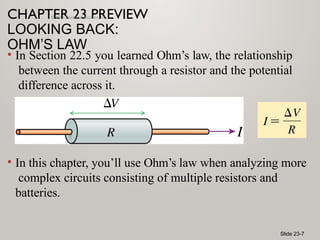
Social Media
Marketing
Technology
Art & Photos
Career
Design
Education
Presentations & Public Speaking
Government & Nonprofit
Healthcare
Internet
Law
Leadership & Management
Automotive
Engineering
Software
Recruiting & HR
Retail
Sales
Services
Science
Small Business & Entrepreneurship
Food
Environment
Economy & Finance
Data & Analytics
Investor Relations
Sports
Spiritual
News & Politics
Travel
Self Improvement
Real Estate
Entertainment & Humor
Health & Medicine
Devices & Hardware
Lifestyle
Change Language
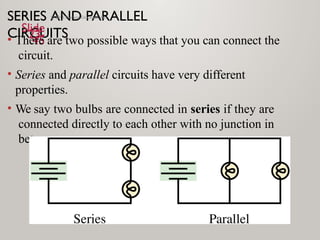
Language
English
Español
Português
Français
Deutsche
Cancel
Save
Submit search
EN
Uploaded by
SamAgustineRosil1
PPTX, PDF
8 views
Physics10 - CIRCUITS_Lecture Slides.pptx
Lecture on circuits for science 10
Education
◦
Read more
0
Save
Share
Embed
Embed presentation
Download
Download to read offline
1
/ 226
2
/ 226
3
/ 226
4
/ 226
5
/ 226
6
/ 226
7
/ 226
8
/ 226
9
/ 226
10
/ 226
11
/ 226
12
/ 226
13
/ 226
14
/ 226
15
/ 226
16
/ 226
17
/ 226
18
/ 226
19
/ 226
20
/ 226
21
/ 226
22
/ 226
23
/ 226
24
/ 226
25
/ 226
26
/ 226
27
/ 226
28
/ 226
29
/ 226
30
/ 226
31
/ 226
32
/ 226
33
/ 226
34
/ 226
35
/ 226
36
/ 226
37
/ 226
38
/ 226
39
/ 226
40
/ 226
41
/ 226
42
/ 226
43
/ 226
44
/ 226
45
/ 226
46
/ 226
47
/ 226
48
/ 226
49
/ 226
50
/ 226
51
/ 226
52
/ 226
53
/ 226
54
/ 226
55
/ 226
56
/ 226
57
/ 226
58
/ 226
59
/ 226
60
/ 226
61
/ 226
62
/ 226
63
/ 226
64
/ 226
65
/ 226
66
/ 226
67
/ 226
68
/ 226
69
/ 226
70
/ 226
71
/ 226
72
/ 226
73
/ 226
74
/ 226
75
/ 226
76
/ 226
77
/ 226
78
/ 226
79
/ 226
80
/ 226
81
/ 226
82
/ 226
83
/ 226
84
/ 226
85
/ 226
86
/ 226
87
/ 226
88
/ 226
89
/ 226
90
/ 226
91
/ 226
92
/ 226
93
/ 226
94
/ 226
95
/ 226
96
/ 226
97
/ 226
98
/ 226
99
/ 226
100
/ 226
101
/ 226
102
/ 226
103
/ 226
104
/ 226
105
/ 226
106
/ 226
107
/ 226
108
/ 226
109
/ 226
110
/ 226
111
/ 226
112
/ 226
113
/ 226
114
/ 226
115
/ 226
116
/ 226
117
/ 226
118
/ 226
119
/ 226
120
/ 226
121
/ 226
122
/ 226
123
/ 226
124
/ 226
125
/ 226
126
/ 226
127
/ 226
128
/ 226
129
/ 226
130
/ 226
131
/ 226
132
/ 226
133
/ 226
134
/ 226
135
/ 226
136
/ 226
137
/ 226
138
/ 226
139
/ 226
140
/ 226
141
/ 226
142
/ 226
143
/ 226
144
/ 226
145
/ 226
146
/ 226
147
/ 226
148
/ 226
149
/ 226
150
/ 226
151
/ 226
152
/ 226
153
/ 226
154
/ 226
155
/ 226
156
/ 226
157
/ 226
158
/ 226
159
/ 226
160
/ 226
161
/ 226
162
/ 226
163
/ 226
164
/ 226
165
/ 226
166
/ 226
167
/ 226
168
/ 226
169
/ 226
170
/ 226
171
/ 226
172
/ 226
173
/ 226
174
/ 226
175
/ 226
176
/ 226
177
/ 226
178
/ 226
179
/ 226
180
/ 226
181
/ 226
182
/ 226
183
/ 226
184
/ 226
185
/ 226
186
/ 226
187
/ 226
188
/ 226
189
/ 226
190
/ 226
191
/ 226
192
/ 226
193
/ 226
194
/ 226
195
/ 226
196
/ 226
197
/ 226
198
/ 226
199
/ 226
200
/ 226
201
/ 226
202
/ 226
203
/ 226
204
/ 226
205
/ 226
206
/ 226
207
/ 226
208
/ 226
209
/ 226
210
/ 226
211
/ 226
212
/ 226
213
/ 226
214
/ 226
215
/ 226
216
/ 226
217
/ 226
218
/ 226
219
/ 226
220
/ 226
221
/ 226
222
/ 226
223
/ 226
224
/ 226
225
/ 226
226
/ 226
More Related Content
PPTX
electric circuit calculation and applications
by
khaledstephann
PPTX
The classroom 12 G8 Science Q1- Week 7- Parallel and Series Circuit.pptx
by
aickensaga
PPTX
LESSON 5 - DIRECT CURRENT and circuits.pptx
by
PrinceDeTorres
PPT
7525067.pptooooooooooooooooooooooooooooo
by
sangamary90
PPTX
Lecture (2) hhhhhhhhhhhhhhBasic Laws.pptx
by
AbdelhameedRabieaaKh
PPTX
EEE120-LEC 2_11235272772883727643.pptxjjs
by
mamarobanosair
DOC
Circuits 1,2
by
ssuserb043cd
PPTX
Circuits.pptx
by
XgApaz
electric circuit calculation and applications
by
khaledstephann
The classroom 12 G8 Science Q1- Week 7- Parallel and Series Circuit.pptx
by
aickensaga
LESSON 5 - DIRECT CURRENT and circuits.pptx
by
PrinceDeTorres
7525067.pptooooooooooooooooooooooooooooo
by
sangamary90
Lecture (2) hhhhhhhhhhhhhhBasic Laws.pptx
by
AbdelhameedRabieaaKh
EEE120-LEC 2_11235272772883727643.pptxjjs
by
mamarobanosair
Circuits 1,2
by
ssuserb043cd
Circuits.pptx
by
XgApaz
Similar to Physics10 - CIRCUITS_Lecture Slides.pptx
PPTX
BASIC ELECTRICAL ENGINEERING BEEE
by
Prasant Kumar
PPT
DC circuit
by
prempanigrahi
PPTX
12 G8 Science Q1- Week 7- Parallel and Series Circuit (1).pptx
by
JESSALOUCAPAPAS2
PDF
Kirchhoff's current law and voltage law.pdf
by
MeeraGandhiDoshi
PPTX
19_LectureOutline newton first law .pptx
by
dwyphy
PDF
Basic laws linear circuit analysis
by
ZulqarnainEngineerin
PPT
FUNDAMENTALS OF ELECTRICAL AND ELECTRONICS ENGINEERING FOR STUDENTS.ppt
by
Bismark Budu
PPT
4 direct current circuits
by
Ruben Conde
PPT
chapter28.ppt
by
ssuser28b150
PPTX
1.1 Introduction to DC Circuits EEE.pptx
by
karthikeyanS725446
PPT
Topic 1 a_basic_concepts_and_theorem
by
Gabriel O'Brien
PPTX
DC measurement.pptx
by
AliAlZyoud2
PDF
Lecture 1a [compatibility mode]
by
Sporsho
PPT
Chapter_2_Basic_Circuit_Laws.ppt
by
NabeelBashir10
PDF
Module 1 ELECTRONICS
by
Army Public School and College -Faisal
PPT
Electronics I Basi Concepts Unit 2.ppt
by
Sphumzo2012
PPT
BEEE - Part A - Unit 1 DC Circuits PPT.ppt
by
nagarajesh87
PPTX
18 beps02 electrical technology
by
mahalakshmimalini
PPTX
bee
by
Harishreddy Singoor
PDF
Module 1
by
Army Public School and College -Faisal
BASIC ELECTRICAL ENGINEERING BEEE
by
Prasant Kumar
DC circuit
by
prempanigrahi
12 G8 Science Q1- Week 7- Parallel and Series Circuit (1).pptx
by
JESSALOUCAPAPAS2
Kirchhoff's current law and voltage law.pdf
by
MeeraGandhiDoshi
19_LectureOutline newton first law .pptx
by
dwyphy
Basic laws linear circuit analysis
by
ZulqarnainEngineerin
FUNDAMENTALS OF ELECTRICAL AND ELECTRONICS ENGINEERING FOR STUDENTS.ppt
by
Bismark Budu
4 direct current circuits
by
Ruben Conde
chapter28.ppt
by
ssuser28b150
1.1 Introduction to DC Circuits EEE.pptx
by
karthikeyanS725446
Topic 1 a_basic_concepts_and_theorem
by
Gabriel O'Brien
DC measurement.pptx
by
AliAlZyoud2
Lecture 1a [compatibility mode]
by
Sporsho
Chapter_2_Basic_Circuit_Laws.ppt
by
NabeelBashir10
Module 1 ELECTRONICS
by
Army Public School and College -Faisal
Electronics I Basi Concepts Unit 2.ppt
by
Sphumzo2012
BEEE - Part A - Unit 1 DC Circuits PPT.ppt
by
nagarajesh87
18 beps02 electrical technology
by
mahalakshmimalini
bee
by
Harishreddy Singoor
Module 1
by
Army Public School and College -Faisal
Recently uploaded
PDF
Pharmaceutical Biotechnology unitI Notes
by
Bhagyashree Prakash Gajbhare
PDF
Application of ICT Lecture 7 Ethical Considerations in Use of ICT Platforms a...
by
Khalil Khan Marwat
PPTX
CHAPTER NO. 05 DIURETICS PHARMACOGNOSY.pptx
by
Ganu Gavade
PPTX
Chapter No. 5 Anti- Hypertensive Pharmacognosy-2.pptx
by
Ganu Gavade
PDF
Sentence Comprehension The Integration of Habits and Rules (Language, Speech,...
by
Man_Ebook
PPTX
LEARNING PART 2.SHILPA HOTAKAR PSYCHOLOGY NOTES pptx
by
SHILPA HOTAKAR
PDF
BÀI TẬP BỔ TRỢ 4 KỸ NĂNG TIẾNG ANH 9 GLOBAL SUCCESS - CẢ NĂM - BÁM SÁT FORM Đ...
by
Nguyen Thanh Tu Collection
PDF
Homebound (2025): A Critical Analysis of Social Realism, Systemic Apathy, and...
by
krutivyas2005
PDF
Visualising Library Insights: Power BI Dashboard for Data-Driven Decision Mak...
by
CONUL Conference
PDF
Generative AI and Bibliographic Record Generation: Reflections on Experiments...
by
CONUL Conference
PPTX
Set online status in Odoo 19_Do not distrurb
by
Celine George
PPTX
Caring for Collections – New directions at UCC Library. Louise O’Connor, Uni...
by
CONUL Conference
PPTX
English 8 Q3 Wk8.pptx opinion editorial article( Writing , Revising, Editing...
by
jacquelyncastre03
PPTX
Archival literacy and engagement through Brightspace: the new Special Collect...
by
CONUL Conference
PPTX
From Vision to Action: UCC Library’s Digital & Information Literacy Framework...
by
CONUL Conference
PPTX
AI Literacy at UCD Library. Dr Marta Bustillo & Sandra Dunkin, University Col...
by
CONUL Conference
PPTX
From AI curious to AI conversant – a year of experimentation at TCD Library. ...
by
CONUL Conference
PPTX
Conduction System of the Heart, The Cardiac Cycle, The Cardiac Output, ECG.pptx
by
Ashish Umale
PPTX
PixelX : Think Design Experience powerpoint presentation
by
VinaySiddha
PDF
IoT communication protocols and Cloud Platforms.pdf
by
harshil60
Pharmaceutical Biotechnology unitI Notes
by
Bhagyashree Prakash Gajbhare
Application of ICT Lecture 7 Ethical Considerations in Use of ICT Platforms a...
by
Khalil Khan Marwat
CHAPTER NO. 05 DIURETICS PHARMACOGNOSY.pptx
by
Ganu Gavade
Chapter No. 5 Anti- Hypertensive Pharmacognosy-2.pptx
by
Ganu Gavade
Sentence Comprehension The Integration of Habits and Rules (Language, Speech,...
by
Man_Ebook
LEARNING PART 2.SHILPA HOTAKAR PSYCHOLOGY NOTES pptx
by
SHILPA HOTAKAR
BÀI TẬP BỔ TRỢ 4 KỸ NĂNG TIẾNG ANH 9 GLOBAL SUCCESS - CẢ NĂM - BÁM SÁT FORM Đ...
by
Nguyen Thanh Tu Collection
Homebound (2025): A Critical Analysis of Social Realism, Systemic Apathy, and...
by
krutivyas2005
Visualising Library Insights: Power BI Dashboard for Data-Driven Decision Mak...
by
CONUL Conference
Generative AI and Bibliographic Record Generation: Reflections on Experiments...
by
CONUL Conference
Set online status in Odoo 19_Do not distrurb
by
Celine George
Caring for Collections – New directions at UCC Library. Louise O’Connor, Uni...
by
CONUL Conference
English 8 Q3 Wk8.pptx opinion editorial article( Writing , Revising, Editing...
by
jacquelyncastre03
Archival literacy and engagement through Brightspace: the new Special Collect...
by
CONUL Conference
From Vision to Action: UCC Library’s Digital & Information Literacy Framework...
by
CONUL Conference
AI Literacy at UCD Library. Dr Marta Bustillo & Sandra Dunkin, University Col...
by
CONUL Conference
From AI curious to AI conversant – a year of experimentation at TCD Library. ...
by
CONUL Conference
Conduction System of the Heart, The Cardiac Cycle, The Cardiac Output, ECG.pptx
by
Ashish Umale
PixelX : Think Design Experience powerpoint presentation
by
VinaySiddha
IoT communication protocols and Cloud Platforms.pdf
by
harshil60
Physics10 - CIRCUITS_Lecture Slides.pptx
1.
LECTURE PRESENTATION Chapter 23 Circuits © 2015
Pearson Education, Inc.
2.
CHAPTER 23 CIRCUITS Slide 23-2 Chapter
Goal: To understand the fundamental physical principles that govern electric circuits.
3.
CHAPTER 23 PREVIEW LOOKING
AHEAD: ANALYZING CIRCUITS © 2015 Pearson Education, Inc. • Practical circuits consist of many elements—resistors, batteries, capacitors—connected together. • You’ll learn how to analyze complex circuits by breaking them into simpler pieces. Slide 23-3
4.
CHAPTER 23 PREVIEW LOOKING
AHEAD: SERIES AND PARALLEL CIRCUITS © 2015 Pearson Education, Inc. • There are two basic ways to connect resistors together and capacitors together: series circuits and parallel circuits. • You’ll learn why holiday lights are wired in series but headlights are in parallel. Slide 23-4
5.
CHAPTER 23 PREVIEW LOOKING
AHEAD: ELECTRICITY IN THE BODY © 2015 Pearson Education, Inc. • Your nervous system works by transmitting electrical signals along axons, the long nerve fibers shown here. • You’ll learn how to understand nerve impulses in terms of the resistance, capacitance, and electric potential of individual nerve cells. Slide 23-5
6.
CHAPTER 23 PREVIEW LOOKING AHEAD ©
2015 Pearson Education, Inc. Text: p. 727 Slide 23-6
7.
CHAPTER 23 PREVIEW LOOKING
BACK: OHM’S LAW © 2015 Pearson Education, Inc. • In Section 22.5 you learned Ohm’s law, the relationship between the current through a resistor and the potential difference across it. • In this chapter, you’ll use Ohm’s law when analyzing more complex circuits consisting of multiple resistors and batteries. Slide 23-7
8.
CHAPTER 23 PREVIEW STOP TO
THINK © 2015 Pearson Education, Inc. Rank in order, from smallest to largest, the resistances R1 to R4 of the four resistors. Slide 23-8
9.
READING QUESTION 23.1 © 2015
Pearson Education, Inc. The symbol shown represents a A. Battery. B. Resistor. C. Capacitor. D. Transistor. Slide 23-9
10.
READING QUESTION 23.1 © 2015
Pearson Education, Inc. The symbol shown represents a A. Battery. B. Resistor. C. Capacitor. D. Transistor. Slide 23-10
11.
READING QUESTION 23.2 © 2015
Pearson Education, Inc. The bulbs in the circuit below are connected . A. In series B. In parallel Slide 23-11
12.
READING QUESTION 23.2 © 2015
Pearson Education, Inc. The bulbs in the circuit below are connected . A. In series B. In parallel Slide 23-12
13.
Which terminal of
the battery has a higher potential? A. The top terminal B. The bottom terminal READING QUESTION 23.3 © 2015 Pearson Education, Inc. Slide 23-13
14.
READING QUESTION 23.3 © 2015
Pearson Education, Inc. Which terminal of the battery has a higher potential? A. The top terminal B. The bottom terminal Slide 23-14
15.
Slide 23-15 READING QUESTION 23.4 ©
2015 Pearson Education, Inc. When three resistors are combined in series the total resistance of the combination is A. Greater than any of the individual resistance values. B. Less than any of the individual resistance values. C. The average of the individual resistance values.
16.
READING QUESTION 23.4 © 2015
Pearson Education, Inc. When three resistors are combined in series the total resistance of the combination is A. Greater than any of the individual resistance values. B. Less than any of the individual resistance values. C. The average of the individual resistance values. Slide 23-16
17.
Slide 23-17 READING QUESTION 23.5 ©
2015 Pearson Education, Inc. In an RC circuit, what is the name of the quantity represented by the symbol ? A. The decay constant B. The characteristic time C. The time constant D. The resistive component E. The Kirchoff
18.
READING QUESTION 23.5 © 2015
Pearson Education, Inc. In an RC circuit, what is the name of the quantity represented by the symbol ? A. The decay constant B. The characteristic time C. The time constant D. The resistive component E. The Kirchoff Slide 23-18
19.
SECTION 23.1 CIRCUIT
ELEMENTS AND DIAGRAMS © 2015 Pearson Education, Inc.
20.
CIRCUIT ELEMENTS AND DIAGRAMS ©
2015 Pearson Education, Inc. Slide 23-20 • This is an electric circuit in which a resistor and a capacitor are connected by wires to a battery. • To understand the operation of the circuit, we do not need to know whether the wires are bent or straight, or whether the battery is to the right or left of the resistor. • The literal picture provides many irrelevant details.
21.
Slide 23-21 CIRCUIT ELEMENTS
AND DIAGRAMS © 2015 Pearson Education, Inc. • Rather than drawing a literal picture of circuit to describe or analyze circuits, we use a more abstract picture called a circuit diagram. • A circuit diagram is a logical picture of what is connected to what. • The actual circuit may look quite different from the circuit diagram, but it will have the same logic and connections.
22.
CIRCUIT ELEMENTS AND DIAGRAMS ©
2015 Pearson Education, Inc. • Here are the basic symbols used for electric circuit drawings: Slide 23-22
23.
CIRCUIT ELEMENTS AND DIAGRAMS ©
2015 Pearson Education, Inc. • Here are the basic symbols used for electric circuit drawings: Slide 23-23
24.
QUICKCHECK 23.1 © 2015 Pearson
Education, Inc. Does the bulb light? A. Yes B. No C. I’m not sure. Slide 23-24
25.
QUICKCHECK 23.1 © 2015 Pearson
Education, Inc. Does the bulb light? A. Ye s B. No C. I’m not sure. Not a complete circuit Slide 23-25
26.
CIRCUIT ELEMENTS AND DIAGRAMS ©
2015 Pearson Education, Inc. • The circuit diagram for the simple circuit is now shown. • The battery’s emf ℇ, the resistance R, and the capacitance C of the capacitor are written beside the circuit elements. • The wires, which in practice may bend and curve, are shown as straight-line connections between the circuit elements. Slide 23-26
27.
SECTION 23.2 KIRCHHOFF’S LAW ©
2015 Pearson Education, Inc.
28.
KIRCHHOFF’S LAWS © 2015 Pearson
Education, Inc. • Kirchhoff ’s junction law, as we learned in Chapter 22, states that the total current into a junction must equal the total current leaving the junction. • This is a result of charge and current conservation: Slide 23-28
29.
Slide 23-29 KIRCHHOFF’S LAWS © 2015
Pearson Education, Inc. • The gravitational potential energy of an object depends only on its position, not on the path it took to get to that position. • The same is true of electric potential energy. If a charged particle moves around a closed loop and returns to its starting point, there is no net change in its electric potential energy: Δuelec = 0. • Because V = Uelec/q, the net change in the electric potential around any loop or closed path must be zero as well.
30.
KIRCHHOFF’S LAWS © 2015 Pearson
Education, Inc. Slide 23-30
31.
KIRCHHOFF’S LAWS © 2015 Pearson
Education, Inc. • For any circuit, if we add all of the potential differences around the loop formed by the circuit, the sum must be zero. • This result is Kirchhoff’s loop law: • ΔVi is the potential difference of the ith component of the loop. Slide 23-31
32.
KIRCHHOFF’S LAWS © 2015 Pearson
Education, Inc. Text: pp. 729–730 Slide 23-32
33.
KIRCHHOFF’S LAWS © 2015 Pearson
Education, Inc. Slide 23-33 Text: p. 730
34.
Slide 23-34 KIRCHHOFF’S LAWS © 2015
Pearson Education, Inc. • ΔVbat can be positive or negative for a battery, but ΔVR for a resistor is always negative because the potential in a resistor decreases along the direction of the current. • Because the potential across a resistor always decreases, we often speak of the voltage drop across the resistor.
35.
KIRCHHOFF’S LAWS © 2015 Pearson
Education, Inc. • The most basic electric circuit is a single resistor connected to the two terminals of a battery. • There are no junctions, so the current is the same in all parts of the circuit. Slide 23-35
36.
KIRCHHOFF’S LAWS © 2015 Pearson
Education, Inc. • The first three steps of the analysis of the basic circuit using Kirchhoff’s Laws: Slide 23-36
37.
KIRCHHOFF’S LAWS © 2015 Pearson
Education, Inc. • The fourth step in analyzing a circuit is to apply Kirchhoff’s loop law: • First we must find the values for ΔVbat and ΔVR. Slide 23-37
38.
KIRCHHOFF’S LAWS © 2015 Pearson
Education, Inc. • The potential increases as we travel through the battery on our clockwise journey around the loop. We enter the negative terminal and exit the positive terminal after having gained potential ℇ. • Thus ΔVbat = + ℇ. Slide 23-38
39.
KIRCHHOFF’S LAWS © 2015 Pearson
Education, Inc. • The magnitude of the potential difference across the resistor is ΔV = IR, but Ohm’s law does not tell us whether this should be positive or negative. The potential of a resistor decreases in the direction of the current, which is indicated with + and signs in the figure. • Thus, ΔVR = IR. Slide 23-39
40.
KIRCHHOFF’S LAWS © 2015 Pearson
Education, Inc. • With the values of ΔVbat and ΔVR, we can use Kirchhoff’s loop law: • We can solve for the current in the circuit: Slide 23-40
41.
QUICKCHECK 23.6 © 2015 Pearson
Education, Inc. The diagram below shows a segment of a circuit. What is the current in the 200 Ω resistor? A. 0.5 A B. 1.0 A C. 1.5 A D. 2.0 A E. There is not enough information to decide. Slide 23-41
42.
QUICKCHECK 23.6 © 2015 Pearson
Education, Inc. The diagram below shows a segment of a circuit. What is the current in the 200 Ω resistor? A. 0.5 A B. 1.0 A C. 1.5 A D. 2.0 A E. There is not enough information to decide. Slide 23-42
43.
Example Problem There is
a current of 1.0 A in the following circuit. What is the resistance of the unknown circuit element? Slide 23-43 © 2015 Pearson Education, Inc.
44.
SECTION 23.3 SERIES
AND PARALLEL CIRCUITS © 2015 Pearson Education, Inc.
45.
SERIES AND PARALLEL CIRCUITS ©
2015 Pearson Education, Inc. Slide 23- 45 • There are two possible ways that you can connect the circuit. • Series and parallel circuits have very different properties. • We say two bulbs are connected in series if they are connected directly to each other with no junction in between.
46.
QUICKCHECK 23.4 © 2015 Pearson
Education, Inc. Slide 23- 46 The circuit shown has a battery, two capacitors, and a resistor. Which of the following circuit diagrams is the best representation of the circuit shown?
47.
QUICKCHECK 23.4 © 2015 Pearson
Education, Inc. Slide 23- 47 The circuit shown has a battery, two capacitors, and a resistor. Which of the following circuit diagrams is the best representation of the circuit shown? A
48.
QuickCheck 23.5 Which is
the correct circuit diagram for the circuit shown? © 2015 Pearson Education, Inc. Slide 23-48
49.
QUICKCHECK 23.5 © 2015 Pearson
Education, Inc. Slide 23- 49 Which is the correct circuit diagram for the circuit shown? A
50.
Example 23.2 Brightness
of bulbs in series FIGURE 23.11 shows two identical lightbulbs connected in series. Which bulb is brighter: A or B? Or are they equally bright? © 2015 Pearson Education, Inc. Slide 23-50
51.
EXAMPLE 23.2 BRIGHTNESS
OF BULBS IN SERIES (CONT.) © 2015 Pearson Education, Inc. Slide 23-51 REASON Current is conserved, and there are no junctions in the circuit. Thus, as FIGURE 23.12 shows, the current is the same at all points.
52.
EXAMPLE 23.2 BRIGHTNESS
OF BULBS IN SERIES (CONT.) © 2015 Pearson Education, Inc. Slide 23- 52 We learned in ◀SECTION 22.6 that the power dissipated by a resistor is P = I 2R. If the two bulbs are identical (i.e., the same resistance) and have the same current through them, the power dissipated by each bulb is the same. This means that the brightness of the bulbs must be the same. The voltage across each of the bulbs will be the same as well because ∆V = IR.
53.
EXAMPLE 23.2 BRIGHTNESS
OF BULBS IN SERIES (CONT.) © 2015 Pearson Education, Inc. Slide 23- 53 ASSESS It’s perhaps tempting to think that bulb A will be brighter than bulb B, thinking that something is “used up” before the current gets to bulb B. It is true that energy is being transformed in each bulb, but current must be conserved and so both bulbs dissipate energy at the same rate. We can extend this logic to a special case: If one bulb burns out, and no longer lights, the second bulb will go dark as well. If one bulb can no longer carry a current, neither can the other.
54.
QUICKCHECK 23.12 © 2015 Pearson
Education, Inc. Slide 23- 54 Which bulb is brighter? A. The 60 W bulb. B. The 100 W bulb. C. Their brightnesses are the same. D. There’s not enough information to tell.
55.
QUICKCHECK 23.12 © 2015 Pearson
Education, Inc. Slide 23- 55 Which bulb is brighter? A. The 60 W bulb. B. The 100 W bulb. C. Their brightnesses are the same. D. There’s not enough information to tell. P = I2R and both have the same current.
56.
SERIES RESISTORS © 2015 Pearson
Education, Inc. Slide 23- 56 • This figure shows two resistors in series connected to a battery. • Because there are no junctions, the current I must be the same in both resistors.
57.
SERIES RESISTORS © 2015 Pearson
Education, Inc. Slide 23- 57 • We use Kirchhoff’s loop law to look at the potential differences.
58.
SERIES RESISTORS © 2015 Pearson
Education, Inc. Slide 23- 58 • The voltage drops across the two resistors, in the direction of the current, are ΔV1 = IR1 and ΔV2 = IR2. • We solve for the current in the circuit:
59.
QUICKCHECK 23.13 © 2015 Pearson
Education, Inc. Slide 23- 59 The battery current I is A. 3 A B. 2 A C. 1 A D. 2/3 A E. 1/2 A
60.
QUICKCHECK 23.13 © 2015 Pearson
Education, Inc. Slide 23- 60 The battery current I is A. 3 A B. 2 A C. 1 A D. 2/3 A E. 1/2 A
61.
QUICKCHECK 23.9 © 2015 Pearson
Education, Inc. Slide 23- 61 The diagram below shows a circuit with two batteries and three resistors. What is the potential difference across the 200 Ω resistor? A. 2.0 V B. 3.0 V C. 4.5 V D. 7.5 V E. There is not enough information to decide.
62.
QUICKCHECK 23.9 © 2015 Pearson
Education, Inc. Slide 23- 62 The diagram below shows a circuit with two batteries and three resistors. What is the potential difference across the 200 Ω resistor? A. 2.0 V B. 3.0 V C. 4.5 V D. 7.5 V E. There is not enough information to decide.
63.
SERIES RESISTORS © 2015 Pearson
Education, Inc. Slide 23- 63 • If we replace two resistors with a single resistor having the value Req = R1 + R2 the total potential difference across this resistor is still ℇ because the potential difference is established by the battery.
64.
SERIES RESISTORS © 2015 Pearson
Education, Inc. Slide 23- 64 • The current in the single resistor circuit is: • The single resistor is equivalent to the two series resistors in the sense that the circuit’s current and potential difference are the same in both cases. • If we have N resistors in series, their equivalent resistance is the sum of the N individual resistances:
65.
QUICKCHECK 23.7 © 2015 Pearson
Education, Inc. Slide 23- 65 The current through the 3 resistor is A. 9 A B. 6 A C. 5 A D. 3 A E. 1 A
66.
QUICKCHECK 23.7 © 2015 Pearson
Education, Inc. Slide 23- 66 The current through the 3 resistor is A. 9 A B. 6 A C. 5 A D. 3 A E. 1 A
67.
EXAMPLE 23.3 POTENTIAL
DIFFERENCE OF CHRISTMAS- TREE MINILIGHTS © 2015 Pearson Education, Inc. Slide 23-67 A string of Christmas-tree minilights consists of 50 bulbs wired in series. What is the potential difference across each bulb when the string is plugged into a 120 V outlet?
68.
EXAMPLE 23.3 POTENTIAL
DIFFERENCE OF CHRISTMAS- TREE MINILIGHTS (CONT.) © 2015 Pearson Education, Inc. Slide 23-68 PREPARE FIGURE 23.14 shows the minilight circuit, which has 50 bulbs in series. The current in each of the bulbs is the same because they are in series.
69.
EXAMPLE 23.3 POTENTIAL
DIFFERENCE OF CHRISTMAS- TREE MINILIGHTS (CONT.) © 2015 Pearson Education, Inc. Slide 23-69 SOLVE Applying Kirchhoff’s loop law around the circuit, we find
70.
EXAMPLE 23.3 POTENTIAL DIFFERENCE
OF CHRISTMAS- TREE MINILIGHTS (CONT.) © 2015 Pearson Education, Inc. Slide 23- 70 The bulbs are all identical and, because the current in the bulbs is the same, all of the bulbs have the same potential difference. The potential difference across a single bulb is thus
71.
EXAMPLE 23.3 POTENTIAL DIFFERENCE
OF CHRISTMAS- TREE MINILIGHTS (CONT.) © 2015 Pearson Education, Inc. Slide 23- 71 ASSESS This result seems reasonable. The potential difference is “shared” by the bulbs in the circuit. Since the potential difference is shared among 50 bulbs, the potential difference across each bulb will be quite small.
72.
SERIES RESISTORS © 2015 Pearson
Education, Inc. Slide 23- 72 • We compare two circuits: one with a single lightbulb, and the other with two lightbulbs connected in series. All of the batteries and bulbs are identical. • How does the brightness of the bulbs in the different circuits compare?
73.
SERIES RESISTORS © 2015 Pearson
Education, Inc. Slide 23- 73 • In a circuit with one bulb, circuit A, a battery drives the current IA = ℇ/R through the bulb. • In a circuit, with two bulbs (in series) with the same resistance R, circuit B, the equivalent resistance is Req = 2R. • The current running through the bulbs in the circuit B is IB = ℇ/2R. • Since the emf from the battery and the resistors are the same in each circuit, IB = ½ IA. • The two bulbs in circuit B are equally bright, but they are dimmer than the bulb in circuit A because there is less current.
74.
SERIES RESISTORS © 2015 Pearson
Education, Inc. Slide 23- 74 • A battery is a source of potential difference, not a source of current. • The battery does provide the current in a circuit, but the amount of current depends on the resistance. • The amount of current depends jointly on the battery’s emf and the resistance of the circuit attached to the battery.
75.
PARALLEL RESISTORS © 2015 Pearson
Education, Inc. Slide 23- 75 • In a circuit where two bulbs are connected at both ends, we say that they are connected in parallel.
76.
Conceptual Example 23.5
Brightness of bulbs in parallel Which lightbulb in the circuit of FIGURE 23.18 is brighter: A or B? Or are they equally bright? © 2015 Pearson Education, Inc. Slide 23-76
77.
CONCEPTUAL EXAMPLE 23.5
BRIGHTNESS OF BULBS IN PARALLEL (CONT.) © 2015 Pearson Education, Inc. Slide 23- 77 Because the bulbs are identical, the currents through the two bulbs are equal and thus the bulbs are equally bright.
78.
CONCEPTUAL EXAMPLE 23.5
BRIGHTNESS OF BULBS IN PARALLEL (CONT.) •ASSESS One might think that A would be brighter than B because current takes the “shortest route.” But current is determined by potential difference, and two bulbs connected in parallel have the same potential difference. © 2015 Pearson Education, Inc. Slide 23- 78
79.
PARALLEL RESISTORS © 2015 Pearson
Education, Inc. Slide 23- 79 • The potential difference across each resistor in parallel is equal to the emf of the battery because both resistors are connected directly to the battery.
80.
PARALLEL RESISTORS © 2015 Pearson
Education, Inc. Slide 23- 80 • The current Ibat from the battery splits into currents I1 and I2 at the top of the junction. • According to the junction law, • Applying Ohm’s law to each resistor, we find that the battery current is
81.
PARALLEL RESISTORS © 2015 Pearson
Education, Inc. Slide 23- 81 • Can we replace a group of parallel resistors with a single equivalent resistor? • To be equivalent, ΔV must equal ℇ and I must equal Ibat: • This is the equivalent resistance, so a single Req acts exactly the same as multiple resistors.
82.
PARALLEL RESISTORS © 2015 Pearson
Education, Inc. Slide 23- 82
83.
PARALLEL RESISTORS © 2015 Pearson
Education, Inc. Slide 23- 83 • How does the brightness of bulb B compare to that of bulb A? • Each bulb is connected to the same potential difference, that of the battery, so they all have the same brightness. • In the second circuit, the battery must power two lightbulbs, so it provides twice as much current.
84.
QUICKCHECK 23.10 © 2015 Pearson
Education, Inc. Slide 23- 84 What things about the resistors in this circuit are the same for all three? A. Current I B. Potential difference V C. Resistance R D. A and B E. B and C
85.
QUICKCHECK 23.10 © 2015 Pearson
Education, Inc. Slide 23- 85 What things about the resistors in this circuit are the same for all three? A. Current I B. Potential difference V C. Resistance R D. A and B E. B and C
86.
QUICKCHECK 23.11 © 2015 Pearson
Education, Inc. Slide 23- 86 Which resistor dissipates more power? A. The 9 resistor B. The 1 resistor C. They dissipate the same power
87.
QUICKCHECK 23.11 © 2015 Pearson
Education, Inc. Slide 23- 87 Which resistor dissipates more power? A. The 9 resistor B. The 1 resistor C. They dissipate the same power
88.
Example 23.6 Current
in a parallel resistor circuit The three resistors of FIGURE 23.22 are connected to a 12 V battery. What current is provided by the battery? [Insert Figure 23.22] © 2015 Pearson Education, Inc. Slide 23-88
89.
Example 23.6 Current
in a parallel resistor circuit (cont.) PREPARE The three resistors are in parallel, so we can reduce them to a single equivalent resistor, as in FIGURE 23.23. © 2015 Pearson Education, Inc. Slide 23-89
90.
EXAMPLE 23.6 CURRENT
IN A PARALLEL RESISTOR CIRCUIT (CONT.) © 2015 Pearson Education, Inc. Slide 23- 90 SOLVE We can use Equation 23.12 to calculate the equivalent resistance: Once we know the equivalent resistance, we can use Ohm’s law to calculate the current leaving the battery:
91.
EXAMPLE 23.6 CURRENT
IN A PARALLEL RESISTOR CIRCUIT (CONT.) © 2015 Pearson Education, Inc. Slide 23- 91 Because the battery can’t tell the difference between the original three resistors and this single equivalent resistor, the battery in Figure 23.22 provides a current of 0.66 A to the circuit. ASSESS As we’ll see, the equivalent resistance of a group of parallel resistors is less than the resistance of any of the resistors in the group. 18 Ω is less than any of the individual values, a good check on our work.
92.
PARALLEL RESISTORS © 2015 Pearson
Education, Inc. Slide 23- 92 • It would seem that more resistors would imply more resistance. This is true for resistors in series, but not for resistors in parallel. • Parallel resistors provide more pathways for charge to get through. • The equivalent of several resistors in parallel is always less than any single resistor in the group. • An analogy is driving in heavy traffic. If there is an alternate route for cars to travel, more cars will be able to flow.
93.
QUICKCHECK 23.13 © 2015 Pearson
Education, Inc. Slide 23- 93 The battery current I is A. 3 A B. 2 A C. 1 A D. 2/3 A E. 1/2 A
94.
QUICKCHECK 23.13 © 2015 Pearson
Education, Inc. Slide 23- 94 The battery current I is A. 3 A B. 2 A C. 1 A D. 2/3 A E. 1/2 A
95.
QUICKCHECK 23.14 © 2015 Pearson
Education, Inc. Slide 23- 95 The battery current I is A. 3 A B. 2 A C. 1 A D. 2/3 A E. 1/2 A
96.
QUICKCHECK 23.14 © 2015 Pearson
Education, Inc. Slide 23- 96 The battery current I is A. 3 A B. 2 A C. 1 A D. 2/3 A E. 1/2 A
97.
QUICKCHECK 23.15 © 2015 Pearson
Education, Inc. Slide 23- 97 When the switch closes, the battery current A. Increases. B. Stays the same. C. Decreases.
98.
QUICKCHECK 23.15 © 2015 Pearson
Education, Inc. Slide 23- 98 When the switch closes, the battery current A. Increases. B. Stays the same. C. Decreases. Equivalent resistance decreases. Potential difference is unchanged.
99.
QUICKCHECK 23.2 © 2015 Pearson
Education, Inc. Slide 23- 99 The three bulbs are identical and the two batteries are identical. Compare the brightnesses of the bulbs. A. A B C B. A C B C. A B C D. A B C E. A B C
100.
QUICKCHECK 23.2 © 2015 Pearson
Education, Inc. Slide 23- 100 The three bulbs are identical and the two batteries are identical. Compare the brightnesses of the bulbs. A. A B C B. A C B C. A B C D. A B C E. A B C This question is checking your initial intuition. We’ll return to it later.
101.
QUICKCHECK 23.3 © 2015 Pearson
Education, Inc. Slide 23- 101 The three bulbs are identical and the two batteries are identical. Compare the brightnesses of the bulbs. A. A B C B. A C B C. A B C D. A B C E. A B C
102.
QUICKCHECK 23.3 © 2015 Pearson
Education, Inc. Slide 23- 102 The three bulbs are identical and the two batteries are identical. Compare the brightnesses of the bulbs. A. A B C B. A C B C. A B C D. A B C E. A B C This question is checking your initial intuition. We’ll return to it later.
103.
QUICKCHECK 23.18 © 2015 Pearson
Education, Inc. Slide 23- 103 The lightbulbs are identical. Initially both bulbs are glowing. What happens when the switch is closed? A. Nothing. B. A stays the same; B gets dimmer. C. A gets brighter; B stays the same. D. Both get dimmer. E. A gets brighter; B goes out.
104.
QUICKCHECK 23.18 © 2015 Pearson
Education, Inc. Slide 23- 104 The lightbulbs are identical. Initially both bulbs are glowing. What happens when the switch is closed? A. Nothing. B. A stays the same; B gets dimmer. C. A gets brighter; B stays the same. D. Both get dimmer. E. A gets brighter; B goes out. Short circuit. Zero resistance path.
105.
Example Problem What is
the current supplied by the battery in the following circuit? © 2015 Pearson Education, Inc. Slide 23- 105
106.
Example Problem A resistor
connected to a power supply works as a heater. Which of the following two circuits will provide more power? © 2015 Pearson Education, Inc. Slide 23- 106
107.
SECTION 23.4 MEASURING
VOLTAGE AND CURRENT © 2015 Pearson Education, Inc.
108.
Slide 23-108 MEASURING VOLTAGE
AND CURRENT © 2015 Pearson Education, Inc. • An ammeter is a device that measures the current in a circuit element. • Because charge flows through circuit elements, an ammeter must be placed in series with the circuit element whose current is to be measured.
109.
MEASURING VOLTAGE AND CURRENT ©
2015 Pearson Education, Inc. • In order to determine the resistance in this simple, one- resistor circuit with a fixed emf of 1.5 V, we must know the current in the circuit. Slide 23-109
110.
MEASURING VOLTAGE AND CURRENT ©
2015 Pearson Education, Inc. • To determine the current in the circuit, we insert the ammeter. To do so, we must break the connection between the battery and the resistor. • Because they are in series, the ammeter and the resistor have the same current. • The resistance of an ideal ammeter is zero so that it can measure the current without changing the current. Slide 23-110
111.
MEASURING VOLTAGE AND CURRENT ©
2015 Pearson Education, Inc. • In this circuit, the ammeter reads a current I = 0.60 A. • If the ammeter is ideal, there is no potential difference across it. The potential difference across the resistor is ΔV = ℇ. • The resistance is then calculated: Slide 23-111
112.
MEASURING VOLTAGE AND CURRENT ©
2015 Pearson Education, Inc. • A voltmeter is used to measure the potential differences in a circuit. • Because the potential difference is measured across a circuit element, a voltmeter is placed in parallel with the circuit element whose potential difference is to be measured. Slide 23-112
113.
MEASURING VOLTAGE AND CURRENT ©
2015 Pearson Education, Inc. • An ideal voltmeter has infinite resistance so that it can measure the voltage without changing the voltage. • Because it is in parallel with the resistor, the voltmeter’s resistance must be very large so that it draws very little current. Slide 23-113
114.
MEASURING VOLTAGE AND CURRENT ©
2015 Pearson Education, Inc. • The voltmeter finds the potential difference across the 24 Ω resistor to be 6.0 V. • The current through the resistor is: Slide 23-114
115.
MEASURING VOLTAGE AND CURRENT ©
2015 Pearson Education, Inc. • Kirchhoff’s law gives the potential difference across the unknown resistor: • ΔVR = 3.0V Slide 23-115
116.
QUICKCHECK 23.19 © 2015 Pearson
Education, Inc. What does the voltmeter read? A. 6 V B. 3 V C. 2 V D. Some other value E. Nothing because this will fry the meter. Slide 23-116
117.
QUICKCHECK 23.19 © 2015 Pearson
Education, Inc. What does the voltmeter read? A. 6 V B. 3 V C. 2 V D. Some other value E. Nothing because this will fry the meter. Slide 23-117
118.
QUICKCHECK 23.20 © 2015 Pearson
Education, Inc. Slide 23- 118 What does the ammeter read? A. 6 A B. 3 A C. 2 A D. Some other value E. Nothing because this will fry the meter.
119.
QUICKCHECK 23.20 © 2015 Pearson
Education, Inc. Slide 23- 119 What does the ammeter read? A. 6 A B. 3 A C. 2 A D. Some other value E. Nothing because this will fry the meter.
120.
SECTION 23.5 MORE
COMPLEX CIRCUITS © 2015 Pearson Education, Inc.
121.
MORE COMPLEX CIRCUITS © 2015
Pearson Education, Inc. Slide 23- 121 • Combinations of resistors can often be reduced to a single equivalent resistance through a step-by-step application of the series and parallel rules. • Two special cases: Two identical resistors in series: Req = 2R Two identical resistors in parallel: Req = R/2
122.
EXAMPLE 23.8 HOW
DOESTHE BRIGHTNESS CHANGE? © 2015 Pearson Education, Inc. Slide 23- 122 Initially the switch in FIGURE 23.28 is open. Bulbs A and B are equally bright, and bulb C is not glowing. What happens to the brightness of A and B when the switch is closed? And how does the brightness of C then compare to that of A and B? Assume that all bulbs are identical.
123.
EXAMPLE 23.8 HOW
DOESTHE BRIGHTNESS CHANGE? (CONT.) © 2015 Pearson Education, Inc. Slide 23- 123 SOLVE Suppose the resistance of each bulb is R. Initially, before the switch is closed, bulbs A and B are in series; bulb C is not part of the circuit. A and B are identical resistors in series, so their equivalent resistance is 2R and the current from the battery is This is the initial current in bulbs A and B, so they are equally bright.
124.
EXAMPLE 23.8 HOW
DOESTHE BRIGHTNESS CHANGE? (CONT.) © 2015 Pearson Education, Inc. Slide 23- 124 Closing the switch places bulbs B and C in parallel with each other. The equivalent resistance of the two identical resistors in parallel is RBC = R/2. This equivalent resistance of B and C is in series with bulb A; hence the total resistance of the circuit is and the current leaving the battery is Closing the switch decreases the total circuit resistance and
125.
All the current
from the battery passes through bulb A, so A increases in brightness when the switch is closed. The current Iafter then splits at the junction. Bulbs B and C have equal resistance, so the current divides equally. The current in B is (ℇ/R), which is less than Ibefore. Thus B decreases in brightness when the switch is closed. With the switch closed, bulbs B and C are in parallel, so bulb C has the same brightness as bulb B. EXAMPLE 23.8 HOW DOESTHE BRIGHTNESS CHANGE? (CONT.) © 2015 Pearson Education, Inc. Slide 23- 125
126.
EXAMPLE 23.8 HOW
DOESTHE BRIGHTNESS CHANGE? (CONT.) © 2015 Pearson Education, Inc. Slide 23- 126 ASSESS Our final results make sense. Initially, bulbs A and B are in series, and all of the current that goes through bulb A goes through bulb B. But when we add bulb C, the current has another option—it can go through bulb C. This will increase the total current, and all that current must go through bulb A, so we expect a brighter bulb A. But now the current through bulb A can go through bulbs B and C. The current splits, so we’d expect that bulb B will be dimmer than before.
127.
ANALYZING COMPLEX CIRCUITS © 2015
Pearson Education, Inc. Slide 23- 127 Text: p. 739
128.
ANALYZING COMPLEX CIRCUITS © 2015
Pearson Education, Inc. Text: p. 739 Slide 23-130
129.
ANALYZING COMPLEX CIRCUITS © 2015
Pearson Education, Inc. Slide 23- 129 Text: p. 739
130.
Example Problem What is
the current supplied by the battery in the following circuit? What is the current through each resistor in the circuit? What is the potential difference across each resistor? © 2015 Pearson Education, Inc. Slide 23- 130
131.
Example Problem What is
the equivalent resistance of the following circuit? © 2015 Pearson Education, Inc. Slide 23- 131
132.
SECTION 23.6 CAPACITORS
IN PARALLEL AND SERIES © 2015 Pearson Education, Inc.
133.
CAPACITORS IN PARALLEL
AND SERIES © 2015 Pearson Education, Inc. Slide 23- 133 • A capacitor is a circuit element made of two conductors separated by an insulating layer. • When the capacitor is connected to the battery, charge will flow to the capacitor, increasing its potential difference until ΔVC = ℇ • Once the capacitor is fully charged, there will be no further current.
134.
CAPACITORS IN PARALLEL
AND SERIES © 2015 Pearson Education, Inc. Slide 23- 134 • Parallel or series capacitors can be represented by a single equivalent capacitance.
135.
CAPACITORS IN PARALLEL
AND SERIES © 2015 Pearson Education, Inc. Slide 23- 135 • The total charge Q on the two capacitors is
136.
CAPACITORS IN PARALLEL
AND SERIES © 2015 Pearson Education, Inc. Slide 23- 136 • We can replace two capacitors in parallel by a single equivalent capacitance Ceq: • The equivalent capacitance has the same ΔVC but a greater charge.
137.
CAPACITORS IN PARALLEL
AND SERIES © 2015 Pearson Education, Inc. Slide 23- 137 • If N capacitors are in parallel, their equivalent capacitance is the sum of the individual capacitances:
138.
CAPACITORS IN PARALLEL
AND SERIES © 2015 Pearson Education, Inc. Slide 23-140
139.
CAPACITORS IN PARALLEL
AND SERIES © 2015 Pearson Education, Inc. Slide 23- 139 • The potential differences across two capacitors in series are ΔV1 = Q/C1 and ΔV2 = Q/C2 • The total potential difference across both capacitors is ΔVC = ΔV1 + ΔV2
140.
CAPACITORS IN PARALLEL
AND SERIES © 2015 Pearson Education, Inc. Slide 23- 140 • If we replace the two capacitors with a single capacitor having charge Q and potential difference ΔVC, then the inverse of the capacitance of this equivalent capacitor is • This analysis hinges on the fact that series capacitors each have the same charge Q.
141.
CAPACITORS IN PARALLEL
AND SERIES © 2015 Pearson Education, Inc. Slide 23- 141 • If N capacitors are in series, their equivalent capacitance is the inverse of the sum of the inverses of the individual capacitances: • For series capacitors the equivalent capacitance is less than that of the individual capacitors.
142.
QuickCheck 23.21 Which of
the following combinations of capacitors has the highest capacitance? © 2015 Pearson Education, Inc. Slide 23- 142
143.
QUICKCHECK 23.21 © 2015 Pearson
Education, Inc. Slide 23- 143 Which of the following combinations of capacitors has the highest capacitance? B
144.
QUICKCHECK 23.22 © 2015 Pearson
Education, Inc. Slide 23- 144 Which capacitor discharges more quickly after the switch is closed? A. Capacitor A B. Capacitor B C. They discharge at the same rate. D. We can’t say without knowing the initial amount of charge.
145.
QUICKCHECK 23.22 © 2015 Pearson
Education, Inc. Slide 23- 145 Which capacitor discharges more quickly after the switch is closed? A. Capacitor A B. Capacitor B C. They discharge at the same rate. D. We can’t say without knowing the initial amount of charge. Smaller time constant= RC
146.
EXAMPLE 23.10 ANALYZING
A CAPACITOR CIRCUIT © 2015 Pearson Education, Inc. Slide 23- 146 a. Find the equivalent capacitance of the combination of capacitors in the circuit of FIGURE 23.35. b. What charge flows through the battery as the capacitors are being charged?
147.
EXAMPLE 23.10 ANALYZING
A CAPACITOR CIRCUIT (CONT.) © 2015 Pearson Education, Inc. Slide 23- 147 PREPARE We can use the relationships for parallel and series capacitors to reduce the capacitors to a single equivalent capacitance, much as we did for resistor circuits. We can then compute the charge through the battery using this value of capacitance.
148.
EXAMPLE 23.10 ANALYZING
A CAPACITOR CIRCUIT (CONT.) © 2015 Pearson Education, Inc. Slide 23-150
149.
EXAMPLE 23.10 ANALYZING
A CAPACITOR CIRCUIT (CONT.) © 2015 Pearson Education, Inc. Slide 23- 149
150.
EXAMPLE 23.10 ANALYZING
A CAPACITOR CIRCUIT (CONT.) © 2015 Pearson Education, Inc. Slide 23- 150 The battery sees a capacitance of 2.0 F. To establish a potential difference of 12 V, the charge that must flow is Q = Ceq ∆VC = (2.0 10−6 F)(12 V) = 2.4 10−5 C ASSESS We solve capacitor circuit problems in a manner very similar to what we followed for resistor circuits.
151.
SECTION 23.7 RC CIRCUITS ©
2015 Pearson Education, Inc.
152.
RC CIRCUITS © 2015 Pearson
Education, Inc. Slide 23- 152 • RC circuits are circuits containing resistors and capacitors. • In RC circuits, the current varies with time. • The values of the resistance and the capacitance in an RC circuit determine the time it takes the capacitor to charge or discharge.
153.
RC CIRCUITS © 2015 Pearson
Education, Inc. Slide 23- 153 • The figure shows an RC circuit consisting of a charged capacitor, an open switch, and a resistor before the switch closes. The switch will close at t = 0.
154.
RC CIRCUITS © 2015 Pearson
Education, Inc. Slide 23- 154
155.
RC CIRCUITS © 2015 Pearson
Education, Inc. Slide 23- 155 • The initial potential difference is (ΔVC)0 = Q0/C. • The initial current—the initial rate at which the capacitor begins to discharge—is
156.
RC CIRCUITS © 2015 Pearson
Education, Inc. Slide 23- 156
157.
RC CIRCUITS © 2015 Pearson
Education, Inc. Slide 23- 157 • After some time, both the charge on the capacitor (and thus the potential difference) and the current in the circuit have decreased. • When the capacitor voltage has decreased to ΔVC, the current has decreased to • The current and the voltage decrease until the capacitor is fully discharged and the current is zero.
158.
RC CIRCUITS © 2015 Pearson
Education, Inc. • The current and the capacitor voltage decay to zero after the switch closes, but not linearly. Slide 23-160
159.
RC CIRCUITS © 2015 Pearson
Education, Inc. Slide 23- 159 • The decays of the voltage and the current are exponential decays:
160.
RC CIRCUITS © 2015 Pearson
Education, Inc. Slide 23- 160 • The time constant is a characteristic time for a circuit. A long time constant implies a slow decay; a short time constant, a rapid decay: = RC • In terms of the time constant, the current and voltage equations are
161.
RC CIRCUITS © 2015 Pearson
Education, Inc. Slide 23- 161 • The current and voltage in a circuit do not drop to zero after one time constant. Each increase in time by one time constant causes the voltage and current to decrease by a factor of e−1 = 0.37.
162.
RC CIRCUITS © 2015 Pearson
Education, Inc. Slide 23- 162
163.
RC CIRCUITS © 2015 Pearson
Education, Inc. Slide 23- 163 • The time constant has the form = RC. • A large resistance opposes the flow of charge, so increasing R increases the decay time. • A larger capacitance stores more charge, so increasing C also increases the decay time.
164.
QUICKCHECK 23.23 © 2015 Pearson
Education, Inc. Slide 23- 164 The following circuits contain capacitors that are charged to 5.0 V. All of the switches are closed at the same time. After 1 second has passed, which capacitor is charged to the highest voltage?
165.
QUICKCHECK 23.23 © 2015 Pearson
Education, Inc. Slide 23- 165 The following circuits contain capacitors that are charged to 5.0 V. All of the switches are closed at the same time. After 1 second has passed, which capacitor is charged to the highest voltage? C
166.
QUICKCHECK 23.24 © 2015 Pearson
Education, Inc. Slide 23- 166 In the following circuit, the switch is initially closed and the bulb glows brightly. When the switch is opened, what happens to the brightness of the bulb? A. The brightness of the bulb is not affected. B. The bulb starts at the same brightness and then gradually dims. C. The bulb starts and the same brightness and then gradually brightens. D. The bulb initially brightens, then gradually dims. E. The bulb initially dims, then gradually
167.
QUICKCHECK 23.24 © 2015 Pearson
Education, Inc. In the following circuit, the switch is initially closed and the bulb glows brightly. When the switch is opened, what happens to the brightness of the bulb? A. The brightness of the bulb is not affected. B. The bulb starts at the same brightness and then gradually dims. C. The bulb starts and the same brightness and then gradually brightens. D. The bulb initially brightens, then gradually dims. E. The bulb initially dims, then gradually Slide 23-169
168.
EXAMPLE 23.11 FINDINGTHE CURRENT
IN AN RC CIRCUIT •The switch in the circuit of FIGURE 23.40 has been in position a for a long time, so the capacitor is fully charged. The switch is changed to position b at t = 0. What is the current in the circuit immediately after the switch is closed? What is the current in the circuit 25 μs later? © 2015 Pearson Education, Inc. Slide 23-179
169.
EXAMPLE 23.11 FINDINGTHE CURRENT
IN AN RC CIRCUIT (CONT.) © 2015 Pearson Education, Inc. Slide 23- 169 SOLVE The capacitor is connected across the battery terminals, so initially it is charged to (∆VC)0 = 9.0 V. When the switch is closed, the initial current is given by Equation 23.20:
170.
EXAMPLE 23.11 FINDING
THE CURRENT IN AN RC CIRCUIT (CONT.) © 2015 Pearson Education, Inc. Slide 23- 170 As charge flows, the capacitor discharges. The time constant for the decay is given by Equation 23.23:
171.
EXAMPLE 23.11 FINDING
THE CURRENT IN AN RC CIRCUIT (CONT.) © 2015 Pearson Education, Inc. Slide 23- 171 The current in the circuit as a function of time is given by Equation 23.22. 25 s after the switch is closed, the current is
172.
EXAMPLE 23.11 FINDINGTHE CURRENT
IN AN RC CIRCUIT (CONT.) © 2015 Pearson Education, Inc. Slide 23- 172 ASSESS This result makes sense. 25 s after the switch has closed is 2.5 time constants, so we expect the current to decrease to a small fraction of the initial current. Notice that we left times in units of s; this is one of the rare cases where we needn’t convert to SI units. Because the exponent is t/, which involves a ratio of two times, we need only be certain that both t and are in the same units.
173.
CHARGING A CAPACITOR © 2015
Pearson Education, Inc. Slide 23- 173 • In a circuit that charges a capacitor, once the switch is closed, the potential difference of the battery causes a current in the circuit, and the capacitor begins to charge. • As the capacitor charges, it develops a potential difference that opposes the current, so the current decreases, and so does the rate of charging. • The capacitor charges until ΔVC = ℇ.
174.
CHARGING A CAPACITOR © 2015
Pearson Education, Inc. Slide 23- 174 • The equations that describe the capacitor voltage and the current as a function of time are
175.
QUICKCHECK 23.25 © 2015 Pearson
Education, Inc. Slide 23- 175 The capacitor is initially unchanged. Immediately after the switch closes, the capacitor voltage is A. 0 V B. Somewhere between 0 V and 6 V C. 6 V D. Undefined.
176.
QUICKCHECK 23.25 © 2015 Pearson
Education, Inc. Slide 23- 176 The capacitor is initially unchanged. Immediately after the switch closes, the capacitor voltage is A. 0 V B. Somewhere between 0 V and 6 V C. 6 V D. Undefined.
177.
QUICKCHECK 23.26 © 2015 Pearson
Education, Inc. Slide 23- 177 The red curve shows how the capacitor charges after the switch is closed at t = 0. Which curve shows the capacitor charging if the value of the resistor is reduced? B
178.
QUICKCHECK 23.26 © 2015 Pearson
Education, Inc. The red curve shows how the capacitor charges after the switch is closed at t = 0. Which curve shows the capacitor charging if the value of the resistor is reduced? Smaller time constant. Same ultimate amount of charge. B Slide 23-180
179.
EXAMPLE PROBLEM © 2015 Pearson
Education, Inc. The switch in the circuit shown has been in position a for a long time, so the capacitor is fully charged. The switch is changed to position b at t = 0. What is the current in the circuit immediately after the switch is closed? What is the current in the circuit 25 s later? Slide 23-181
180.
SECTION 23.8 ELECTRICITY
IN THE NERVOUS SYSTEM © 2015 Pearson Education, Inc.
181.
ELECTRICITY IN THE
NERVOUS SYSTEM © 2015 Pearson Education, Inc. Slide 23- 181 • In the late 1700s, the scientist Galvini and others revealed that electrical signals can animate muscle cells, and a small potential applied to the axon of a nerve cell can produce a signal that propagates down its length.
182.
THE ELECTRICAL NATURE
OF NERVE CELLS © 2015 Pearson Education, Inc. Slide 23- 182 • A simple model of a nerve cell begins with a cell membrane, an insulating layer of lipids approximately 7 nm thick that separates regions of conducting fluid inside and outside the cell. • Ions, rather than electrons, are the charge carriers of the cell. • Our simple model will only consider the transport of two positive ions, sodium and potassium, although other ions are important as well.
183.
THE ELECTRICAL NATURE
OF NERVE CELLS © 2015 Pearson Education, Inc. Slide 23- 183
184.
THE ELECTRICAL NATURE
OF NERVE CELLS © 2015 Pearson Education, Inc. Slide 23- 184 • The ion exchange pumps act much like the charge escalator of a battery, using chemical energy to separate charge by transporting ions. • A living cell generates an emf. • The charge separation produces an electric field inside the cell membrane and results in a potential difference between the inside and outside of the cell.
185.
THE ELECTRICAL NATURE
OF NERVE CELLS © 2015 Pearson Education, Inc. Slide 23- 185 • The potential inside a nerve cell is less than the outside of the cell. It is called the cell’s resting potential. • Because the potential difference is produced by a charge separation across the membrane, we say the membrane is polarized. • Because the potential difference is entirely across the membrane, we call this potential difference the membrane potential.
186.
THE ELECTRICAL NATURE
OF NERVE CELLS © 2015 Pearson Education, Inc. Slide 23- 186
187.
EXAMPLE 23.12 ELECTRIC
FIELD IN A CELL MEMBRANE © 2015 Pearson Education, Inc. Slide 23- 187 The thickness of a typical nerve cell membrane is 7.0 nm. What is the electric field inside the membrane of a resting nerve cell? PREPARE The potential difference across the membrane of a resting nerve cell is 70 mV. The inner and outer surfaces of the membrane are equipotentials. We learned in Chapter 21 that the electric field is perpendicular to the equipotentials and is related to the potential difference by E = ∆V/d.
188.
EXAMPLE 23.12 ELECTRIC
FIELD IN A CELL MEMBRANE (CONT.) © 2015 Pearson Education, Inc. SOLVE The magnitude of the potential difference between the inside and the outside of the cell is 70 mV. The field strength is thus The field points from positive to negative, so the electric field is Slide 23-190
189.
EXAMPLE 23.12 ELECTRIC
FIELD IN A CELL MEMBRANE (CONT.) © 2015 Pearson Education, Inc. Slide 23- 189 ASSESS This is a very large electric field; in air it would be large enough to cause a spark! But we expect the fields to be large to explain the cell’s strong electrical character.
190.
THE ELECTRICAL NATURE
OF NERVE CELLS © 2015 Pearson Education, Inc. Slide 23- 190 • The fluids inside and outside of the membrane are good conductors, but the cell membrane is not. Charges therefore accumulate on the inside and outside surfaces of the membrane. • A cell thus looks like two charged conductors separated by an insulator—a capacitor. • The membrane is not a perfect insulator because charges can move across it. The cell membrane will have a certain resistance.
191.
THE ELECTRICAL NATURE
OF NERVE CELLS © 2015 Pearson Education, Inc. Slide 23- 191 • Because the cell membrane has both resistance and capacitance, it can be modeled as an RC circuit. • Like any RC circuit, the membrane has a time constant.
192.
THE ACTION POTENTIAL © 2015
Pearson Education, Inc. Slide 23- 192 • The membrane potential can change drastically in response to a stimulus. • Neurons—nerve cells—can be stimulated by neurotransmitter chemicals released at synapse junctions. • A neuron can also be stimulated by a changing potential. • The result of the stimulus is a rapid change called an action potential.
193.
THE ACTION POTENTIAL © 2015
Pearson Education, Inc. Slide 23- 193 • A cell depolarizes when a stimulus causes the opening of the sodium channels. The concentration of sodium ions is much higher outside the cell, so positive sodium ions flow into the cell, rapidly raising its potential to 40 mV, at which point the sodium channels close.
194.
THE ACTION POTENTIAL © 2015
Pearson Education, Inc. Slide 23- 194 • The cell repolarizes as the potassium channels open. The higher potassium concentration inside the cell drives these ions out of the cell. The potassium channels close when the membrane potential reaches about –80 mV, slightly less than the resting potential.
195.
THE ACTION POTENTIAL © 2015
Pearson Education, Inc. Slide 23- 195 • The reestablishment of the resting potential after the sodium and potassium channels close is a relatively slow process controlled by the motion of ions across the membrane.
196.
THE ACTION POTENTIAL © 2015
Pearson Education, Inc. Slide 23- 196 • After the action potential is complete, there is a brief resting period, after which the cell is ready to be triggered again. • The action potential is driven by ionic conduction through sodium and potassium channels, so the potential changes are rapid. • Muscles also undergo a similar cycle of polarization.
197.
THE PROPAGATION OF
NERVE IMPULSES © 2015 Pearson Education, Inc. Slide 23- 197 • How is a signal transmitted from the brain to a muscle in the hand? • The primary cells of the nervous system responsible for signal transmission are known as neurons. • The transmission of a signal to a muscle is the function of a motor neuron. • The transmission of signals takes place along the axon of the neuron, a long fiber that connects the cell body to a muscle fiber.
198.
THE PROPAGATION OF
NERVE IMPULSES © 2015 Pearson Education, Inc. Slide 23- 198 • The signal is transmitted along an axon because the axon is long enough that it may have different potentials at different points. When one point is stimulated, the membrane will depolarize at that point. • The resulting action potential may trigger depolarization in adjacent parts of the membrane. This wave of action potential—a nerve impulse—travels along the axon.
199.
THE PROPAGATION OF
NERVE IMPULSES © 2015 Pearson Education, Inc. Slide 23- 199
200.
THE PROPAGATION OF
NERVE IMPULSES © 2015 Pearson Education, Inc. Slide 23- 200 • A small increase in the potential difference across the membrane of a cell causes the sodium channels to open, triggering a large action potential response.
201.
THE PROPAGATION OF
NERVE IMPULSES © 2015 Pearson Education, Inc. Slide 23- 201
202.
THE PROPAGATION OF
NERVE IMPULSES © 2015 Pearson Education, Inc. Slide 23- 202
203.
THE PROPAGATION OF
NERVE IMPULSES © 2015 Pearson Education, Inc. Slide 23- 203
204.
THE PROPAGATION OF
NERVE IMPULSES © 2015 Pearson Education, Inc. Slide 23- 204
205.
INCREASING SPEED BY INSULATION ©
2015 Pearson Education, Inc. Slide 23- 205 • The axons of motor neurons and most other neurons can transmit signals at very high speeds because they are insulated with a myelin sheath. • Schwann cells wrap the axon with myelin, insulating it electrically and chemically, with breaks at the node of Ranvier. • The ion channels are concentrated in these nodes because this is the only place where the extracellular fluid is in contact with the cell membrane. • In an insulated axis, a signal propagates by jumping from one node to the next in a process called saltatory conduction.
206.
INCREASING SPEED BY INSULATION ©
2015 Pearson Education, Inc. Slide 23- 206 • The ion channels are located at the nodes. When they are triggered, the potential at the node changes rapidly to +40 mV. Thus this section of the axon acts like a battery with a switch.
207.
INCREASING SPEED BY INSULATION ©
2015 Pearson Education, Inc. Slide 23- 207 • The conduction fluid within the axon acts like the resistor R.
208.
INCREASING SPEED BY INSULATION ©
2015 Pearson Education, Inc. • The myelin sheath acts like the dielectric of a capacitor C between the conducting fluids inside and outside the axon. Slide 23-210
209.
INCREASING SPEED BY INSULATION ©
2015 Pearson Education, Inc. Slide 23- 209
210.
INCREASING SPEED BY INSULATION ©
2015 Pearson Education, Inc. Slide 23- 210
211.
INCREASING SPEED BY INSULATION ©
2015 Pearson Education, Inc. Slide 23- 211
212.
INCREASING SPEED BY INSULATION ©
2015 Pearson Education, Inc. Slide 23- 212 • Nerve propagation along a myelinated axon:
213.
INCREASING SPEED BY INSULATION ©
2015 Pearson Education, Inc. Slide 23- 213
214.
INCREASING SPEED BY INSULATION ©
2015 Pearson Education, Inc. Slide 23- 214
215.
INCREASING SPEED BY INSULATION ©
2015 Pearson Education, Inc. Slide 23- 215
216.
INCREASING SPEED BY INSULATION ©
2015 Pearson Education, Inc. Slide 23- 216 • How rapidly does a pulse move down a myelinated axon? • The critical time for propagation is the time constant RC. • The resistance of an axon between nodes is 25 MΩ. • The capacitance of the membrane is 1.6 pF per segment. • Because the nodes of Ranvier are spaced about 1 mm apart, the speed at which the nerve impulse travels down the axon is approximately
217.
SUMMARY: GENERAL PRINCIPLES © 2015
Pearson Education, Inc. Slide 23- 217 Text: p. 753
218.
SUMMARY: GENERAL PRINCIPLES © 2015
Pearson Education, Inc. Text: p. 753 Slide 23-220
219.
Slide 23-221 SUMMARY: GENERAL PRINCIPLES ©
2015 Pearson Education, Inc. Text: p. 753
220.
SUMMARY: IMPORTANT CONCEPTS © 2015
Pearson Education, Inc. Slide 23- 220 Text: p. 753
221.
SUMMARY: IMPORTANT CONCEPTS © 2015
Pearson Education, Inc. Text: p. 753 Slide 23-221
222.
SUMMARY: APPLICATIONS © 2015 Pearson
Education, Inc. Text: p. 753 Slide 23-222
223.
SUMMARY: APPLICATIONS © 2015 Pearson
Education, Inc. Slide 23- 223 Text: p. 753
224.
SUMMAR Y © 2015 Pearson
Education, Inc. Slide 23- 224 Text: p. 753
225.
SUMMAR Y © 2015 Pearson
Education, Inc. Slide 23- 225 Text: p. 753
226.
SUMMAR Y © 2015 Pearson
Education, Inc. Slide 23- 226 Text: p. 753
Download






![Example 23.6 Current in a parallel resistor
circuit
The three resistors of FIGURE 23.22 are connected to a
12 V battery. What current is provided by the battery?
[Insert Figure 23.22]
© 2015 Pearson Education, Inc.
Slide 23-88](https://image.slidesharecdn.com/physics-circuitslectureslides-250917000006-4652dcca/85/Physics10-CIRCUITS_Lecture-Slides-pptx-88-320.jpg)


![Lecture 1a [compatibility mode]](https://cdn.slidesharecdn.com/ss_thumbnails/lecture1acompatibilitymode-130523045820-phpapp02-thumbnail.jpg?width=640&height=640&fit=bounds)


