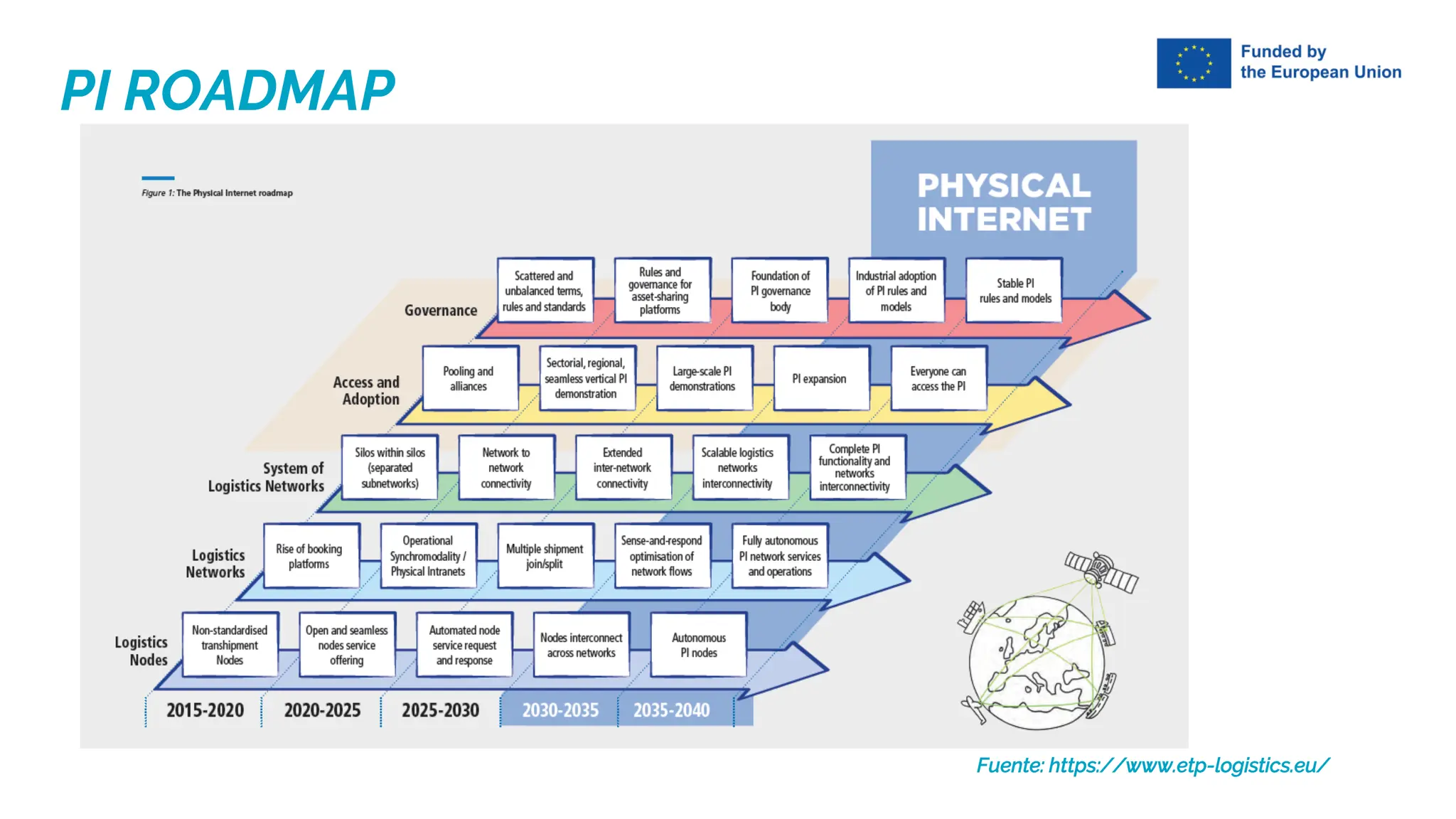
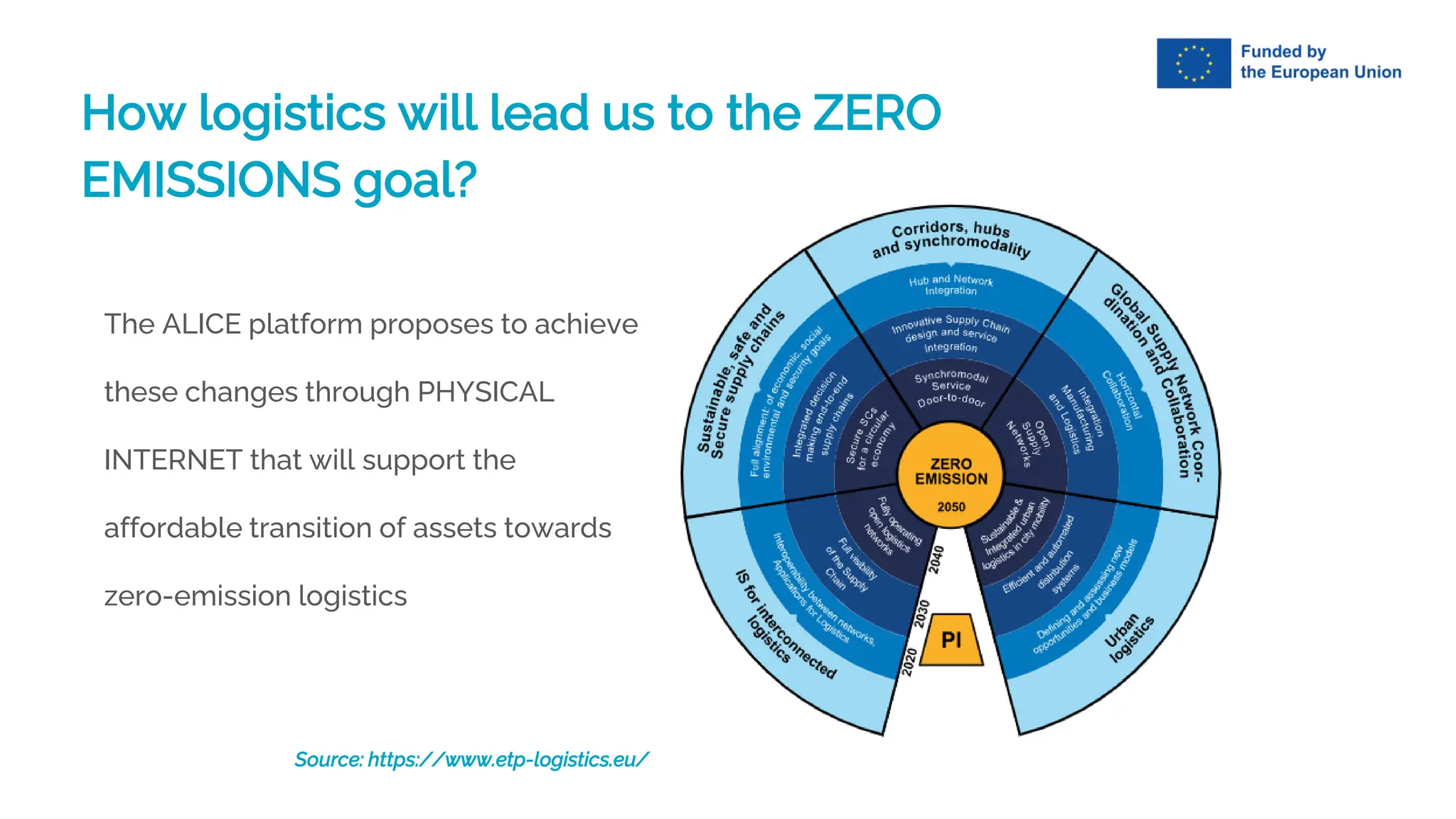
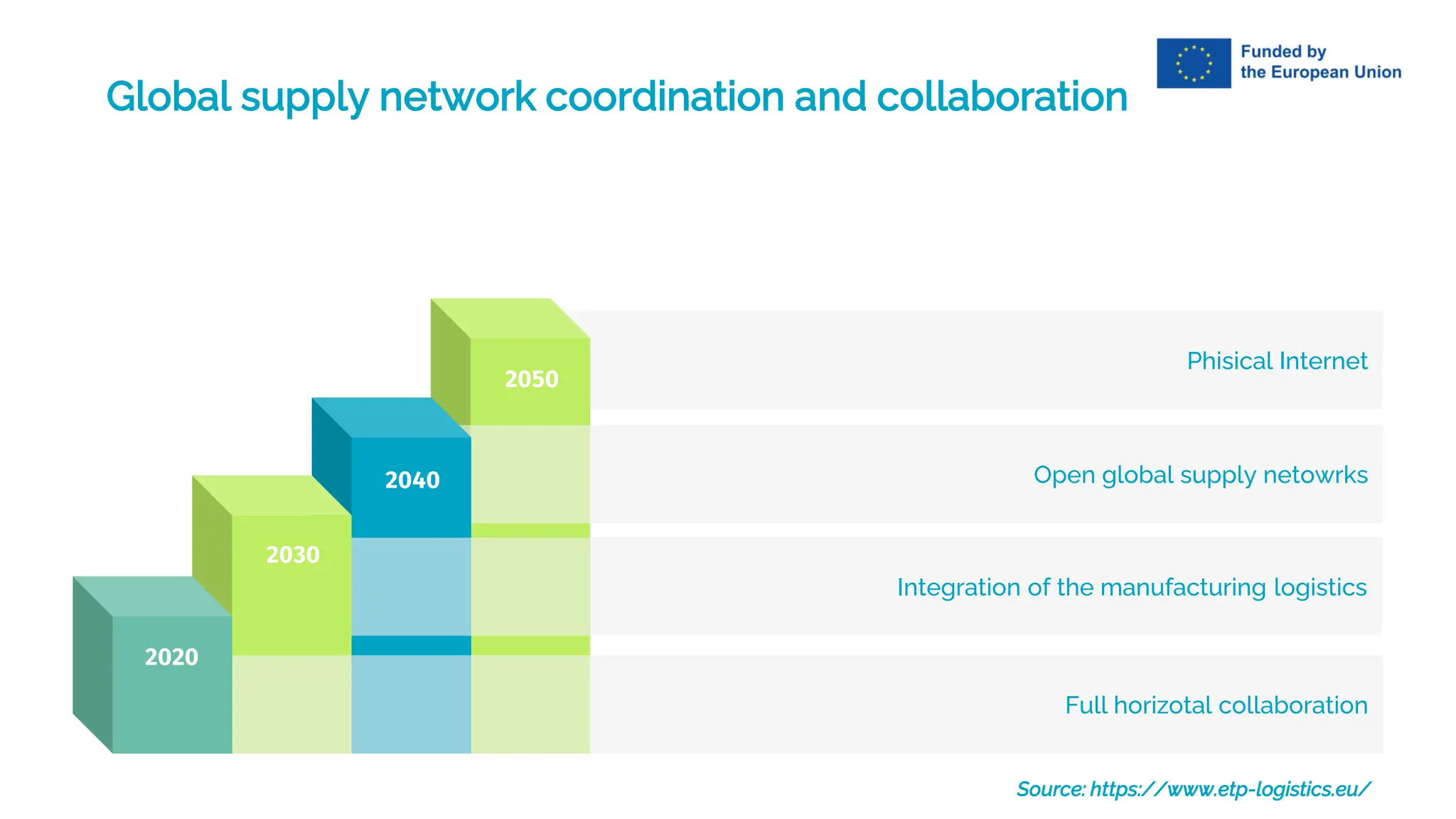
The document discusses the concept of the Physical Internet and its role in achieving climate neutrality in logistics and supply chains by 2050. Key points include:
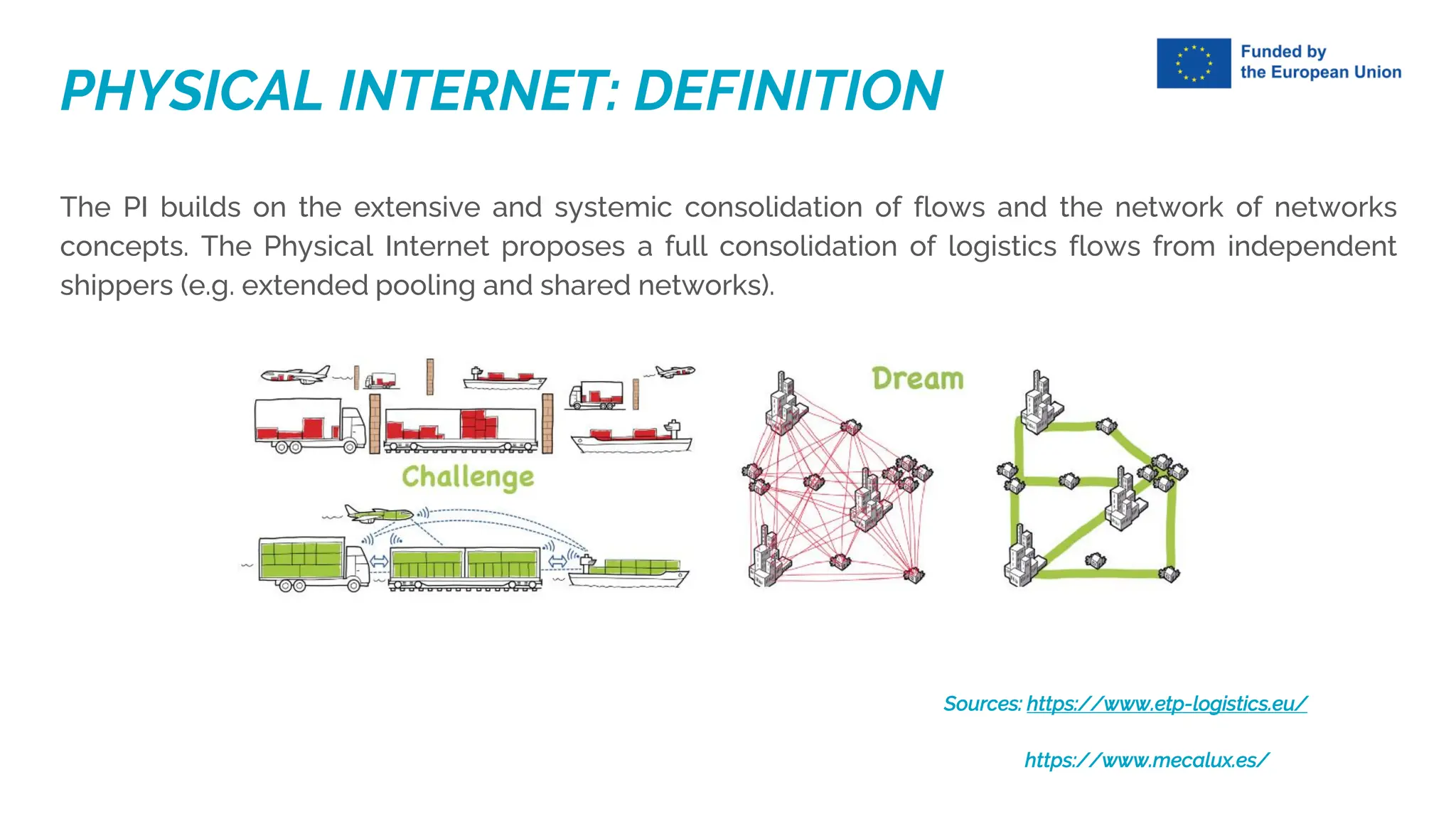
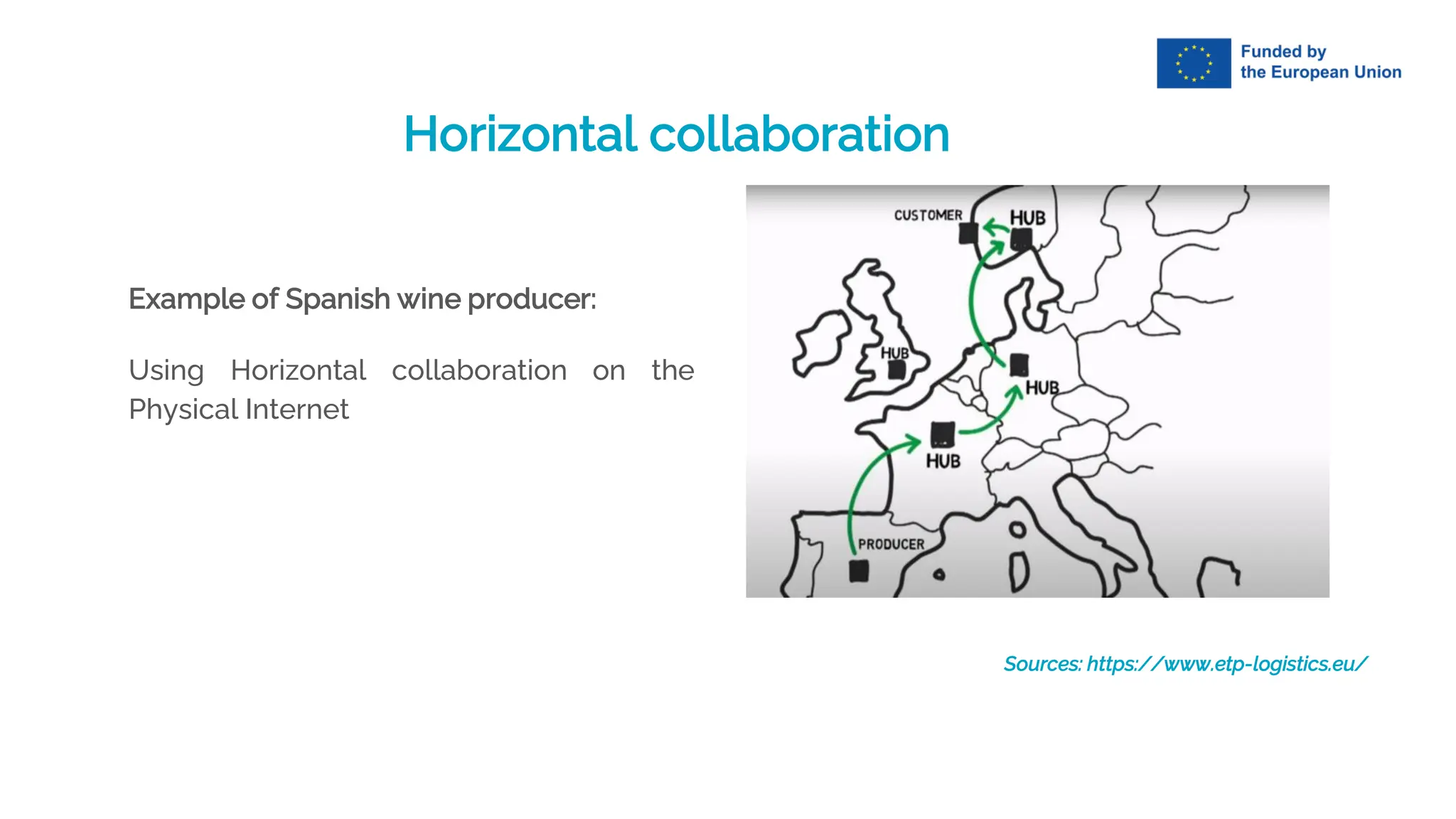
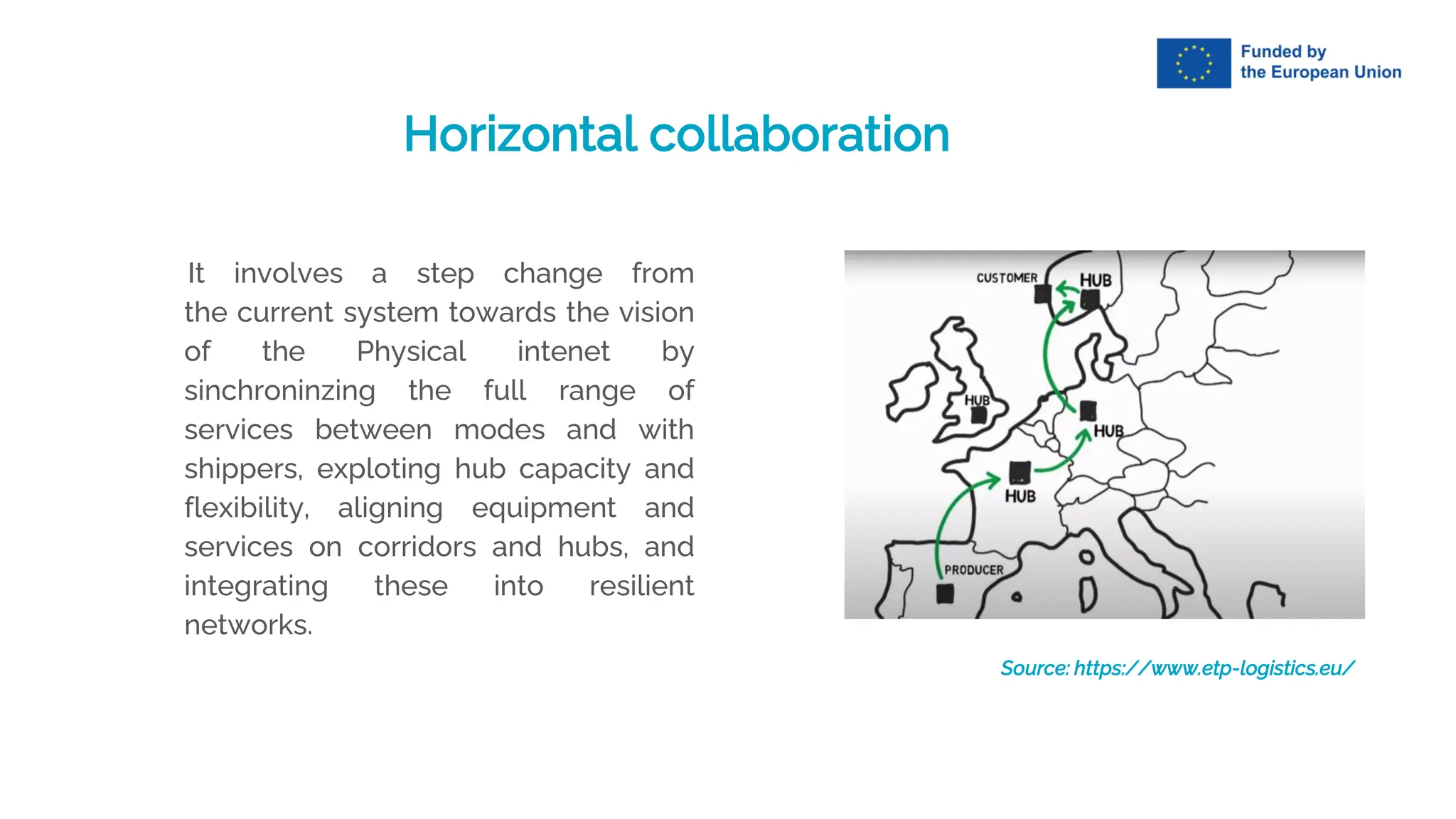
- The Physical Internet proposes fully consolidated and pooled logistics flows across independent networks to improve efficiency.
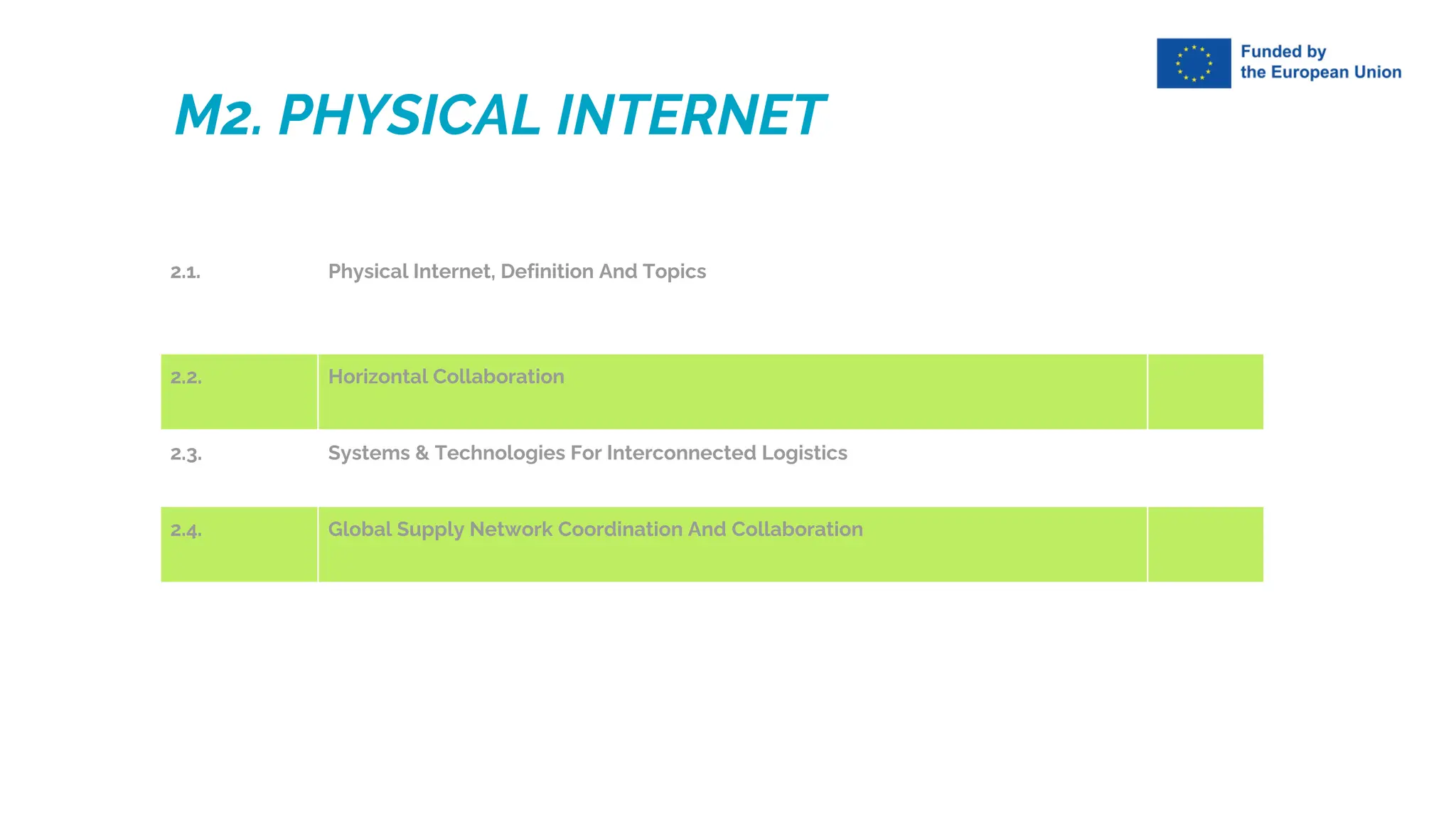
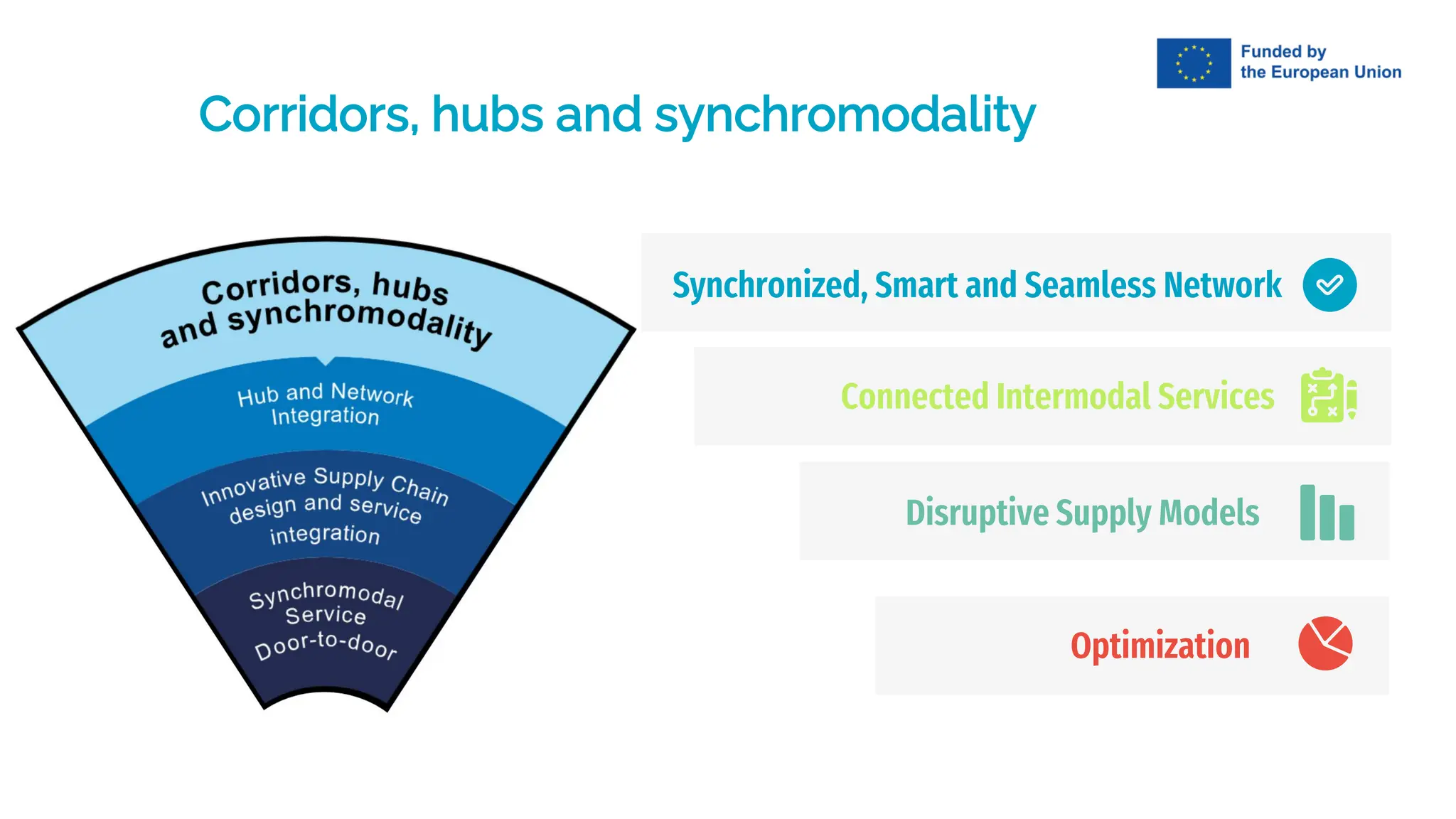
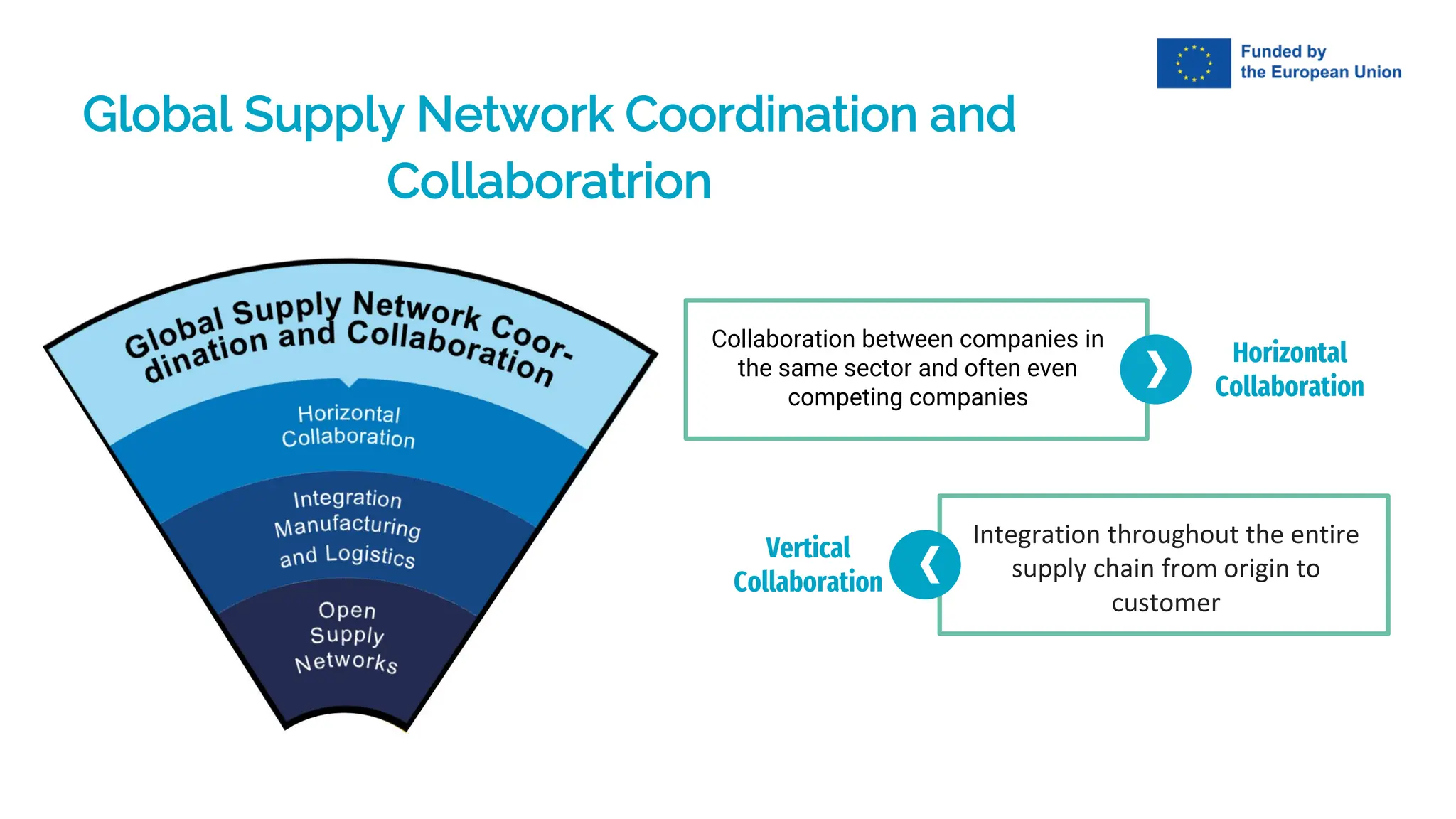
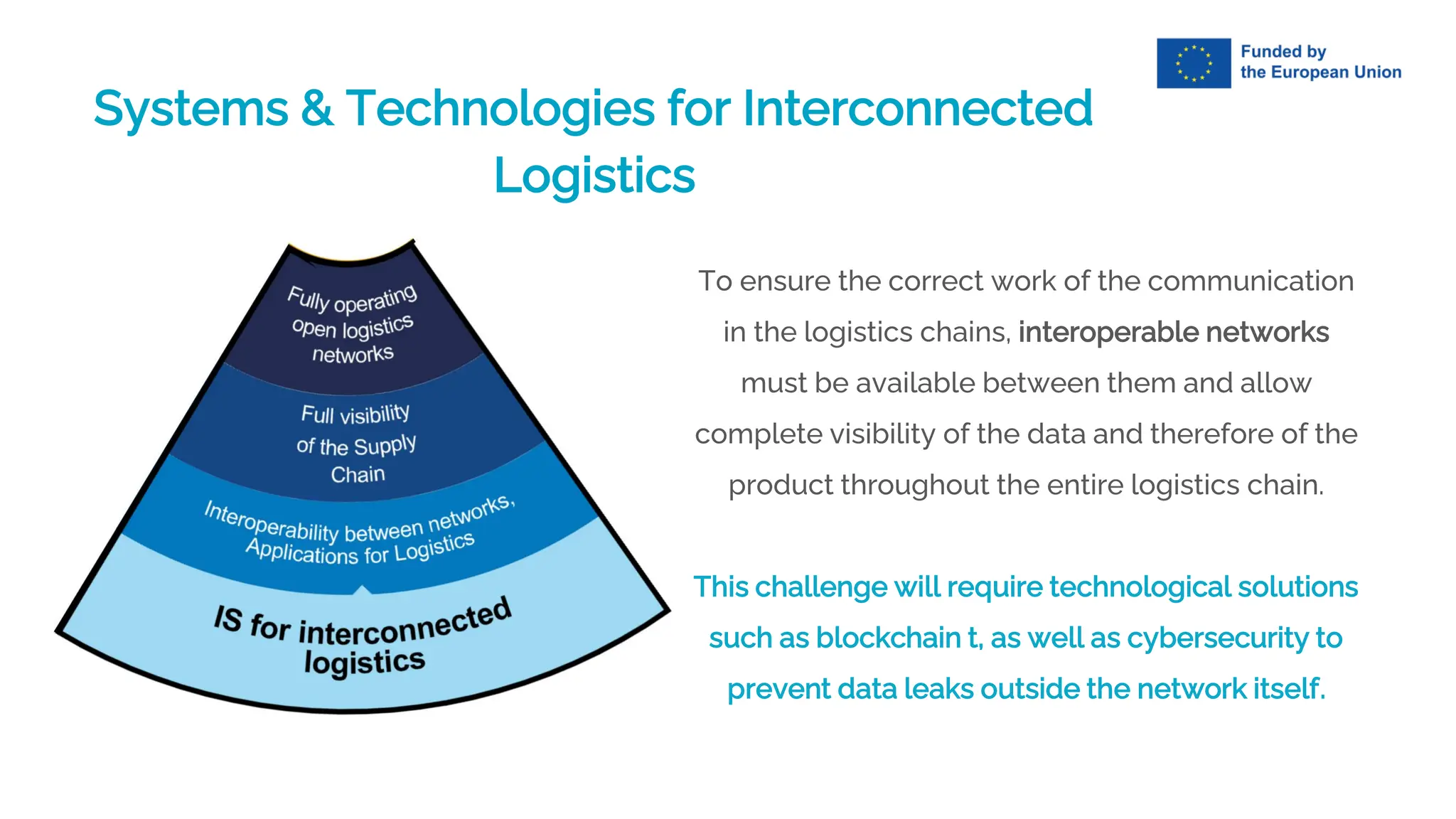
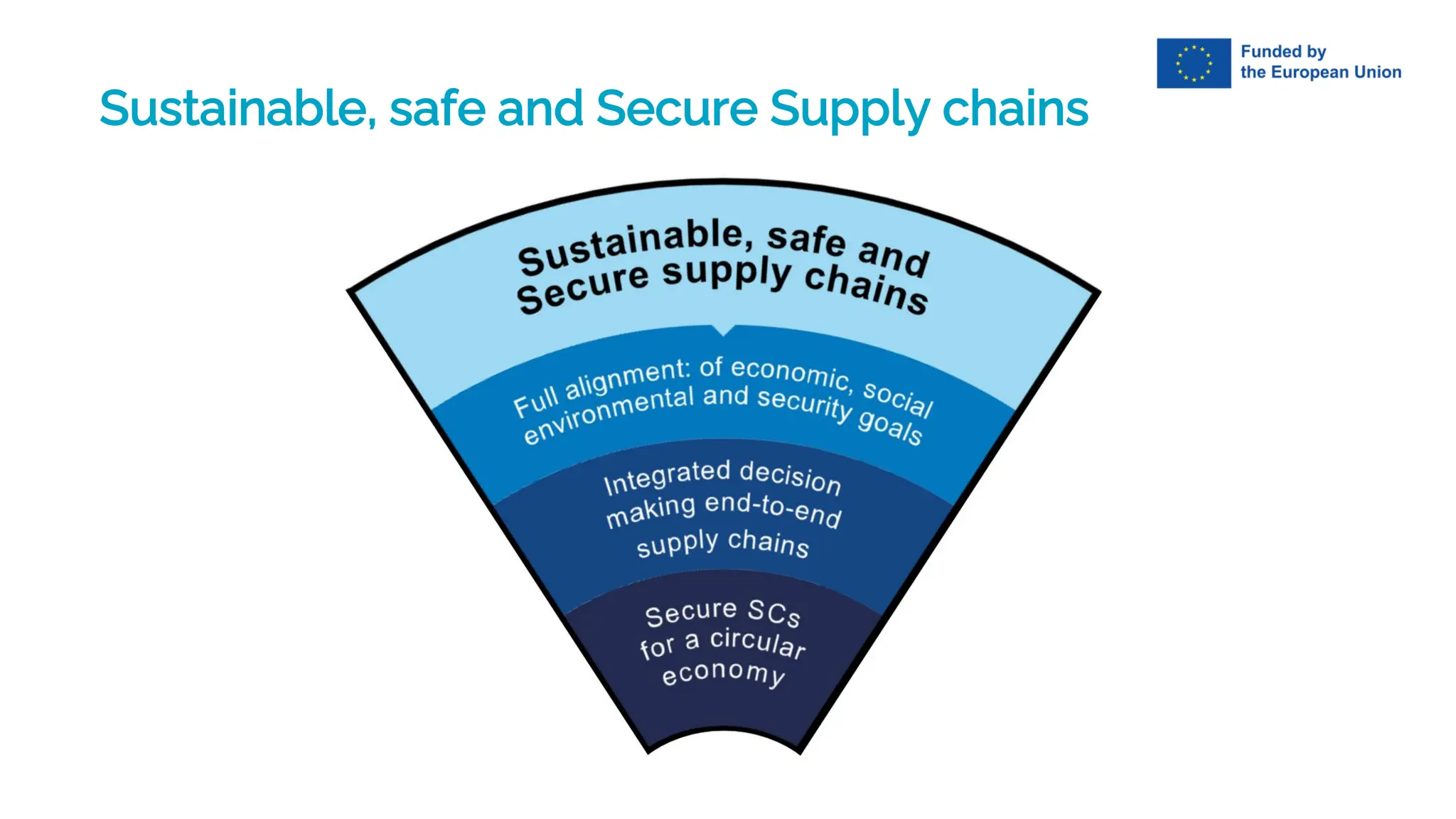
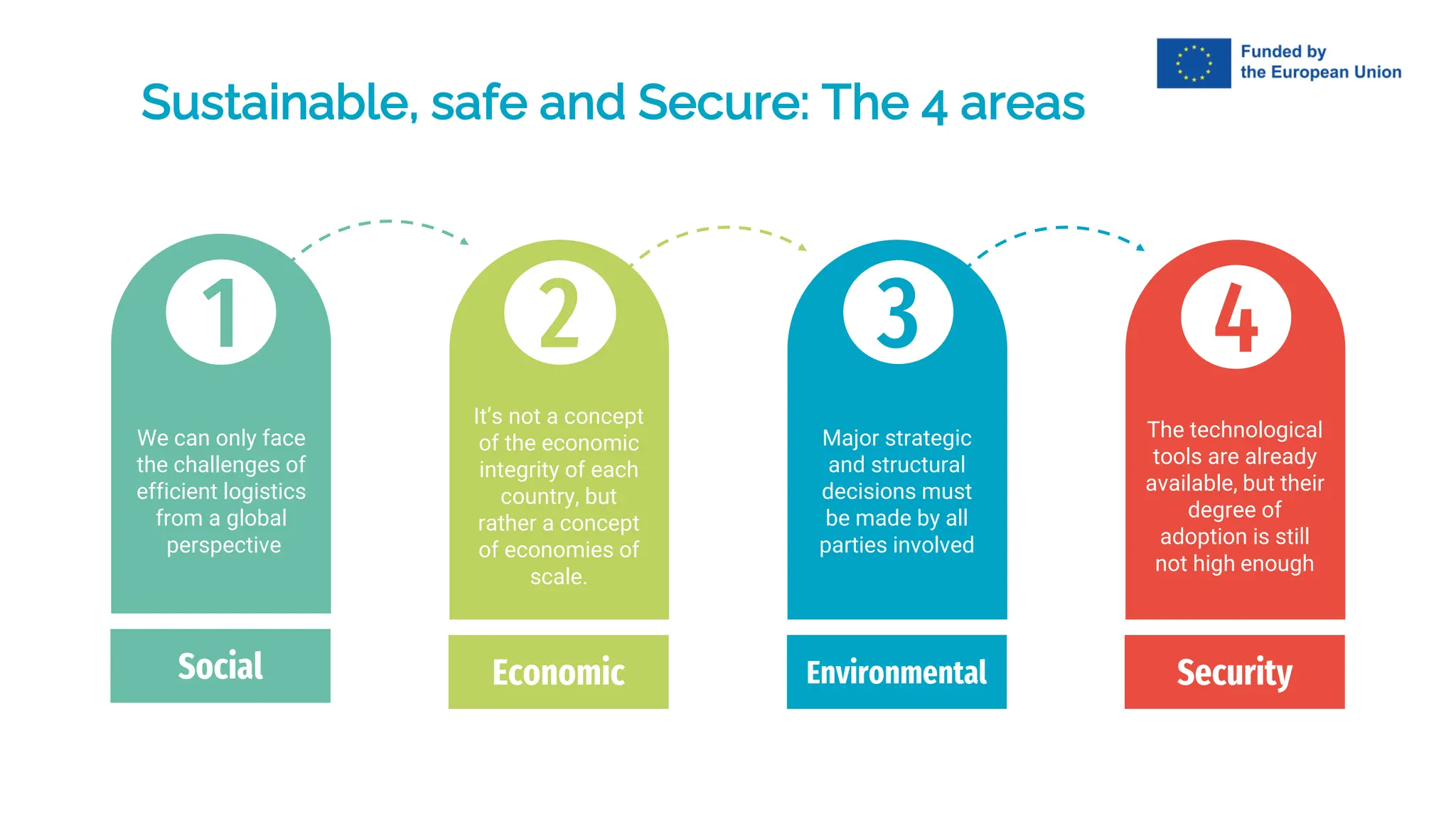
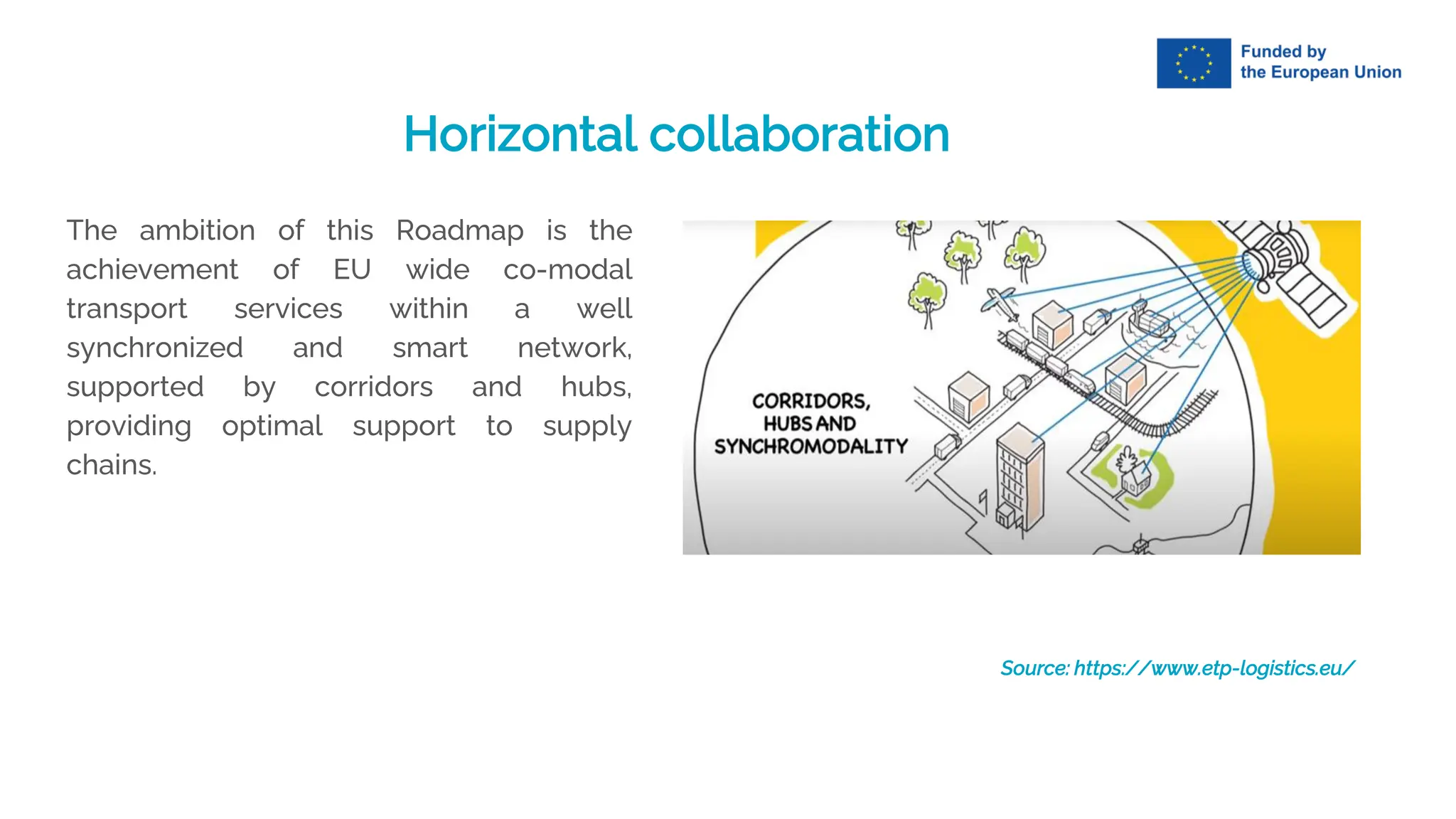
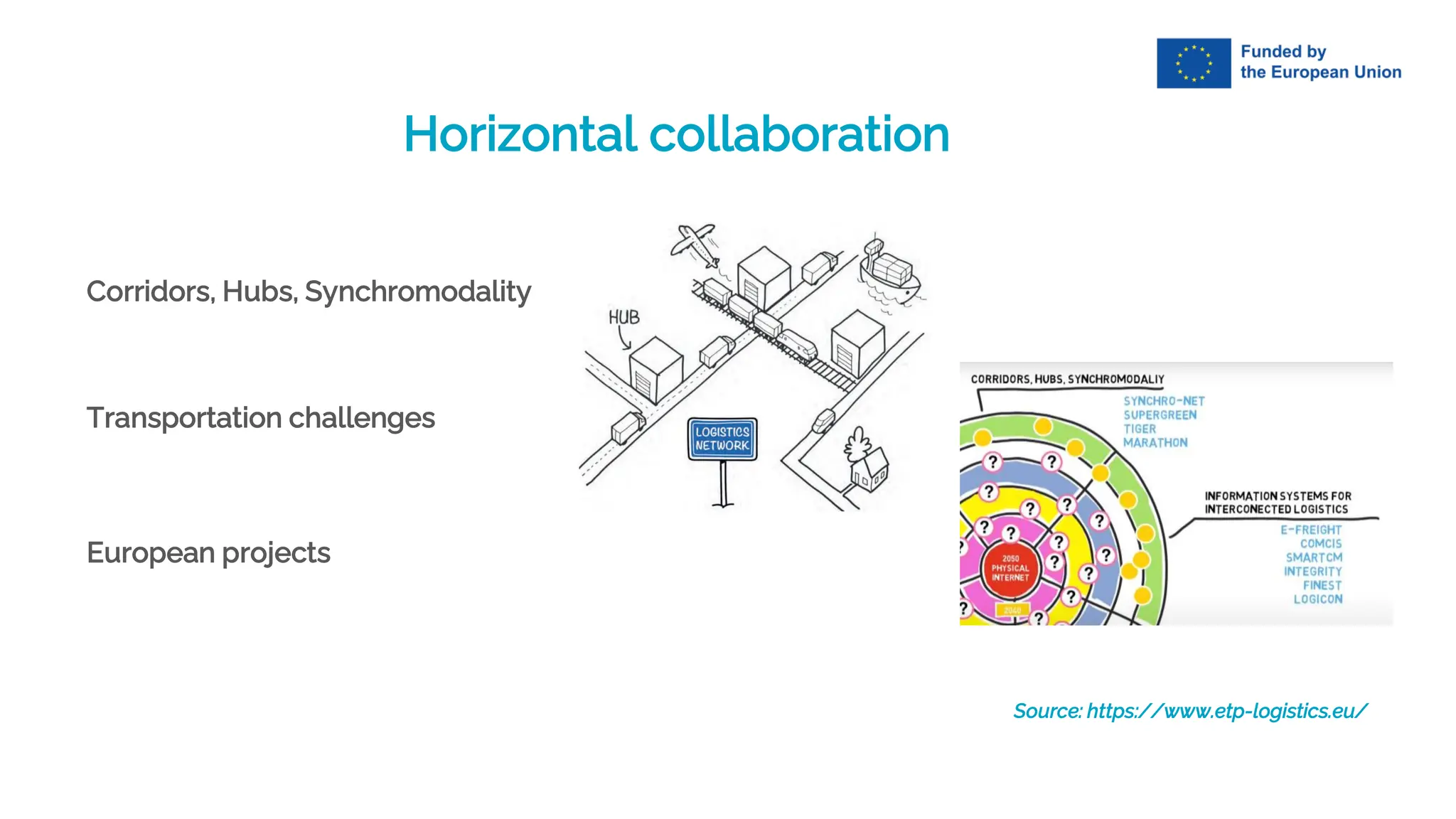
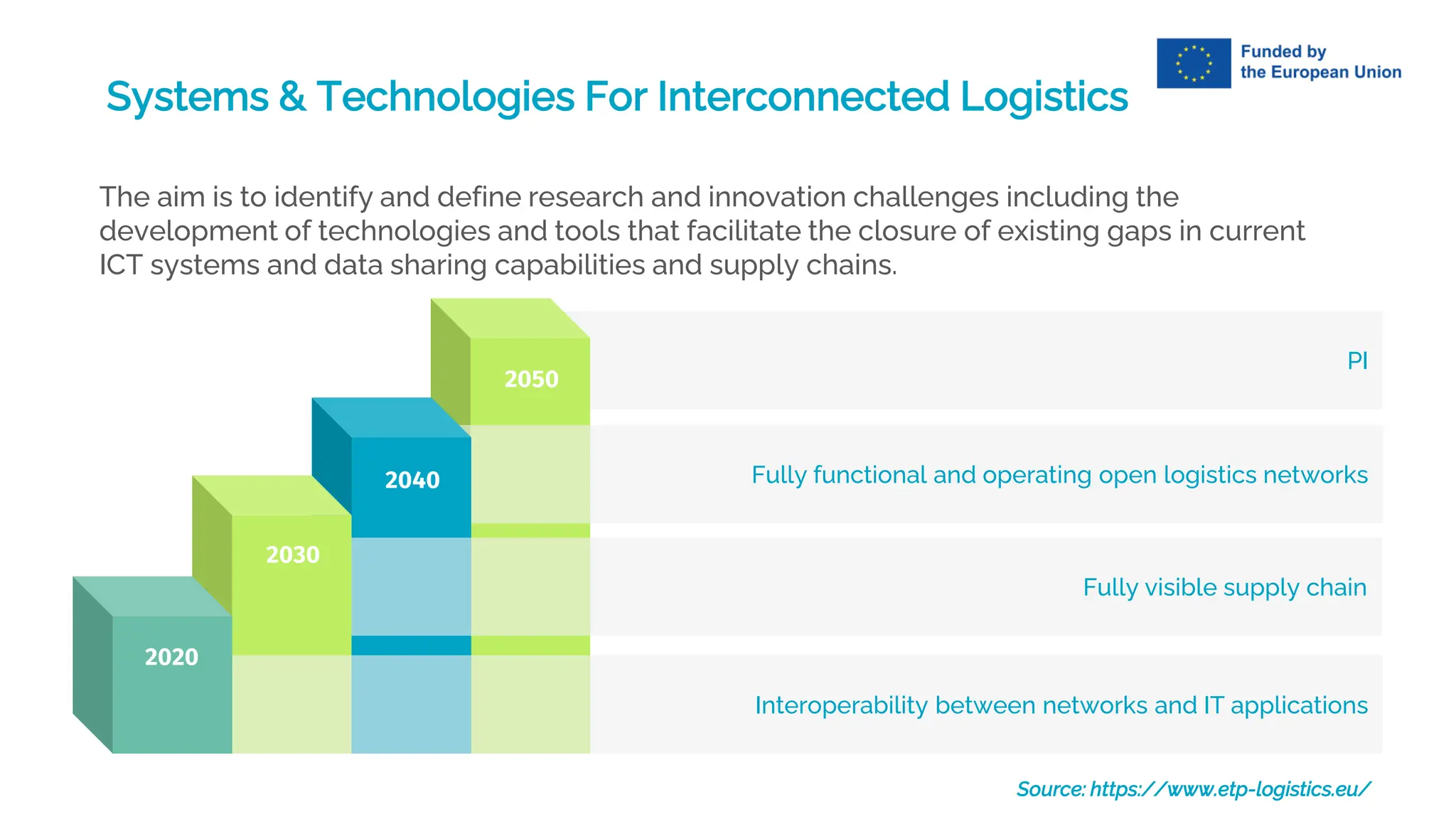
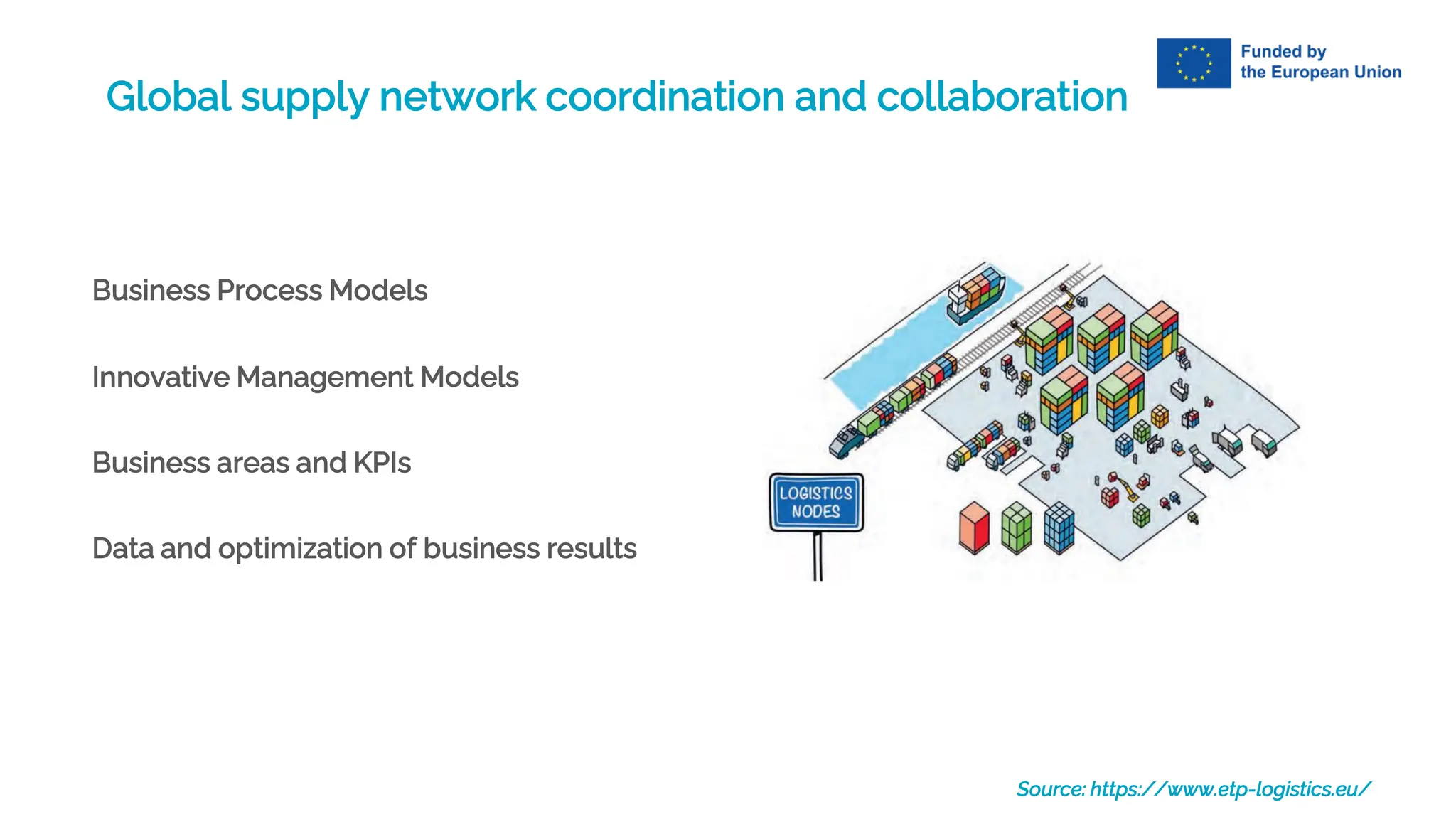
- Achieving the goals will require horizontal collaboration between companies, developing technologies for interconnected logistics networks, and coordinating global supply networks.
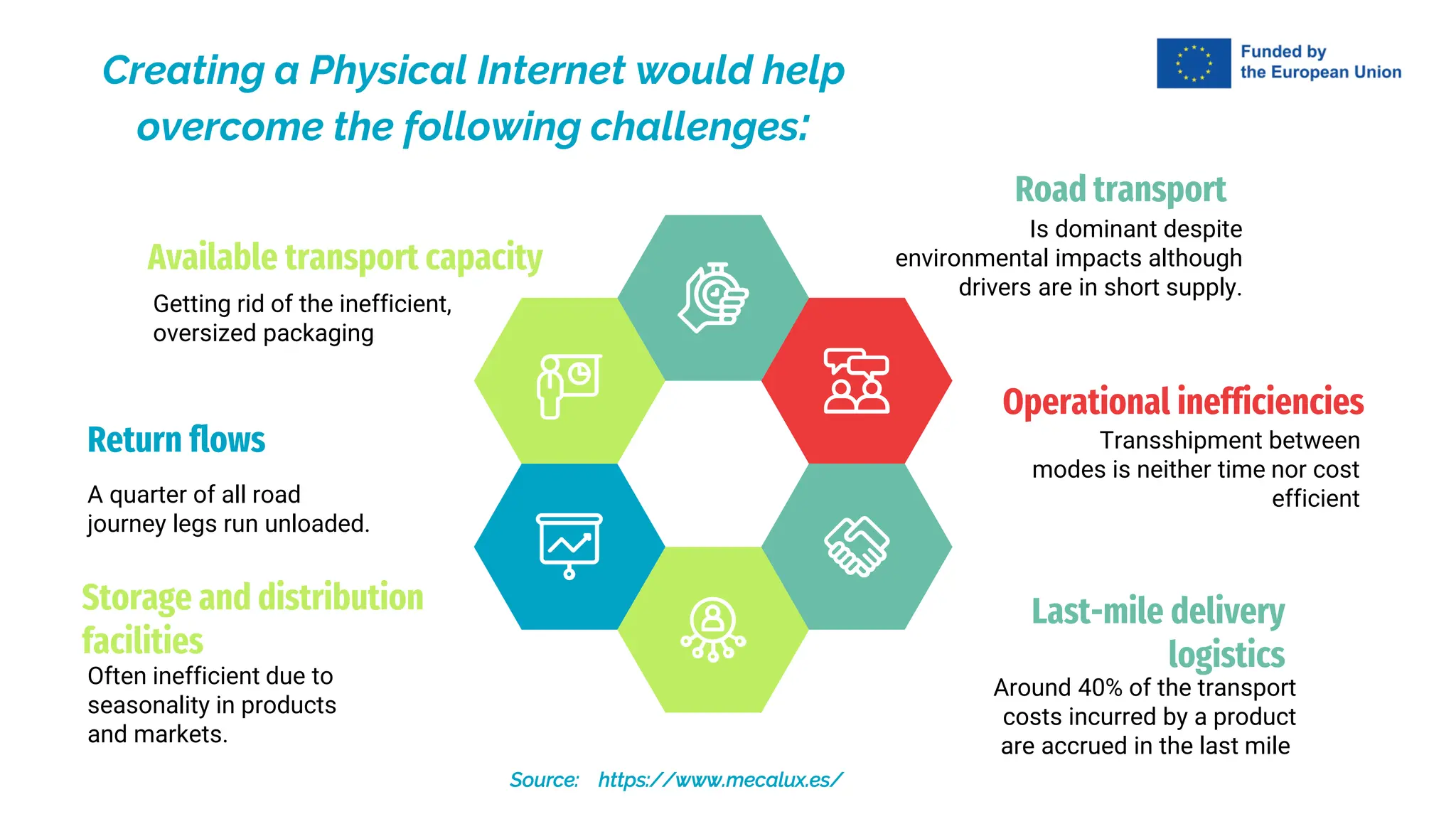
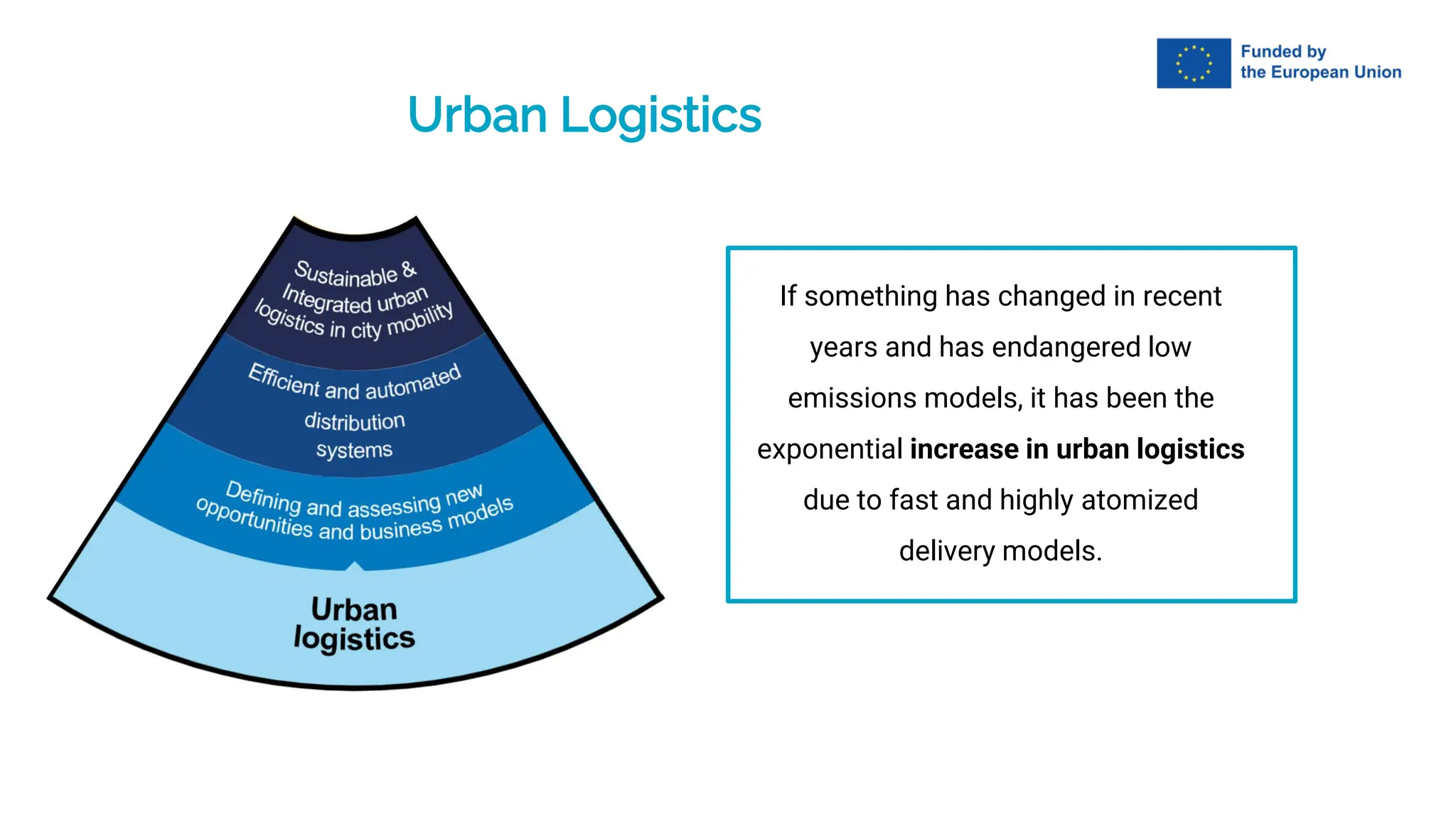
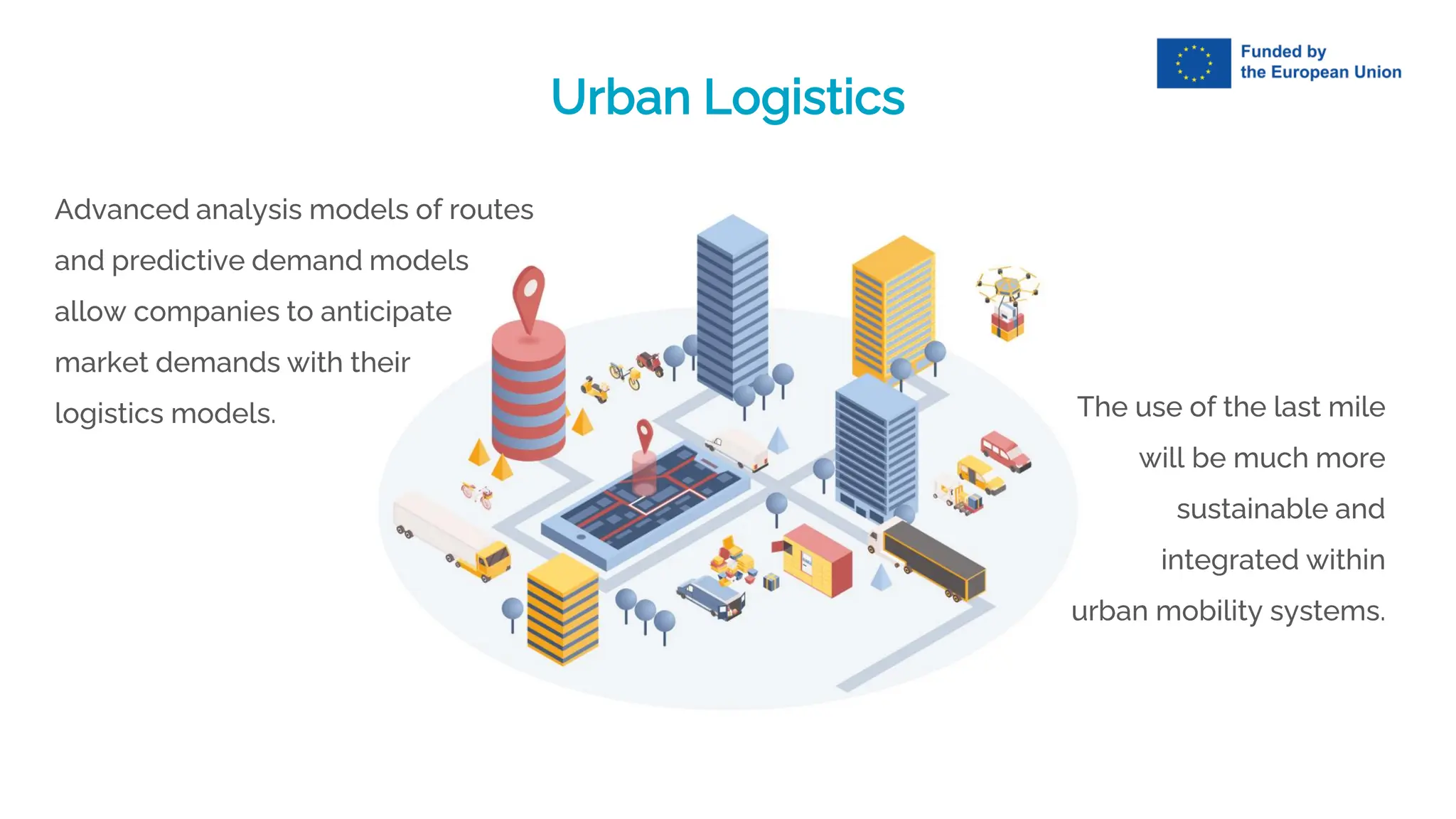
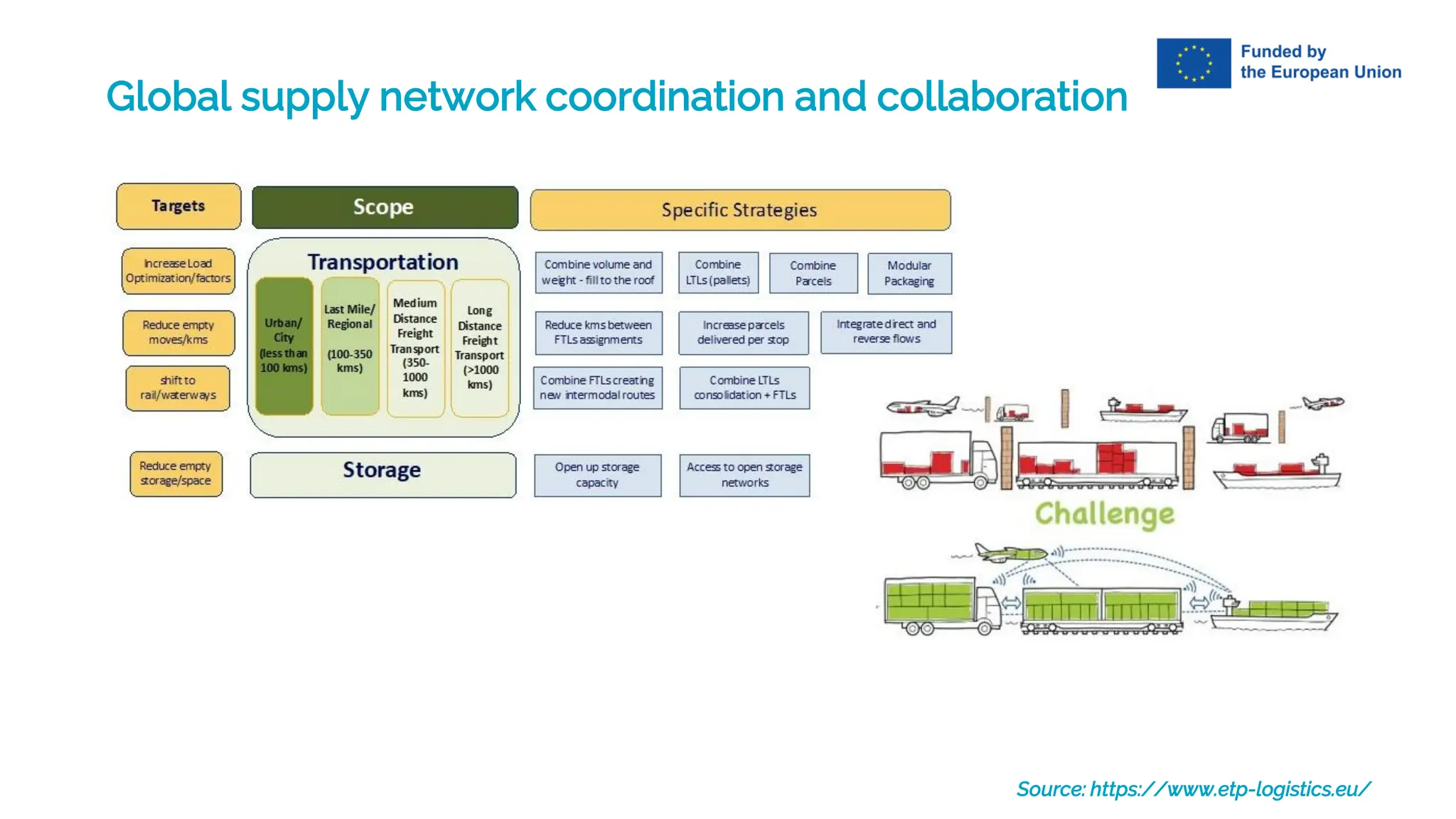
- Challenges include improving asset utilization, empty backhauls, storage/transhipment, last mile deliveries, and road transport inefficiencies.