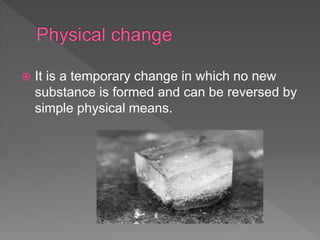
 It is a temporary change in which no new
substance is formed and can be reversed by
simple physical means.
 (i) It is a temporary change.
 (ii) There is a change in physical properties
of a substance.
 (iii) The composition of the substance does
not change.
 (iv) No new substances are produced.
 (v) This change can be easily reversed.
 (vi) There is no energy change.
 (vii) There is no change in mass.
 Melting of wax
 Melting of butter
 Ringing of an electric bell
 Expansion and contraction of substances
 sublimation of iodineItorigin
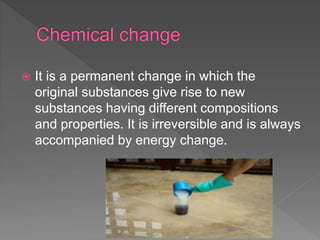
 It is a permanent change in which the
original substances give rise to new
substances having different compositions
and properties. It is irreversible and is always
accompanied by energy change.
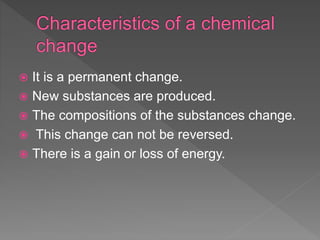
 It is a permanent change.
 New substances are produced.
 The compositions of the substances change.
 This change can not be reversed.
 There is a gain or loss of energy.
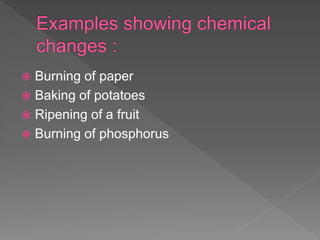
 Burning of paper
 Baking of potatoes
 Ripening of a fruit
 Burning of phosphorus
PHYSICAL AND CHEMICAL CHANGES ...pptx

PHYSICAL AND CHEMICAL CHANGES ...pptx

  • 2.
     It isa temporary change in which no new substance is formed and can be reversed by simple physical means.
  • 3.
     (i) Itis a temporary change.  (ii) There is a change in physical properties of a substance.  (iii) The composition of the substance does not change.  (iv) No new substances are produced.  (v) This change can be easily reversed.  (vi) There is no energy change.  (vii) There is no change in mass.
  • 4.
     Melting ofwax  Melting of butter  Ringing of an electric bell  Expansion and contraction of substances  sublimation of iodineItorigin
  • 5.
     It isa permanent change in which the original substances give rise to new substances having different compositions and properties. It is irreversible and is always accompanied by energy change.
  • 6.
     It isa permanent change.  New substances are produced.  The compositions of the substances change.  This change can not be reversed.  There is a gain or loss of energy.
  • 7.
     Burning ofpaper  Baking of potatoes  Ripening of a fruit  Burning of phosphorus