Physical Examination of
Cervical Spine / Neck
Andhika Yudistira
Apley
McRae
Magee
Most common Symptoms
• Pain
• Stiffness
• Deformity
• Numbness, tingling, and weakness of upper
limbs
• Headache
• Tension
Most Common Problems in The Neck
• Torticollis
• Klippel-Feil Syndrome
(Cervical-Vertebral
Synostosis)
• Cervical Spondylosis
• OPLL
• Spinal Stenosis
• Cervical Myelopathy
• Infection
• Rheumatoid Arthritis
• Ankylosing Spondylitis
• Thoracic Outlet
Syndrome
• Whiplash
• Barre-Lieou Syndrome
Physical Examination
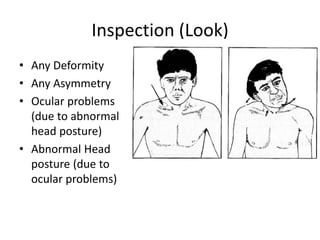
Inspection (Look)
• Any Deformity
• Any Asymmetry
• Ocular problems
(due to abnormal
head posture)
• Abnormal Head
posture (due to
ocular problems)
Palpation (Feel)
• Prone position, or
• Sitting position
• Examiner standing at
the back
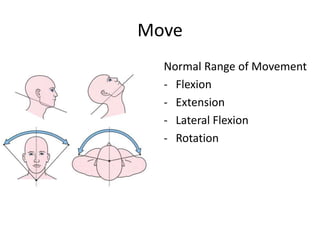
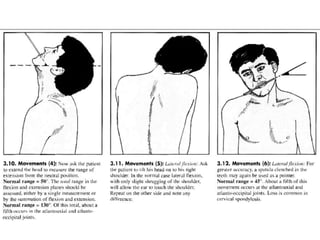
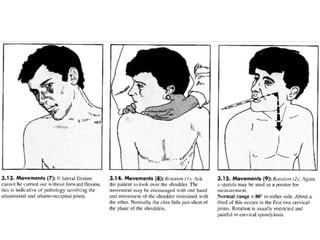
Move
Normal Range of Movement
- Flexion
- Extension
- Lateral Flexion
- Rotation
Movement
Another Special Tests
• Foraminal Compression Test
• Distraction Test
• Shoulder Depression Test
• Vertebral Artery (Cervical Quadrant) Test
• Brachial Plexus Tension Test
• Shoulder Abduction Test
• Valsava Test
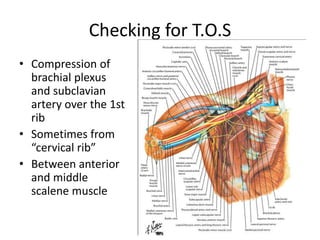
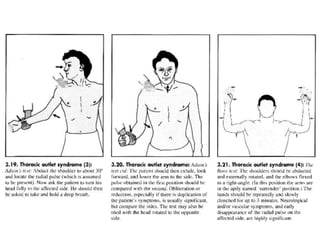
Checking for T.O.S
• Compression of
brachial plexus
and subclavian
artery over the 1st
rib
• Sometimes from
“cervical rib”
• Between anterior
and middle
scalene muscle
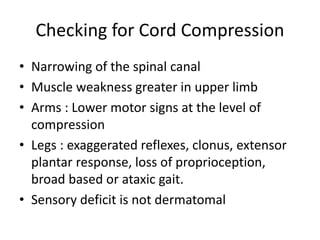
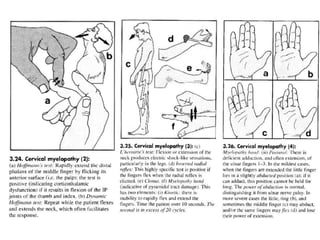
Checking for Cord Compression
• Narrowing of the spinal canal
• Muscle weakness greater in upper limb
• Arms : Lower motor signs at the level of
compression
• Legs : exaggerated reflexes, clonus, extensor
plantar response, loss of proprioception,
broad based or ataxic gait.
• Sensory deficit is not dermatomal
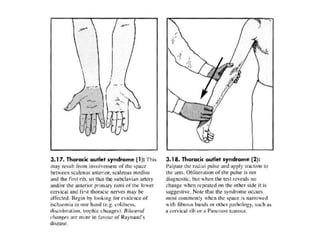
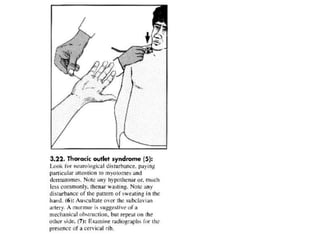
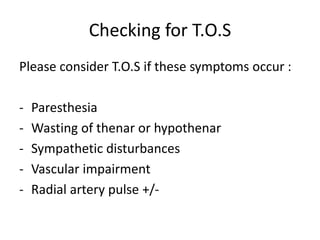
Checking for T.O.S
Please consider T.O.S if these symptoms occur :
- Paresthesia
- Wasting of thenar or hypothenar
- Sympathetic disturbances
- Vascular impairment
- Radial artery pulse +/-
THANK YOU

phys exam neck.pptx

  • 1.
    Physical Examination of CervicalSpine / Neck Andhika Yudistira Apley McRae Magee
  • 2.
    Most common Symptoms •Pain • Stiffness • Deformity • Numbness, tingling, and weakness of upper limbs • Headache • Tension
  • 3.
    Most Common Problemsin The Neck • Torticollis • Klippel-Feil Syndrome (Cervical-Vertebral Synostosis) • Cervical Spondylosis • OPLL • Spinal Stenosis • Cervical Myelopathy • Infection • Rheumatoid Arthritis • Ankylosing Spondylitis • Thoracic Outlet Syndrome • Whiplash • Barre-Lieou Syndrome
  • 4.
  • 5.
    Inspection (Look) • AnyDeformity • Any Asymmetry • Ocular problems (due to abnormal head posture) • Abnormal Head posture (due to ocular problems)
  • 6.
    Palpation (Feel) • Proneposition, or • Sitting position • Examiner standing at the back
  • 7.
    Move Normal Range ofMovement - Flexion - Extension - Lateral Flexion - Rotation
  • 8.
  • 11.
    Another Special Tests •Foraminal Compression Test • Distraction Test • Shoulder Depression Test • Vertebral Artery (Cervical Quadrant) Test • Brachial Plexus Tension Test • Shoulder Abduction Test • Valsava Test
  • 12.
    Checking for T.O.S •Compression of brachial plexus and subclavian artery over the 1st rib • Sometimes from “cervical rib” • Between anterior and middle scalene muscle
  • 16.
    Checking for CordCompression • Narrowing of the spinal canal • Muscle weakness greater in upper limb • Arms : Lower motor signs at the level of compression • Legs : exaggerated reflexes, clonus, extensor plantar response, loss of proprioception, broad based or ataxic gait. • Sensory deficit is not dermatomal
  • 18.
    Checking for T.O.S Pleaseconsider T.O.S if these symptoms occur : - Paresthesia - Wasting of thenar or hypothenar - Sympathetic disturbances - Vascular impairment - Radial artery pulse +/-
  • 20.