IHS Plans for PHR Personal Health Records
Agenda Lessons Learned from outside IHS PHRs and Organizational Change Successful and Unsuccessful PHRs IHS PHR project overview Sample IHS PHR screens Q&A May, 2010 PHR Pilot 2 Personal Health Records
PHRs AND ORGANIZATIONAL CHANGE Lessons Learned: Personal Health Records
PHRs and Organizational Change Policies/Process Change Jobs Change Patient Behaviors Change Clinical Behaviors Change May, 2010 PHR Pilot 4 Personal Health Records
This is not your typical release! VA My Health e Vet Program: Implementation plans – ex. local site POCs Communications – ex., online communications, facility handouts Training – ex., online, on-site  Patient Recruitment/Participation! Powerful advocates PHRs and Organizational Change Personal Health Records
PHRs and Organizational Change Example of Change: Registration to view IHS records Register online for your PHR account Apply to view your RPMS data Communications: Online instructions Get In-person authentication (IPA) Training: train local facility resources to access associate a patient with a PHR user View your records in your PHR Personal Health Records
New Policies/Process (In-Person Authentication) Jobs Change (Local IHS employee performed verification) Patient Behaviors Change (Proactively view their RPMS information) Clinical Behaviors Change (more ‘aware’ patients) PHRs and Organizational Change May, 2010 PHR Pilot 7 Personal Health Records
ATTRIBUTES OF SUCCESSFUL AND UNSUCCESSFUL PHRS Lessons Learned: Personal Health Records
Most Used Features Prescription Management (Rx Refill, etc.) Secure Messaging Tracking Labs Reminders Appointments Wallet Card NOTE: “Pre-Populated” PHR Pilot 9 Personal Health Records
Characteristics for Non-Use Login is difficult General use is difficult Preference for another mechanism (real people, didn’t want to use computers) PHR Pilot 10 May, 2010 Personal Health Records
Patient-focus Personal Health Records
PHR Use PHR usage doubled in two years. One in 14 Americans say they have used PHR. Less educated, lower-income and chronically ill patients report  greater value  from using a PHR. Consumers prefer to use a PHR from their health care provider. Two out of three Americans are concerned about the privacy of their health information; concern is reduced by experience with and benefits received from a PHR. May, 2010 12 Personal Health Records Personal Health Records
Desired Positive Results of PHRs Empower patients Easy access to information More/better healthcare info & understanding Opt to share info with healthcare workers Health care workers provide better care at lower cost More knowledge of patient conditions, status & opinions More productive patient visits and improved triage Improved Patient-Healthcare Worker communication Better decisions 13 May, 2010 Personal Health Records
IHS PHR PROJECT OVERVIEW Personal Health Records
Privacy and Security Concerns comfort levels rise when they interact with and receive benefits from a PHR 66 percent of respondents agreed that privacy concerns should not stop efforts to learn how technology can improve our healthcare CMS survey: (surprisingly) less concern around privacy and security PHR Pilot 15 May, 2010 Personal Health Records
Status of IHS PHR Project Work completed to date: Application architecture developed Initial feature development: Registration, View Meds Next Steps: Allergies Laboratory results Problem List Procedure Information Discharge summaries PHR account set-up and administration February 9, 2010 16 PHR Pilot Personal Health Records
Timeline Initial Development Release – Summer 2010 Pilot – Fall 2010 Rollout – Winter/Spring 2011 May, 2010 PHR Pilot 17 Personal Health Records
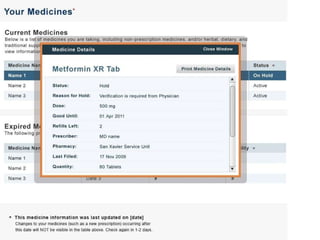
SAMPLE IHS PHR SCREENS February 5, 2010 PHR Pilot 18 Personal Health Records
Sample IHS PHR Screens PHR Pilot 19 May, 2010
May, 2010 PHR Pilot 20
May, 2010 PHR Pilot 21
May, 2010 PHR Pilot 22
May, 2010 PHR Pilot 23
May, 2010 PHR Pilot 24
May, 2010 PHR Pilot 25
Questions & Answers 26 PHR Pilot May, 2010
Backup Slides PHR Pilot 27 May, 2010
Sources HIMSS Presentation: Medicare Advantage PHR Pilots California HealthCare Foundation: Consumers and Health Information Technology: A National Survey Lake Research Partners April 2010  PHR Pilot 28 May, 2010 Personal Health Records

Phr intro pt2

  • 1.
    IHS Plans forPHR Personal Health Records
  • 2.
    Agenda Lessons Learnedfrom outside IHS PHRs and Organizational Change Successful and Unsuccessful PHRs IHS PHR project overview Sample IHS PHR screens Q&A May, 2010 PHR Pilot 2 Personal Health Records
  • 3.
    PHRs AND ORGANIZATIONALCHANGE Lessons Learned: Personal Health Records
  • 4.
    PHRs and OrganizationalChange Policies/Process Change Jobs Change Patient Behaviors Change Clinical Behaviors Change May, 2010 PHR Pilot 4 Personal Health Records
  • 5.
    This is notyour typical release! VA My Health e Vet Program: Implementation plans – ex. local site POCs Communications – ex., online communications, facility handouts Training – ex., online, on-site Patient Recruitment/Participation! Powerful advocates PHRs and Organizational Change Personal Health Records
  • 6.
    PHRs and OrganizationalChange Example of Change: Registration to view IHS records Register online for your PHR account Apply to view your RPMS data Communications: Online instructions Get In-person authentication (IPA) Training: train local facility resources to access associate a patient with a PHR user View your records in your PHR Personal Health Records
  • 7.
    New Policies/Process (In-PersonAuthentication) Jobs Change (Local IHS employee performed verification) Patient Behaviors Change (Proactively view their RPMS information) Clinical Behaviors Change (more ‘aware’ patients) PHRs and Organizational Change May, 2010 PHR Pilot 7 Personal Health Records
  • 8.
    ATTRIBUTES OF SUCCESSFULAND UNSUCCESSFUL PHRS Lessons Learned: Personal Health Records
  • 9.
    Most Used FeaturesPrescription Management (Rx Refill, etc.) Secure Messaging Tracking Labs Reminders Appointments Wallet Card NOTE: “Pre-Populated” PHR Pilot 9 Personal Health Records
  • 10.
    Characteristics for Non-UseLogin is difficult General use is difficult Preference for another mechanism (real people, didn’t want to use computers) PHR Pilot 10 May, 2010 Personal Health Records
  • 11.
  • 12.
    PHR Use PHRusage doubled in two years. One in 14 Americans say they have used PHR. Less educated, lower-income and chronically ill patients report greater value from using a PHR. Consumers prefer to use a PHR from their health care provider. Two out of three Americans are concerned about the privacy of their health information; concern is reduced by experience with and benefits received from a PHR. May, 2010 12 Personal Health Records Personal Health Records
  • 13.
    Desired Positive Resultsof PHRs Empower patients Easy access to information More/better healthcare info & understanding Opt to share info with healthcare workers Health care workers provide better care at lower cost More knowledge of patient conditions, status & opinions More productive patient visits and improved triage Improved Patient-Healthcare Worker communication Better decisions 13 May, 2010 Personal Health Records
  • 14.
    IHS PHR PROJECTOVERVIEW Personal Health Records
  • 15.
    Privacy and SecurityConcerns comfort levels rise when they interact with and receive benefits from a PHR 66 percent of respondents agreed that privacy concerns should not stop efforts to learn how technology can improve our healthcare CMS survey: (surprisingly) less concern around privacy and security PHR Pilot 15 May, 2010 Personal Health Records
  • 16.
    Status of IHSPHR Project Work completed to date: Application architecture developed Initial feature development: Registration, View Meds Next Steps: Allergies Laboratory results Problem List Procedure Information Discharge summaries PHR account set-up and administration February 9, 2010 16 PHR Pilot Personal Health Records
  • 17.
    Timeline Initial DevelopmentRelease – Summer 2010 Pilot – Fall 2010 Rollout – Winter/Spring 2011 May, 2010 PHR Pilot 17 Personal Health Records
  • 18.
    SAMPLE IHS PHRSCREENS February 5, 2010 PHR Pilot 18 Personal Health Records
  • 19.
    Sample IHS PHRScreens PHR Pilot 19 May, 2010
  • 20.
    May, 2010 PHRPilot 20
  • 21.
    May, 2010 PHRPilot 21
  • 22.
    May, 2010 PHRPilot 22
  • 23.
    May, 2010 PHRPilot 23
  • 24.
    May, 2010 PHRPilot 24
  • 25.
    May, 2010 PHRPilot 25
  • 26.
    Questions & Answers26 PHR Pilot May, 2010
  • 27.
    Backup Slides PHRPilot 27 May, 2010
  • 28.
    Sources HIMSS Presentation:Medicare Advantage PHR Pilots California HealthCare Foundation: Consumers and Health Information Technology: A National Survey Lake Research Partners April 2010 PHR Pilot 28 May, 2010 Personal Health Records

Editor's Notes

  • #14 Consumers: Support wellness activities Improve understanding of health issues Increase sense of control over health Increase control over access to personal health information Support timely, appropriate preventive services Support healthcare decisions and responsibility for care Strengthen communication with providers Verify accuracy of information in provider records Support home monitoring for chronic diseases Support understanding and appropriate use of medications Support continuity of care across time and providers Manage insurance benefits and claims Avoid duplicate tests Reduce adverse drug interactions and allergic reactions Reduce hassle through online appointment scheduling and prescription refills Increase access to providers via e-visits Providers: Improve access to data from other providers and the patients themselves Increase knowledge of potential drug interactions and allergies Avoid duplicate tests Improve medication compliance Provide information to patients for both healthcare and patient services purposes Provide patients with convenient access to specific information or services (e.g., lab results, Rx refills, e-visits) Improve documentation of communication with patients Payers: Improve customer service (transactions and information) Promote portability of patient information across plan Support wellness and preventive care Provide information and education to beneficiaries Employers: Support wellness and preventive care Provide convenient service Improve workforce productivity Promote empowered healthcare consumers Use aggregate data to manage employee health General Public: Strengthen health promotion and disease prevention Improve the health of populations Expand health education opportunities