Rules about PhonicsBy: Macy Hayes
Sometimes        the rules                       don’t work.
Every syllable in every word must have a vowel.
“C” followed by “i, e, or y” usually has the soft sound “s”.
“G” followed by “e, i, y” usually has the soft sound “j”.
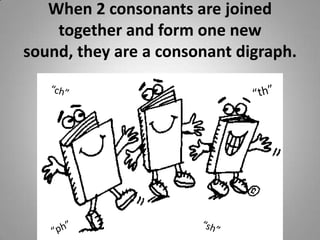
When 2 consonants are joined together and form one new sound, they are a consonant digraph. “th”“ch”“sh”“ph”
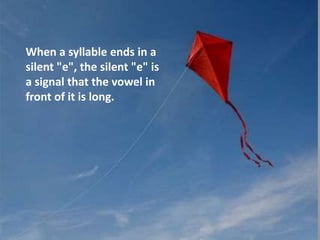
When a syllable ends in a silent "e", the silent "e" is a signal that the vowel in front of it is long.
      When a syllable ends in a consonantand has only one vowel, that vowel is short.
When a syllable has 2 vowels together,the first vowel is usually long and the second is silent.
When a syllable ends in a vowel,And is the only vowel,That vowel is usually long.Pa/per

Phonics

  • 1.
  • 2.
    Sometimes the rules don’t work.
  • 3.
    Every syllable inevery word must have a vowel.
  • 4.
    “C” followed by“i, e, or y” usually has the soft sound “s”.
  • 5.
    “G” followed by“e, i, y” usually has the soft sound “j”.
  • 6.
    When 2 consonantsare joined together and form one new sound, they are a consonant digraph. “th”“ch”“sh”“ph”
  • 7.
    When a syllableends in a silent "e", the silent "e" is a signal that the vowel in front of it is long.
  • 8.
    When a syllable ends in a consonantand has only one vowel, that vowel is short.
  • 9.
    When a syllablehas 2 vowels together,the first vowel is usually long and the second is silent.
  • 10.
    When a syllableends in a vowel,And is the only vowel,That vowel is usually long.Pa/per