 Definitions- Pg 03
 Branches Pharmacology- Pg 06
 Sources of Drugs- Pg 09
 Routes of Drug Action- Pg 12
 Ligands & its type- Pg 31
 Factors Modifying Drug Action- Pg 37
 From the Greek Pharmacon (Drug) and Logos (a
discourse or treatise).
 It is defined as how chemical agents affect living
processes i.e., Hormones, neurotransmitter, growth
factors, drugs (pharmaceuticals), toxic agents in the
environment.
 The medicinal/organic chemists may create the
candidate compound (sometimes referred to as a
new chemical entity), it is the pharmacologist who is
responsible for testing it for pharmacological
activity.
 Ultimately will lead to the discovery of novel drugs
for therapeutic intervention.
 A single active chemical entity present in a
medicine that is used for diagnosis,
prevention and treatment of diseases.
 WHO- in 1966 – “ Drug is any substance or
product which is used or intended to be used
to modify or explore physiological systems or
pathological states for the benefit of
recipient.
 Pharmacology studies the effect of drugs and
how they exert their effects:
 Paracetamol can reduce body temperature in
case of fever by inhibiting an enzyme known as
cyclooxygenase in in CNS, which is responsible
for the synthesis of a number of inflammatory
mediators.
 Penicillin cures certain bacterial infection by
disrupting the synthesis of bacterial cell walls
by inhibiting a key enzyme.
Two main branches
PHARMACOKINETIC
S
PHARMACODYNAMICS
WHAT BODY DOES TO
DRUGS?
WHAT DRUGS DO TO THE BODY?
Includes absorption, distribution,
metabolism and excretion.
Effect of the drug on our body
or Body response to drug.
 Pharmacotherapeutics: Use of drugs for
prevention and cure of diseases (clinical
management of diseases).
 Pharmacoepidemiology: Study of effect of
drugs on population.
 Pharmacoeconomics: Study of cost
effectiveness of drug treatment.
 Pharmacognosy: Study related to
identification of plant drugs.
 Toxicology: Science of poison which includes
detection and measurement of poisons as
well as treatment of poisoning.
 Pharmacopoeia: It is an official code
containing a selected list of the established
drugs and medicinal preparations with
description of their physical properties and
tests for their identity, purity and potency.
 Example: IP, USP, BP,EP.
 Plant Sources: Morphine, digoxin, quinine, atropine,
paclitaxel, reserpine, vinca alkaloids.
 Animal Sources: Insulin, thyroid extract, heparin,
gonadotrophins and sera.
 Minerals: Liquid paraffin, magnesium sulfate,
magnesium trisilicate, ferrous sulphate and kaolin.
 Microorganism: Penicillin, Streptomycin.
 Synthetic: Analgesics, hypnotics, anticancer drugs,
antimicrobials.
 Genetic engineering: Human insulin, growth
hormone genes.
 Hybridoma technique: Monoclonal antibodies origin.
WHO - “Essential medicines are those that
satisfy the priority healthcare needs of the
population. Essential medicines are intended
to be available within the context of the
functioning health systems at all times and in
adequate amounts, in appropriate dosage
forms, with assured quality and adequate
information, and at a price the individual and
the community can afford.”
These are the drugs or the biological
products for diagnosis, prevention and
treatment of a rare disease or a more
common disease for which there is no
reasonable expectation that the cost of
developing and marketing will be recovered
from the sales of these medicine.
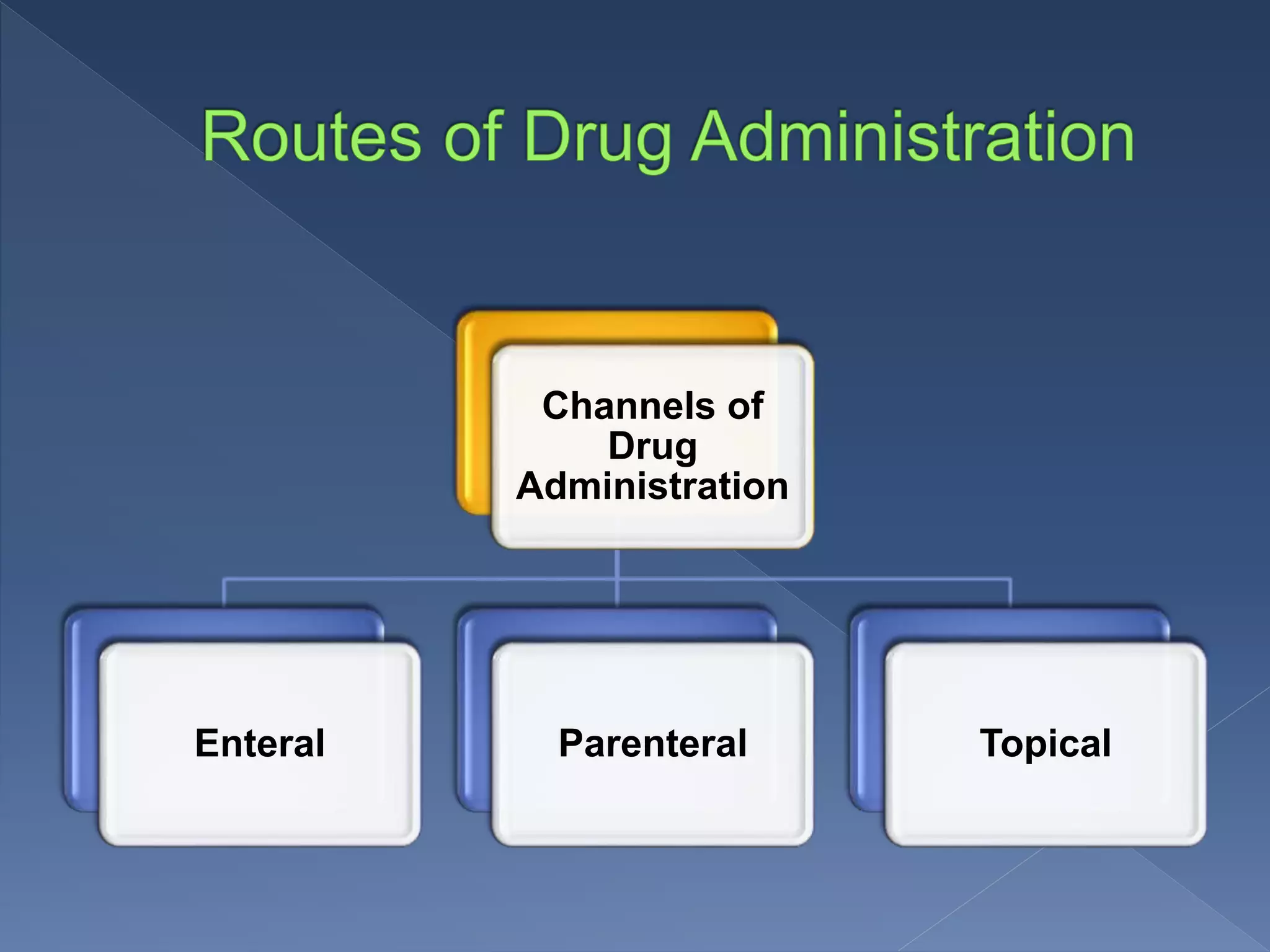
Channels of
Drug
Administration
Enteral Parenteral Topical
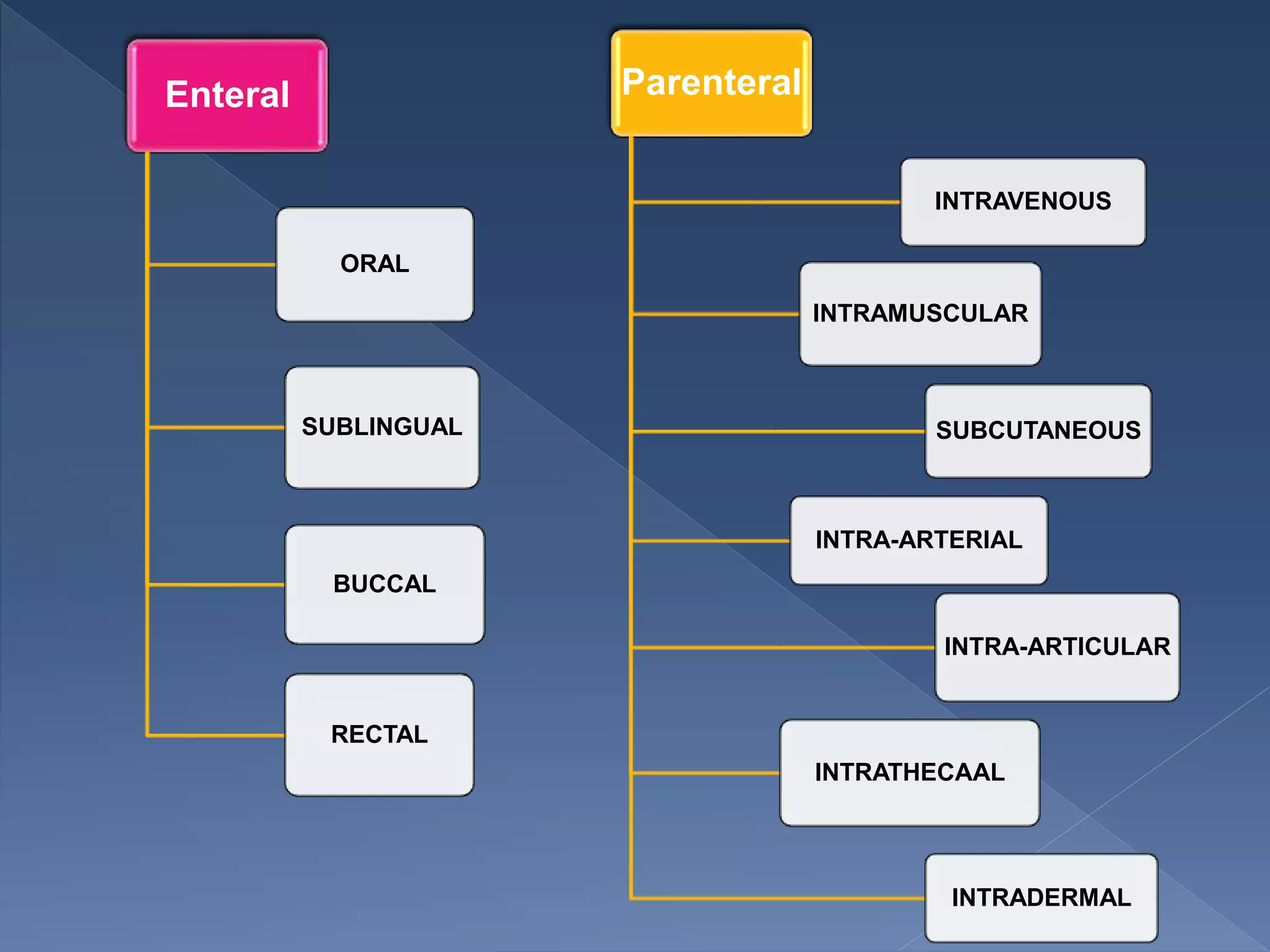
Enteral
ORAL
SUBLINGUAL
BUCCAL
RECTAL
Parenteral
INTRAVENOUS
INTRAMUSCULAR
SUBCUTANEOUS
INTRA-ARTERIAL
INTRA-ARTICULAR
INTRATHECAAL
INTRADERMAL
 Oral refers to two method of administration:
 applying topically to the mouth
 swallowing for absorption along the gastrointestinal
(GI) tract into systemic circulation
 po(Latin term “peros”) is the abbreviation used to
indicate oral route of medication administration
 Common dosage forms for oral administration are:
Tablets, Capsules, Suspension, Liquids, Solutions,
Syrup, Elixers.
Convenient - can be
self- administered, pain
free, easy totake
Absorption - takes
place along the whole
length of the GI tract
Cheap- compared to
most other parenteral
routes.
 Destruction of drugs by
gastric acid and
digestive juices
 Effect too slow for
emergencies
 Unpleasant taste of some
drugs
 Unable to use in
unconscious patient
 The first-pass effect is the term used for the
hepatic metabolism of a pharmacological agent
when it is absorbed from the gut and delivered to
the liver via the portal circulation. The greater the
first-pass effect, the less the agent will reach the
systemic circulation ( in case of drug administered
orally)
Sublingual administration is where the dosage form is
placed under the tongue and is rapidly absorbed by
sublingual mucosa.
Advantages
• Economical
• Quick termination
• Firstpassavoided
• Drug absorption is
quick.
Disadvantages
• Unpalatable & bitter drugs
• Irritation of oral mucosa
• Large quantities not given
• Few drugs are absorbed
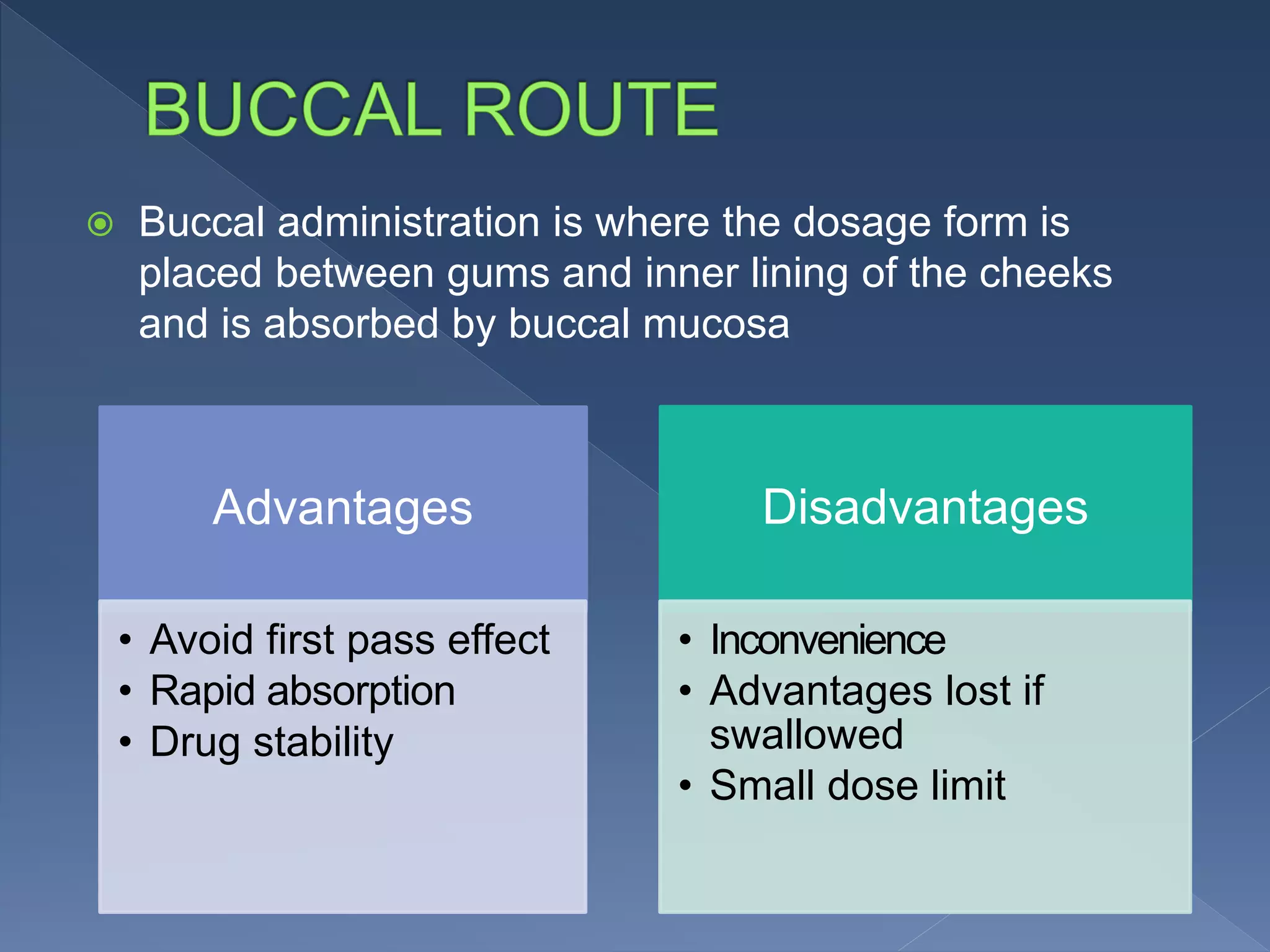
 Buccal administration is where the dosage form is
placed between gums and inner lining of the cheeks
and is absorbed by buccal mucosa
Advantages
• Avoid first pass effect
• Rapid absorption
• Drug stability
Disadvantages
• Inconvenience
• Advantages lost if
swallowed
• Small dose limit
Advantages
• Used in children
• Little or no first
pass effect
• Higher
concentration
rapidly
achieved
Disadvantages
• Inconvenient
• Absorption is
slow and erratic
• Irritation and
inflammation of
rectal mucosa
can occur.
 Parenteral administration is injection or
infusion by means of a needle or catheter
inserted into the body.
 The term parenterals comes from a greek
word para (meaning outside) and enteral
(meaning the intestine).
 This route of administration bypasses the
alimentary canal.
 Systemic parenterals are mainly injectables
and inhalants.
ADVANTAGES
• Bioavailability 100%
• Desired blood
concentration
achieved
• Large quantities
• Vomitting & diarrhoea
• Emergency situation
• First pass avoided
• Gastric manupulation
avoided
DISADVANTAGES
• Irritation & cellulities
• Thrombophelebitis
• Repeated injections
not always feasible.
• Less safe
• Techinical assistance
required
• Danger of infections
• Expensive
• Less convenient and
painful.
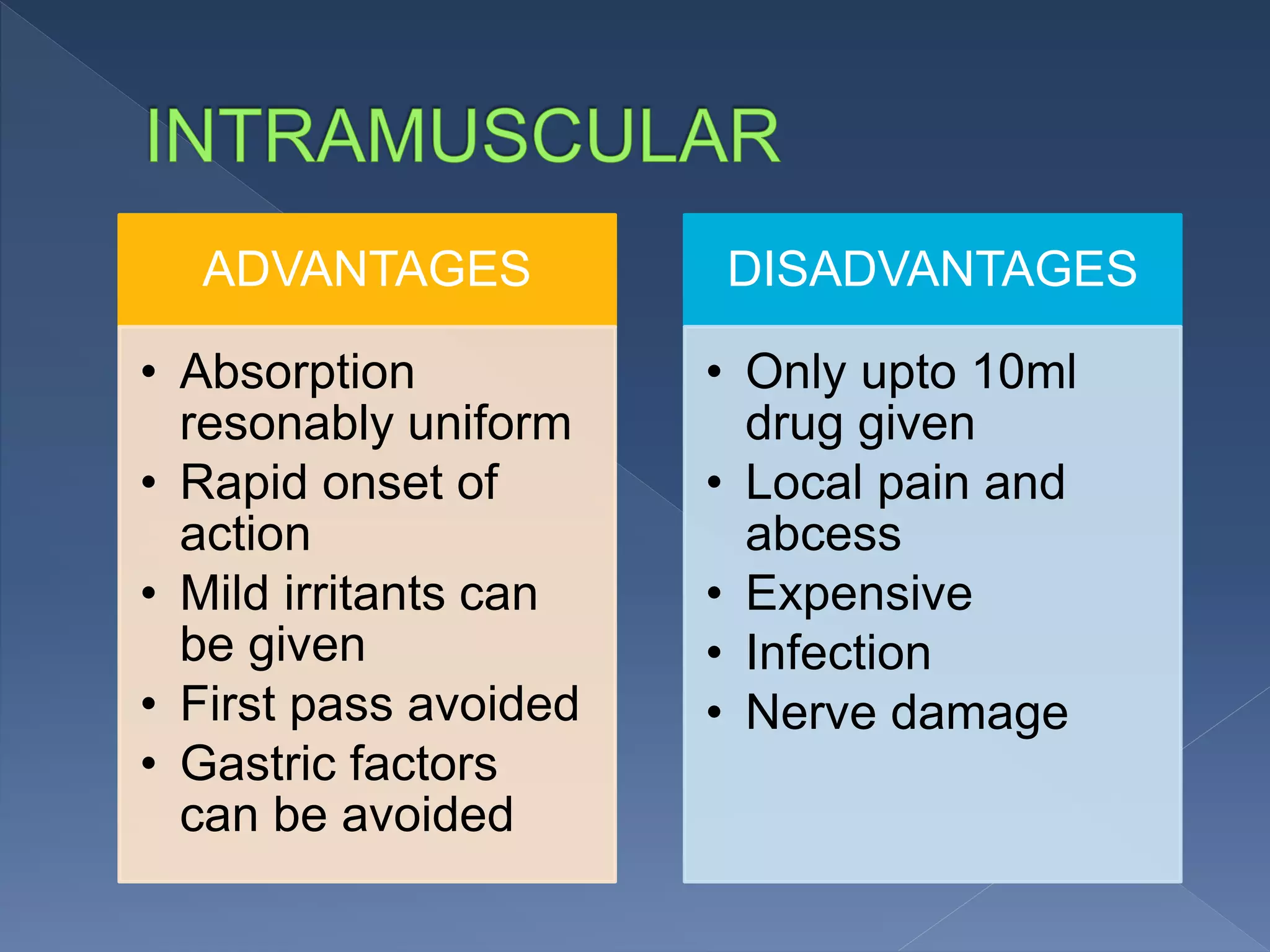
ADVANTAGES
• Absorption
resonably uniform
• Rapid onset of
action
• Mild irritants can
be given
• First pass avoided
• Gastric factors
can be avoided
DISADVANTAGES
• Only upto 10ml
drug given
• Local pain and
abcess
• Expensive
• Infection
• Nerve damage
 Injected under the skin.
 Absorption is slow, so action is prolonged.
IMPLANT: A tablet or porous capsule is
inserted into the loose tissues by incision of
the skin, which is then stitched up.
Example: certain hormonal drugs
 Rarely used
 Anticancers drugs are given for localised
effect.
 Drugs used for diagnosis of peripheral
vascular diseases.
 Injections of antibiotics and corticosteroids
are administered in inflammed joined cavities
by experts.
Example: Hydrocortisone in rheumatoid
arthritis.
 Drug is given within skin layers (dermis).
 Painful
 Mainly used for testing sensitivity to drugs.
Example: Penicillin, ATS (Anti tetanus serum).
 Topical administration is the application of a
drug directly to the surface of the skin.
 Includes administration of drugs to any
mucous membrane.
 Dose forms of topical administration include:
cream, ointment, lotion, gels, transdermal
patches, disks, sprays and powders.
 Local therapeutic effects.
 Not well absorbed into the deep layers of the
skin or mucous membrane.
 Low risk of side effects.
 Transdermal route offers steady level of drug
in the system
 Sprays for inhalation through the nose may
be for local or systemic effects.
 Absorption of drug through the skin
(systemic action)
 Stable blood levels
 No first pass metabolism
 Drug must be potent or patch becomes too
large.
 The route of administration is determined by:
 The physical characteristics of the drug.
 The speed which the drug is absorbed and/or
released.
 The need to bypass hepatic metabolism.
 To achieve high concentration at particular
sites.
 Accuracy of dosage
 Condition of the patient.
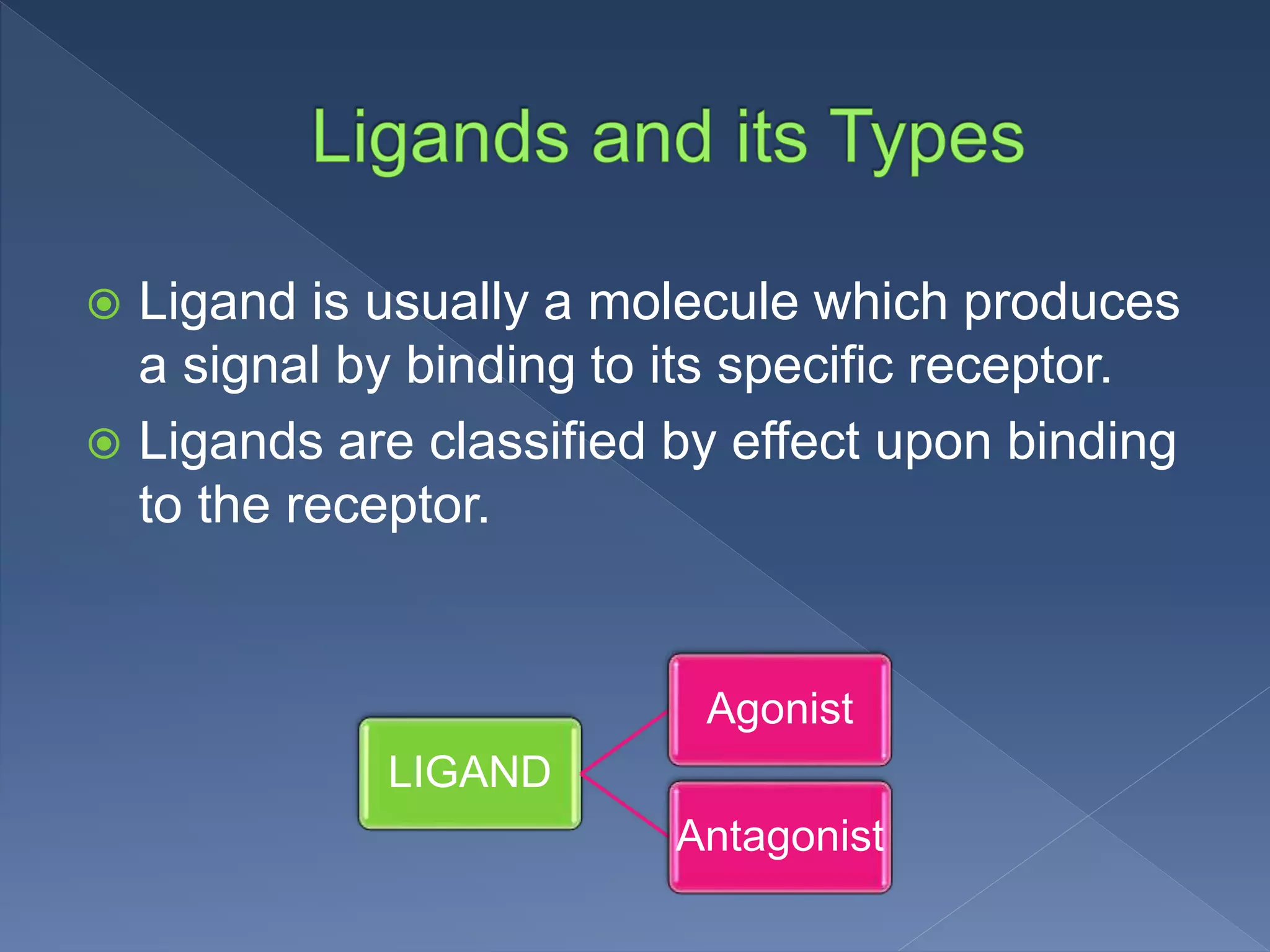
 Ligand is usually a molecule which produces
a signal by binding to its specific receptor.
 Ligands are classified by effect upon binding
to the receptor.
LIGAND
Agonist
Antagonist
Agonist: Drugs that occupy receptors and activate them.
Antagonist: Drugs that occupy receptor but do not activate them. It
also block receptor activation by agonist.
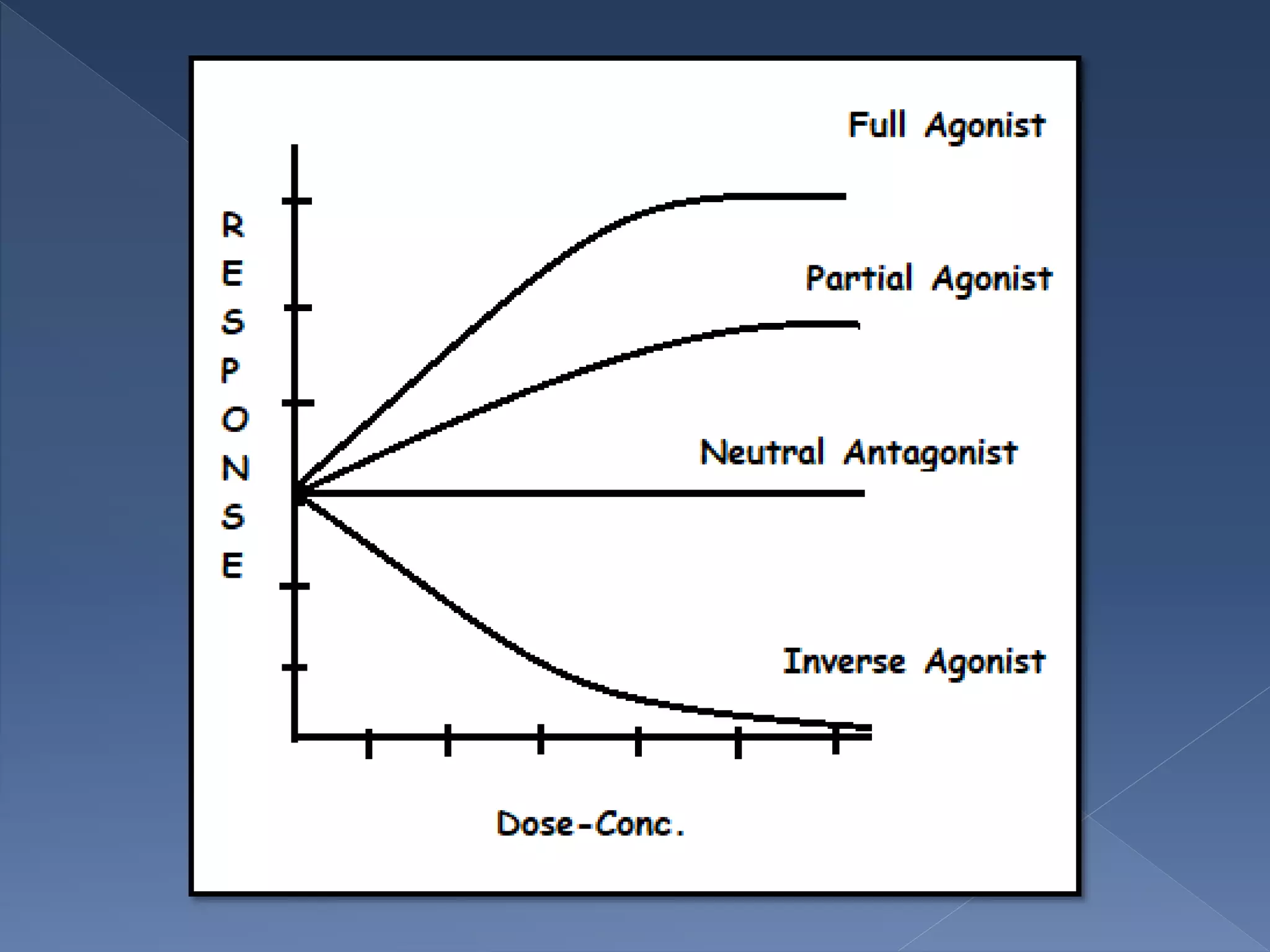
AGONIST
FULL
AGONIST
PARTIAL
AGONIST
INVERSE
AGONIST
The ligand that
increase the activity of
the receptor & produce
the maximal response.
Example: Morphine,
mimics the action of
endorphins at opoid
receptors.
The ligand that
increase the activity
of the receptor &
produce the maximal
response.
Example: Morphine,
mimics the action of
endorphins at opoid
receptors.
The ligand partially
increases the activity
of the receptors but do
not produce the
maximal response like
full agonist even when
present in excess
amount.
Example: Buspiron an
anxiolytic drugs used
to treat an anxiety
disorder.
The ligand which
decreases the activity
of an active receptor
to their inactive state.
Example: Flumazenil
drugs acts as an
inverse agonist for
the GABA receptor
&produce anxiogenic
effect.
ANTAGONIST
REVERSIBLE
ANTAGONIST
COMPETITIVE
ANTAGONIST
NON COMPETITIVE
ANTAGONIST
IRREVERSIBLE
ANTAGONIST
A competitive
antagonist binds to
the same site as the
agonist but does not
activate it, thus
blocks the agonist's
action.
A non-competitive
antagonist binds to an
allosteric (non-
agonist) site on the
receptor to prevent
activation of the
receptor.
An irreversible
antagonist binds
covalently to the
receptor and may or
may not compete
with agonist for
binding to the
receptor.
 Responses variation to a Drug — (1)person to person; and (2)
also same person on different occasions
 Individuals differ in pharmacokinetic handling ofdrugs —varying
plasma/target site cone. — Metabolized drug Vs excreted unchanged
drugs —Propranolol andAtenolol
 Variation in number or state of receptors, coupling proteins or other
components of response effectuation. Variations in
hormonal/neurogenic tone or concentrations —atropine,
propranolol, captopril. Categories of factors: Genetic and
Non genetic including environmental, circumstantial and personal
variables.
 Factors modify drug action
 Quantitatively —action increased or decreased
 Qualitatively : Altered response —allergic reaction or
idiosyncrasy
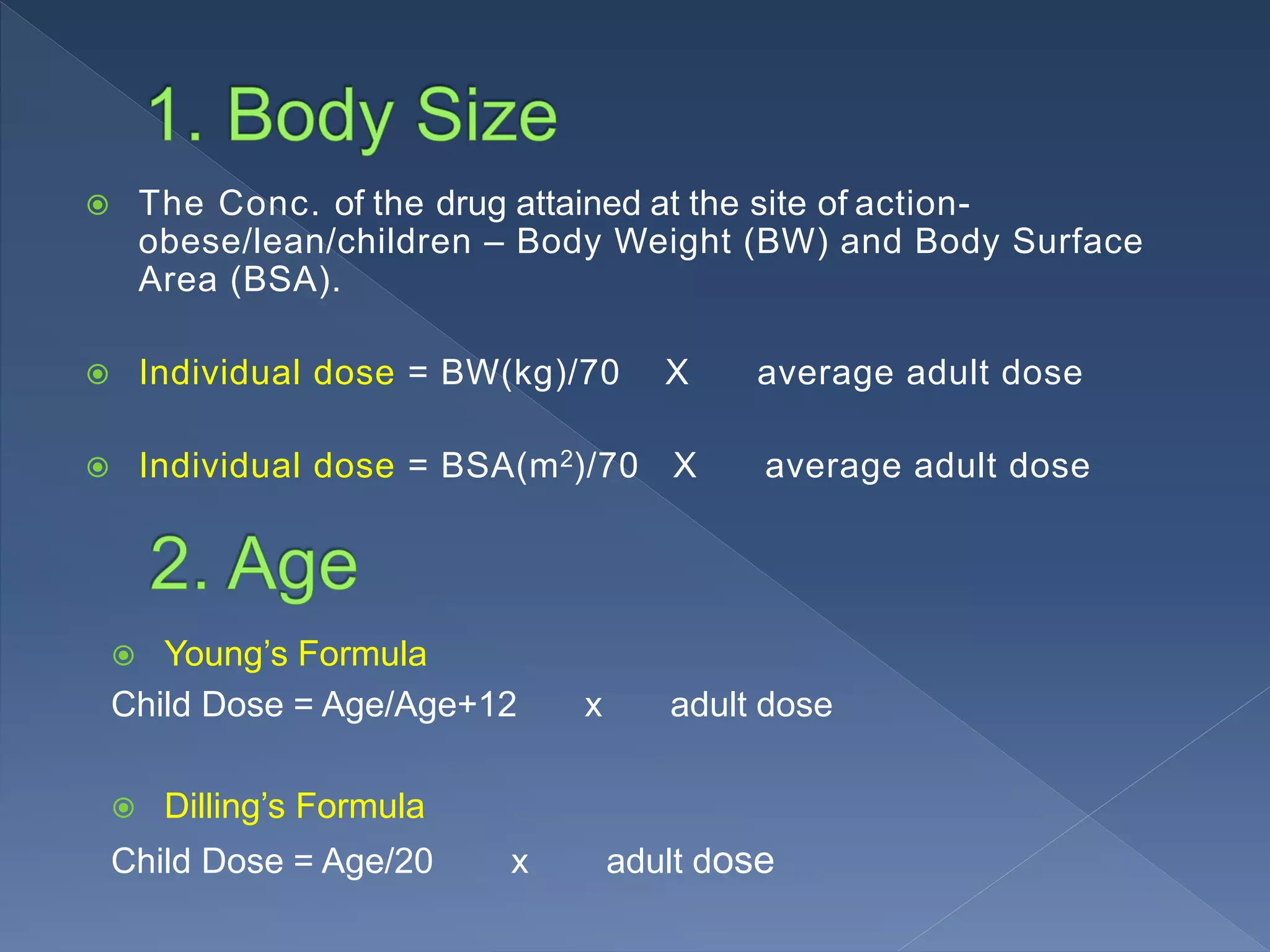
 The Conc. of the drug attained at the site of action-
obese/lean/children – Body Weight (BW) and Body Surface
Area (BSA).
 Individual dose = BW(kg)/70 X average adult dose
 Individual dose = BSA(m2)/70 X average adult dose
 Young’s Formula
Child Dose = Age/Age+12 x adult dose
 Dilling’s Formula
Child Dose = Age/20 x adult dose
 Females have smaller body size - required doses are
lower.
 Digoxin in Maintenance therapy of heart failure -
mortality higher.
 Beta blockers, methyldopa, diuretics - sexual function
disturbances in male.
 Gynaecomastia - Metoclopramide, chloropromazinc,
ketoconazole etc.
 Pregnancy – particularly 3rd trimester
 Species variation in drugs responses do exists.
 Some strains of rabbits – resistant to atropine.
 Rat and mice are resistant to digitalis.
 Race – Racial differences have been observed.
 Black require higher doses of atropine and ephedrine,
while mongols require lower doses.
 Africans – beta blocker are less effective.
 Some in Japan but not among Indians.
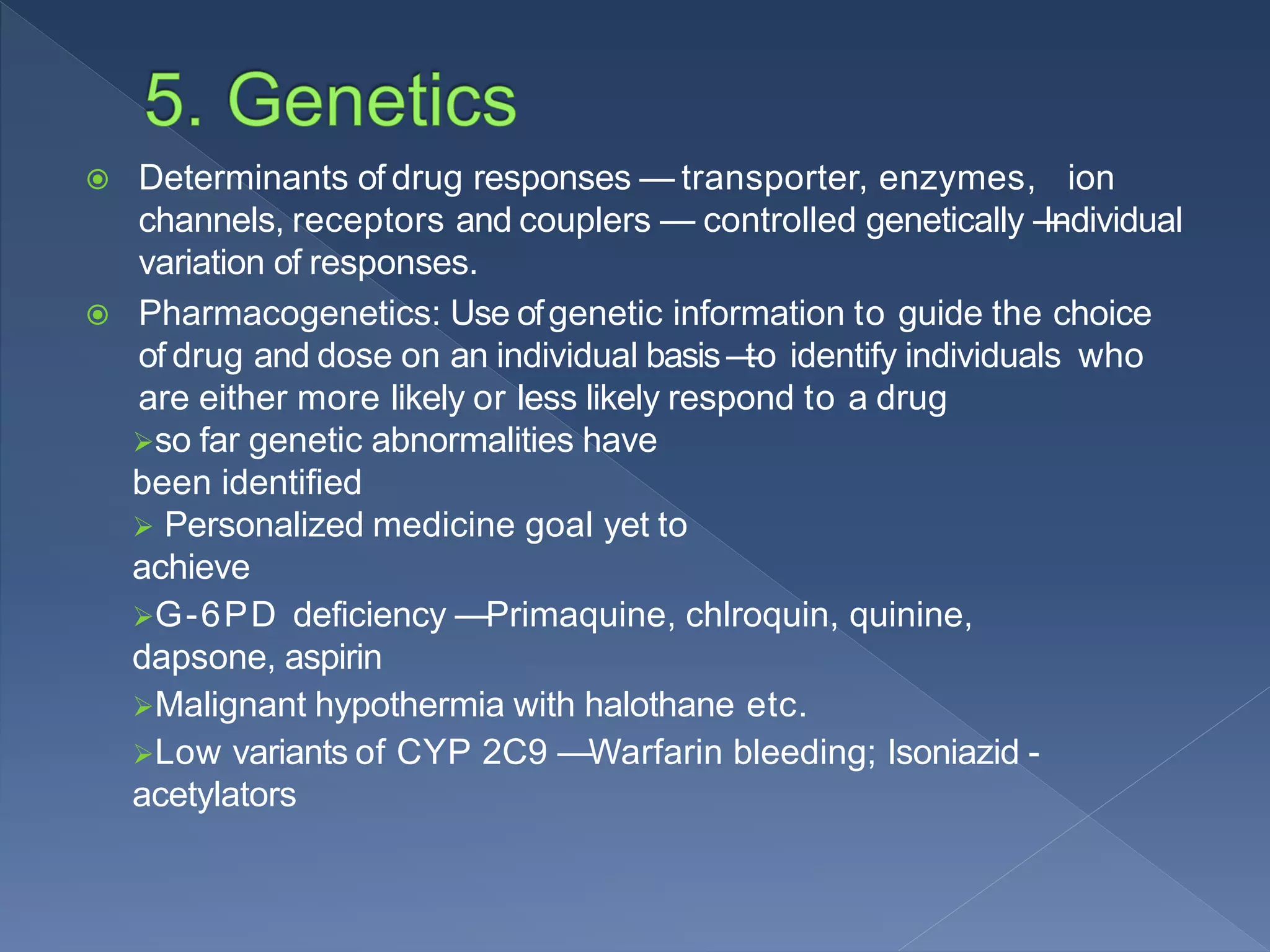
 Determinants of drug responses — transporter, enzymes, ion
channels, receptors and couplers — controlled genetically —Individual
variation of responses.
 Pharmacogenetics: Use ofgenetic information to guide the choice
of drug and dose on an individual basis —to identify individuals who
are either more likely or less likely respond to a drug
so far genetic abnormalities have
been identified
 Personalized medicine goal yet to
achieve
G-6PD deficiency —Primaquine, chlroquin, quinine,
dapsone, aspirin
Malignant hypothermia with halothane etc.
Low variants of CYP 2C9 —Warfarin bleeding; Isoniazid -
acetylators
 Route determines the speed and intensity of drug response –
Oral/ Enteral for slow & Parenteral for speedy action.
 A drug may have different actions via different routes -
Magnesium sulfate or anatacids.
 Drug metabolism may get induced – exposure to insecticides,
carcinogens, tobacco smoke and charcoal broiled meat.
 Food interferes absorption of some drugs while enhances some
drugs – ampicillin get reduced and gresiofulvin get enhanced.
 Hypnotics taken at night.
 Efficacyofadrug can be affected by patient’s beliefs, attitudes and
expectations — particularly CNS drugs — more GAin nervous and
anxious patients — alcohol and performance
 Placebo: AnInertsubstance which is given in the garb of medicine.
Works by psychodynamic effects (not pharmacodynamics) —
sometimes responses equivalent to active drugs
 Placebo reactors
 Induce psychological responses — release of endorphins in brain
 Uses — Control device in clinical trials and to treat a patient
 Lactose tablet/capsules or water injections etc.
 Nocebo: Negative psychodynamic effects of drugs
 Diseases can influence drug deposition- GIT diseases, Liver
diseases, kidney diseases, Congestive heart failure and
Thyroid etc.
 GIT: Coeliac diseases- amoxicillin absorption decreased
while Cephalexin and cotrimoxazole increased;
Achlorohydria – Reduced aspirin absorption – NSAIDs
aggravate peptic ulcer.
 Liver diseases: Liver diseases (cirrhosis) influence drug
action
 Increased bioavailability of drugs with high first pass
metabolism.
 Serum albumin reduced – protein bound drug like Warfarin
– more free drug.
 Prodrugs are less effective (becampicillin)
 Kidney diseases: Pharmacokinetics of many drugs are
affected
 Clearance of drugs in unchanged form (aminoglycosides,
digoxin, phenobarbitone) reduced - parallel to CL- loading
dose not altered- dose should be reduced.
 Plasma protein, albumin reduced – binding of acidic
drugs affected.
 Permeability of BBB is increased – Opiates etc, more
CNS depression.
 Drugs acting via kidney mechanisim – become
ineffective- Thiazides and urinary antiseptics.
 CHF/ CCF: (1) Alter drug kinetics by decreased absorption
(Thiazide),(2)modifying Volume of distribution
(Lignocaine),(3)retarding the elimination(Lignocaine).decreased
perfusion and congestion of liver; reduced g.f.r, increased
tubular reabsorption- doses need reduction.
 Thyroid diseases: Hypothyroid states- sensitive to digoxin,
morphine, and CNS depressants; Hyperthyroid states- resistant
to ionotropic action- prone to cause arrhythmia by digoxin.
 Presence of other drugs: Drug interaction- Pharmacokinetic
and Pharmacodynamic.
 Cumulation: If Rate of administration>Rate of elimination-
cumulation. Slowly eliminating drugs are prone- Prolonged use
of Chloroquine.
 The requirement of higher dose of a drug to produce a given
response
Example: Sulfonylureas in type 2 diabetes and beta-2 agonist in
bronchial asthma – adaptive biological phenomena.
 Natural : Species or individual inherently less sensitive – rabbits
to atropine and black to beta blocker.
 Acquired: Repeated use of a drug in an individual who was
initially responsive become nonresponsive (tolerant) – CNS
depressant.
 Cross tolerance: Tolerance to pharmacologically related drugs –
alcoholics to barbiturates and GA; morphine and pethidine.
 Pharmacokinetic/Drug disposition tolerance:
effective concentration of the drug at the site of
action is decreased – due to enhancement of
elimination on chronic use – Barbiturates and
Carbamazepine induce own metabolism.
 Pharmacodynamic tolerance: less drug action –
cells of target organs become less responsive –
morphine, barbiturates, nitrates etc,... Down
regulation/desensitization of receptors
Example of tolerance is Tachyphylaxis (rapid
development of tolerance when a drug is repeated
in quick succession)
Pharmacology slides final

Pharmacology slides final

  • 2.
     Definitions- Pg03  Branches Pharmacology- Pg 06  Sources of Drugs- Pg 09  Routes of Drug Action- Pg 12  Ligands & its type- Pg 31  Factors Modifying Drug Action- Pg 37
  • 3.
     From theGreek Pharmacon (Drug) and Logos (a discourse or treatise).  It is defined as how chemical agents affect living processes i.e., Hormones, neurotransmitter, growth factors, drugs (pharmaceuticals), toxic agents in the environment.  The medicinal/organic chemists may create the candidate compound (sometimes referred to as a new chemical entity), it is the pharmacologist who is responsible for testing it for pharmacological activity.  Ultimately will lead to the discovery of novel drugs for therapeutic intervention.
  • 4.
     A singleactive chemical entity present in a medicine that is used for diagnosis, prevention and treatment of diseases.  WHO- in 1966 – “ Drug is any substance or product which is used or intended to be used to modify or explore physiological systems or pathological states for the benefit of recipient.
  • 5.
     Pharmacology studiesthe effect of drugs and how they exert their effects:  Paracetamol can reduce body temperature in case of fever by inhibiting an enzyme known as cyclooxygenase in in CNS, which is responsible for the synthesis of a number of inflammatory mediators.  Penicillin cures certain bacterial infection by disrupting the synthesis of bacterial cell walls by inhibiting a key enzyme.
  • 6.
    Two main branches PHARMACOKINETIC S PHARMACODYNAMICS WHATBODY DOES TO DRUGS? WHAT DRUGS DO TO THE BODY? Includes absorption, distribution, metabolism and excretion. Effect of the drug on our body or Body response to drug.
  • 7.
     Pharmacotherapeutics: Useof drugs for prevention and cure of diseases (clinical management of diseases).  Pharmacoepidemiology: Study of effect of drugs on population.  Pharmacoeconomics: Study of cost effectiveness of drug treatment.  Pharmacognosy: Study related to identification of plant drugs.
  • 8.
     Toxicology: Scienceof poison which includes detection and measurement of poisons as well as treatment of poisoning.  Pharmacopoeia: It is an official code containing a selected list of the established drugs and medicinal preparations with description of their physical properties and tests for their identity, purity and potency.  Example: IP, USP, BP,EP.
  • 9.
     Plant Sources:Morphine, digoxin, quinine, atropine, paclitaxel, reserpine, vinca alkaloids.  Animal Sources: Insulin, thyroid extract, heparin, gonadotrophins and sera.  Minerals: Liquid paraffin, magnesium sulfate, magnesium trisilicate, ferrous sulphate and kaolin.  Microorganism: Penicillin, Streptomycin.  Synthetic: Analgesics, hypnotics, anticancer drugs, antimicrobials.  Genetic engineering: Human insulin, growth hormone genes.  Hybridoma technique: Monoclonal antibodies origin.
  • 10.
    WHO - “Essentialmedicines are those that satisfy the priority healthcare needs of the population. Essential medicines are intended to be available within the context of the functioning health systems at all times and in adequate amounts, in appropriate dosage forms, with assured quality and adequate information, and at a price the individual and the community can afford.”
  • 11.
    These are thedrugs or the biological products for diagnosis, prevention and treatment of a rare disease or a more common disease for which there is no reasonable expectation that the cost of developing and marketing will be recovered from the sales of these medicine.
  • 12.
  • 13.
  • 14.
     Oral refersto two method of administration:  applying topically to the mouth  swallowing for absorption along the gastrointestinal (GI) tract into systemic circulation  po(Latin term “peros”) is the abbreviation used to indicate oral route of medication administration  Common dosage forms for oral administration are: Tablets, Capsules, Suspension, Liquids, Solutions, Syrup, Elixers.
  • 15.
    Convenient - canbe self- administered, pain free, easy totake Absorption - takes place along the whole length of the GI tract Cheap- compared to most other parenteral routes.  Destruction of drugs by gastric acid and digestive juices  Effect too slow for emergencies  Unpleasant taste of some drugs  Unable to use in unconscious patient
  • 16.
     The first-passeffect is the term used for the hepatic metabolism of a pharmacological agent when it is absorbed from the gut and delivered to the liver via the portal circulation. The greater the first-pass effect, the less the agent will reach the systemic circulation ( in case of drug administered orally)
  • 17.
    Sublingual administration iswhere the dosage form is placed under the tongue and is rapidly absorbed by sublingual mucosa. Advantages • Economical • Quick termination • Firstpassavoided • Drug absorption is quick. Disadvantages • Unpalatable & bitter drugs • Irritation of oral mucosa • Large quantities not given • Few drugs are absorbed
  • 18.
     Buccal administrationis where the dosage form is placed between gums and inner lining of the cheeks and is absorbed by buccal mucosa Advantages • Avoid first pass effect • Rapid absorption • Drug stability Disadvantages • Inconvenience • Advantages lost if swallowed • Small dose limit
  • 19.
    Advantages • Used inchildren • Little or no first pass effect • Higher concentration rapidly achieved Disadvantages • Inconvenient • Absorption is slow and erratic • Irritation and inflammation of rectal mucosa can occur.
  • 20.
     Parenteral administrationis injection or infusion by means of a needle or catheter inserted into the body.  The term parenterals comes from a greek word para (meaning outside) and enteral (meaning the intestine).  This route of administration bypasses the alimentary canal.  Systemic parenterals are mainly injectables and inhalants.
  • 21.
    ADVANTAGES • Bioavailability 100% •Desired blood concentration achieved • Large quantities • Vomitting & diarrhoea • Emergency situation • First pass avoided • Gastric manupulation avoided DISADVANTAGES • Irritation & cellulities • Thrombophelebitis • Repeated injections not always feasible. • Less safe • Techinical assistance required • Danger of infections • Expensive • Less convenient and painful.
  • 22.
    ADVANTAGES • Absorption resonably uniform •Rapid onset of action • Mild irritants can be given • First pass avoided • Gastric factors can be avoided DISADVANTAGES • Only upto 10ml drug given • Local pain and abcess • Expensive • Infection • Nerve damage
  • 23.
     Injected underthe skin.  Absorption is slow, so action is prolonged. IMPLANT: A tablet or porous capsule is inserted into the loose tissues by incision of the skin, which is then stitched up. Example: certain hormonal drugs
  • 24.
     Rarely used Anticancers drugs are given for localised effect.  Drugs used for diagnosis of peripheral vascular diseases.
  • 25.
     Injections ofantibiotics and corticosteroids are administered in inflammed joined cavities by experts. Example: Hydrocortisone in rheumatoid arthritis.
  • 26.
     Drug isgiven within skin layers (dermis).  Painful  Mainly used for testing sensitivity to drugs. Example: Penicillin, ATS (Anti tetanus serum).
  • 27.
     Topical administrationis the application of a drug directly to the surface of the skin.  Includes administration of drugs to any mucous membrane.  Dose forms of topical administration include: cream, ointment, lotion, gels, transdermal patches, disks, sprays and powders.
  • 28.
     Local therapeuticeffects.  Not well absorbed into the deep layers of the skin or mucous membrane.  Low risk of side effects.  Transdermal route offers steady level of drug in the system  Sprays for inhalation through the nose may be for local or systemic effects.
  • 29.
     Absorption ofdrug through the skin (systemic action)  Stable blood levels  No first pass metabolism  Drug must be potent or patch becomes too large.
  • 30.
     The routeof administration is determined by:  The physical characteristics of the drug.  The speed which the drug is absorbed and/or released.  The need to bypass hepatic metabolism.  To achieve high concentration at particular sites.  Accuracy of dosage  Condition of the patient.
  • 31.
     Ligand isusually a molecule which produces a signal by binding to its specific receptor.  Ligands are classified by effect upon binding to the receptor. LIGAND Agonist Antagonist
  • 32.
    Agonist: Drugs thatoccupy receptors and activate them. Antagonist: Drugs that occupy receptor but do not activate them. It also block receptor activation by agonist.
  • 34.
    AGONIST FULL AGONIST PARTIAL AGONIST INVERSE AGONIST The ligand that increasethe activity of the receptor & produce the maximal response. Example: Morphine, mimics the action of endorphins at opoid receptors. The ligand that increase the activity of the receptor & produce the maximal response. Example: Morphine, mimics the action of endorphins at opoid receptors. The ligand partially increases the activity of the receptors but do not produce the maximal response like full agonist even when present in excess amount. Example: Buspiron an anxiolytic drugs used to treat an anxiety disorder. The ligand which decreases the activity of an active receptor to their inactive state. Example: Flumazenil drugs acts as an inverse agonist for the GABA receptor &produce anxiogenic effect.
  • 36.
    ANTAGONIST REVERSIBLE ANTAGONIST COMPETITIVE ANTAGONIST NON COMPETITIVE ANTAGONIST IRREVERSIBLE ANTAGONIST A competitive antagonistbinds to the same site as the agonist but does not activate it, thus blocks the agonist's action. A non-competitive antagonist binds to an allosteric (non- agonist) site on the receptor to prevent activation of the receptor. An irreversible antagonist binds covalently to the receptor and may or may not compete with agonist for binding to the receptor.
  • 37.
     Responses variationto a Drug — (1)person to person; and (2) also same person on different occasions  Individuals differ in pharmacokinetic handling ofdrugs —varying plasma/target site cone. — Metabolized drug Vs excreted unchanged drugs —Propranolol andAtenolol  Variation in number or state of receptors, coupling proteins or other components of response effectuation. Variations in hormonal/neurogenic tone or concentrations —atropine, propranolol, captopril. Categories of factors: Genetic and Non genetic including environmental, circumstantial and personal variables.  Factors modify drug action  Quantitatively —action increased or decreased  Qualitatively : Altered response —allergic reaction or idiosyncrasy
  • 38.
     The Conc.of the drug attained at the site of action- obese/lean/children – Body Weight (BW) and Body Surface Area (BSA).  Individual dose = BW(kg)/70 X average adult dose  Individual dose = BSA(m2)/70 X average adult dose  Young’s Formula Child Dose = Age/Age+12 x adult dose  Dilling’s Formula Child Dose = Age/20 x adult dose
  • 39.
     Females havesmaller body size - required doses are lower.  Digoxin in Maintenance therapy of heart failure - mortality higher.  Beta blockers, methyldopa, diuretics - sexual function disturbances in male.  Gynaecomastia - Metoclopramide, chloropromazinc, ketoconazole etc.  Pregnancy – particularly 3rd trimester
  • 40.
     Species variationin drugs responses do exists.  Some strains of rabbits – resistant to atropine.  Rat and mice are resistant to digitalis.  Race – Racial differences have been observed.  Black require higher doses of atropine and ephedrine, while mongols require lower doses.  Africans – beta blocker are less effective.  Some in Japan but not among Indians.
  • 41.
     Determinants ofdrug responses — transporter, enzymes, ion channels, receptors and couplers — controlled genetically —Individual variation of responses.  Pharmacogenetics: Use ofgenetic information to guide the choice of drug and dose on an individual basis —to identify individuals who are either more likely or less likely respond to a drug so far genetic abnormalities have been identified  Personalized medicine goal yet to achieve G-6PD deficiency —Primaquine, chlroquin, quinine, dapsone, aspirin Malignant hypothermia with halothane etc. Low variants of CYP 2C9 —Warfarin bleeding; Isoniazid - acetylators
  • 42.
     Route determinesthe speed and intensity of drug response – Oral/ Enteral for slow & Parenteral for speedy action.  A drug may have different actions via different routes - Magnesium sulfate or anatacids.  Drug metabolism may get induced – exposure to insecticides, carcinogens, tobacco smoke and charcoal broiled meat.  Food interferes absorption of some drugs while enhances some drugs – ampicillin get reduced and gresiofulvin get enhanced.  Hypnotics taken at night.
  • 43.
     Efficacyofadrug canbe affected by patient’s beliefs, attitudes and expectations — particularly CNS drugs — more GAin nervous and anxious patients — alcohol and performance  Placebo: AnInertsubstance which is given in the garb of medicine. Works by psychodynamic effects (not pharmacodynamics) — sometimes responses equivalent to active drugs  Placebo reactors  Induce psychological responses — release of endorphins in brain  Uses — Control device in clinical trials and to treat a patient  Lactose tablet/capsules or water injections etc.  Nocebo: Negative psychodynamic effects of drugs
  • 44.
     Diseases caninfluence drug deposition- GIT diseases, Liver diseases, kidney diseases, Congestive heart failure and Thyroid etc.  GIT: Coeliac diseases- amoxicillin absorption decreased while Cephalexin and cotrimoxazole increased; Achlorohydria – Reduced aspirin absorption – NSAIDs aggravate peptic ulcer.  Liver diseases: Liver diseases (cirrhosis) influence drug action  Increased bioavailability of drugs with high first pass metabolism.  Serum albumin reduced – protein bound drug like Warfarin – more free drug.  Prodrugs are less effective (becampicillin)
  • 45.
     Kidney diseases:Pharmacokinetics of many drugs are affected  Clearance of drugs in unchanged form (aminoglycosides, digoxin, phenobarbitone) reduced - parallel to CL- loading dose not altered- dose should be reduced.  Plasma protein, albumin reduced – binding of acidic drugs affected.  Permeability of BBB is increased – Opiates etc, more CNS depression.  Drugs acting via kidney mechanisim – become ineffective- Thiazides and urinary antiseptics.
  • 46.
     CHF/ CCF:(1) Alter drug kinetics by decreased absorption (Thiazide),(2)modifying Volume of distribution (Lignocaine),(3)retarding the elimination(Lignocaine).decreased perfusion and congestion of liver; reduced g.f.r, increased tubular reabsorption- doses need reduction.  Thyroid diseases: Hypothyroid states- sensitive to digoxin, morphine, and CNS depressants; Hyperthyroid states- resistant to ionotropic action- prone to cause arrhythmia by digoxin.  Presence of other drugs: Drug interaction- Pharmacokinetic and Pharmacodynamic.  Cumulation: If Rate of administration>Rate of elimination- cumulation. Slowly eliminating drugs are prone- Prolonged use of Chloroquine.
  • 47.
     The requirementof higher dose of a drug to produce a given response Example: Sulfonylureas in type 2 diabetes and beta-2 agonist in bronchial asthma – adaptive biological phenomena.  Natural : Species or individual inherently less sensitive – rabbits to atropine and black to beta blocker.  Acquired: Repeated use of a drug in an individual who was initially responsive become nonresponsive (tolerant) – CNS depressant.  Cross tolerance: Tolerance to pharmacologically related drugs – alcoholics to barbiturates and GA; morphine and pethidine.
  • 48.
     Pharmacokinetic/Drug dispositiontolerance: effective concentration of the drug at the site of action is decreased – due to enhancement of elimination on chronic use – Barbiturates and Carbamazepine induce own metabolism.  Pharmacodynamic tolerance: less drug action – cells of target organs become less responsive – morphine, barbiturates, nitrates etc,... Down regulation/desensitization of receptors Example of tolerance is Tachyphylaxis (rapid development of tolerance when a drug is repeated in quick succession)