3
4
1
2
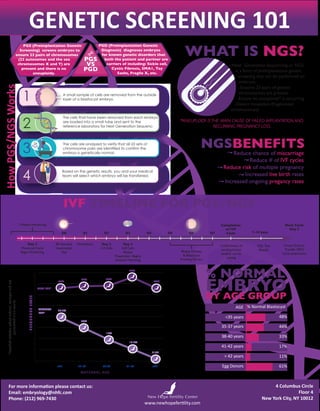
A small sample of cells are removed from the outside
layer of a blastocyst embryo.
The cells that have been removed from each embryo
are loaded into a small tube and sent to the
reference laboratory for Next Generation Sequenc-
The cells are analyzed to verify that all 23 sets of
chromosome pairs are identified to confirm the
embryo is genetically normal.
Based on the genetic results, you and your medical
team will select which embryo will be transferred.
HowPGS/NGSWorks
% NORMAL
EMBRYOBY AGE GROUP
AGE
<35 years
35-37 years
38-40 years
41-42 years
> 42 years
Egg Donors
% Normal Blastocyst
48%
44%
33%
17%
11%
61%
2 Weeks Monitoring
Day 3
Menstrual Cycle
Begin Monitoring
ER Retrieval
Insemination
Day
Fertilization Day 2
2-4 Cells
Day 3
6-8 Cells
Biopsy
Preparation Begins
(Assisted Hatching)
Biopsy Process
& Blastocyst
Freezing Occurs
D0 D1 D2 D3 D4 D5 D6 D7
Confirmation of
sending biopsy
samples out for
testing
Completion
of IVF
Cycle 7-10 days
PGS Test
Results
Next Cycle
Day 3
Frozen Embryo
Transfer (FET)
Cycle preparation
IVF TIMELINE FOR PGS/NGS
<35 35-37 38-40 41-42 >42
MATERNAL AGE
PREGNANCYRATES
WITHOUT
PGS*
WITH PGS*
66%
68% 69%
76%
66%
4.5%
10.2%
19%
30%
39.5%
PGD (Preimplantation Genetic
Diagnosis) diagnoses embryos
for known genetic disorders that
both the patient and partner are
carriers of including: Sickle cell,
Cystic Fibrosis, SMA1, Tay
Sachs, Fragile X, etc.
PGS (Preimplantation Genetic
Screening) screens embryos to
ensure 23 pairs of chromosomes
(22 autosomes and the sex
chromosomes X and Y) are
present and there is no
aneuploidy.
PGS
VS
PGD
Next Generation Sequencing or NGS
is a form of preimplantation genetic
screening that can be performed on
embryos.
-Ensures 23 pairs of genetic
chromosomes are present
-Ensure no aneuploidy* is occurring
-Detect mosaicism (fragmented
chromosomes)
*ANEUPLOIDY IS THE MAIN CAUSE OF FAILED IMPLANTATION AND
RECURRING PREGNANCY LOSS.
WHAT IS NGS?
Reduce chance of miscarriage
Reduce # of IVF cycles
Reduce risk of multiple pregnancy
Increased live birth rates
Increased ongoing pregancy rates
NGSBENEFITS
GENETIC SCREENING 101
For more information please contact us:
Email: embryology@nhfc.com
Phone: (212) 969-7430
4 Columbus Circle
Floor 4
New York City, NY 10012
www.newhopefertility.com
*Providedstatisticsreflectnationalaveragesandnot
guaranteedclinicresults

PGS INfographic copy

  • 1.
    3 4 1 2 A small sampleof cells are removed from the outside layer of a blastocyst embryo. The cells that have been removed from each embryo are loaded into a small tube and sent to the reference laboratory for Next Generation Sequenc- The cells are analyzed to verify that all 23 sets of chromosome pairs are identified to confirm the embryo is genetically normal. Based on the genetic results, you and your medical team will select which embryo will be transferred. HowPGS/NGSWorks % NORMAL EMBRYOBY AGE GROUP AGE <35 years 35-37 years 38-40 years 41-42 years > 42 years Egg Donors % Normal Blastocyst 48% 44% 33% 17% 11% 61% 2 Weeks Monitoring Day 3 Menstrual Cycle Begin Monitoring ER Retrieval Insemination Day Fertilization Day 2 2-4 Cells Day 3 6-8 Cells Biopsy Preparation Begins (Assisted Hatching) Biopsy Process & Blastocyst Freezing Occurs D0 D1 D2 D3 D4 D5 D6 D7 Confirmation of sending biopsy samples out for testing Completion of IVF Cycle 7-10 days PGS Test Results Next Cycle Day 3 Frozen Embryo Transfer (FET) Cycle preparation IVF TIMELINE FOR PGS/NGS <35 35-37 38-40 41-42 >42 MATERNAL AGE PREGNANCYRATES WITHOUT PGS* WITH PGS* 66% 68% 69% 76% 66% 4.5% 10.2% 19% 30% 39.5% PGD (Preimplantation Genetic Diagnosis) diagnoses embryos for known genetic disorders that both the patient and partner are carriers of including: Sickle cell, Cystic Fibrosis, SMA1, Tay Sachs, Fragile X, etc. PGS (Preimplantation Genetic Screening) screens embryos to ensure 23 pairs of chromosomes (22 autosomes and the sex chromosomes X and Y) are present and there is no aneuploidy. PGS VS PGD Next Generation Sequencing or NGS is a form of preimplantation genetic screening that can be performed on embryos. -Ensures 23 pairs of genetic chromosomes are present -Ensure no aneuploidy* is occurring -Detect mosaicism (fragmented chromosomes) *ANEUPLOIDY IS THE MAIN CAUSE OF FAILED IMPLANTATION AND RECURRING PREGNANCY LOSS. WHAT IS NGS? Reduce chance of miscarriage Reduce # of IVF cycles Reduce risk of multiple pregnancy Increased live birth rates Increased ongoing pregancy rates NGSBENEFITS GENETIC SCREENING 101 For more information please contact us: Email: embryology@nhfc.com Phone: (212) 969-7430 4 Columbus Circle Floor 4 New York City, NY 10012 www.newhopefertility.com *Providedstatisticsreflectnationalaveragesandnot guaranteedclinicresults