Hellison, D. (2003). Teaching personal and social 
responsibility in physical education. In S. Silverman and C. 
Ennis (Eds.), Student Learning In Physical Education: 
Applying Research to Enhance Instruction. Champaign, IL: 
Human Kinetics. (pp. 241-254 
Renee Brown 
Adam Keath
Background 
• Hellison Worked in inner-city schools and saw the 
need for moral and character education. 
• The need was not exclusive to urban settings 
modern culture was affecting the character and 
morals of kids nationwide. 
• “To what extent and in what ways can physical 
education help meet the needs of kids today?” 
• https://www.youtube.com/watch?v=qzayNPEmo 
K0&list=PL9CCC890650706F6A
Teaching Personal and social 
responsibility. 
• Hellison developed a model to address the 
affective domain of students and help develop 
character in the students. 
• Model had to keep physical activity central to 
physical activity. 
• The model through activity helps students be 
more reflective about personal and social-moral 
decisions.
TPSR Goals 
• Respect the rights and feelings of others 
– Self control/temper 
– Conflict resolution 
• Effort 
– Self motivation 
– New tasks/staying on task 
• Self direction 
– Works independently 
– Goal setting and progression 
– Peer pressure resistance
TPSR Goals cont. 
• Helping others and leadership 
– Caring & compassion 
– Sensitivity and responsiveness 
• Outside the gym 
– Trying these concepts outside of PE 
– Becoming role models
TPSR Levels 
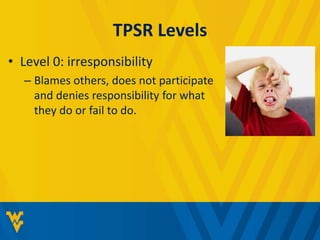
• Level 0: irresponsibility 
– Blames others, does not participate 
and denies responsibility for what 
they do or fail to do.
TPSR Levels 
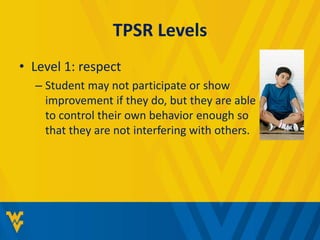
• Level 1: respect 
– Student may not participate or show 
improvement if they do, but they are able 
to control their own behavior enough so 
that they are not interfering with others.
TPSR Levels 
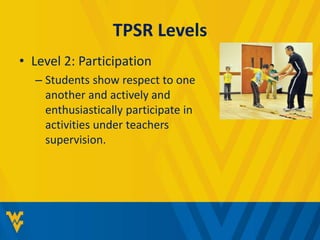
• Level 2: Participation 
– Students show respect to one 
another and actively and 
enthusiastically participate in 
activities under teachers 
supervision.
TPSR Levels 
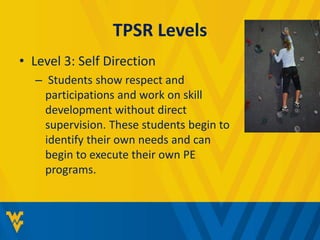
• Level 3: Self Direction 
– Students show respect and 
participations and work on skill 
development without direct 
supervision. These students begin to 
identify their own needs and can 
begin to execute their own PE 
programs.
TPSR Levels 
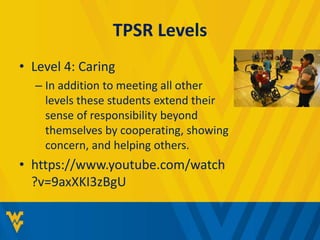
• Level 4: Caring 
– In addition to meeting all other 
levels these students extend their 
sense of responsibility beyond 
themselves by cooperating, showing 
concern, and helping others. 
• https://www.youtube.com/watch 
?v=9axXKI3zBgU
TPSR Class Format 
• Counseling time- touch base with students, 
show them you care for them as individuals. 
• Awareness talk- Remind students of their 
responsibilities, eventually this becomes 
student led. 
• The lesson- teacher uses TPSR instructional 
strategies to integrate teaching responsibility 
with physical activity.
TPSR Format Cont. 
• Group meeting- Students express their views about 
the lesson and raise possible issues or ideas they 
might have to improve the class or lesson. 
• Reflection time- student’s reflect on their attitudes 
and intentions over the course of the lesson and 
think about what level they were at in terms of 
Hellison’s five levels. 
• Counseling time- If time permits give student’s the 
chance to meet one on one and discuss any potential 
issues.
Instructional Strategies 
• Awareness strategies- “teachable moments”, 
wall charts, awareness talks. 
• Direct instruction- How lessons are designed 
to incorporate components of TPSR. 
• Individual decision making- Offering options 
in class and allowing students to select there 
own progression.
Instructional Strategies 
• Large and small group decision making- 
Group meetings and decisions so students can 
be an active part of the review process.
Extended Day Programs 
• Community youth programs 
– Flexibility 
– Funding and student recruitment is voluntary 
– Usually fails because the holistic agenda is broader 
than the existing youth services framework.
Implications For Research 
• Personal and social development outcomes 
are difficult to evaluate. 
– Sleeper effect 
• Influence of the effect of students life outside 
of physical activity 
– Follow-up research neccesary
Conclusions 
• The best known work in achieving NASPE 
standard 4 as described by Palcek. 
• Model focused on character development and 
the affective domain. 
• “Never doubt that the efforts of one person 
can change the world…indeed, it’s the only 
thing that ever has.” Margaret Meade

Teaching Personal and Social Responsibility: In Physical Education

  • 1.
    Hellison, D. (2003).Teaching personal and social responsibility in physical education. In S. Silverman and C. Ennis (Eds.), Student Learning In Physical Education: Applying Research to Enhance Instruction. Champaign, IL: Human Kinetics. (pp. 241-254 Renee Brown Adam Keath
  • 2.
    Background • HellisonWorked in inner-city schools and saw the need for moral and character education. • The need was not exclusive to urban settings modern culture was affecting the character and morals of kids nationwide. • “To what extent and in what ways can physical education help meet the needs of kids today?” • https://www.youtube.com/watch?v=qzayNPEmo K0&list=PL9CCC890650706F6A
  • 3.
    Teaching Personal andsocial responsibility. • Hellison developed a model to address the affective domain of students and help develop character in the students. • Model had to keep physical activity central to physical activity. • The model through activity helps students be more reflective about personal and social-moral decisions.
  • 4.
    TPSR Goals •Respect the rights and feelings of others – Self control/temper – Conflict resolution • Effort – Self motivation – New tasks/staying on task • Self direction – Works independently – Goal setting and progression – Peer pressure resistance
  • 5.
    TPSR Goals cont. • Helping others and leadership – Caring & compassion – Sensitivity and responsiveness • Outside the gym – Trying these concepts outside of PE – Becoming role models
  • 6.
    TPSR Levels •Level 0: irresponsibility – Blames others, does not participate and denies responsibility for what they do or fail to do.
  • 7.
    TPSR Levels •Level 1: respect – Student may not participate or show improvement if they do, but they are able to control their own behavior enough so that they are not interfering with others.
  • 8.
    TPSR Levels •Level 2: Participation – Students show respect to one another and actively and enthusiastically participate in activities under teachers supervision.
  • 9.
    TPSR Levels •Level 3: Self Direction – Students show respect and participations and work on skill development without direct supervision. These students begin to identify their own needs and can begin to execute their own PE programs.
  • 10.
    TPSR Levels •Level 4: Caring – In addition to meeting all other levels these students extend their sense of responsibility beyond themselves by cooperating, showing concern, and helping others. • https://www.youtube.com/watch ?v=9axXKI3zBgU
  • 11.
    TPSR Class Format • Counseling time- touch base with students, show them you care for them as individuals. • Awareness talk- Remind students of their responsibilities, eventually this becomes student led. • The lesson- teacher uses TPSR instructional strategies to integrate teaching responsibility with physical activity.
  • 12.
    TPSR Format Cont. • Group meeting- Students express their views about the lesson and raise possible issues or ideas they might have to improve the class or lesson. • Reflection time- student’s reflect on their attitudes and intentions over the course of the lesson and think about what level they were at in terms of Hellison’s five levels. • Counseling time- If time permits give student’s the chance to meet one on one and discuss any potential issues.
  • 13.
    Instructional Strategies •Awareness strategies- “teachable moments”, wall charts, awareness talks. • Direct instruction- How lessons are designed to incorporate components of TPSR. • Individual decision making- Offering options in class and allowing students to select there own progression.
  • 14.
    Instructional Strategies •Large and small group decision making- Group meetings and decisions so students can be an active part of the review process.
  • 15.
    Extended Day Programs • Community youth programs – Flexibility – Funding and student recruitment is voluntary – Usually fails because the holistic agenda is broader than the existing youth services framework.
  • 16.
    Implications For Research • Personal and social development outcomes are difficult to evaluate. – Sleeper effect • Influence of the effect of students life outside of physical activity – Follow-up research neccesary
  • 17.
    Conclusions • Thebest known work in achieving NASPE standard 4 as described by Palcek. • Model focused on character development and the affective domain. • “Never doubt that the efforts of one person can change the world…indeed, it’s the only thing that ever has.” Margaret Meade

Editor's Notes

  • #14 Examples of direct instruction: For respecting others rights to participate, Use of modified games and rules. Such as requiring two hits before returning the ball in volley ball. Or requiring everyone on the team to touch the ball before scoring in basketball. For effort- structuring a lesson that has different paces that can be self paced for each of the different levels. Provide the students with options on performance level. For helping others- peer coaching Individual decision making- Offering activities at different intensities e.g. practice, competition, recreation.
  • #17 Involve complex issues such as changes that occur inside kids. Rather than observable behaviors.