Pescara!!!
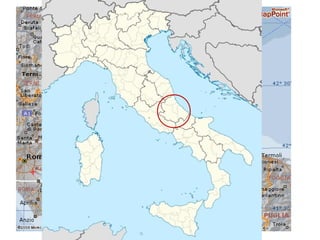
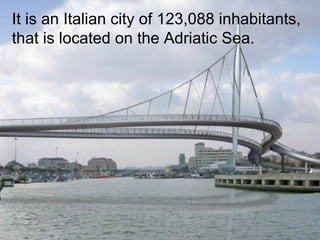
It is an Italian city of 123,088 inhabitants,
that is located on the Adriatic Sea.
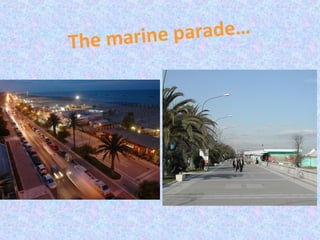
parade…
he marine
T
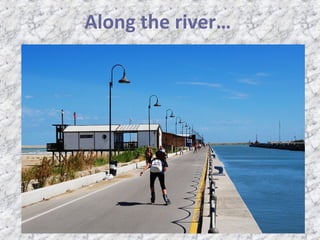
Along the river…
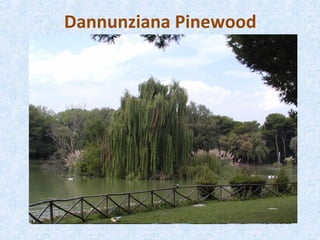
Dannunziana Pinewood
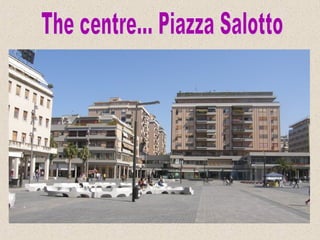
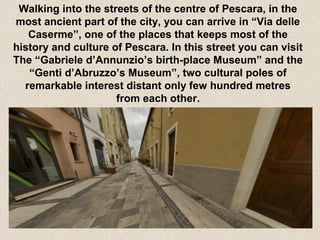
Walking into the streets of the centre of Pescara, in the
most ancient part of the city, you can arrive in “Via delle
Caserme”, one of the places that keeps most of the
history and culture of Pescara. In this street you can visit
The “Gabriele d’Annunzio’s birth-place Museum” and the
“Genti d’Abruzzo’s Museum”, two cultural poles of
remarkable interest distant only few hundred metres
from each other.
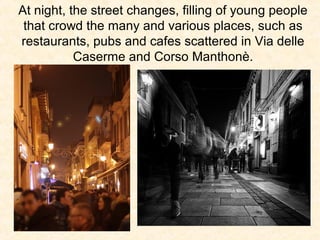
At night, the street changes, filling of young people
that crowd the many and various places, such as
restaurants, pubs and cafes scattered in Via delle
Caserme and Corso Manthonè.
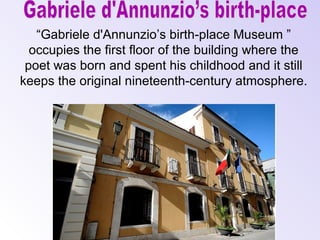
“Gabriele d'Annunzio’s birth-place Museum ”
occupies the first floor of the building where the
poet was born and spent his childhood and it still
keeps the original nineteenth-century atmosphere.
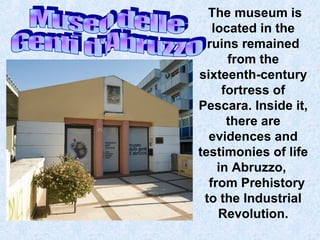
The museum is
located in the
ruins remained
from the
sixteenth-century
fortress of
Pescara. Inside it,
there are
evidences and
testimonies of life
in Abruzzo,
from Prehistory
to the Industrial
Revolution.
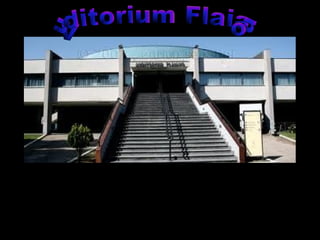
A multipurpose indoor room, which contains up to 500
seats and can be used the whole year around. Within it
operas, concerts, ballets and different plays are
performed.
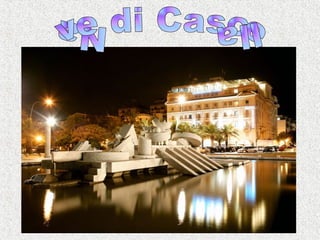
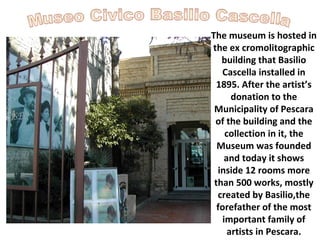
The museum is hosted in
the ex cromolitographic
building that Basilio
Cascella installed in
1895. After the artist’s
donation to the
Municipality of Pescara
of the building and the
collection in it, the
Museum was founded
and today it shows
inside 12 rooms more
than 500 works, mostly
created by Basilio,the
forefather of the most
important family of
artists in Pescara.
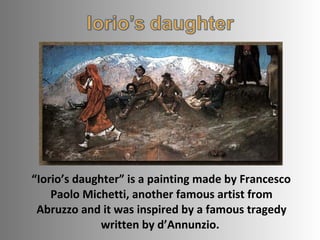
“Iorio’s daughter” is a painting made by Francesco
Paolo Michetti, another famous artist from
Abruzzo and it was inspired by a famous tragedy
written by d’Annunzio.
Pescara

Pescara

  • 1.
  • 2.
    It is anItalian city of 123,088 inhabitants, that is located on the Adriatic Sea.
  • 5.
  • 6.
  • 8.
  • 9.
    Walking into thestreets of the centre of Pescara, in the most ancient part of the city, you can arrive in “Via delle Caserme”, one of the places that keeps most of the history and culture of Pescara. In this street you can visit The “Gabriele d’Annunzio’s birth-place Museum” and the “Genti d’Abruzzo’s Museum”, two cultural poles of remarkable interest distant only few hundred metres from each other.
  • 10.
    At night, thestreet changes, filling of young people that crowd the many and various places, such as restaurants, pubs and cafes scattered in Via delle Caserme and Corso Manthonè.
  • 11.
    “Gabriele d'Annunzio’s birth-placeMuseum ” occupies the first floor of the building where the poet was born and spent his childhood and it still keeps the original nineteenth-century atmosphere.
  • 12.
    The museum is locatedin the ruins remained from the sixteenth-century fortress of Pescara. Inside it, there are evidences and testimonies of life in Abruzzo, from Prehistory to the Industrial Revolution.
  • 13.
    A multipurpose indoorroom, which contains up to 500 seats and can be used the whole year around. Within it operas, concerts, ballets and different plays are performed.
  • 14.
    The museum ishosted in the ex cromolitographic building that Basilio Cascella installed in 1895. After the artist’s donation to the Municipality of Pescara of the building and the collection in it, the Museum was founded and today it shows inside 12 rooms more than 500 works, mostly created by Basilio,the forefather of the most important family of artists in Pescara.
  • 15.
    “Iorio’s daughter” isa painting made by Francesco Paolo Michetti, another famous artist from Abruzzo and it was inspired by a famous tragedy written by d’Annunzio.