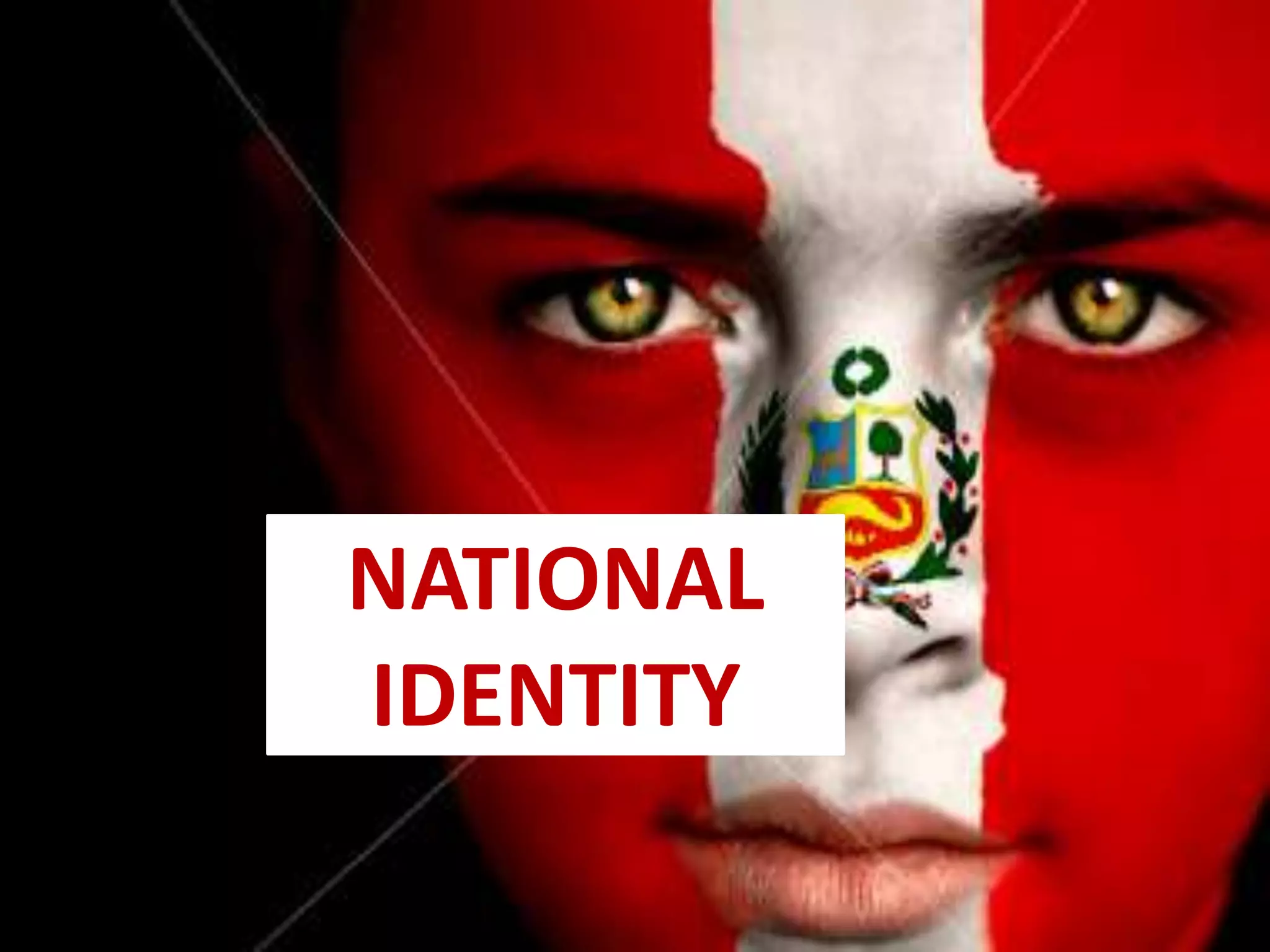
NATIONAL
IDENTITY
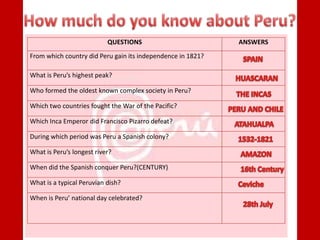
QUESTIONS ANSWERS
From which country did Peru gain its independence in 1821?
What is Peru’s highest peak?
Who formed the oldest known complex society in Peru?
Which two countries fought the War of the Pacific?
Which Inca Emperor did Francisco Pizarro defeat?
During which period was Peru a Spanish colony?
What is Peru’s longest river?
When did the Spanish conquer Peru?(CENTURY)
What is a typical Peruvian dish?
When is Peru’ national day celebrated?
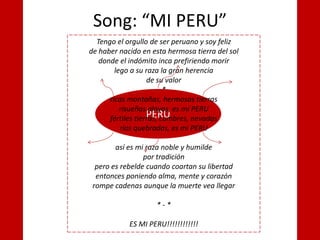
Song: “MI PERU”
PERU
Tengo el orgullo de ser peruano y soy feliz
de haber nacido en esta hermosa tierra del sol
donde el indómito inca prefiriendo morir
lego a su raza la gran herencia
de su valor
*
ricas montañas, hermosas tierras
risueñas playas, es mi PERU
fértiles tierras, cumbres, nevadas
ríos quebradas, es mi PERU
así es mi raza noble y humilde
por tradición
pero es rebelde cuando coartan su libertad
entonces poniendo alma, mente y corazón
rompe cadenas aunque la muerte vea llegar
* - *
ES MI PERU!!!!!!!!!!!!
It is the person's identity and sense of
belonging to one state or to one
nation, a feeling one shares with a
group of people, regardless of one's
citizenship status.
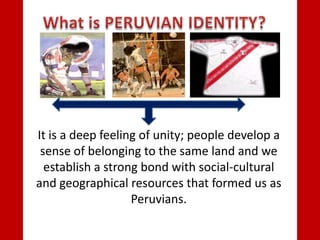
It is a deep feeling of unity; people develop a
sense of belonging to the same land and we
establish a strong bond with social-cultural
and geographical resources that formed us as
Peruvians.
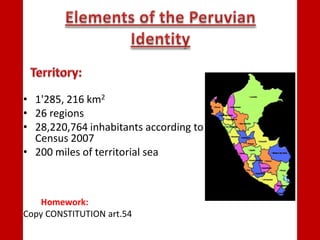
• 1'285, 216 km2
• 26 regions
• 28,220,764 inhabitants according to
Census 2007
• 200 miles of territorial sea
Homework:
Copy CONSTITUTION art.54
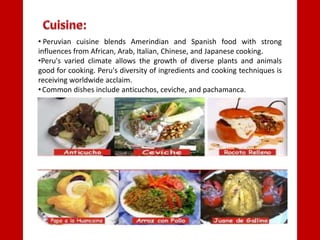
• Peruvian cuisine blends Amerindian and Spanish food with strong
influences from African, Arab, Italian, Chinese, and Japanese cooking.
•Peru's varied climate allows the growth of diverse plants and animals
good for cooking. Peru's diversity of ingredients and cooking techniques is
receiving worldwide acclaim.
•Common dishes include anticuchos, ceviche, and pachamanca.
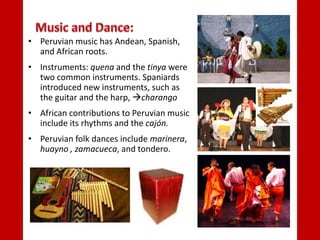
• Peruvian music has Andean, Spanish,
and African roots.
• Instruments: quena and the tinya were
two common instruments. Spaniards
introduced new instruments, such as
the guitar and the harp, charango
• African contributions to Peruvian music
include its rhythms and the cajón.
• Peruvian folk dances include marinera,
huayno , zamacueca, and tondero.
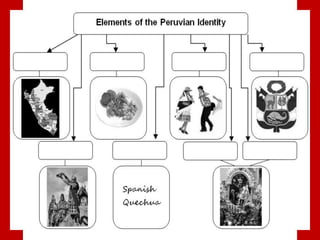
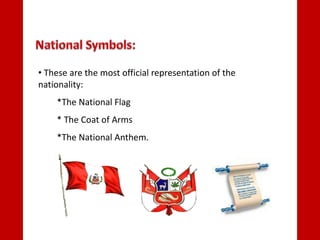
• These are the most official representation of the
nationality:
*The National Flag
* The Coat of Arms
*The National Anthem.
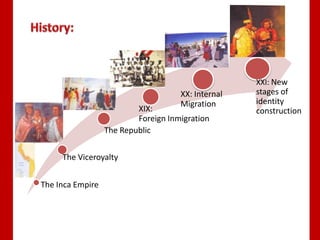
The Inca Empire
The Viceroyalty
The Republic
XIX:
Foreign Inmigration
XX: Internal
Migration
XXI: New
stages of
identity
construction
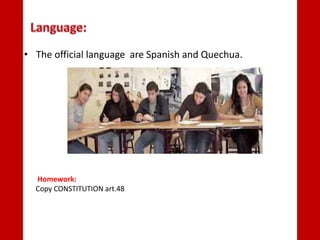
• The official language are Spanish and Quechua.
Homework:
Copy CONSTITUTION art.48
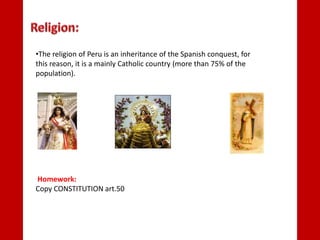
•The religion of Peru is an inheritance of the Spanish conquest, for
this reason, it is a mainly Catholic country (more than 75% of the
population).
Homework:
Copy CONSTITUTION art.50
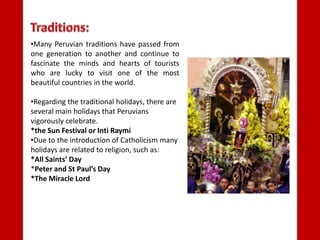
•Many Peruvian traditions have passed from
one generation to another and continue to
fascinate the minds and hearts of tourists
who are lucky to visit one of the most
beautiful countries in the world.
•Regarding the traditional holidays, there are
several main holidays that Peruvians
vigorously celebrate.
*the Sun Festival or Inti Raymi
•Due to the introduction of Catholicism many
holidays are related to religion, such as:
*All Saints’ Day
*Peter and St Paul’s Day
*The Miracle Lord
PERU: NATIONAL IDENTITY

PERU: NATIONAL IDENTITY

  • 1.
  • 2.
    QUESTIONS ANSWERS From whichcountry did Peru gain its independence in 1821? What is Peru’s highest peak? Who formed the oldest known complex society in Peru? Which two countries fought the War of the Pacific? Which Inca Emperor did Francisco Pizarro defeat? During which period was Peru a Spanish colony? What is Peru’s longest river? When did the Spanish conquer Peru?(CENTURY) What is a typical Peruvian dish? When is Peru’ national day celebrated?
  • 3.
    Song: “MI PERU” PERU Tengoel orgullo de ser peruano y soy feliz de haber nacido en esta hermosa tierra del sol donde el indómito inca prefiriendo morir lego a su raza la gran herencia de su valor * ricas montañas, hermosas tierras risueñas playas, es mi PERU fértiles tierras, cumbres, nevadas ríos quebradas, es mi PERU así es mi raza noble y humilde por tradición pero es rebelde cuando coartan su libertad entonces poniendo alma, mente y corazón rompe cadenas aunque la muerte vea llegar * - * ES MI PERU!!!!!!!!!!!!
  • 4.
    It is theperson's identity and sense of belonging to one state or to one nation, a feeling one shares with a group of people, regardless of one's citizenship status.
  • 5.
    It is adeep feeling of unity; people develop a sense of belonging to the same land and we establish a strong bond with social-cultural and geographical resources that formed us as Peruvians.
  • 7.
    • 1'285, 216km2 • 26 regions • 28,220,764 inhabitants according to Census 2007 • 200 miles of territorial sea Homework: Copy CONSTITUTION art.54
  • 8.
    • Peruvian cuisineblends Amerindian and Spanish food with strong influences from African, Arab, Italian, Chinese, and Japanese cooking. •Peru's varied climate allows the growth of diverse plants and animals good for cooking. Peru's diversity of ingredients and cooking techniques is receiving worldwide acclaim. •Common dishes include anticuchos, ceviche, and pachamanca.
  • 9.
    • Peruvian musichas Andean, Spanish, and African roots. • Instruments: quena and the tinya were two common instruments. Spaniards introduced new instruments, such as the guitar and the harp, charango • African contributions to Peruvian music include its rhythms and the cajón. • Peruvian folk dances include marinera, huayno , zamacueca, and tondero.
  • 10.
    • These arethe most official representation of the nationality: *The National Flag * The Coat of Arms *The National Anthem.
  • 11.
    The Inca Empire TheViceroyalty The Republic XIX: Foreign Inmigration XX: Internal Migration XXI: New stages of identity construction
  • 12.
    • The officiallanguage are Spanish and Quechua. Homework: Copy CONSTITUTION art.48
  • 13.
    •The religion ofPeru is an inheritance of the Spanish conquest, for this reason, it is a mainly Catholic country (more than 75% of the population). Homework: Copy CONSTITUTION art.50
  • 14.
    •Many Peruvian traditionshave passed from one generation to another and continue to fascinate the minds and hearts of tourists who are lucky to visit one of the most beautiful countries in the world. •Regarding the traditional holidays, there are several main holidays that Peruvians vigorously celebrate. *the Sun Festival or Inti Raymi •Due to the introduction of Catholicism many holidays are related to religion, such as: *All Saints’ Day *Peter and St Paul’s Day *The Miracle Lord