Personality
Li Linfeng M.D. M.P.H
No.1 Affiliated hospital, Shihezi University
Personality refers to all of the characteristics
that distinguish a constantly developing, self-
organizing human being from a predictable
machine-like object. In other words, personality
refers to all the ways in which someone shapes
and adapts in a unique way to ever-changing
internal and external environments.
What is Personality?
Personality is both complex and unique. On
one hand, people differ greatly from one
another in multiple components of behavior,
and, on the other hand, each person
expresses only one of his or her many
potential lifestyles.
Factors
● Biological
● Psychological
● Social
•Hypersensitivity to and un-forgiveness of insults, slights, and rebuffs
•Unwarranted tendency to question the loyalty of friends or the
fidelity of spouse or sexual partners
•Reluctance to confide in others because of unwarranted fear that the
information will be used against him or her
•Preoccupation with “conspiratorial” explanations of and hidden
demeaning or threatening meanings in benign events or remarks
•Unwarranted tendency to perceive attacks on his or her character or
reputation with angry reactions or counterattacks
Paranoid
•Indifference to praise and criticism
•Preference for solitary activities and fantasy (“loner”)
•Lack of interest for sexual interactions
•Lack of desire or pleasure in close relationships
•Emotional coldness, detachment, or flattened affectivity
•No close friends or confidants other than family members
•Pleasure experienced in few, if any, activities
Schizoid
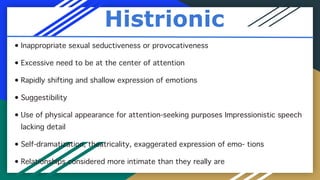
• Inappropriate sexual seductiveness or provocativeness
• Excessive need to be at the center of attention
• Rapidly shifting and shallow expression of emotions
• Suggestibility
• Use of physical appearance for attention-seeking purposes Impressionistic speech
lacking detail
• Self-dramatization, theatricality, exaggerated expression of emo- tions
• Relationships considered more intimate than they really are
Histrionic
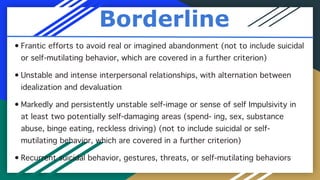
• Frantic efforts to avoid real or imagined abandonment (not to include suicidal
or self-mutilating behavior, which are covered in a further criterion)
• Unstable and intense interpersonal relationships, with alternation between
idealization and devaluation
• Markedly and persistently unstable self-image or sense of self Impulsivity in
at least two potentially self-damaging areas (spend- ing, sex, substance
abuse, binge eating, reckless driving) (not to include suicidal or self-
mutilating behavior, which are covered in a further criterion)
• Recurrent suicidal behavior, gestures, threats, or self-mutilating behaviors
Borderline
• Difficulty in making everyday decisions without excessive reas- surance and
advice from others
• Needs for others to assume responsibility for major areas of his or her life
• Difficulties in expressing disagreement with others because of fear of loss of
support or approval (this does not include realistic fears of retribution)
• Lack of initiative
• Unrealistic preoccupation with fears of being left to take care of self
Urgent search for another relationship as a source of care and support when
a close relationship ends
Dependent
● Medicine (fluoxetine);
● Psychotherapy;
● Education
Treatment

Personality-Li .pdf

  • 1.
    Personality Li Linfeng M.D.M.P.H No.1 Affiliated hospital, Shihezi University
  • 2.
    Personality refers toall of the characteristics that distinguish a constantly developing, self- organizing human being from a predictable machine-like object. In other words, personality refers to all the ways in which someone shapes and adapts in a unique way to ever-changing internal and external environments. What is Personality?
  • 3.
    What is Personality? Personalityis both complex and unique. On one hand, people differ greatly from one another in multiple components of behavior, and, on the other hand, each person expresses only one of his or her many potential lifestyles.
  • 4.
  • 6.
    •Hypersensitivity to andun-forgiveness of insults, slights, and rebuffs •Unwarranted tendency to question the loyalty of friends or the fidelity of spouse or sexual partners •Reluctance to confide in others because of unwarranted fear that the information will be used against him or her •Preoccupation with “conspiratorial” explanations of and hidden demeaning or threatening meanings in benign events or remarks •Unwarranted tendency to perceive attacks on his or her character or reputation with angry reactions or counterattacks Paranoid
  • 7.
    •Indifference to praiseand criticism •Preference for solitary activities and fantasy (“loner”) •Lack of interest for sexual interactions •Lack of desire or pleasure in close relationships •Emotional coldness, detachment, or flattened affectivity •No close friends or confidants other than family members •Pleasure experienced in few, if any, activities Schizoid
  • 8.
    • Inappropriate sexualseductiveness or provocativeness • Excessive need to be at the center of attention • Rapidly shifting and shallow expression of emotions • Suggestibility • Use of physical appearance for attention-seeking purposes Impressionistic speech lacking detail • Self-dramatization, theatricality, exaggerated expression of emo- tions • Relationships considered more intimate than they really are Histrionic
  • 9.
    • Frantic effortsto avoid real or imagined abandonment (not to include suicidal or self-mutilating behavior, which are covered in a further criterion) • Unstable and intense interpersonal relationships, with alternation between idealization and devaluation • Markedly and persistently unstable self-image or sense of self Impulsivity in at least two potentially self-damaging areas (spend- ing, sex, substance abuse, binge eating, reckless driving) (not to include suicidal or self- mutilating behavior, which are covered in a further criterion) • Recurrent suicidal behavior, gestures, threats, or self-mutilating behaviors Borderline
  • 10.
    • Difficulty inmaking everyday decisions without excessive reas- surance and advice from others • Needs for others to assume responsibility for major areas of his or her life • Difficulties in expressing disagreement with others because of fear of loss of support or approval (this does not include realistic fears of retribution) • Lack of initiative • Unrealistic preoccupation with fears of being left to take care of self Urgent search for another relationship as a source of care and support when a close relationship ends Dependent
  • 13.
    ● Medicine (fluoxetine); ●Psychotherapy; ● Education Treatment